People

Bonar Law

Bonar Law was a Canadian-born Conservative Prime Minister of the United Kingdom. He led the party through Home Rule crisis, wartime coalition politics, and a brief post-war premiership before resigning from terminal illness in 1923.

Born
1858 CE
Died
1923 CE
Role
Conservative Prime Minister

Conservative Prime Minister (1858–1923)

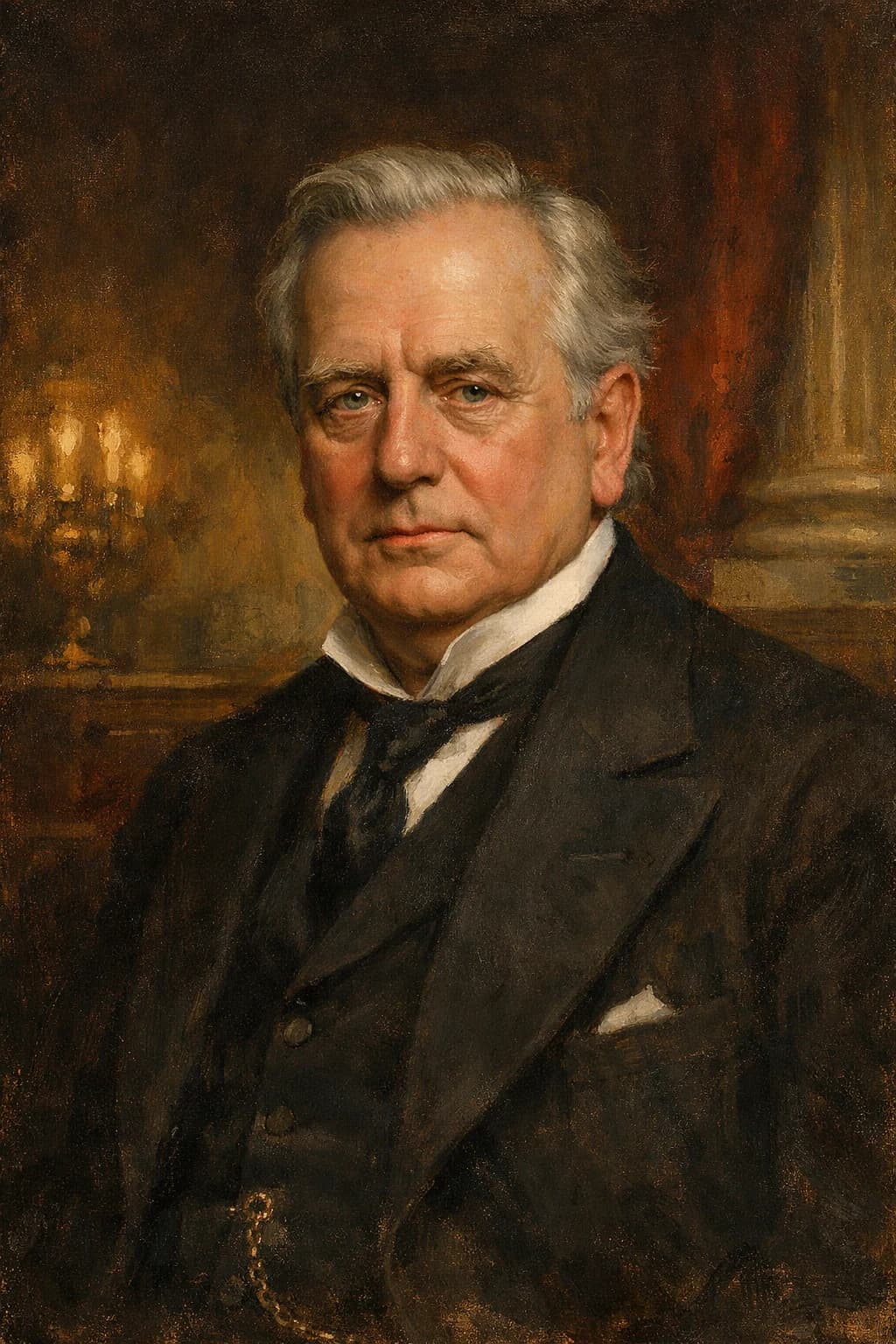
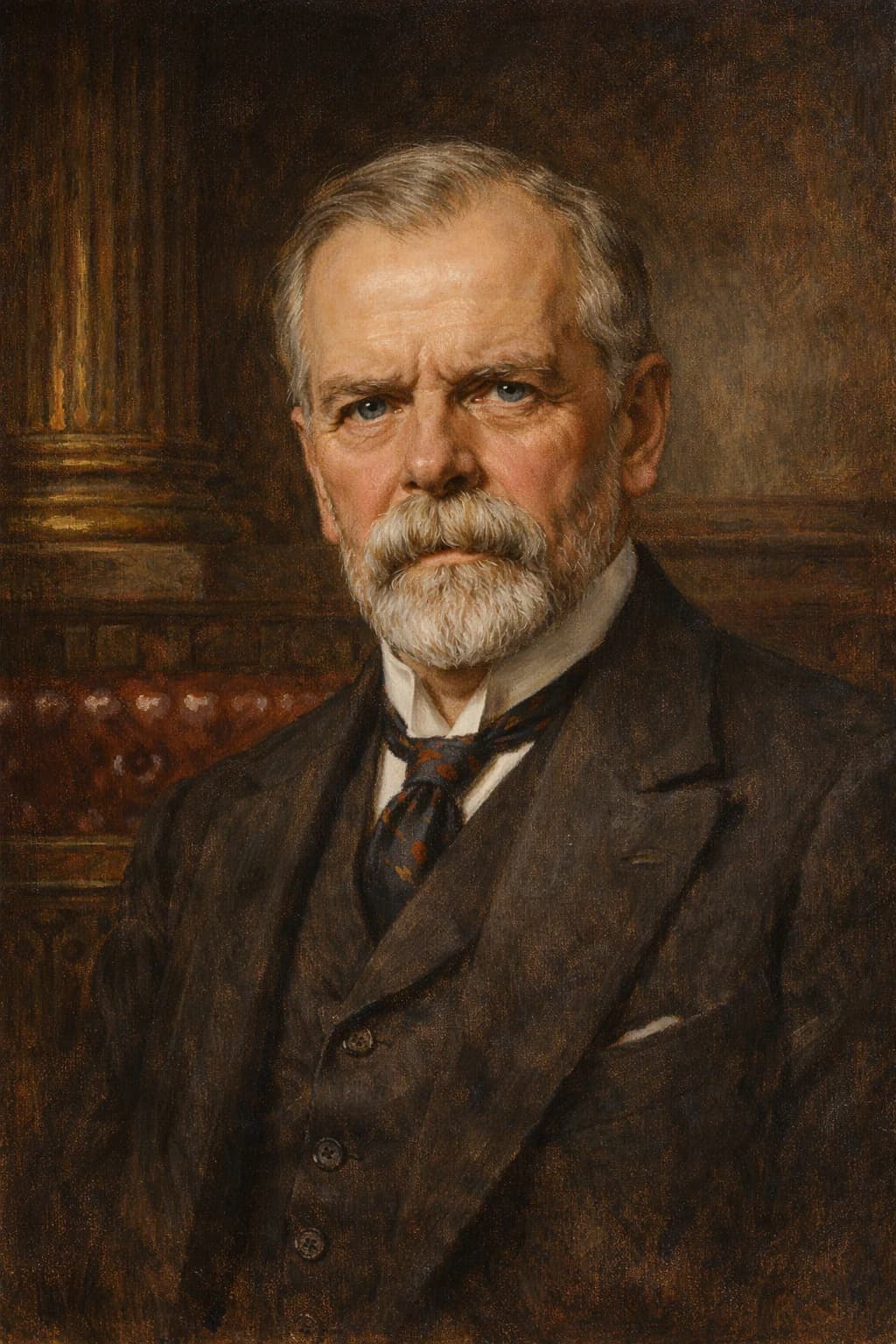
AI-generated portrait of Bonar Law in formal Edwardian attire
AI-assisted historical reconstruction

An illustrative reconstruction based on historical context. It is not a photograph or documentary likeness. Image policy

Quick answer

Bonar Law was a Canadian-born Conservative Prime Minister of the United Kingdom. He led the party through Home Rule crisis, wartime coalition politics, and a brief post-war premiership before resigning from terminal illness in 1923.

Born
1858 CE
Died
1923 CE
Role
Conservative Prime Minister
Years
1858-1923 CE
Quick facts

Profile details

Additional identity and tagging details that are not already covered in the introduction.

Full name
Andrew Bonar Law
Facts

Bonar Law timeline facts

Selected specifics from this profile's life story.

1858-1870
Colonial Beginnings

Born in New Brunswick in 1858 to a family with Scottish and Ulster roots, Andrew Bonar Law began life far from Westminster yet inside the wider British world he would later help govern.

1911
Compromise Leader

When Arthur Balfour fell, Law emerged as the acceptable choice between rivals and unexpectedly took command of a divided Conservative Party.

1919-1921
Exhaustion and Retreat

After the war he remained influential, but illness and strain forced him from frontline politics just as the coalition's troubles were multiplying.

1923
A Brief Finish

Throat cancer forced his resignation after only months in office, leaving behind the image of a powerful political operator denied a full premiership.

Life Journey

A timeline of ambition, party warfare and a vanishing premiership

Follow the story in a more continuous narrative, with a reading mode that matches how much depth you want.

Complete chronology

1858-1870

Colonial Beginnings

Andrew Bonar Law was born in Rexton, New Brunswick, in 1858, in what was then a British colony rather than the political heart of the empire he would one day lead. That distance mattered. His life began at the edge of imperial power, among Presbyterian, Scottish and Ulster connections that gave him several identities at once. Family loss and relocation interrupted any easy childhood. Unlike aristocratic Conservatives who seemed born into Westminster, Law carried the habits of someone who had crossed worlds and learned not to waste words. His Canadian birth later became more than a biographical curiosity: it helped him appear practical, unsentimental and less polished than the grand party figures around him. In an age of rhetoric, he made bluntness feel like authenticity.

1870-1885

Scotland Shapes Him

The move to Scotland after family loss was a decisive break. Instead of a long university education or an easy road into public life, Law entered the world of business while still young. He worked in the Glasgow iron trade, judged contracts, handled risk and learned to read character quickly. Profit, credit, negotiation and stamina were not abstract ideas to him; they were daily tests. By the time many future politicians were still learning parliamentary manners, he had already built credibility in a competitive commercial world. That experience left a permanent mark on his politics. Law tended to speak directly, distrusted decorative language and preferred arguments that could survive contact with money, machinery and pressure. It also made tariff reform attractive to him, because he saw trade policy through the eyes of industry rather than inherited theory.

1900-1906

Late Arrival, Fast Rise

Law did not grow up inside parliamentary culture and did not arrive in the Commons as a youthful prodigy. He entered in 1900, older than many newcomers and with no long apprenticeship in elite politics. That might have been a disadvantage, yet it helped him stand out. He brought the confidence of someone who had already succeeded elsewhere and did not need to imitate established grandees. His speeches were lean, forceful, and often more cutting than elegant. He took a strong interest in tariff reform, an issue that exposed deep arguments about empire, trade, and national power. Even when he lost his seat in the Liberal landslide of 1906, he soon returned, proving he was already more than a passing figure.

1911

Compromise Leader

His path to leadership was not the usual march of an obvious heir. In 1911 the Conservatives were fractured by strategy, temperament, and old arguments over trade policy. Better-known contenders seemed capable of splitting the party rather than steadying it. Law's strength was that enough groups could live with him. He was not everyone's first choice, but he was acceptable to enough of them to prevent a damaging contest. That is a revealing kind of victory. It meant his authority initially rested less on glamour than on usefulness. Yet once installed, he proved far more formidable than the label of compromise candidate suggests. He had little taste for ornament, but he knew how to hold a line and how to turn party anger into disciplined opposition.

1912-1914

Ulster and Confrontation

The fight over Irish Home Rule turned Law from party manager into a central actor in a constitutional crisis. He threw his weight behind Edward Carson and Ulster unionist resistance, treating the Third Home Rule Bill not as a technical adjustment but as a test of political legitimacy. Many Conservatives believed H. H. Asquith's Liberal government was forcing through a profound change without the consent of those most affected; Law made that anger respectable inside national party politics. His position energised unionists, but it also sharpened the danger that parliamentary struggle might slide into coercion. The Ulster Volunteers, the Curragh incident and escalating rhetoric created an atmosphere in which civil conflict no longer seemed impossible. The crisis was not solved by careful settlement. It was overtaken by the outbreak of the First World War, which suspended the argument without removing its causes.

1915-1918

War Cabinet Power

War pulled Law from opposition into high office. He joined the coalition under Asquith and, after the political upheaval of late 1916, became a key support for David Lloyd George's new administration. As chancellor and leader in the Commons, he was not the most dazzling public face of the government, but he was one of the men who made it function. He could steady colleagues, translate party feeling, and keep political machinery moving while military pressures dominated national life. In a period when personality clashes and institutional strain could wreck governments, Law's value lay in reliability. He was often the hinge between coalition necessity and Conservative interest. That kind of power can look secondary on paper, yet governments frequently survive because someone like him keeps them stitched together.

1919-1921

Exhaustion and Retreat

Peace did not bring simplicity. Postwar Britain faced unrest, debt, imperial strain, and bitter arguments over Ireland and the future shape of government. Law stayed at the top of politics, but the burden was catching up with him. He had already endured heavy personal losses, and his health was worsening. In 1921 he resigned the leadership, a decision that seemed to remove him from the centre just when Conservative unease with Lloyd George's coalition was rising. His departure mattered because it altered the balance inside government. Without him, the coalition lost a figure who could absorb anger and still command respect across party lines. His withdrawal looked personal and medical, but it had major political consequences as well.

1922-1923

Back to the Summit

By 1922 many Conservatives had had enough of coalition politics and the improvising brilliance of David Lloyd George. At the Carlton Club meeting, Conservative MPs chose to fight independently, ending the coalition that had dominated postwar government. Law, though physically diminished, was still the one figure able to reunite the party after the break. He returned to leadership, became prime minister, and secured victory in the 1922 general election. The mood he offered was not visionary excitement. It was relief. After war, inflation, Irish upheaval and coalition intrigue, his appeal lay in stability and restraint. Yet his premiership never had room to develop. Reparations, inter-Allied debts, unemployment and European insecurity remained unresolved, while throat cancer was already narrowing his horizon. He reached the office he had spent years orbiting only when his body was failing him.

1923

A Brief Finish

Law resigned in May 1923 because he could no longer physically continue, and he died later that year. The brevity of his premiership often shrinks him in public memory, yet that can be misleading. He was not a minor figure who briefly wandered into greatness by accident. For more than a decade he had been central to Conservative recovery, wartime coalition management, and the political path that led to the postwar party system. What he lacked was not importance but longevity at the very top. His career invites a different kind of historical judgment: less attention to grand reforming achievement, more to the harder art of holding parties together in ugly, unstable times. He was a decisive man whose final chapter was cut brutally short.

Continue in context

Connected stories

Move from the profile into the wider events and settings this figure belongs to.

British Prime Ministers lineage
LineagePrime ministers in sequence
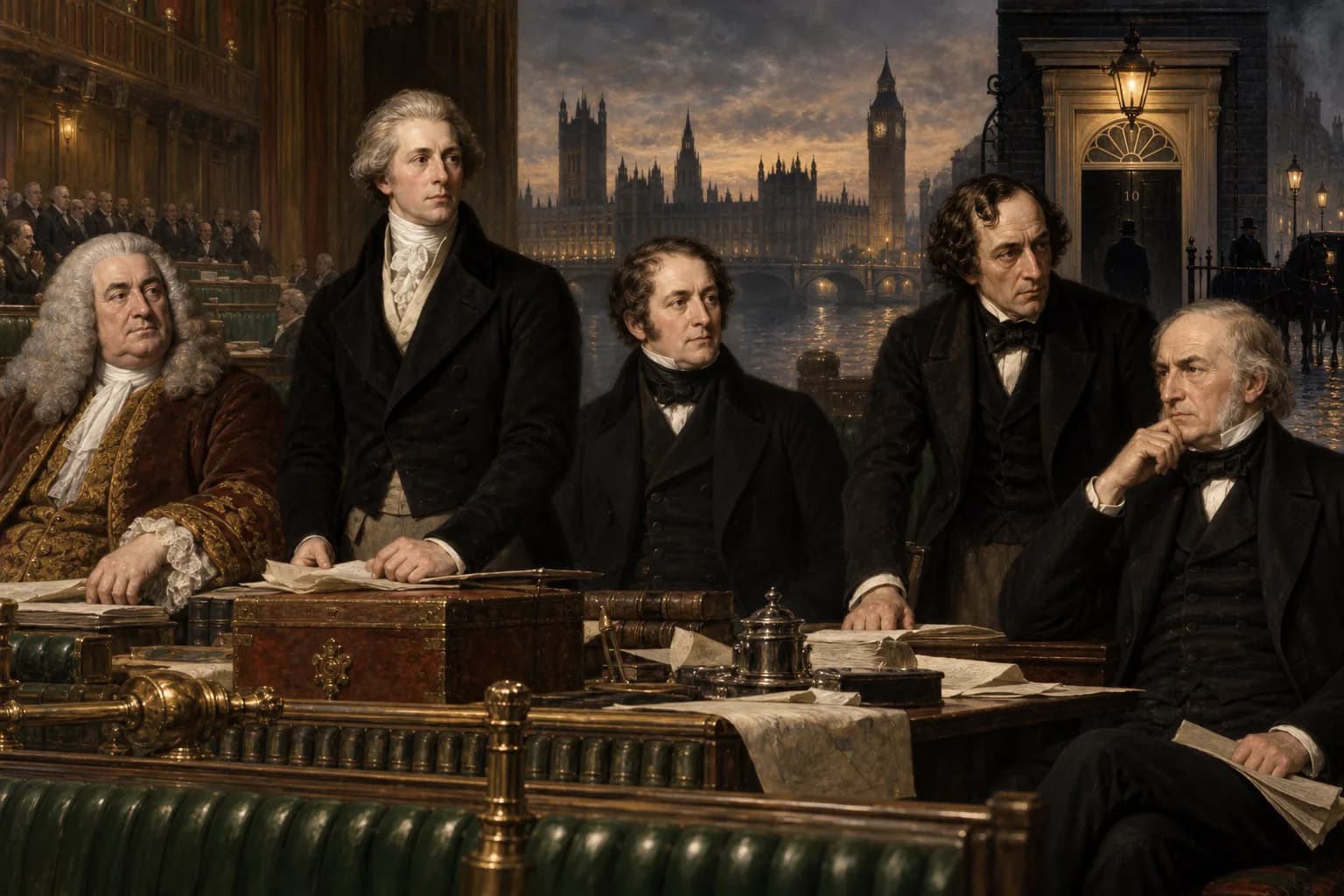
British Prime Ministers
1721 CE–present

Explore British prime ministers from Walpole to the present.

View lineage
Tertiary paths

Content note

This profile is written for educational use and connects to related Stories of History pages. The main portrait is an AI-assisted historical reconstruction, included as an illustrative aid rather than documentary evidence. Image policy

References

Sources & Further Reading

Reliable reference works, archives and reading paths connected to this profile.

Further reading

  1. Encyclopaedia Britannica, Search results for Bonar Law,” accessed June 2026.Open source
  2. WorldCat, Books and library holdings for Bonar Law,” accessed June 2026.Open source

Primary sources

  1. Library of Congress, Search results for Bonar Law,” accessed June 2026.Open source

Reviewed claim sources

Loading reviewed claim sources...

A weekly route through history

Find out first about the latest published stories, feature notes and occasional Premium offers in one weekly email.