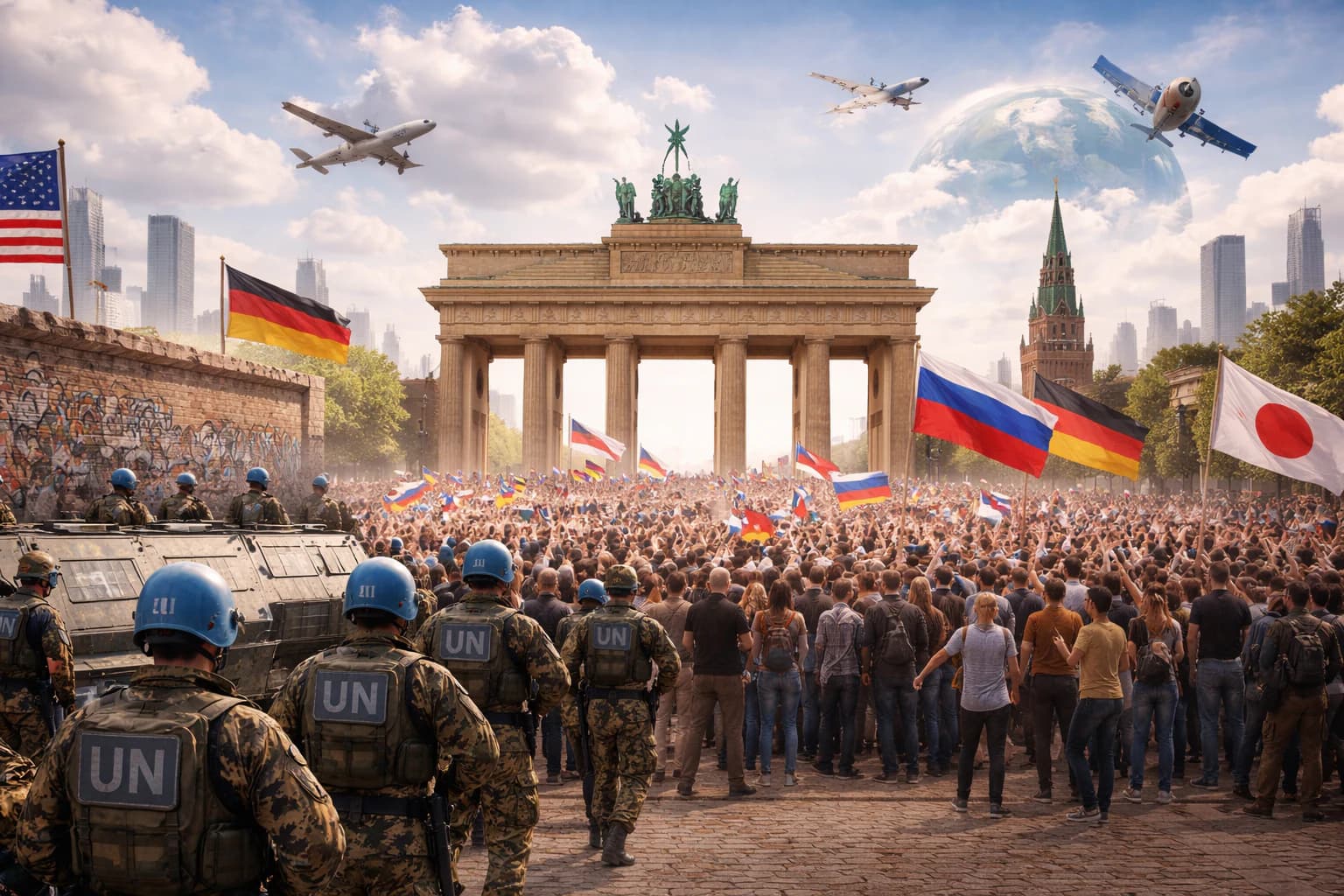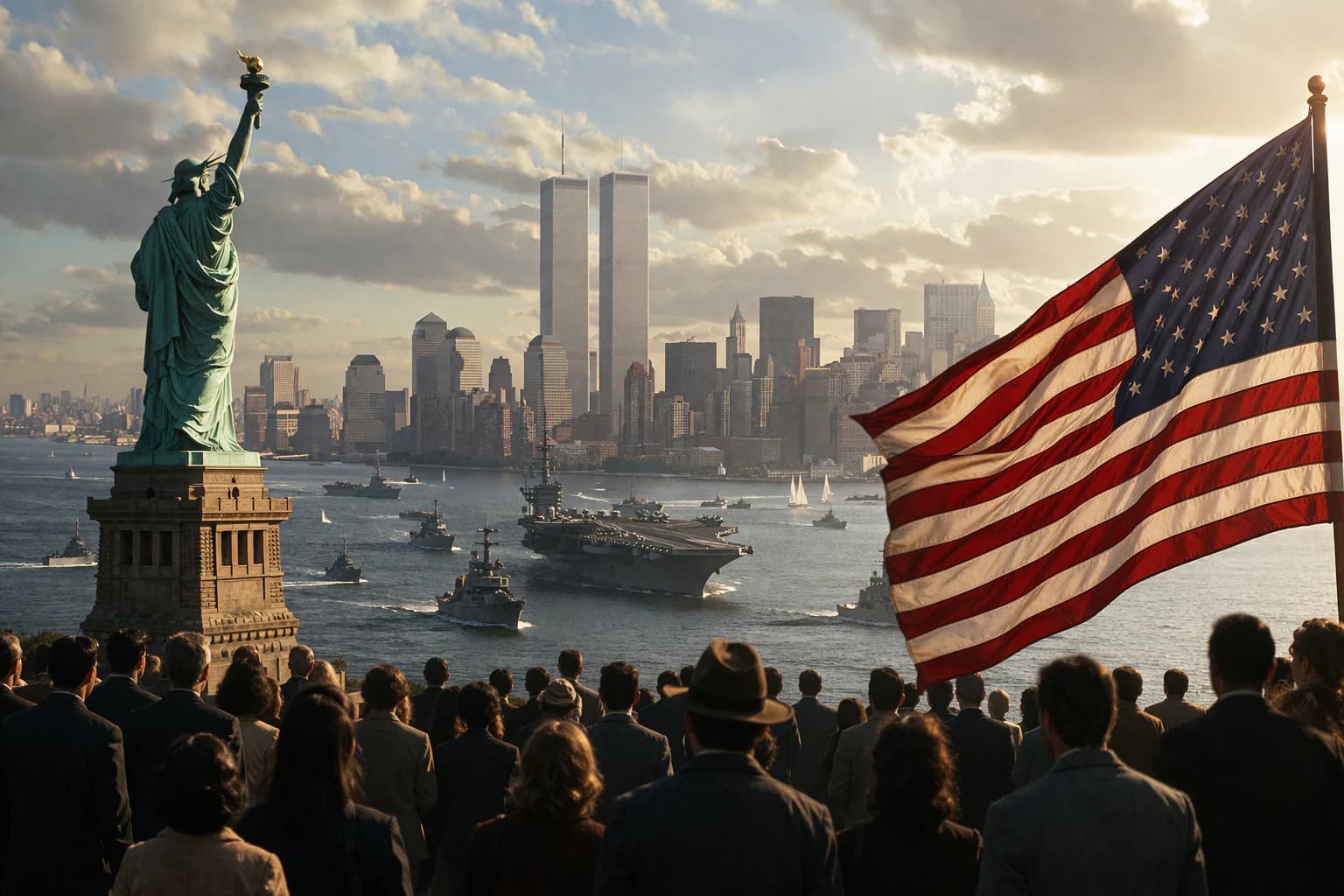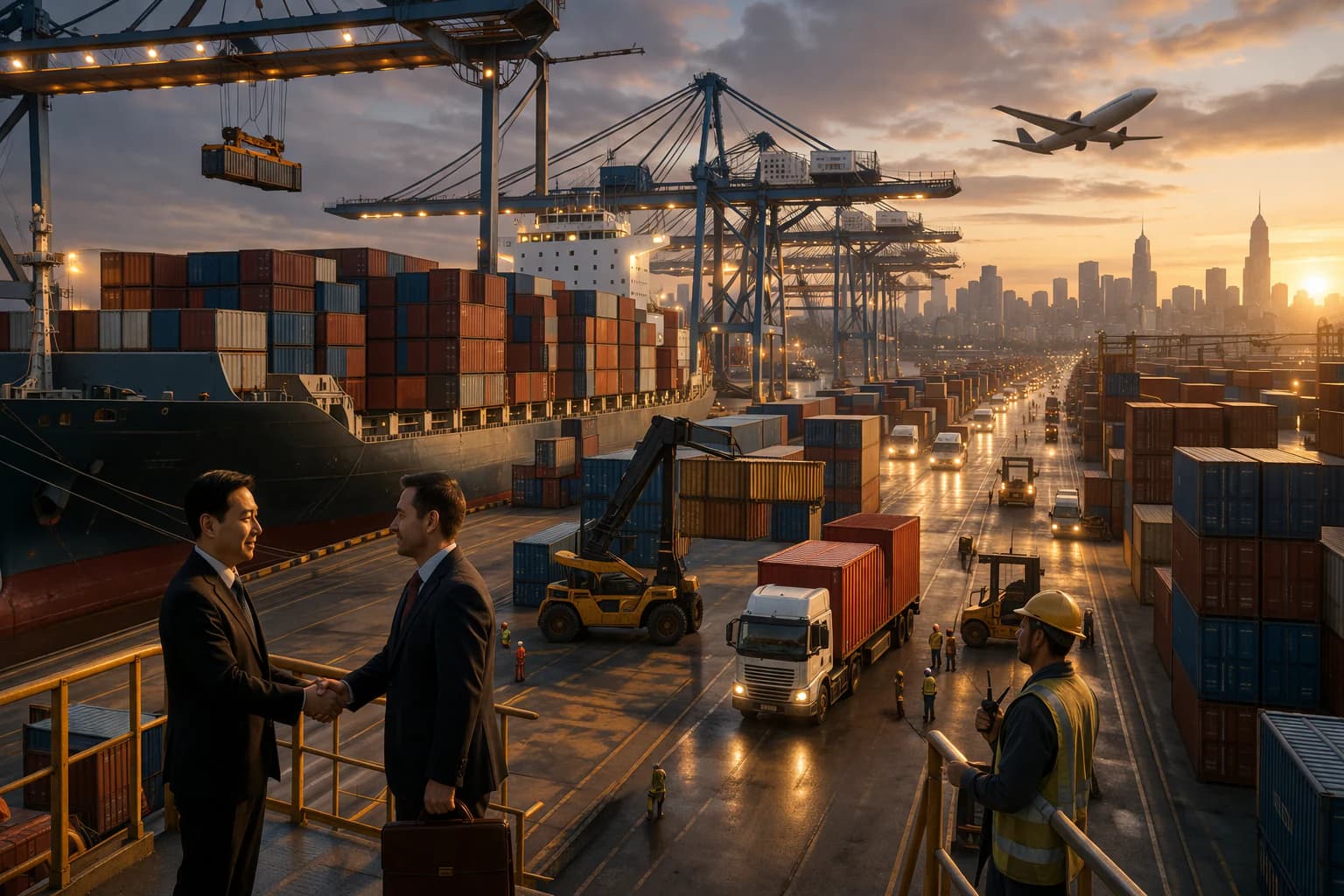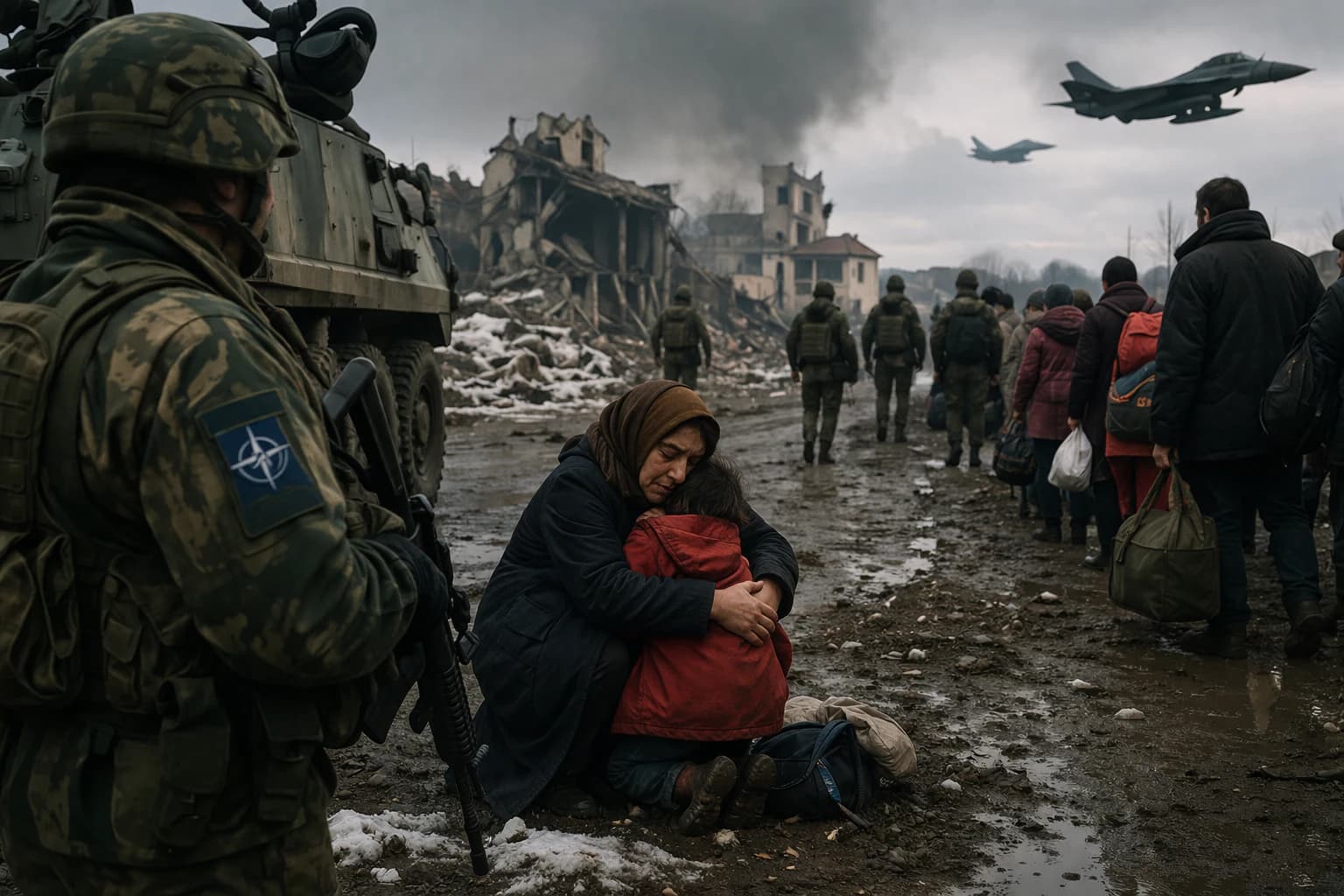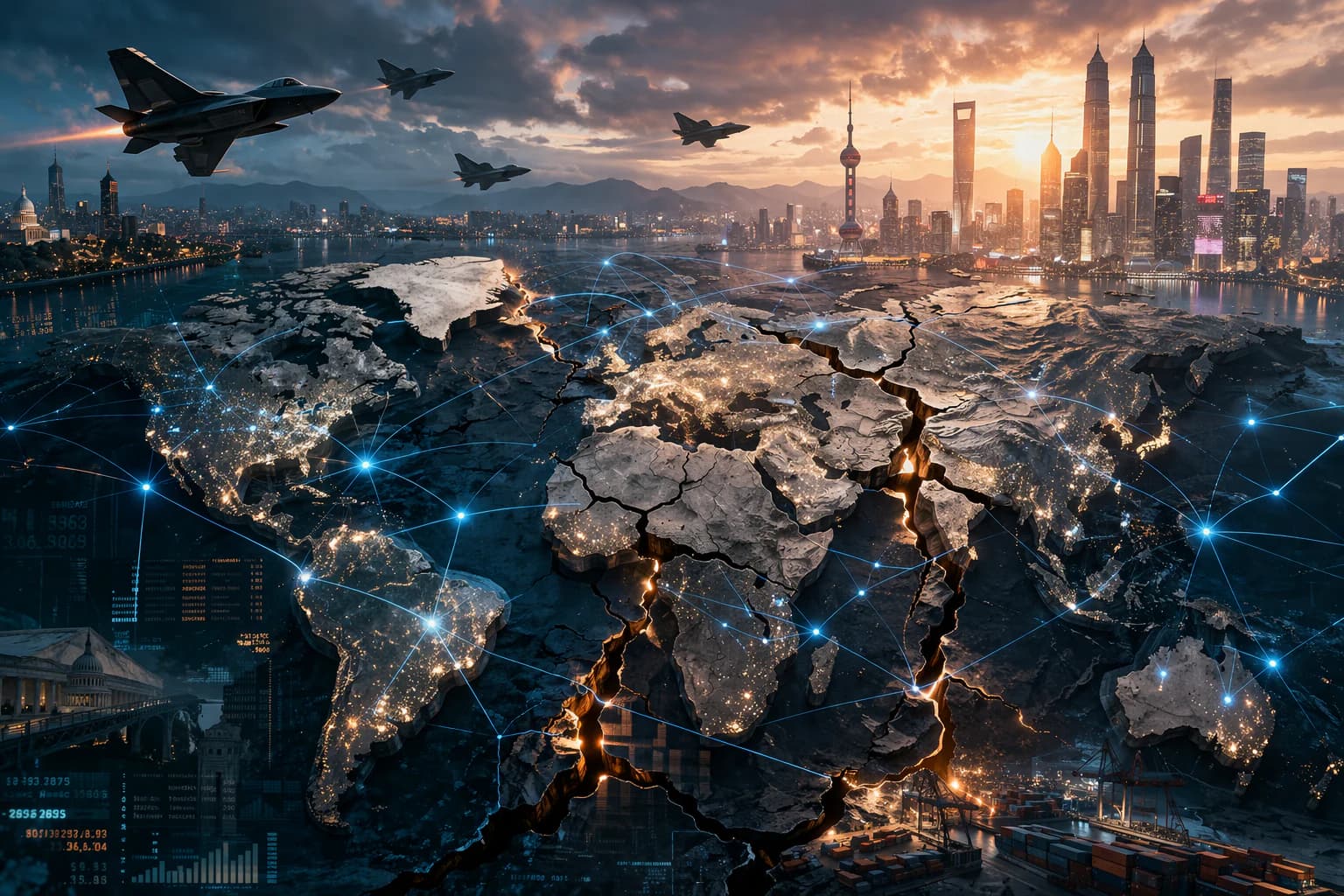
A fractured world map lit by digital networks, military aircraft overhead and rising skylines in Asia
Free Story

The World After the Cold War

Explore the world after the Cold War, from American primacy and globalisation to terror, crisis, and renewed rivalry.

10 chapters

Next
Context

Introduction

Overview

When the Cold War ended in 1991, the world entered a new era shaped by American power, globalisation, terrorism, financial crisis, China’s rise and renewed great-power rivalry. The end of the Cold War did not create a settled peace; it removed one global rivalry and exposed new tensions. From the 1990s to the twenty-first century, states and societies faced a changing order in which old ideological divisions faded but new conflicts emerged.

What you'll learn: You'll understand how the post-Cold War world was constructed, why it proved unstable, how 9/11 transformed global politics, and how the return of great power competition challenges the international order of the twentieth century.

Key forces

The Soviet Collapse
1991 CE
Step 1 of 101991 CEAccessible mode

The Soviet Collapse

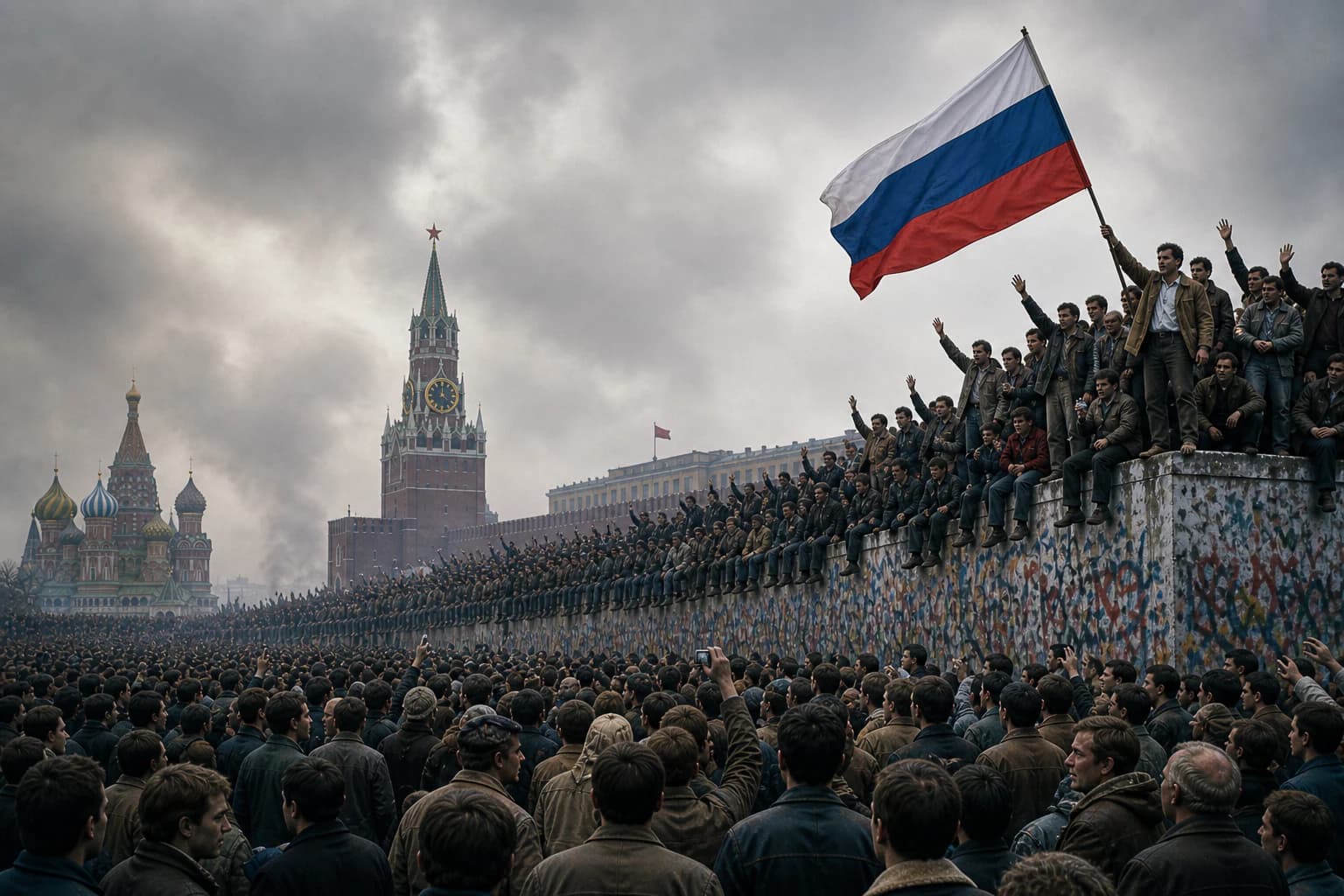
In 1991, one of the world’s two superpowers suddenly broke apart. The Cold War ended almost overnight.

For decades, the Soviet Union controlled a huge territory and competed with the United States for global influence. It governed many republics and kept tight control over Eastern Europe.

By the late 1980s, the system was struggling. The economy was weak, people demanded more freedom, and reforms loosened control. This made it harder for leaders to hold everything together.

A superpower did not fall in war, but from within.

In 1991, the Soviet Union officially dissolved into independent countries. Russia became the largest successor state, and many nations suddenly had to govern themselves.

Life changed quickly. Old systems collapsed, economies shifted, and people faced uncertainty. Some gained freedom, while others struggled with instability.

The United States became the world’s only superpower, and many regions were left without clear leadership. The effects still shape global politics today.

The Unipolar Moment
1992 CE
Step 2 of 101992 CEAccessible mode

The Unipolar Moment

In 1992, the Cold War was over, and the United States stood alone at the top. For a brief time, it looked like one country and one set of ideas would shape the future.

For decades, the world had been split between the United States and the Soviet Union. Countries often had to choose between capitalism and communism.

When the Soviet Union collapsed, that rivalry disappeared. American power in the military, the economy, and global culture suddenly had no real equal.

It seemed like the American way had won.

Many leaders now treated liberal democracy, free markets, and open trade as the normal path forward. Elections spread, old state controlled economies opened up, and U.S. influence reached almost every region.

This changed daily life in many places. New businesses, media, and political reforms appeared, but so did pressure to follow a model designed far away.

The world today still carries the mark of that moment. Global finance, American alliances, and debates over democracy all grew from this short era of unmatched U.S. power.

The Acceleration of Globalisation
1995 CE
Step 3 of 101995 CEAccessible mode

The Acceleration of Globalisation

By the mid 1990s, the world felt like it was shrinking. Goods, money, and ideas could move faster than ever before.

Before this, many countries still protected their own industries with tariffs and rules that limited trade.

After the Cold War, leaders pushed for more open markets. In 1995, the World Trade Organization was created to set common trade rules.

The global economy was becoming one connected system.

New computers, container shipping, and the internet helped companies manage factories, offices, and sales across many countries at once.

Banks and investors moved money around the world quickly, while multinational corporations searched for lower costs and bigger markets.

This brought cheaper products and new jobs in some places, but also factory closures and growing inequality in others. Today’s supply chains, online shopping, and global finance all grew from this shift.

Humanitarian Intervention Era
1999 CE
Step 4 of 101999 CEAccessible mode

Humanitarian Intervention Era

By the late 1990s, the world faced a hard question. Should countries use force to stop mass violence inside another country?

After the Cold War, many hoped ethnic wars and mass killings would become less common. But in places like and , civilians were attacked, driven from their homes, and killed.

Western governments, especially in NATO, said standing by was no longer acceptable. They argued that protecting people from atrocities could justify military action.

Human rights began to challenge the old rule that states could do whatever they wanted inside their borders.

In 1999, NATO bombed Yugoslavia during the Kosovo crisis, saying it was trying to stop a humanitarian disaster. Supporters saw this as a moral duty.

Critics warned that bypassing state sovereignty and the United Nations could be dangerous. They feared powerful countries would decide for themselves when intervention was allowed.

That argument still shapes the present. Debates over Syria, Libya, and other crises continue to ask the same thing: when does the world have a responsibility to protect people?

The September 11 Attacks
2001 CE
Step 5 of 102001 CEAccessible mode

The September 11 Attacks

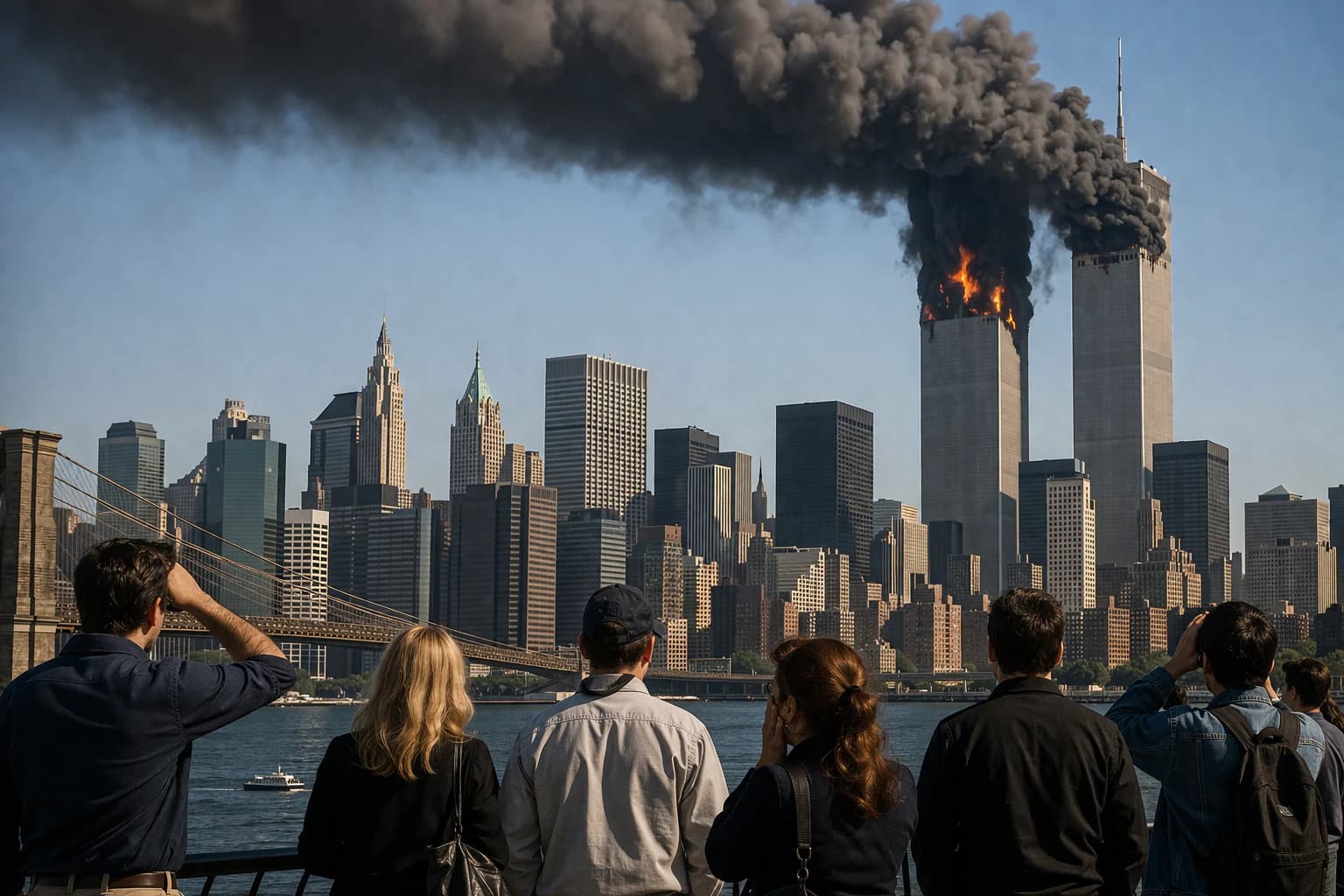
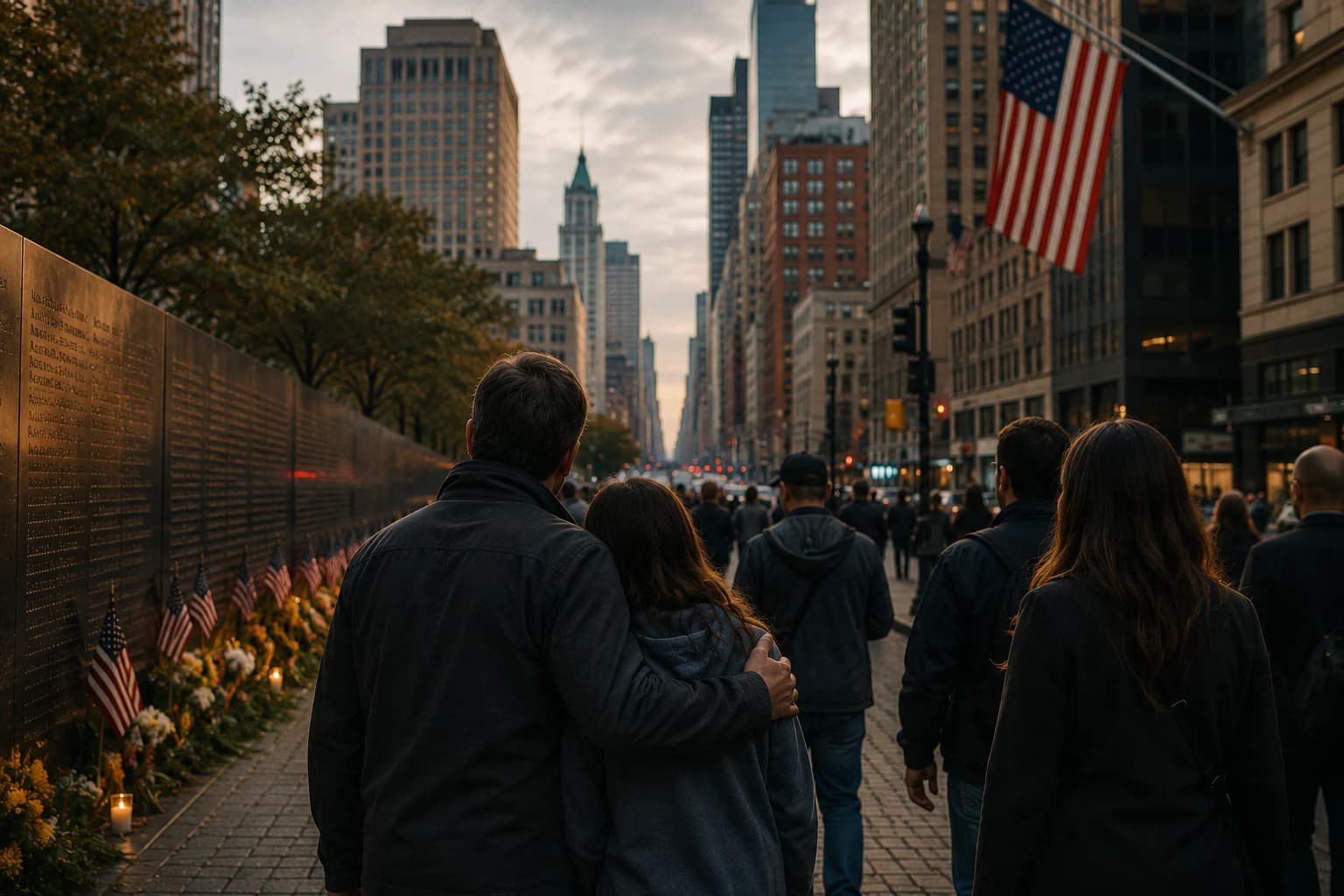
On September 11, 2001, four hijacked planes turned an ordinary morning into a global shock. The attacks changed how governments thought about safety, war, and danger.

After the Cold War, many people hoped the biggest global conflicts were over. The United States was powerful, and attention had shifted away from superpower rivalry.

But a different threat was growing. Al Qaeda, a militant Islamist group led by Osama bin Laden, planned large attacks against the United States.

The danger no longer looked like armies facing each other across a border.

Hijackers crashed two planes into in New York, one into , and another fell in after passengers fought back. Nearly 3,000 people were killed.

The attacks led to new airport checks, stronger surveillance, and a new focus on counterterrorism. The United States invaded and began the War on Terror.

You still see the effects today in travel security, foreign policy, and debates about privacy, war, and how far governments should go to stop attacks.

Wars in Afghanistan and Iraq
2003 CE
Step 6 of 102003 CEAccessible mode

Wars in Afghanistan and Iraq

After the Cold War, the United States looked stronger than anyone else. Then two wars showed that winning an invasion was not the same as creating peace.

In 2001, after the September 11 attacks, the US invaded to destroy al Qaeda and remove the Taliban, which had given it shelter.

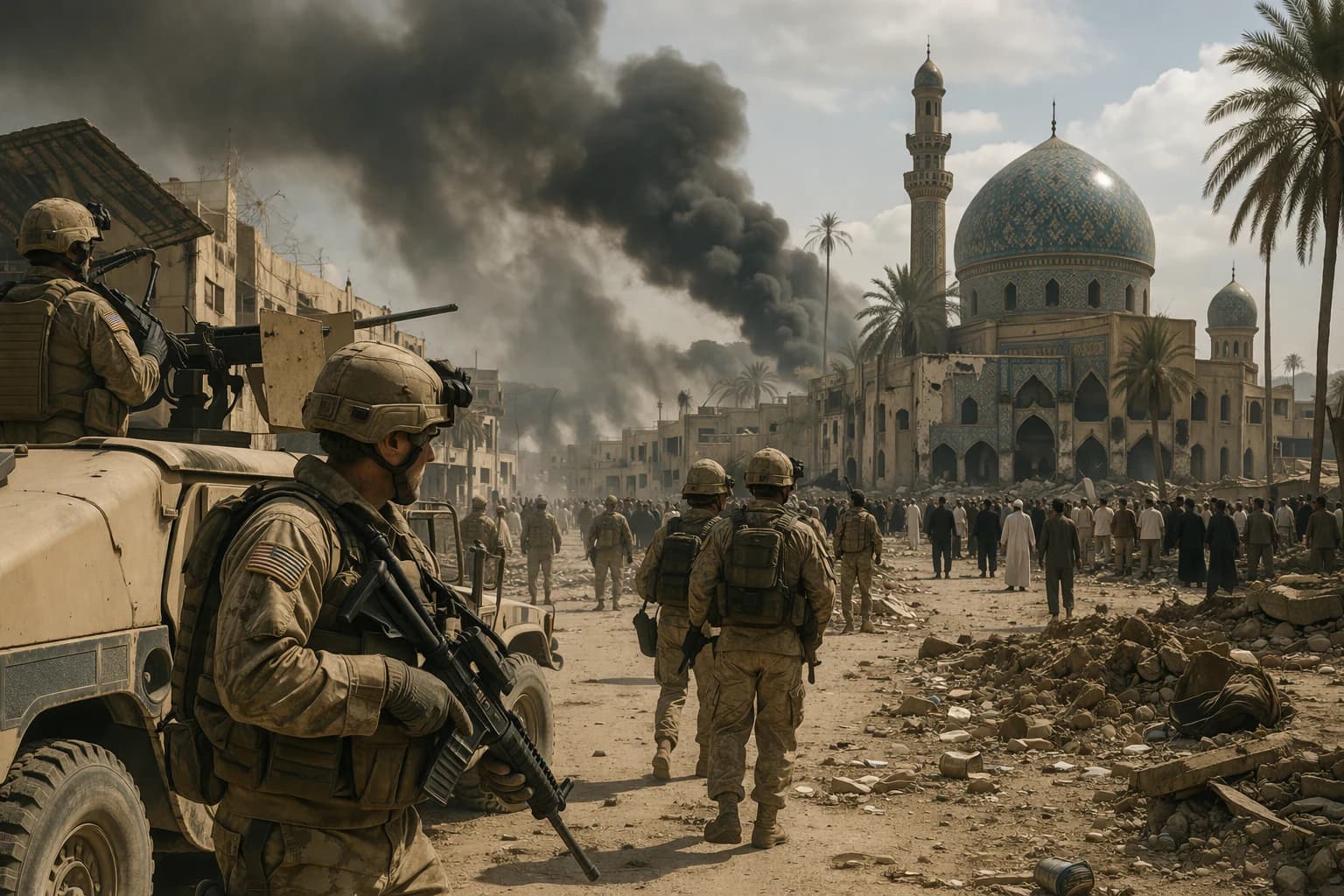
In 2003, the US and its allies invaded , saying Saddam Hussein had dangerous weapons and posed a threat. Those weapons were never found.

Toppling a government was fast. Building a stable country was far harder.

Both wars turned into long occupations, insurgencies, and huge civilian suffering. In , the collapse of the state deepened sectarian violence. In , the Taliban slowly returned.

These conflicts cost enormous sums, killed many people, and shook trust in American leadership. They also helped destabilize the Middle East and fed new extremist movements.

Today, these wars still shape debates about intervention, intelligence, refugees, and what military power can really achieve.

The Global Financial Crisis
2008 CE
Step 7 of 102008 CEAccessible mode

The Global Financial Crisis

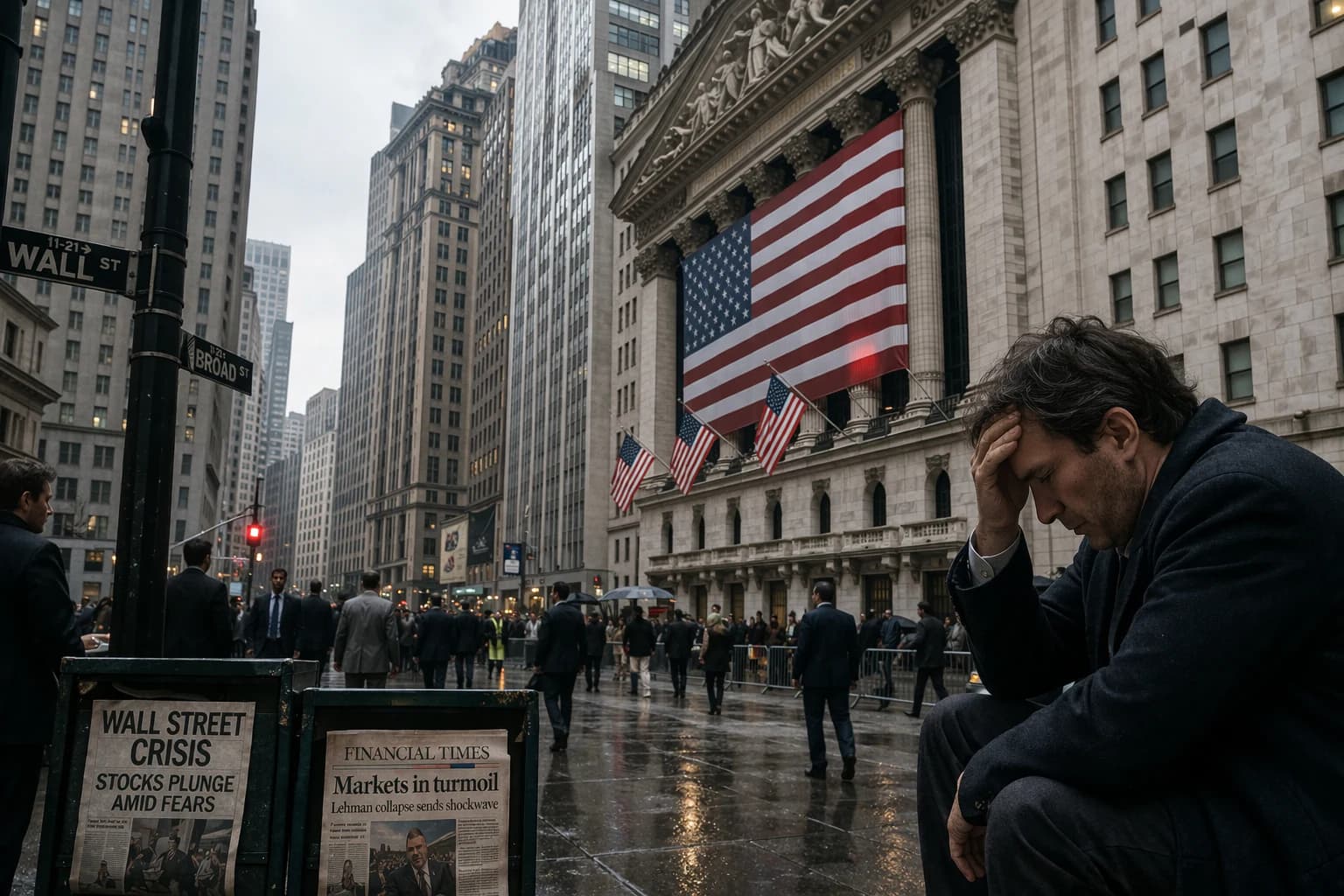
In 2008, the world economy suddenly looked far less stable than people had believed. Banks failed, jobs disappeared, and a crisis that started in the United States spread almost everywhere.

Before the crash, many people trusted banks, rising house prices, and easy credit. Western financial centers seemed to set the rules for the global economy.

That confidence broke when risky home loans in the United States were bundled into complex investments and sold across the world. When borrowers fell behind, the whole system started to crack.

When finance in one country broke, the shock raced through the whole world.

Major banks collapsed or had to be rescued, trade slowed, and stock markets plunged. Governments stepped in with emergency loans, bailouts, and stimulus plans.

Millions lost savings, homes, or work. Trust in political and business leaders fell, especially in countries that had claimed to know best how the global economy should run.

The crisis helped push power away from the old Western centers and gave rising economies more influence. It also left a lasting fear that global markets can fail fast and hit ordinary people hardest.

China’s Rise to Global Power
2012 CE
Step 8 of 102012 CEAccessible mode

China’s Rise to Global Power

By 2012, China was no longer just a fast growing country. It was becoming one of the main forces shaping the world.

For years, the United States had been the strongest economy and military power. China, once poorer and more isolated, focused on factories, trade, and building cities at huge speed.

As its economy grew, China gained money, confidence, and influence. Its leaders wanted more say in global trade, finance, and politics, not just a place inside systems built by others.

Economic power gave China a louder political voice.

Chinese companies spread across the world. The government upgraded its military, expanded its navy, and pushed harder in nearby seas. It also used investment and diplomacy to build partnerships far beyond Asia.

This changed daily life around the world. Countries sold to China, borrowed from China, and worried about relying on Chinese factories and technology at the same time.

Today, many global debates about trade, security, technology, and power are really about one big question: how the world will adapt to China’s rise.

Renewed Great Power Rivalry
2014 CE
Step 9 of 102014 CEAccessible mode

Renewed Great Power Rivalry

For a while, it looked like the biggest powers might work together. By 2014, that hope was fading fast.

After the Cold War, many leaders thought major wars between powerful states were becoming less likely. Countries traded more, talked more, and built new ties.

But deep disagreements never disappeared. Russia felt pushed aside as NATO expanded east. China was growing stronger and more confident. The United States still wanted to lead.

The age of easy cooperation was ending.

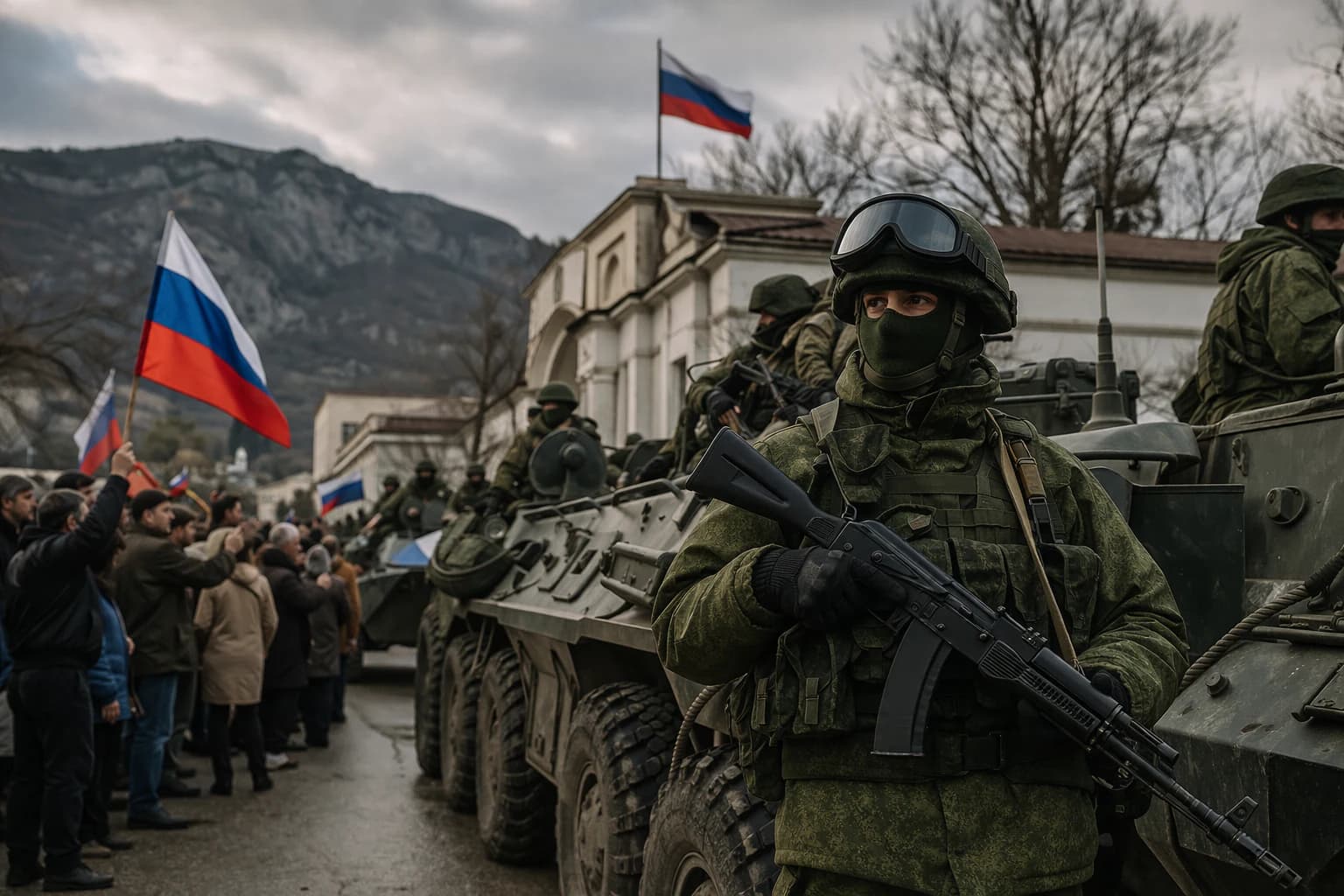
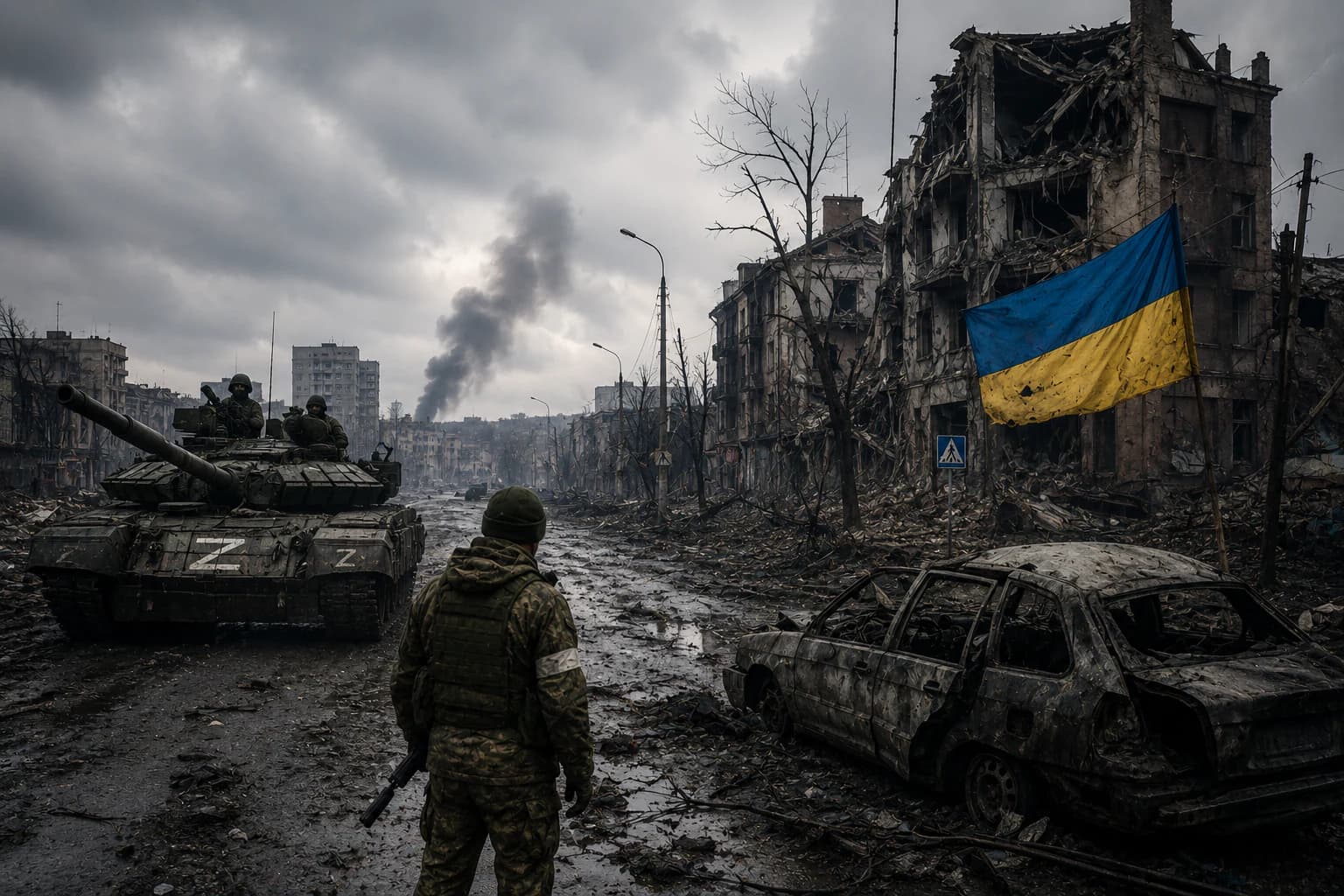
In 2014, Russia seized from Ukraine after protests in toppled Ukraine's president. The move shocked much of the world and broke basic rules about borders in Europe.

Trust collapsed. Western countries imposed sanctions on Russia. Militaries started preparing for rivalry again. Governments began talking less about partnership and more about power, security, and influence.

That shift still shapes life today. It helps explain wars, sanctions, military spending, cyberattacks, and why relations between big countries now feel tense and unstable.

A Fragmented Multipolar World
2022 CE
Step 10 of 102022 CEAccessible mode

A Fragmented Multipolar World

By 2022, the dream of a calmer world had faded. Power was no longer centered in one place, and the rules that once seemed strong looked shaky.

After the Cold War, many hoped trade, diplomacy, and global groups would keep major wars rare.

But countries like China and Russia pushed back against a US-led order, while many regional powers followed their own goals.

The world was connected, but less united.

Russia's full invasion of Ukraine in 2022 shocked Europe and showed that large interstate war had not disappeared. At the same time, rivalry over chips, AI, energy, and cyber power deepened.

People felt this through higher prices, supply problems, online disinformation, and growing fears about security.

This era still shapes daily life. It affects what countries build, who they trust, and whether global institutions can still hold the system together.

The end of the Cold War seemed to promise stability, but what happened after the Cold War was more unsettled. Once the Cold War ended, American power expanded, globalisation deepened, and new rivalries slowly replaced the old bipolar order.

Continue reading

Finished The World After the Cold War?

Choose the next story, explore the people behind this one, or trace the line of power that shaped this world.

Browse stories

References

Sources & Further Reading

Reliable sources, primary-source collections and reading paths connected to this page.

Sources used

  1. Office of the Historian, U.S. Department of State, Collapse of the Soviet Union,” Open source
  2. NATO, NATO Declassified,” Open source

Further reading

  1. Tony Judt, Postwar, Penguin.

Primary sources

  1. National Security Archive, Briefing books,” Open source

A weekly route through history

Find out first about the latest published stories, feature notes and occasional Premium offers in one weekly email.