Complete chronology
Full overview and deeper context for every journey step.
1946–1960s
Early Life
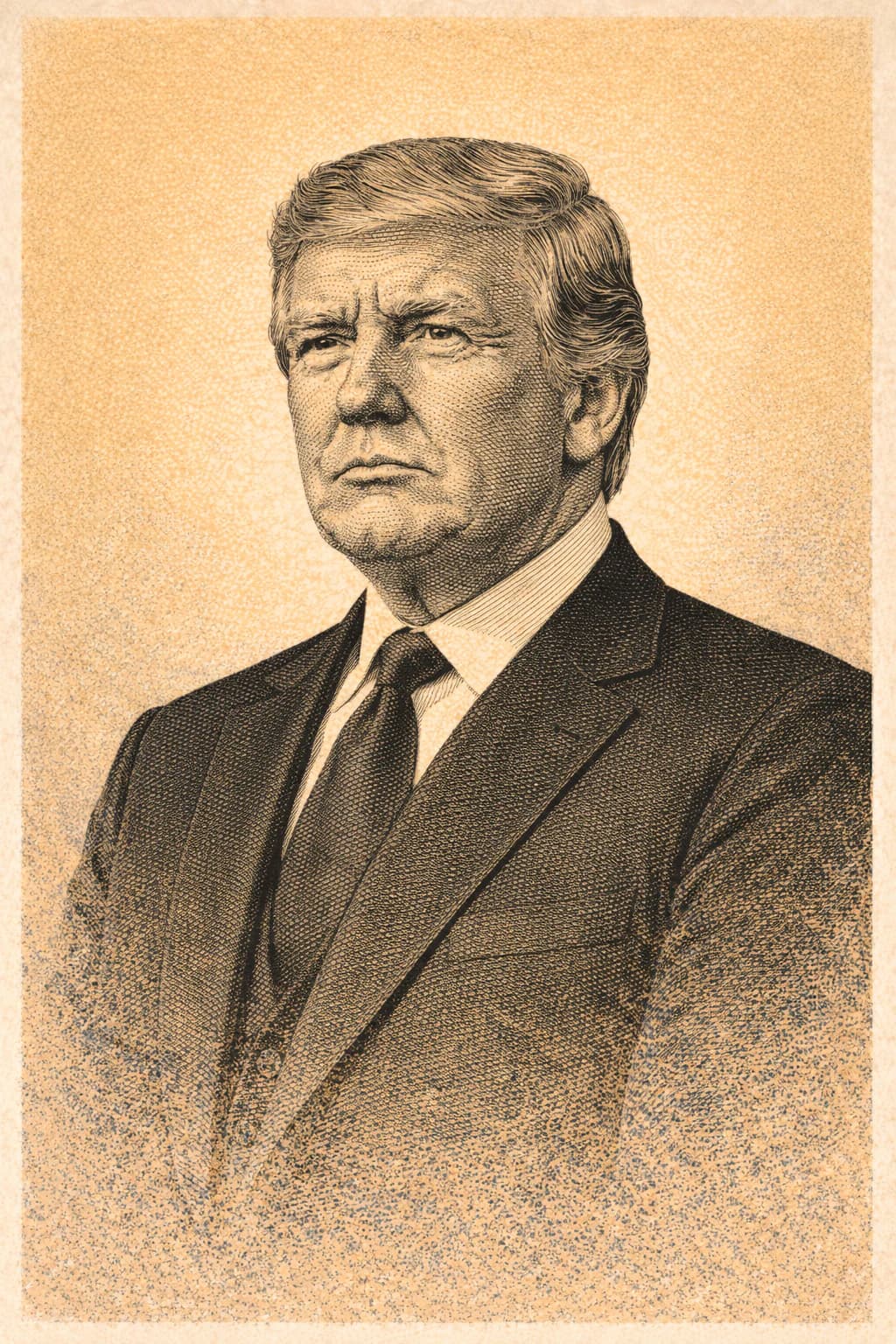
Donald John Trump was born in Queens, New York, in 1946, into a family already embedded in real estate. His father, Fred Trump, built and managed housing in Brooklyn and Queens, giving Donald both a model of business ambition and a platform from which to expand. Trump attended the New York Military Academy and later the Wharton School, experiences that fed a competitive, status-conscious public identity. He did not begin as an outsider to wealth. His later political story would present him as a fighter against elites, but his early advantages were substantial: capital, family training, name recognition in New York property circles, and an instinct for attention. Those elements became the raw material of his career.
Early exposure to business shaped his focus on scale, negotiation, and visibility.
1970s–2000s
Business Expansion
In the 1970s and 1980s, Trump moved the family business from outer-borough housing into Manhattan spectacle. Projects such as the Grand Hyatt redevelopment and Trump Tower were not only real estate ventures; they were stages for a persona built around luxury, confidence, and combat. The Trump name appeared on buildings, casinos, books, steaks, airlines, golf courses, and licensing deals, sometimes attached to assets he owned and sometimes to brands he sold. The record was mixed. There were successes, bankruptcies in casino ventures, lawsuits, aggressive debt, and constant publicity. Trump’s genius was not conventional corporate steadiness. It was the conversion of business into identity. By making himself the product, he built a kind of fame that could survive financial reversals.
He turned business success into a recognizable personal brand that extended beyond real estate.
2000s
Media Presence
Television transformed Trump from a New York tabloid figure into a national character. The Apprentice, beginning in 2004, presented him as a decisive billionaire judging competence from a boardroom throne. The image was simplified, controlled, and politically useful: Trump as boss, negotiator, winner. At the same time, he learned the rhythm of mass attention: conflict, catchphrase, dominance, repetition. Social media later gave him a direct channel that bypassed editors, party gatekeepers, and conventional campaign discipline. His promotion of the false birther conspiracy against Barack Obama previewed the politics to come: distrust of institutions, racialized insinuation, and the use of controversy to hold the spotlight. By 2015, Trump had something many politicians spend years chasing: instant recognition and an audience trained to watch him.
Media exposure transformed him from a businessman into a widely recognized public figure.
2015–2016
Presidential Campaign
Trump entered the 2016 Republican race by attacking immigration, trade deals, political correctness, and the competence of both parties. Many observers treated the campaign as spectacle; voters in key Republican primaries treated it as permission to reject the party’s old leadership. His message fused economic grievance, nationalism, border politics, anti-establishment anger, and personal dominance. He insulted rivals, drew enormous free media coverage, and made rallies feel like a movement rather than a policy seminar. The campaign’s appeal was strongest among voters who felt ignored by cultural and economic change, but it also drew support from traditional Republicans willing to accept disruption for judges, tax cuts, deregulation, and party victory. Trump did not create American polarization, but he learned how to command it.
Challenging established norms allowed him to redefine how campaigns could operate.
2016
Election Victory
In 2016 Trump lost the popular vote to Hillary Clinton but won the Electoral College through narrow victories in states such as Michigan, Pennsylvania, and Wisconsin. The result exposed the geography of American discontent and the power of the Electoral College to convert targeted state-level victories into national office. It also shocked institutions that had assumed his candidacy would collapse under controversy. Russia’s interference campaign, the FBI’s handling of Clinton’s emails, long-term partisan sorting, economic frustration, and Clinton’s own weaknesses all formed part of the story, but Trump’s achievement was real: he remade the Republican coalition around himself. His victory brought into the White House a president with no prior military or public office experience, an unusual relationship to truth, and a direct bond with supporters that often mattered more than party structures.
His victory revealed changing political alignments and the impact of unconventional strategies.
2017–2021
Governing Approach
Trump’s first presidency combined conventional Republican goals with disruptive populist style. His administration cut taxes in 2017, appointed three Supreme Court justices, reduced regulation, withdrew from the Paris climate agreement and the Iran nuclear deal, imposed tariffs, pursued a harder line on China, and made immigration enforcement central to its identity. The travel ban, family separations at the southern border, border wall politics, and repeated attacks on judges, journalists, civil servants, and opponents defined the atmosphere of government. His foreign policy mixed pressure, personal diplomacy, and suspicion of alliances, from NATO disputes to meetings with Kim Jong Un. He governed through television and social media as much as cabinet process. For supporters, this was direct accountability; for critics, it weakened norms that protect institutions from personal rule.
His governing style blurred the line between policy decisions and public messaging.
2017–2021
Political Controversies
Controversy was not background noise in Trump’s presidency; it was part of its operating system. The Mueller investigation examined Russian interference and contacts with the Trump campaign, while stopping short of charging a criminal conspiracy. Trump was impeached in 2019 over pressure on Ukraine to investigate Joe Biden, then acquitted by the Senate. In 2020, the COVID-19 pandemic tested his administration with a public health crisis that became intensely partisan. After losing the 2020 election, Trump falsely claimed widespread fraud and pressured officials to overturn the result. On 6 January 2021, his supporters attacked the U.S. Capitol as Congress certified Biden’s victory. Trump was impeached a second time for incitement of insurrection and again acquitted. The episode became central to debates over democracy, accountability, and presidential power.
His presidency highlighted how leadership can intensify existing divisions within society.
2021–present
Post-Presidency Role
After leaving office in 2021, Trump did not become a conventional former president. He remained the dominant figure in Republican politics, endorsed candidates, attacked internal critics, and continued to insist falsely that the 2020 election had been stolen. His post-presidency included criminal indictments and civil judgments, making his political comeback unprecedented in legal and constitutional context. Yet the prosecutions often strengthened his hold on Republican voters who saw them as political persecution. In 2024 he defeated primary rivals and won the general election, becoming the first president since Grover Cleveland to return to the White House after losing re-election. His second victory confirmed that Trumpism was not an interruption in Republican history. It had become one of the party’s organizing forces.
Influence can continue beyond formal office when a strong political base remains engaged.
Present
Ongoing Legacy
Trump’s legacy is still unfolding because he is serving again as president, but several conclusions are already visible. He changed the Republican Party’s language, priorities, and tests of loyalty. He made immigration, trade, elite distrust, media hostility, and national grievance central to conservative politics. He also reshaped the federal judiciary, including the Supreme Court majority that helped overturn Roe v. Wade after his first term. His critics argue that he weakened democratic norms, attacked electoral legitimacy, and turned public life toward conspiracy and personal loyalty. His supporters argue that he broke stale consensus, confronted China, secured conservative courts, and spoke for voters dismissed by institutions. Trump is important because he exposed and accelerated deep tensions in American democracy: between expertise and distrust, globalism and nationalism, law and power, spectacle and governance.
His legacy reflects a period of transformation whose full impact is still unfolding.