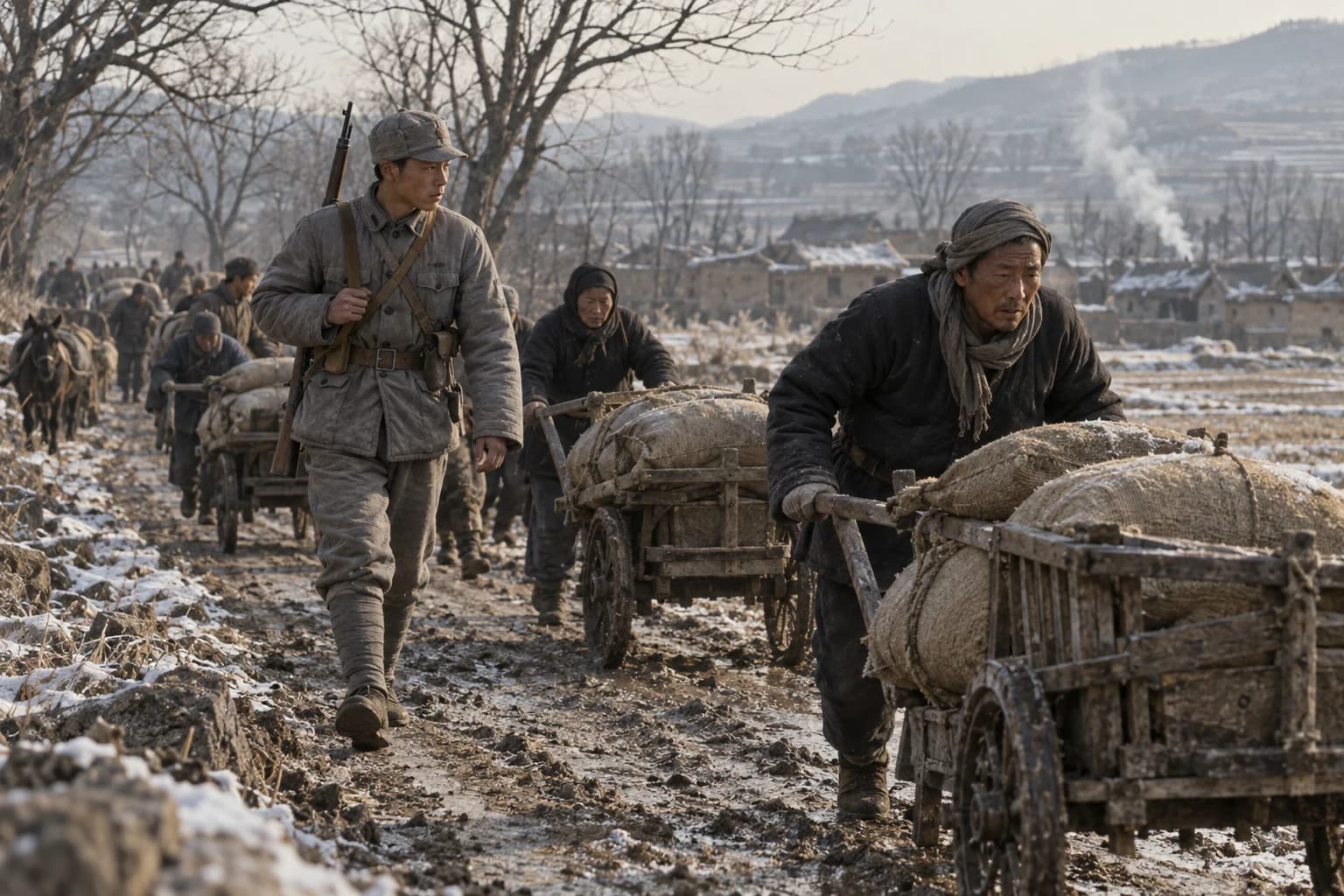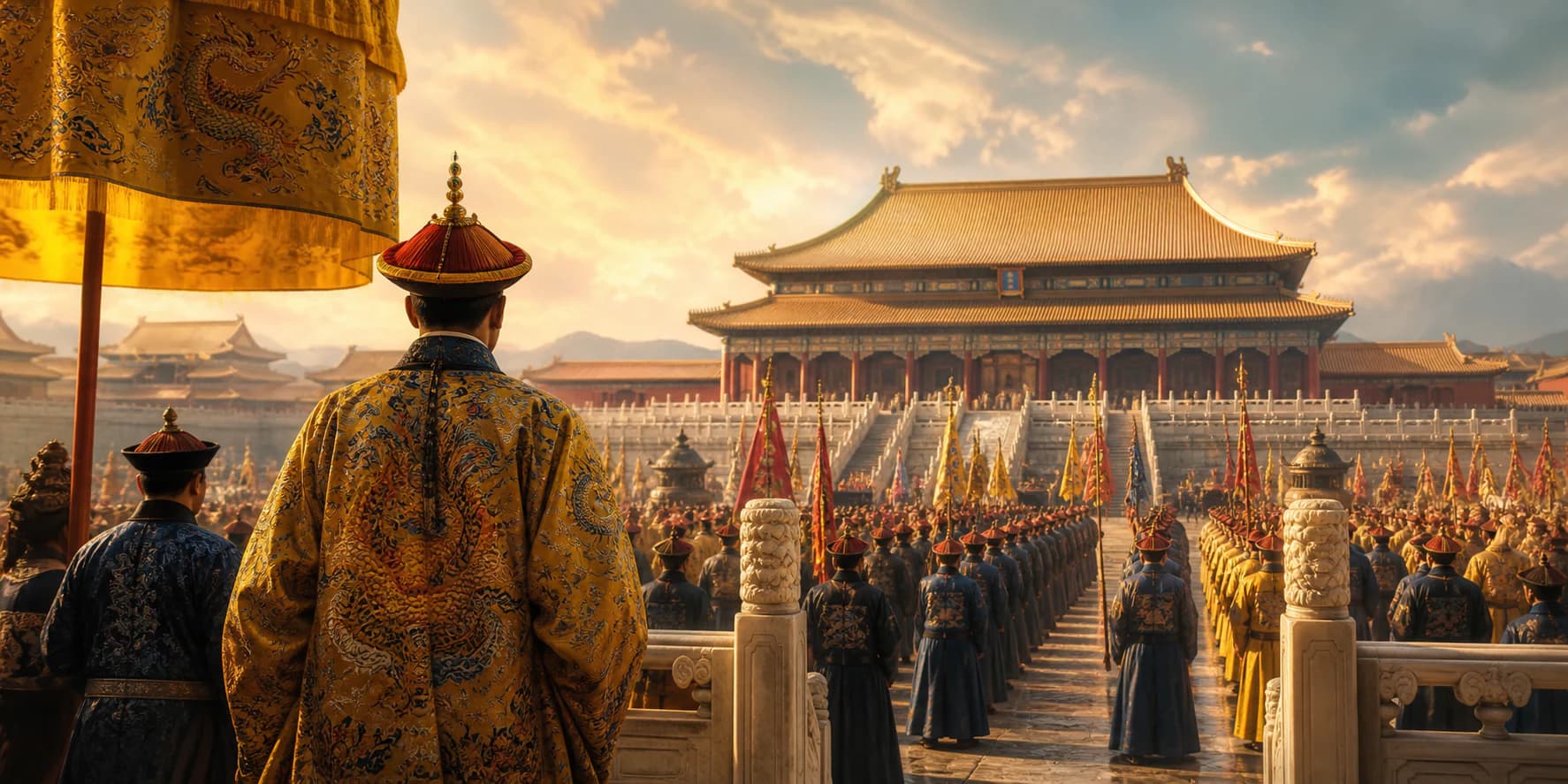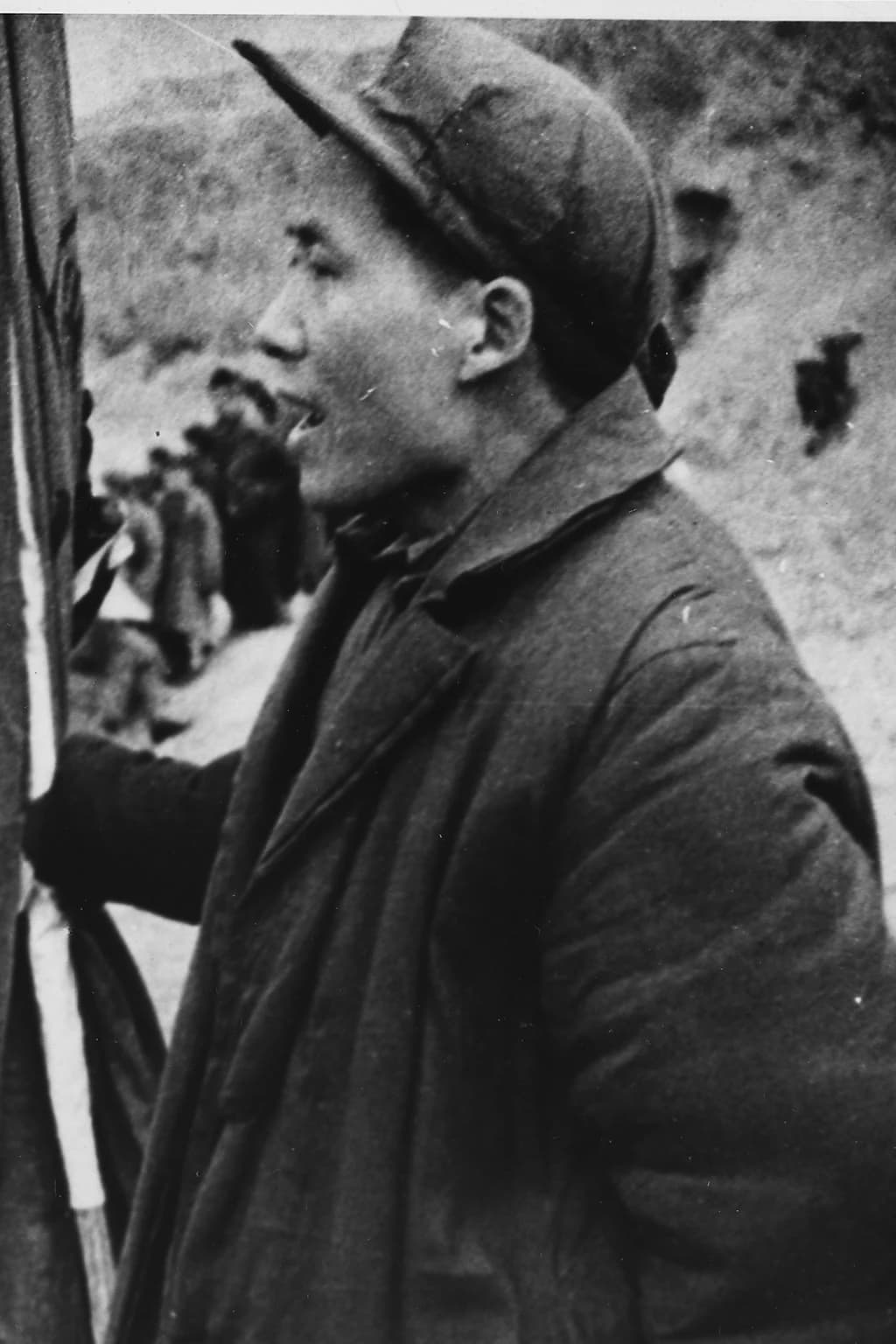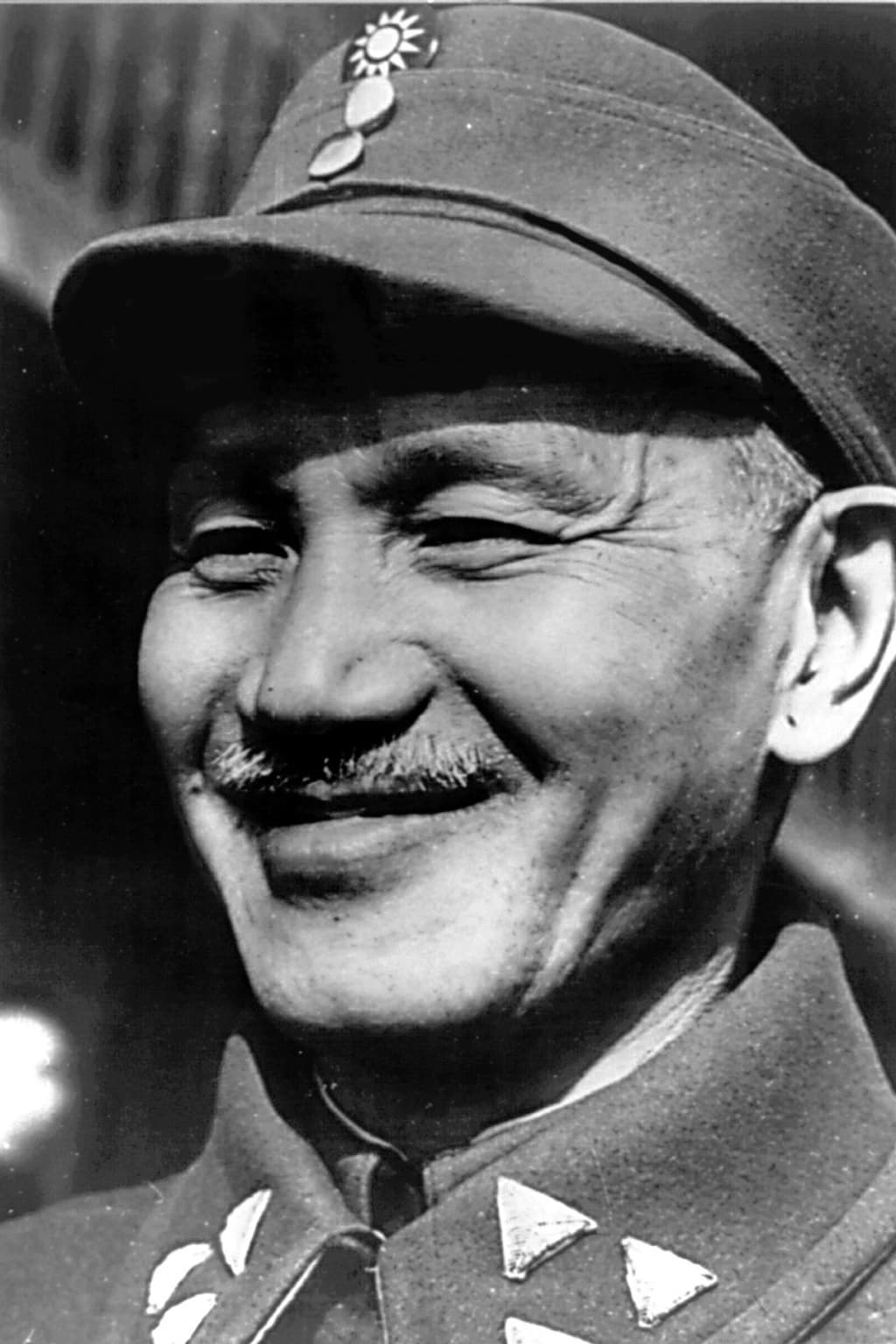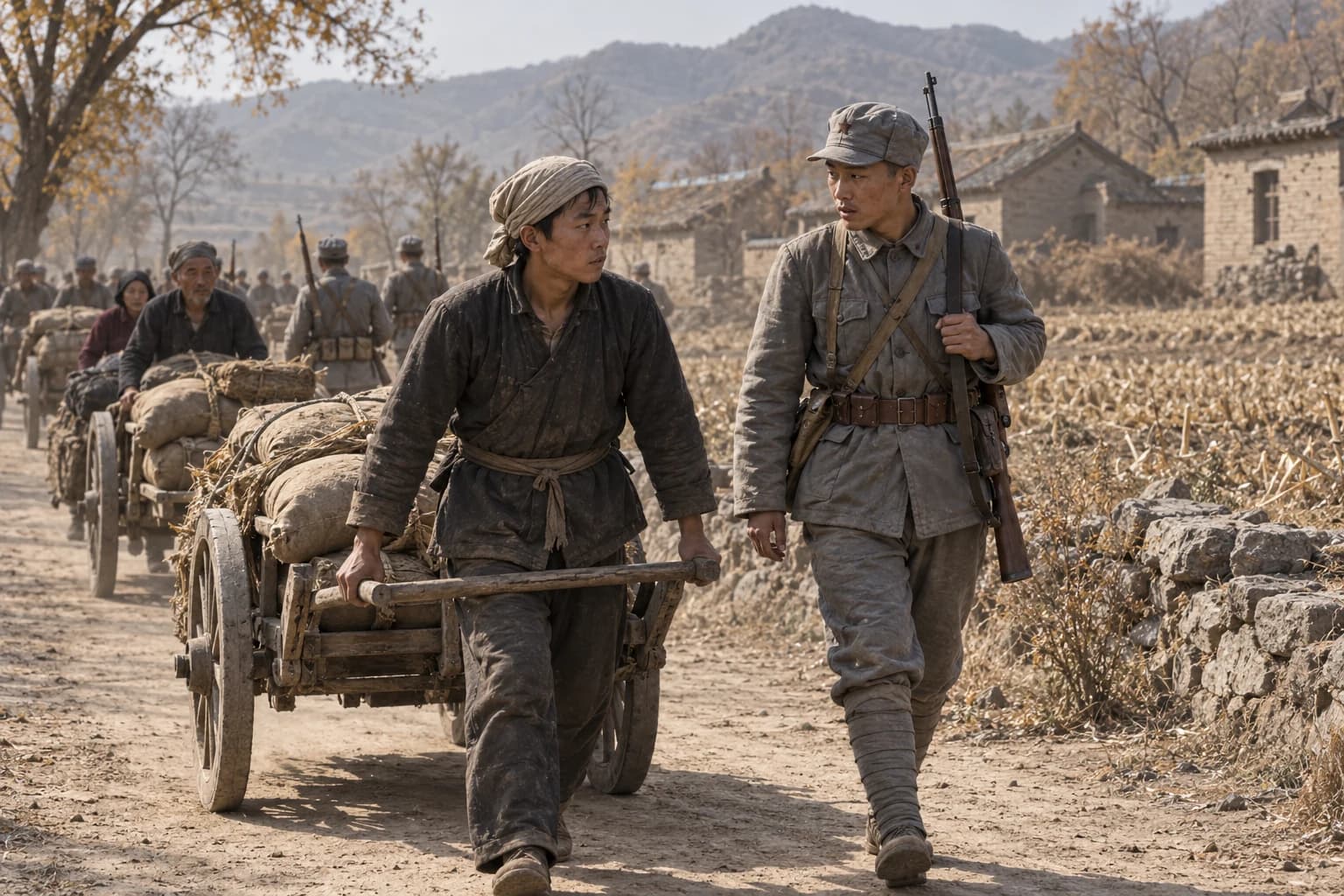
Illustrative reconstruction: anonymous Chinese rural civilians carrying grain supplies beside Communist soldiers in northern China around 1948.
Free Story

The Chinese Civil War

How did an army driven from the cities come to rule the mainland?

10 chapters · 20 min read

Next
Context

Introduction

Overview

The Chinese Civil War grew out of a broken alliance. Nationalists and Communists had worked together to reunite a country divided by regional military rulers. In 1927, that partnership collapsed into violence. The Communists survived by building rural bases, escaped destruction during the Long March, and expanded while China fought Japan. When Japan surrendered in 1945, hopes of a negotiated peace gave way to renewed war. Military organisation, land reform, civilian mobilisation and the Nationalist government’s economic crisis changed the balance. By 1949, Communist armies held most of the mainland, Mao Zedong had proclaimed the People’s Republic of China, and Chiang Kai-shek’s Republic of China government had retreated to Taiwan. The mainland war produced a victor, but no agreed peace across the strait.

What you'll learn: You’ll see how two revolutionary allies became enemies, why the Communists survived and won, and how the war reshaped lives on the mainland and Taiwan.

Key forces

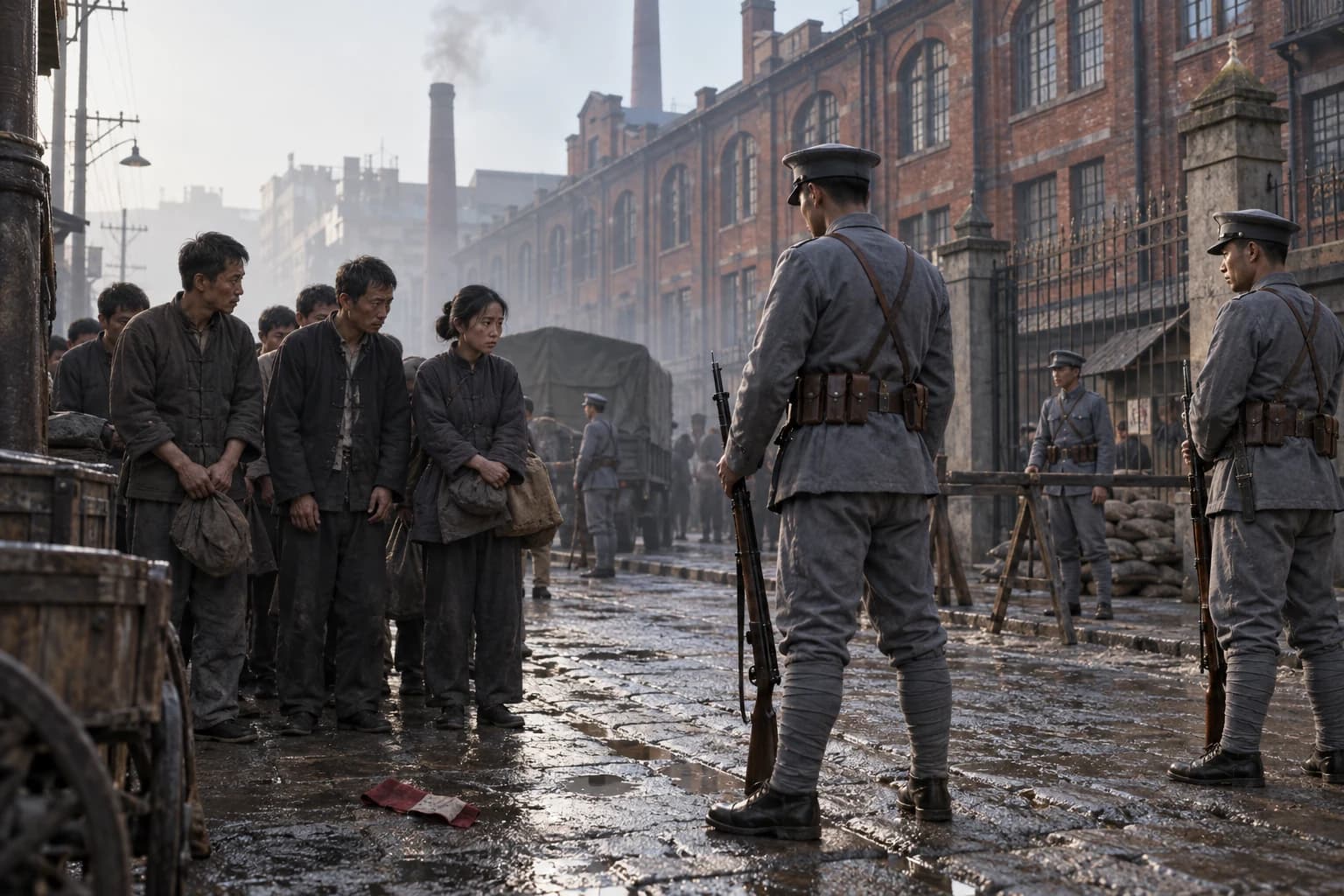
Illustrative reconstruction: Anonymous Nationalist soldiers controlling a Shanghai street while civilian workers wait outside a textile mill in April 1927.
1927 CE
Step 1 of 101927 CEAccessible mode

The Alliance Breaks

In 1927, two movements trying to rebuild China became enemies. Their broken alliance opened a civil war that would last, with interruptions, for more than twenty years.

China had become a republic in 1912, but regional military rulers still controlled much of the country. The Nationalist Party, also called the Kuomintang or KMT, wanted a strong, united state. The Chinese Communist Party, or CCP, wanted a socialist revolution.

The parties had worked together, with Soviet help, to defeat those regional rulers. Chiang Kai-shek led the Northern Expedition, a military campaign launched in 1926.

“An army could reunite territory while its allies fought over the future.”

In April 1927, forces aligned with Chiang violently suppressed Communists and labour organisers in . Further purges destroyed the alliance. Communist uprisings later that year failed to secure the major cities.

The survivors faced a new question: could a revolution defeated in the cities find strength in the countryside?

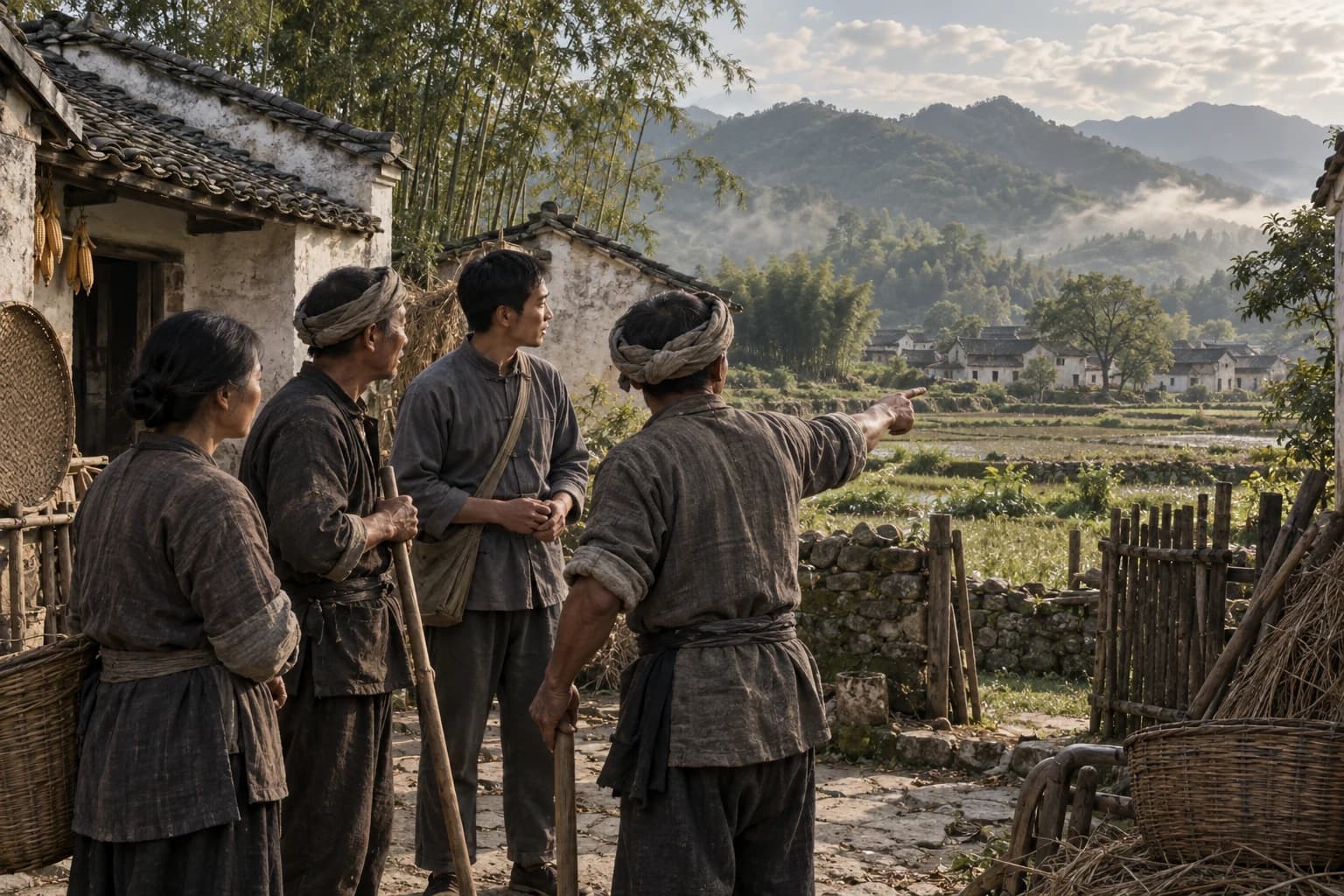
Illustrative reconstruction: Anonymous farmers and a Communist organiser discussing fields in a Jiangxi village courtyard around 1931.
1931 CE
Step 2 of 101931 CEAccessible mode

Revolution in the Countryside

Driven from the cities, Communist organisers looked to villages. Land, rent and survival became central to their revolution.

Most Chinese people lived by farming. Many rented land, owed debts or struggled to feed their families. Promises to redistribute land could attract support where village life felt unfair.

Mao Zedong and other Communist leaders built rural bases protected by armed forces. In 1931, they established the Chinese Soviet Republic in Jiangxi, a rival government inside China.

“Control of a village meant more than control of its fields.”

The Communists collected supplies, recruited soldiers and changed local authority. Some villagers welcomed them. Others faced pressure, confiscation or violence. Rural support was never a simple story of universal enthusiasm.

Chiang’s government launched repeated campaigns to destroy these bases. The Communists had found a place to survive, but keeping it would prove much harder.

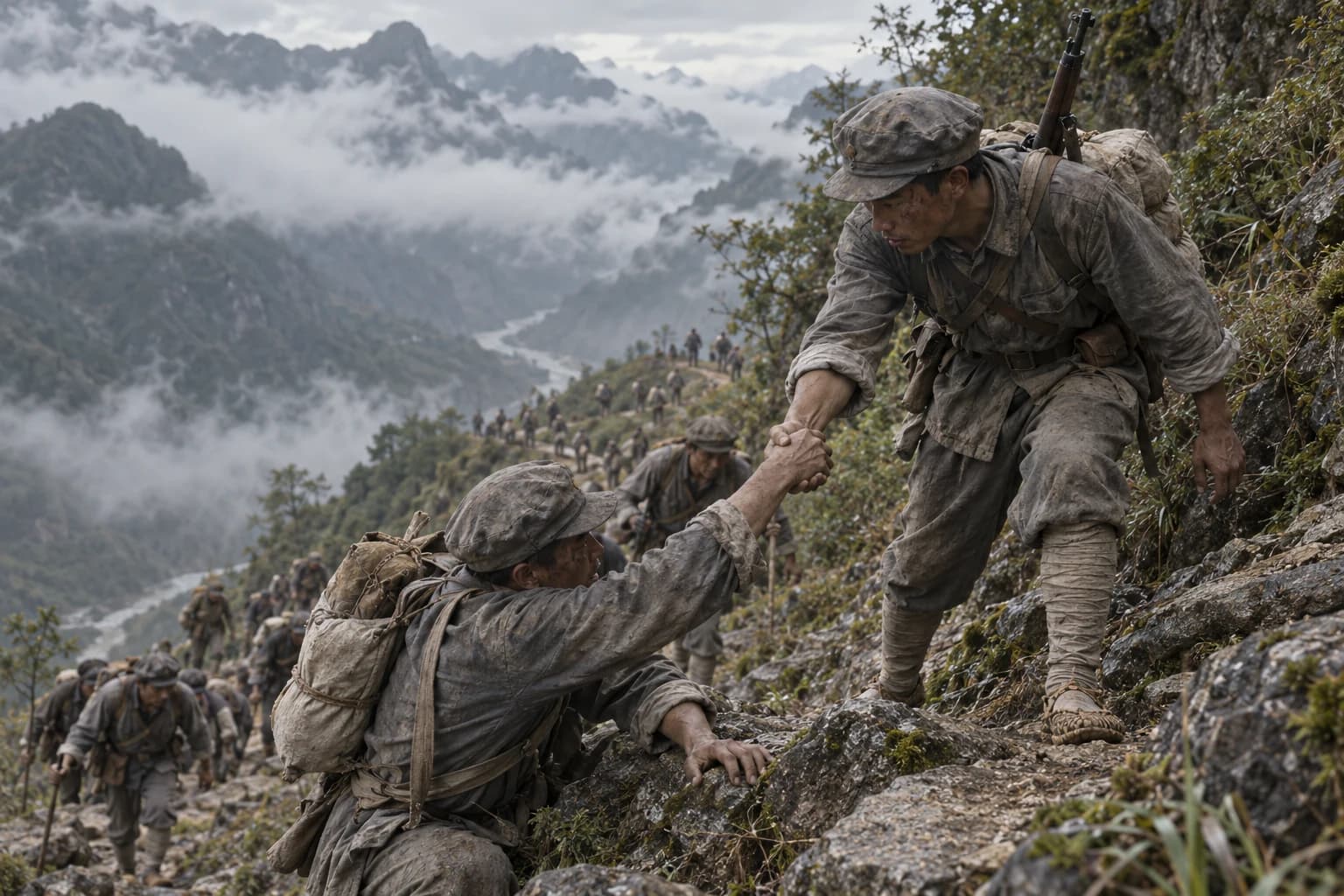
Illustrative reconstruction: Exhausted anonymous Red Army soldiers helping one another along a mountain path during the Long March in 1935.
1934 CE
Step 3 of 101934 CEAccessible mode

The Long March

In 1934, Communist forces abandoned their main southern base. The Long March began as an escape from defeat.

Nationalist armies had tightened their blockade around Jiangxi. Remaining there risked destruction. The main Communist force broke out in October and moved across western China.

The journey brought battles, hunger, exhaustion and difficult mountain crossings. Many people died or left the columns. Other Communist armies made separate retreats.

“Survival would later be remembered as a victory.”

Mao strengthened his position during the march, especially after the Zunyi meeting in early 1935. The main force reached northern Shaanxi later that year; other forces arrived in 1936.

The survivors were much weaker in numbers but had escaped destruction. The party later turned their ordeal into a heroic founding story. Remembering that story also means recognising the losses behind it.

Illustrative reconstruction: Anonymous Nationalist and Communist soldiers keeping their distance while a civilian family passes on a North China road in 1937.
1937 CE
Step 4 of 101937 CEAccessible mode

A Truce Against Japan

Japan’s expansion changed the stakes. Rivals inside China faced an invader that threatened them both.

Japan had seized Manchuria in 1931. Chiang continued to prioritise defeating the Communists, arguing that China needed internal order before it could resist effectively.

In December 1936, generals Zhang Xueliang and Yang Hucheng detained Chiang at . Negotiations helped secure his release and opened a path towards renewed cooperation.

“A shared enemy could interrupt a civil war without resolving it.”

Full-scale war with Japan began in 1937. Nationalists and Communists formed a Second United Front, but kept separate organisations and deep suspicions.

The Nationalist armies fought major battles, while Communist forces expanded resistance networks behind Japanese lines. Fighting between the two Chinese sides never disappeared completely. Their uneasy cooperation bought time, but left the argument over China’s future unsettled.

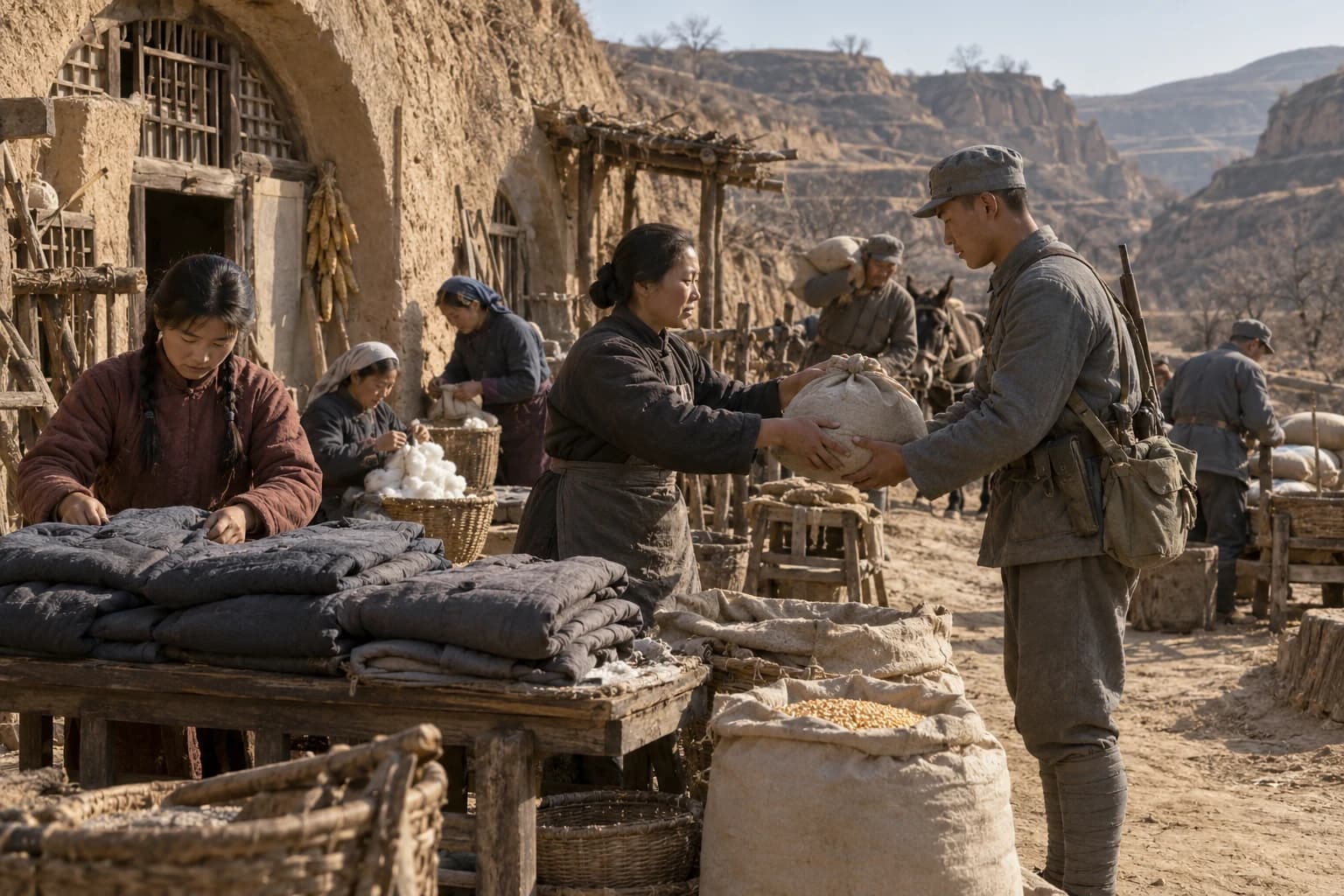
Illustrative reconstruction: Anonymous villagers preparing grain and clothing supplies beside Shaanxi cave dwellings during the war against Japan around 1943.
1943 CE
Step 5 of 101943 CEAccessible mode

War Changes the Balance

The war against Japan exhausted the Nationalist government and gave the Communists room to grow. Both changes helped shape the civil war that followed.

Nationalist armies suffered heavy losses. The government moved inland as important cities and productive regions fell under occupation. Keeping armies supplied placed severe demands on ordinary people.

Communist bases expanded in the countryside. Organisers linked resistance to village government, recruitment and promises of social change.

“A movement could grow by governing the places another state struggled to reach.”

The Communist base at became a political centre. Mao strengthened his authority, while campaigns to enforce party discipline involved pressure and persecution as well as education.

Neither side offered freedom from hardship. Villagers faced taxation, recruitment and violence from several directions. By 1945, China was deeply damaged, and the rivals waiting to inherit it were no longer the same forces that had entered the war.

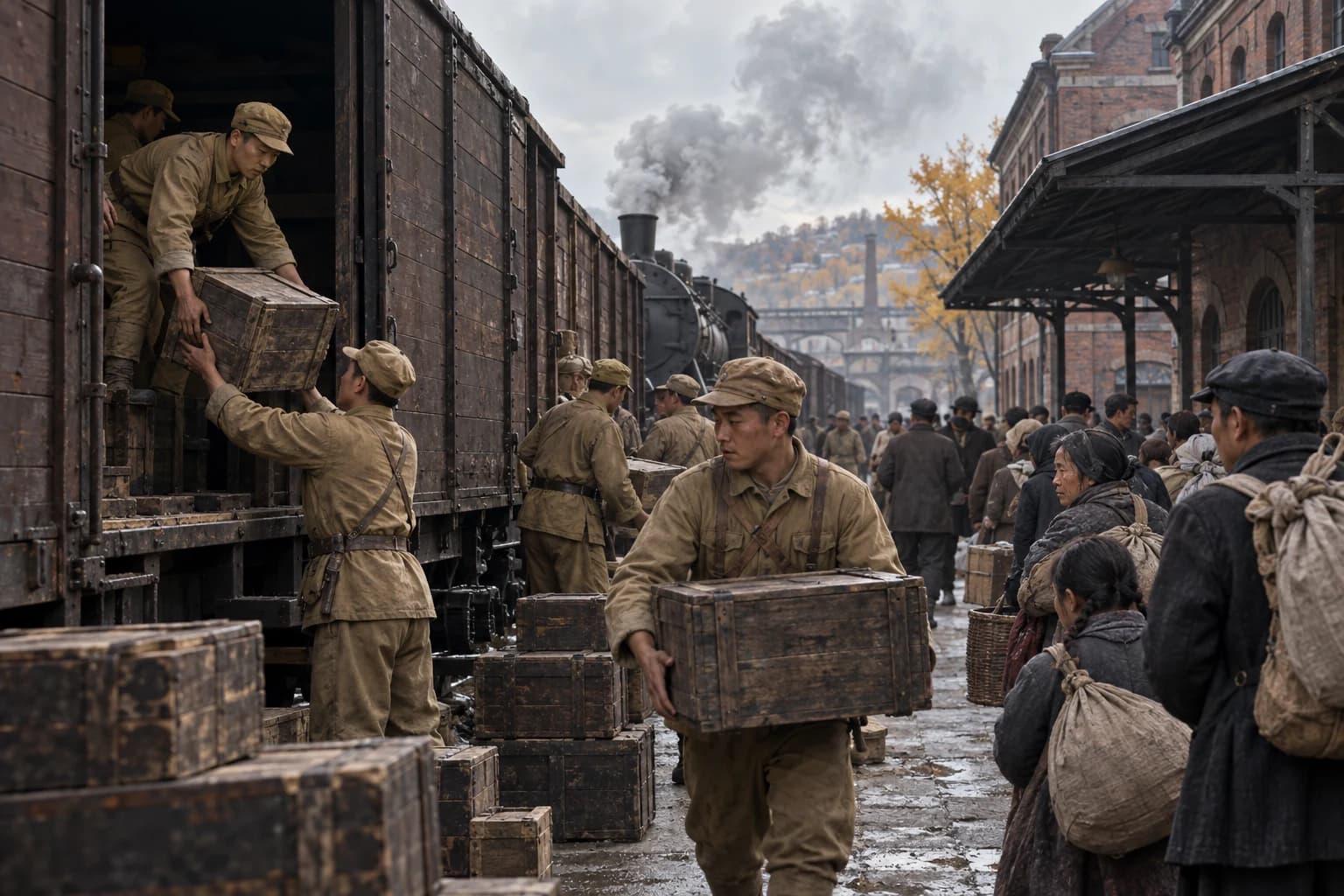
Illustrative reconstruction: Anonymous Chinese soldiers unloading railway supplies while displaced civilians wait at a northeastern station after Japan’s surrender in 1945.
1945 CE
Step 6 of 101945 CEAccessible mode

Peace Talks and a Race for Power

Japan’s surrender in 1945 brought relief. It also opened a race to control the territory and weapons left behind.

Chiang’s government held international recognition and American support. United States transport helped Nationalist forces reach important areas. The Communists drew strength from northern rural bases.

Manchuria was especially valuable because of its railways and industry. Soviet occupation after Japan’s defeat complicated the struggle over who would take control.

“Peace required an agreement about armies, territory and power.”

Mao and Chiang met in . Their October agreement promised political cooperation, but neither side trusted the other enough to give up its military position.

American general George Marshall then tried to mediate. A ceasefire in early 1946 briefly raised hopes, but local fighting and unresolved disputes undermined it. The chance to rebuild together was closing.

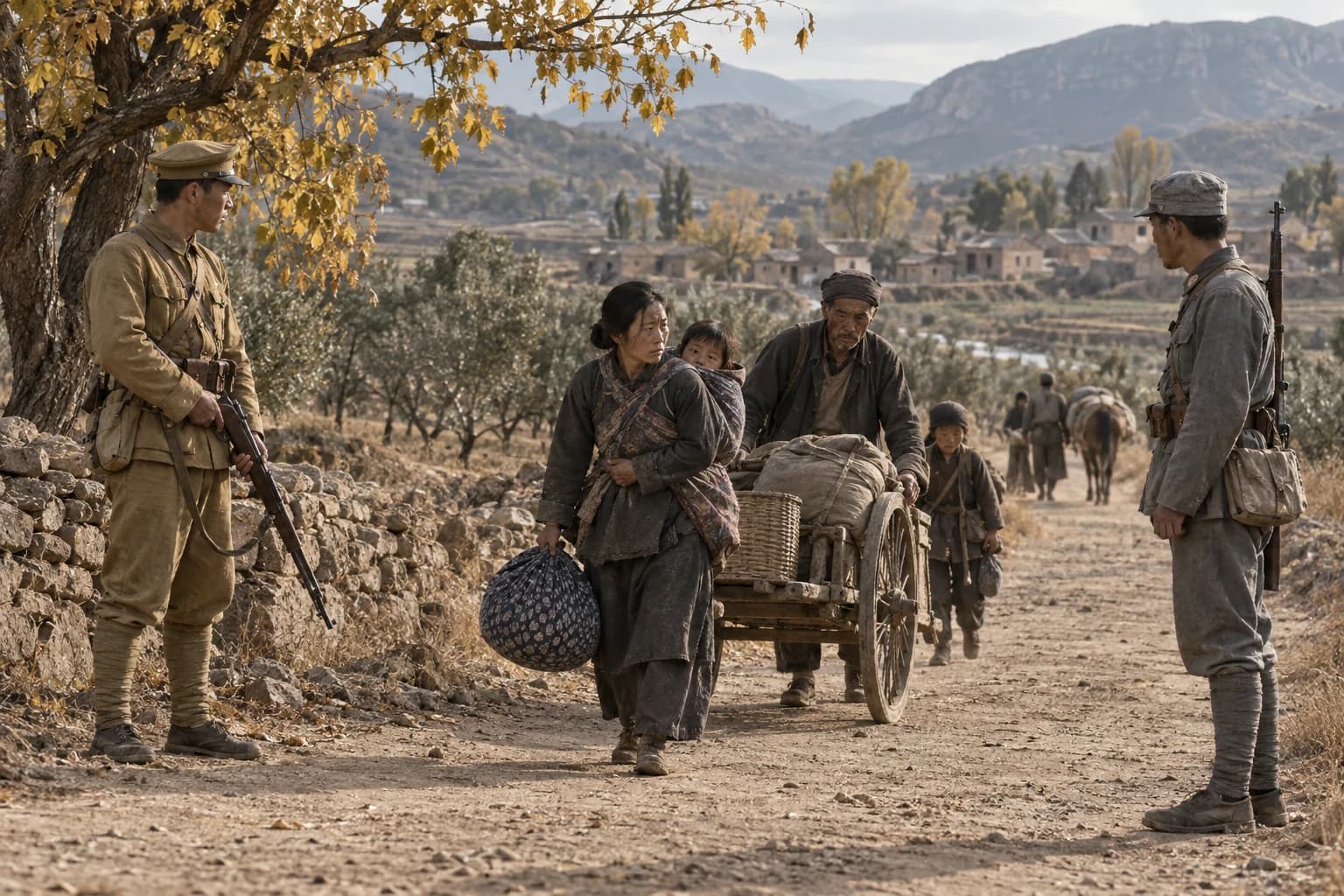
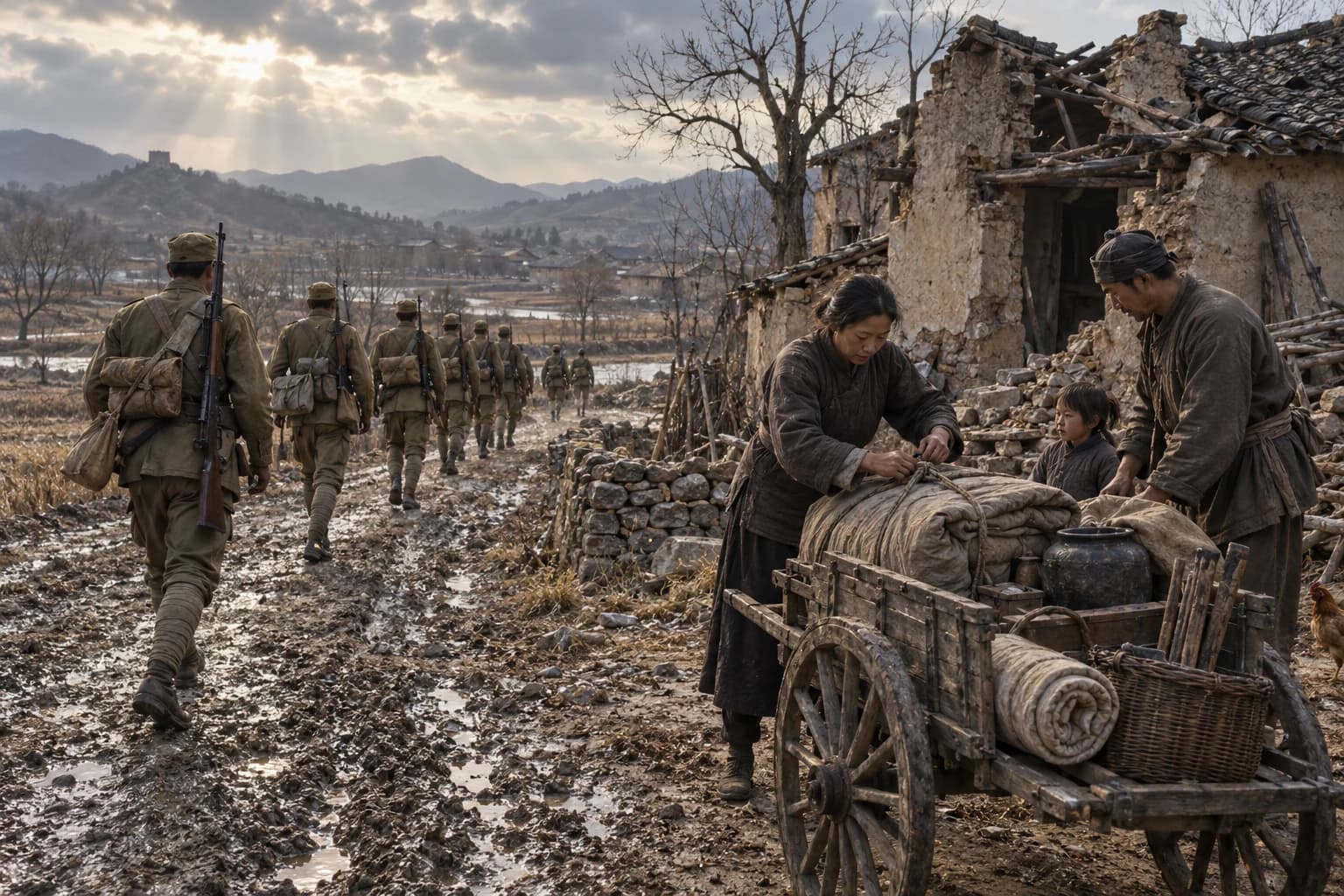
Illustrative reconstruction: Anonymous Nationalist soldiers passing a family packing a handcart during the renewed civil war in northern China in 1946.
1946 CE
Step 7 of 101946 CEAccessible mode

Civil War Returns

By 1946, attempts at compromise had failed. China entered the decisive phase of its civil war.

The Nationalists began with more troops, major cities and stronger equipment. Chiang expected military pressure to break Communist resistance. His armies advanced into contested areas.

The Communists often withdrew rather than defend every town. They sought opportunities to isolate enemy units and build strength in the surrounding countryside.

“An advance could capture territory while making an army harder to supply.”

In 1947, Nationalist forces took , the Communist political centre. Yet Mao’s movement survived, and its armies increasingly moved onto the offensive.

For civilians, renewed war meant more displacement, recruitment and demands for food. The outcome depended on military decisions, but also on whether governments could keep people willing, or able, to support them.

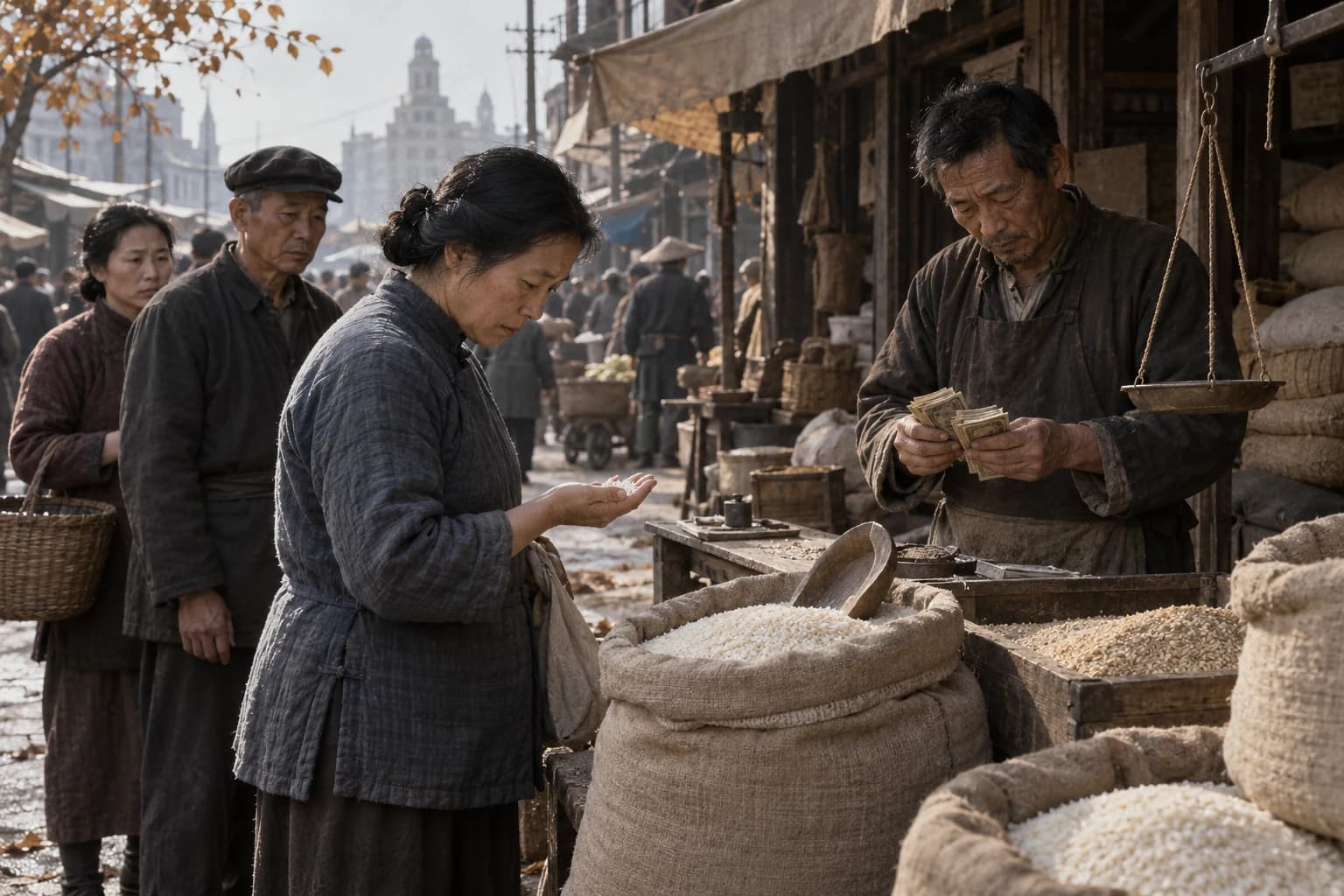
Illustrative reconstruction: Anonymous Shanghai market customers and a rice seller confronting the currency crisis in autumn 1948.
1947 CE
Step 8 of 101947 CEAccessible mode

The Struggle for People and Land

Armies needed more than weapons. They needed food, recruits and a reason for people to keep supporting them.

The Communists expanded land redistribution during the later civil war. Giving poorer farmers land could connect their future to a Communist victory. Village organisations helped supply and recruit for the army.

But reform also brought coercion, public accusations and killings. Support for the revolution did not erase the suffering it caused.

“The battle for power reached into fields, households and market stalls.”

The Nationalist government faced mounting inflation. Printing money helped pay for the war, but prices raced ahead of wages and savings. A currency reform in 1948 failed to restore confidence.

Military failures, economic hardship and repression weakened Chiang’s government together. Communist organisation gained strength as the state’s promises became harder to believe.

Illustrative reconstruction: Anonymous civilians transporting grain by handcart in central-eastern China during the Huaihai campaign in winter 1948.
1948 CE
Step 9 of 101948 CEAccessible mode

The Mainland Campaigns

In late 1948 and early 1949, a series of major campaigns broke Nationalist power across northern and central China.

The Liaoshen campaign gave the Communists control of Manchuria. The Huaihai campaign destroyed major Nationalist forces around . The Pingjin campaign secured the -Tianjin region.

These were large conventional operations, supported by rural transport and supplies. Communist armies were no longer simply guerrilla forces avoiding stronger opponents.

“The war’s balance changed when whole armies could no longer recover.”

Civilian suffering remained severe. Sieges cut off food, and people caught between armies faced hunger and displacement. Victory on a map could conceal disaster inside a city.

In April 1949, Communist forces crossed the Yangtze and captured . followed in May. The Nationalist government was losing the mainland, although fighting continued elsewhere.

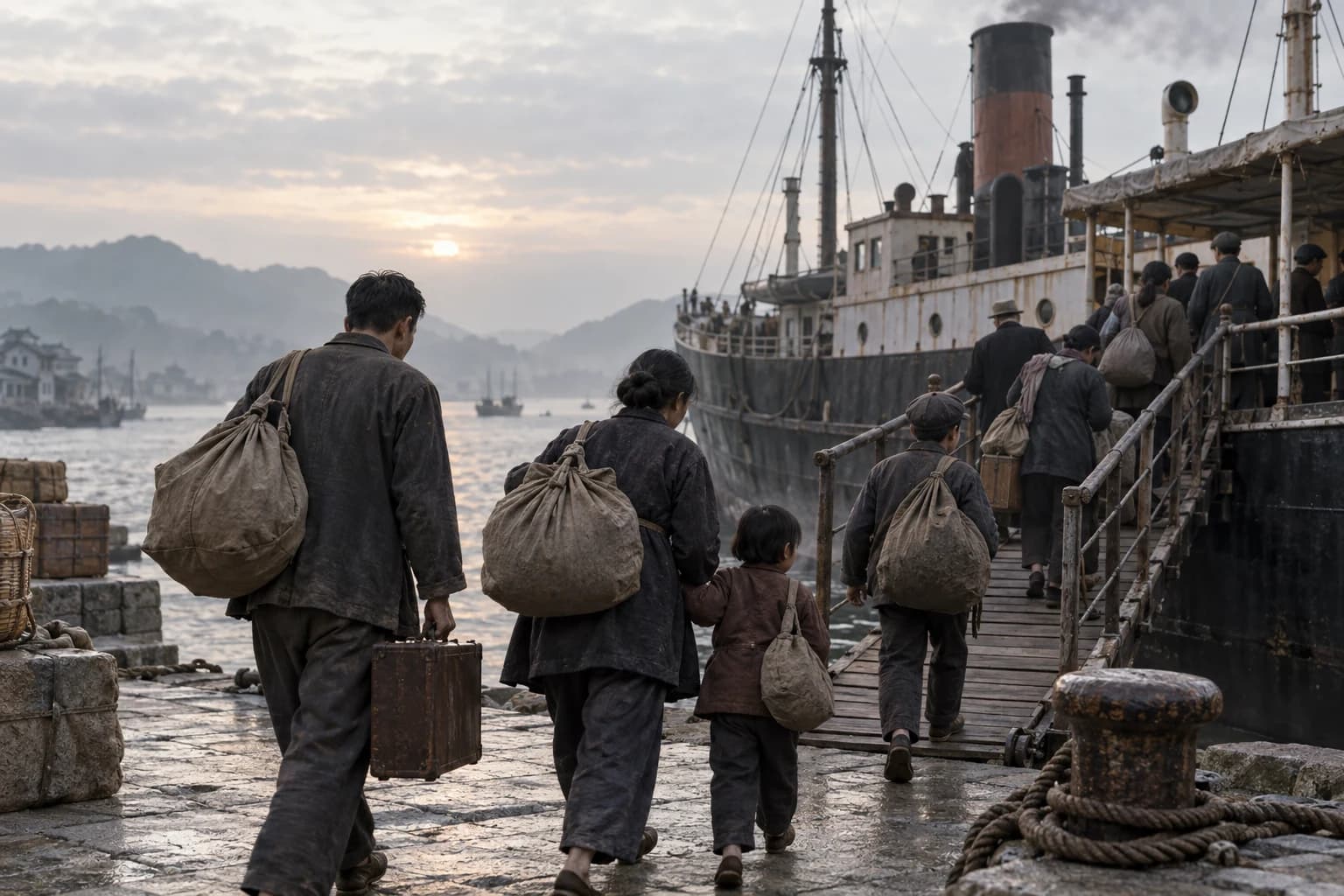
Illustrative reconstruction: an anonymous Chinese civilian family boarding a coastal passenger ship during displacement and Nationalist withdrawal to Taiwan in 1949.
1949 CE
Step 10 of 101949 CEAccessible mode

Victory and an Unfinished Divide

In 1949, Mao proclaimed a new state on the mainland. Chiang’s government withdrew to Taiwan, and the conflict acquired an enduring divide.

The People’s Republic of China was founded on 1 October. Communist victories continued after the announcement. Nationalist leaders, soldiers and civilians moved to Taiwan, where the Republic of China government survived.

Taiwan already had its own communities and a painful recent history. Nationalist repression after the 1947 uprising and martial law imposed in 1949 shaped the lives of its people.

“The mainland had a victor. The wider conflict had no agreed peace.”

Both governments claimed to represent China. Fighting continued after 1949, and the Korean War brought American naval intervention in the Taiwan Strait in 1950.

The civil war explains the origins of the divide. Later Communist rule and Taiwan’s democratic development belong to the next chapters of the story.

Continue reading

Finished The Chinese Civil War?

Choose the next story, follow a connected moment, or explore the people behind this story.

Browse stories

References

Sources & Further Reading

Reliable sources, primary-source collections and reading paths connected to this page.

Sources used

  1. The National Archives, “The Chinese Civil War,”

    British documents and teaching context for the postwar conflict; contemporary reports reflect their observers’ perspectives.

    Open source
  2. Columbia University, ExEAS, “Asian Revolutions: Mao Zedong,”

    Cross-check for the revolutionary alliance, 1927 repression, rural bases, the 1936 Xi’an Incident and wartime leadership. Long March geography is treated more carefully in the narrative.

    Open source
  3. Columbia University, Asia for Educators, “The Long March (1934–1936),”

    Includes Edgar Snow’s account and Mao’s poem; used critically as evidence of revolutionary memory and representation.

    Open source
  4. Army University Press, Military Review, “An Army Rooted in Large-Scale Combat Operations, Part 2: The People’s Liberation Army’s Combat Experience in the Chinese Civil War, 1946–1949,”

    Campaign analysis and civilian starvation at Changchun. Available indexed excerpts were inspected; the direct page returned 403 during this review.

    Open source
  5. Indiana University Press, “China, the Struggle for Power 1917–1972, chapter IV,”

    Open scholarly chapter on the early conflict and Long March.

    Open source
  6. U.S. Department of State, Office of the Historian, “The Chinese Revolution of 1949,”

    Overview of postwar diplomacy and victory. Its Xi’an paragraph incorrectly gives 1937 for Chiang’s detention; the story uses December 1936, checked independently.

    Open source
  7. PBS American Experience, “Nixon’s China Game: Timeline,”

    Dates for the postwar talks, ceasefires, 1949 proclamation and retreat, and 1950 Seventh Fleet intervention.

    Open source
  8. Memorial Foundation of 228, “The 228 Incident,”

    Taiwanese historical context for the 1947 uprising and Nationalist repression.

    Open source
  9. Taiwan National Human Rights Museum, “Human Rights Relief at Home and Abroad: Exhibition Handbook,”

    Historical context for the White Terror and martial-law period.

    Open source

Further reading

  1. Diana Lary, China’s Civil War: A Social History, 1945–1949, Cambridge University Press.Open source
  2. Harold M. Tanner, Where Chiang Kai-shek Lost China: The Liao-Shen Campaign, 1948, Indiana University Press.Open source
  3. Encyclopaedia Britannica, “Search results for The Chinese Civil War,” Open source
  4. WorldCat, “Library holdings for The Chinese Civil War,” Open source

Primary sources

  1. Mao Zedong, “Report on the Investigation of the Peasant Movement in Hunan, March 1927,”

    Evidence of Mao’s advocacy of peasant mobilisation and his defence of revolutionary violence; read as a partisan political argument.

    Open source
  2. U.S. Department of State, Foreign Relations of the United States, “Nitze memorandum on Chinese currency reform, 1948,”

    Contemporary evidence for the Gold Yuan reform and concern over continuing monetary instability.

    Open source
  3. U.S. Department of State, Foreign Relations of the United States, “The Ambassador in China to the Secretary of State, 13 October 1944,”

    Contemporary account of Communist wartime expansion and the January 1941 New Fourth Army Incident; reflects the observer’s perspective.

    Open source
  4. U.S. Department of State, Foreign Relations of the United States, “Memorandum Prepared in the Department of State, 1948,”

    Contemporary analysis connecting military spending, deficits and inflation; a U.S. policy document, not a neutral account of every party.

    Open source
  5. Library of Congress, “Search results for The Chinese Civil War,” Open source

Reviewed claim sources

Loading reviewed claim sources...

A monthly route through history

Find out first about the latest published stories, feature notes and occasional Premium offers in one monthly email.