People

Thomas Paine

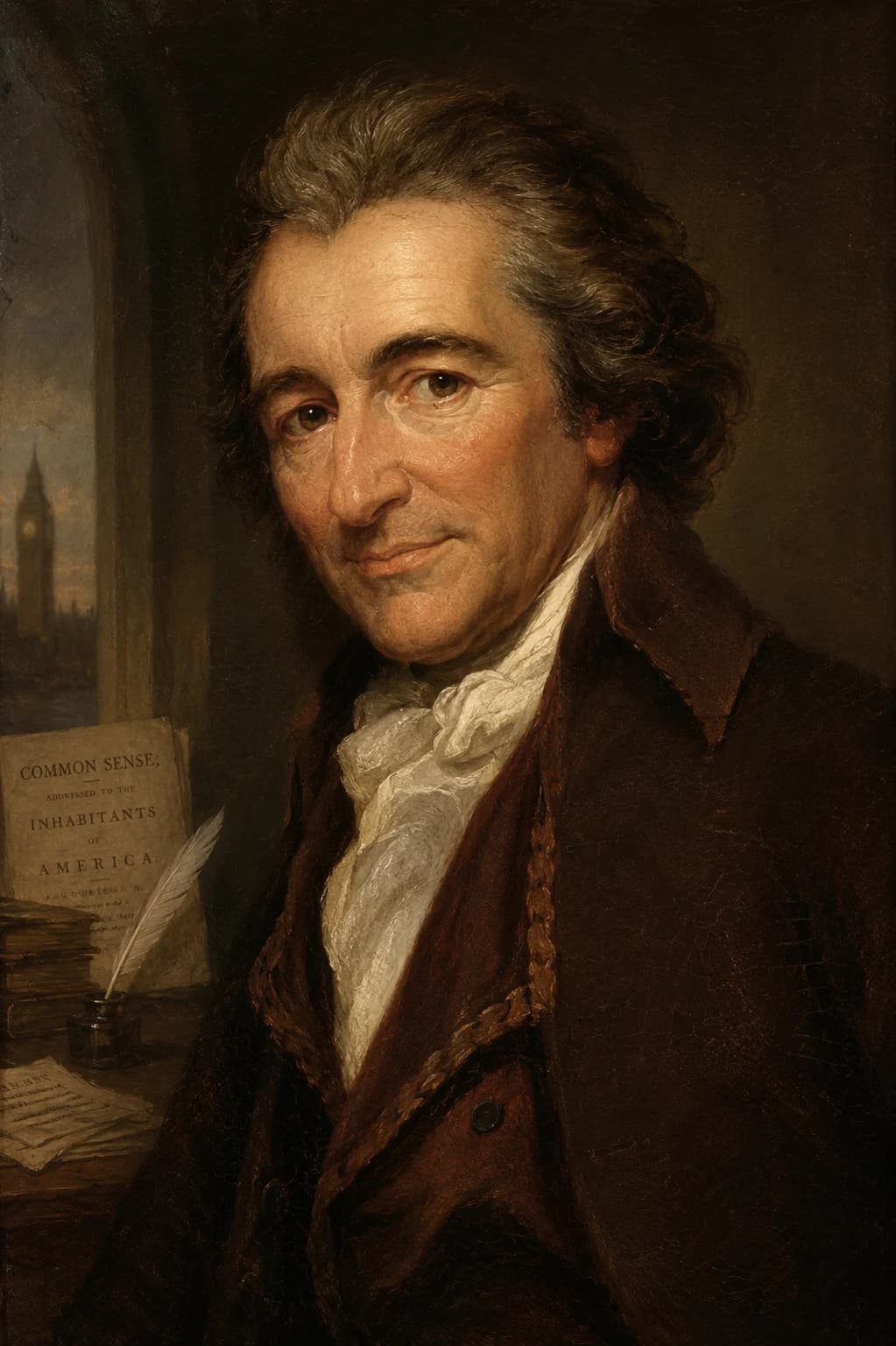
Thomas Paine was an English-born political writer and revolutionary pamphleteer whose Common Sense helped persuade American colonists to support independence in 1776.

Born
1737 CE
Died
1809 CE
Role
Political writer and revolutionary pamphleteer

Revolutionary writer and pamphleteer (1737-1809)

Portrait of Thomas Paine beside papers and a copy of Common Sense
Quick facts

Profile details

Additional identity and tagging details that are not already covered in the introduction.

Also known as
Paine
Facts

Thomas Paine timeline facts

Selected specifics from this profile's life story.

1737-1774
English beginnings

Thomas Paine was born in Thetford, England, and worked in several trades before meeting Benjamin Franklin and emigrating to America.

1776
Common Sense

In Common Sense, Paine argued that the colonies should stop seeking reconciliation with Britain and declare independence.

1780s-1790s
Atlantic radical

After the American Revolution, Paine supported broader democratic reform and became involved in the French Revolution.

1790s-1809
Contested legacy

Paine's later attacks on organized religion made him controversial, but his revolutionary writing remained deeply influential.

Life Journey

Plain words, radical politics, and revolutionary print

Follow the story in a more continuous narrative, with a reading mode that matches how much depth you want.

1737-1774

English beginnings

Thomas Paine was born in Thetford, England, and worked in several trades before meeting Benjamin Franklin and emigrating to America.

1776

Common Sense

In Common Sense, Paine argued that the colonies should stop seeking reconciliation with Britain and declare independence.

1776-1783

The American Crisis

During the war, Paine wrote The American Crisis essays, encouraging Americans to keep fighting through danger and defeat.

1780s-1790s

Atlantic radical

After the American Revolution, Paine supported broader democratic reform and became involved in the French Revolution.

1790s-1809

Contested legacy

Paine's later attacks on organized religion made him controversial, but his revolutionary writing remained deeply influential.

Continue in context

Connected stories

Move from the profile into the wider events and settings this figure belongs to.

Tertiary paths

Content note

This profile is written for educational use and connects to related Stories of History pages. Illustrations are original artistic interpretations.

References

Sources & Further Reading

Reliable reference works, archives and reading paths connected to this profile.

Further reading

  1. Encyclopaedia Britannica, Search results for Thomas Paine,” accessed June 2026.Open source
  2. WorldCat, Books and library holdings for Thomas Paine,” accessed June 2026.Open source

Primary sources

  1. Library of Congress, Search results for Thomas Paine,” accessed June 2026.Open source

A weekly route through history

Find out first about the latest published stories, feature notes and occasional Premium offers in one weekly email.