People

Tarquin the Proud

Tarquin the Proud, or Lucius Tarquinius Superbus, was remembered as the last King of Rome. His expulsion in 509 BC became the legendary beginning of the Roman Republic.

Born
550 BCE
Died
495 BCE
Role
Last King of Rome

Last King of Rome (traditionally r. 534–509 BC)

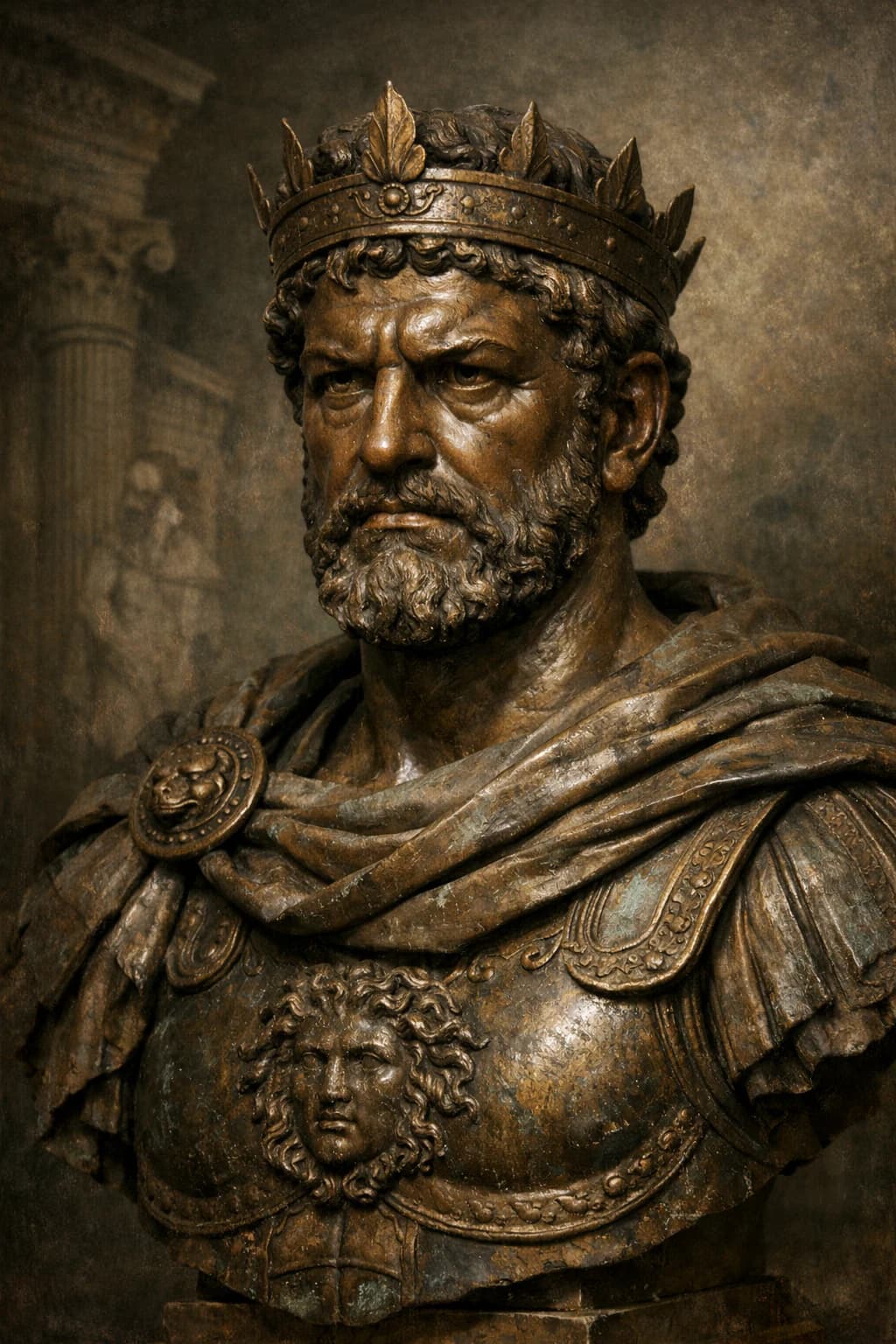
AI-generated portrait of Tarquin the Proud in ancient Roman royal attire
AI-assisted historical reconstruction

An illustrative reconstruction based on historical context. It is not a photograph or documentary likeness. Image policy

Quick answer

Tarquin the Proud, or Lucius Tarquinius Superbus, was remembered as the last King of Rome. His expulsion in 509 BC became the legendary beginning of the Roman Republic.

Born
550 BCE
Died
495 BCE
Role
Last King of Rome
Years
550-495 BCE
Facts

Tarquin the Proud timeline facts

Selected specifics from this profile's life story.

-550
Royal beginnings

Tarquin the Proud belonged to the Tarquin dynasty, a royal house with strong Etruscan connections in Rome's semi-legendary kingly period.

-530 to -520
Rule without restraint

As king, Tarquin was remembered for ruling without the senate, using intimidation, executions and family power to reduce aristocratic independence.

-509
Scandal and outrage

The rape of Lucretia by Tarquin's son Sextus became the moral crisis that turned private violation into a public revolution.

After -509
End of kingship

Tarquin's legacy is less biography than political memory: he became the negative example behind Rome's republican hatred of kings.

Life Journey

The last king, the Lucretia crisis, and Rome's republican myth

Follow the story in a more continuous narrative, with a reading mode that matches how much depth you want.

Complete chronology

-550

Royal beginnings

Tarquin the Proud, traditionally Lucius Tarquinius Superbus, stands at the edge of legend and history. Roman writers described him as part of a dynasty with Etruscan roots, linked to earlier kings who had expanded Rome's power and monumental ambition. The details of his birth and early career cannot be treated like a modern biography; the sources were written centuries later and shaped by republican memory. Yet the tradition places him inside a real cultural world: early Rome was deeply influenced by Etruscan symbols of kingship, urban building, religious ritual and aristocratic competition. Tarquin's story is therefore less a private childhood than a political myth about how royal power became intolerable.
-530

Marriage alliance

The stories about Tarquin and Tullia are morally charged, and that is the point. Ancient authors portray them as a pair bound by ambition, impatience and contempt for restraint. Tullia, daughter of Servius Tullius, is said to have urged Tarquin toward the throne and even driven over her father's body after his murder. The details may be shaped by later Roman taste for dramatic warning tales, but they reveal how Romans wanted to remember monarchy's end: not as a calm constitutional transition, but as a household crime spilling into public power. In the legend, Tarquin's rise is stained before his reign even begins.

-534

Seizing the throne

The traditional date for Tarquin's accession is 534 BC, though early Roman chronology is uncertain. What matters in the Roman memory is the manner of his rule. Servius Tullius had been remembered as a reforming king associated with census organisation and civic structure. Tarquin, by contrast, was said to have taken the throne through violence and without proper approval by senate or people. That contrast made him a useful villain for republican Rome. He embodied the king who ruled by force rather than law, by household conspiracy rather than public consent. His title Superbus, usually rendered 'the Proud', signals arrogance as a political crime.

-530 to -520

Rule without restraint

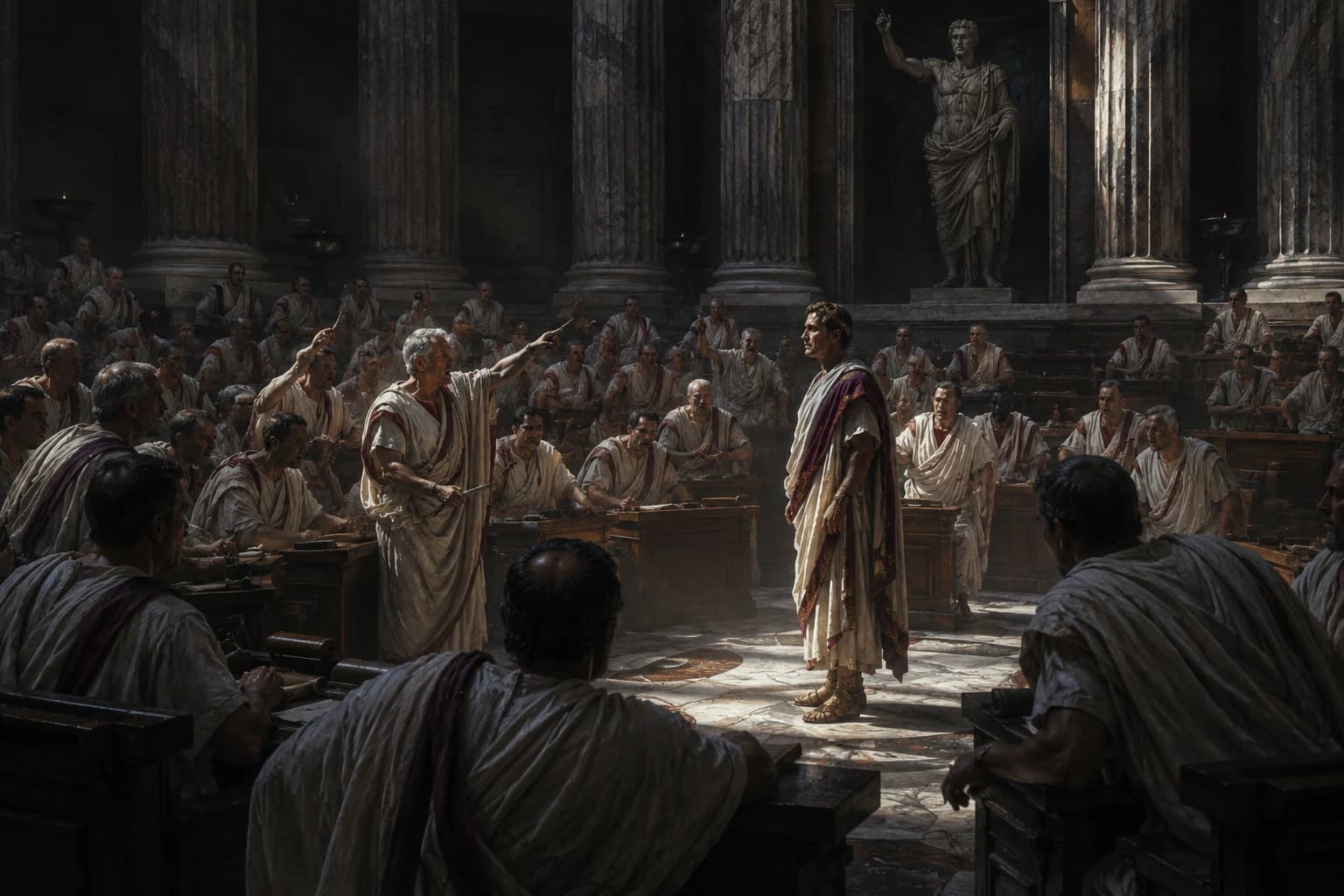
Roman tradition makes Tarquin the model of tyrannical kingship. He allegedly avoided senatorial consultation, killed or intimidated leading men, and treated government as a private possession. The historical accuracy of each charge is impossible to prove, but the pattern is revealing. Later Romans defined liberty partly as the opposite of Tarquin: magistrates with limited terms, shared authority, appeal to citizens and suspicion of any man who looked like a king. The legend therefore turns his reign into a negative constitution. By showing what unchecked monarchy looked like, Tarquin's memory helped Romans explain why republican safeguards mattered.

-520

Grand building works

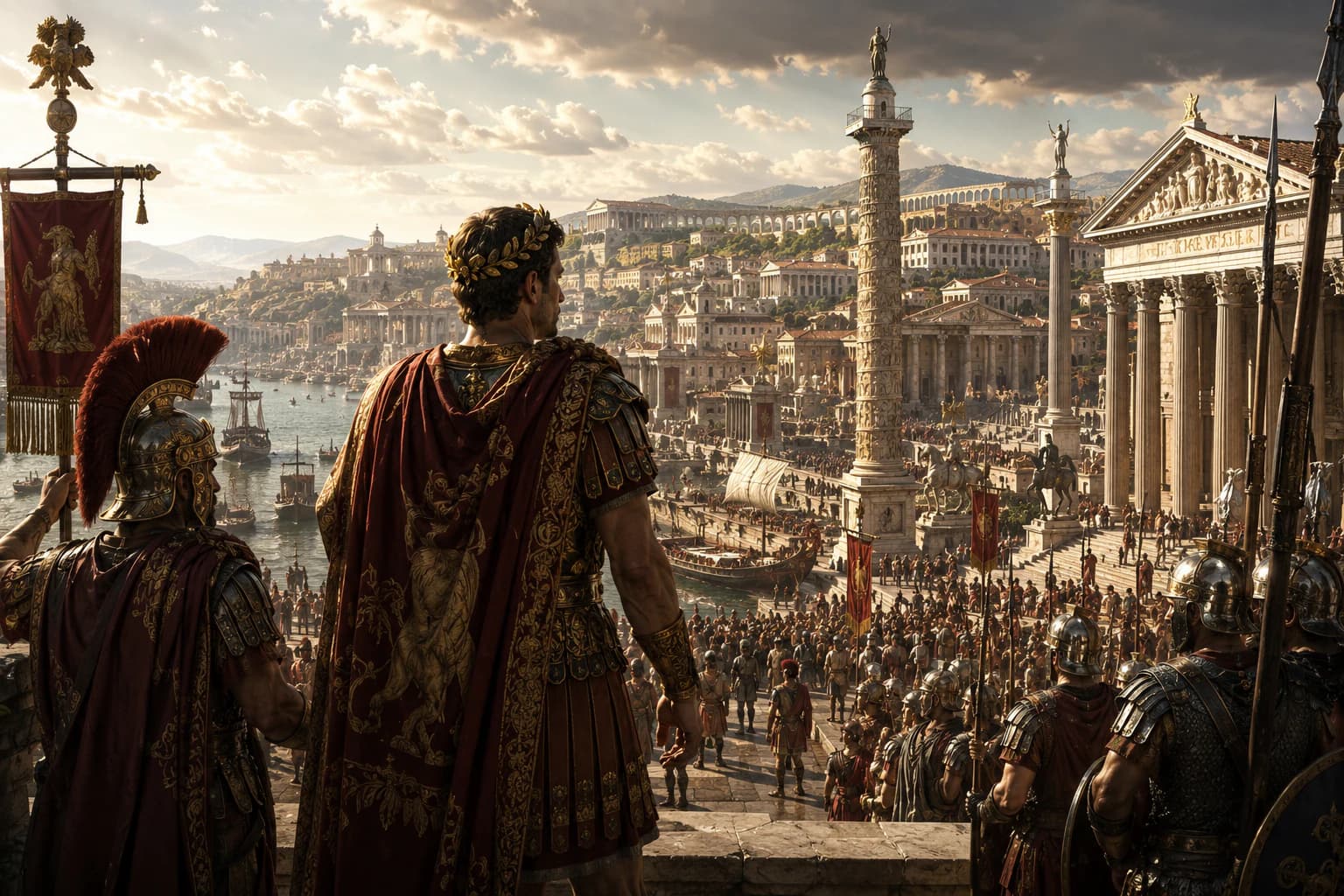
The last kings of Rome were associated with the transformation of Rome from a cluster of settlements into a more recognisable city. Tarquin's reign was linked to the completion or advancement of major works such as the Temple of Jupiter Optimus Maximus and drainage infrastructure traditionally connected with the Cloaca Maxima. These projects advertised royal ambition and Rome's growing urban identity. But in the story, achievement is inseparable from coercion. Forced labour, elite exclusion and royal display made construction look less like civic glory than domination. Roman memory allowed Tarquin to build, but refused to let building excuse tyranny.

-515

Growing unrest

The legend of Tarquin's fall gathers several kinds of resentment into one crisis. Senators disliked exclusion. Citizens resented labour and fear. Noble households felt dishonoured by royal impunity. Rome was also expanding through war, and Tarquin was absent on campaign at Ardea when the decisive scandal broke. This matters because monarchy depended on more than military strength. A king who could command armies but not preserve honour, trust and elite cooperation was vulnerable. The Roman story presents Tarquin's regime as a structure waiting for one final outrage to turn grievance into revolution.

-509

Scandal and outrage

The Lucretia story is one of Rome's most powerful and troubling foundation legends. Sextus Tarquinius, the king's son, raped Lucretia, the wife of Collatinus. Lucretia summoned her family, named her attacker and died by suicide. Lucius Junius Brutus then turned grief into revolt, displaying the crime as proof that no Roman household was safe under kings. Modern readers must handle the story carefully: it is a literary and political tradition shaped by Roman ideals of honour, gender and family control. Yet its function is clear. The monarchy falls not after an abstract constitutional debate, but after royal power invades the home and destroys trust.

-509

Expulsion from Rome

Tarquin's expulsion was remembered as the birth of the Roman Republic. Brutus and Collatinus became the first consuls, and the Romans swore never again to tolerate a king. Tarquin did not simply disappear. Traditions describe attempts to regain power through conspiracy, Etruscan allies and war, including the famous intervention of Lars Porsenna. These stories may mix history and patriotic invention, but they reinforced a central republican message: liberty had to be defended repeatedly after monarchy's fall. Tarquin became the returning threat, the reminder that tyranny defeated once could still seek a way back.

After -509

End of kingship

Tarquin the Proud matters because Romans made him matter. Whether every episode is factual is less important than the work the story performed. He explained why Rome distrusted kingship, why magistrates should be temporary, why no single man should hold unchecked command inside the city, and why later figures accused of royal ambition could be treated as enemies of liberty. From Julius Caesar's assassins to later republican thinkers, the image of the tyrant king retained explosive force. Tarquin's actual reign belongs to the misty world of early Rome, but his symbolic afterlife helped shape one of history's most influential political traditions.

Continue in context

Connected stories

Move from the profile into the wider events and settings this figure belongs to.

Tertiary paths

Content note

This profile is written for educational use and connects to related Stories of History pages. The main portrait is an AI-assisted historical reconstruction, included as an illustrative aid rather than documentary evidence. Image policy

References

Sources & Further Reading

Reliable reference works, archives and reading paths connected to this profile.

Further reading

  1. Encyclopaedia Britannica, Search results for Tarquin the Proud,” accessed June 2026.Open source
  2. WorldCat, Books and library holdings for Tarquin the Proud,” accessed June 2026.Open source

Primary sources

  1. Library of Congress, Search results for Tarquin the Proud,” accessed June 2026.Open source

Reviewed claim sources

Loading reviewed claim sources...

A weekly route through history

Find out first about the latest published stories, feature notes and occasional Premium offers in one weekly email.