← People

Roger Mortimer

Roger Mortimer was first Earl of March and Marcher lord. A powerful border lord escaped the Tower, allied with Queen Isabella and helped depose Edward II. His rise to control of government ended when the young Edward III struck back.

Born
1287 CE
Died
1330 CE
Role
First Earl of March and Marcher lord
Full name
Roger Mortimer, 1st Earl of March
Also known as
Roger Mortimer of Wigmore

First Earl of March and Marcher lord (1287–1330)

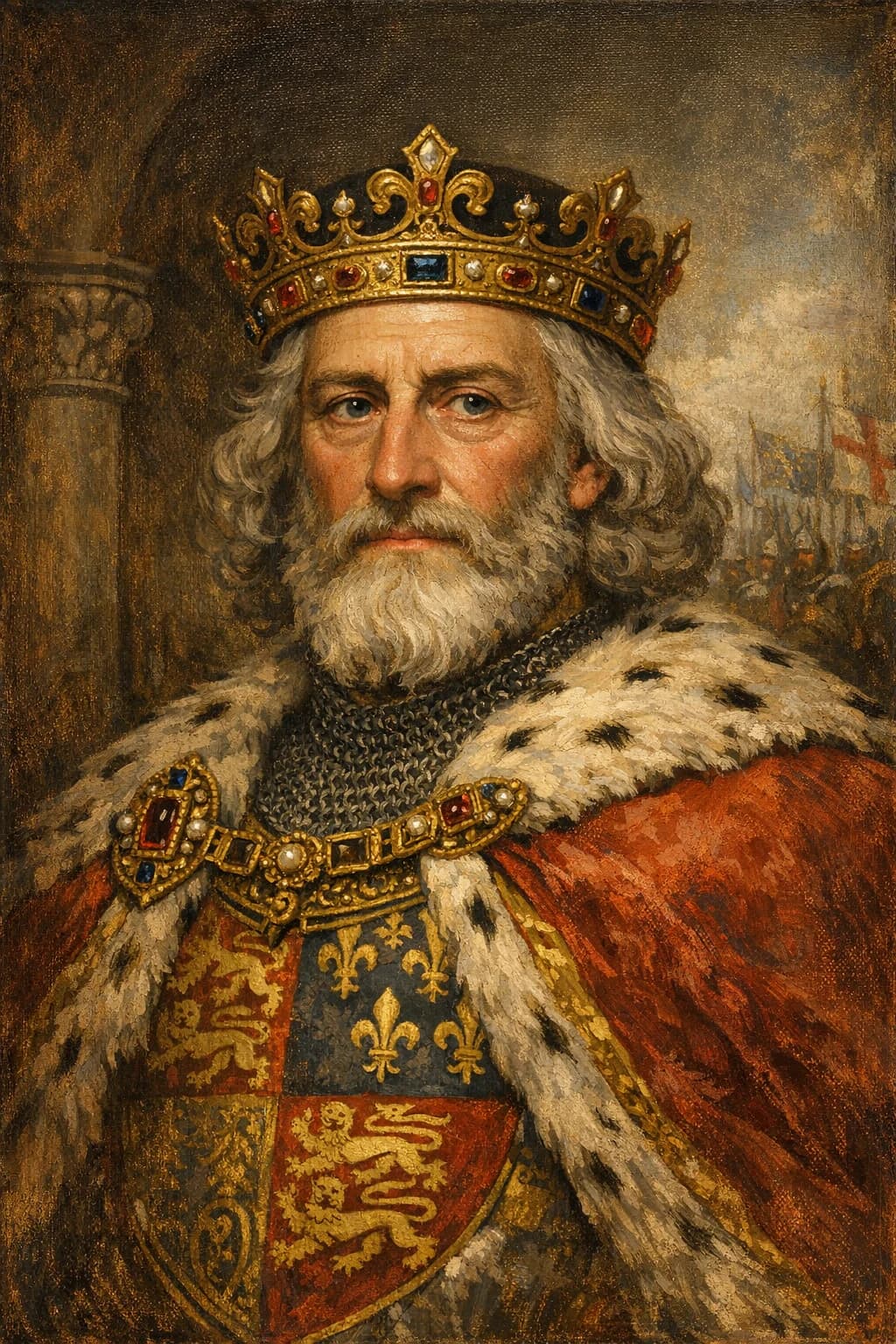
AI-generated portrait of Roger Mortimer in period clothing; an interpretive reconstruction, not a documented likeness
AI-assisted historical reconstruction

An illustrative reconstruction based on historical context. It is not a photograph or documentary likeness. Image policy

Life Journey

From the Welsh Marches to the control of England

Follow Roger from the Welsh Marches to exile, control of government and a sudden fall.

Complete chronology

1287–1304

Power on the border

The Welsh Marches formed a frontier where great lords exercised extensive local authority. Roger’s family controlled Wigmore and other estates, giving him a base in a world of castles, private affinities and contested borders. Born in 1287, he inherited after his father’s death in 1304. This was power within the English king’s wider dominion, but with freedoms and traditions that Marcher families defended fiercely. Roger’s later conflict with royal favourites would grow partly from that setting. An ambitious courtier’s acquisition of border lands could threaten the practical independence of established lords.
1301–1315

An Irish inheritance

Roger married Joan de Geneville while they were young. Her inheritance added lands in Ireland and the border region to the Mortimer household. These possessions supplied revenues and obligations, drawing Roger into the politics of English lordship in Ireland. He travelled there and also served the king on campaigns elsewhere. His career began as that of a useful magnate defending family interests while carrying out royal duties. The scale of his estates later made him dangerous to Edward II: an opponent with resources in several regions could organise resistance beyond the reach of a single local dispute.

1315–1320

The king’s man in Ireland

The invasion led by Edward Bruce, brother of Robert the Bruce, challenged English rule in Ireland from 1315. Roger suffered defeat at Kells before returning with wider royal responsibilities. As justiciar, he sought to organise government and defend the interests of the English lordship. After Edward Bruce’s defeat and death in 1318, Roger remained involved in administration, including a parliament at Dublin in 1320. His service demonstrates that he was not always an enemy of the crown. He understood how royal authority worked, and had acquired the military and administrative experience to challenge it.

1321–1322

The Despenser conflict

Hugh Despenser the Younger’s aggressive pursuit of land unsettled the balance of power in the Welsh Marches. Roger joined opposition that forced the Despensers into exile in 1321. Edward’s counterattack restored them and broke the rebellion. Roger surrendered early in 1322 and was imprisoned, while other opponents were executed after the royal victory. His fall was both personal and structural: the king had shown that established aristocratic power could be overturned by a court faction backed with royal force. Imprisonment removed him from public politics, but did not end his ability to attract support.

1323–1325

Escape and exile

Roger’s escape from the Tower in August 1323 became one of the striking reversals of Edward II’s reign. He reached France, where distance from the king’s officials gave him room to organise. Exile was dangerous, but it also brought together people alienated by the Despenser regime. Roger possessed military experience and a powerful family identity even while deprived of his English position. The arrival of Queen Isabella in France in 1325 offered a far greater opportunity. A disaffected lord could now ally with someone whose royal status and access to the heir changed the scale of opposition.

1325–1326

Isabella’s partner

Isabella’s diplomatic mission brought her into contact with Roger and other exiles. Their alliance was political and probably also intimate, though its private beginnings cannot be reconstructed with complete confidence. The presence of Prince Edward supplied a plausible alternative around which opponents could unite: resistance could be presented as protection of the heir and the kingdom rather than a lord’s private revolt. Support from Hainaut helped make intervention possible. Roger’s experience complemented Isabella’s dynastic position. Together they assembled a challenge that could attract allies inside England before the invading army had won a major battle.

1326–1328

Government without the crown

When Isabella and Roger landed in 1326, Edward’s support collapsed. The Despensers were executed, the king was captured and his son took the throne in early 1327. Roger held no crown himself, but access to Isabella and control over government allowed him to wield exceptional authority. He accumulated offices, lands and the title Earl of March in 1328. These gains made his new position resemble the concentrated favour that had helped provoke the rebellion. The problem was now sharper because the king in whose name he acted was approaching the age to govern for himself.

1328–1330

The coalition fractures

Roger’s expanding authority unsettled nobles who had supported the overthrow of Edward II. Henry of Lancaster and others resisted his dominance. The government’s settlement with Scotland also attracted hostility, while the young Edward III had reasons to resent his restricted role. In 1330, Edmund, Earl of Kent, was executed after attempting to restore his half-brother Edward II, whom he had been led to believe was alive. The episode exposed the regime’s use of fear and accusations to suppress opposition. Roger’s power looked formidable, but its political foundation was narrower than his titles suggested.

1330

Nottingham and the fall

In October 1330, Edward III and trusted companions arranged Roger’s arrest at Nottingham. The coup transformed who controlled the king’s government in a single night. Roger faced accusations including usurpation of royal authority and responsibility for crimes committed under his dominance. He was condemned without an ordinary trial and hanged in November. His enemies’ charges should not be treated as neutral proof of every allegation, particularly concerning Edward II’s death. What is clear is the political outcome: the king ended the rule exercised in his name, and Roger’s spectacular ascent collapsed into forfeiture and execution.

Continue in context

Connected stories

Move from the profile into the wider events and settings this figure belongs to.

Tertiary paths

Content note

This profile is written for educational use and connects to related Stories of History pages. The main portrait is an AI-assisted historical reconstruction, included as an illustrative aid rather than documentary evidence. Image policy

References

Sources & Further Reading

Reliable reference works, archives and reading paths connected to this profile.

Sources used

  1. Dictionary of Irish Biography, “Mortimer, Roger,” accessed 2 October 2026.

    Biography covering family, Irish service, rebellion and government.

    Open source
  2. English Heritage, “History of Wigmore Castle,” accessed 2 October 2026.

    Marcher power and the family seat; the precise circumstances of Edward II’s death remain disputed.

    Open source
  3. Mortimer History Society, “The Earls of March,” accessed 2 October 2026.

    Family chronology, earldom and the restoration of Mortimer prestige.

    Open source

Further reading

  1. Encyclopaedia Britannica, “Search results for Roger Mortimer,” accessed June 2026.Open source
  2. WorldCat, “Books and library holdings for Roger Mortimer,” accessed June 2026.Open source

Primary sources

  1. Library of Congress, “Search results for Roger Mortimer,” accessed June 2026.Open source

Reviewed claim sources

Loading reviewed claim sources...

A monthly route through history

Find out first about the latest published stories, feature notes and occasional Premium offers in one monthly email.