People

Edward II of England

Edward II of England was king from 1307 to 1327. His favourites Piers Gaveston and Hugh Despenser, defeat at Bannockburn, deposition, and death made his reign a warning about failed kingship.

Born
1284 CE
Died
1327 CE
Role
English king

English king (1284–1327)

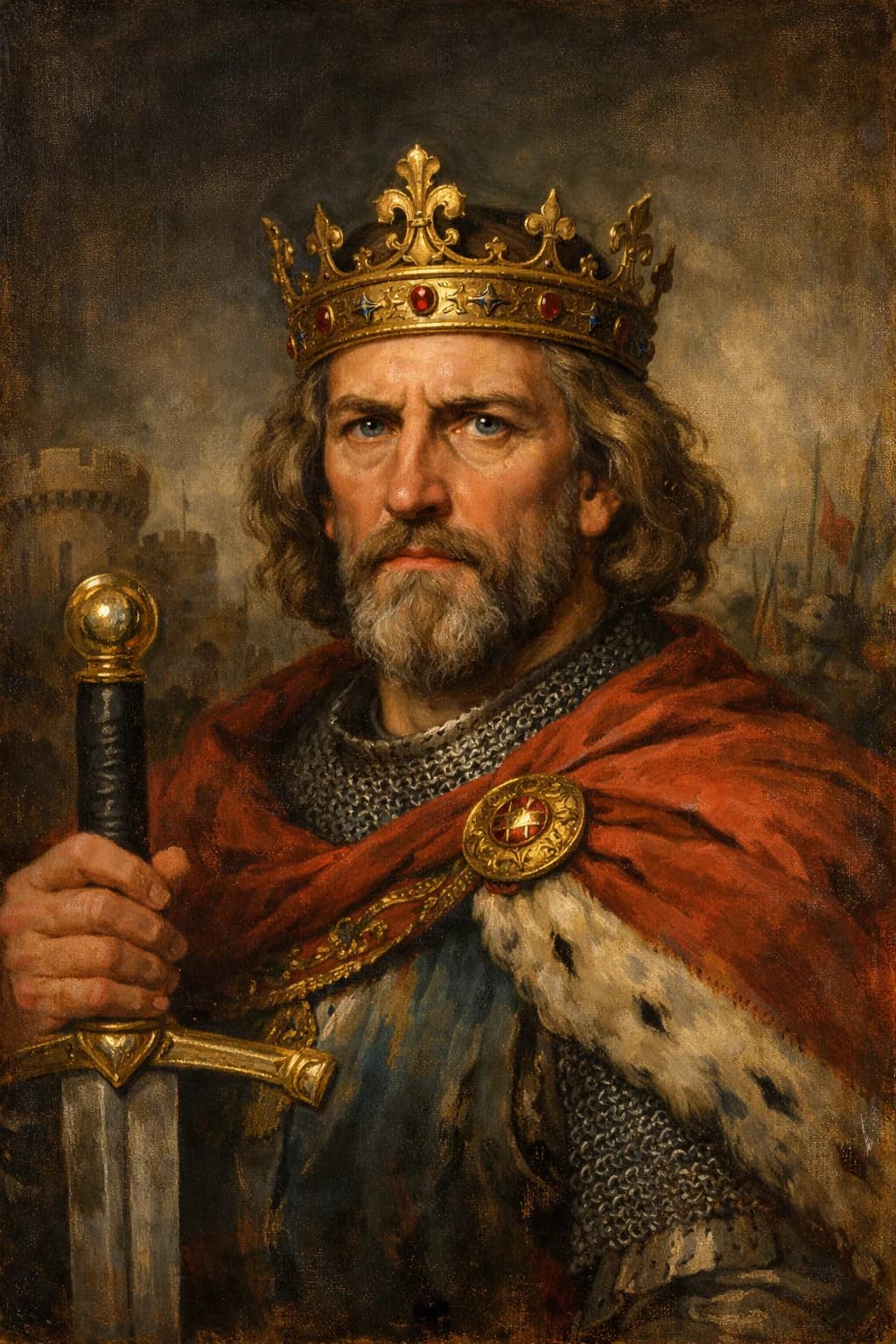
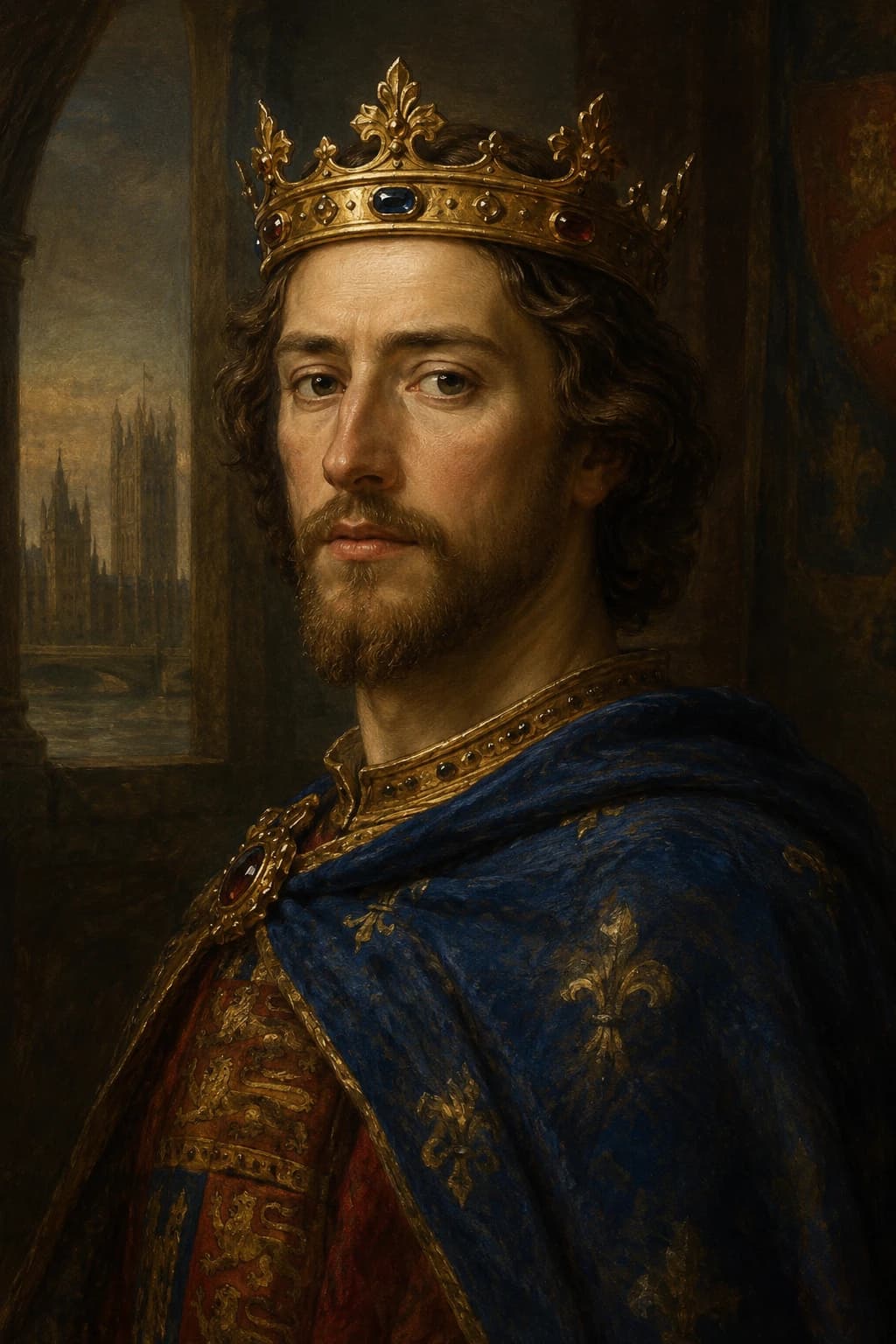
AI-generated portrait of Edward II in medieval royal attire
AI-assisted historical reconstruction

An illustrative reconstruction based on historical context. It is not a photograph or documentary likeness. Image policy

Quick answer

Edward II of England was king from 1307 to 1327. His favourites Piers Gaveston and Hugh Despenser, defeat at Bannockburn, deposition, and death made his reign a warning about failed kingship.

Born
1284 CE
Died
1327 CE
Role
English king
Years
1284-1327 CE
Facts

Edward II of England timeline facts

Selected specifics from this profile's life story.

1284
Royal upbringing

Edward was born at Caernarfon in 1284, the surviving son of Edward I, and grew up beneath the expectations created by one of medieval England's most forceful kings.

1308–1312
Noble opposition

Opposition to Gaveston produced the Ordinances of 1311 and, after Edward defied repeated demands, Gaveston's capture and execution by rebel magnates in 1312.

1325–1326
Rebellion rises

Queen Isabella, alienated by Edward and the Despensers, joined Roger Mortimer in exile and returned to England in 1326 with an invasion that rapidly gathered support.

1327 onward
A troubled legacy

Edward II is remembered for favouritism, military failure, deposition, and a mysterious death at Berkeley Castle, but his reign also forced England to confront what failed kingship meant.

Life Journey

A fragile crown under pressure and rebellion

Follow the story in a more continuous narrative, with a reading mode that matches how much depth you want.

Complete chronology

1284

Royal upbringing

Edward II was born at Caernarfon Castle in April 1284, soon after his father's conquest of Wales. The setting mattered: he entered the world as a symbol of Plantagenet authority over a newly subdued region. After the deaths of his elder brothers, he became heir to a king whose reputation rested on war, law, discipline, and relentless command. Edward II did not naturally resemble that model. He enjoyed companionship, display, physical recreations, and practical interests that chroniclers sometimes mocked because they seemed insufficiently royal. The problem was not that he lacked intelligence or feeling. It was that he inherited a crown built for a hard political operator and then governed in ways that made powerful men doubt his judgement.
1290s–1307

Prince and favourite

Piers Gaveston became the relationship through which Edward's weaknesses were first made politically visible. Gaveston was charismatic, able, and socially provocative, but his elevation rested on the prince's extraordinary favour rather than broad aristocratic acceptance. Edward I saw the danger and exiled Gaveston shortly before his death. The anxiety was not simply personal jealousy among nobles. In a world where access to the king meant land, office, influence, and honour, a favourite could alter the entire political economy of the court. Edward's attachment to Gaveston suggested that he would privilege emotional loyalty over careful distribution of power. That perception followed him into kingship and proved devastating.

1307

Becoming king

Edward I died in July 1307 while campaigning against Robert Bruce. His son inherited unfinished war in Scotland, heavy financial pressures, and a political class used to his father's discipline. Edward II's first signal was unmistakable: he recalled Gaveston from exile, made him Earl of Cornwall, and treated him with a closeness that infuriated senior nobles. His marriage to Isabella, daughter of Philip IV of France, should have strengthened diplomacy and royal prestige. Instead, his coronation in 1308 became notorious for Gaveston's prominence and for the anger it generated among the aristocracy. Edward had not yet lost authority, but he had spent political capital with startling speed.

1308–1312

Noble opposition

The crisis around Gaveston became a constitutional confrontation. In 1311, a group of magnates known as the Ordainers imposed restrictions on royal government, aiming to control appointments, finance, and the influence of favourites. Edward accepted under pressure but resisted in practice, repeatedly trying to restore Gaveston. In 1312, after Gaveston surrendered under promise of safety, Thomas, Earl of Lancaster, and his allies seized and executed him. The killing was unlawful, but it exposed a brutal truth: the king could not protect the man he loved and promoted above almost everyone else. Edward never forgave the humiliation. The political community, meanwhile, had crossed a line by demonstrating that royal favour could be answered with aristocratic violence.

1314

Bannockburn defeat

Bannockburn was the military disaster that turned political weakness into national humiliation. Edward marched north in 1314 to relieve Stirling Castle and reassert English dominance in Scotland, but Robert Bruce chose his ground carefully and forced the English army into conditions that blunted its advantages. Over two days, Scottish schiltrons held firm, English cavalry failed to break them, and confusion spread through Edward's much larger host. The king escaped, but the defeat was catastrophic. It did not instantly end the war, yet it made Bruce's kingship far more secure and left English claims in Scotland badly damaged. At home, Bannockburn confirmed every hostile judgement about Edward's incapacity. A Plantagenet king could survive personal scandal; failure in war was harder to forgive.

1310s–1320s

New favourites

After Gaveston, Edward did not learn to govern without favourites. Hugh Despenser the Younger became the dominant figure at court, supported by his father and protected by the king. The Despensers were not merely resented companions; they were aggressive accumulators of land, especially in the Welsh Marches, where their ambitions threatened other powerful families. Opposition forced their exile in 1321, but Edward struck back. In 1322 he defeated Thomas of Lancaster at Boroughbridge, executed him, revoked the Ordinances, and entered a phase of harsher, more authoritarian rule. For a brief period, Edward looked stronger than ever. In reality, the monarchy had narrowed around a faction whose greed made reconciliation almost impossible.

1325–1326

Rebellion rises

The final challenge came from inside Edward's own marriage. Isabella of France had been sent to negotiate with her brother, the French king, over disputes in Gascony. Once abroad, she refused to return while Hugh Despenser remained in power. She formed an alliance with Roger Mortimer, a Marcher lord who had escaped imprisonment in the Tower, and in 1326 they invaded England with a small force. The speed of their success revealed the hollowness of Edward's support. Nobles, bishops, towns, and former enemies of the Despensers rallied to Isabella's cause. Edward fled west with the younger Despenser but could not build a viable defence. A king who had once defeated Lancaster now found almost no one willing to risk themselves for him.

1327

Deposition

Edward's deposition was one of the most consequential political acts of medieval England. The formal charges presented against him accused him of incompetence, bad counsel, loss of Scotland, neglect of government, and refusal to heed good advice. These claims were crafted to justify a decision already made, but they mattered because they set out a language by which kingship could be judged. Edward was not removed because monarchy had become elective or democratic. He was removed because the political nation accepted that a king who destroyed trust, mismanaged war, and allowed destructive favourites to dominate could be made to yield authority. His teenage son became Edward III, while real power initially rested with Isabella and Mortimer.

1327 onward

A troubled legacy

Edward II died at Berkeley Castle in September 1327. The traditional story of a grotesque murder by red-hot iron is almost certainly later sensationalism, and the exact circumstances remain uncertain. What is clear is that he died in custody after being publicly stripped of kingship. His reputation has often been flattened into weakness, but the deeper significance of his reign lies in the political lessons it created. Personal intimacy could become a public crisis when joined to patronage. Military failure could corrode legitimacy. Aristocratic reform could become violence. Deposition, once almost unthinkable, became a precedent later generations would remember. Edward II was not important because he achieved greatness. He was important because his failure exposed the conditions a medieval English king had to satisfy in order to survive.

Continue in context

Connected stories

Move from the profile into the wider events and settings this figure belongs to.

British Monarchs lineage
Lineage42 rulers
British Monarchs
1066 CE–present

Trace the English and later British monarchy from William I to today.

View lineage
Tertiary paths

Content note

This profile is written for educational use and connects to related Stories of History pages. The main portrait is an AI-assisted historical reconstruction, included as an illustrative aid rather than documentary evidence. Image policy

References

Sources & Further Reading

Reliable reference works, archives and reading paths connected to this profile.

Further reading

  1. Encyclopaedia Britannica, Search results for Edward II of England,” accessed June 2026.Open source
  2. WorldCat, Books and library holdings for Edward II of England,” accessed June 2026.Open source

Primary sources

  1. Library of Congress, Search results for Edward II of England,” accessed June 2026.Open source

Reviewed claim sources

Loading reviewed claim sources...

A weekly route through history

Find out first about the latest published stories, feature notes and occasional Premium offers in one weekly email.