← People

Isabella of France

Isabella of France was queen consort of England and political leader. A French princess became an English queen, then helped overthrow her husband Edward II. Her alliance with Roger Mortimer briefly controlled government before her son claimed power for himself.

Born
c. 1295 CE
Died
1358 CE
Role
Queen consort of England and political leader
Full name
Isabella of France, Queen of England
Also known as
Queen Isabella of France

Queen consort of England and political leader (c. 1295–1358)

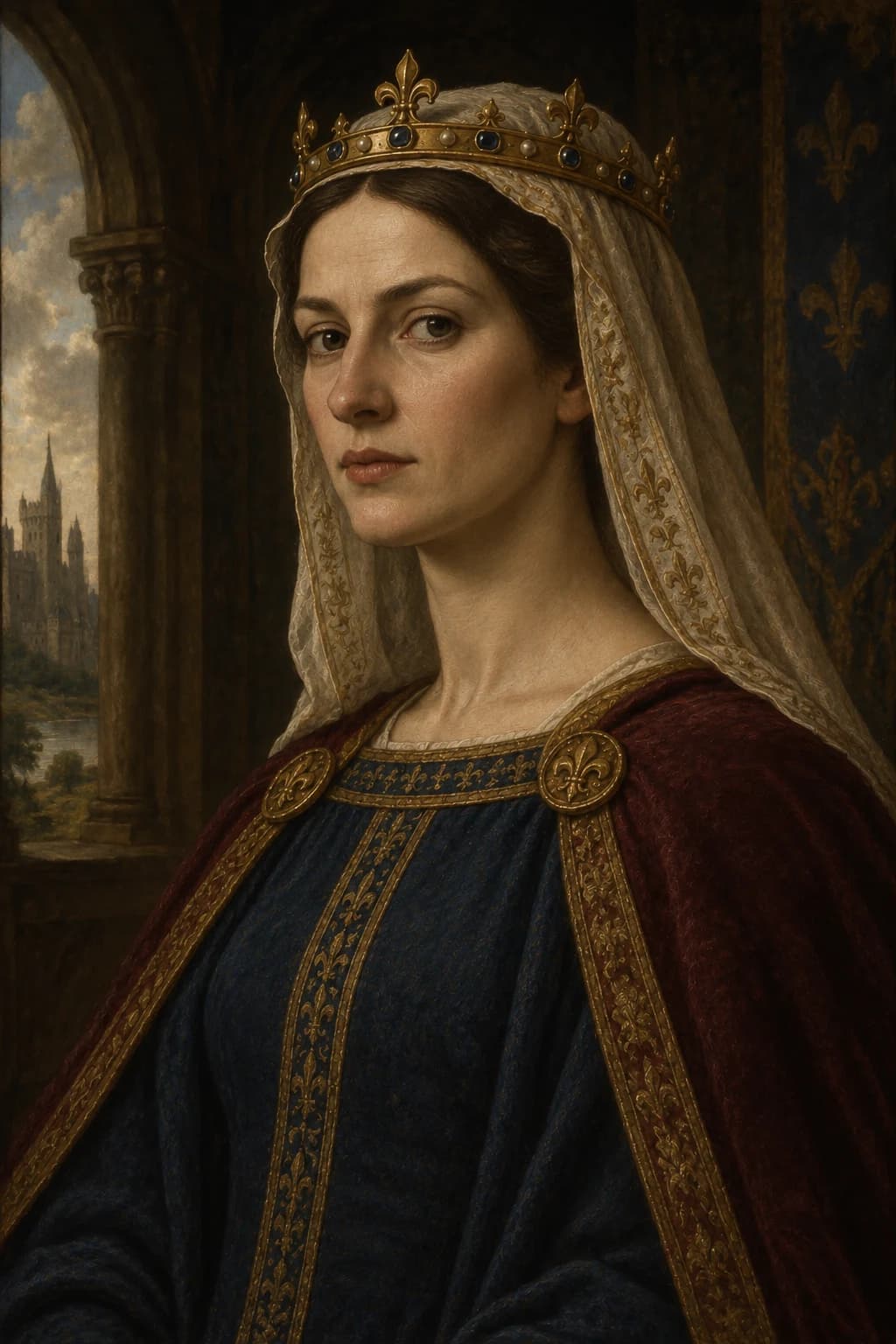
AI-generated portrait of Isabella of France in period clothing; an interpretive reconstruction, not a documented likeness
AI-assisted historical reconstruction

An illustrative reconstruction based on historical context. It is not a photograph or documentary likeness. Image policy

Life Journey

The queen who helped overturn a monarchy

Follow Isabella from a French royal childhood to English queenship, rebellion and life after political defeat.

Complete chronology

c. 1295–1308

A Capetian princess

Born around 1295, Isabella grew up in the Capetian royal family at a time when the French monarchy was asserting its authority. Her parents’ kingdoms and relationships made her marriage a matter of international politics. The English crown still held lands in France, where its king owed duties to the French ruler. A marriage could help manage those tensions without resolving them. Isabella’s future was therefore shaped by a cross-Channel relationship that combined kinship, rivalry and overlapping claims. She would later use those same family connections to move beyond the role originally arranged for her.
1308–1312

Queen beside Edward II

The young Isabella became queen in a court divided over Edward’s attachment to Piers Gaveston. Gaveston’s prominence angered nobles who believed royal favour and resources were being concentrated around one man. Isabella’s marriage should not be reduced to a timeless tale of immediate rejection: she and Edward shared a household, had children and at times worked together politically. Nevertheless, the struggles surrounding the king’s favourites made her position difficult. Queenship offered influence through intercession, estates and family connections, but it did not guarantee control over a husband’s political choices or the conduct of his closest companions.

1312–1320

An heir and a household

Isabella gave birth to Prince Edward in 1312, followed by three more children. Motherhood added a crucial dynastic responsibility to her role as queen. Her interests now included the security and prospects of an heir who could eventually become king. She also intervened in disputes and maintained her own household and revenues. After Gaveston’s death, the court’s conflicts did not disappear; different factions competed for access to Edward II. Isabella’s experience of queenship was therefore active and political well before the dramatic rebellion for which she is most often remembered.

1321–1324

The Despenser ascendancy

The Despensers’ pursuit of lands and influence helped provoke rebellion in 1321. Edward restored them and defeated his opponents in 1322, emerging with a government more tightly bound to their interests. Isabella’s position deteriorated as relations between England and France worsened. Her lands and household came under pressure, and her access to meaningful influence diminished. The queen had reasons to fear both the king’s political dependence and the consequences for her own security. Her later opposition arose within this specific struggle over power, rather than solely from private hostility between husband and wife.

1325–1326

A mission becomes an opening

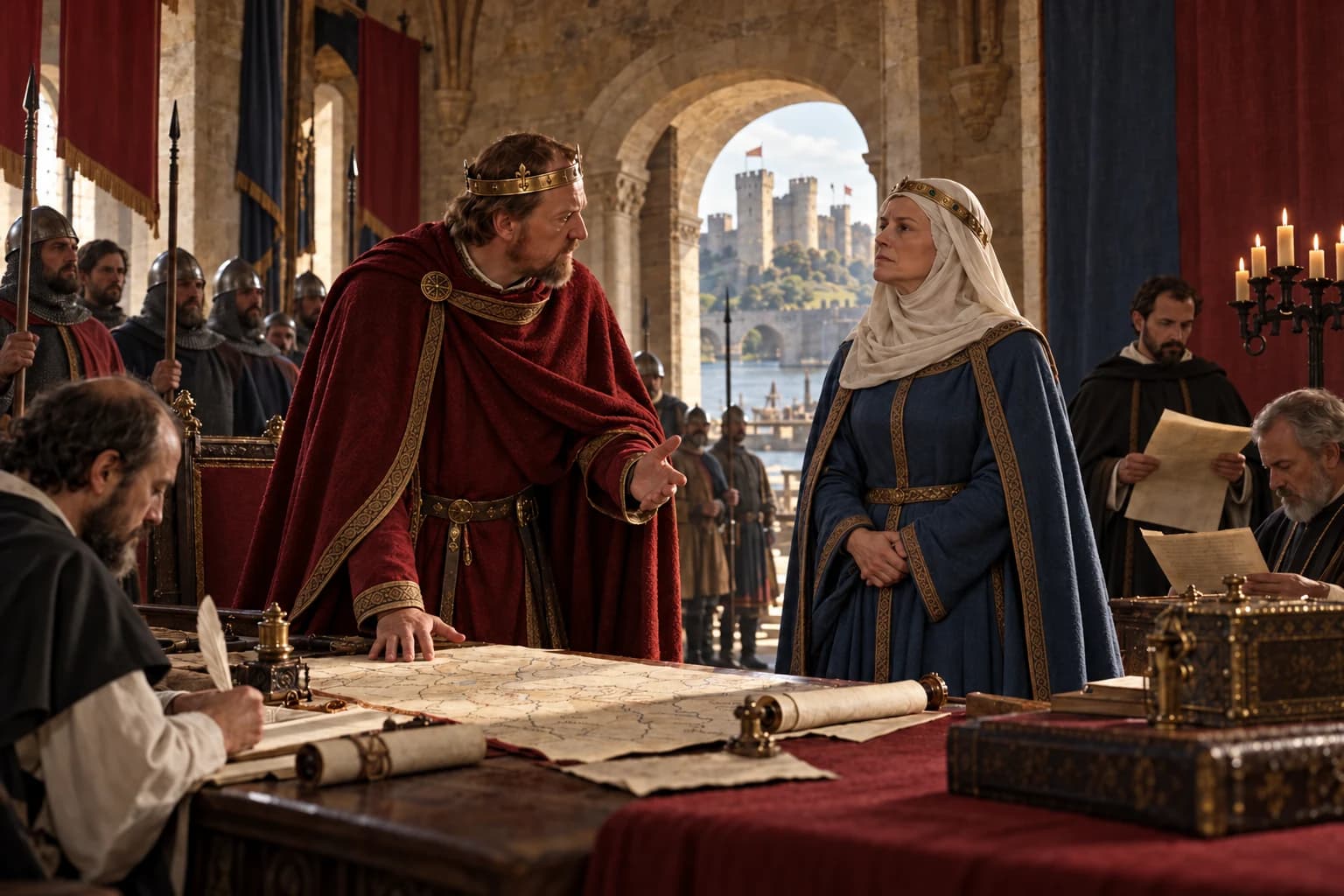
Edward sent Isabella to France in 1325 to negotiate over the English crown’s continental possessions. Their son later joined her to perform the required homage. That decision placed the heir outside the king’s immediate reach. Isabella refused to return while Despenser remained dominant and formed an alliance with the exiled Roger Mortimer. A political relationship, probably also a personal one, developed into preparations for intervention. Support from Hainaut helped supply the means of invasion, alongside a marriage arrangement for Prince Edward. Diplomatic access had become a route to organised resistance.

1326

The invasion succeeds

The invading force was not large enough to conquer England by itself. Its success depended on the collapse of loyalty around Edward and the Despensers. Nobles and other opponents joined Isabella’s cause, while the king failed to organise an effective defence. The Despensers were captured and subjected to brutal executions. Edward himself was taken prisoner. Isabella had helped break the political system that had pushed her aside, but success immediately raised a harder question: what should happen to a captured king when his opponents proposed to govern in his son’s name?

1327

A king removed

In early 1327, political pressure, an assembly at Westminster and Edward’s compelled acceptance of his removal made his son king. Isabella and Mortimer gained enormous influence during the new ruler’s minority. Edward II remained in custody, and his death was reported later in the year. Murder was widely suspected, but responsibility and the precise circumstances remain debated. The notorious red-hot poker story should not be presented as established fact. Isabella’s role in overturning her husband’s government is clear; reconstructing every decision concerning his captivity and death is much less secure.

1327–1330

Government in a son’s name

The new regime governed under Edward III’s authority while leaving the young king limited freedom. Isabella received substantial resources, and Mortimer accumulated offices, lands and a new earldom. Opposition grew as their rule appeared to repeat the concentration of power they had condemned. In 1330, Edward and trusted companions arranged Mortimer’s arrest at Nottingham Castle. Mortimer was subsequently executed. Isabella’s position as the king’s mother protected her from the same fate, but her direct control of government ended. The heir whose presence had made her rebellion possible now asserted his own kingship.

1330–1358

Life after the coup

Isabella was initially restricted after the coup, but her later life included estates, a household, travel and contact with her son and grandchildren. She died in 1358. Later depictions often turned her into a sinister figure defined by rebellion and an affair. That image obscures an earlier career of diplomacy, mediation and queenship, as well as a long life after political defeat. Her alliance with Mortimer could be self-interested and coercive without erasing her ability or agency. She remains central to understanding how a queen could help overturn a monarchy from inside its own family.

Continue in context

Connected stories

Move from the profile into the wider events and settings this figure belongs to.

Tertiary paths

Content note

This profile is written for educational use and connects to related Stories of History pages. The main portrait is an AI-assisted historical reconstruction, included as an illustrative aid rather than documentary evidence. Image policy

References

Sources & Further Reading

Reliable reference works, archives and reading paths connected to this profile.

Sources used

  1. English Heritage, “Three Queens at Eltham,” accessed 2 October 2026.

    Family background, marriage, diplomatic mission and later life.

    Open source
  2. English Heritage, “Consorts and their connections to English Heritage sites,” accessed 2 October 2026.

    The rebellion against Edward II and its royal context.

    Open source
  3. British Museum, “Isabella of France, Queen of Edward II,” accessed 2 October 2026.

    Identity and conventional lifespan; birth is approximate.

    Open source
  4. Dictionary of Irish Biography, “Mortimer, Roger,” accessed 2 October 2026.

    The alliance, regime and fall of Roger Mortimer.

    Open source

Further reading

  1. Encyclopaedia Britannica, “Search results for Isabella of France,” accessed June 2026.Open source
  2. WorldCat, “Books and library holdings for Isabella of France,” accessed June 2026.Open source

Primary sources

  1. Library of Congress, “Search results for Isabella of France,” accessed June 2026.Open source

Reviewed claim sources

Loading reviewed claim sources...

A monthly route through history

Find out first about the latest published stories, feature notes and occasional Premium offers in one monthly email.