People

Boniface VIII

Pope Boniface VIII was pope from 1294 to 1303. His conflict with Philip IV of France over taxation and papal supremacy produced the bull Unam Sanctam, the attack at Anagni, and a crisis that led toward the Avignon Papacy.

Born
c. 1230 CE
Died
1303 CE
Role
Pope

Pope (c. 1230-1303)

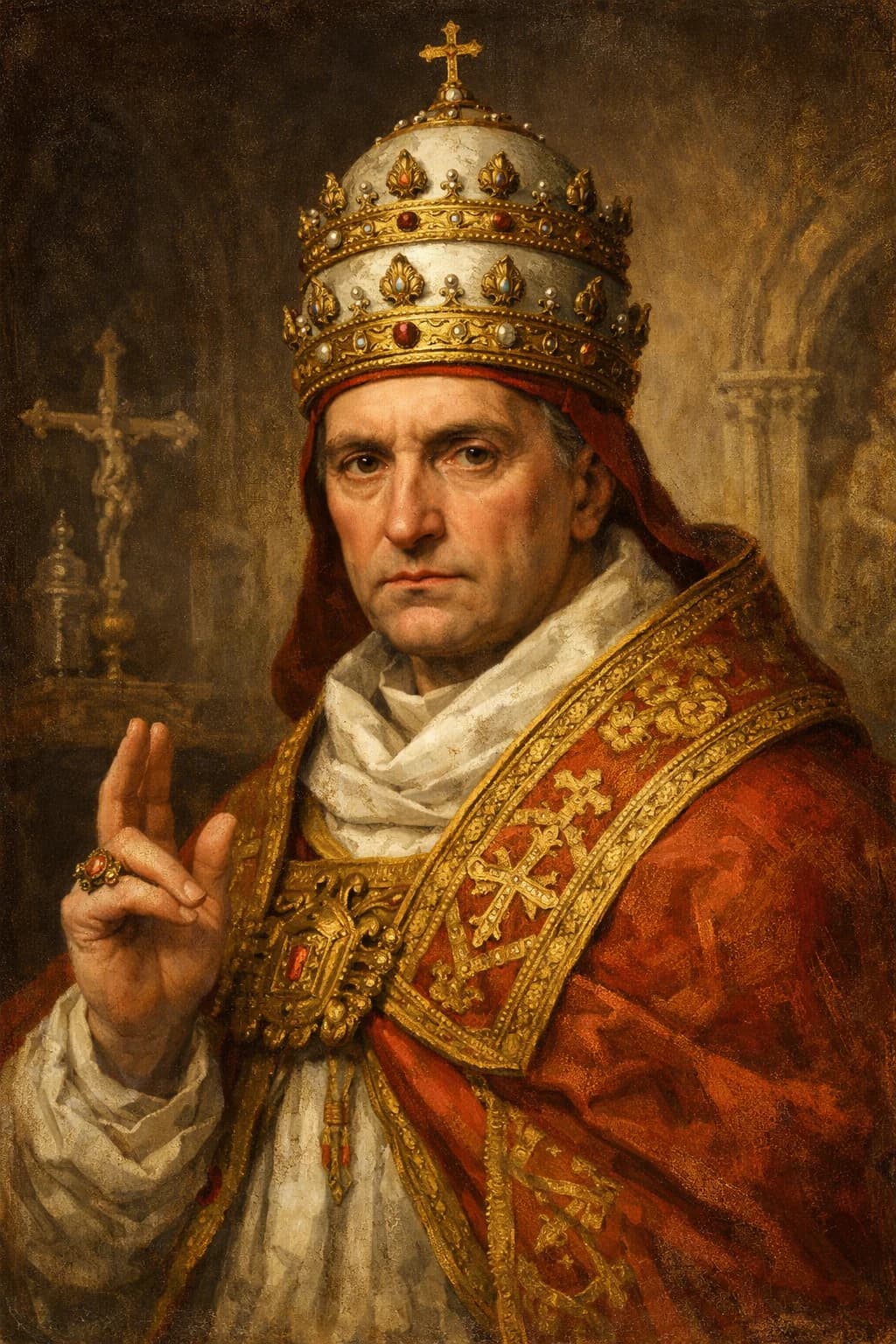
AI-generated portrait of Pope Boniface VIII in papal vestments
AI-assisted historical reconstruction

An illustrative reconstruction based on historical context. It is not a photograph or documentary likeness. Image policy

Quick answer

Pope Boniface VIII was pope from 1294 to 1303. His conflict with Philip IV of France over taxation and papal supremacy produced the bull Unam Sanctam, the attack at Anagni, and a crisis that led toward the Avignon Papacy.

Born
c. 1230 CE
Died
1303 CE
Role
Pope
Years
c. 1230-1303 CE
Quick facts

Profile details

Additional identity and tagging details that are not already covered in the introduction.

Full name
Pope Boniface VIII
Also known as
Benedetto Caetani
Facts

Boniface VIII timeline facts

Selected specifics from this profile's life story.

c. 1230-1294
Canon lawyer

Benedetto Caetani rose through the church as a skilled lawyer and papal administrator before becoming pope.

1294-1302
Claims of supremacy

Boniface defended papal authority against kings, especially when Philip IV of France taxed clergy without papal approval.

1303
Anagni

Agents acting for Philip IV seized Boniface at Anagni in 1303, shocking Europe and damaging papal prestige.

After 1303
Road to Avignon

Boniface's defeat helped create the conditions in which a later pope, Clement V, moved the papal court to Avignon.

Life Journey

Supremacy and shock

Follow Boniface VIII from canon lawyer to the papal crisis that preceded Avignon.

Complete chronology

c. 1230-1294

Canon lawyer

Boniface VIII was born Benedetto Caetani, probably around 1230, into an Italian noble family. He built his career through law, diplomacy, and curial service. That background mattered because the late medieval papacy governed through documents, courts, dispensations, appointments, and legal claims as much as through preaching. When he became pope in 1294 after the resignation of Celestine V, he brought formidable technical confidence to an office already burdened by political tension.

1294-1302

Claims of supremacy

Boniface's conflict with Philip IV of France began over money but quickly became a dispute about jurisdiction. Philip needed revenue for war and wanted to tax French clergy. Boniface insisted that secular rulers could not treat church wealth as ordinary royal property. The quarrel escalated through letters, councils, legal arguments, and propaganda. In 1302 Boniface issued Unam Sanctam, a bull that expressed papal supremacy in absolute language and placed spiritual authority above temporal power.

1303

Anagni

In September 1303, forces associated with Philip IV and the Colonna family confronted Boniface at Anagni. The pope was detained and treated with violence or public humiliation, though the details vary in later accounts. He was freed within days, but the shock was immense. A pope who had claimed supreme authority over rulers had been physically overpowered by agents of a king. Boniface died weeks later, and the authority of the medieval papacy never fully recovered from the symbolism of the attack.

After 1303

Road to Avignon

Boniface did not move the papacy to Avignon, but his defeat made that future easier to imagine. The clash with France exposed how dependent universal spiritual claims could be on local political realities. After a brief intervening pontificate, Clement V, a French archbishop, became pope and established the papal court at Avignon in 1309. The Avignon residence did not erase papal administration, but it damaged the papacy's image of independence. Boniface's career therefore marks both the height of papal language and the beginning of a visible institutional crisis.

Continue in context

Connected stories

Move from the profile into the wider events and settings this figure belongs to.

Tertiary paths

Content note

This profile is written for educational use and connects to related Stories of History pages. The main portrait is an AI-assisted historical reconstruction, included as an illustrative aid rather than documentary evidence. Image policy

References

Sources & Further Reading

Reliable reference works, archives and reading paths connected to this profile.

Further reading

  1. Encyclopaedia Britannica, Search results for Boniface VIII,” accessed June 2026.Open source
  2. WorldCat, Books and library holdings for Boniface VIII,” accessed June 2026.Open source

Primary sources

  1. Library of Congress, Search results for Boniface VIII,” accessed June 2026.Open source

Reviewed claim sources

Loading reviewed claim sources...

A weekly route through history

Find out first about the latest published stories, feature notes and occasional Premium offers in one weekly email.