People

Pope Alexander VI

Pope Alexander VI, born Rodrigo Borgia, was a Renaissance pope from 1492 to 1503. His papacy was marked by Borgia family power, Italian Wars diplomacy, accusations of corruption, and the 1493 bulls linked to Spanish and Portuguese expansion.

Born
1431 CE
Died
1503 CE
Role
Renaissance pope

Renaissance pope (1431–1503)

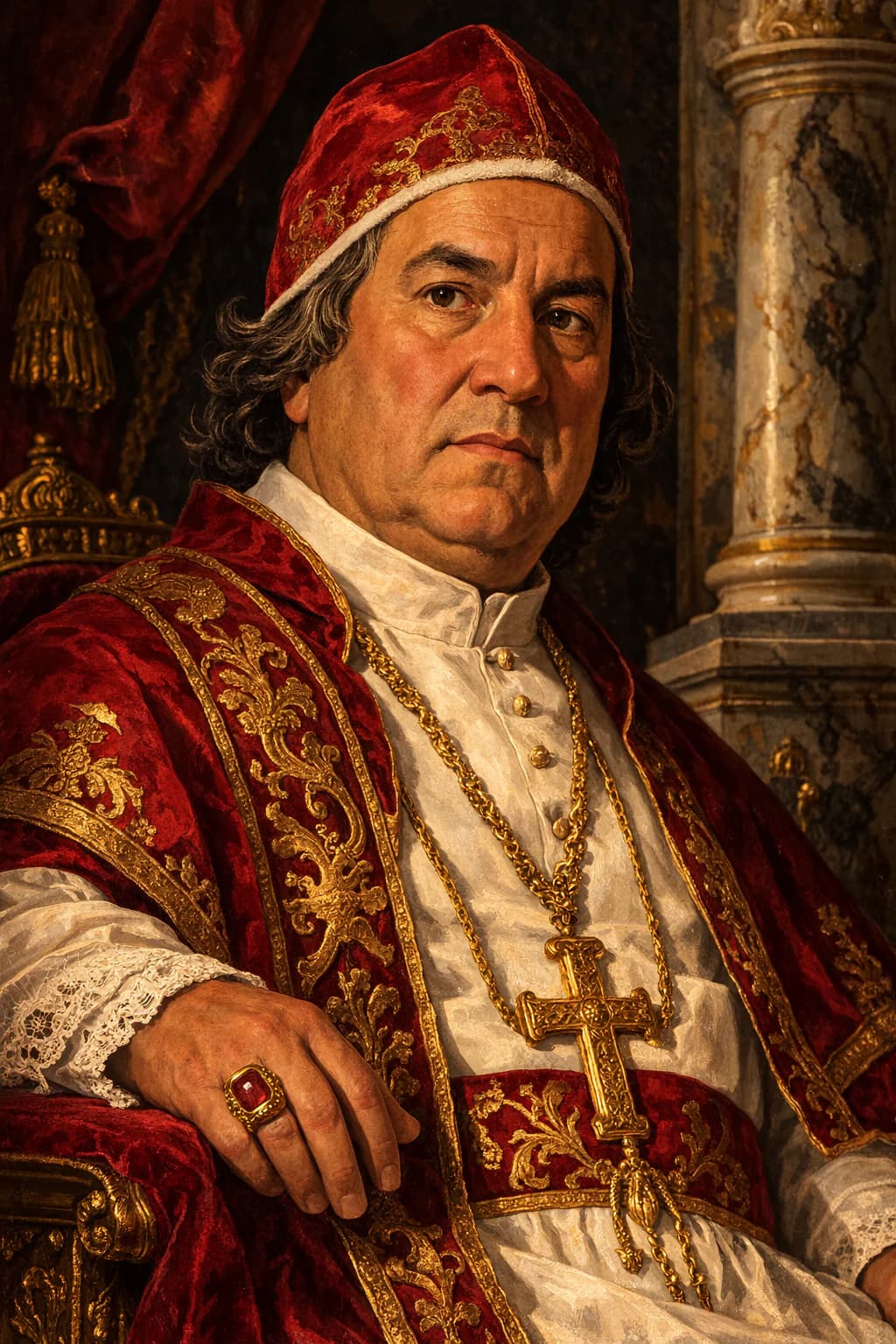
AI-generated portrait of Pope Alexander VI in papal robes
AI-assisted historical reconstruction

An illustrative reconstruction based on historical context. It is not a photograph or documentary likeness. Image policy

Quick answer

Pope Alexander VI, born Rodrigo Borgia, was a Renaissance pope from 1492 to 1503. His papacy was marked by Borgia family power, Italian Wars diplomacy, accusations of corruption, and the 1493 bulls linked to Spanish and Portuguese expansion.

Born
1431 CE
Died
1503 CE
Role
Renaissance pope
Years
1431-1503 CE
Facts

Pope Alexander VI timeline facts

Selected specifics from this profile's life story.

1431
Early Life

Pope Alexander VI was born Rodrigo Borgia near Valencia in 1431, entering a world where family patronage, canon law, and Renaissance politics shaped Church careers.

1490s
Family Power and Nepotism

Alexander VI used papal power to advance Cesare, Lucrezia, and the wider Borgia family, making nepotism the central drama of his reign.

Throughout reign
Reputation and Criticism

Alexander VI became a byword for Renaissance papal corruption, though some stories about him were sharpened by enemies and later legend.

Long-term
Long-Term Legacy

Alexander VI's legacy links the Borgia myth, Renaissance papal politics, early Atlantic empire, and the mounting pressure for Church reform.

Life Journey

A timeline of rise, influence and legacy

Follow the story in a more continuous narrative, with a reading mode that matches how much depth you want.

Complete chronology

1431

Early Life

Rodrigo Borgia was born in 1431 at Xativa, near Valencia, into a family whose fortunes rose dramatically through the Church. His maternal uncle, Alfonso de Borja, became Pope Callixtus III in 1455 and opened a path that Rodrigo used with remarkable skill. He studied law at Bologna and entered the Roman ecclesiastical world not as a cloistered reformer but as a talented administrator in a political institution. The fifteenth-century papacy was both a spiritual office and a territorial power ruling the Papal States. Cardinals negotiated alliances, managed money, dispensed patronage, and acted like princes. Rodrigo learned that world early. His later scandals should not hide his competence: he was intelligent, disciplined in administration, multilingual, legally trained, and exceptionally good at reading ambition in others.
1450s–1492

Rise in the Church

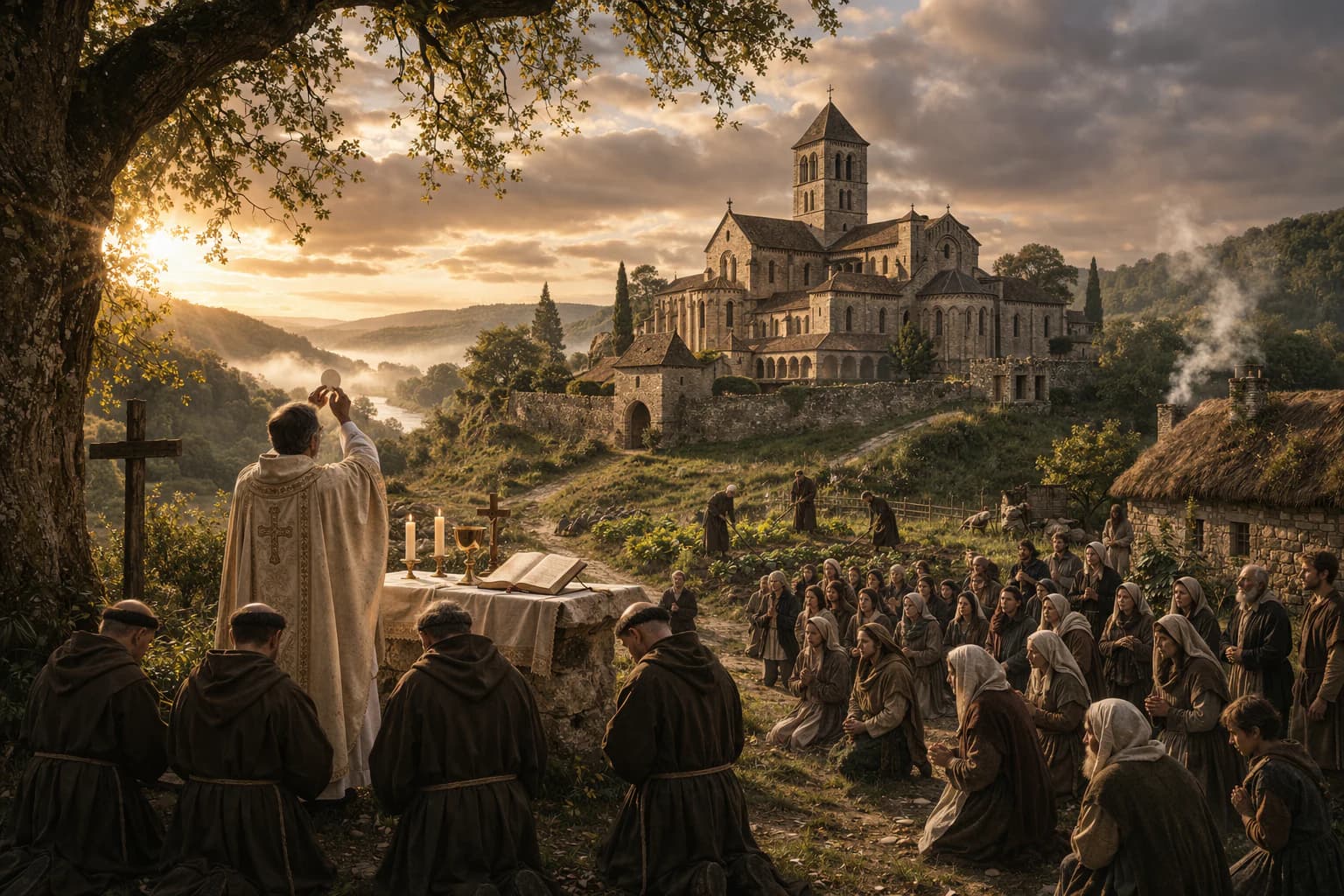
Rodrigo Borgia became a cardinal while still young and served for decades as vice-chancellor of the Church, one of the most powerful administrative offices in Rome. That long apprenticeship made him rich, connected, and formidable. He understood petitions, benefices, diplomacy, finance, law, and the personal rivalries that shaped papal elections. He also fathered children, including Cesare and Lucrezia Borgia, and lived in a manner that critics saw as openly worldly. This tension defined him before he became pope. He was not an incompetent libertine accidentally raised to power. He was a skilled churchman and political operator whose private life and family ambition collided with the moral claims of the office he sought. By 1492 he had experience, money, allies, and enemies in abundance.

1492

Election as Pope

The conclave of 1492 took place at a moment of extraordinary change: Lorenzo de' Medici had died, Spain had conquered Granada, Columbus had crossed the Atlantic, and Italian politics were becoming dangerously unstable. Rodrigo Borgia emerged as pope Alexander VI after a conclave shaped by negotiation, promises, and accusations of simony. Renaissance papal elections often involved hard bargaining, but Alexander's election became infamous even by those standards. Once elected, he held a unique combination of authority: bishop of Rome, head of the Latin Church, ruler of the Papal States, patron, judge, diplomat, and symbolic father of Christendom. His problem was that he used those powers in ways that made the papacy look like a family principality. His defenders point to political realism; his critics saw sacred office being spent on Borgia advantage.

1490s

Family Power and Nepotism

Nepotism was common in Renaissance Rome, but Alexander VI made it unusually visible and aggressive. Cesare Borgia moved from cardinal to military prince, building power in the Romagna with papal support. Lucrezia Borgia became a diplomatic asset through marriages that served shifting alliances, though later legend often exaggerated her personal guilt and ignored her political usefulness. Alexander's family policy was not merely indulgence. It was a dynastic strategy designed to secure Borgia power in a peninsula where the papacy, France, Spain, Naples, Milan, Venice, and Florence all competed. Yet this was precisely the scandal. The pope's spiritual authority became entangled with the advancement of his children. Alexander did not invent Renaissance corruption, but he became its most memorable face because he seemed to perform it without shame.

1493

Dividing the Overseas World

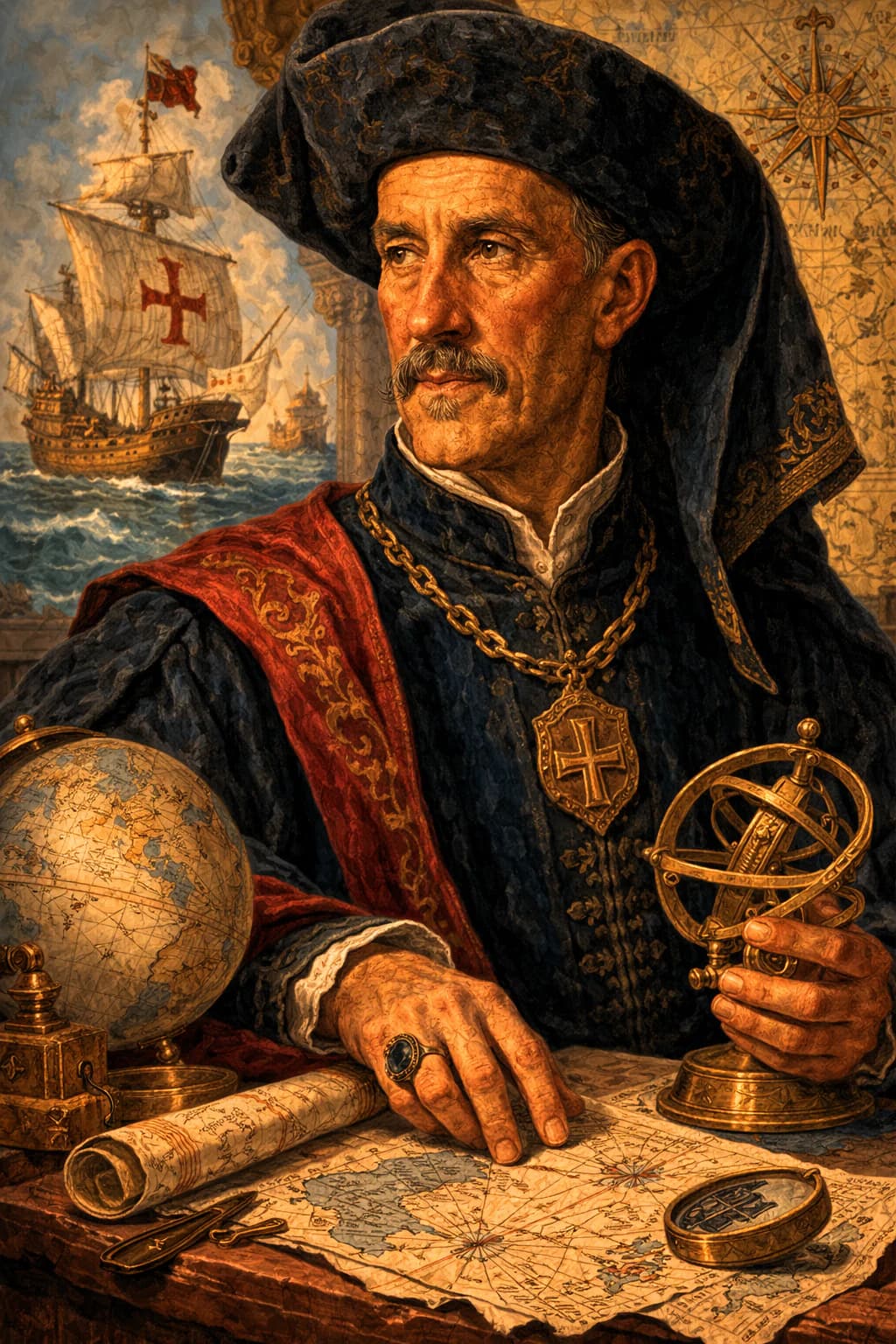
Alexander VI's global significance rests partly on documents issued in 1493 after Columbus returned from the Atlantic. The papal bulls associated with Inter caetera favored the Spanish crown and drew a line of claim in the ocean world, helping frame competition with Portugal. The Treaty of Tordesillas in 1494, negotiated directly between Spain and Portugal, adjusted that division, but the papal decisions gave religious legitimacy to European claims over lands whose peoples had not consented to such arrangements. This was not a map neatly dividing the modern western hemisphere in one simple act, but it was a decisive moment in the moral architecture of empire. Alexander's papacy stood at the threshold of European colonial expansion, where missionary language, royal ambition, commercial hunger, and violence began to move together.

1494 onwards

Italian Wars and Power Struggles

The Italian Wars began in 1494 when Charles VIII of France invaded Italy, exposing how vulnerable the peninsula was to larger monarchies. Alexander VI had to survive in a world where the pope was not only a shepherd of souls but a territorial ruler surrounded by predators. He shifted between France, Spain, Naples, and Italian powers, sometimes with impressive tactical flexibility and sometimes with naked self-interest. Cesare Borgia's campaigns in the Romagna depended on this unstable environment and on the pope's ability to turn international rivalry into family opportunity. Alexander's diplomacy shows why simple moral labels are inadequate but not irrelevant. He was capable, shrewd, and often effective. He also deepened the impression that the papacy had become another player in the game of dynastic power.

Throughout reign

Reputation and Criticism

Alexander VI's reputation is difficult because fact, hostile propaganda, moral outrage, and later myth are tightly woven together. He did promote his children, accumulate wealth, conduct politics ruthlessly, and embody many abuses that reformers would later condemn. At the same time, lurid tales of poisonings, incest, and theatrical depravity often grew in the telling, especially among enemies of the Borgias. A serious biography must hold both truths. Alexander was not innocent of corruption; nor should every sensational story be accepted uncritically. His importance lies in what his papacy revealed. By the early sixteenth century, many Europeans could look at Rome and see a Church whose spiritual language was compromised by money, office, sex, war, and family power. That perception would matter profoundly in the age of reform that followed.

1503

Death and Aftermath

Alexander VI died in August 1503 after a sudden illness, probably malaria or another fever common in the Roman summer, though poison rumors flourished almost immediately. His death exposed the fragility of Borgia power. Cesare Borgia had built a formidable position, but it depended heavily on papal backing, money, and the ability to control succession. The brief papacy of Pius III and then the election of Julius II changed the political weather. Julius, a fierce opponent of the Borgias, moved to break Cesare's position. Within a few years, the spectacular Borgia project had collapsed. Alexander's death is a reminder that Renaissance power could look permanent while resting on one office, one patronage network, and one human body vulnerable to fever.

Long-term

Long-Term Legacy

Pope Alexander VI remains important because his life sits at the crossing of several histories. He shaped Italian politics during the opening of the Italian Wars. He helped give papal legitimacy to early Spanish imperial claims after Columbus. He made the Borgia family one of the most famous dynasties of Renaissance Europe. And he became a symbol, fair and unfair at once, of the corruption that made reform seem urgent to many Christians. He was not the sole cause of the Reformation, which began after his death and had many theological, political, and social roots. But his papacy helped define what critics meant when they attacked Rome as worldly and morally compromised. The legend of Alexander VI is sometimes too melodramatic; the historical reality is more useful and more disturbing. He shows how sacred institutions can be bent by family, money, and power while still claiming to speak for eternity.

Continue in context

Connected stories

Move from the profile into the wider events and settings this figure belongs to.

Tertiary paths

Content note

This profile is written for educational use and connects to related Stories of History pages. The main portrait is an AI-assisted historical reconstruction, included as an illustrative aid rather than documentary evidence. Image policy

References

Sources & Further Reading

Reliable reference works, archives and reading paths connected to this profile.

Further reading

  1. Encyclopaedia Britannica, Search results for Pope Alexander VI,” accessed June 2026.Open source
  2. WorldCat, Books and library holdings for Pope Alexander VI,” accessed June 2026.Open source

Primary sources

  1. Library of Congress, Search results for Pope Alexander VI,” accessed June 2026.Open source

Reviewed claim sources

Loading reviewed claim sources...

A weekly route through history

Find out first about the latest published stories, feature notes and occasional Premium offers in one weekly email.