People

Liz Truss

Liz Truss was Prime Minister of the United Kingdom from 6 September to 25 October 2022, the shortest premiership in British history. Her mini-budget triggered market turmoil and ended her authority within weeks.

Born
1975 CE
Role
British Prime Minister

British Prime Minister (born 1975)

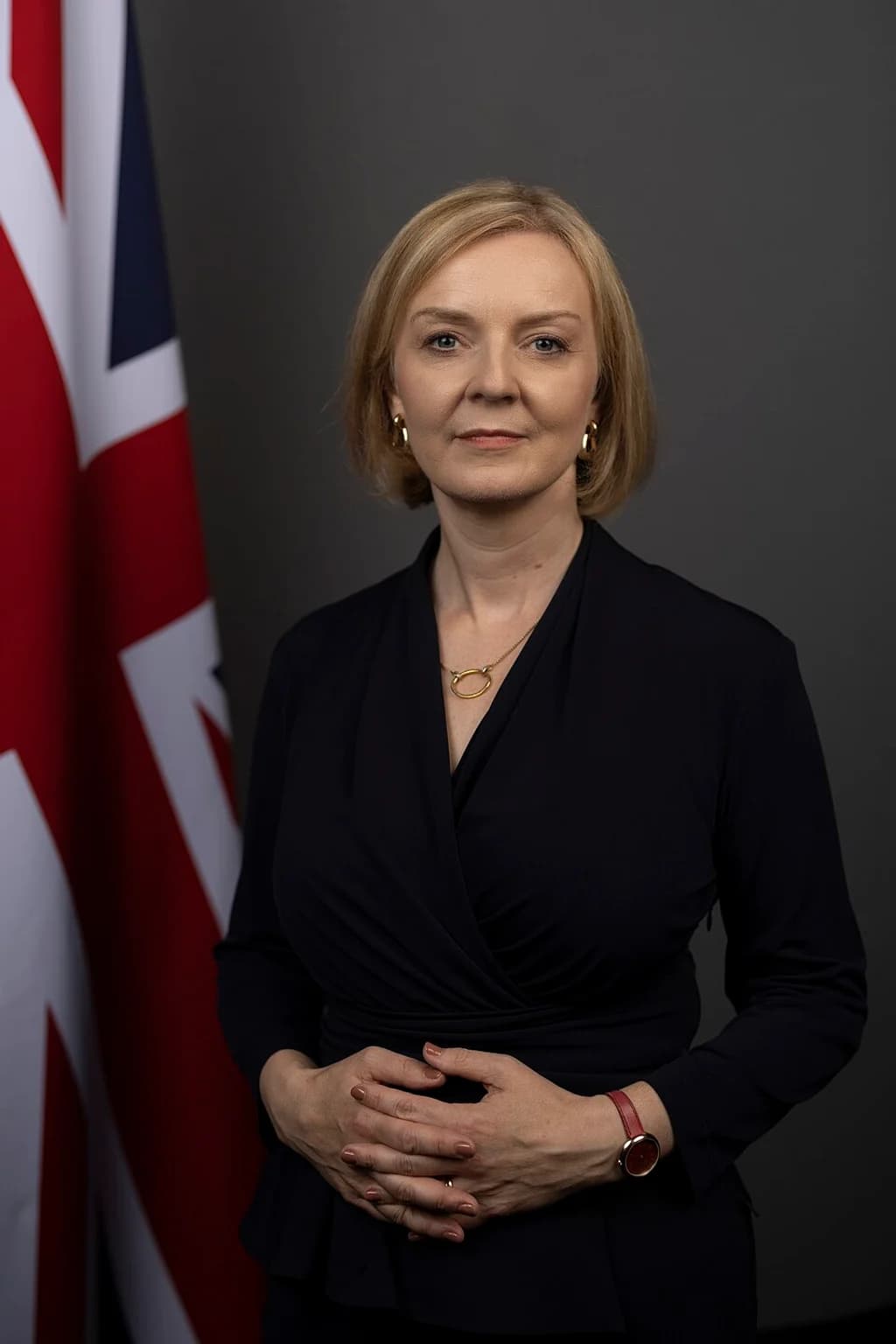
Official portrait photograph of Liz Truss
Licensed archival image

A real historical or editorial image is used here. Source, licence and transformation details are publicly recorded. Image policy Attribution

Quick answer

Liz Truss was Prime Minister of the United Kingdom from 6 September to 25 October 2022, the shortest premiership in British history. Her mini-budget triggered market turmoil and ended her authority within weeks.

Born
1975 CE
Role
British Prime Minister
Years
Born 1975 CE
Facts

Liz Truss timeline facts

Selected specifics from this profile's life story.

1975
Early life

Mary Elizabeth Truss was born in Oxford in 1975 and raised in a politically aware academic family, far from the Conservative identity she later embraced.

2012–2022
Government roles

Between 2012 and 2022, Truss held a wide range of ministerial offices, including environment secretary, justice secretary, trade secretary and foreign secretary.

2022
Economic turmoil

The September 2022 mini-budget triggered a sharp market reaction, a fall in sterling, rising gilt yields and emergency intervention by the Bank of England.

Post-2022
Aftermath and legacy

After office, Truss became a symbol of the risks of radical economic policy without institutional trust, and she lost her seat in the 2024 general election.

Life Journey

A rapid rise and an even faster fall in power

Follow the story in a more continuous narrative, with a reading mode that matches how much depth you want.

Complete chronology

1975

Early life

Liz Truss was born Mary Elizabeth Truss in Oxford on 26 July 1975. Her parents were left-leaning academics, and her childhood included moves between Scotland, northern England and Canada. That upbringing gave her an early familiarity with argument, institutions and the language of public causes. It also made her later political identity more striking. Truss did not emerge from the traditional Conservative social world. Her route into public life was shaped by debate, education and a willingness to revise her allegiances. The contrast between her early environment and later free-market Conservatism became part of her political story: she presented herself as someone who had chosen ideas rather than inherited them. Whether admirers saw that as intellectual independence or critics saw it as ideological restlessness, it helped define her public persona.


1990s

Education and outlook

Truss studied Philosophy, Politics and Economics at Merton College, Oxford, the classic training ground for many British politicians. As a student she was active in the Liberal Democrats and even spoke in favour of abolishing the monarchy, a position far removed from her later Conservative leadership. Her shift to the Conservative Party in the 1990s was not unusual in a generation unsettled by the end of the Cold War and debates over markets, Europe and the role of the state. What became consistent was her attraction to argument by principle: lower taxes, deregulation, growth and scepticism toward what she saw as economic orthodoxy. This intellectual style gave her clarity, but also encouraged a belief that entrenched institutions were obstacles to be overcome. That belief would later become both her appeal and her danger.

2010

Entry into politics

Truss entered Parliament in 2010, the year David Cameron formed a coalition government with the Liberal Democrats. She represented South West Norfolk after surviving a difficult selection controversy that tested her resilience before she had even reached Westminster. In her early parliamentary career she associated with a group of modernising Conservatives interested in education reform, fiscal restraint and public-sector efficiency. She co-authored policy work that argued Britain needed to become more competitive and less complacent. This period built her reputation as energetic, policy-focused and ideologically committed. She was not yet a national figure, but she was clearly ambitious. In a party moving through austerity, coalition compromise and eventually Brexit, Truss learned how to adapt while keeping a recognisable message about growth and economic liberalism.

2012–2022

Government roles

Truss's ministerial career was unusually broad. She served under David Cameron, Theresa May and Boris Johnson, moving through education, environment, justice, Treasury, international trade, women and equalities, and the Foreign Office. Not every role was an obvious triumph. As justice secretary, she was criticised over her response to attacks on judicial independence after the Brexit-related Article 50 litigation. As trade secretary, she became a prominent advocate of post-Brexit trade agreements, using the role to build support among Conservative members. As foreign secretary, she took a hard line on Russia before and after the full-scale invasion of Ukraine in 2022. The breadth of offices gave her experience and visibility, but it also encouraged a performative style of conviction. By the time Boris Johnson fell, Truss had become a leading figure for party members who wanted tax cuts, Brexit confidence and ideological clarity.

2022

Party leadership

The 2022 Conservative leadership contest followed Boris Johnson's resignation amid scandal and exhaustion inside government. Truss faced Rishi Sunak in the final ballot of party members. The contest sharpened a central economic divide. Sunak warned that immediate unfunded tax cuts would worsen inflation and unsettle markets. Truss argued that Britain needed bold supply-side reform, lower taxes and faster growth, presenting Treasury caution as part of the problem. Her message appealed to many Conservative members who wanted ideological confidence after years of crisis management. She won the leadership on 5 September 2022 and became prime minister the next day at Balmoral, in Queen Elizabeth II's final constitutional act before her death on 8 September. Truss entered office with a mandate from party members, but not from the wider electorate or even a large majority of Conservative MPs.

2022

Becoming prime minister

Truss took office during a severe cost-of-living crisis, with energy prices surging after Russia's invasion of Ukraine and inflation already high. Her government announced an energy price guarantee, then moved quickly toward a much broader economic package led by Chancellor Kwasi Kwarteng. The central idea was that tax cuts and deregulation would jolt Britain toward higher growth. The political problem was speed; the economic problem was credibility. The government chose not to accompany its early package with forecasts from the Office for Budget Responsibility, and it signalled large borrowing at a moment when investors were already sensitive to inflation and interest-rate pressure. Truss believed she was breaking a low-growth consensus. Markets heard an unfunded gamble by a new leader with limited parliamentary authority.

2022

Economic turmoil

The mini-budget of 23 September 2022 became the defining event of Truss's premiership. It included major tax cuts, including the planned abolition of the 45p top income-tax rate, alongside a reversal of the planned corporation-tax rise and other measures. The reaction was immediate and severe. Sterling fell, gilt yields rose sharply, and pension funds using liability-driven investment strategies came under intense pressure, prompting emergency Bank of England intervention to stabilise the market. The crisis was not simply about one tax rate. It was about confidence in the government's fiscal judgement. Truss and Kwarteng had tried to assert political control over economic orthodoxy; instead, financial markets imposed a brutal form of accountability. U-turns followed, but each reversal made the government look weaker rather than more responsive.

2022

Resignation

Truss attempted to save her premiership by removing Kwasi Kwarteng on 14 October and appointing Jeremy Hunt as chancellor. Hunt dismantled much of the economic programme, restoring the corporation-tax rise and signalling a return to fiscal restraint. The effect was paradoxical: it calmed markets but stripped Truss of the project that justified her leadership. Cabinet discipline frayed, parliamentary management deteriorated, and Conservative MPs concluded that her authority could not recover. On 20 October 2022, after only 44 days in office and amid open party revolt, she announced her resignation as party leader. She remained prime minister until Rishi Sunak took office on 25 October, making her 49-day premiership the shortest in British history. The speed of the collapse was extraordinary even in the turbulent politics of post-Brexit Britain.

Post-2022

Aftermath and legacy

Truss's legacy is unusually concentrated because her premiership was so short. Supporters argue that she identified real problems: weak productivity, low growth, heavy regulation and the difficulty of making long-term reform in a cautious political culture. Critics answer that diagnosing low growth is not the same as governing a complex economy, and that her failure lay in trying to force through a radical programme without market confidence, parliamentary groundwork or credible fiscal sequencing. After leaving office, Truss continued to defend her broad economic argument and blamed resistance from institutions and orthodox opinion for much of the collapse. The electorate delivered a sharper verdict in 2024, when she lost South West Norfolk, the seat she had held since 2010. Her importance in British political history rests less on duration than warning: in a modern financial state, authority depends not only on conviction, but on trust.

Continue in context

Connected stories

Move from the profile into the wider events and settings this figure belongs to.

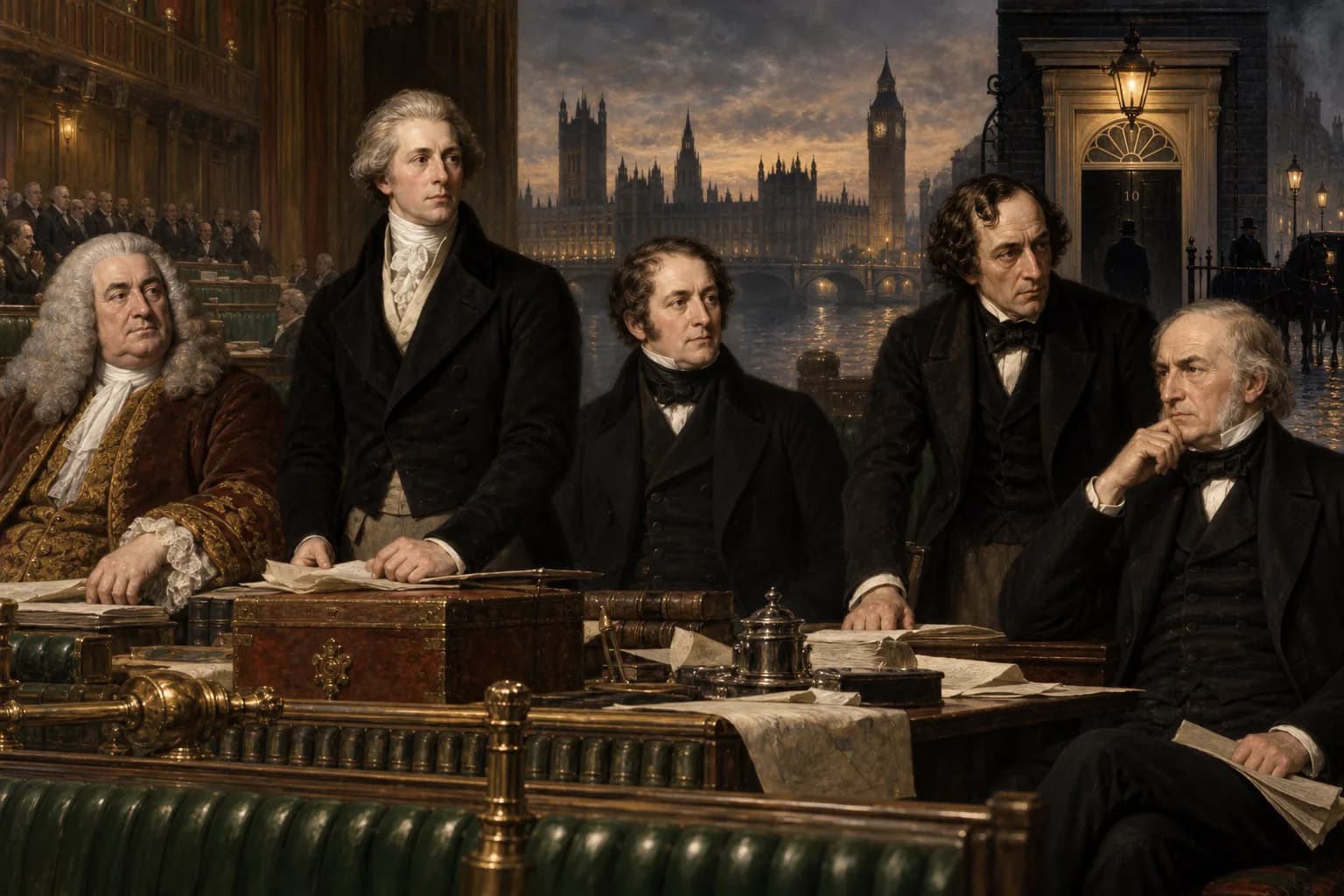
British Prime Ministers lineage
LineagePrime ministers in sequence
British Prime Ministers
1721 CE–present

Explore British prime ministers from Walpole to the present.

View lineage
Tertiary paths

Content note

This profile is written for educational use and connects to related Stories of History pages. The main portrait uses a real historical or editorial image, with source and licence details recorded for attribution review. Image policy Image attribution

References

Sources & Further Reading

Reliable reference works, archives and reading paths connected to this profile.

Further reading

  1. Encyclopaedia Britannica, Search results for Liz Truss,” accessed June 2026.Open source
  2. WorldCat, Books and library holdings for Liz Truss,” accessed June 2026.Open source

Primary sources

  1. Library of Congress, Search results for Liz Truss,” accessed June 2026.Open source

Reviewed claim sources

Loading reviewed claim sources...

A weekly route through history

Find out first about the latest published stories, feature notes and occasional Premium offers in one weekly email.