People

Gerald Ford

Gerald Ford was the 38th U.S. President from 1974 to 1977. He took office after Richard Nixon resigned, pardoned Nixon, faced inflation and recession, and helped steady American government after Watergate.

Born
1913 CE
Died
2006 CE
Role
38th President of the United States

38th President of the United States (1913–2006)

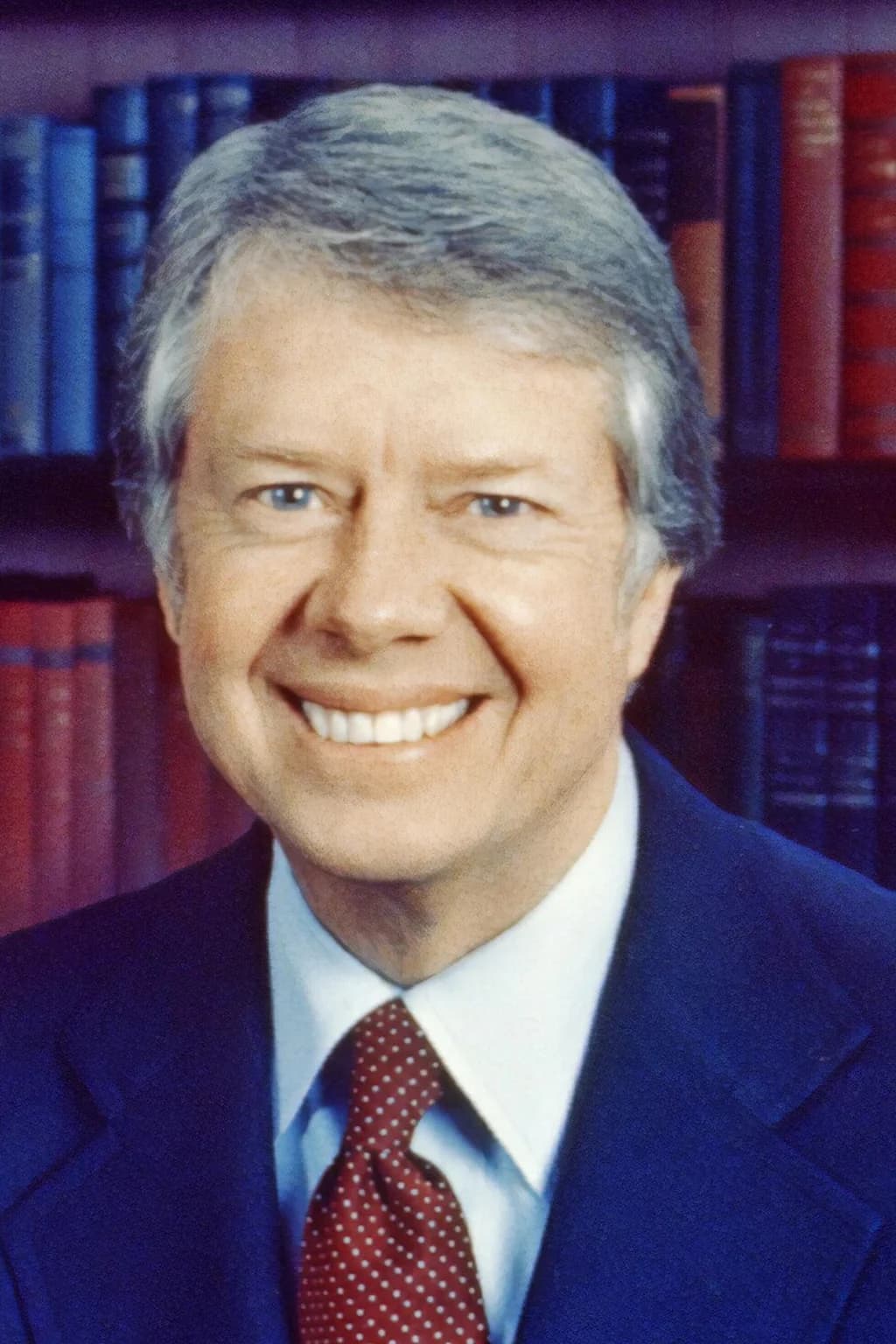
Portrait photograph of Gerald Ford
Historical photograph

A real historical or editorial image is used here. Source, licence and transformation details are publicly recorded. Image policy Attribution

Quick answer

Gerald Ford was the 38th U.S. President from 1974 to 1977. He took office after Richard Nixon resigned, pardoned Nixon, faced inflation and recession, and helped steady American government after Watergate.

Born
1913 CE
Died
2006 CE
Role
38th President of the United States
Years
1913-2006 CE
Facts

Gerald Ford timeline facts

Selected specifics from this profile's life story.

1913–1935
Midwestern roots

Raised in a modest Midwestern household, he developed a strong work ethic and discipline through academics, sports, and community life.

1949–1973
Entering Congress

He served in Congress for many years, earning a reputation for reliability, cooperation, and steady leadership within his party.

1974
Controversial pardon

He issued a controversial pardon to his predecessor, aiming to move the country forward but facing strong public criticism.

After 1977
Lasting legacy

After leaving office, he was increasingly viewed as a stabilizing figure who helped guide the nation through a difficult transition.

Life Journey

A steady hand in a moment of crisis

Follow the story in a more continuous narrative, with a reading mode that matches how much depth you want.

Complete chronology

1913–1935

Midwestern roots

Gerald Ford was born Leslie Lynch King Jr. on 14 July 1913 in Omaha, Nebraska. His mother left his abusive biological father soon after his birth and later married Gerald R. Ford Sr., whose name the future president eventually took. Raised in Grand Rapids, Michigan, Ford grew up in a household that valued work, stability and civic respectability rather than inherited power. Football became his route to confidence and opportunity; he starred at the University of Michigan and received offers to play professionally. Instead, he chose law and public service. His early biography matters because Ford's political identity rested on steadiness: not brilliance, not glamour, but trustworthiness earned over time.


1935–1941

Education and law

Ford studied law at Yale while coaching football and working to support himself. He was not a legal theorist of later fame, but law trained his respect for procedure, institutions and fair dealing. He returned to Grand Rapids to practice and entered Republican politics as a moderate internationalist. His ambitions were real, but they were rooted in congressional service rather than a dramatic presidential dream. Ford's education and early career formed a politician comfortable with committees, compromise and relationships. That background would later make him seem reassuring after the paranoia and secrecy of the Nixon years.

1942–1946

World War II service

During World War II Ford served in the U.S. Navy, including aboard the light aircraft carrier USS Monterey in the Pacific. He survived a dangerous typhoon in 1944 that nearly swept him overboard and damaged the ship. The war reinforced his belief in teamwork, hierarchy and practical competence. Like many of his generation, Ford returned with a widened sense of American responsibility in the world. He was not an isolationist Republican. His later congressional career supported NATO, foreign aid and Cold War containment. Military service gave him credibility in a political age when wartime experience still mattered deeply.

1949–1973

Entering Congress

Ford entered the House of Representatives in 1949 after defeating an isolationist Republican incumbent in the primary. He represented Grand Rapids for twenty-five years, building a reputation as hardworking, personable and ideologically center-right. He served on the Warren Commission after John F. Kennedy's assassination and rose to become House Minority Leader in 1965. Ford wanted to be Speaker, but Republicans never won the House during his career. His congressional style emphasized loyalty, personal relationships and party rebuilding rather than sweeping policy innovation. By the early 1970s he was widely liked in Washington, which made him valuable when trust became scarce.

1973–1974

Vice presidency

In 1973 Vice President Spiro Agnew resigned after a corruption investigation. Under the Twenty-Fifth Amendment, Nixon nominated Ford as vice president because he was confirmable: conservative enough for Republicans, acceptable to Democrats and regarded as personally honest. Ford entered the vice presidency while Watergate was closing around Nixon. He defended the administration longer than later narratives sometimes remember, but he was not implicated in the scandal. His appointment showed the value of a reputation built slowly. In a crisis, the country needed someone Congress would trust enough to place one heartbeat from the presidency.

1974

Assuming presidency

Ford became president on 9 August 1974 after Nixon resigned, declaring that America's long national nightmare was over. No one had ever reached the presidency in quite this way: appointed vice president, then elevated without a national election. His first task was legitimacy. He opened a less imperial style of presidency, spoke plainly and tried to calm a country exhausted by Vietnam, Watergate and institutional distrust. Yet the very absence of electoral mandate made every major decision more fragile. Ford had to prove that constitutional succession could work not as theory, but as daily government.

1974

Controversial pardon

On 8 September 1974 Ford granted Nixon a full pardon for federal crimes he might have committed as president. The decision nearly destroyed Ford's public standing. Many Americans suspected a deal, though no proof of one emerged, and critics argued that accountability had been sacrificed for elite comfort. Ford insisted he acted to prevent a prolonged national obsession with Nixon that would paralyze government. In the short term, the pardon damaged his credibility and likely contributed to his 1976 defeat. In later decades, many reassessed it as an act of political courage. The controversy remains valuable because it asks what democratic healing requires: punishment, closure, or both.

1974–1977

Economic struggles

Ford governed during stagflation, a punishing mix of inflation, unemployment and slow growth that old economic tools struggled to solve. His early 'Whip Inflation Now' campaign, remembered for its WIN buttons, looked inadequate against structural problems driven by oil shocks, productivity pressures and monetary instability. He later shifted toward spending restraint and vetoed numerous bills from a Democratic Congress. Abroad, he watched the fall of Saigon in 1975, signed the Helsinki Accords, and survived two assassination attempts. His presidency was short but crowded with evidence that the postwar American consensus was weakening. Ford managed, but he could not restore the easier confidence of earlier decades.

After 1977

Lasting legacy

Ford lost narrowly to Jimmy Carter in 1976 after a bruising Republican primary challenge from Ronald Reagan and a general election shaped by Watergate's shadow. In retirement, his reputation improved. He was honored for candor, constitutional steadiness and the Nixon pardon, receiving the Profile in Courage Award in 2001. Ford was not a transformative president, and his administration did not solve America's economic or geopolitical uncertainty. His importance lies elsewhere. He demonstrated that the constitutional system could absorb presidential disgrace without breaking. To ask why Gerald Ford was important is to see the value of ordinary decency at a moment when ordinary trust had become rare.

Continue in context

Connected stories

Move from the profile into the wider events and settings this figure belongs to.

American Presidents lineage
Lineage47 presidents
American Presidents
1789 CE–present

The succession of American presidents from George Washington to today.

View lineage
Tertiary paths

Content note

This profile is written for educational use and connects to related Stories of History pages. The main portrait uses a real historical or editorial image, with source and licence details recorded for attribution review. Image policy Image attribution

References

Sources & Further Reading

Reliable reference works, archives and reading paths connected to this profile.

Further reading

  1. Encyclopaedia Britannica, Search results for Gerald Ford,” accessed June 2026.Open source
  2. WorldCat, Books and library holdings for Gerald Ford,” accessed June 2026.Open source

Primary sources

  1. Library of Congress, Search results for Gerald Ford,” accessed June 2026.Open source

Reviewed claim sources

Loading reviewed claim sources...

A weekly route through history

Find out first about the latest published stories, feature notes and occasional Premium offers in one weekly email.