People

Gaiseric

Gaiseric was king of the Vandals and Alans from 428 to 477. He led his people into North Africa, captured Carthage in 439, sacked Rome in 455, and made the Vandal kingdom a major Mediterranean naval power.

Born
c. 389 CE
Died
477 CE
Role
King of the Vandals and Alans

King of the Vandals and Alans (c. 389-477)

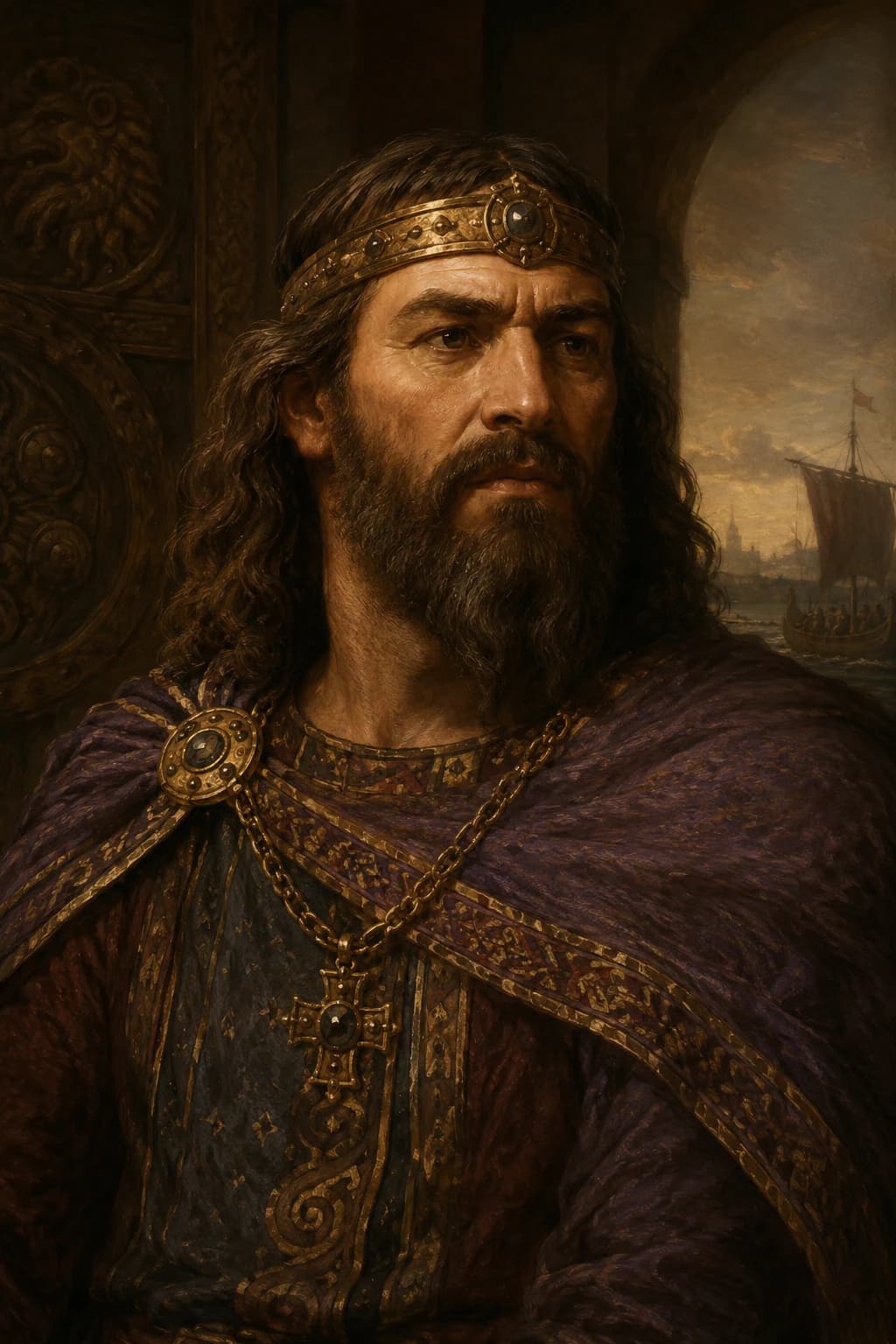
AI-generated portrait of Gaiseric, king of the Vandals and Alans
AI-assisted historical reconstruction

An illustrative reconstruction based on historical context. It is not a photograph or documentary likeness. Image policy

Quick answer

Gaiseric was king of the Vandals and Alans from 428 to 477. He led his people into North Africa, captured Carthage in 439, sacked Rome in 455, and made the Vandal kingdom a major Mediterranean naval power.

Born
c. 389 CE
Died
477 CE
Role
King of the Vandals and Alans
Years
c. 389-477 CE
Quick facts

Profile details

Additional identity and tagging details that are not already covered in the introduction.

Also known as
Geiseric, Genseric
Facts

Gaiseric timeline facts

Selected specifics from this profile's life story.

c. 389-428
Rise among the Vandals

Gaiseric rose to leadership among the Vandals and Alans during their unsettled years in the western Roman provinces.

439
Taking Carthage

Gaiseric captured Carthage in 439, taking control of the western empire's richest African city.

455
Sack of Rome

In 455, Gaiseric's fleet reached Rome and sacked the city, confirming Vandal power across the western Mediterranean.

477 and after
A lasting rupture

Gaiseric died in 477, leaving a Vandal kingdom that had outlasted the western imperial office.

Life Journey

The king who took Rome's granary

Follow Gaiseric from displaced Vandal leader to the ruler of a North African naval kingdom.

Complete chronology

c. 389-428

Rise among the Vandals

Gaiseric was born around 389 and became king of the Vandals and Alans in 428. His people had already moved through Gaul and into Iberia during the great disruptions of the early fifth century. They were not simply wandering raiders by this point but an armed political community looking for security, land, and leverage inside a Roman world that was losing the ability to control its frontiers.
429

Crossing to Africa

In 429, Gaiseric moved his people from Iberia into North Africa, crossing the narrow straits into one of the richest regions of the western empire. The move was bold because North Africa was not a marginal frontier. It supplied grain, taxes, soldiers, and maritime connections that the western court badly needed. By shifting the Vandal base there, Gaiseric turned a displaced people into a force positioned at the heart of Roman survival.

439

Taking Carthage

Carthage fell to Gaiseric in 439. The capture gave the Vandals a major city, a wealthy province, shipyards, ports, and control over routes that connected Africa, Italy, Sicily, and the wider western Mediterranean. For the western Roman Empire, this was catastrophic. Losing Carthage did not merely mean losing prestige. It meant losing the revenue and grain that made armies and administration possible.

440s

A naval kingdom

Gaiseric quickly understood what Carthage offered. With ships, ports, and experienced maritime communities, the Vandal kingdom could operate at sea in a way most Germanic successor kingdoms could not. Vandal fleets threatened Sicily, Sardinia, Italy, and the wider coastline. Roman governments launched attempts to recover Africa, but Gaiseric used diplomacy, timing, and naval mobility to survive them.

455

Sack of Rome

In 455, after turmoil in the western imperial court, Gaiseric sailed to Italy and sacked Rome. The event lasted longer than Alaric's sack in 410 and removed enormous wealth from the city, though later traditions about the word 'vandalism' should not be read back too simply into the event. The sack showed that Rome was no longer protected by imperial distance, prestige, or naval control. A king ruling from North Africa could strike the old capital when opportunity opened.

460s

Failed reconquests

The most dramatic Roman attempt to recover Africa came in 468, when a huge eastern and western expedition targeted the Vandal kingdom. Gaiseric defeated it through negotiation, delay, and a destructive attack on the Roman fleet. The failure was ruinously expensive and confirmed that the empire could not simply reverse the loss of Africa. By then, the western court lacked the resources that North Africa itself had once supplied.

477 and after

A lasting rupture

Gaiseric died in 477, one year after the conventional end of the Western Roman Empire. His kingdom survived him for decades, until Justinian's general Belisarius conquered it in 533-534. Gaiseric's importance lies in the scale of the rupture he created. By taking North Africa, he removed the fiscal and maritime foundation that any western imperial recovery needed. The fall of Rome was not only a story of armies crossing frontiers. It was also a story of revenue, ports, grain, and a ruler who understood exactly what those things were worth.

Continue in context

Connected stories

Move from the profile into the wider events and settings this figure belongs to.

Tertiary paths

Content note

This profile is written for educational use and connects to related Stories of History pages. The main portrait is an AI-assisted historical reconstruction, included as an illustrative aid rather than documentary evidence. Image policy

References

Sources & Further Reading

Reliable reference works, archives and reading paths connected to this profile.

Further reading

  1. Encyclopaedia Britannica, Search results for Gaiseric,” accessed June 2026.Open source
  2. WorldCat, Books and library holdings for Gaiseric,” accessed June 2026.Open source

Primary sources

  1. Library of Congress, Search results for Gaiseric,” accessed June 2026.Open source

Reviewed claim sources

Loading reviewed claim sources...

A weekly route through history

Find out first about the latest published stories, feature notes and occasional Premium offers in one weekly email.
