← People

Empress Matilda

Empress Matilda was imperial consort and claimant to the English throne. Named heir to Henry I, she fought Stephen for England and came close to coronation. Her struggle preserved the claim that eventually made her son Henry II king.

Born
1102 CE
Died
1167 CE
Role
Imperial consort and claimant to the English throne
Full name
Matilda of England, Empress
Also known as
Empress Maud, Matilda of England

Imperial consort and claimant to the English throne (1102–1167)

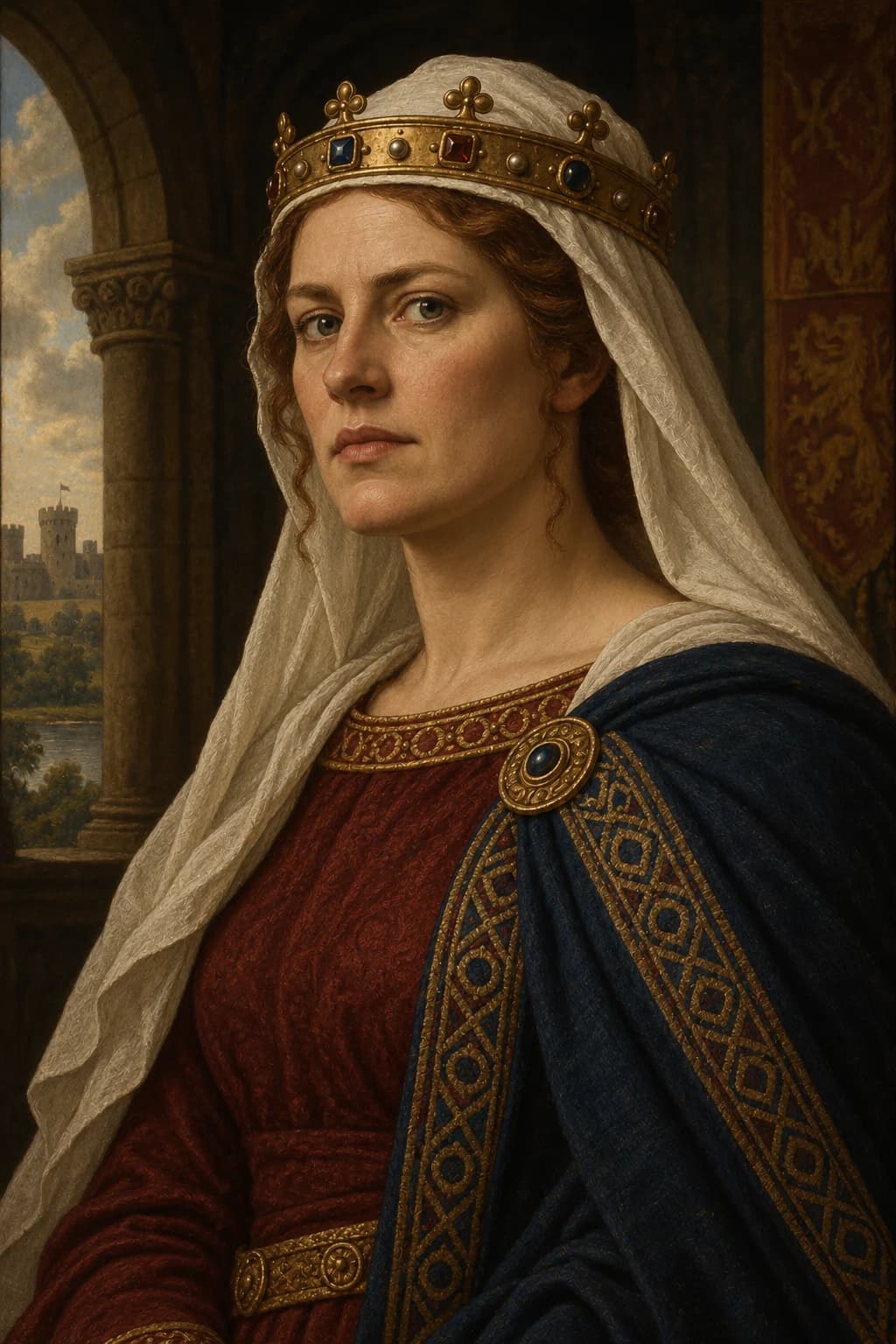
AI-generated portrait of Empress Matilda in period clothing; an interpretive reconstruction, not a documented likeness
AI-assisted historical reconstruction

An illustrative reconstruction based on historical context. It is not a photograph or documentary likeness. Image policy

Life Journey

The uncrowned claimant behind a new dynasty

Follow Matilda from the imperial court to a disputed English crown and the rise of Henry II.

Complete chronology

1102–1110

A daughter of two traditions

Matilda’s father was a son of William the Conqueror, while her mother’s ancestry connected the new dynasty to earlier English rulers. Born in 1102, she grew up in a monarchy held together across England and Normandy. Her younger brother William Adelin was expected to succeed Henry. Matilda’s future initially lay in a marriage alliance, rather than the English crown. That distinction mattered: when she later asserted her inheritance, she brought a strong dynastic claim into a political world with no settled expectation that a woman would rule England in her own right.

1110–1125

An imperial education

Matilda left her family’s court while still young to prepare for marriage to Henry V. The marriage in 1114 placed her inside the politics of the empire, including travel and government in Italy. She participated in official acts and exercised authority during her husband’s absence. These experiences help explain why she later approached rule as something she could do, rather than merely something she might transmit to a son. Henry died in 1125 without children from their marriage. Matilda returned to her father’s world with the title of empress and years of practical political experience.

1120–1127

The heir Henry chose

The wreck of the White Ship in 1120 destroyed Henry’s expected succession. William Adelin drowned, and the king’s later marriage produced no replacement male heir. Once Matilda was widowed, Henry turned to her. In 1127, leading churchmen and nobles swore to recognise her as successor if he died without a legitimate son. An oath created an obligation, but it could not remove every doubt about female rule or guarantee obedience after the king’s death. Henry was trying to secure an inheritance through promises extracted while he still possessed the power to enforce them.

1128–1135

Marriage to Anjou

Henry arranged Matilda’s marriage to Geoffrey, the young heir of Anjou. It offered a strategic alliance on Normandy’s southern border, but the Angevins were old rivals of the Normans, and many nobles distrusted the match. The marriage itself was not consistently harmonious. Nevertheless, it produced three sons, including the future Henry II in 1133. Matilda’s claim now had a male heir behind it, though that did not make the immediate succession straightforward. When Henry I died in 1135, the family was across the Channel and a rival acted faster.

1135–1139

Stephen takes the crown

Stephen moved quickly after Henry’s death, gaining backing and coronation while Matilda and Geoffrey were unable to seize the English political centre. The oaths to Matilda became disputed rather than decisive. She pursued recognition of her claim and gathered support, including that of her half-brother Robert of Gloucester. In 1139 she entered England, where civil war took firmer shape. The conflict later called the Anarchy was not constant chaos everywhere, but rival courts, shifting allegiances and campaigns made authority uneven. Matilda could demand what her father had promised without being able to command universal acceptance.

1141

Almost a coronation

Matilda’s supporters defeated and captured Stephen at Lincoln in February 1141. With the king imprisoned, church leaders recognised her authority, and she used the title Lady of the English. London might have supplied the setting for a coronation, but resistance there and the continuing strength of Stephen’s queen prevented it. Matilda withdrew before she could secure the crown. Chroniclers often explained the setback through accusations of pride; those accounts need to be weighed against political rivalries and the expectations placed on a woman seeking sovereign power. Her greatest opportunity did not become an uncontested reign.

1141–1142

Reversal and escape

The advantage gained at Lincoln unravelled outside Winchester, where Robert of Gloucester was captured during Matilda’s retreat. His importance to her cause led to an exchange: Stephen regained freedom in return for Robert. In 1142 Stephen trapped Matilda at Oxford. Accounts describe an escape through the winter landscape with a small group of companions, sometimes emphasising white clothing against the snow. The vivid details should not overshadow the secure point: she escaped, and her opponents failed to extinguish her claim. Survival kept a rival political centre in existence when outright victory had become unlikely.

1148–1154

A claim passed forward

By 1148, Matilda had left England for Normandy. Geoffrey’s conquest there had given the family a stronger continental base, and Henry was becoming an effective claimant in his own right. The English war continued without delivering a lasting victory for either side. A settlement in 1153 allowed Stephen to remain king but recognised Henry as his successor. When Stephen died in 1154, Henry became Henry II. Matilda had not secured coronation herself. Her prolonged resistance had nevertheless prevented Stephen’s accession from erasing the inheritance on which her son’s position depended.

1154–1167

Authority beyond the crown

Matilda’s later years were not simply retirement after defeat. Based near Rouen, she retained estates, dealt with petitions and religious foundations, and advised her son. Her experience of imperial and Norman government gave her authority that did not depend on possessing the English crown. She died in 1167. Later memory often compressed her into a link between father and son, but her own choices sustained an alternative government and a disputed succession over many years. The Plantagenet monarchy began partly because she refused to allow Henry I’s promises to disappear with him.

Continue in context

Connected stories

Move from the profile into the wider events and settings this figure belongs to.

Tertiary paths

Content note

This profile is written for educational use and connects to related Stories of History pages. The main portrait is an AI-assisted historical reconstruction, included as an illustrative aid rather than documentary evidence. Image policy

References

Sources & Further Reading

Reliable reference works, archives and reading paths connected to this profile.

Sources used

  1. Columbia University, Epistolae, “Matilda of England, empress,” accessed 2 October 2026.

    Scholarly biography and translated letters; imperial experience, succession and Norman government.

    Open source
  2. Westminster Abbey, “Matilda (Maud), wife of Henry I,” accessed 2 October 2026.

    Distinguishes mother and daughter; dates, marriages and Henry II’s descent.

    Open source
  3. English Heritage, “History of Christchurch Castle and Norman House,” accessed 2 October 2026.

    Matilda’s supporters and the wider civil war.

    Open source
  4. Encyclopedia.com, “Matilda, Empress (1102–1167),” accessed 2 October 2026.

    Campaign chronology, London and the reversals of 1141–1142; older claims treated cautiously.

    Open source

Further reading

  1. Encyclopaedia Britannica, “Search results for Empress Matilda,” accessed June 2026.Open source
  2. WorldCat, “Books and library holdings for Empress Matilda,” accessed June 2026.Open source

Primary sources

  1. Library of Congress, “Search results for Empress Matilda,” accessed June 2026.Open source

Reviewed claim sources

Loading reviewed claim sources...

A monthly route through history

Find out first about the latest published stories, feature notes and occasional Premium offers in one monthly email.