People

Edward VI

Edward VI was Tudor king of England from 1547 to 1553. Crowned at nine, he ruled through Somerset and Northumberland while England's Protestant Reformation accelerated before his death at fifteen.

Born
1537 CE
Died
1553 CE
Role
Tudor king of England

Tudor king of England (1537–1553)

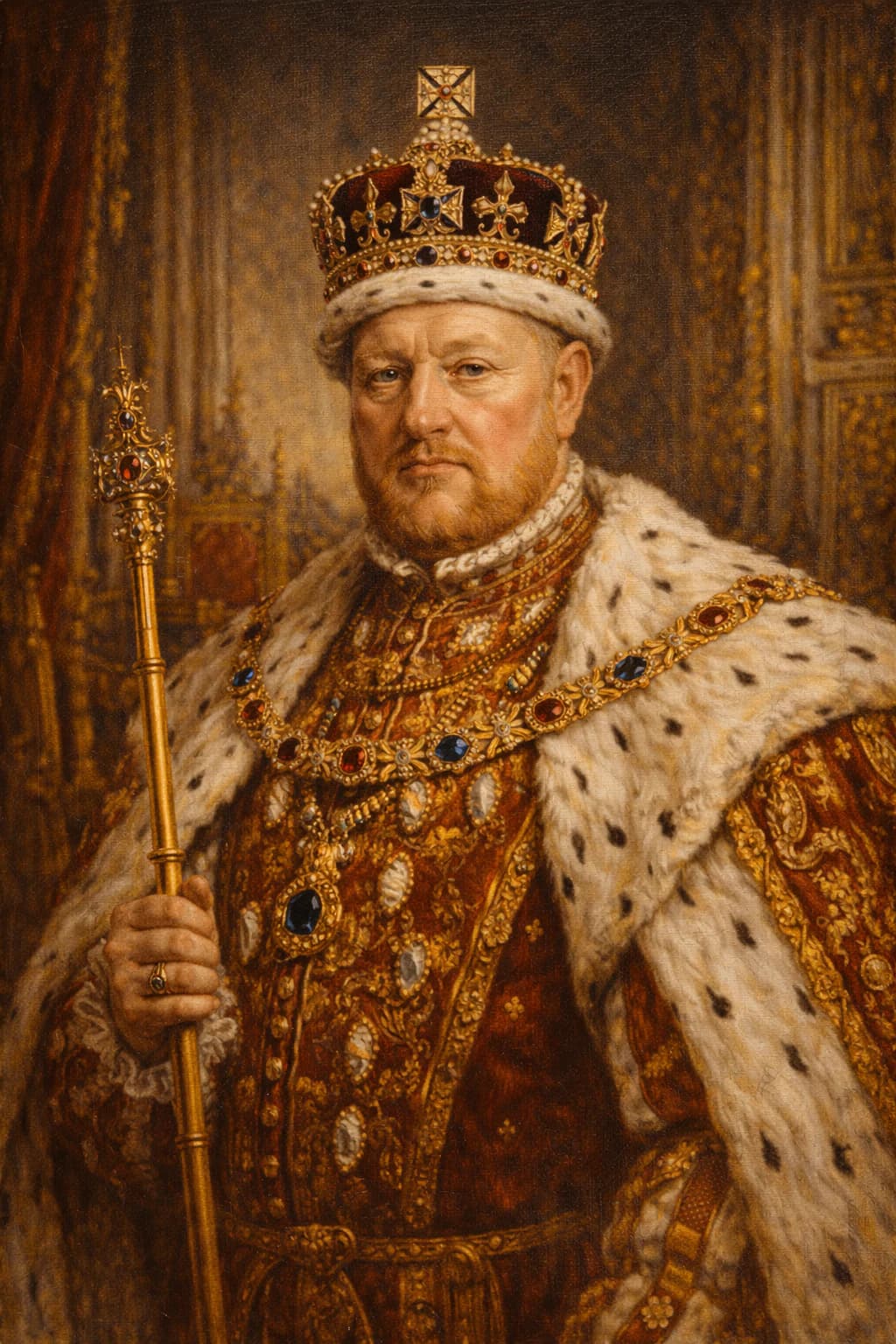
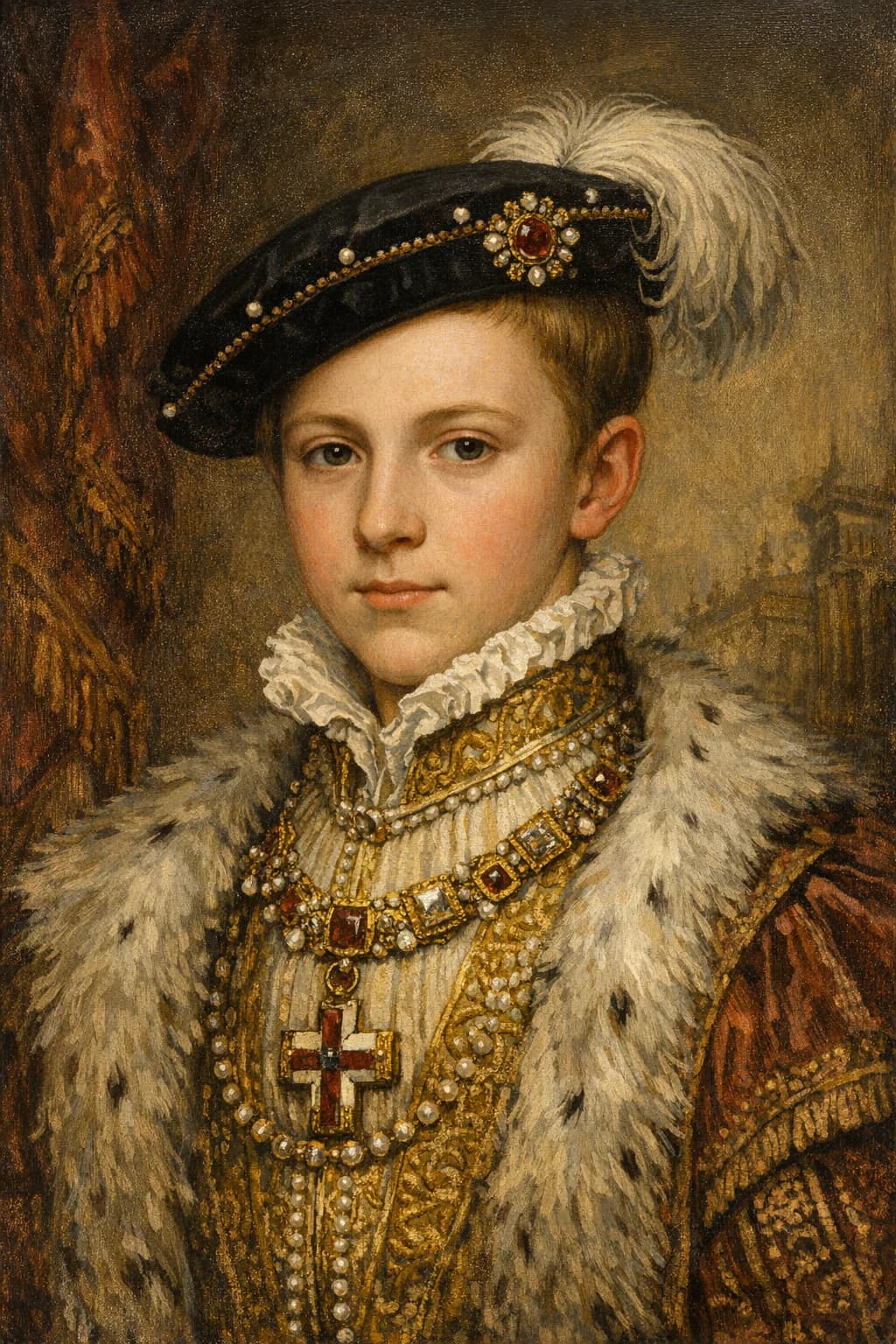
AI-generated portrait of Edward VI in Tudor royal attire
AI-assisted historical reconstruction

An illustrative reconstruction based on historical context. It is not a photograph or documentary likeness. Image policy

Quick answer

Edward VI was Tudor king of England from 1547 to 1553. Crowned at nine, he ruled through Somerset and Northumberland while England's Protestant Reformation accelerated before his death at fifteen.

Born
1537 CE
Died
1553 CE
Role
Tudor king of England
Years
1537-1553 CE
Facts

Edward VI timeline facts

Selected specifics from this profile's life story.

1537
The longed-for prince

Edward was born to Henry VIII and Jane Seymour after years of waiting for a male heir, becoming the centre of Tudor dynastic hopes from his first breath.

1549
Somerset's fall

A combination of rebellions, military setbacks, and political hostility brought down Somerset, replaced as dominant councillor by John Dudley, Earl of Warwick.

June–July 1553
The succession attempt

Edward died in July 1553 after naming Lady Jane Grey as his successor, but Mary rapidly gathered support and claimed the throne within days.

Post-1553
Protestant memory

Edward VI was remembered by later Protestants as the godly young king who had furthered true religion, his early death casting him as a figure of promise unfulfilled.

Life Journey

A child king, a reformed church, a disputed succession

Follow the story in a more continuous narrative, with a reading mode that matches how much depth you want.

Complete chronology

1537

The longed-for prince

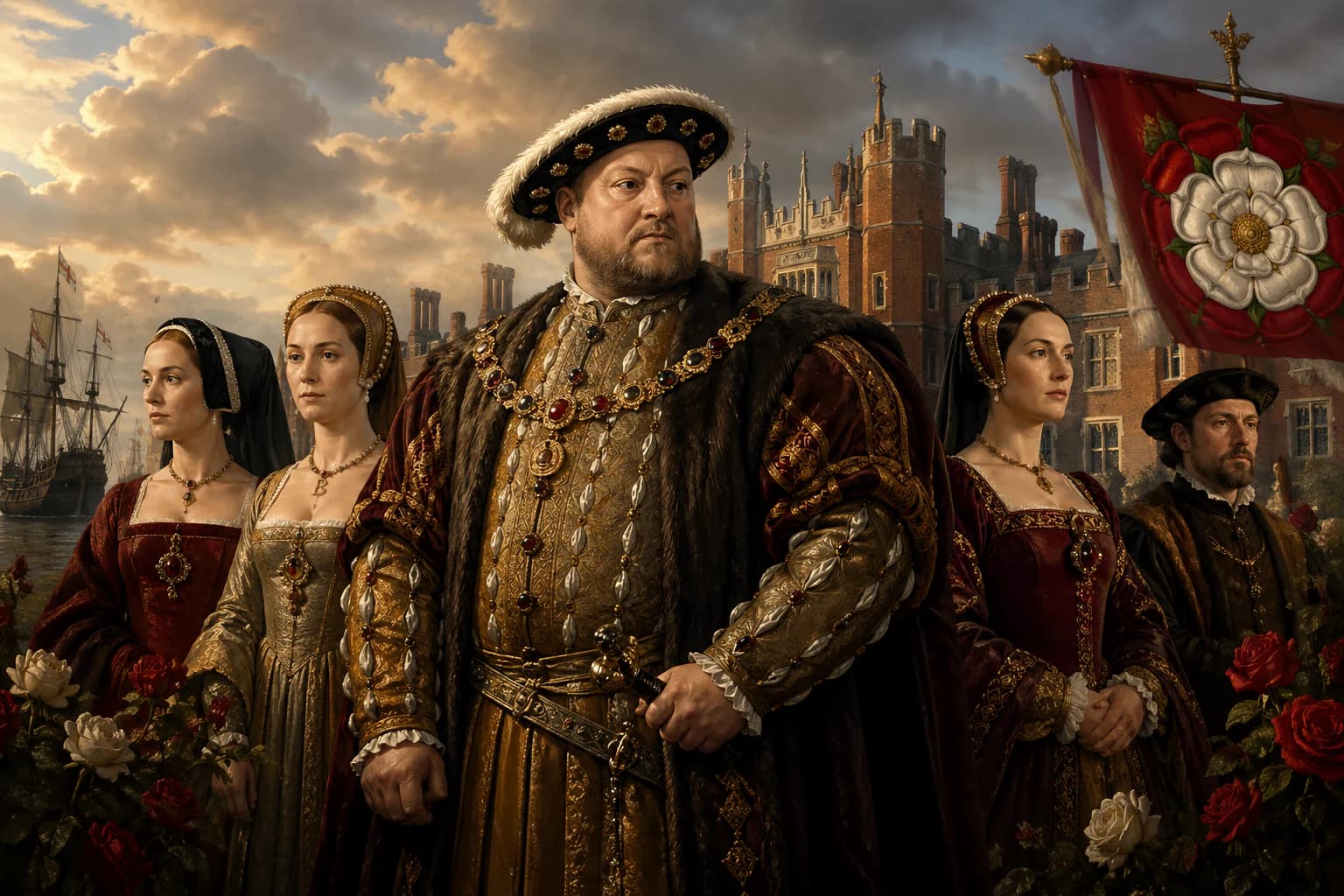
The birth of a healthy male heir at Hampton Court in October 1537 was greeted with an outpouring of national relief. Henry VIII had divorced one queen, beheaded another, and subjected the church to transformation partly in the pursuit of this moment. Jane Seymour, who had provided it, died twelve days after the birth, leaving the infant surrounded by nurses and tutors rather than a mother. Edward grew up as an only child for much of his early years, educated with great care by humanist scholars who instilled in him both a sharp intelligence and a fervent Protestant faith. He was precocious, intellectually serious, and deeply committed to the reformed religion — qualities that would define the character of his reign.
1540s

Education and faith

Henry VIII chose some of the most capable Protestant-leaning scholars in England to educate his son, placing him among carefully selected companions who formed his personal circle. Edward learned Latin, Greek, French, and other languages with apparent ease, and wrote letters and journals that survive as evidence of genuine intellectual engagement. His religious formation was deliberately Protestant, contrasting with the more ambiguous settlement his father had left. By his teens, Edward had absorbed the reformed faith not as an external requirement but as a personal conviction, which gave his later support for Protestant reform a sincerity that went beyond political calculation. He was not just a compliant child in someone else's reform project; he believed in it.

1547

Accession and protectorate

Henry VIII died in January 1547, and Edward's accession immediately raised the question of who would govern during a royal minority. His uncle Edward Seymour, the Earl of Hertford, moved quickly to establish himself as Lord Protector, taking far more personal authority than the council had originally envisaged. Seymour — now Duke of Somerset — used his position to push Protestant reform further and faster than Henry's cautious settlement had allowed. The Mass was abolished, chantries dissolved, and a new English-language Book of Common Prayer was imposed. Edward was genuinely engaged in these changes and supported them, but the governance of the kingdom was largely in his uncle's hands rather than his own.

1549

Somerset's fall

The summer of 1549 brought a crisis that Somerset's government could not contain. In the west, the imposition of the new Protestant prayer book triggered the Prayer Book Rebellion, an uprising of Catholic-aligned populations who called the new rite a Christmas game. In Norfolk, Kett's Rebellion broke out over agrarian grievances. Somerset's response to both was inadequate, and the combination of instability and his own high-handed governing style exhausted his council's patience. John Dudley, Earl of Warwick, led the movement that overthrew Somerset. Edward accepted the change with relatively little visible resistance. He was twelve years old and had learned that those around him made most of the real decisions.

1550–1552

Northumberland's regency

John Dudley, now Duke of Northumberland, ran the council with more political skill than Somerset had shown but with similar self-interest. The Protestant programme continued: a second Book of Common Prayer in 1552 pushed the English church even further from Catholic practice, and the church continued to be stripped of images, altars, and elaborate ceremony. Edward, now in his early teens, was increasingly engaged in governance, reading state papers and attending council meetings with genuine interest. He formed views on policy and expressed them with growing confidence. Whether he would have developed into a forceful independent ruler as he matured is one of history's unanswerable questions, since time was already running out.

1552–1553

Declining health

By the end of 1552, it was clear that Edward was seriously unwell. Whether his underlying condition was tuberculosis, as many historians have concluded, or a combination of illnesses, the trajectory was unmistakably downward. The succession question became urgent because Henry VIII's will had named his daughters Mary and Elizabeth next in line, but Mary was Catholic and her accession would overturn the Protestant settlement that the reign had built. Edward himself was deeply concerned about this, and his instinct aligned with Northumberland's more dynastic calculation that Lady Jane Grey, the Protestant granddaughter of Henry VIII's sister Mary, should succeed. Edward drew up a device for the succession excluding Mary and Elizabeth, though its legality was deeply vulnerable.

June–July 1553

The succession attempt

Edward VI died on 6 July 1553 at Greenwich, aged fifteen. The device for the succession that he had signed named Lady Jane Grey as queen, and she was proclaimed in London on 10 July. The gamble failed almost immediately. Mary, Henry VIII's eldest daughter, moved swiftly and with unexpected success, attracting popular support across the country from those who accepted the legal succession as defined by parliament and Henry's will. Within thirteen days, Jane's brief reign collapsed. Northumberland was arrested and later executed; Jane herself would be executed the following year. Edward's death had undone most of what his reign had tried to secure about the succession.

1553 and after

What was lost

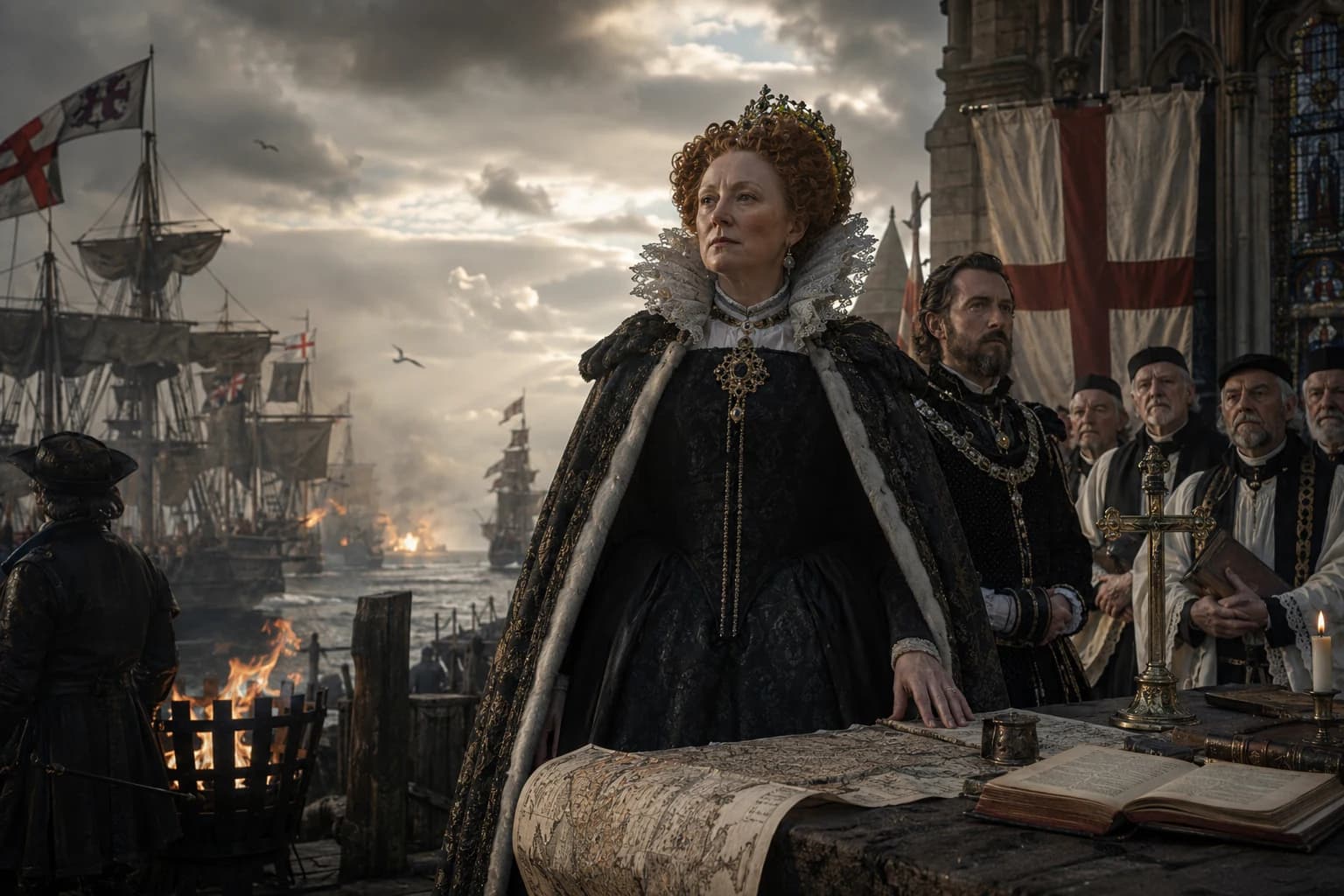
The Catholic reaction under Mary I was swift and comprehensive. The Edwardian prayer books were abolished, the Mass restored, and eventually papal authority was formally reinstated. The Protestant clergy who had shaped the Edwardian church were removed, imprisoned, or fled into exile on the continent. Those who refused to recant and stayed faced burning at the stake, generating the Protestant martyrology that shaped English religious identity for generations. The ease with which the Edwardian settlement was dismantled reflected its fundamental weakness: it had been imposed by a small group of reformers using the authority of a child king, without the broad social embedding that could have made it resilient. It took Elizabeth's reign to find the more durable settlement.

Post-1553

Protestant memory

Protestant writers and martyrologists, above all John Foxe in his Acts and Monuments, constructed an image of Edward VI as the ideal Protestant monarch: pious, learned, committed to reform, and cut down before his work could be completed. This portrait had a real basis — Edward genuinely believed in Protestant Christianity and supported its advancement — but it also served a polemical purpose, contrasting his pure intentions with Mary's Catholic persecution. His reign's actual record was more complex: the government that operated in his name was driven by factional rivalry, financial pressure, war costs, and elite self-interest as much as religious conviction. But the image of the godly boy-king proved durable, shaping how later generations understood the Reformation's English history.

Continue in context

Connected stories

Move from the profile into the wider events and settings this figure belongs to.

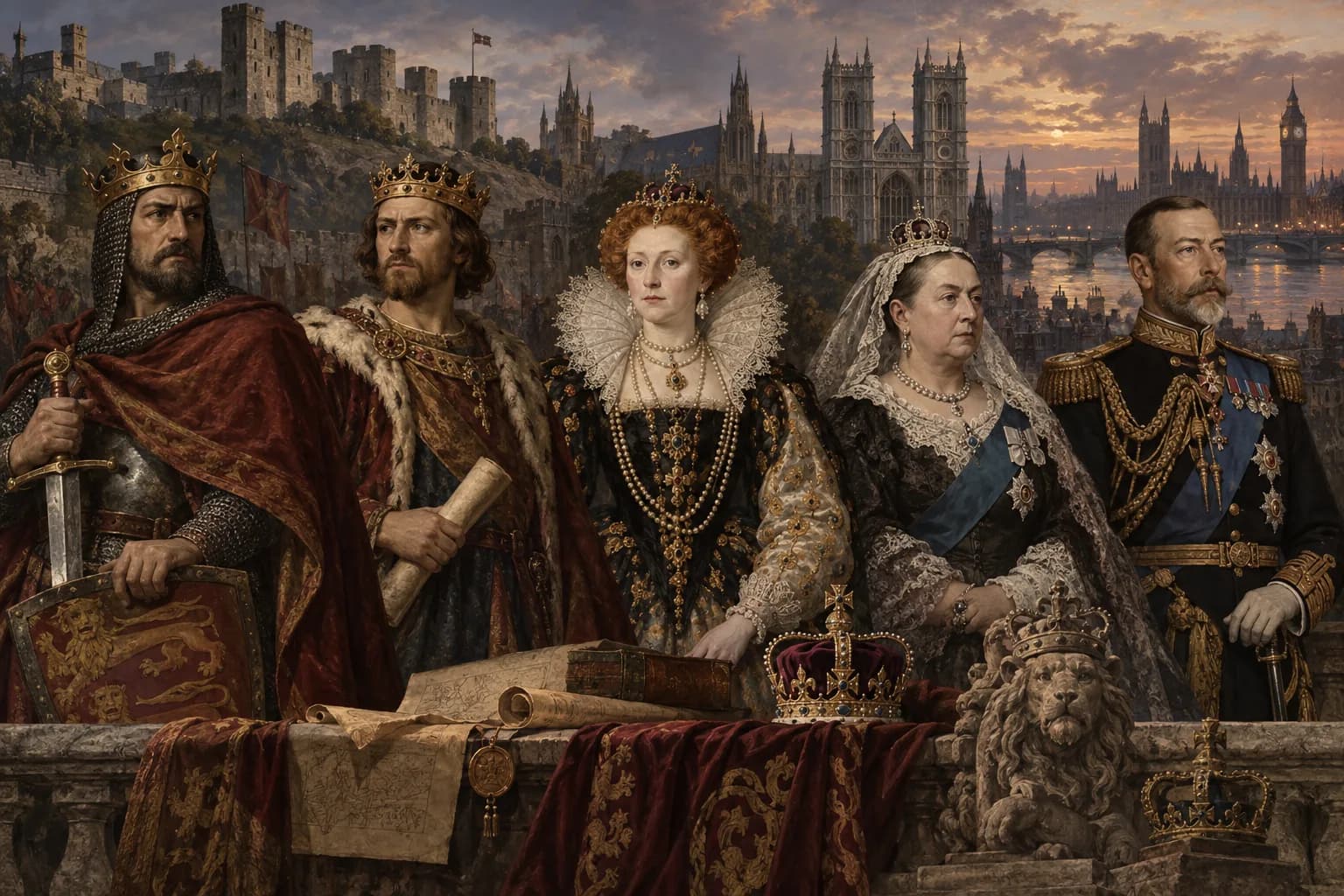
British Monarchs lineage
Lineage42 rulers
British Monarchs
1066 CE–present

Trace the English and later British monarchy from William I to today.

View lineage
Tertiary paths

Content note

This profile is written for educational use and connects to related Stories of History pages. The main portrait is an AI-assisted historical reconstruction, included as an illustrative aid rather than documentary evidence. Image policy

References

Sources & Further Reading

Reliable reference works, archives and reading paths connected to this profile.

Further reading

  1. Encyclopaedia Britannica, Search results for Edward VI,” accessed June 2026.Open source
  2. WorldCat, Books and library holdings for Edward VI,” accessed June 2026.Open source

Primary sources

  1. Library of Congress, Search results for Edward VI,” accessed June 2026.Open source

Reviewed claim sources

Loading reviewed claim sources...

A weekly route through history

Find out first about the latest published stories, feature notes and occasional Premium offers in one weekly email.