People

Batu Khan

Batu Khan was a Mongol prince and grandson of Genghis Khan. He led the western campaign into Rus and eastern Europe and established the Golden Horde's dominance.

Born
c. 1205 CE
Died
1255 CE
Role
Mongol prince and western khan

Mongol prince and founder of Golden Horde power (c. 1205-1255)

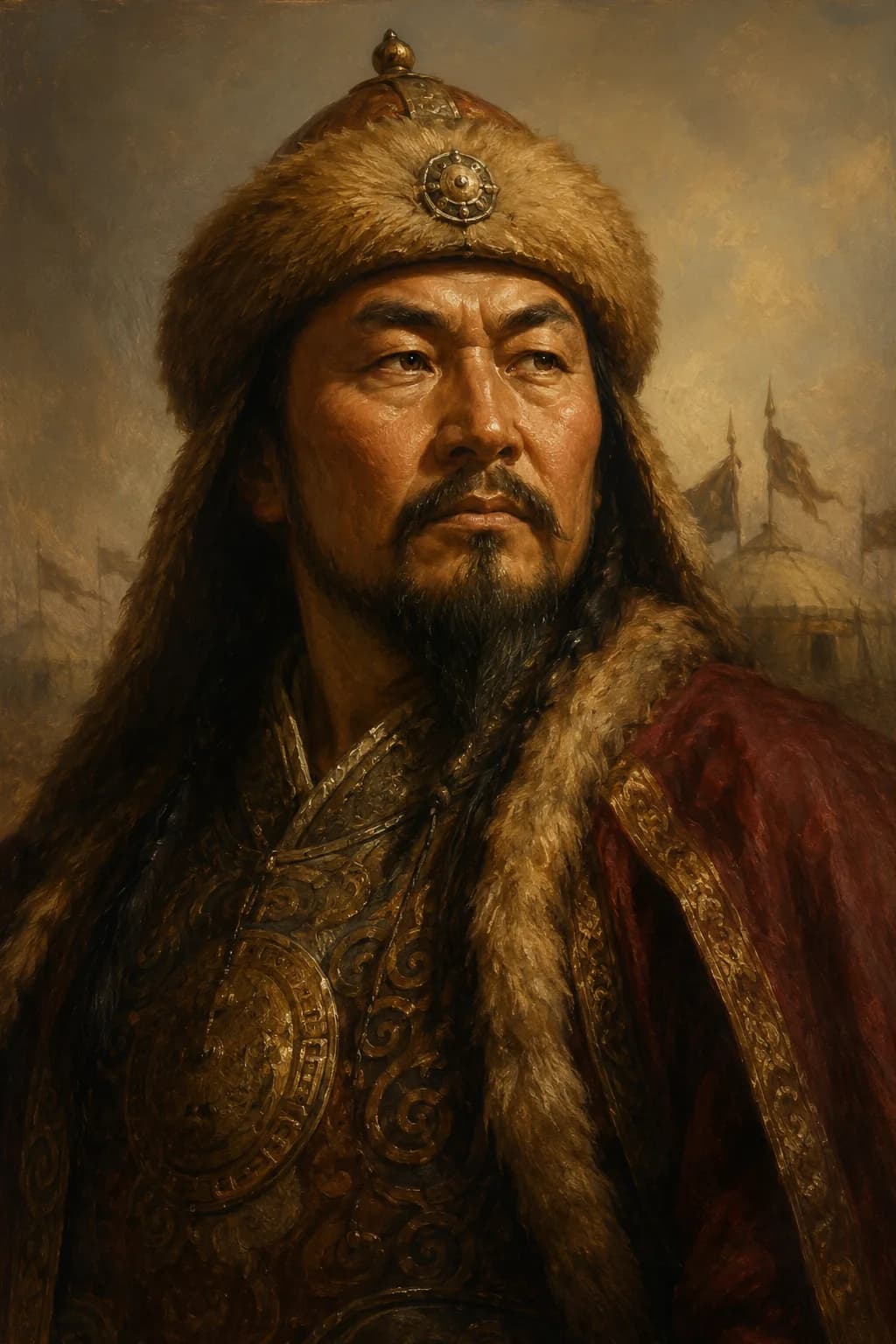
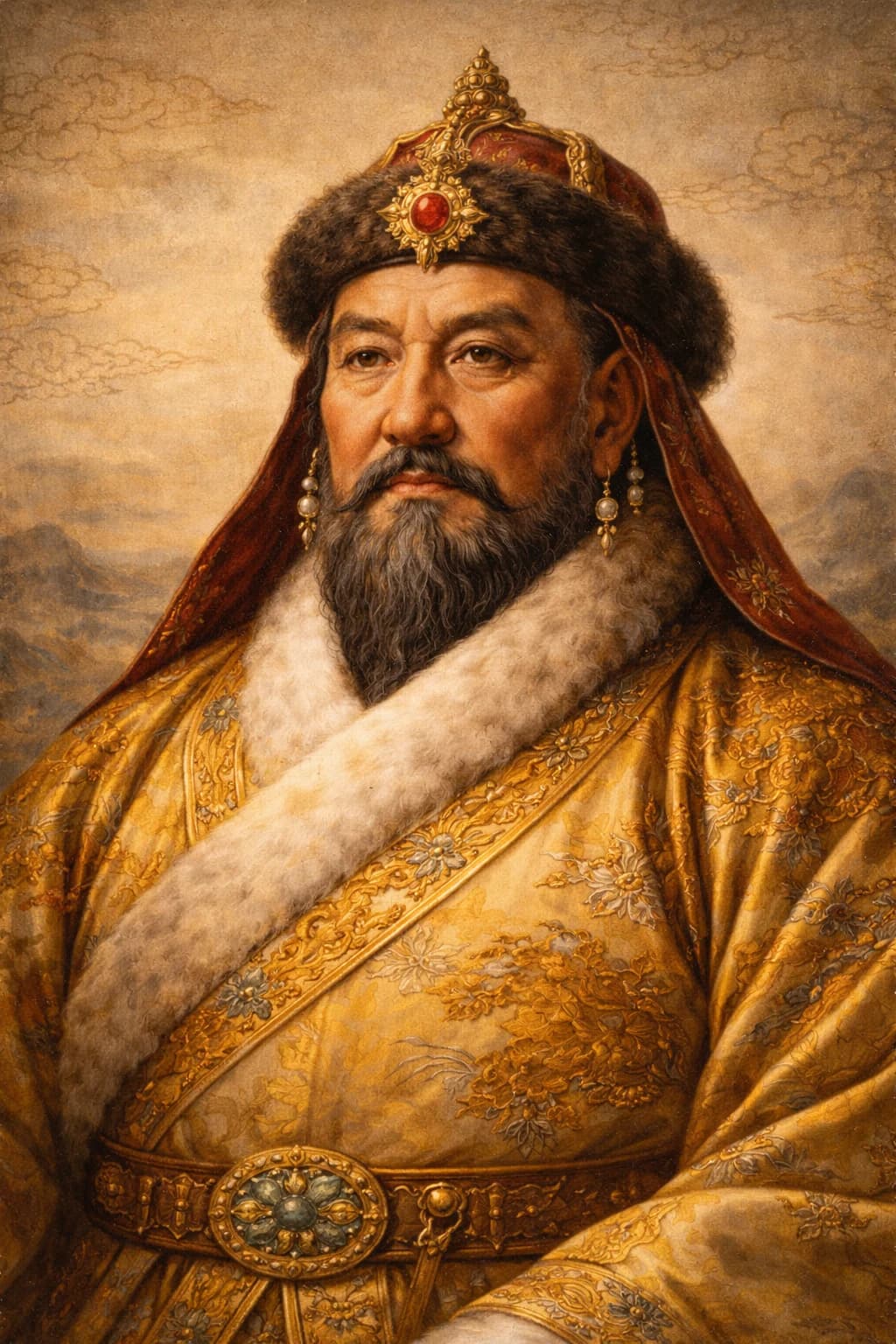
AI-generated portrait of Batu Khan in Mongol steppe attire
AI-assisted historical reconstruction

An illustrative reconstruction based on historical context. It is not a photograph or documentary likeness. Image policy

Quick answer

Batu Khan was a Mongol prince and grandson of Genghis Khan. He led the western campaign into Rus and eastern Europe and established the Golden Horde's dominance.

Born
c. 1205 CE
Died
1255 CE
Role
Mongol prince and western khan
Years
c. 1205-1255 CE
Quick facts

Profile details

Additional identity and tagging details that are not already covered in the introduction.

Also known as
Batu
Facts

Batu Khan timeline facts

Selected specifics from this profile's life story.

c. 1205
Grandson of Genghis Khan

Batu was born into the ruling family of the Mongol Empire as a son of Jochi and grandson of Genghis Khan.

1237-1240
Conquest of the Rus lands

Batu's armies attacked the Rus principalities, taking major cities and destroying Kyiv in 1240.

1241-1242
Withdrawal and western rule

After Ogedei Khan's death, the Mongol advance into Europe stopped, and Batu turned toward consolidating power in the western steppe.

After 1242
Legacy of the Golden Horde

Batu's khanate dominated the Rus principalities for generations and became one of the most important successor states of the Mongol Empire.

Life Journey

From imperial prince to western khan

Follow Batu Khan from the Mongol ruling family to the western campaigns that reshaped Rus and frightened Europe.

Complete chronology

c. 1205

Grandson of Genghis Khan

Batu's position came through Jochi, Genghis Khan's eldest son. That made him part of the Borjigin ruling house, but also tied him to the western inheritance of the empire. The Jochid line would become central to Mongol power across the western steppe, the Volga region and the Rus principalities. Batu's career was shaped by this inheritance: he was both a member of the wider imperial family and a ruler whose strongest power lay far from Mongolia.
1230s

Rising under Ogedei

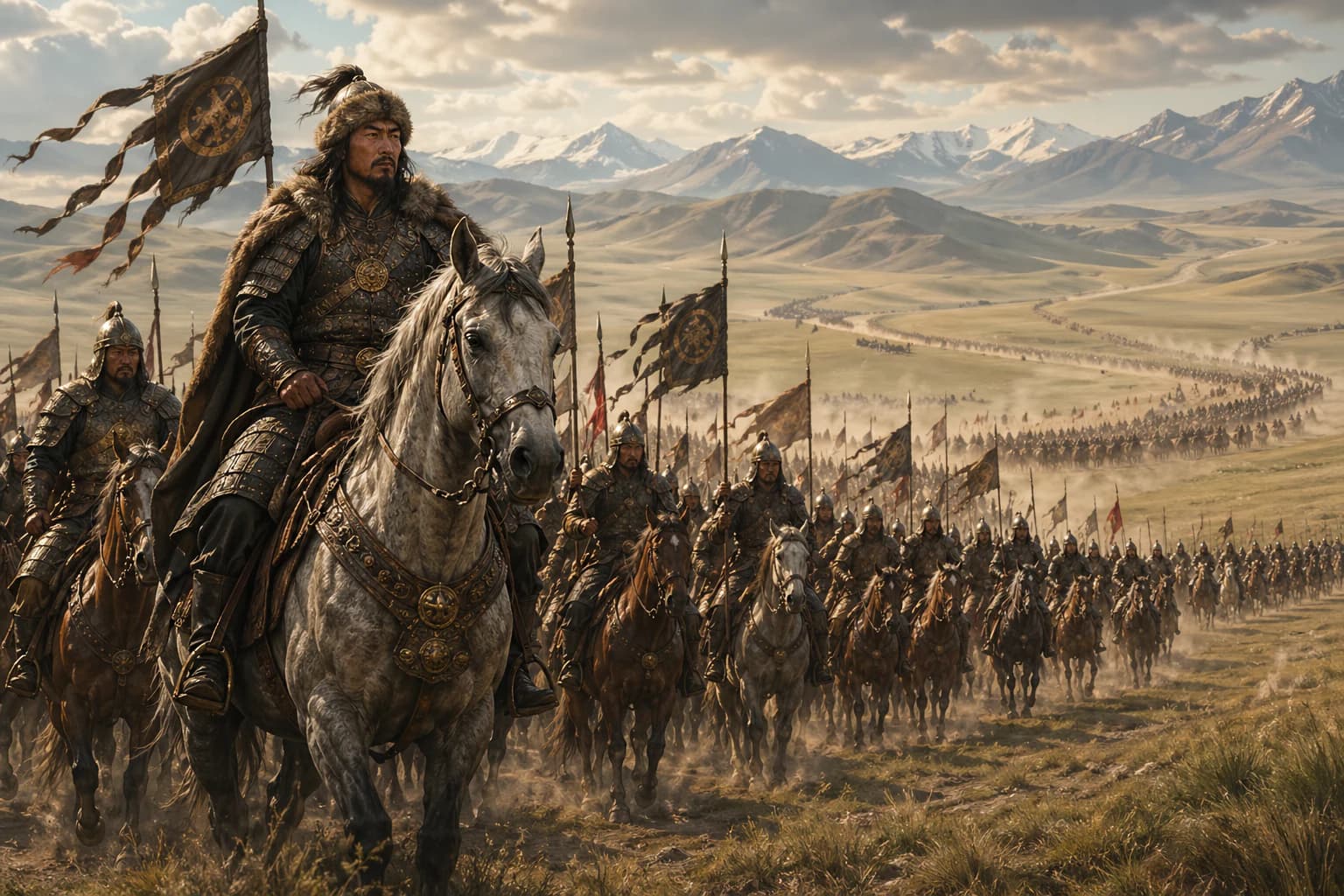
The great western campaign was not a private adventure. It was authorised under Ogedei Khan and drew on the resources of the wider empire. Batu held princely command, while Subutai, one of the most experienced Mongol generals, provided exceptional operational leadership. This combination mattered. Batu represented dynastic authority; Subutai represented military expertise. Together they directed a campaign that moved across huge distances with careful reconnaissance and coordinated columns.

1237-1240

Conquest of the Rus lands

The Mongol attack on the Rus lands was devastating. Ryazan, Vladimir and other centres were overwhelmed before Kyiv fell in 1240 after fierce resistance. The campaign did not simply produce battlefield victories; it changed the political future of the region. Rus princes were forced into submission and tribute, while the western Mongol khanate became a decisive power over the steppe and forest zones north of the Black and Caspian seas.

1241

Into eastern Europe

The 1241 campaign showed Mongol operational skill at terrifying scale. Separate columns struck into Poland and Hungary, defeating European forces at Legnica and Mohi within days of each other. These victories were not random raids. They reflected scouting, speed, coordination and battlefield tactics that drew opponents into exposed positions before destroying them. For European rulers, the campaign revealed a military system they barely understood and could not easily match.

1241-1242

Withdrawal and western rule

The Mongol withdrawal from Hungary and surrounding regions followed Ogedei Khan's death in December 1241 and the succession politics that came after it. Historians still debate the full mix of reasons, including logistics, terrain and strategic priorities, but imperial politics clearly mattered. Batu did not disappear from history after the withdrawal. He consolidated Jochid power in the western steppe, with the Volga region becoming a centre of what later historians call the Golden Horde.

After 1242

Legacy of the Golden Horde

Batu's long-term importance lies in the western khanate he established. The Golden Horde collected tribute, shaped diplomacy among Rus princes, controlled major steppe routes and linked the western Eurasian world to Mongol networks. Its rule was often coercive, but it also became a durable political order rather than a passing raid. Batu's career shows how Mongol conquest could settle into regional power, reshaping local politics for centuries after the first armies moved on.

Continue in context

Connected stories

Move from the profile into the wider events and settings this figure belongs to.

Tertiary paths

Content note

This profile is written for educational use and connects to related Stories of History pages. The main portrait is an AI-assisted historical reconstruction, included as an illustrative aid rather than documentary evidence. Image policy

References

Sources & Further Reading

Reliable reference works, archives and reading paths connected to this profile.

Further reading

  1. Encyclopaedia Britannica, Search results for Batu Khan,” accessed June 2026.Open source
  2. WorldCat, Books and library holdings for Batu Khan,” accessed June 2026.Open source

Primary sources

  1. Library of Congress, Search results for Batu Khan,” accessed June 2026.Open source

Reviewed claim sources

Loading reviewed claim sources...

A weekly route through history

Find out first about the latest published stories, feature notes and occasional Premium offers in one weekly email.