People

Ogedei Khan

Ogedei Khan was Genghis Khan's son and successor as Great Khan. From 1229 to 1241 he expanded the Mongol Empire, built Karakorum and strengthened imperial administration.

Born
c. 1186 CE
Died
1241 CE
Role
Great Khan of the Mongol Empire

Great Khan of the Mongol Empire (c. 1186-1241)

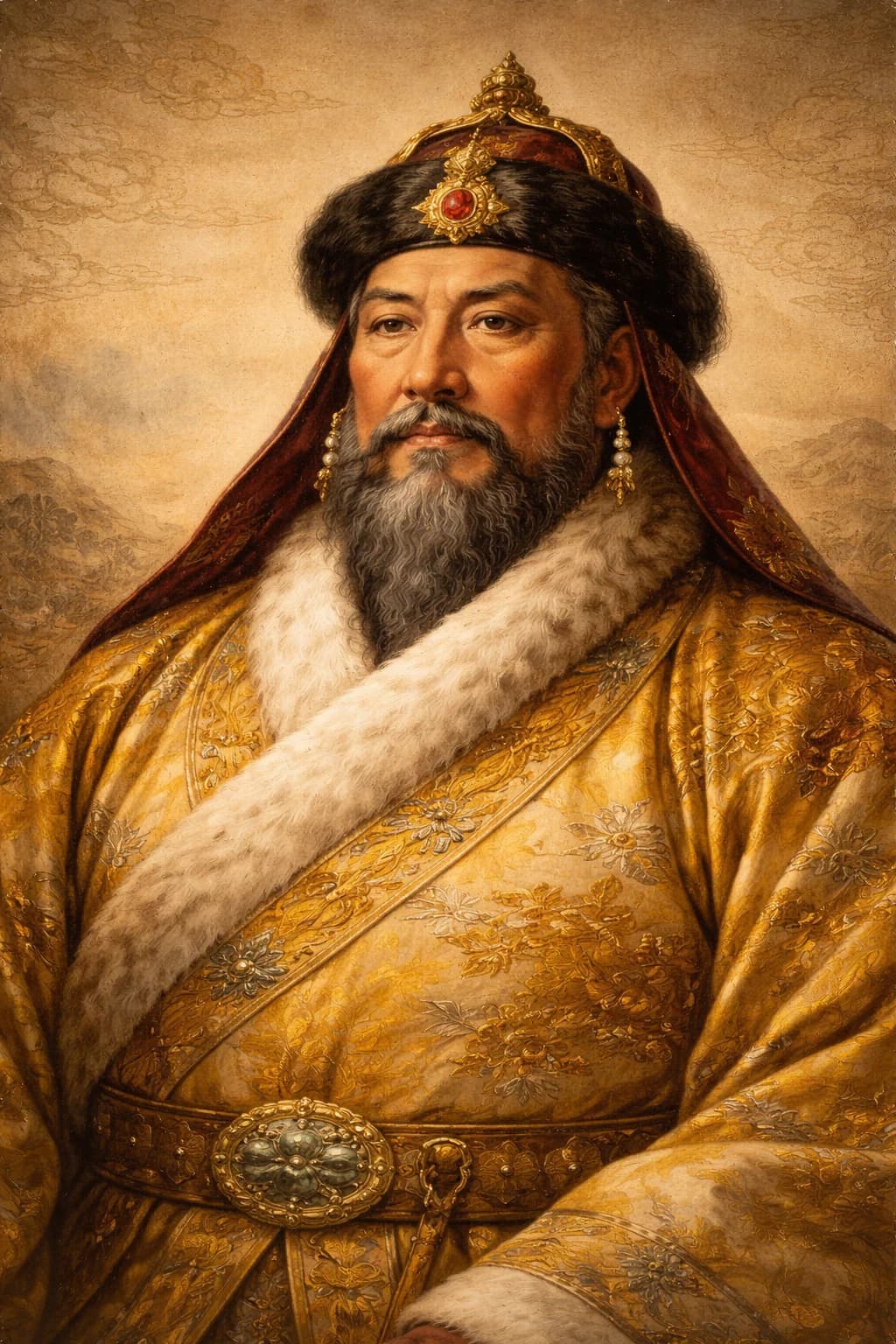
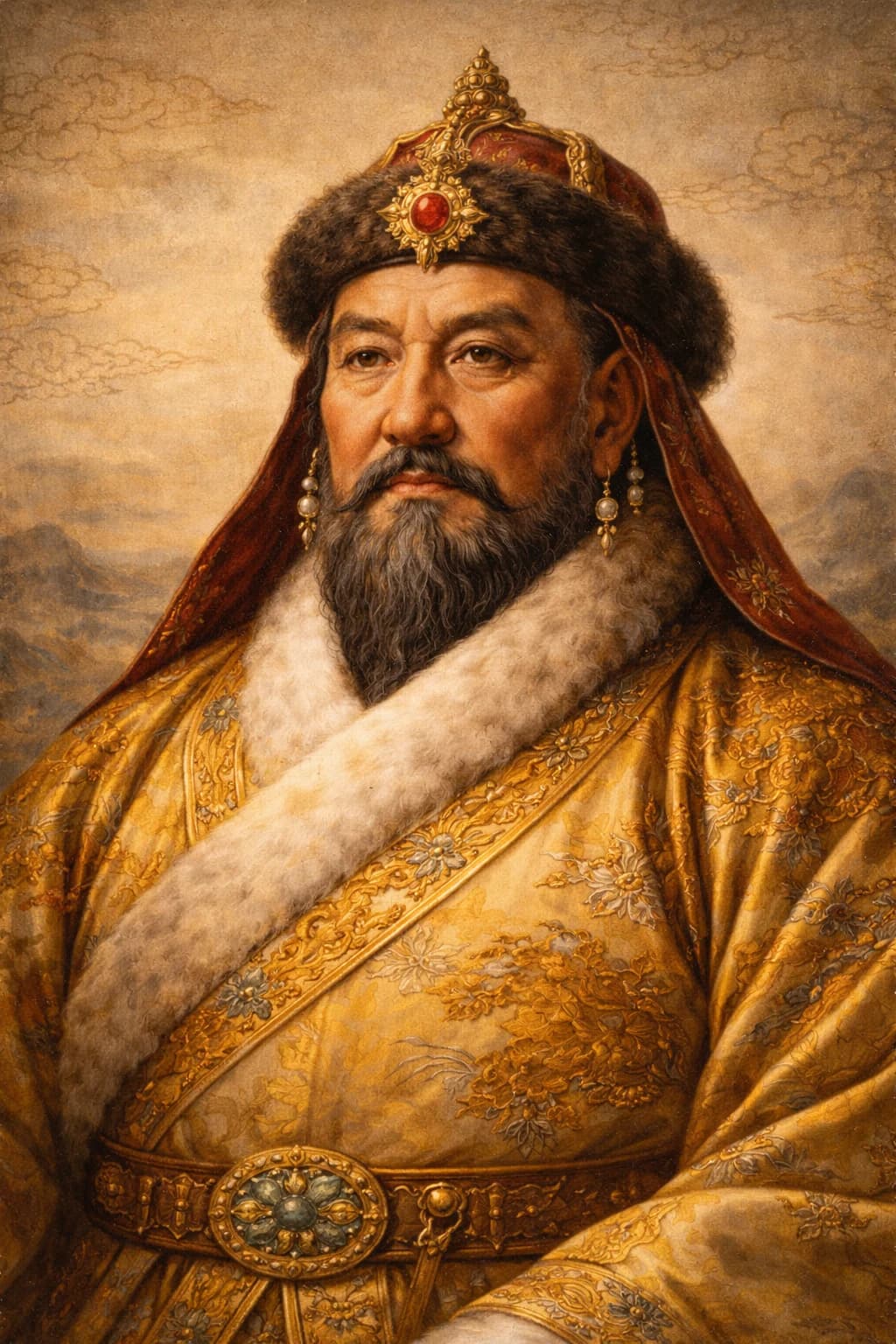
AI-generated portrait of Ogedei Khan in Mongol imperial attire
AI-assisted historical reconstruction

An illustrative reconstruction based on historical context. It is not a photograph or documentary likeness. Image policy

Quick answer

Ogedei Khan was Genghis Khan's son and successor as Great Khan. From 1229 to 1241 he expanded the Mongol Empire, built Karakorum and strengthened imperial administration.

Born
c. 1186 CE
Died
1241 CE
Role
Great Khan of the Mongol Empire
Years
c. 1186-1241 CE
Quick facts

Profile details

Additional identity and tagging details that are not already covered in the introduction.

Also known as
Ogedei, Ogedai Khan
Facts

Ogedei Khan timeline facts

Selected specifics from this profile's life story.

c. 1186
Born into the Borjigin house

Ogedei was born into the family of Temujin, later Genghis Khan, as Mongol power was beginning to take shape on the steppe.

1229
Confirmed as Great Khan

A kurultai confirmed Ogedei as Great Khan in 1229, giving formal legitimacy to his rule over the Mongol Empire.

1235-1241
Authorising new campaigns

Under Ogedei, Mongol expansion continued into northern China, the Rus lands and eastern Europe.

1241
Death and succession strain

Ogedei died in December 1241, interrupting Mongol operations and opening a succession struggle that weakened imperial unity.

Life Journey

From chosen heir to imperial organiser

Follow Ogedei Khan as he inherits Genghis Khan's empire and builds the systems that allowed it to keep expanding.

Complete chronology

c. 1186

Born into the Borjigin house

Ogedei was one of Genghis Khan's sons with Borte and grew up inside the violent consolidation of Mongol power. His early life belonged to a world of clan rivalry, shifting alliances and constant campaigning. By the time he reached adulthood, his father's movement had become a new political order. Ogedei did not create that order, but he inherited its habits: discipline, loyalty to the khan, and the expectation that conquest had to be organised across enormous distances.
1220s

Chosen as successor

Succession was one of the greatest dangers facing the Mongol Empire. Genghis Khan's sons had claims, rival followings and territorial interests of their own. Ogedei's selection mattered because it gave the ruling family a recognised centre after Genghis Khan's death in 1227. He was not the most famous battlefield commander among the Mongol elite, but he was acceptable to powerful relatives and commanders, which made him a practical choice for keeping the empire together.

1229

Confirmed as Great Khan

Ogedei was formally confirmed at a kurultai, the political assembly through which Mongol elites gave public legitimacy to major decisions. His accession showed that Genghis Khan's empire had developed institutions strong enough to survive its founder. The delay between Genghis Khan's death and Ogedei's confirmation also revealed the practical realities of steppe politics: major leaders had to be summoned, interests balanced and consensus displayed before imperial authority could settle.

1230s

Building an imperial centre

Ogedei's reign changed the Mongol Empire from a conquest coalition into a more visible imperial state. Karakorum, built in the Orkhon Valley, became a political and symbolic centre where diplomats, merchants, artisans and religious figures could gather. Ogedei also expanded administrative practices that helped turn conquered territories into sources of revenue and information. The Yam relay network, with stations and fresh horses across imperial routes, made long-distance communication a practical tool of rule.

1235-1241

Authorising new campaigns

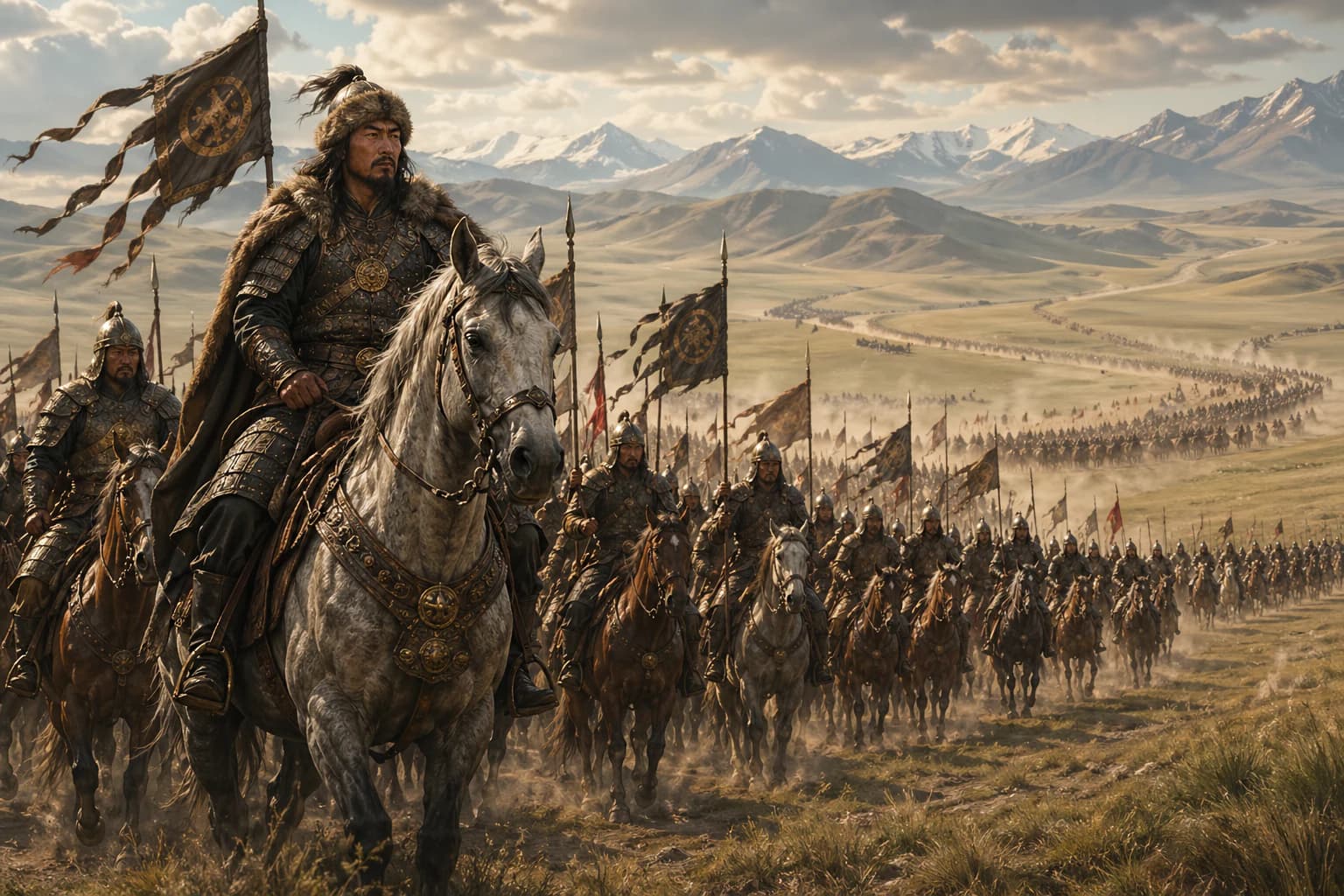
Ogedei did not stop the momentum of conquest. The kurultai of 1235 approved major campaigns, including western operations led by Batu Khan with Subutai as the senior military commander. Mongol armies conquered Rus cities, pushed into Poland and Hungary, and also continued pressure in China. These campaigns depended not only on cavalry skill but on the imperial coordination Ogedei's reign had strengthened: intelligence, supply, relay communication and a command structure able to operate on multiple fronts.

1241

Death and succession strain

Ogedei's death in December 1241 came while Mongol armies were deep in Europe. The western campaign withdrew as Mongol leaders turned back toward the politics of succession. The exact balance of motives behind the withdrawal is debated, but Ogedei's death clearly forced the empire's elite to confront the problem of leadership again. His reign left strong administrative foundations, yet it also showed that the empire still depended heavily on agreement among Genghis Khan's descendants.

Continue in context

Connected stories

Move from the profile into the wider events and settings this figure belongs to.

Tertiary paths

Content note

This profile is written for educational use and connects to related Stories of History pages. The main portrait is an AI-assisted historical reconstruction, included as an illustrative aid rather than documentary evidence. Image policy

References

Sources & Further Reading

Reliable reference works, archives and reading paths connected to this profile.

Further reading

  1. Encyclopaedia Britannica, Search results for Ogedei Khan,” accessed June 2026.Open source
  2. WorldCat, Books and library holdings for Ogedei Khan,” accessed June 2026.Open source

Primary sources

  1. Library of Congress, Search results for Ogedei Khan,” accessed June 2026.Open source

Reviewed claim sources

Loading reviewed claim sources...

A weekly route through history

Find out first about the latest published stories, feature notes and occasional Premium offers in one weekly email.