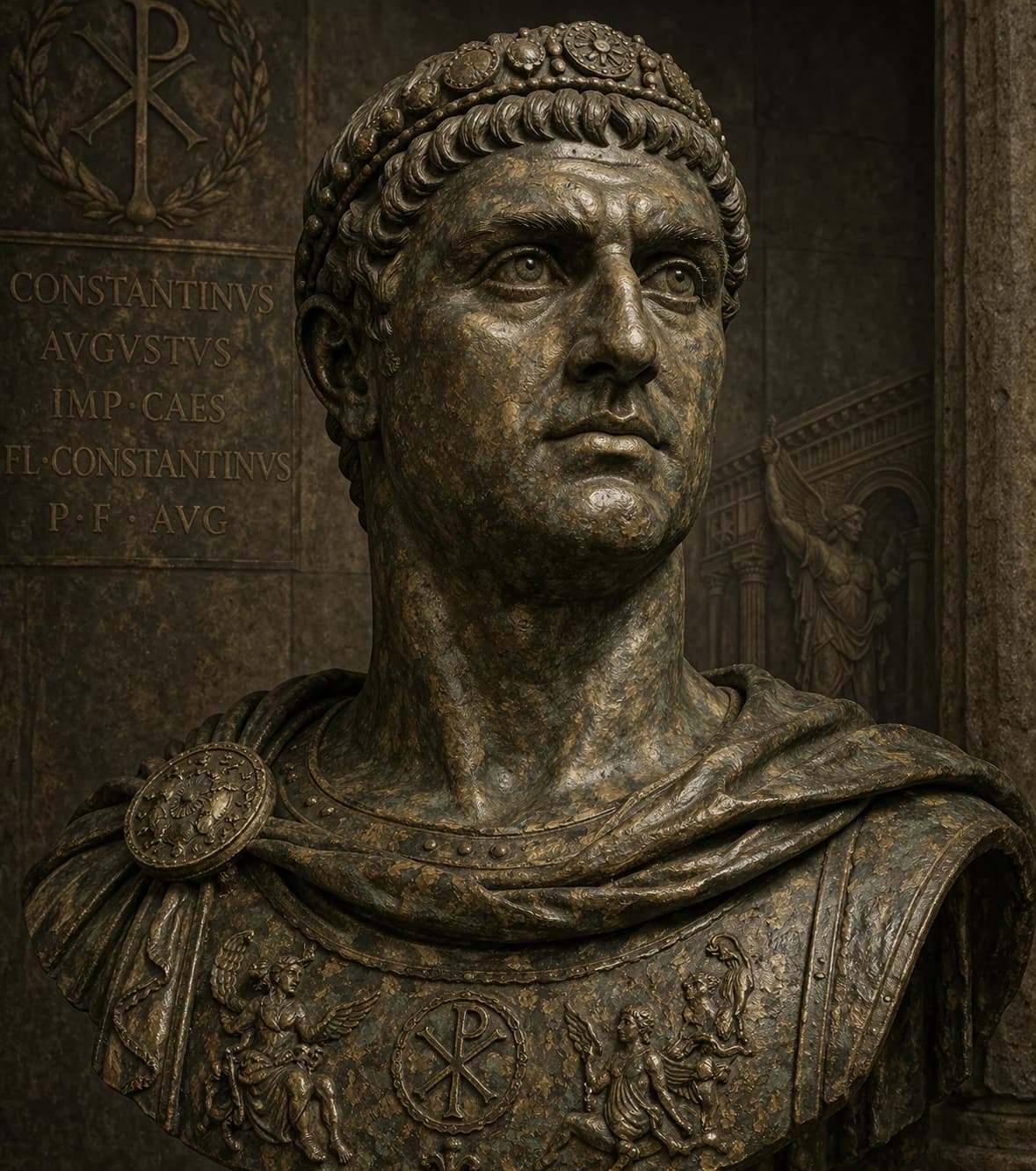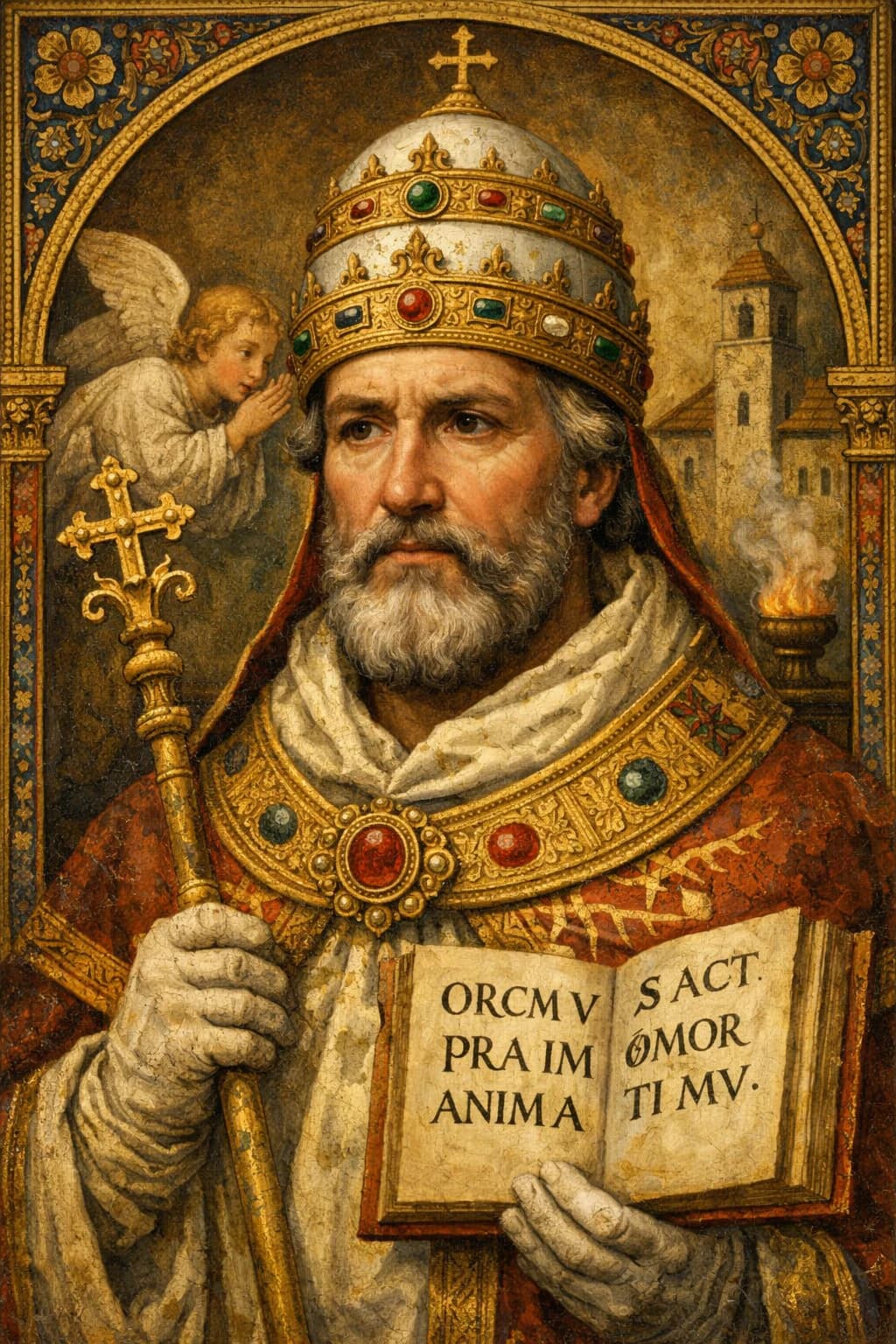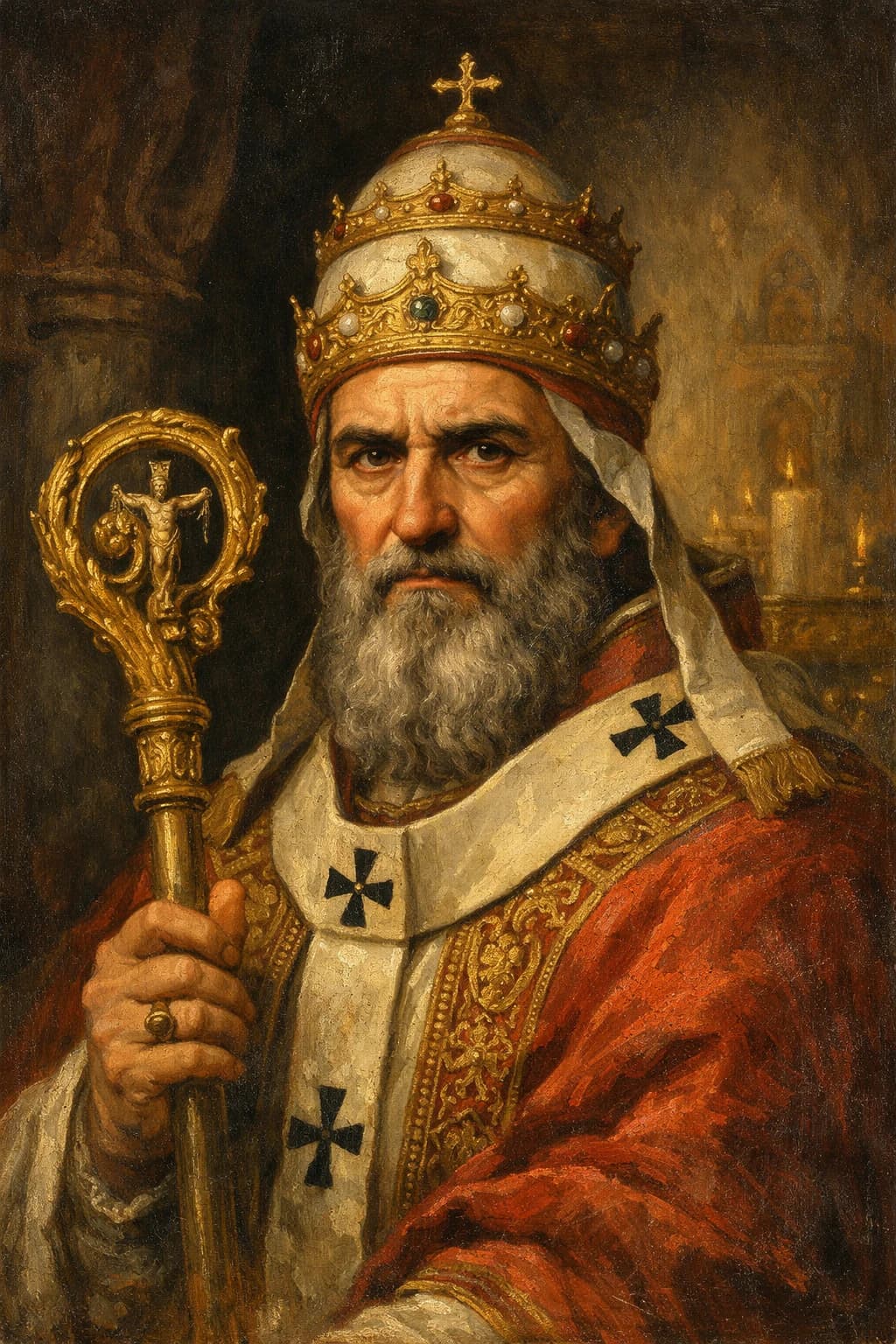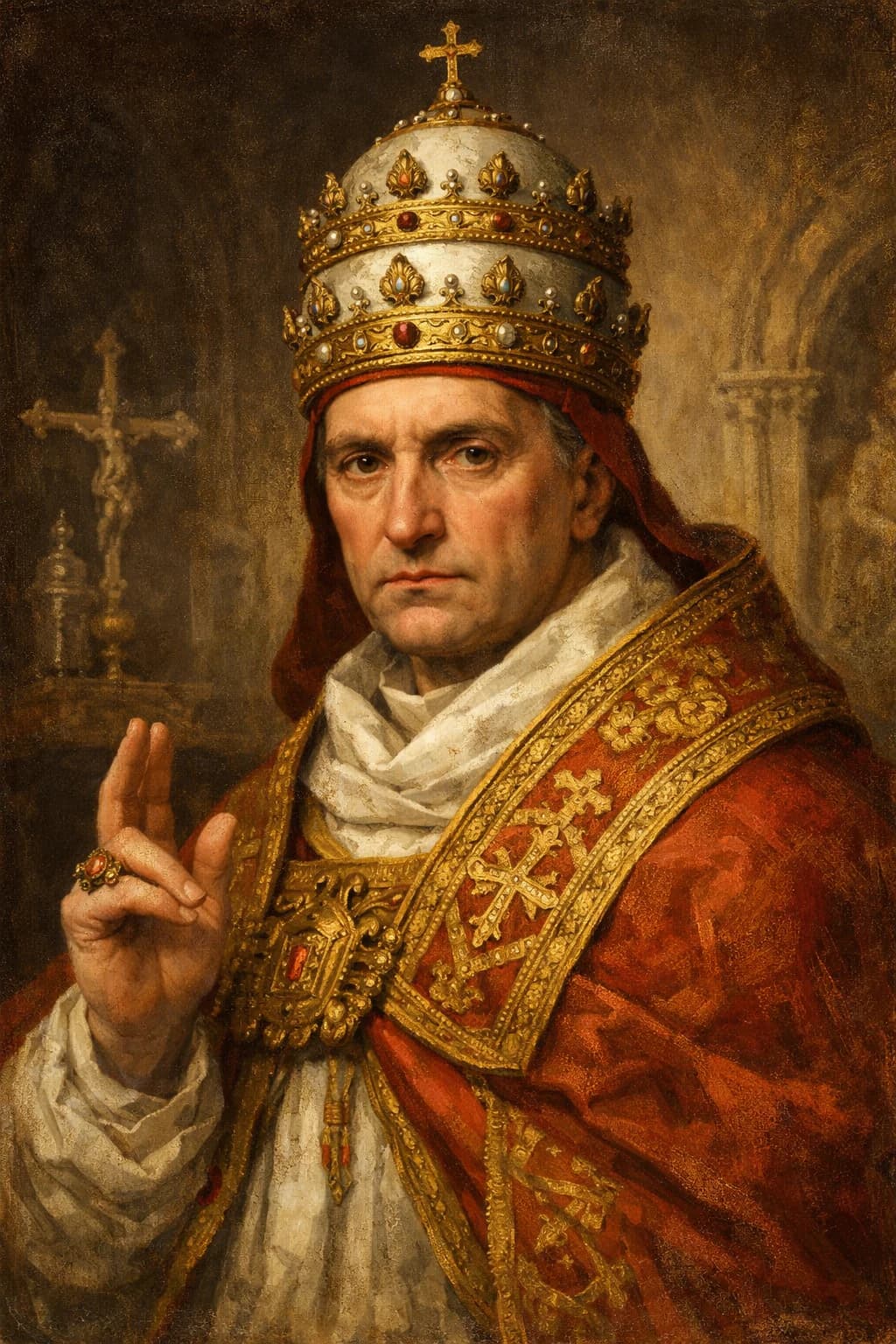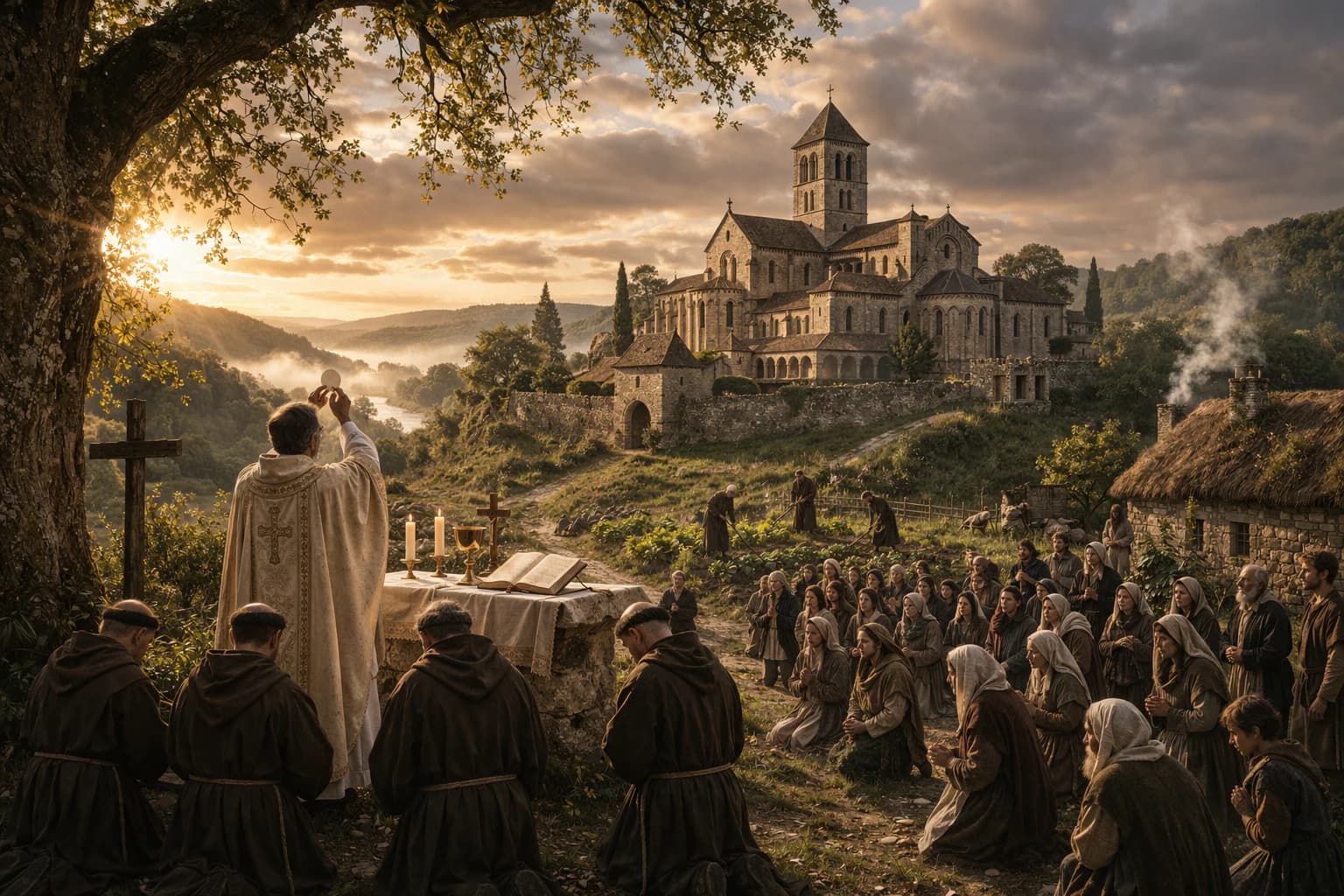
Medieval monks illuminating manuscripts in a great stone abbey
Premium Story

The Rise of the Medieval Church

Follow the medieval Church from Rome’s ruins to monasteries, missions, papal monarchy, and reform.

11 chapters

Next
Context

Introduction

What you'll learn: You'll see how the Christian Church used the collapse of Roman order, monastic discipline, missionary strategy, and direct political confrontation to become the defining institution of medieval Europe, and why the tensions that built up along the way eventually began to pull it apart.

Key forces

The Fall of Rome
476 CE
Step 1 of 10476 CEAccessible mode

The Fall of Rome

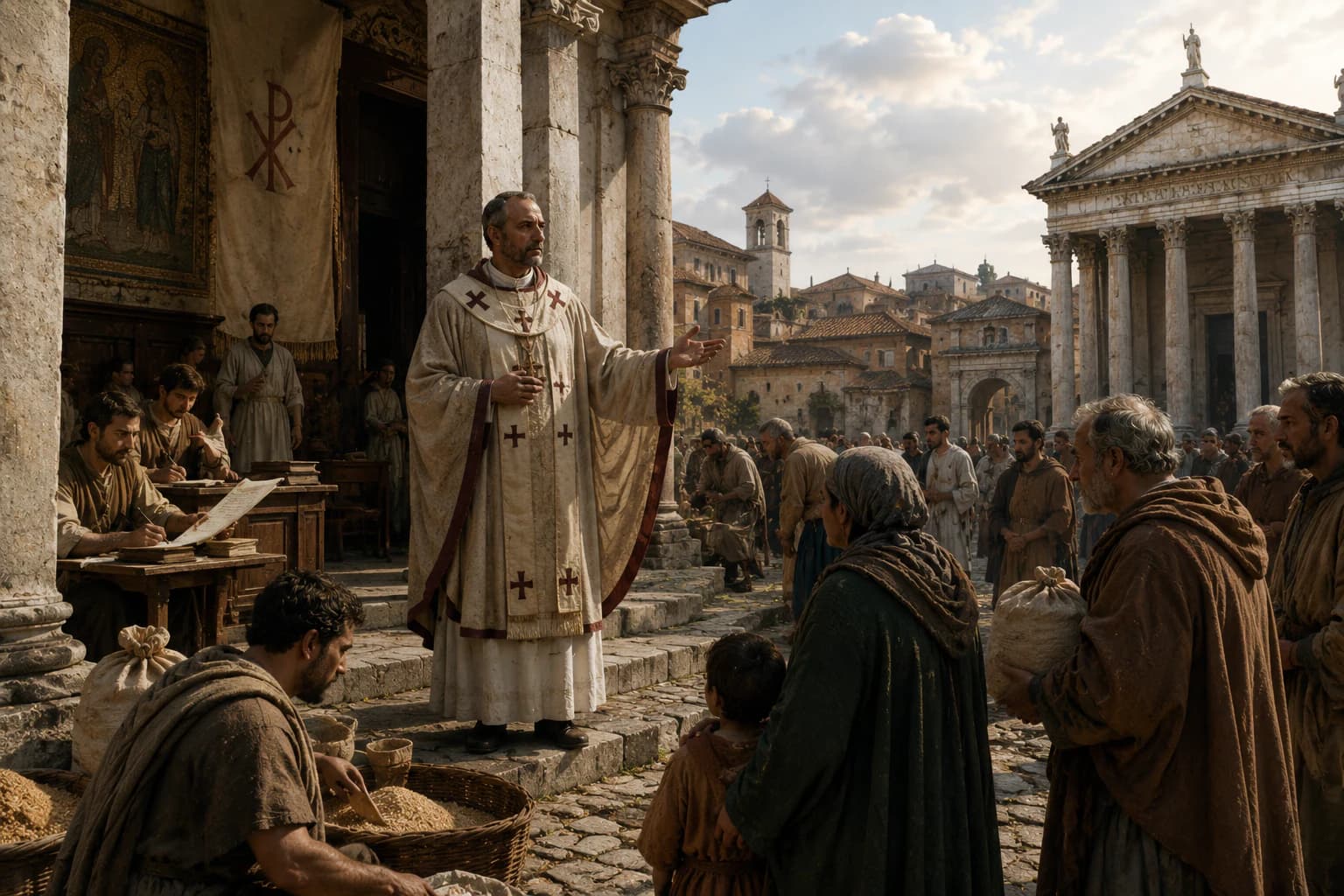
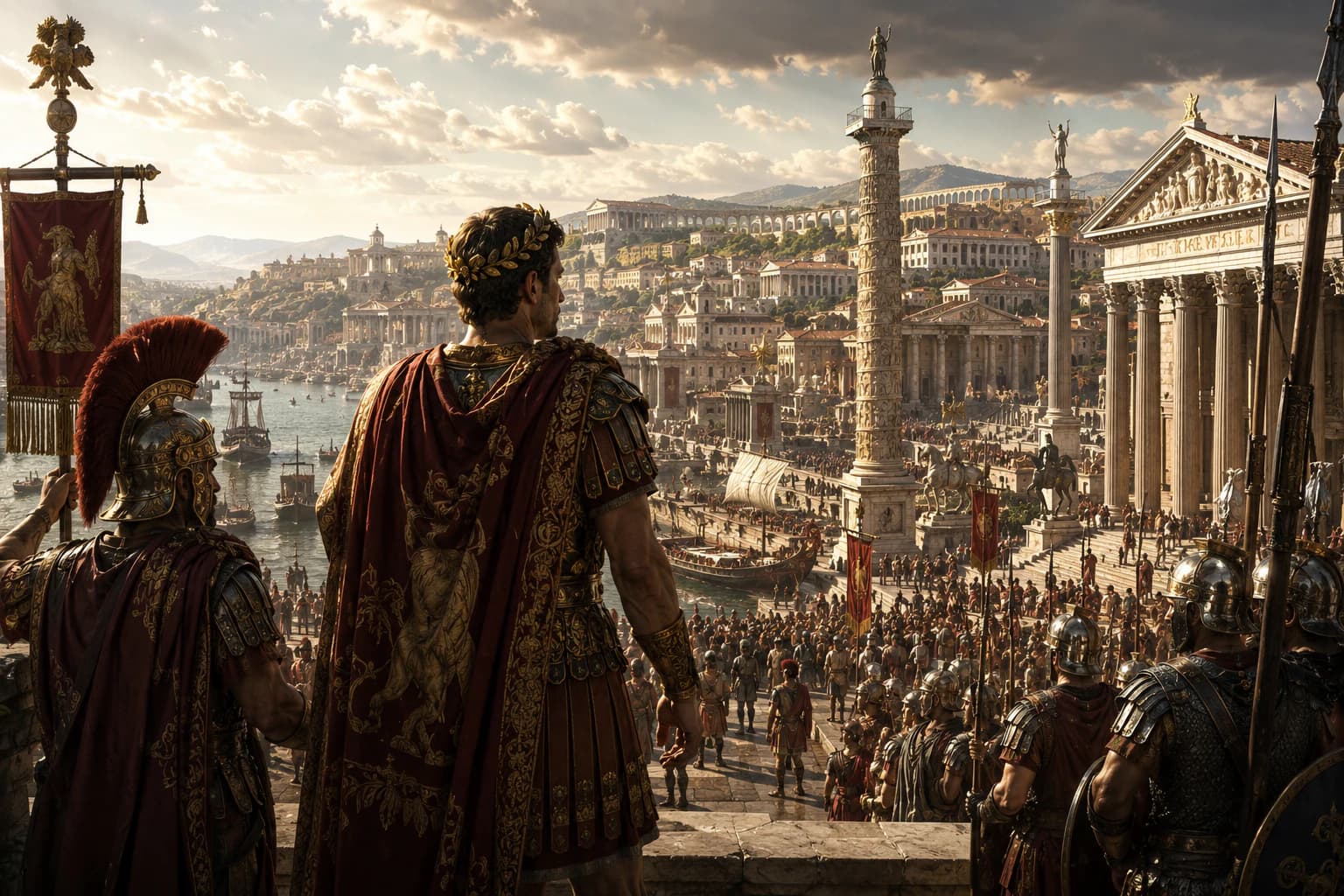
In 476, the last Roman emperor in the west was deposed. 's political order was gone. But one institution survived: the Church.

The Roman Empire had held western Europe together for centuries. When it collapsed, cities shrank, trade declined, and literacy retreated beyond monastery walls.

What survived was the Christian Church. Bishops had been building networks of authority in every significant city for generations. When the governors left, the bishops remained. They managed food distribution, settled disputes, and kept records.

The empire fell, but the Church endured. Its bishops stepped into the vacuum that imperial government had left.

The diocesan structure bishops inherited from Roman administration proved remarkably durable. Each bishop oversaw a territory matching old Roman administrative districts. These boundaries outlasted the empire by many centuries.

The Church had resources, organisation, and moral authority that no other institution possessed. The medieval Church's power was built on the ruins of .

Gregory the Great Shapes Papal Leadership
590 CE
Step 2 of 10590 CEAccessible mode

Gregory the Great Shapes Papal Leadership

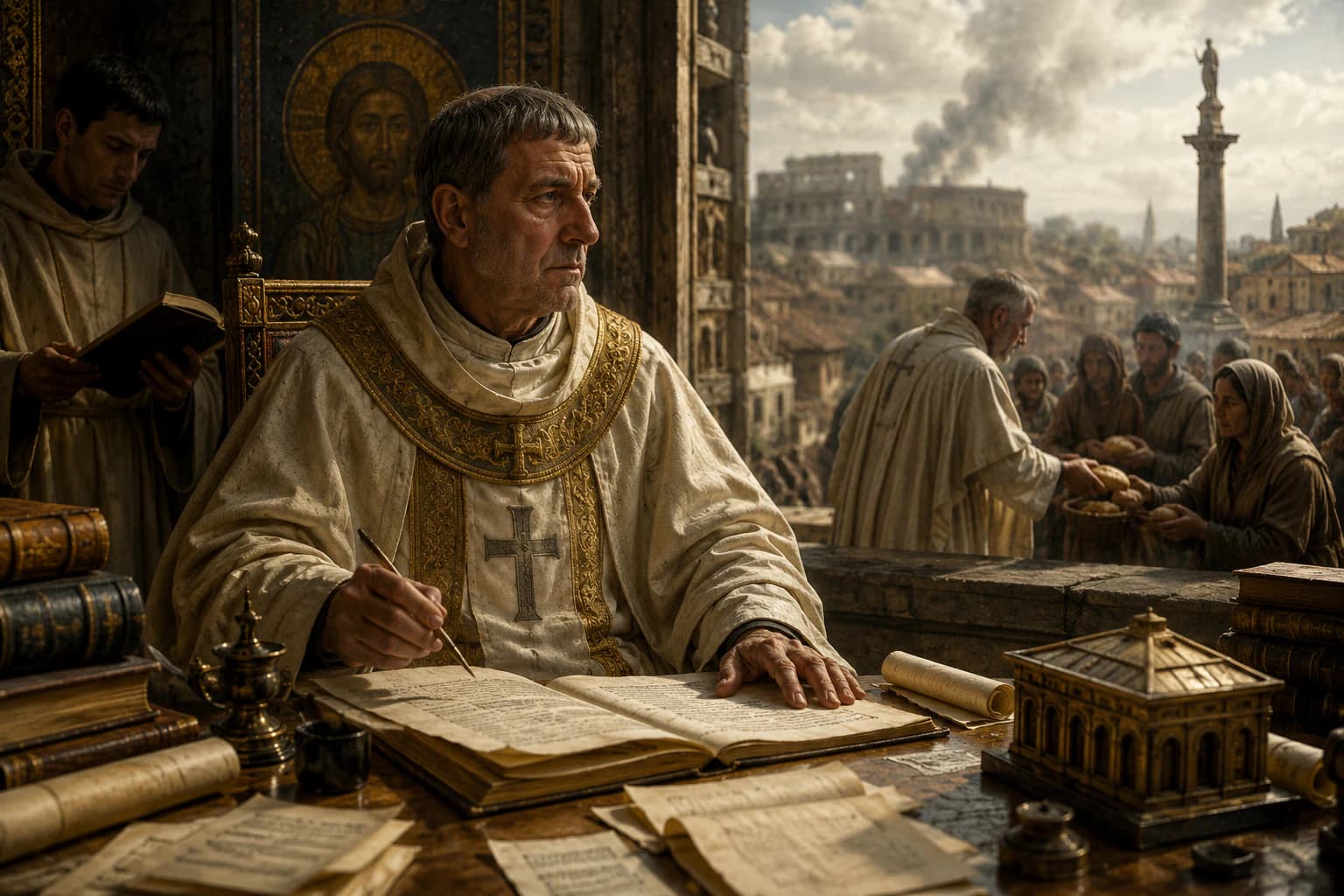
Gregory I became pope in 590 during a crisis. He turned the papacy into a practical power that could govern as well as preach.

Gregory had served as a senior city official before becoming a monk. When plague and Lombard invasions struck , the people chose him. He reluctantly accepted, then proved one of the most capable leaders the papacy had ever seen.

He reorganised Church estates to feed the poor and fund diplomacy. He wrote theological texts that became standard reading for medieval clergy. He sent missionaries to convert the Anglo-Saxons in England.

Gregory styled himself the servant of the servants of God. He governed with the energy of a general.

His most lasting contribution was showing that the papacy could manage estates, negotiate with kings, and extend Christian authority into new territories — not just offer spiritual guidance.

Later popes who claimed power over Europe's rulers looked back to Gregory as their model. He had demonstrated what the papacy could do when its leader was willing to act.

The Rule of Saint Benedict
529 CE
Step 3 of 10529 CEAccessible mode

The Rule of Saint Benedict

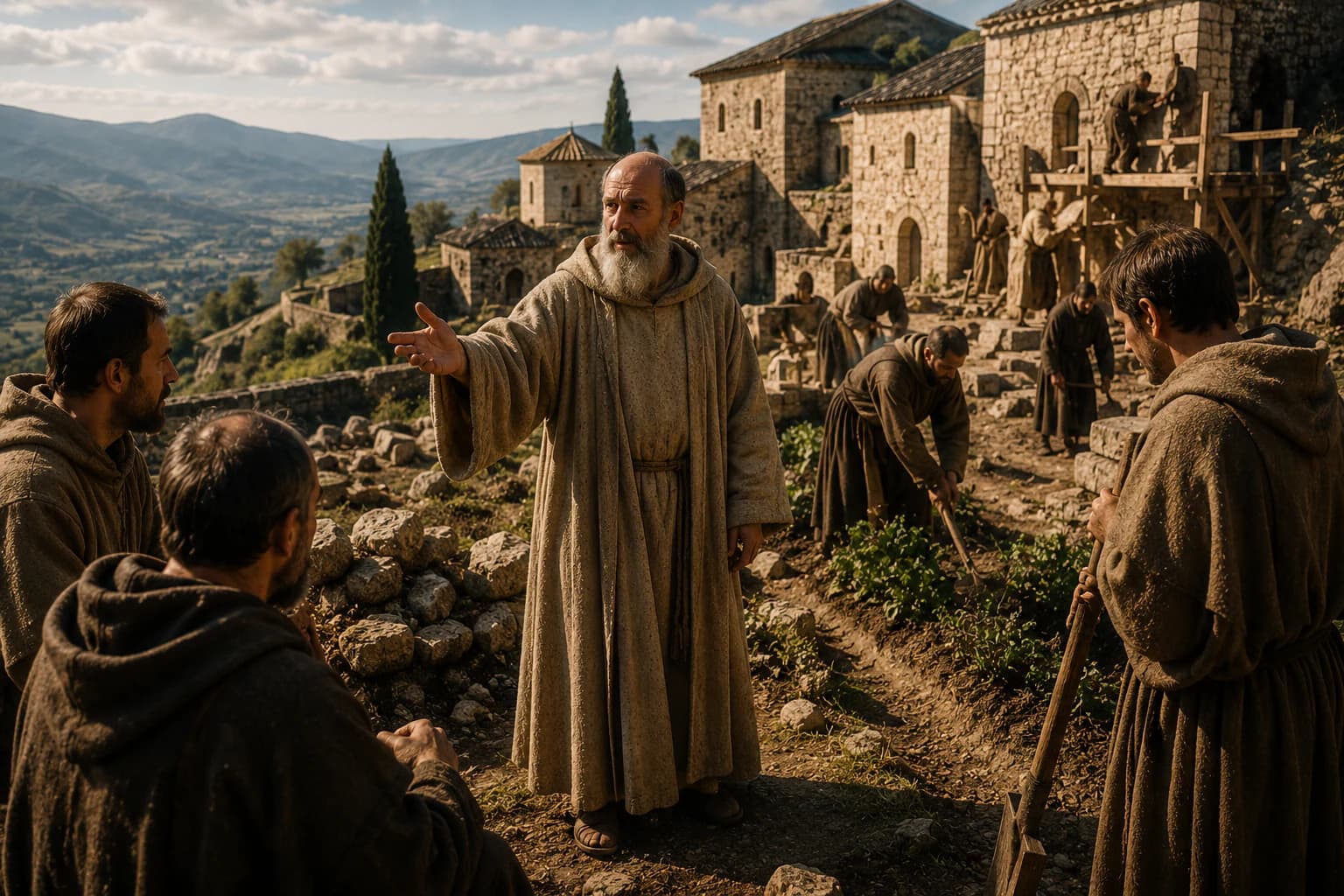
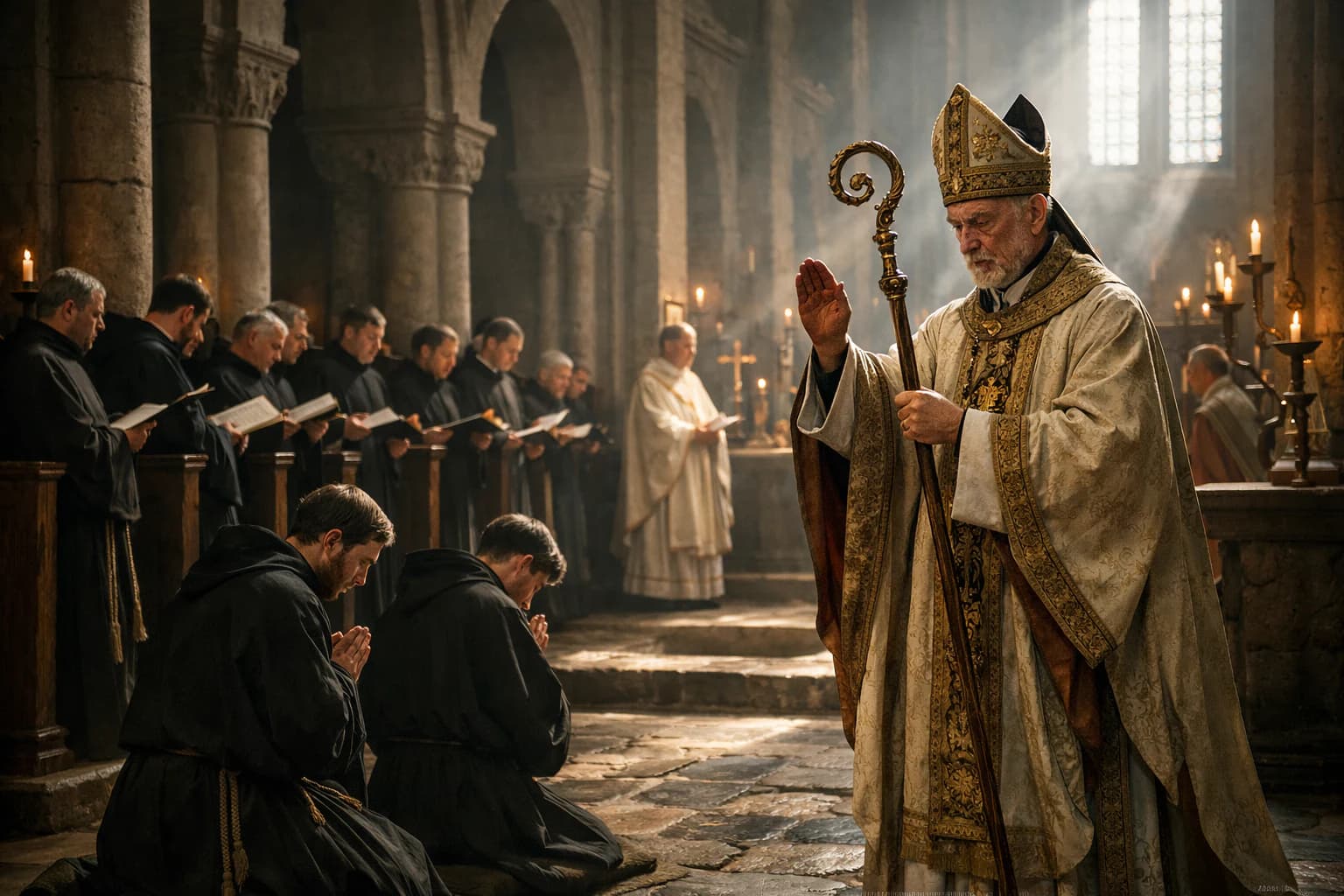
Around 529, an Italian monk named Benedict wrote a set of rules for living in a religious community. Those rules became the foundation of medieval monastic life across Europe.

Before Benedict, Christian monasticism was varied and often extreme. Some monks lived alone in the desert; others lived in communities with little structure. Benedict wanted something different: a balanced, ordered life that most people could actually sustain.

He founded a monastery at and wrote his Rule. It organised the day around prayer, work, and reading. The abbot led with authority tempered by consultation. New members were tested carefully before making permanent vows.

Benedict understood that a life given to God required not only devotion but structure, community, and daily discipline.

The Rule spread rapidly across Europe. Monasteries became centres of farming, manuscript copying, medicine, and education. They preserved knowledge that would otherwise have been lost.

In a world without universities or public institutions, the monastery filled almost every role. Benedict's framework made that possible, and its influence reached far beyond the cloister.

Premium

You've reached the turning point

The opening chapters show bishops and monasteries filling the spaces left by Rome's collapse. Premium follows the Church becoming a power that kings could not ignore: missions, reform, coronations and papal ambition turn faith into an institution that shapes everyday life.

Continue into the reversals, crises and human stakes that make the story matter.

Unlock full story

What Premium unlocks next

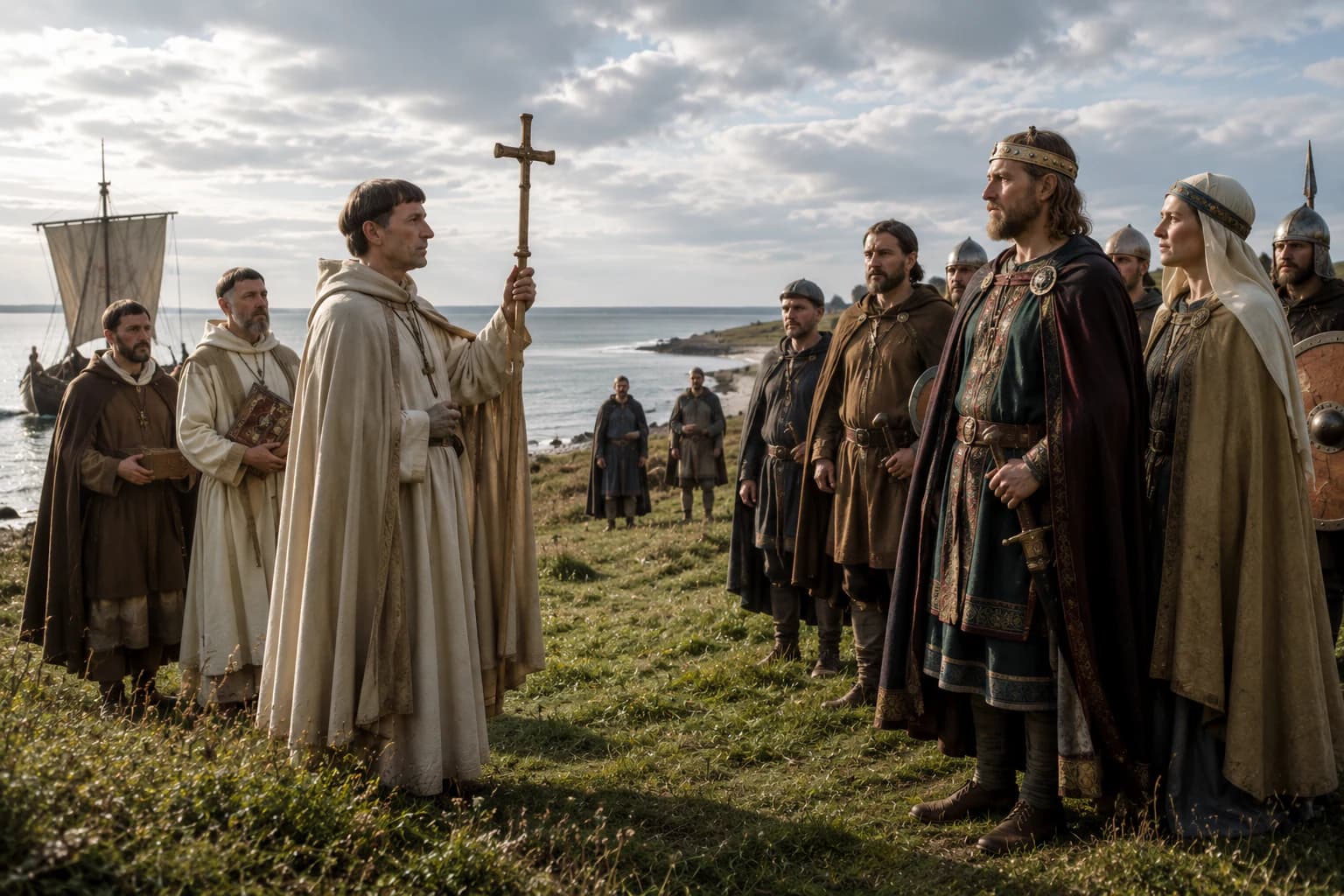
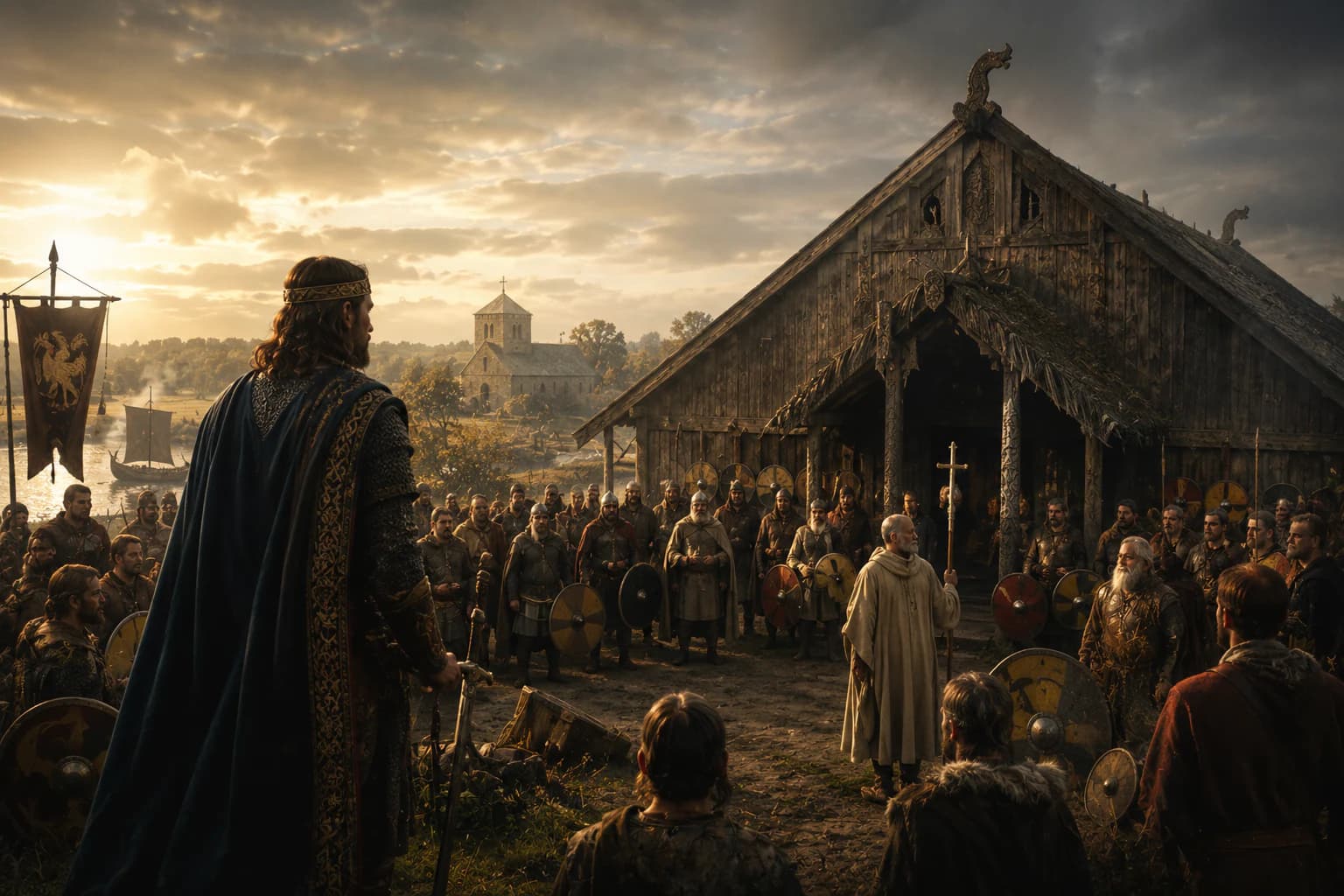
  1. 4The Mission to the English
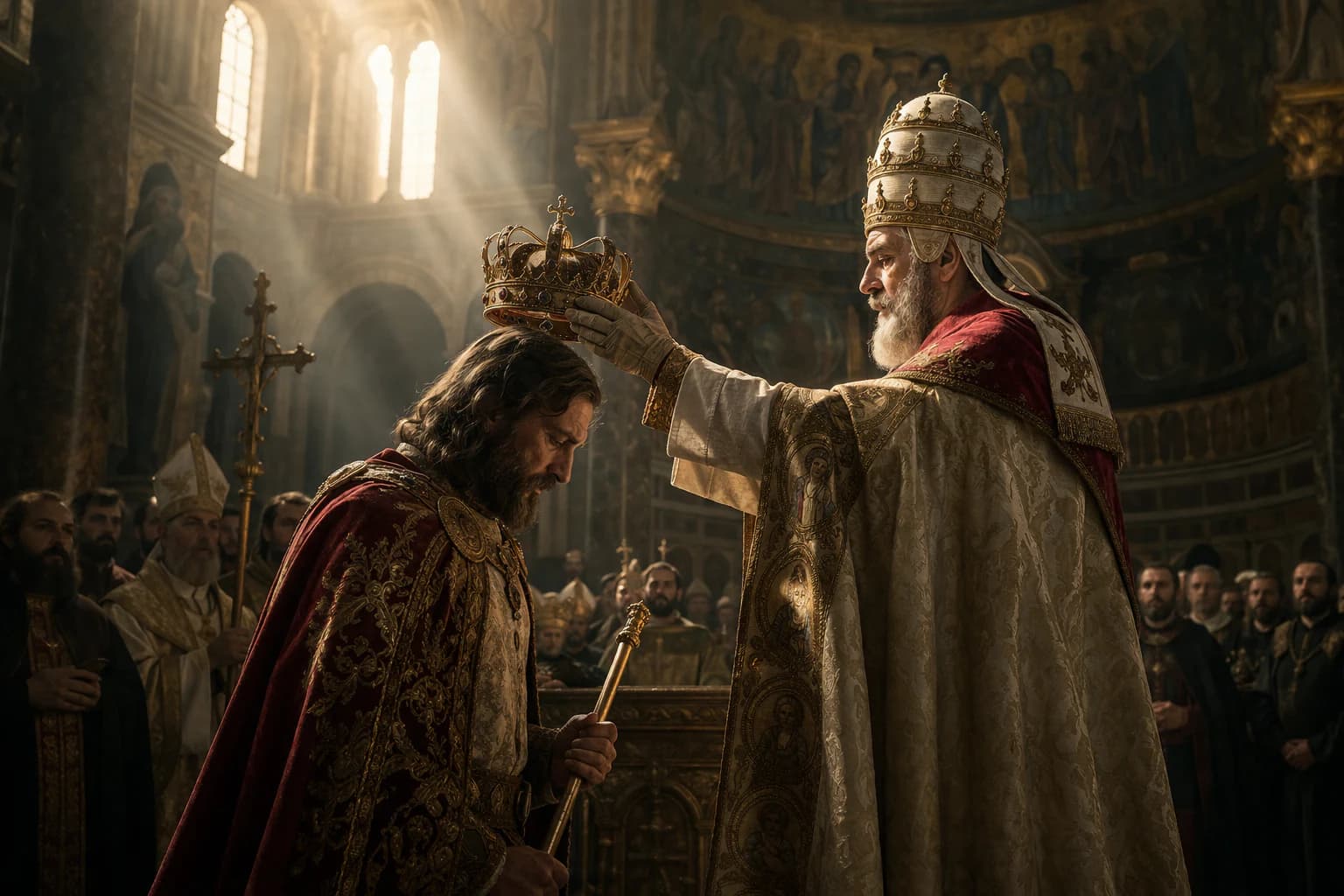
  2. 5The Coronation of Charlemagne
  3. 6Cluny Leads Reform
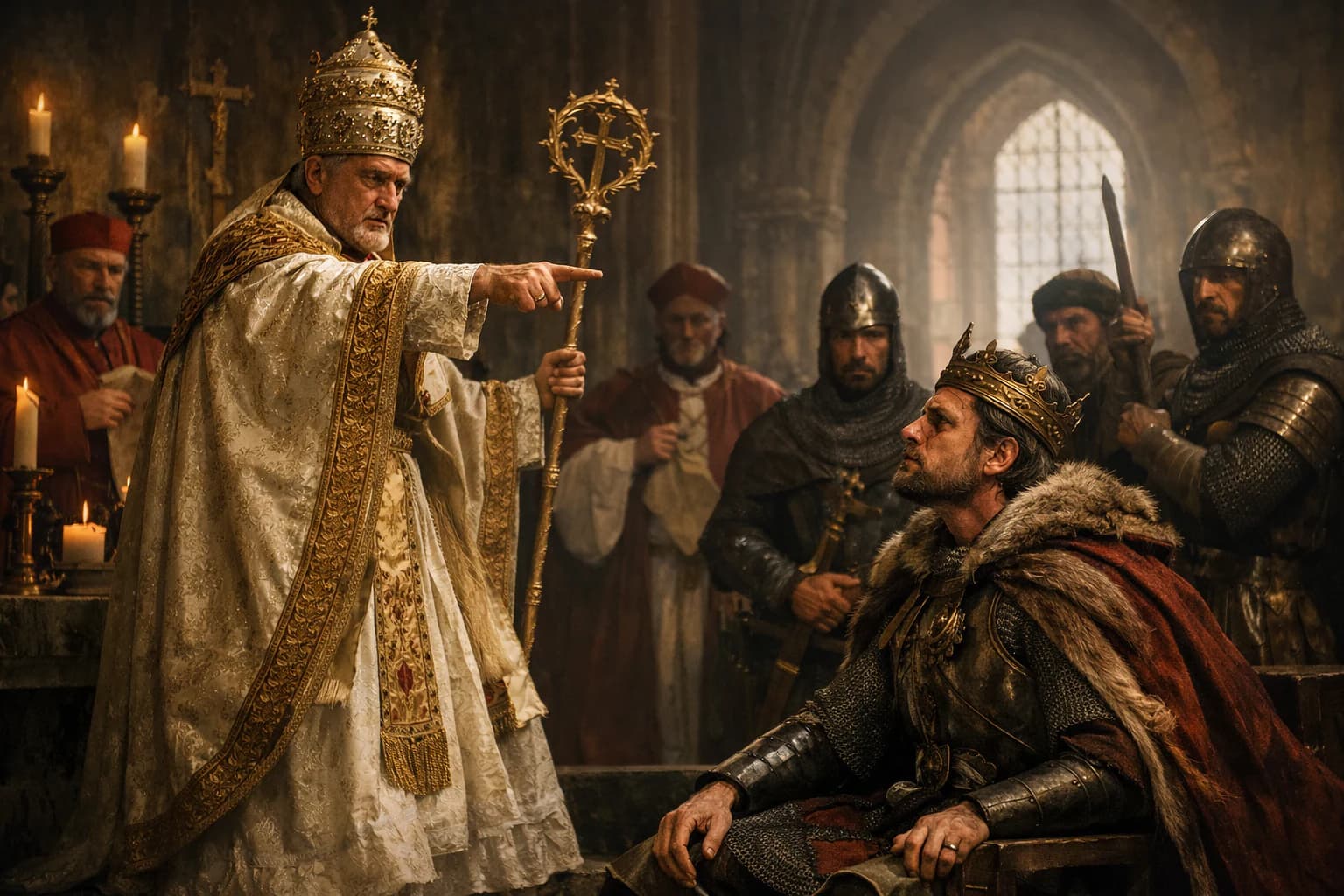
  4. 7Gregory VII Challenges Kings
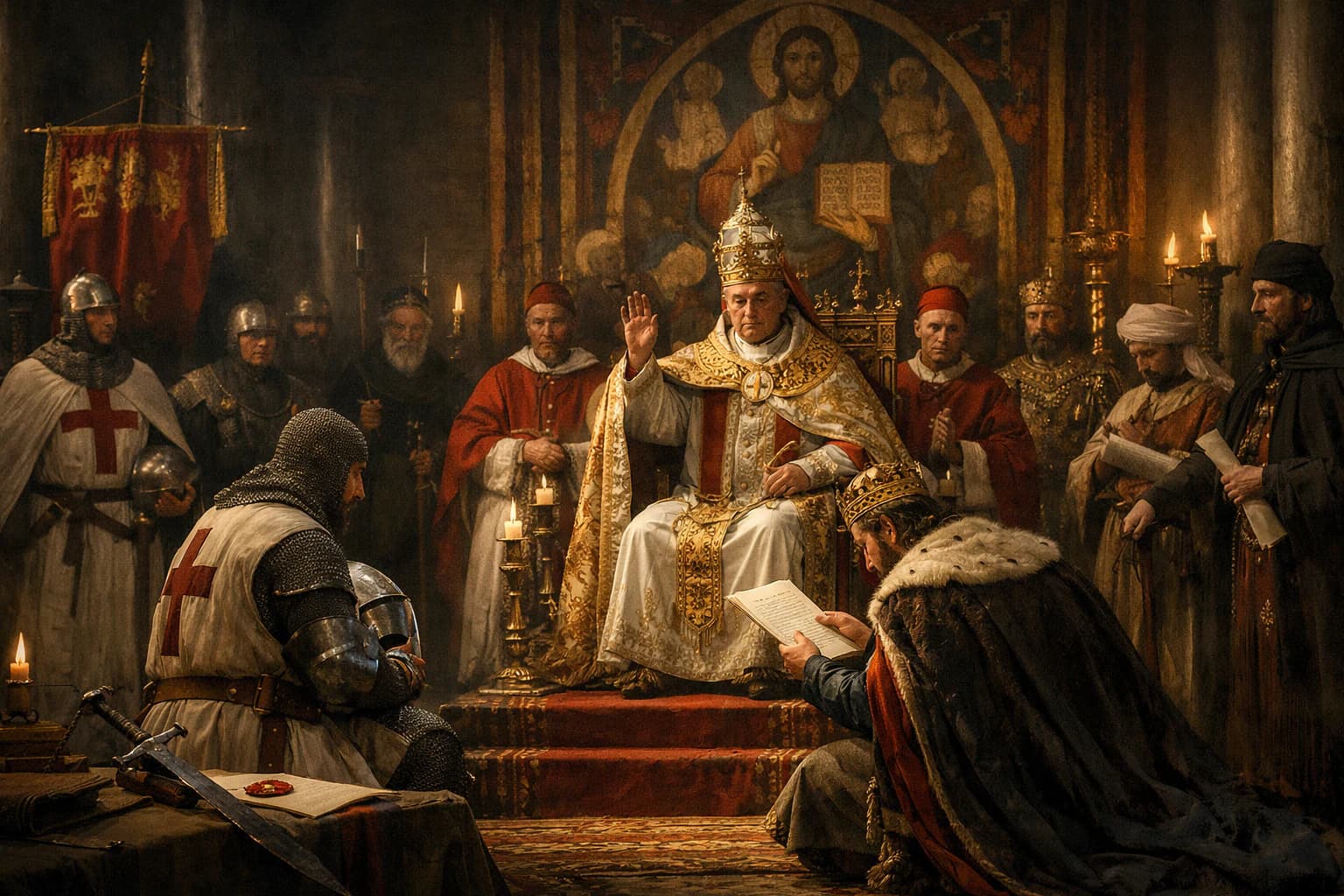
  5. 8Innocent III and Papal Monarchy
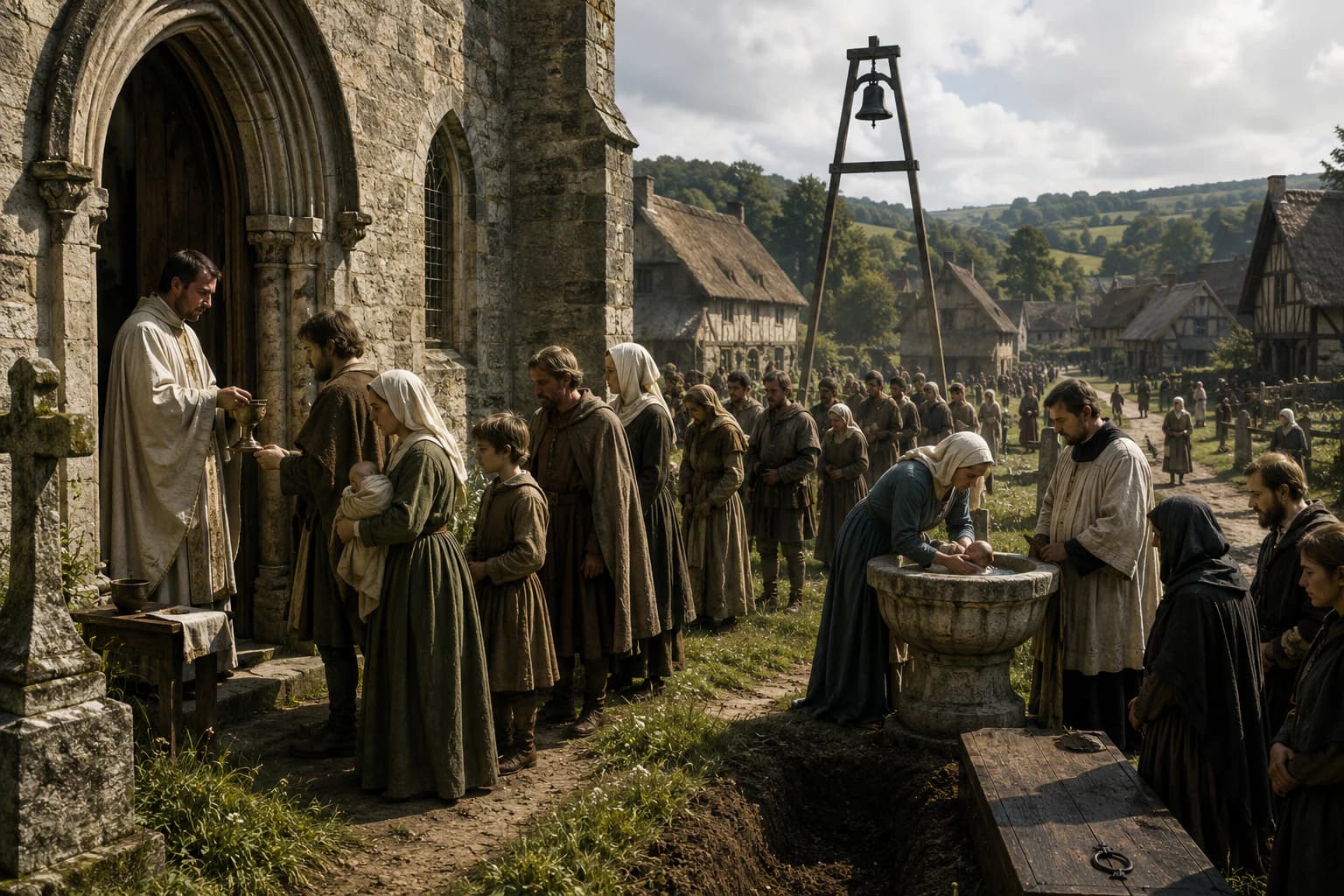
  6. 9The Church in Everyday Life
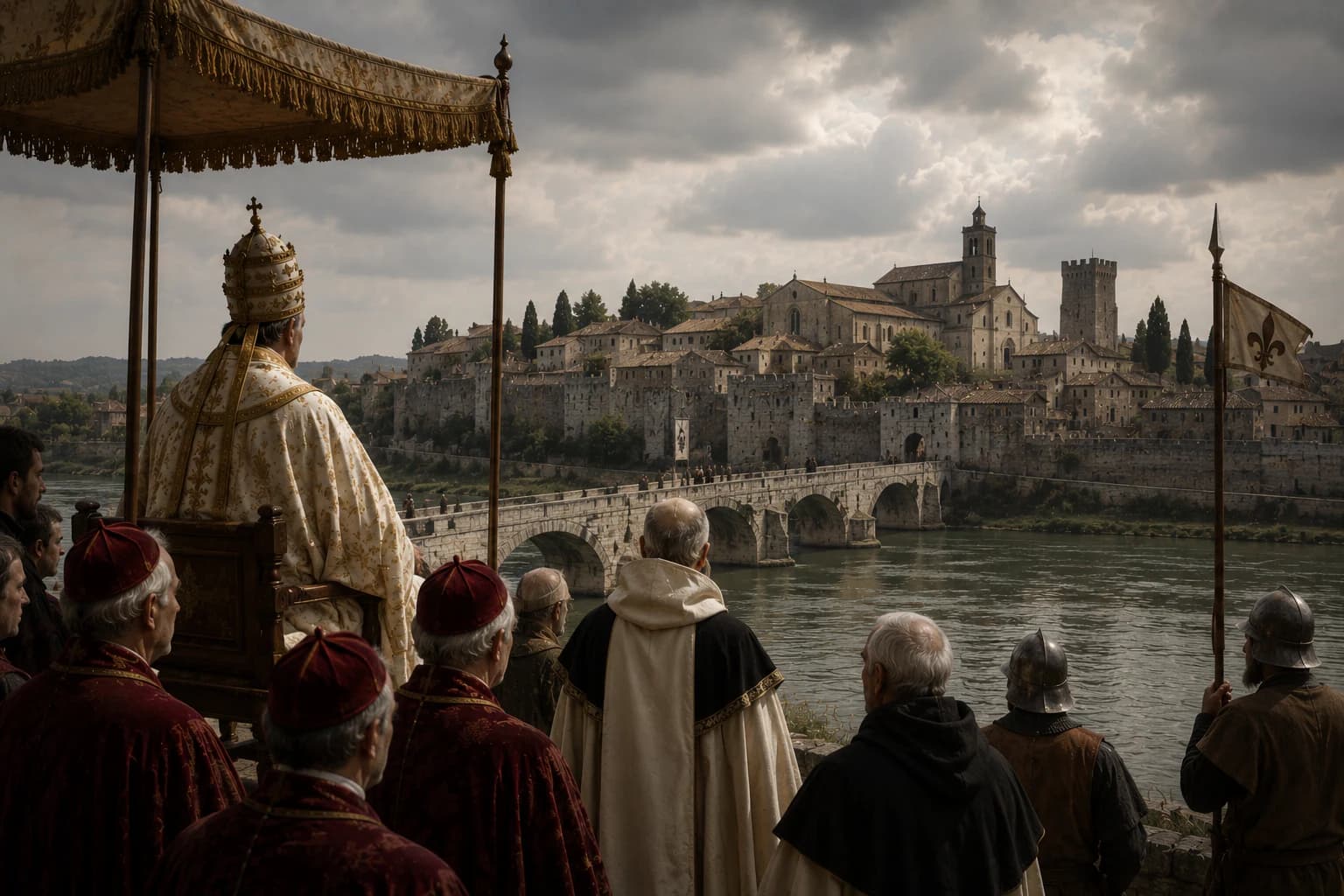
  7. 10Crisis at Avignon

Browse stories

Browse stories for free

Explore the people connected to this turning point or enjoy one of our free stories.

Unlock full storyBrowse stories

References

Sources & Further Reading

Reliable sources, primary-source collections and reading paths connected to this page.

Sources used

  1. Encyclopaedia Britannica, Papacy,” Open source
  2. The British Library, Medieval manuscripts,” Open source

Further reading

  1. R. W. Southern, Western Society and the Church in the Middle Ages, Penguin.

Primary sources

  1. Fordham University, Internet Medieval Sourcebook,” Open source

A weekly route through history

Find out first about the latest published stories, feature notes and occasional Premium offers in one weekly email.