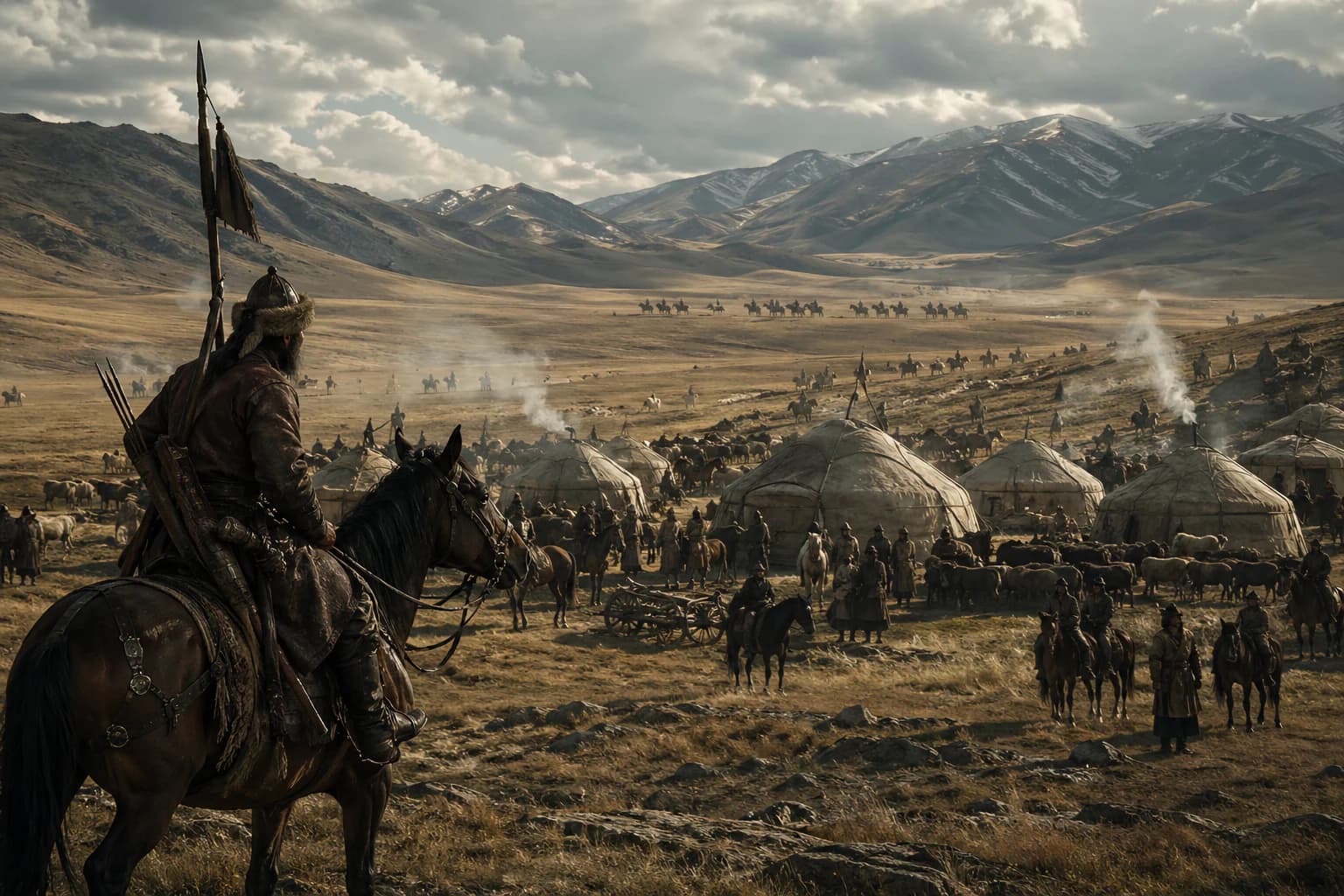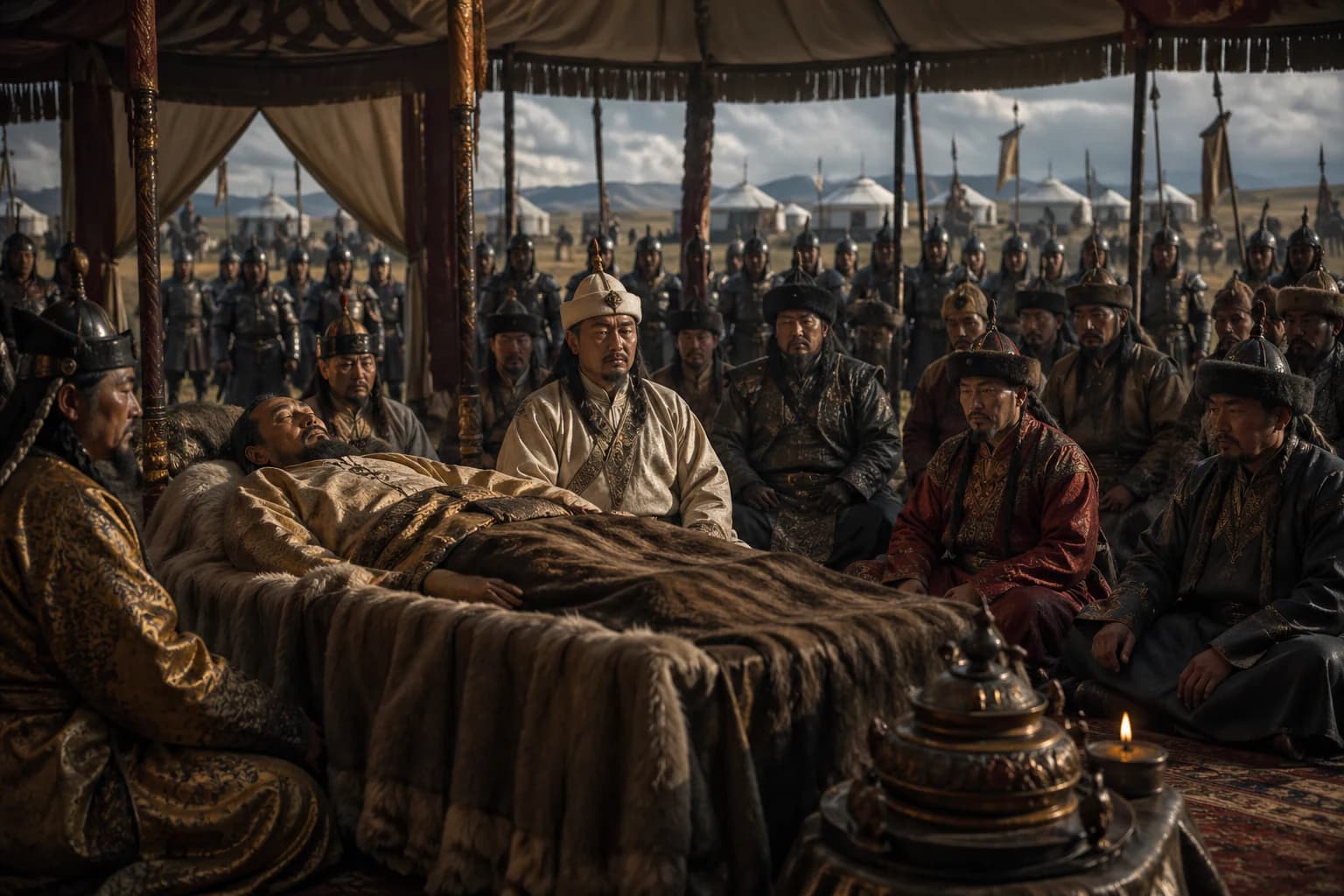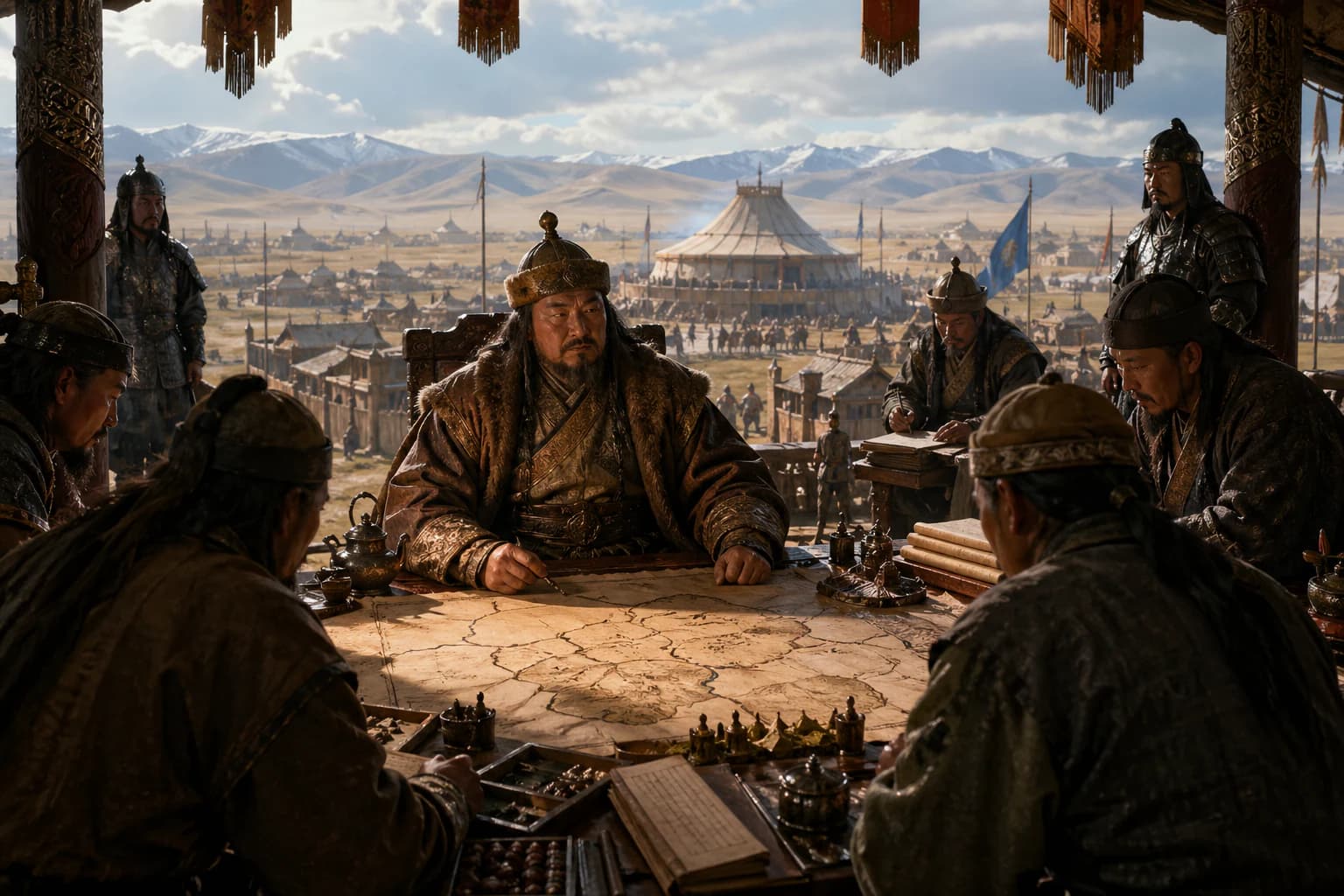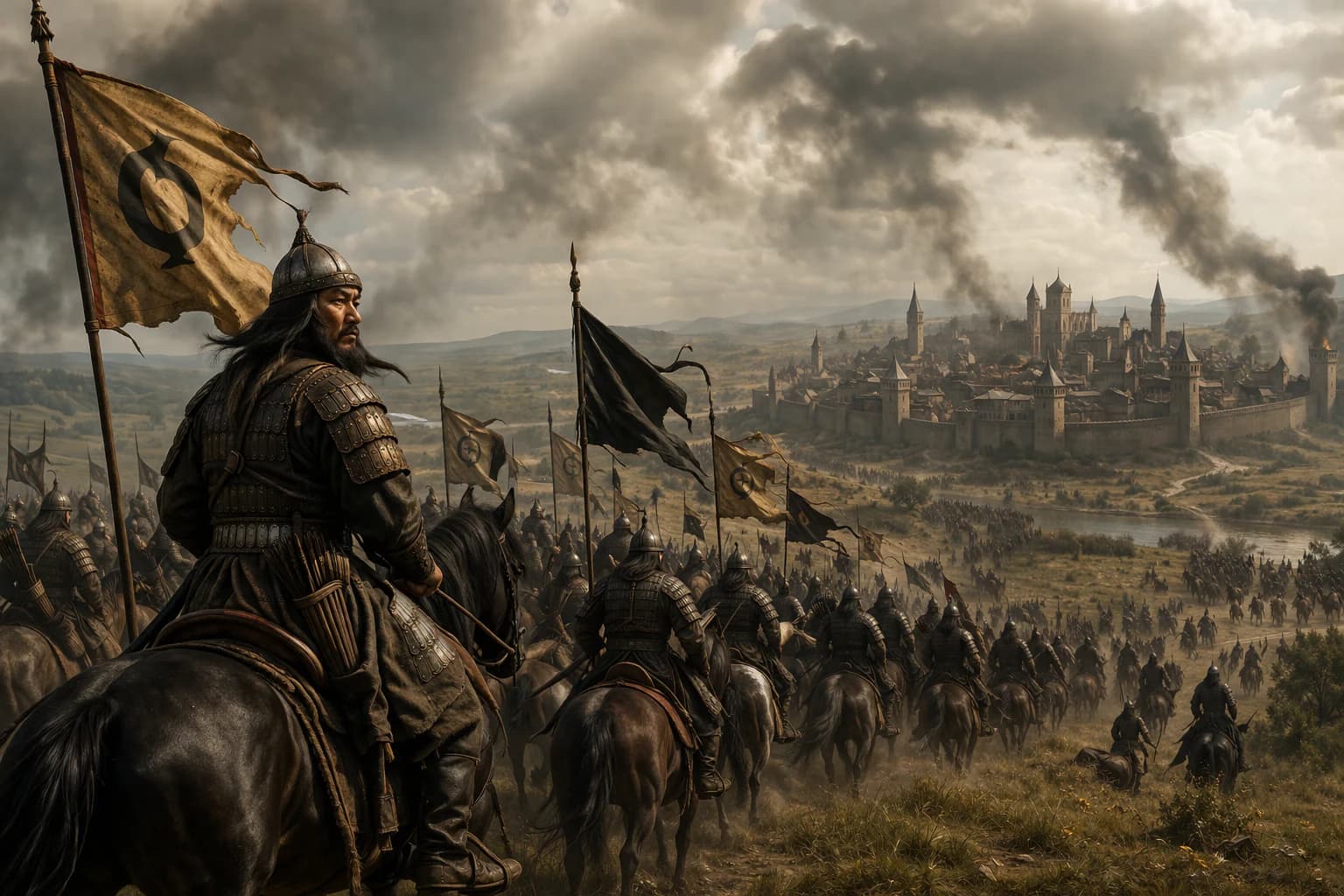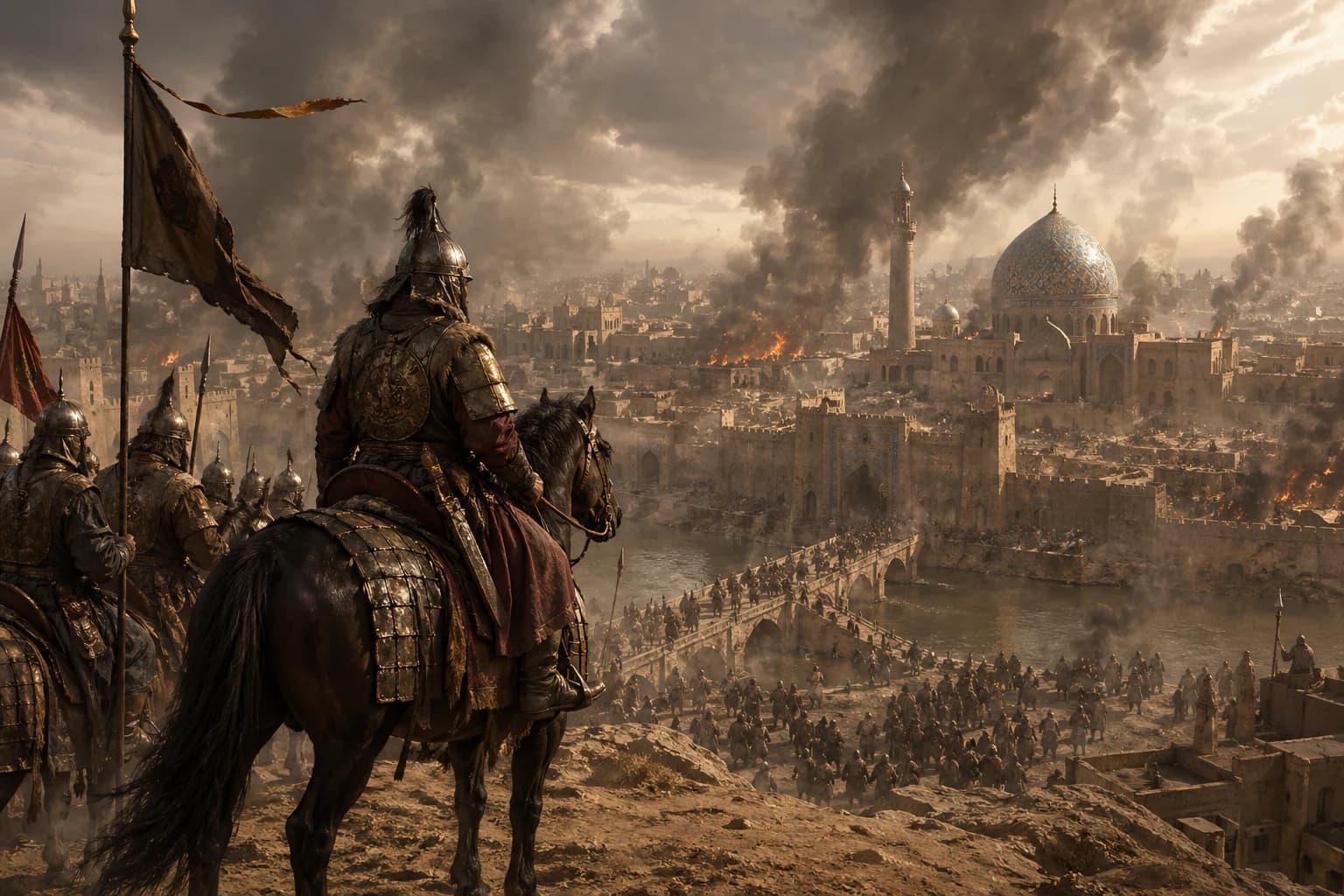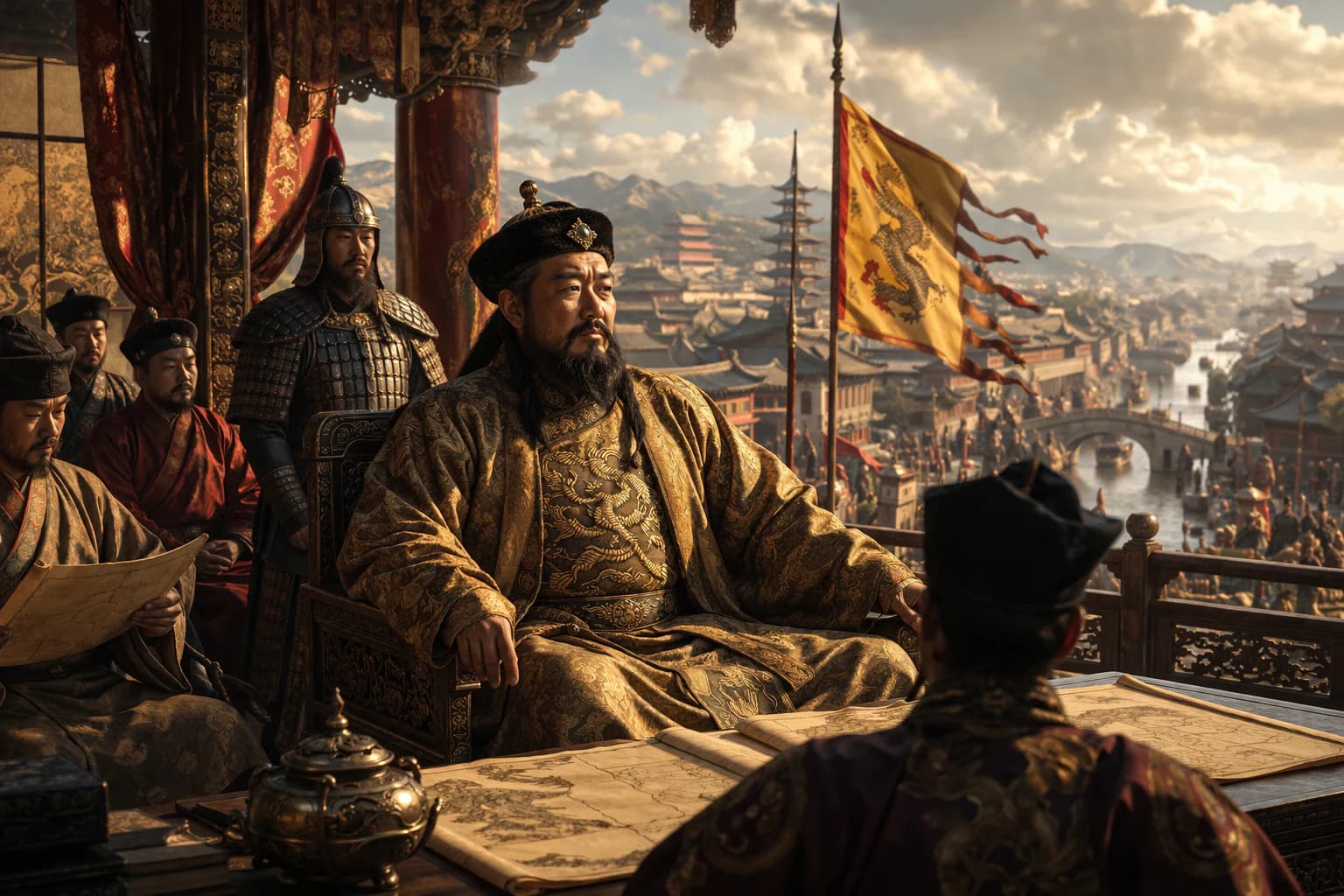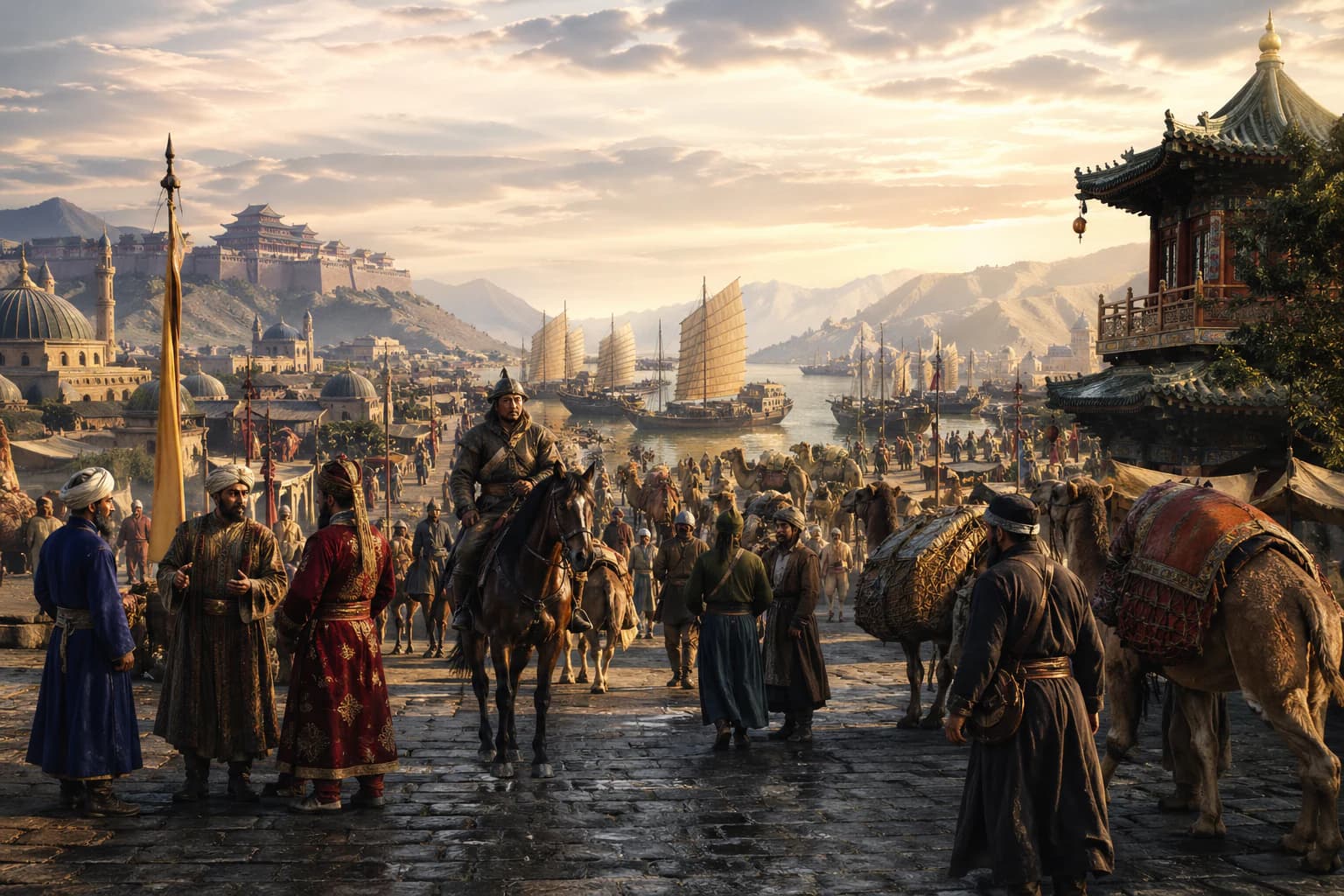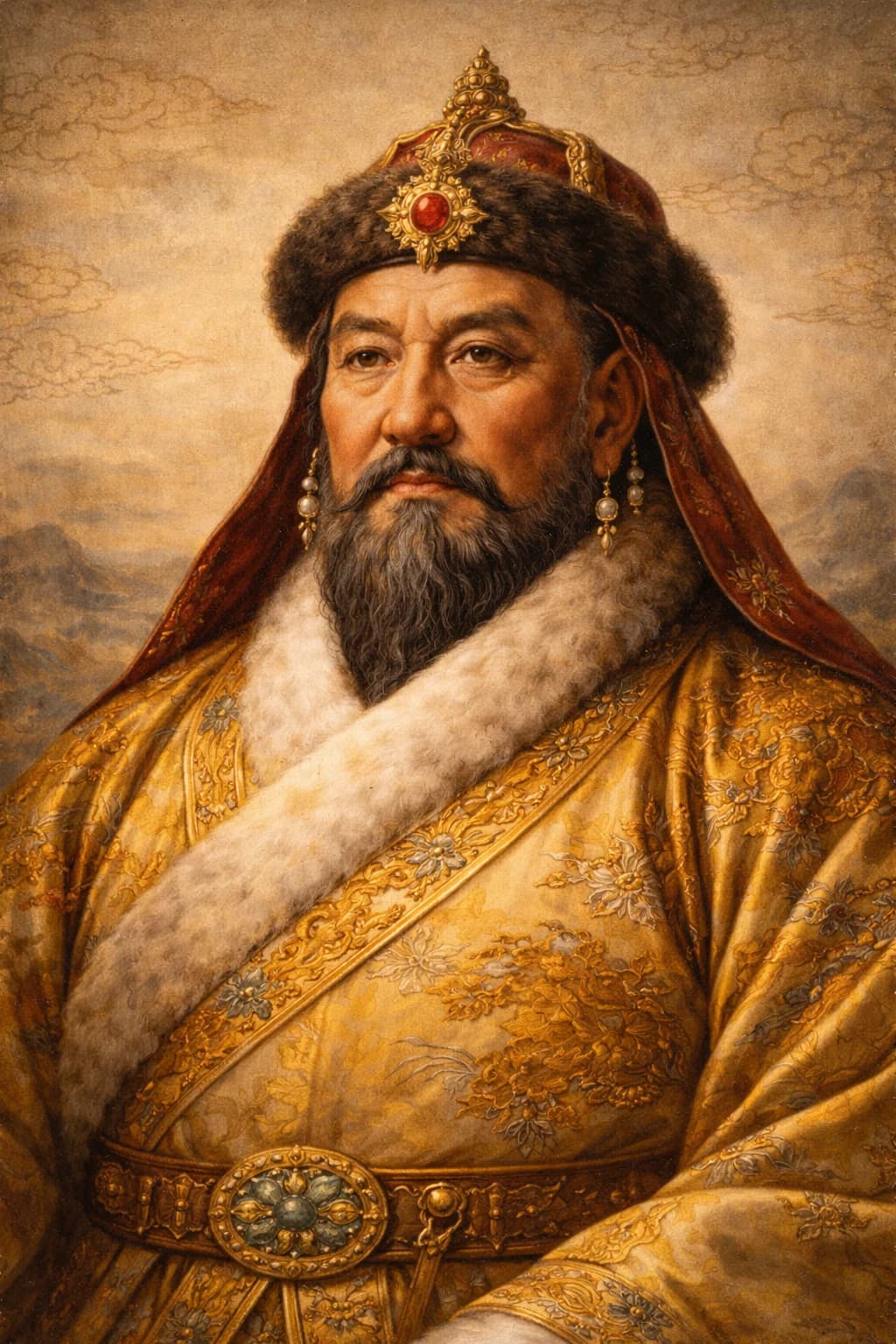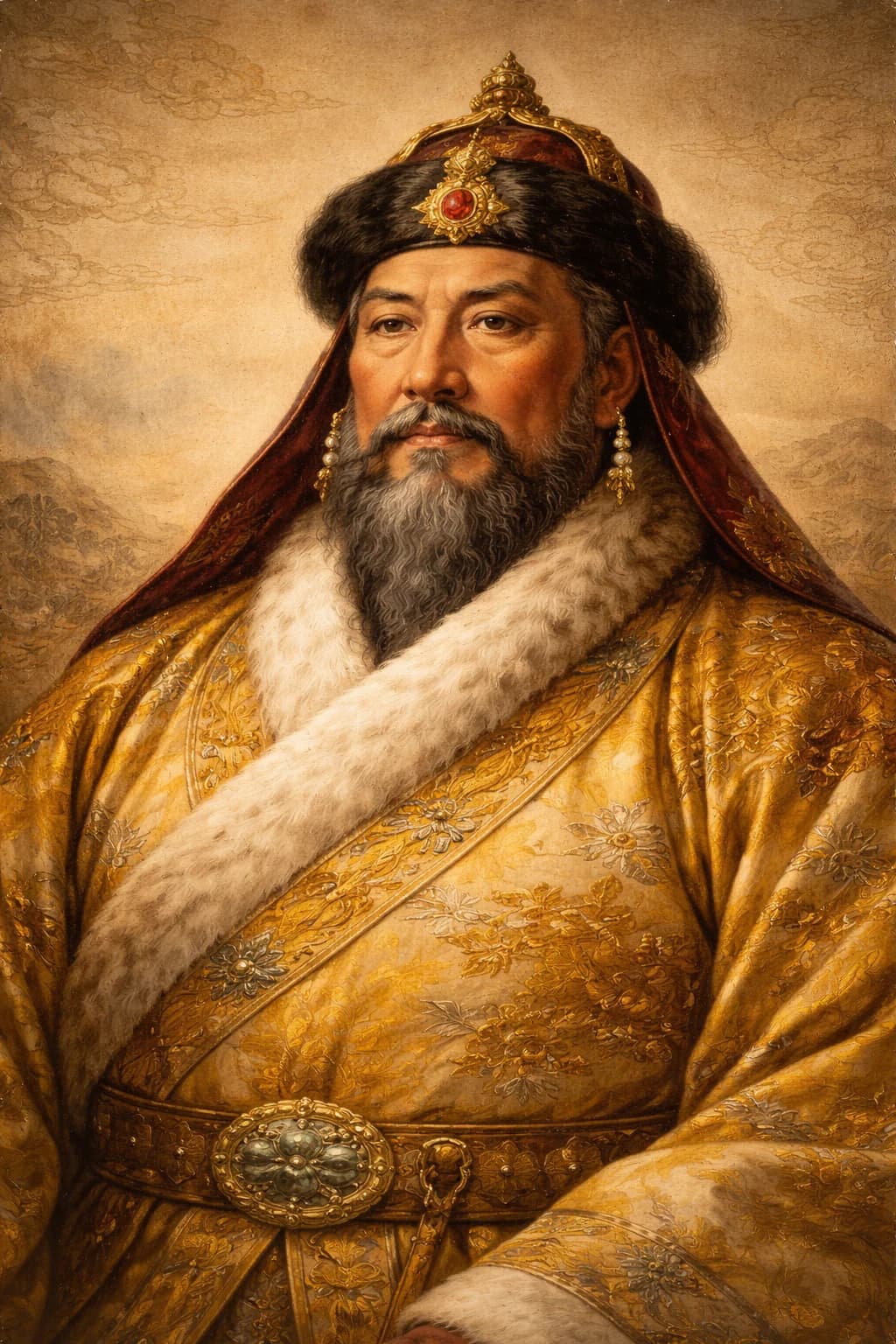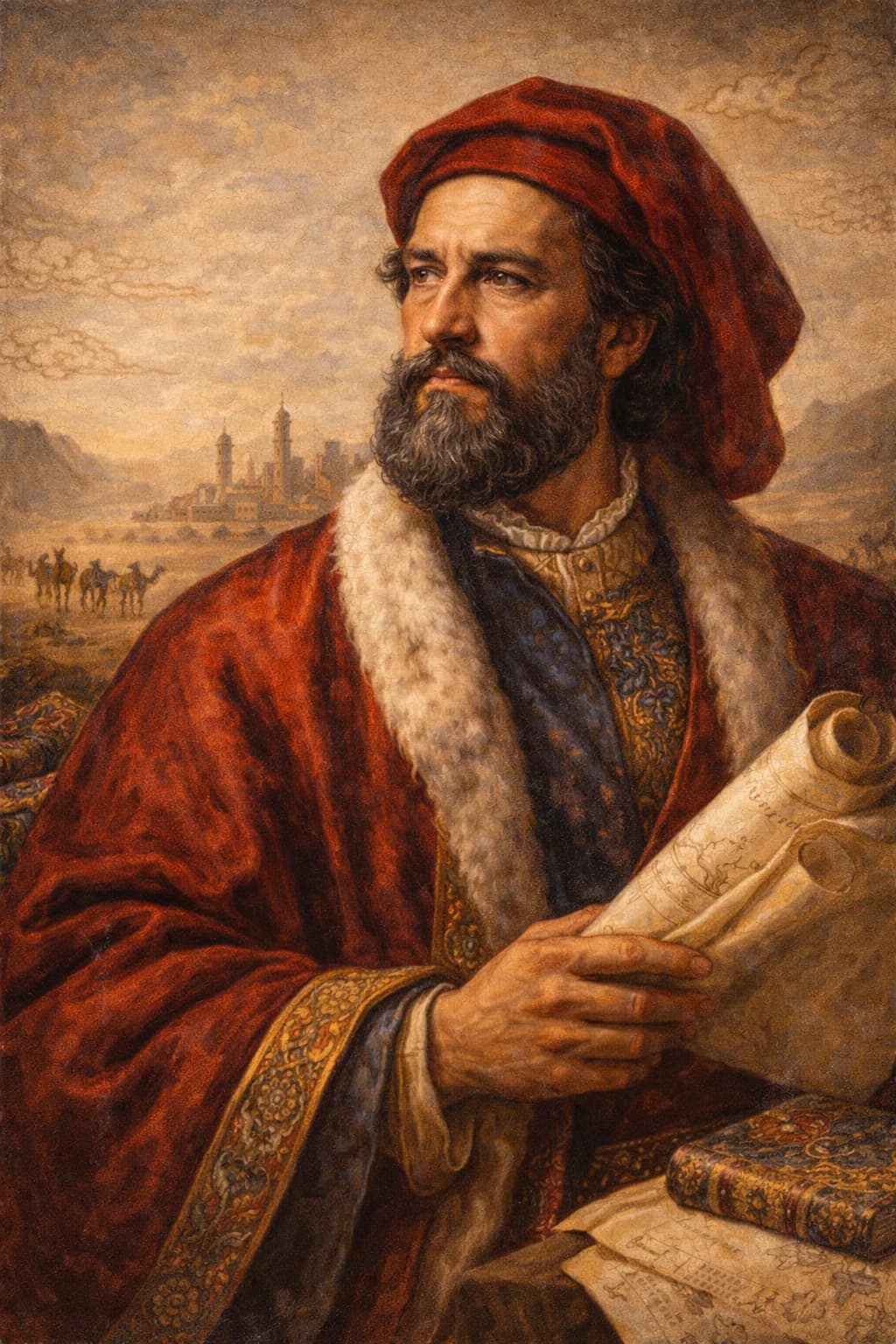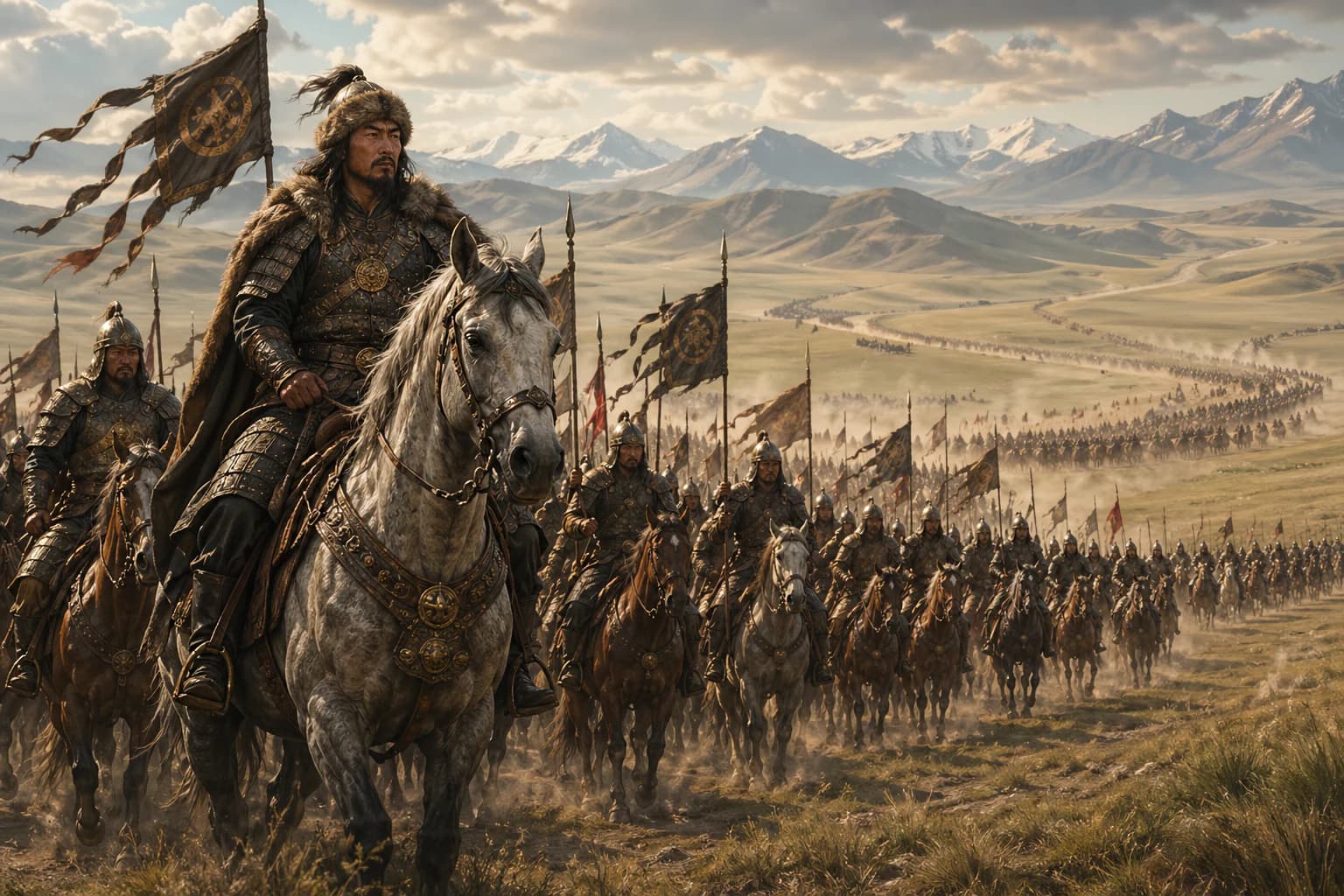
Mongol horsemen crossing the vast Eurasian steppe.
Premium Story

The Mongol Empire

Ride with the Mongol Empire from steppe unification to conquest, terror, trade, and Eurasian exchange.

11 chapters

Next

Content note

This story discusses violence, persecution, mass death, and human suffering in an educational historical context.

Context

Introduction

Overview

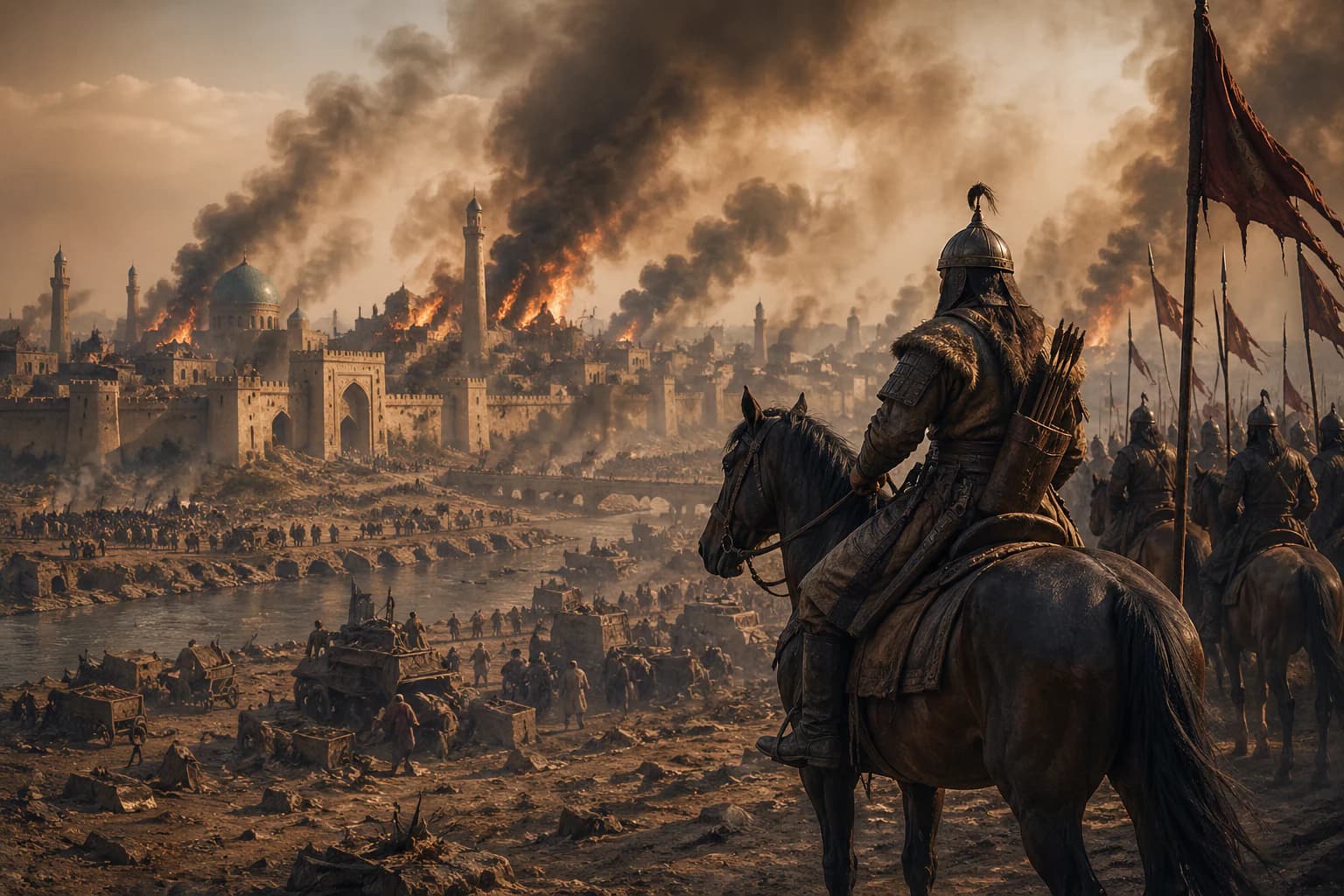
The Mongol Empire was the largest contiguous land empire in history, created by Genghis Khan and his successors in the thirteenth century. Mongol armies used mobility, discipline, intelligence, siege warfare, and terror to conquer states from China and Central Asia to Persia, Russia, and eastern Europe. Their empire devastated many societies but also connected Eurasia through trade, diplomacy, movement, and exchange.

What you'll learn: You will see how steppe politics became world empire, why Mongol conquest was so effective, and how destruction and connection existed side by side.

Key forces

The Steppe World Before Temujin
1162 CE
Step 1 of 101162 CEAccessible mode

The Steppe World Before Temujin

Before the Mongols became a great power, they were one of many competing tribes scraping out survival on the vast Central Asian steppe.

The Eurasian steppe was a grassland stretching from Hungary to the Pacific. No cities. No kings. No fixed borders. Dozens of tribes competed for pasture and resources.

Life centred on horses and herds. Families moved with the seasons. A warrior's skill on horseback and with the bow determined his place in the world.

On the steppe, you were as powerful as the horse beneath you and the loyalty around you.

No single tribe controlled the others. Alliances formed and broke quickly. Raiding, feuding, and kidnapping were a way of life. Political order was fragile and personal.

The Jin dynasty in northern China deliberately kept the steppe tribes divided, arming weaker groups against stronger ones. No tribe was allowed to grow too powerful.

Into this dangerous world, a boy named Temujin was born around 1162. His father was a minor clan leader killed by rivals. His family was abandoned and left to survive alone. That experience would shape everything that followed.

Temujin Unites the Mongols
1206 CE
Step 2 of 101206 CEAccessible mode

Temujin Unites the Mongols

Over decades of struggle, one man defeated every rival tribe and reimagined how the Mongols were organised.

After his difficult childhood, Temujin slowly gathered followers. He rewarded loyalty generously and welcomed able fighters regardless of their background or clan.

One by one, he defeated the great tribal confederacies of the steppe: the Tatars, the Merkits, the Keraits, and finally the Naimans. No rival remained to challenge him.

He didn't just win battles. He broke the old world and built something entirely new in its place.

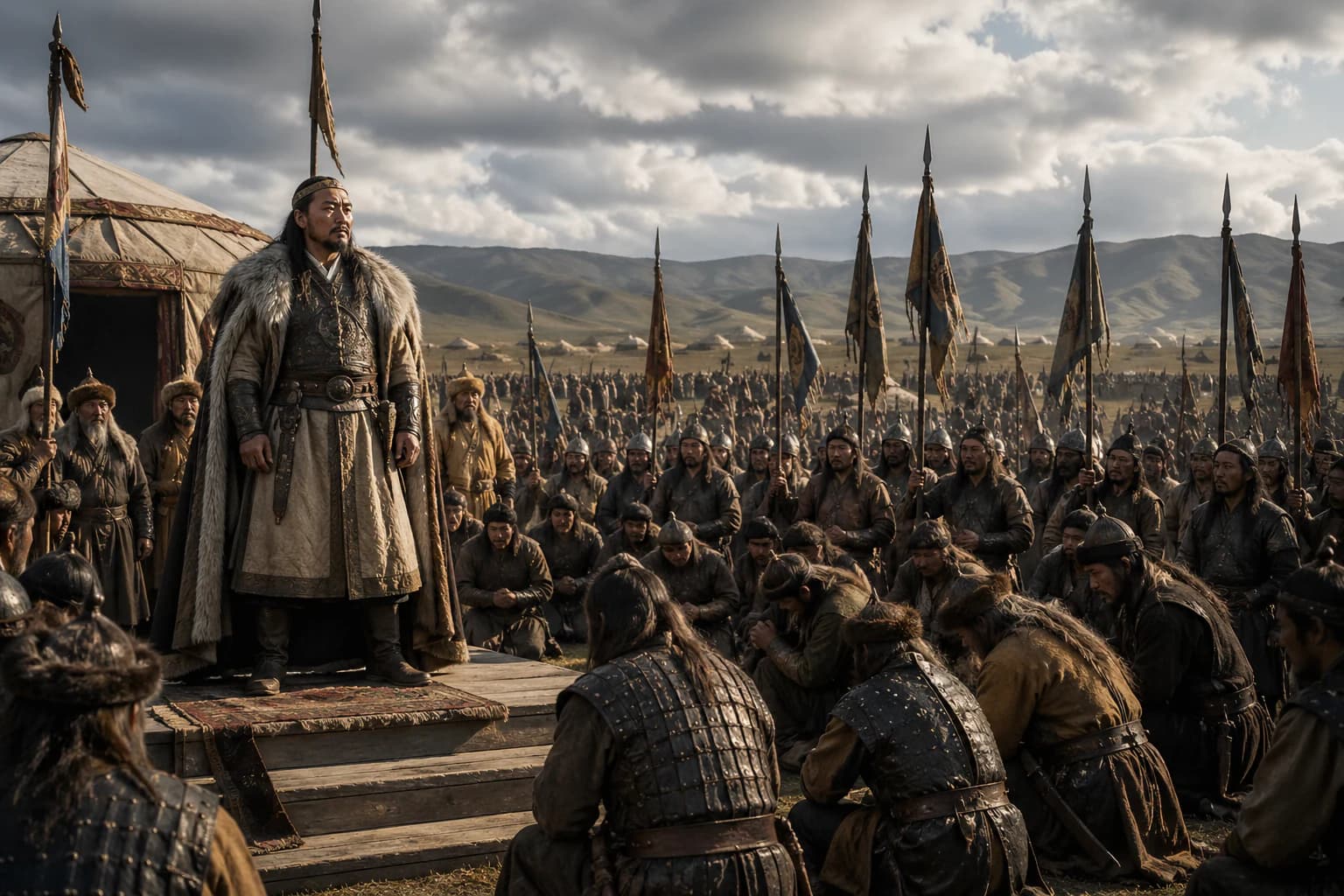
In 1206, at a great assembly called a kurultai, Temujin was proclaimed Genghis Khan — Universal Ruler. It was the recognition of a new political reality.

He reorganised the army into units of ten, a hundred, a thousand, and ten thousand men. Officers were promoted for skill and loyalty, not family connections.

Old clan loyalties were broken apart and replaced with loyalty to the Khan. This made the Mongols far more cohesive and disciplined. By 1206, they were no longer scattered tribes. They were a unified military force ready to expand.

The Conquest of Northern China
1215 CE
Step 3 of 101215 CEAccessible mode

The Conquest of Northern China

The Mongols had always fought on open ground. Attacking the Jin dynasty meant learning to fight an entirely different kind of war.

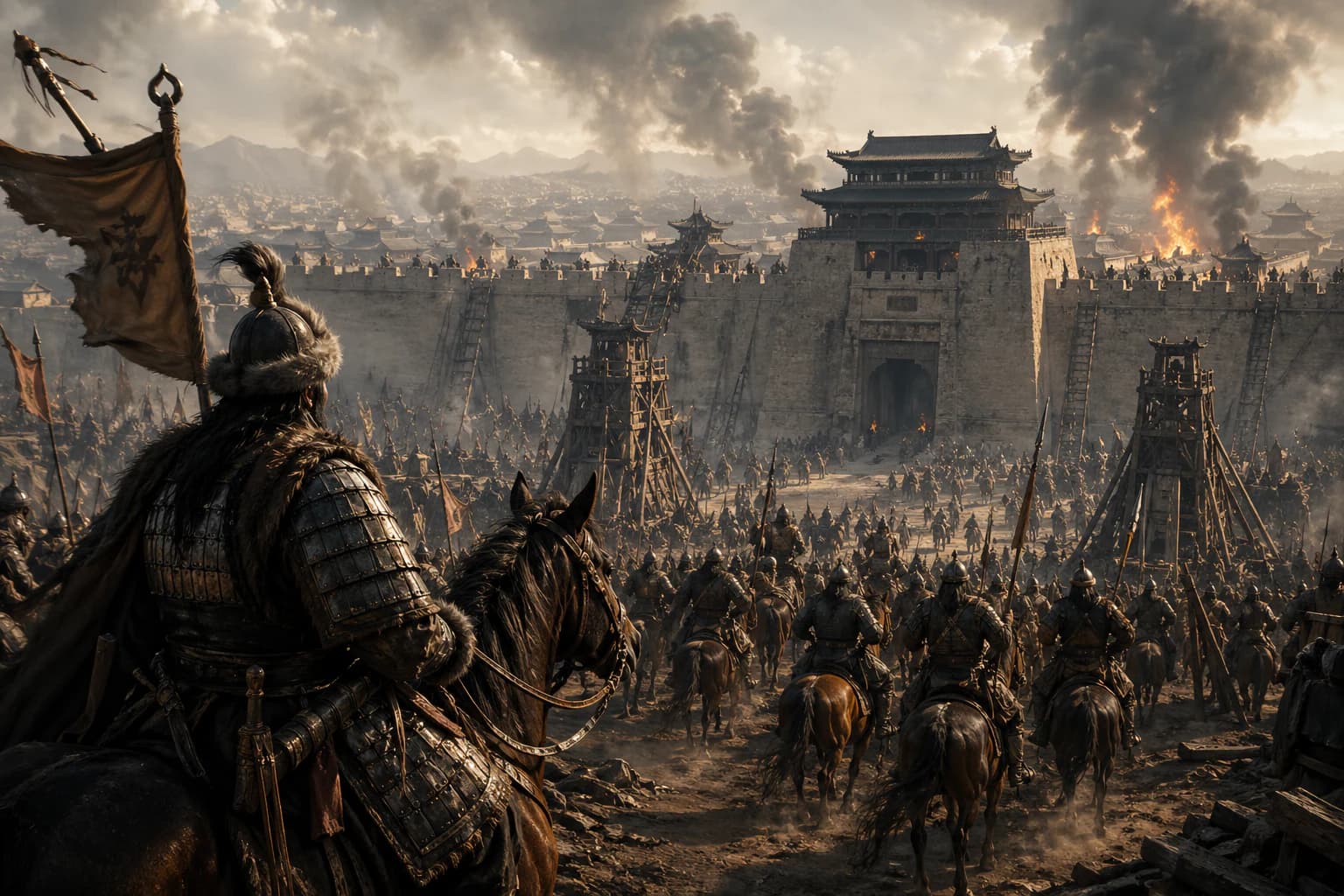
After unifying the Mongols, Genghis Khan turned south to China. The Jin dynasty was wealthy, powerful, and protected by walled cities and large armies.

Mongol cavalry tactics that had won every steppe battle could not simply be applied to fortified cities. The Mongols had to adapt quickly.

Speed had carried them to the steppe's edge. Now they had to learn a different kind of war.

They absorbed captured engineers and artillerymen, learning to operate siege weapons. They used terror deliberately: cities that surrendered quickly were spared, those that resisted were destroyed completely.

Intelligence was equally important. Before each campaign, Mongol scouts gathered detailed information about roads, defences, and internal politics. The enemy rarely knew where the attack would fall.

By 1215, the Jin capital had fallen. The Mongols had proved they could break a major settled civilisation, not just raid its borders. The template for future conquests was now set.

Premium

You've reached the turning point

The opening chapters show how Temujin survived betrayal, exile and violence to become Genghis Khan. Premium follows the moment his story stops being only about survival and becomes a force that cities, kingdoms and empires have to fear.

Continue into the reversals, crises and human stakes that make the story matter.

Unlock full story

What Premium unlocks next

  1. 4The Destruction of Khwarezm
  2. 5The Empire After Genghis Khan
  3. 6Ogedei Expands the Imperial Machine
  4. 7The Invasion of Europe
  5. 8The Fall of Baghdad
  6. 9Kublai Khan Rules China
  7. 10The Pax Mongolica

Browse stories

Browse stories for free

Explore the people connected to this turning point or enjoy one of our free stories.

Unlock full storyBrowse stories

References

Sources & Further Reading

Reliable sources, primary-source collections and reading paths connected to this page.

Sources used

  1. Encyclopaedia Britannica, Mongol Empire,” Open source
  2. The Metropolitan Museum of Art, The Mongol Empire,” Open source

Further reading

  1. Timothy May, The Mongol Empire, Edinburgh University Press.

Primary sources

  1. Fordham University, Internet Medieval Sourcebook,” Open source

A weekly route through history

Find out first about the latest published stories, feature notes and occasional Premium offers in one weekly email.