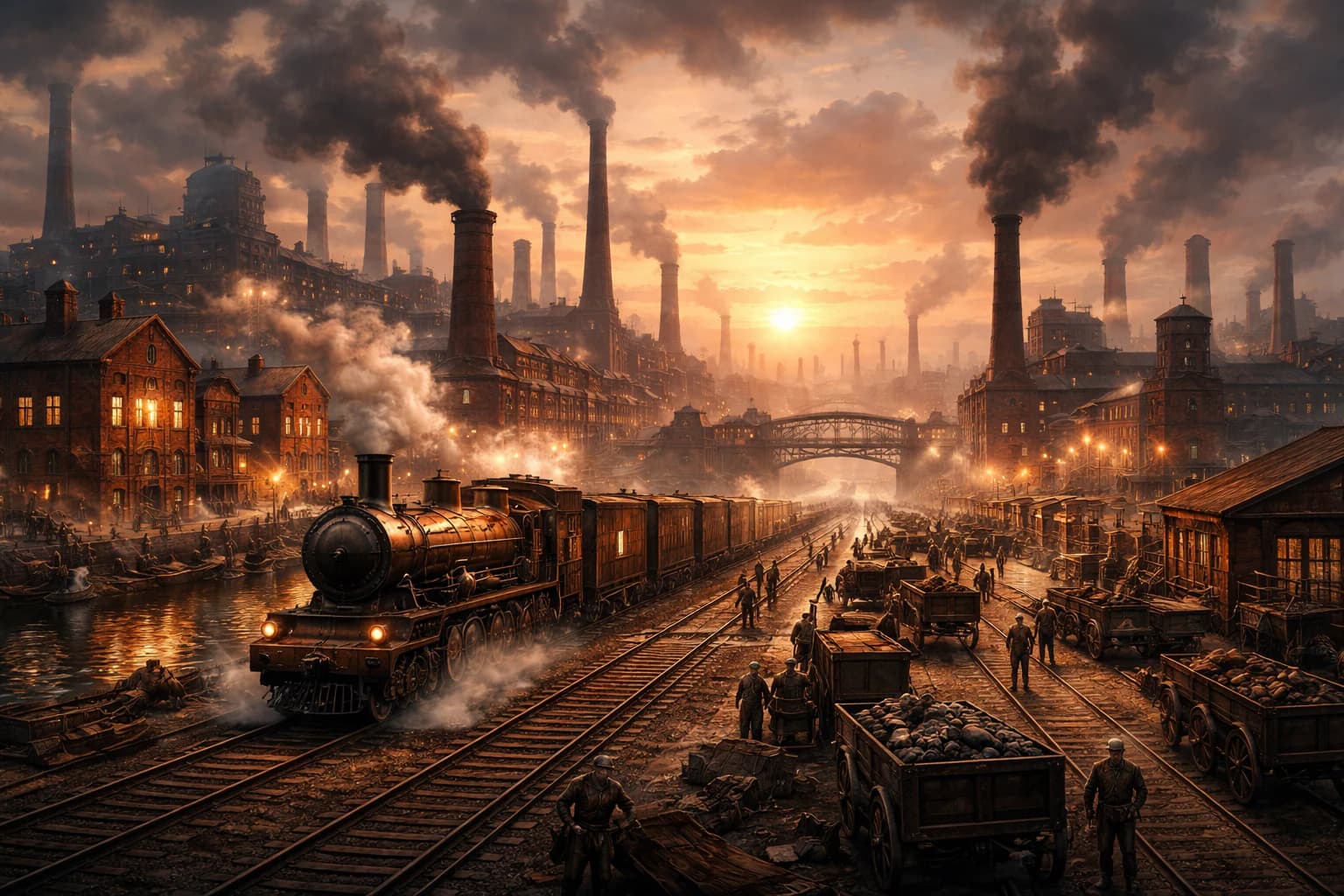
Industrial Revolution factories, steam engines and railways.
Free Story

The Industrial Revolution

Enter the Industrial Revolution as steam, coal, factories, railways, and cities create the modern economy.

10 chapters

Next
Context

What Was the Industrial Revolution?

Overview

The Industrial Revolution was the transformation of work, energy, transport, and society that began in Britain in the eighteenth century and spread across the world. Machines, factories, coal, steam power, railways, and new systems of production changed how goods were made and how people lived. It created modern industry and urban life, but also brought harsh working conditions, environmental change, and deep social inequality.

What you’ll learn: You’ll see how industrialisation changed the way people worked, travelled, lived, and related to one another. You’ll also understand why this period had such a lasting impact on modern cities, economies, and daily life.

Key forces

Why Did the Industrial Revolution Begin in Britain?
1750 CE
Step 1 of 101750 CEAccessible mode

Why Did the Industrial Revolution Begin in Britain?

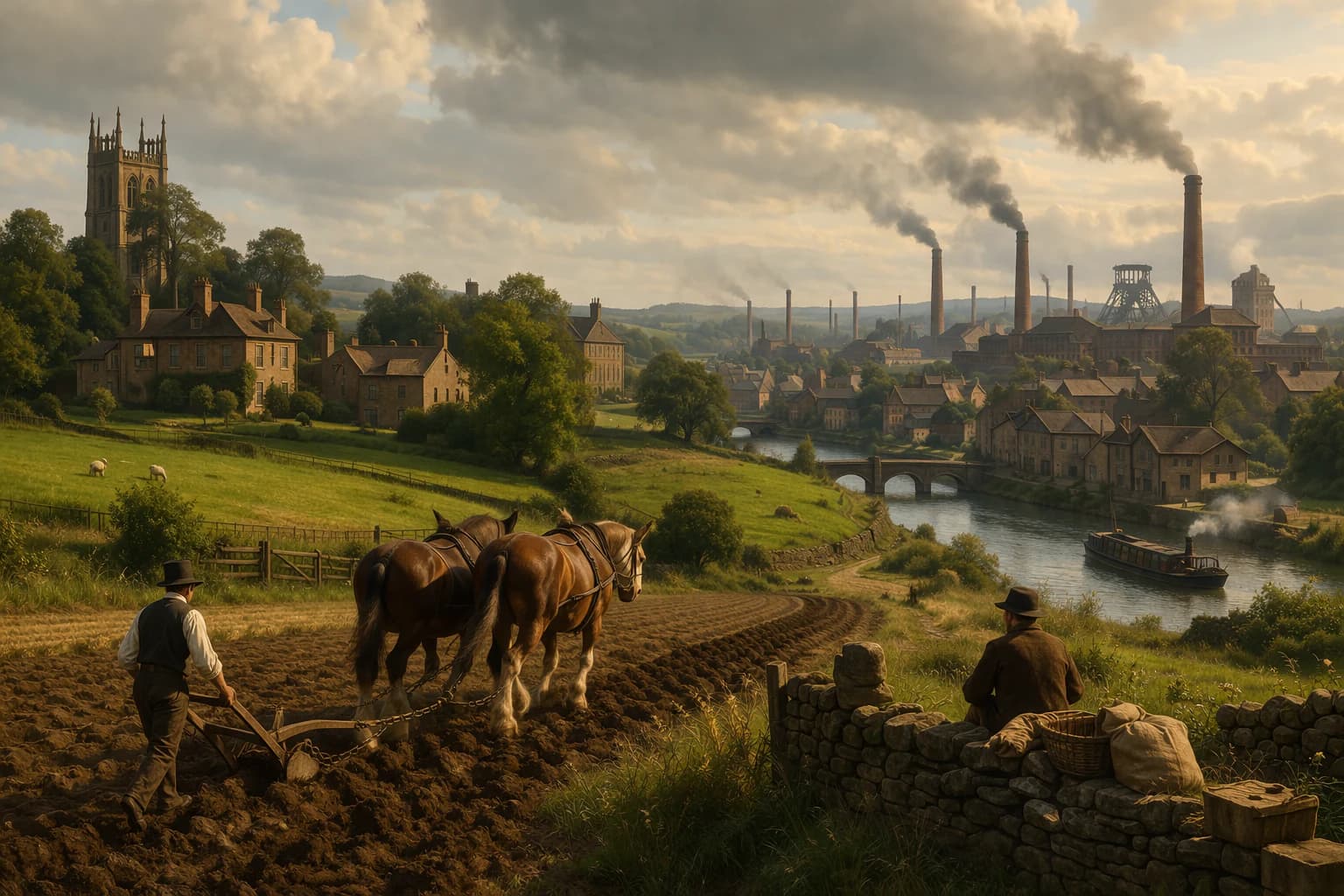
Before factories and steam engines, Britain quietly built the conditions for change. Everyday life was already starting to shift.

Farming improved through new tools and crop methods, so fewer workers could grow more food. This meant more people could leave the land and look for other work.

The population grew quickly, creating both a larger workforce and more demand for goods like clothes and tools.

A bigger population and better farming set the stage for something new.

Britain also had easy access to coal, a key fuel for machines, and wealthy investors willing to fund new ideas and businesses.

Stable government and strong trade networks helped businesses take risks and expand without constant disruption.

These combined factors made Britain the first place where industry could grow rapidly, shaping how modern economies still work today.

Mechanisation of Textile Production
1764 CE
Step 2 of 101764 CEAccessible mode

Mechanisation of Textile Production

Clothes used to be made slowly by hand at home. Then machines changed everything almost overnight.

Before machines, families spun thread and wove cloth in their own cottages. It was slow work, and people could only make small amounts at a time.

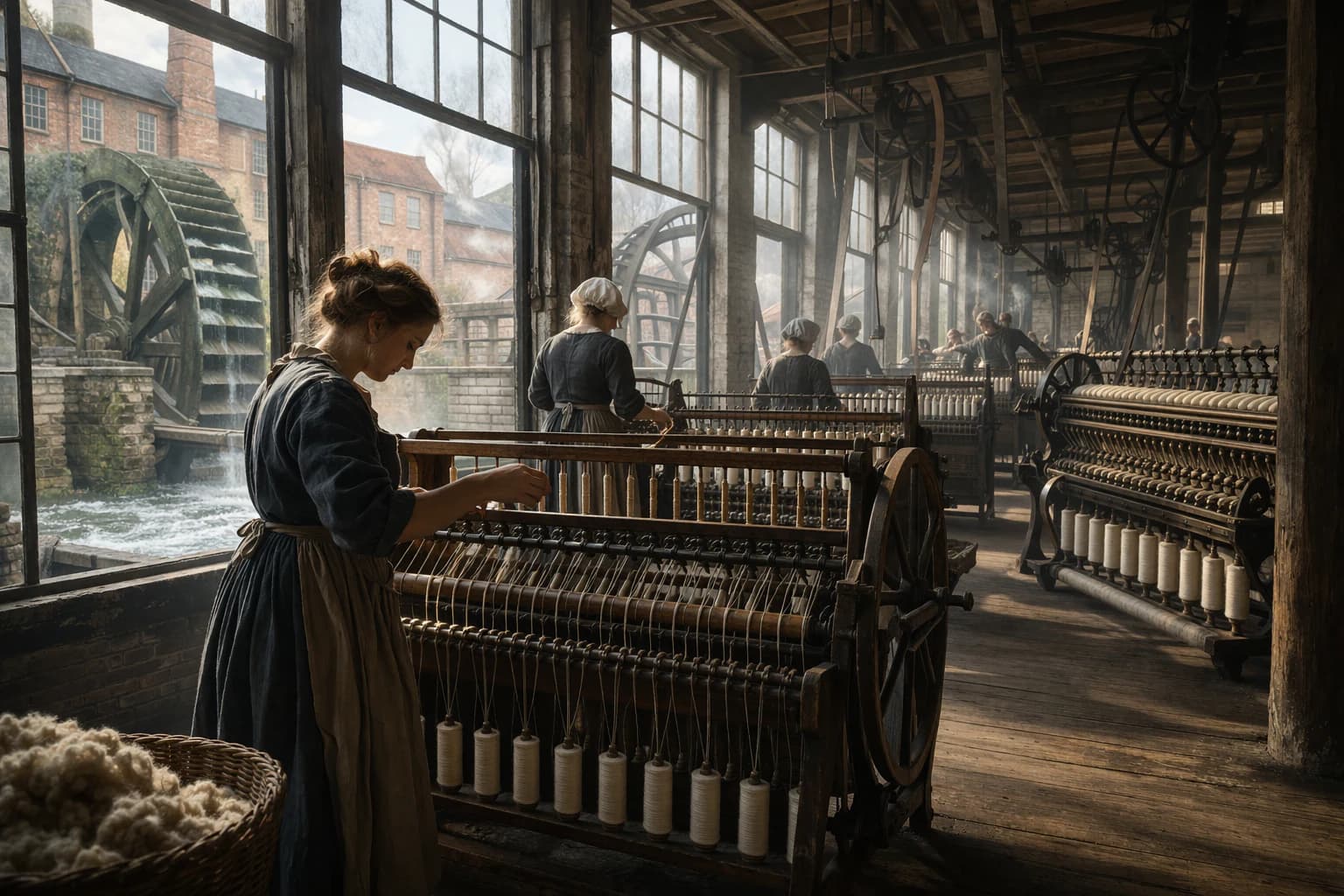
In 1764, new inventions like the spinning jenny allowed one worker to spin many threads at once. Soon after, the water frame used water power to spin even stronger thread.

One machine could do the work of many hands.

These machines were too big for homes, so factories were built near rivers to power them. Workers moved from villages into these new workplaces.

Life changed quickly. People worked longer hours in factories, but cloth became cheaper and easier to produce.

Today’s mass-produced clothing and global fashion industry began with these early machines and the shift to factory life.

The Rise of the Factory System
1771 CE
Step 3 of 101771 CEAccessible mode

The Rise of the Factory System

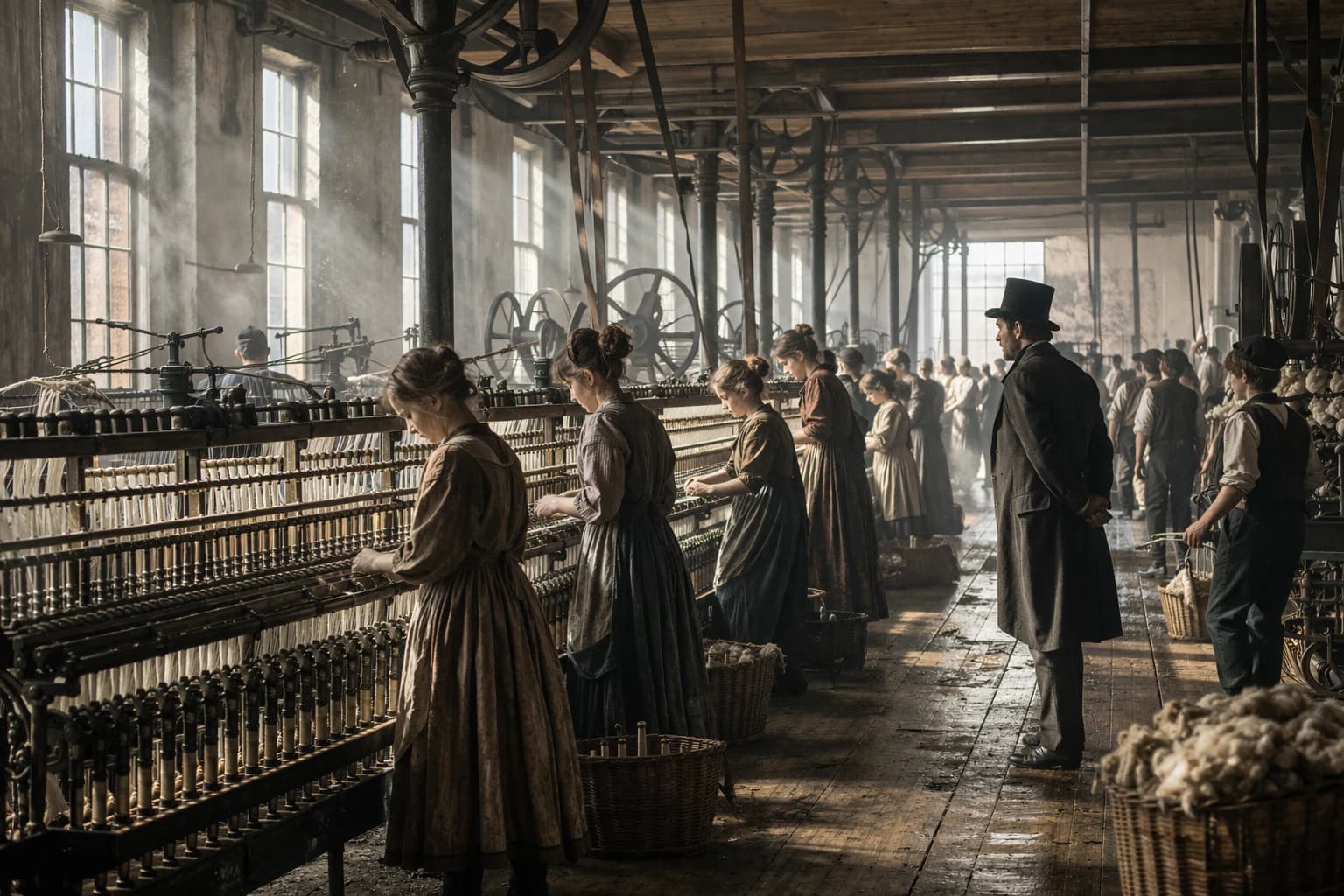
Work changed fast when machines moved into one place. People no longer worked at home but inside large buildings called factories.

Before this, many people spun thread or wove cloth in their own homes. Families worked at their own pace and controlled their day.

New machines needed water power and space, so they were gathered in mills. Richard Arkwright’s cotton mills showed how production could be organized in one place.

Work became something you went to, not something you did at home.

Workers now followed strict hours, often from early morning to late evening. Tasks were divided, and machines set the speed.

This made goods cheaper and faster to produce, but it also made work more tiring and controlled.

Today’s offices, warehouses, and shift work all trace back to this change. The idea of organized workplaces still shapes how we live and work.

Steam Power Revolutionises Industry
1781 CE
Step 4 of 101781 CEAccessible mode

Steam Power Revolutionises Industry

A new kind of engine changed where and how people could work.

Before this, most factories had to sit beside rivers. Waterwheels powered machines, so if the water slowed or froze, work stopped.

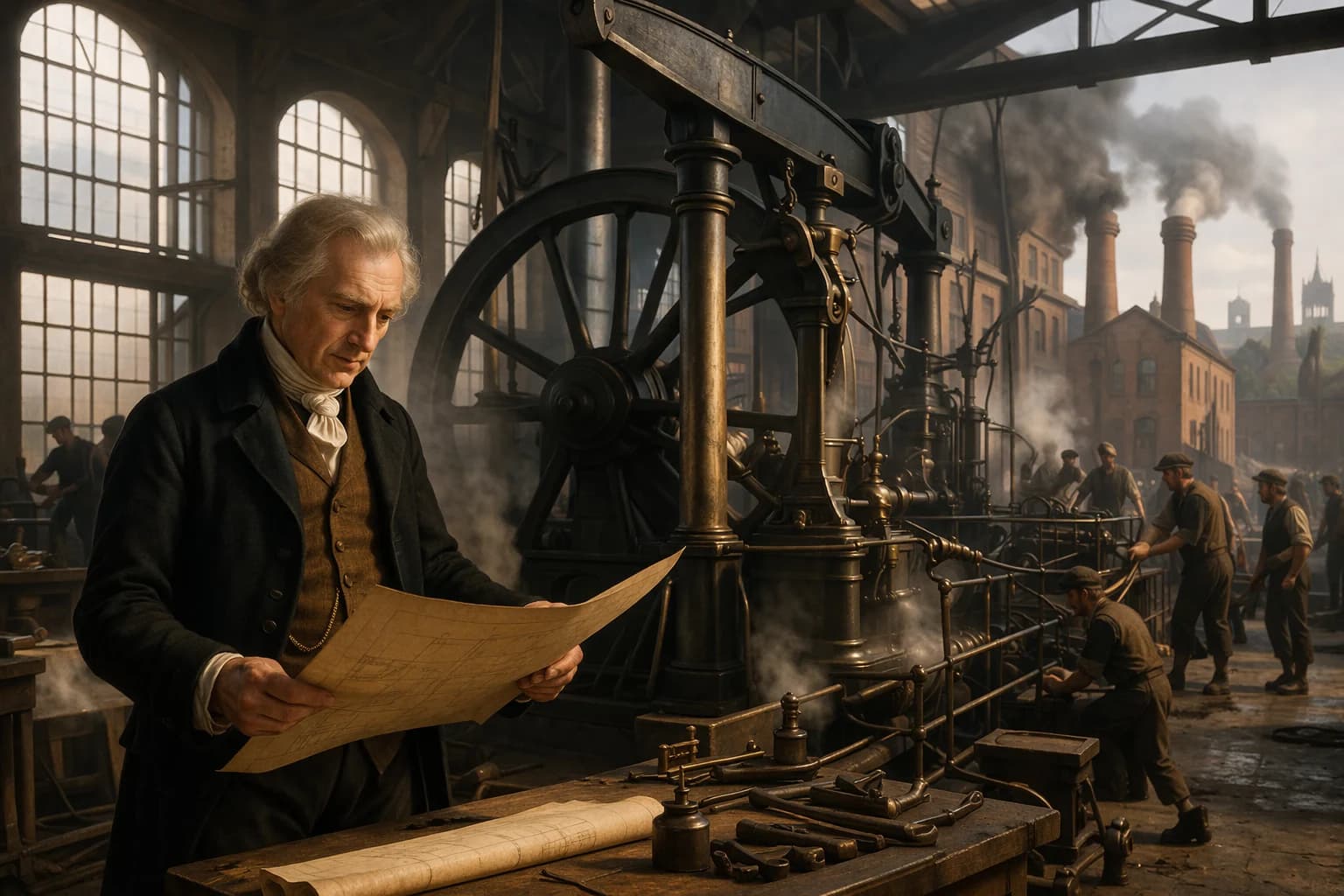
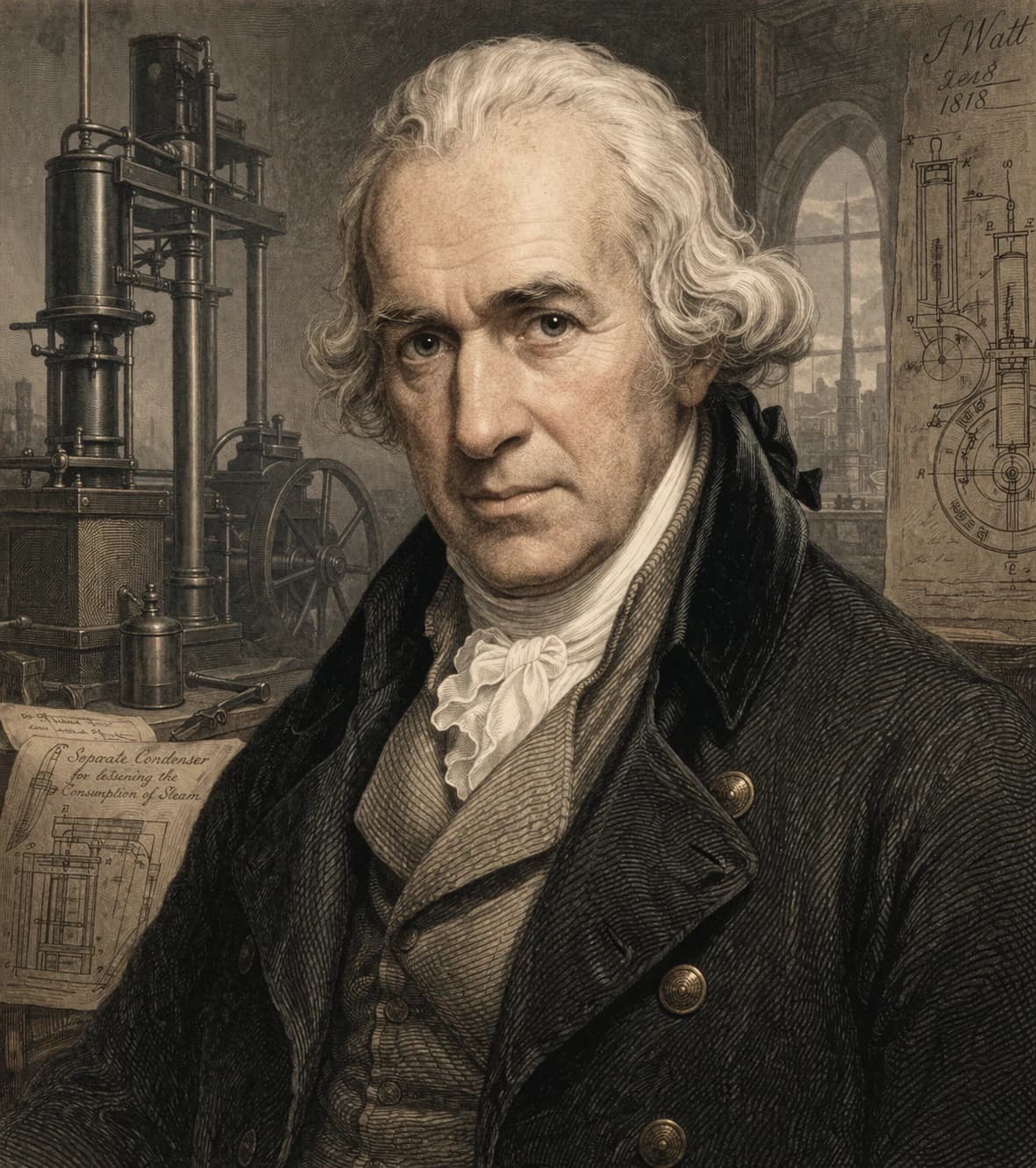
James Watt improved the steam engine so it used less fuel and ran more smoothly. His design made steam power practical for everyday use.

Power was no longer tied to rivers.

Factories began using steam engines to drive machines. They could be built in towns and cities, not just near fast rivers.

Production grew quickly. More goods could be made, and jobs shifted from rural areas into busy industrial centres.

Today, this shift explains why cities grew and why modern industry depends on reliable, constant power sources.

Expansion of Industrial Cities
1801 CE
Step 5 of 101801 CEAccessible mode

Expansion of Industrial Cities

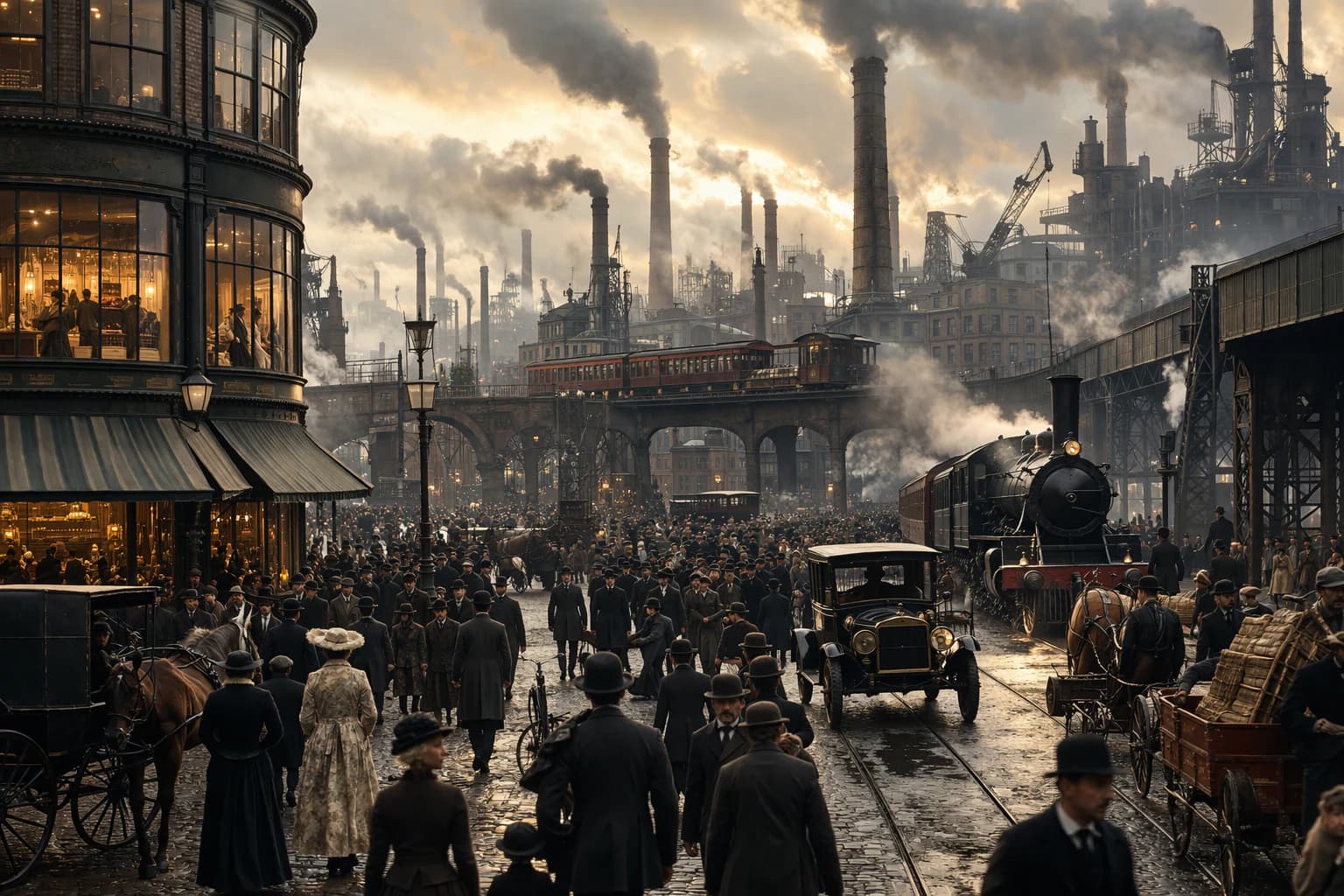
Cities grew fast as factories spread. Life changed quickly for the people who moved there.

Before this, most people lived in small villages and worked on farms. Life was slower, and families often knew everyone around them.

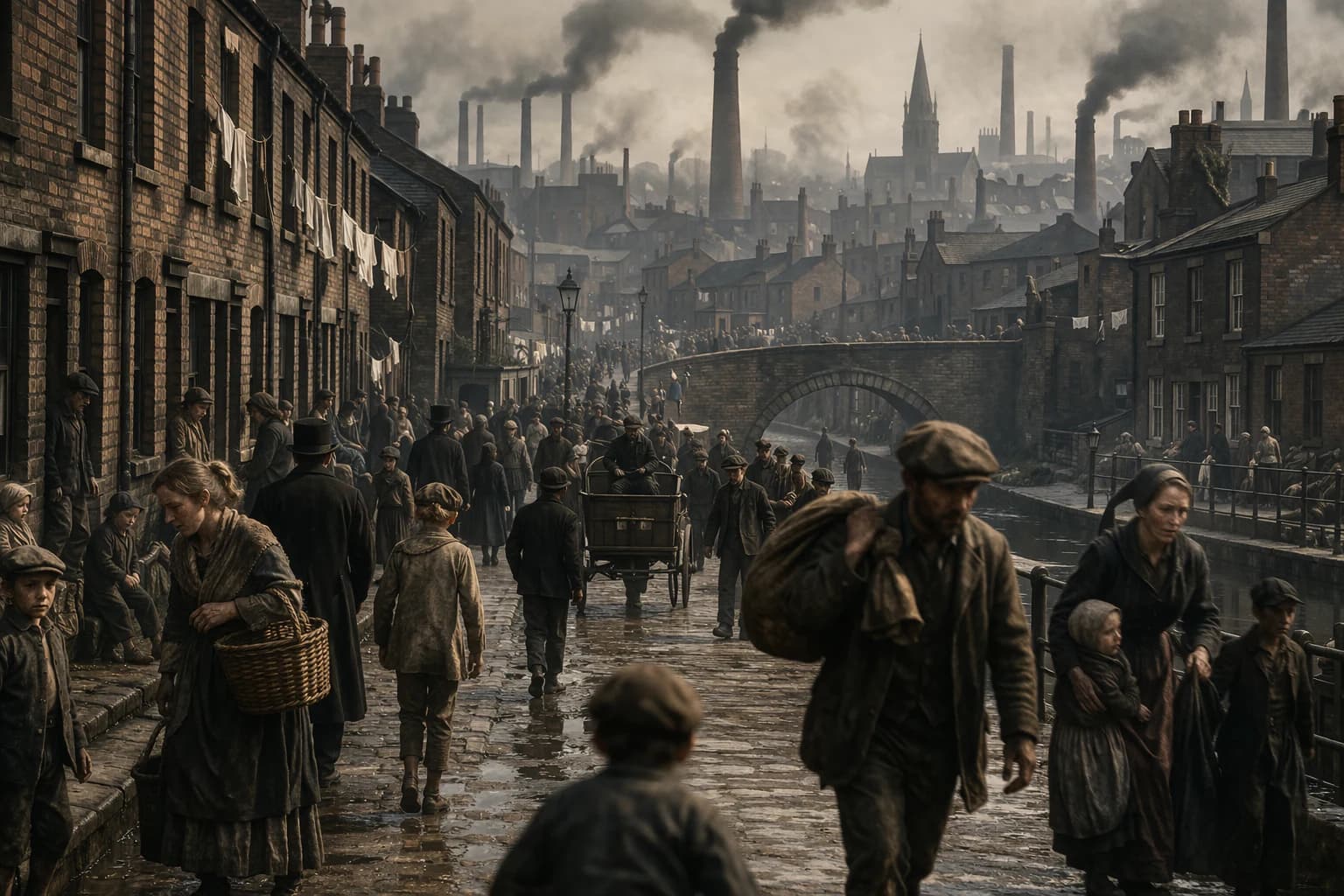
Factories needed workers, so people moved to cities like to find jobs. This caused towns to grow much faster than anyone planned for.

Opportunity brought people in, but the cities were not ready for them.

Homes were packed tightly together. Many families shared small rooms. Streets were dirty, and clean water was hard to find. Disease spread easily.

Daily life became crowded and noisy. People worked long hours and lived close to factories that filled the air with smoke.

Modern cities still deal with issues like housing and pollution. The way cities grew during this time shaped how urban life works today.

Transport Networks Transform Movement
1825 CE
Step 6 of 101825 CEAccessible mode

Transport Networks Transform Movement

Moving goods used to be slow and expensive. New transport networks began to change everything.

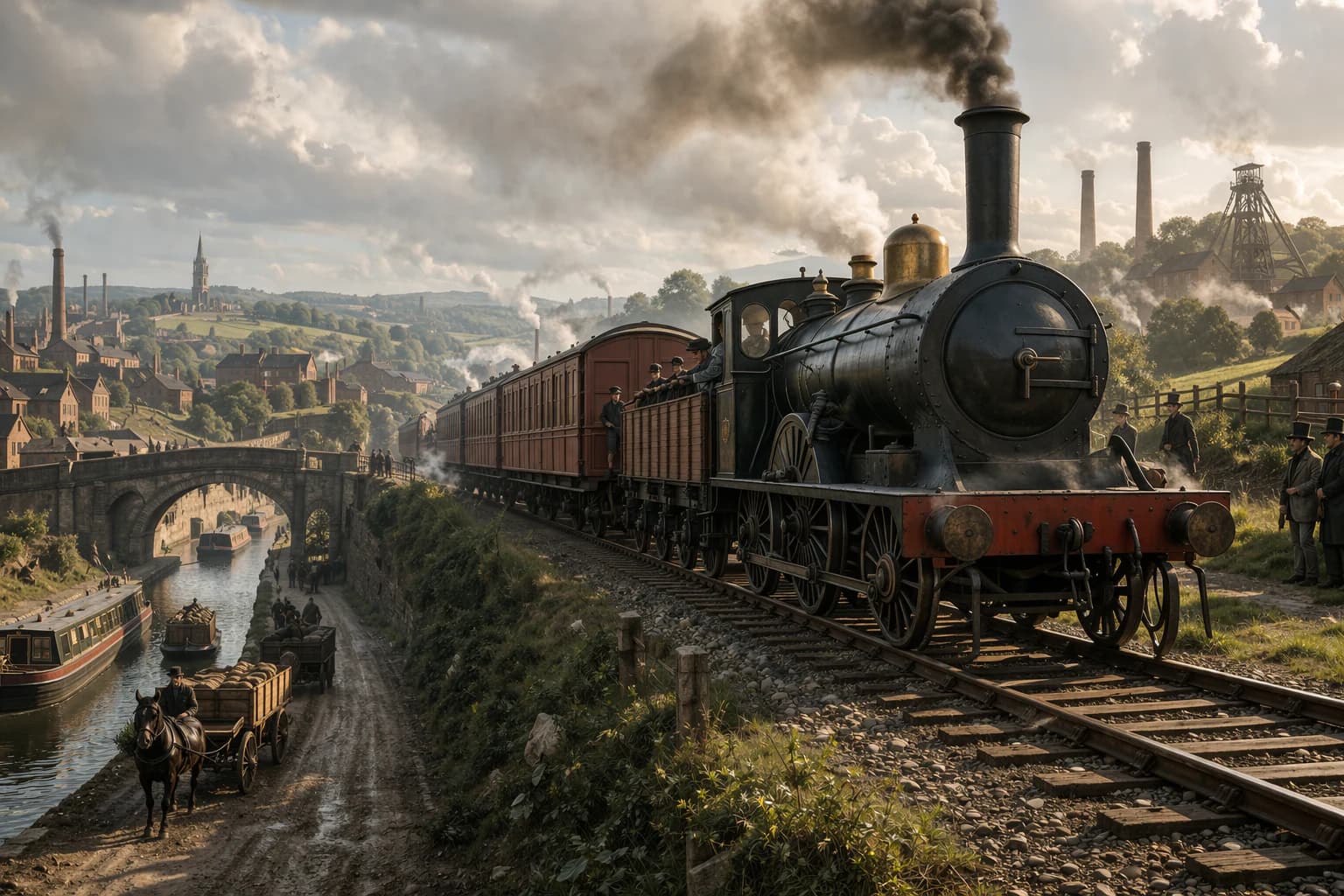
Before this, most goods traveled by horse and cart on rough roads. It could take days or weeks to move items even short distances, and costs were high.

Canals improved things by letting boats carry heavy loads more cheaply. Better roads also made travel faster and more reliable.

Faster movement meant faster growth.

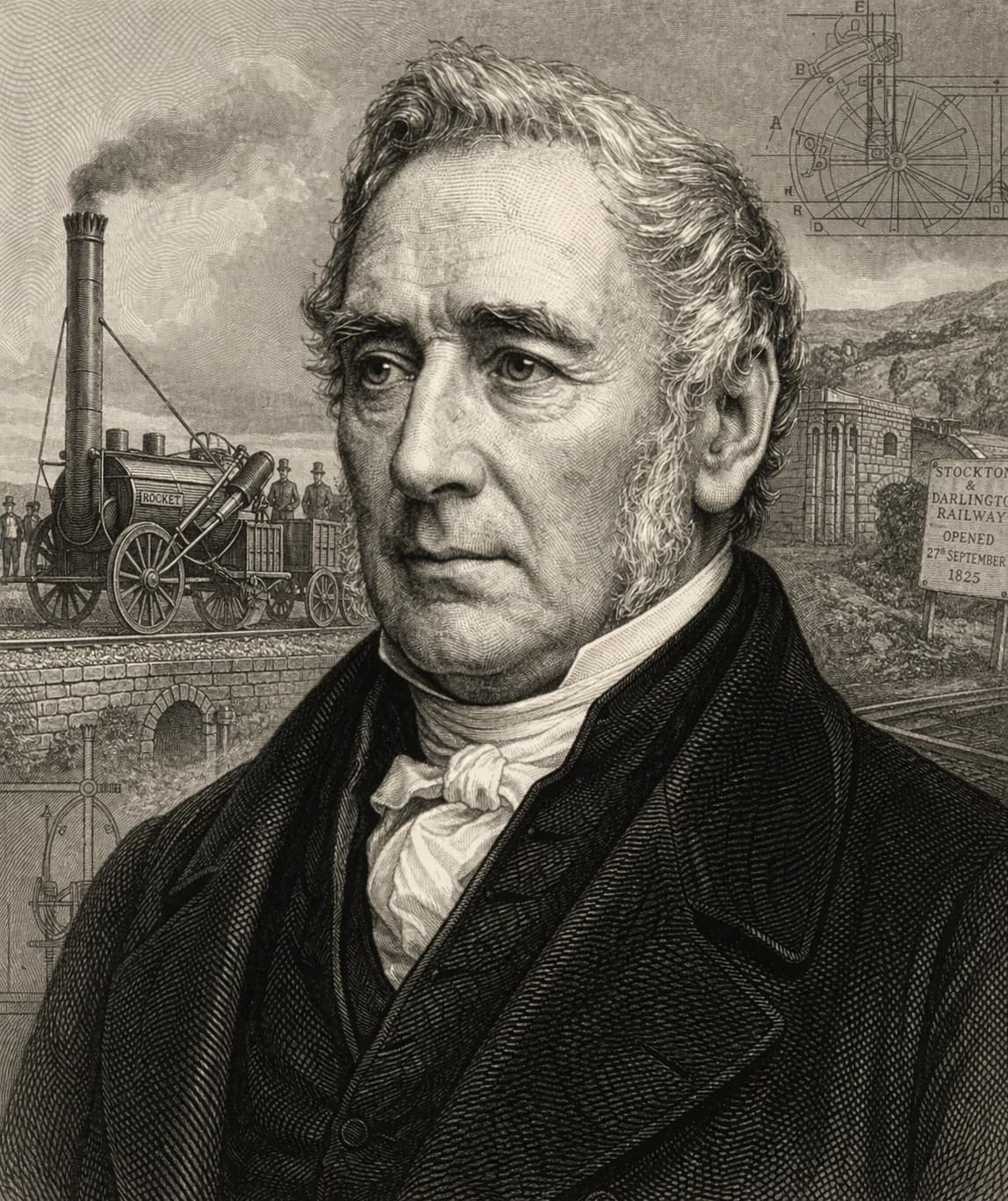
Then came railways. In 1825, one of the first public railways opened, using steam engines to pull goods and people much faster than ever before.

Transport costs dropped, businesses could reach new customers, and cities became more connected. Fresh food, coal, and materials could move quickly.

Today’s global trade, fast delivery, and connected economies all began with these early transport breakthroughs.

The Emergence of New Social Classes
1832 CE
Step 7 of 101832 CEAccessible mode

The Emergence of New Social Classes

Factories did more than change work. They reshaped society itself.

Before industrialisation, most people were farmers or small craftsmen. Wealth and power were mainly held by landowners and the aristocracy.

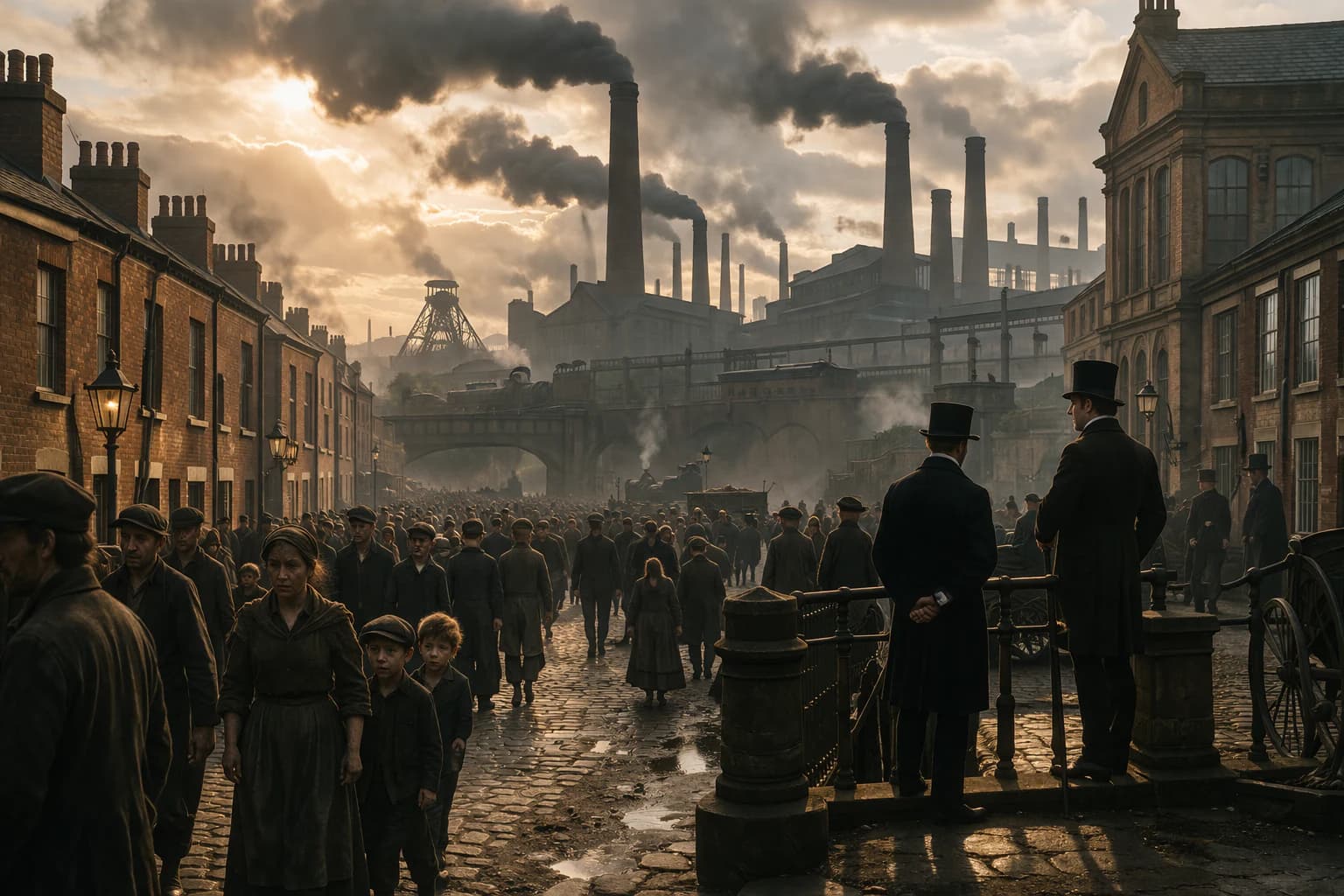
As factories spread, two new groups grew fast. The working class laboured long hours for wages. The middle class, including factory owners and managers, gained money and influence.

Industrial life divided people by work, wealth, and power.

By 1832, these changes were clear. Workers lived in crowded cities and had little political voice. Meanwhile, the middle class pushed for reforms to gain representation in government.

Tensions grew between workers and employers. Strikes and protests became more common as people demanded better pay and conditions.

Today, ideas about social class, workers’ rights, and political representation still come from this period. The divide between labour and wealth remains a major issue.

Industrialisation Spreads Globally
1848 CE
Step 8 of 101848 CEAccessible mode

Industrialisation Spreads Globally

Factories and machines were no longer just a British story. Industrialisation began spreading across the world.

At first, Britain led the way with new machines, steam power, and factories. Other countries watched closely and wanted the same growth and wealth.

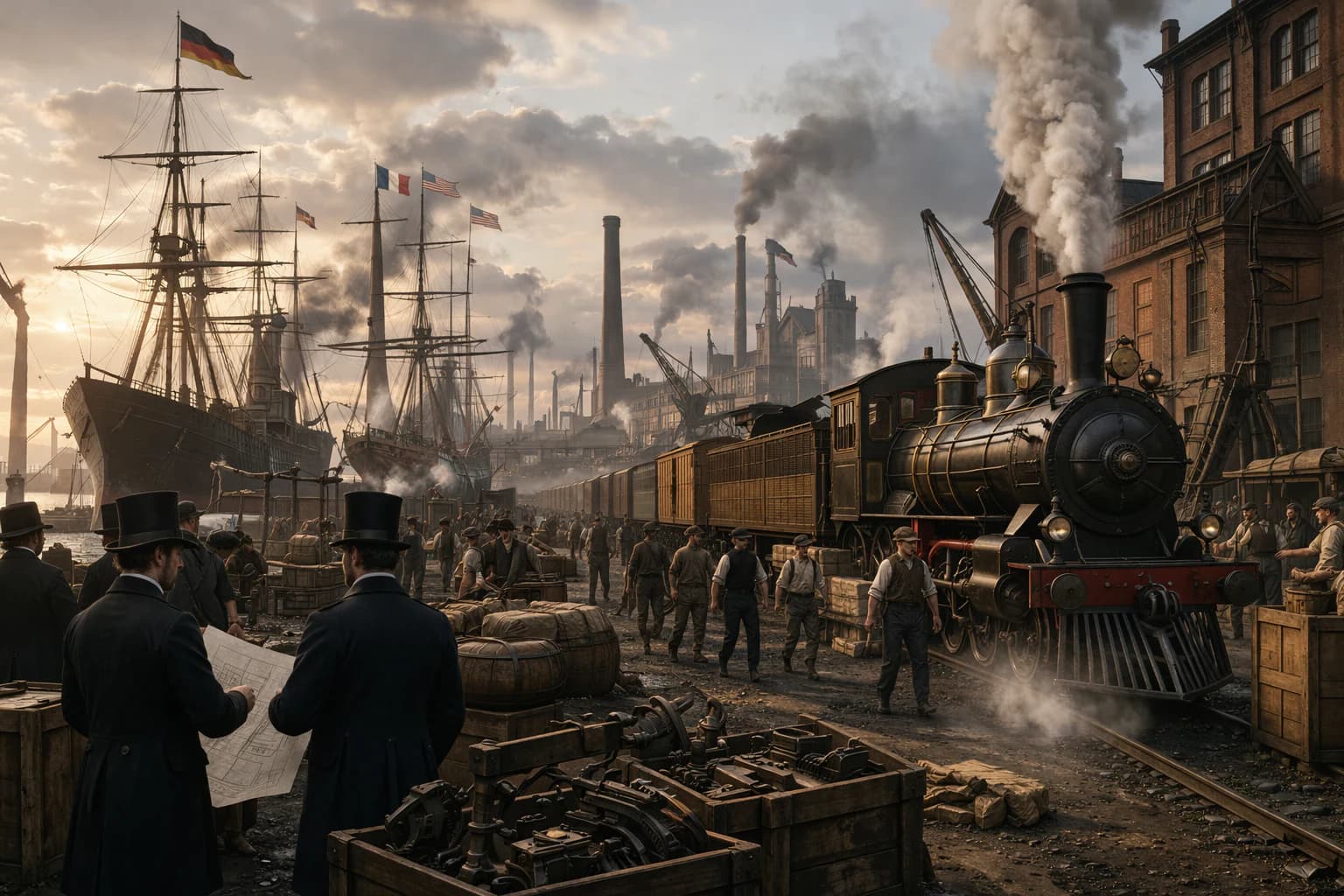
Ideas and technology spread through trade, travel, and even industrial spies. Investors also helped fund new factories in Europe and North America.

Industrialisation did not stay in one place for long.

Countries like France, Germany, and the United States began building railways, factories, and cities. Each followed its own path depending on resources and politics.

This changed how people worked and lived everywhere. More jobs appeared in cities, but working conditions were often tough.

Today’s global economy grew from this spread. The way countries develop still depends on how and when they industrialised.

Reform Movements and Labour Rights
1871 CE
Step 9 of 101871 CEAccessible mode

Reform Movements and Labour Rights

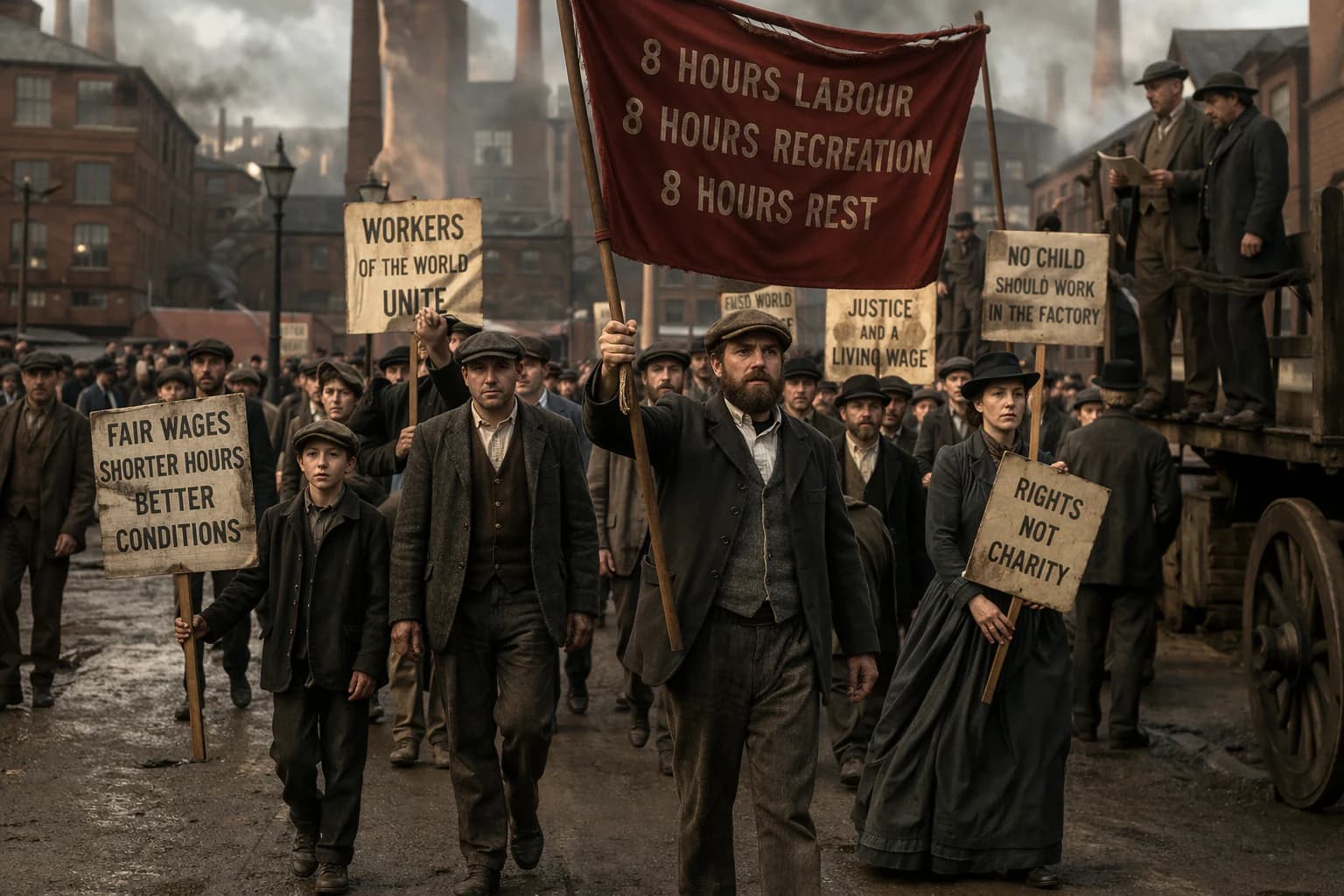
Factories made nations richer, but many workers lived with long hours, low pay, and dangerous jobs. By 1871, more people were pushing back.

For years, industrial workers had little power. Men, women, and children often worked exhausting shifts in mills, mines, and workshops.

As cities grew, workers began joining together in trade unions. They wanted better wages, shorter hours, and safer places to work.

Industrial progress came with a human cost, and workers refused to stay silent.

Governments slowly responded. In Britain and elsewhere, reformers pushed laws to limit child labour, improve factory inspection, and give unions more legal protection.

These changes did not fix everything, but they gave ordinary workers more voice. Strikes, petitions, and campaigns helped force employers and politicians to listen.

Today, ideas we take for granted, like weekends, workplace safety rules, and the right to organize, grew out of these nineteenth-century fights.

Foundations of Modern Industrial Society
1900 CE
Step 10 of 101900 CEAccessible mode

Foundations of Modern Industrial Society

By 1900, industrialisation had done more than fill factories. It had reshaped daily life in ways that still feel familiar now.

Before industry grew, most goods were made slowly by hand. People bought less, reused more, and lived closer to local markets.

Factories changed that. Machines made huge numbers of clothes, tools, and household items cheaper and faster than ever before.

Modern life was built on speed, scale, and constant supply.

This also created bigger cities, larger companies, and trade networks that linked mines, ports, railways, shops, and banks across the world.

People gained more products and new jobs, but they also faced pollution, crowded housing, harsh work, and a growing gap between rich and poor.

A lot of today’s world comes from this shift: mass production, global business, advertising, consumer habits, and the idea that progress means making and buying more.

Continue reading

Finished The Industrial Revolution?

Choose the next story, explore the people behind this one, or trace the line of power that shaped this world.

Browse stories

References

Sources & Further Reading

Reliable sources, primary-source collections and reading paths connected to this page.

Sources used

  1. Encyclopaedia Britannica, Industrial Revolution,” Open source
  2. Science Museum, Industrial Revolution,” Open source

Further reading

  1. Robert C. Allen, The British Industrial Revolution in Global Perspective, Cambridge University Press.

Primary sources

  1. The British Library, The Industrial Revolution,” Open source

A weekly route through history

Find out first about the latest published stories, feature notes and occasional Premium offers in one weekly email.