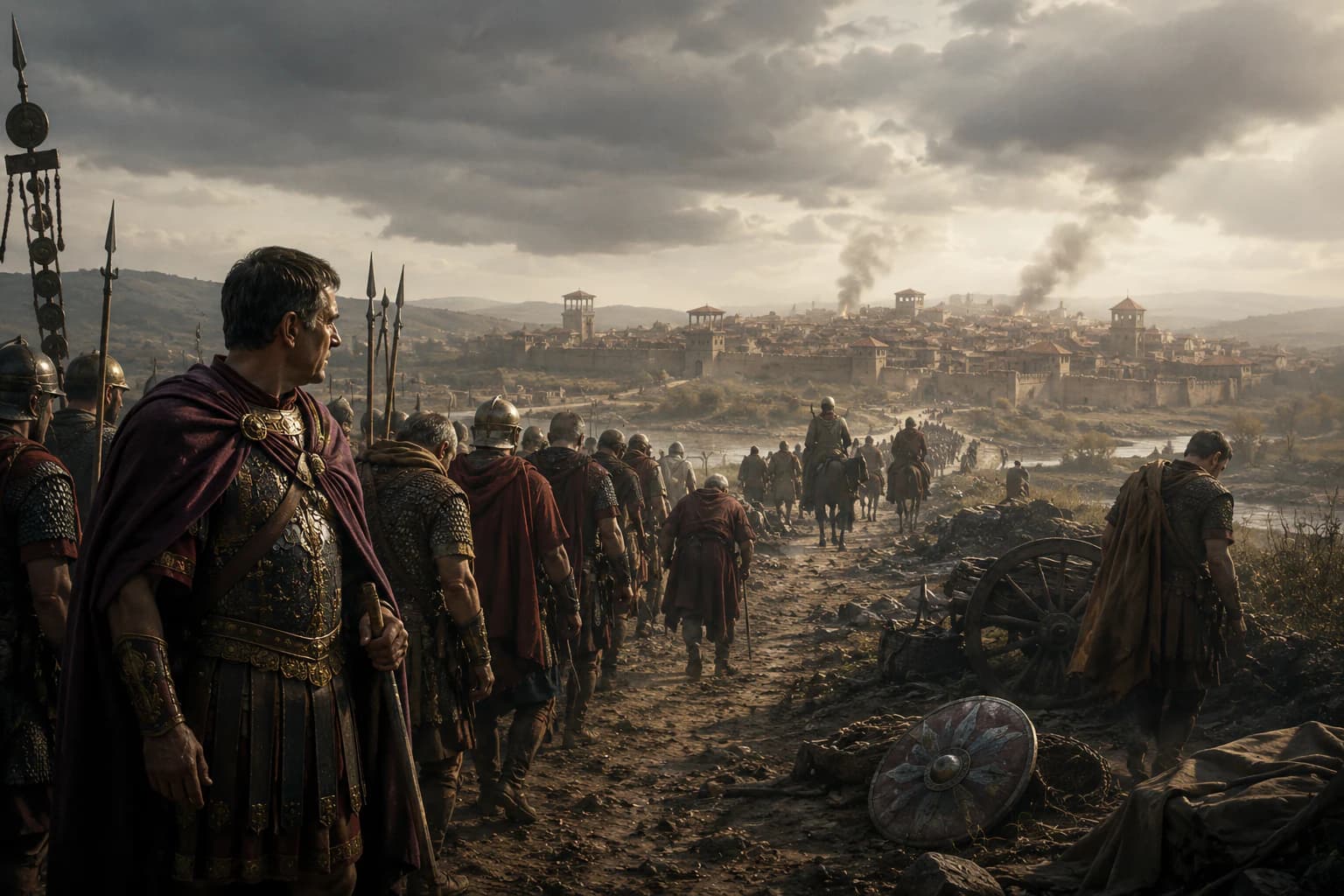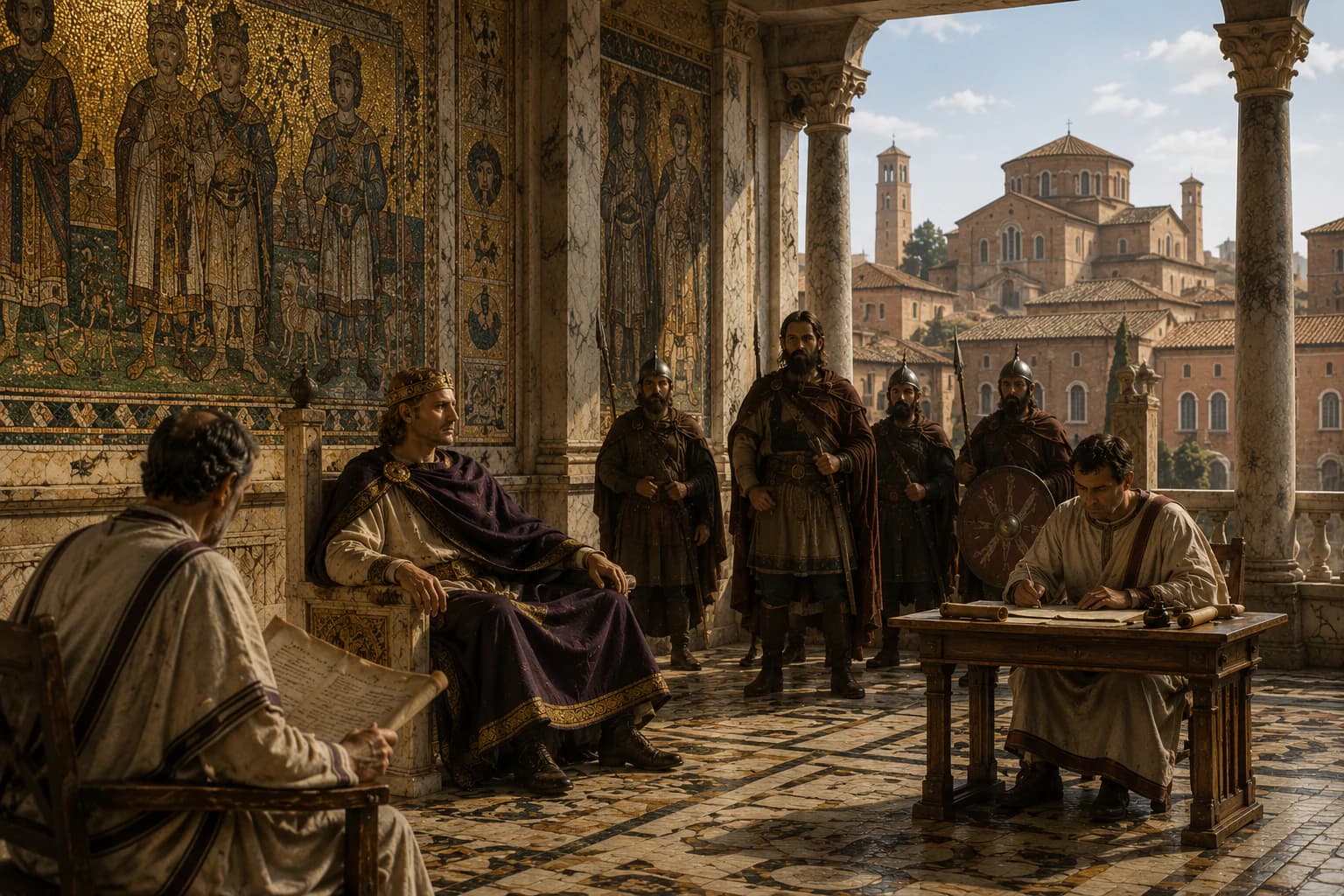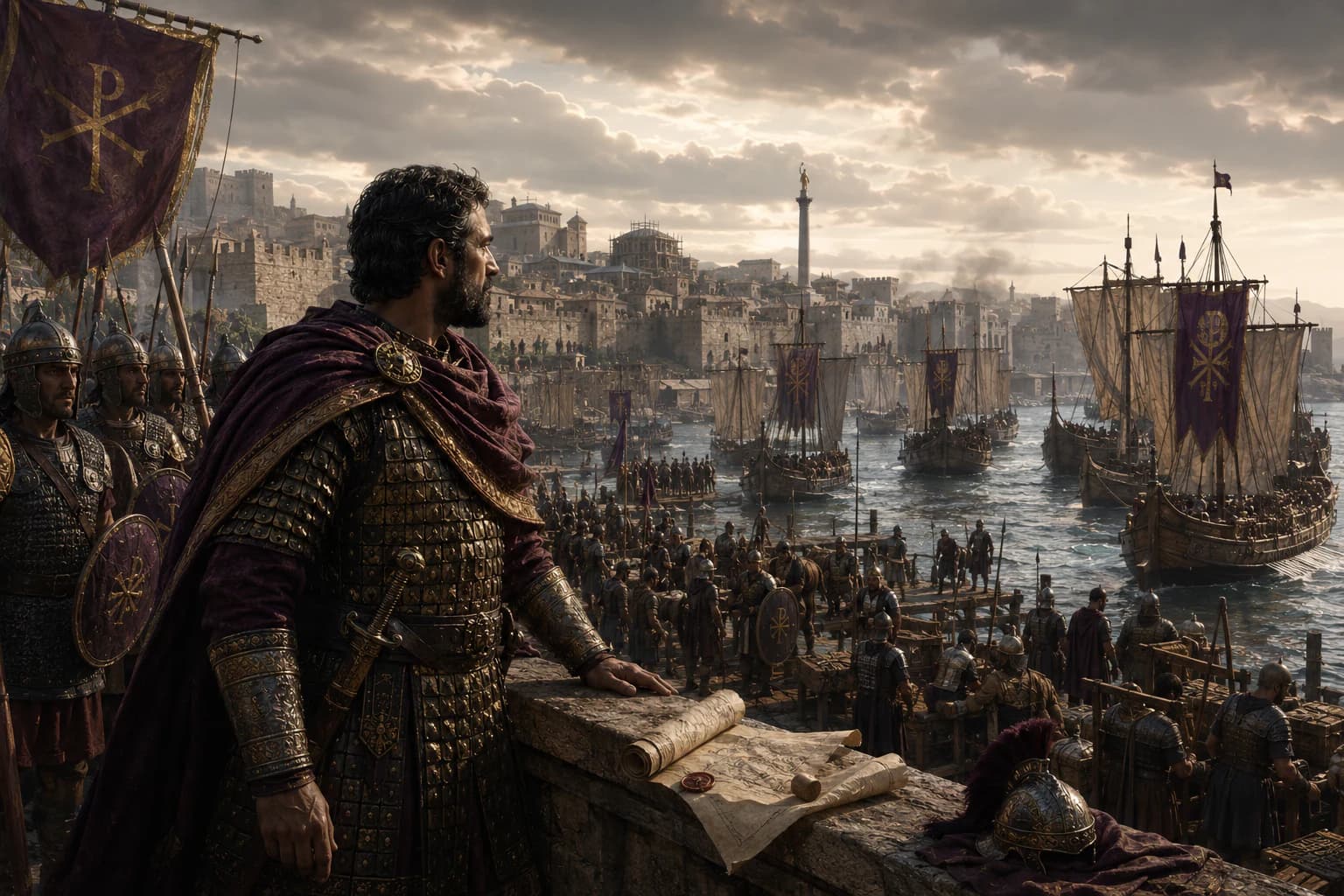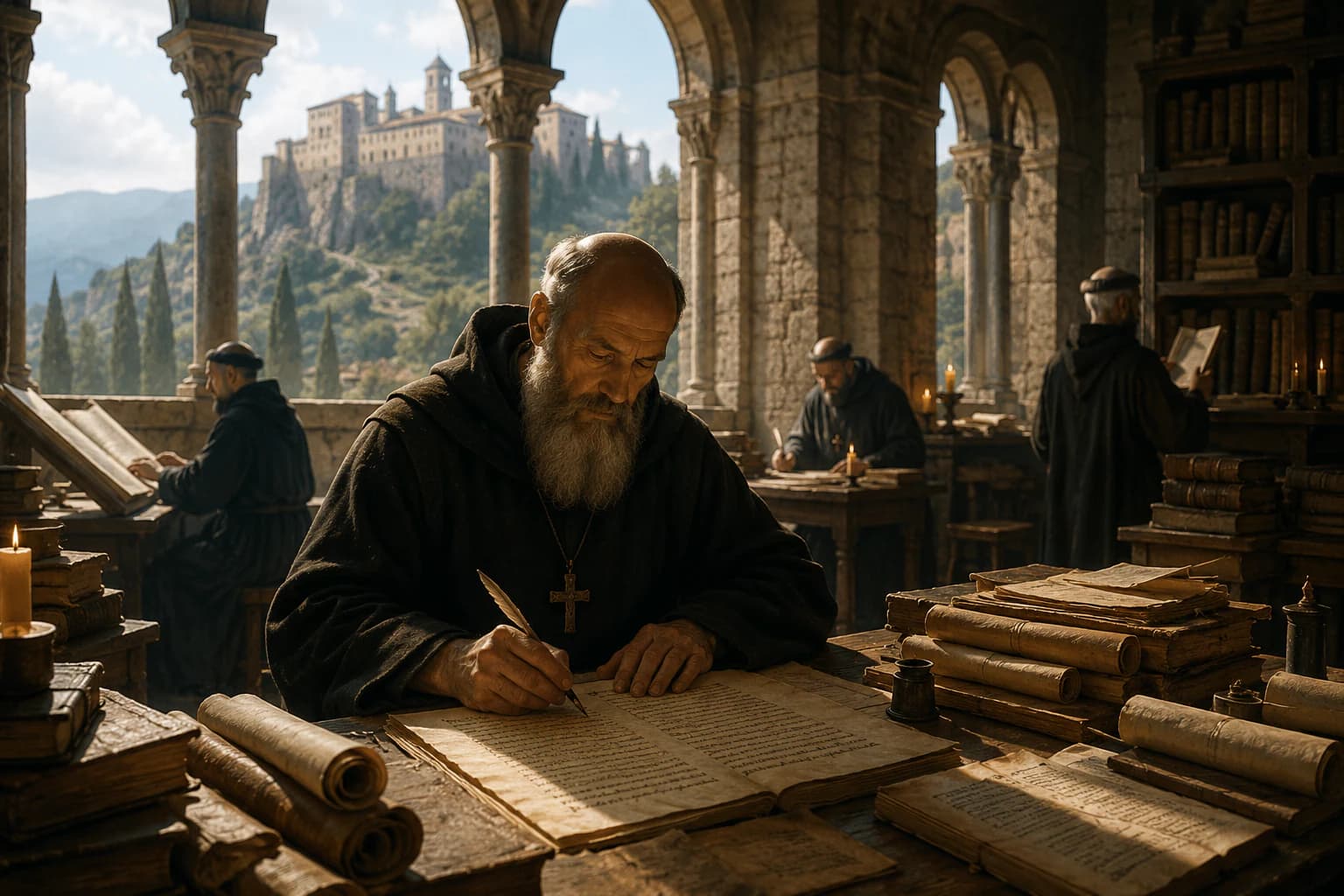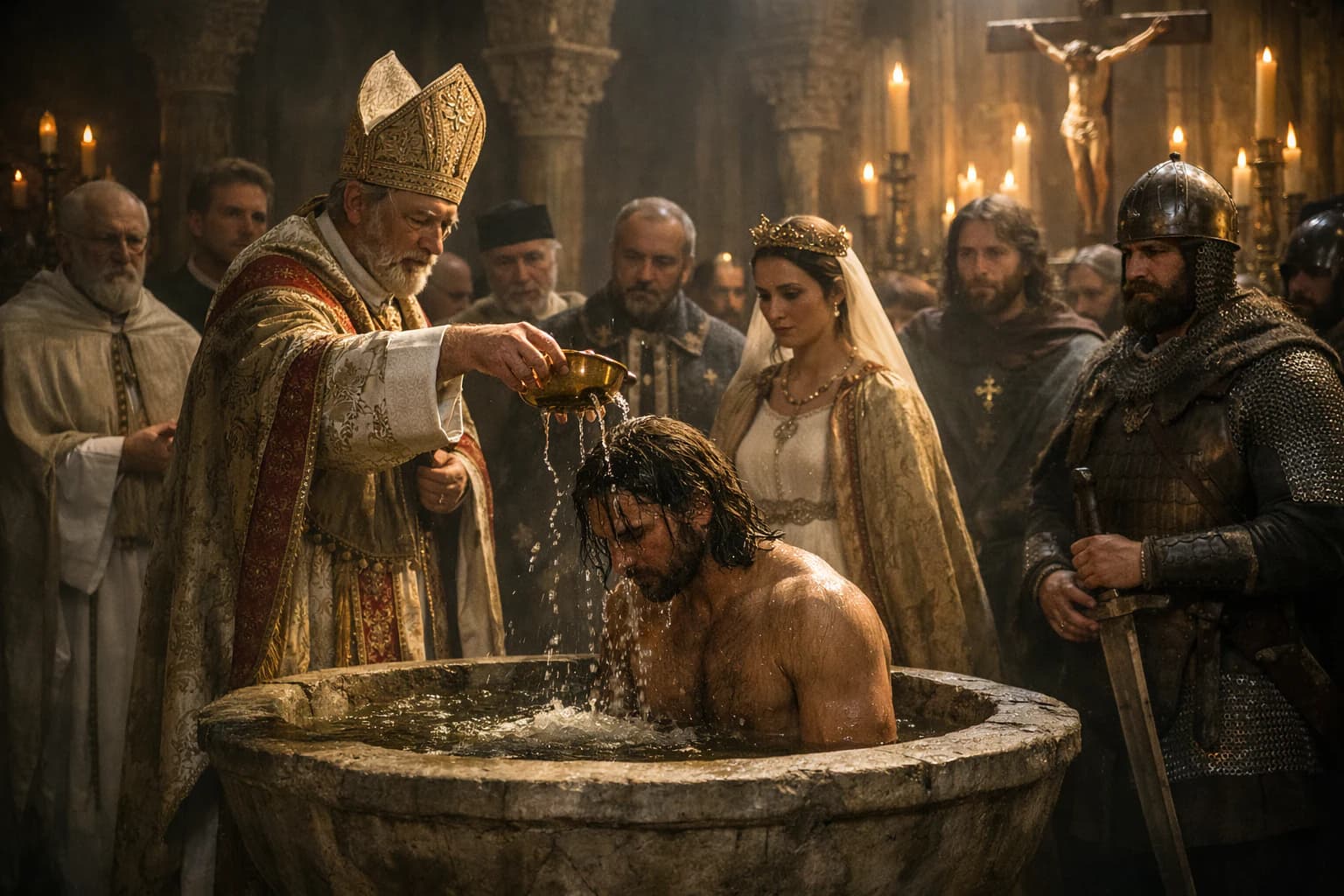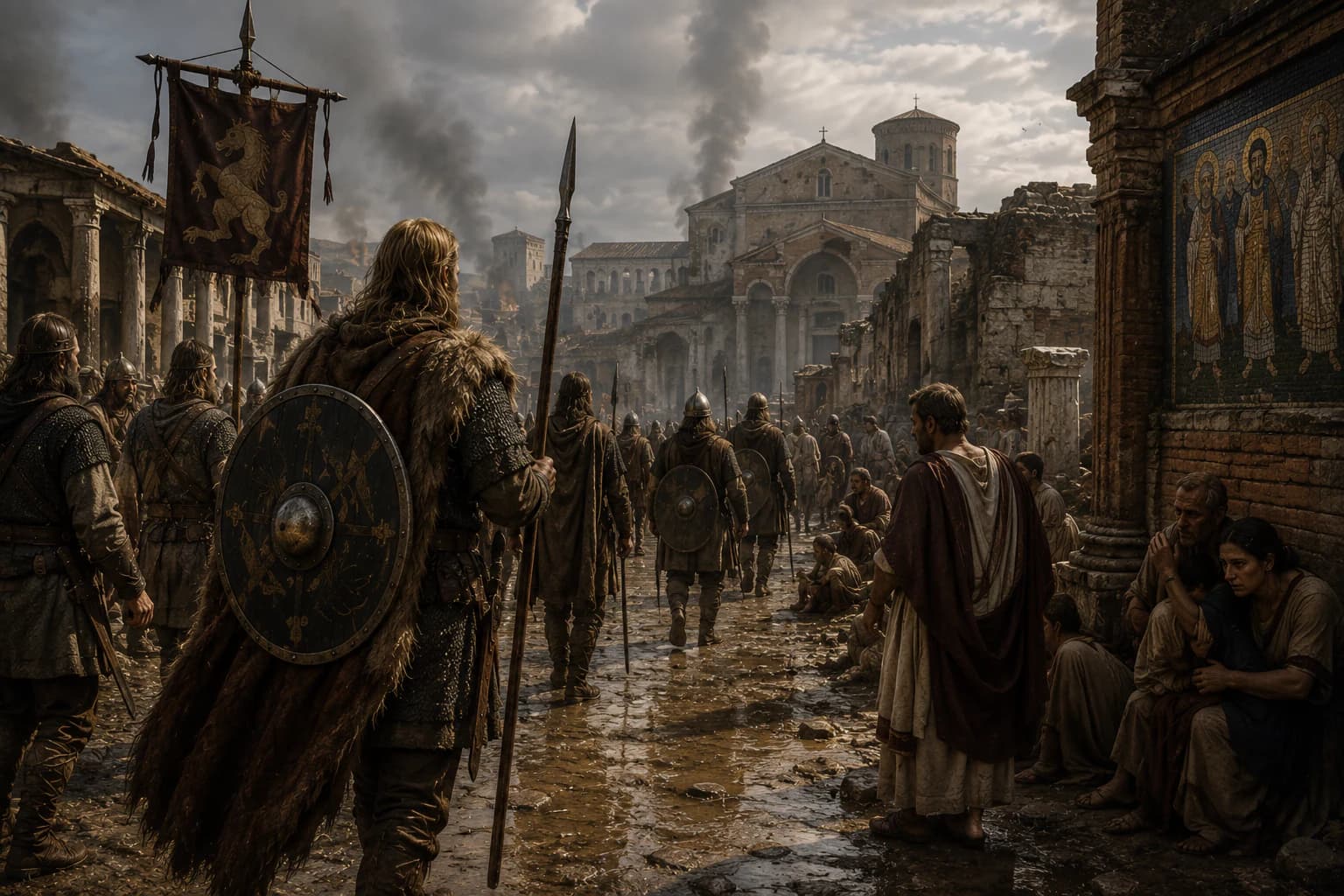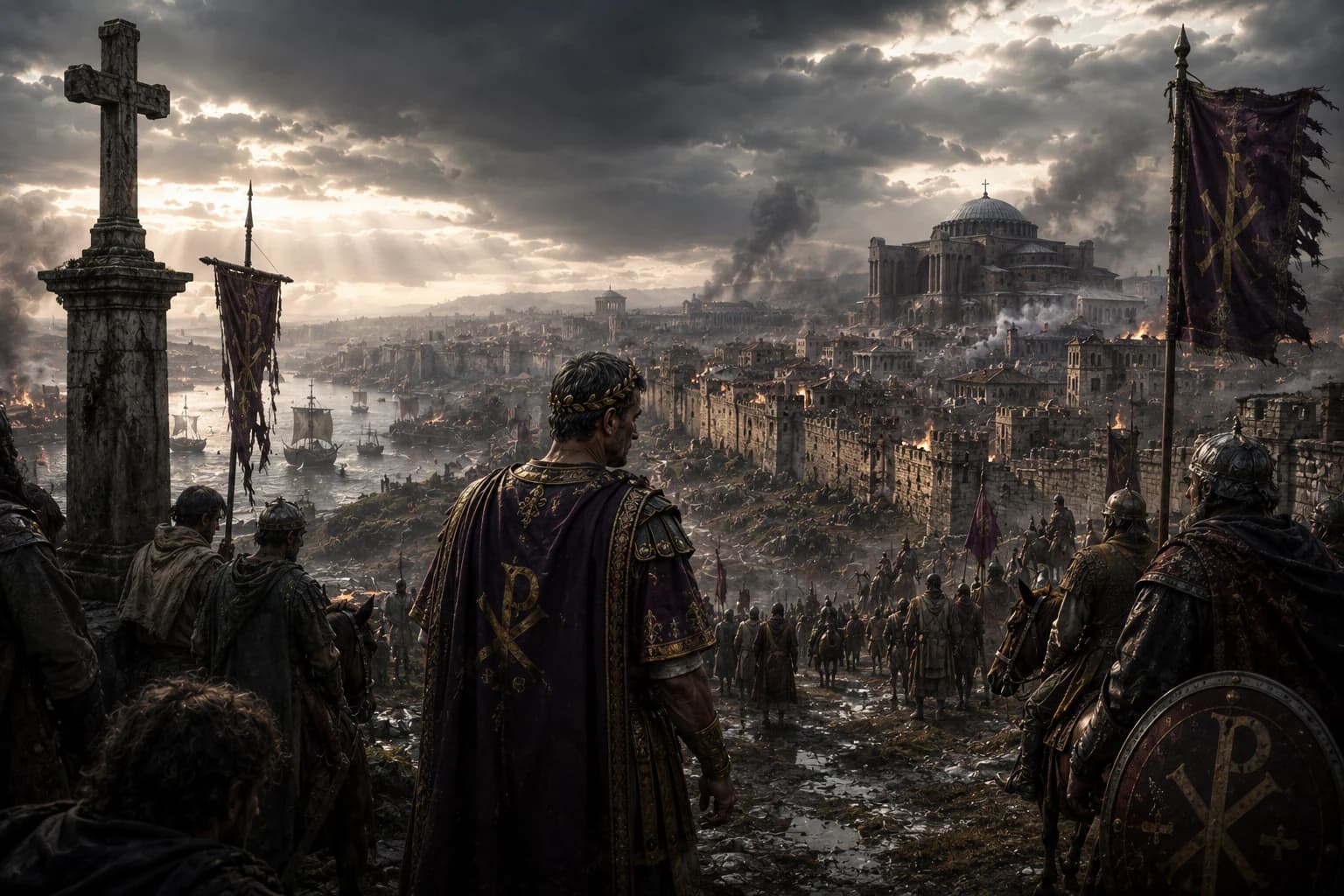
A Roman city falling into ruin as Germanic warriors cross the frontier
Premium Story

The Fall of Rome to Early Medieval Europe

Move from Rome’s western collapse to Gothic kingdoms, the medieval Church, and Charlemagne’s new order.

11 chapters

Next
Context

Introduction

Overview

The fall of and the rise of early medieval Europe marked the transformation of the western Roman world into new kingdoms, Christian institutions, and regional powers. As imperial authority weakened, Gothic, Frankish, Anglo-Saxon, and other successor societies built new political orders on Roman foundations. This period did not simply erase ; it remade its inheritance into the medieval world of kings, bishops, monasteries, and local lordship.

What you'll learn: You'll see how one of history's greatest empires gave way to a new world through a mix of invasion, adaptation, religious change, and the rise of new powers, and why the echoes of that transformation still shape Europe today.

Key forces

Adrianople Shatters Roman Confidence
378 CE
Step 1 of 10378 CEAccessible mode

Adrianople Shatters Roman Confidence

In 378 CE, a Roman emperor died in battle against the people his own empire had let inside its borders. The defeat at was a warning about what lay ahead.

Visigothic groups had crossed two years earlier, fleeing the Huns. Roman officials mistreated them instead of managing the settlement properly. Humiliation and hunger turned refugees into fighters.

Emperor Valens marched to confront them without waiting for reinforcements. At , Gothic cavalry overwhelmed his army. Valens died on the battlefield — one of the few Roman emperors to fall in open combat.

had dominated its own soil for centuries. made clear that could no longer be assumed.

could not expel the Goths. It had to negotiate, allowing them to stay inside the empire under their own leaders. This was a new and uncomfortable reality.

The empire would increasingly depend on outside peoples whose loyalty was conditional. That pattern would shape everything that followed.

Alaric Sacks Rome
410 CE
Step 2 of 10410 CEAccessible mode

Alaric Sacks Rome

In August 410 CE, the Gothic king Alaric entered . The city had not been sacked by an outsider in eight hundred years.

Alaric had spent years fighting for the Roman empire and asking for formal recognition within it. Each time, the imperial court refused him. After two sieges and years of broken negotiations, he finally walked through the city's gates.

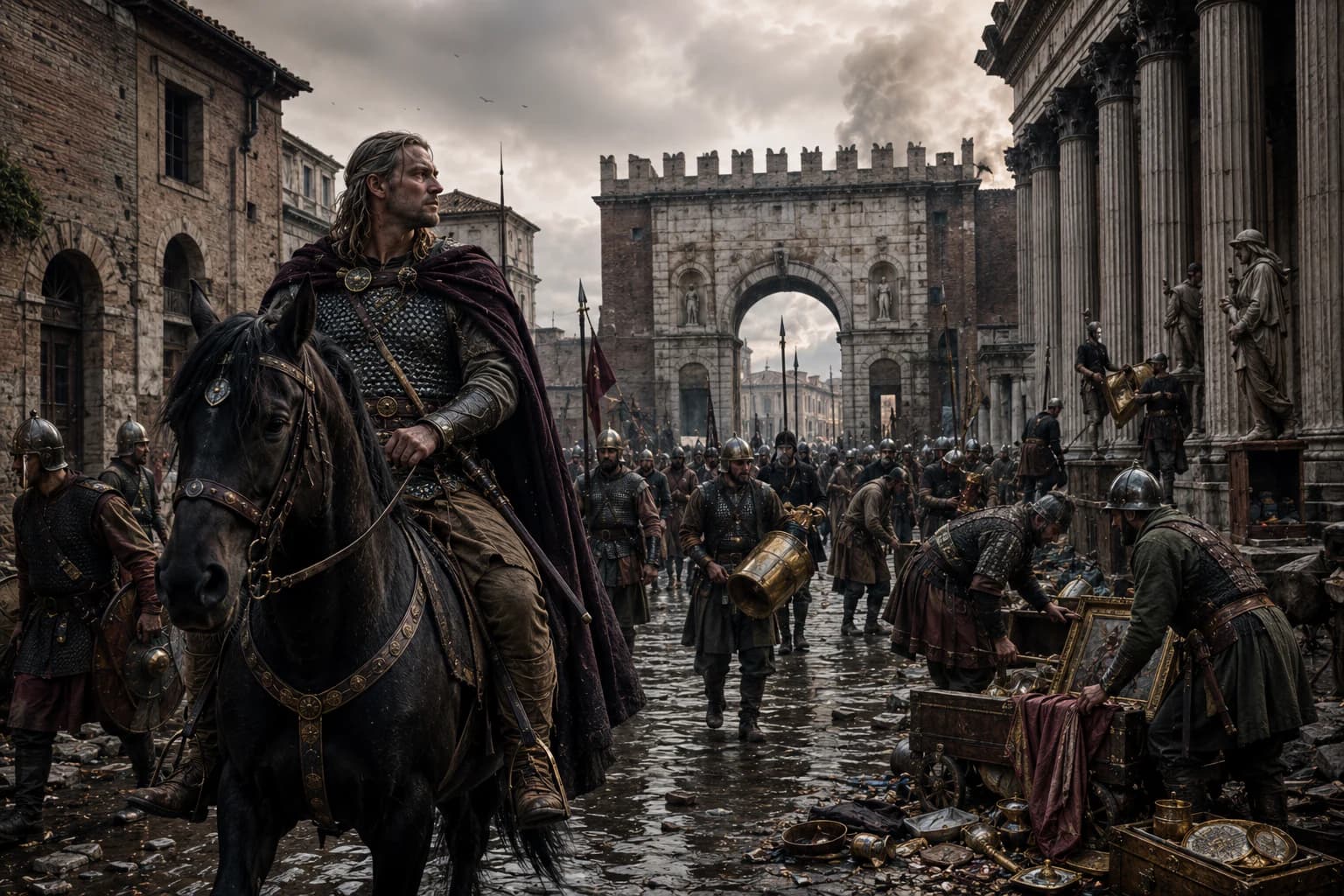
The sack lasted three days. Churches were mostly spared, but there was genuine looting and real violence. The shock across the Roman world was enormous. had seemed permanent. Now it had been breached.

People did not just grieve a city. They questioned whether the world they knew could survive at all.

The Western Empire continued for another sixty years, but the sack exposed how weak its authority had become. Power was moving to military commanders, many outsiders, who controlled the armies.

Writers like Augustine and Jerome wrestled with what it meant. Their conclusion — that no earthly empire is permanent — shaped the Church's thinking for centuries.

Vandals Take North Africa
439 CE
Step 3 of 10439 CEAccessible mode

Vandals Take North Africa

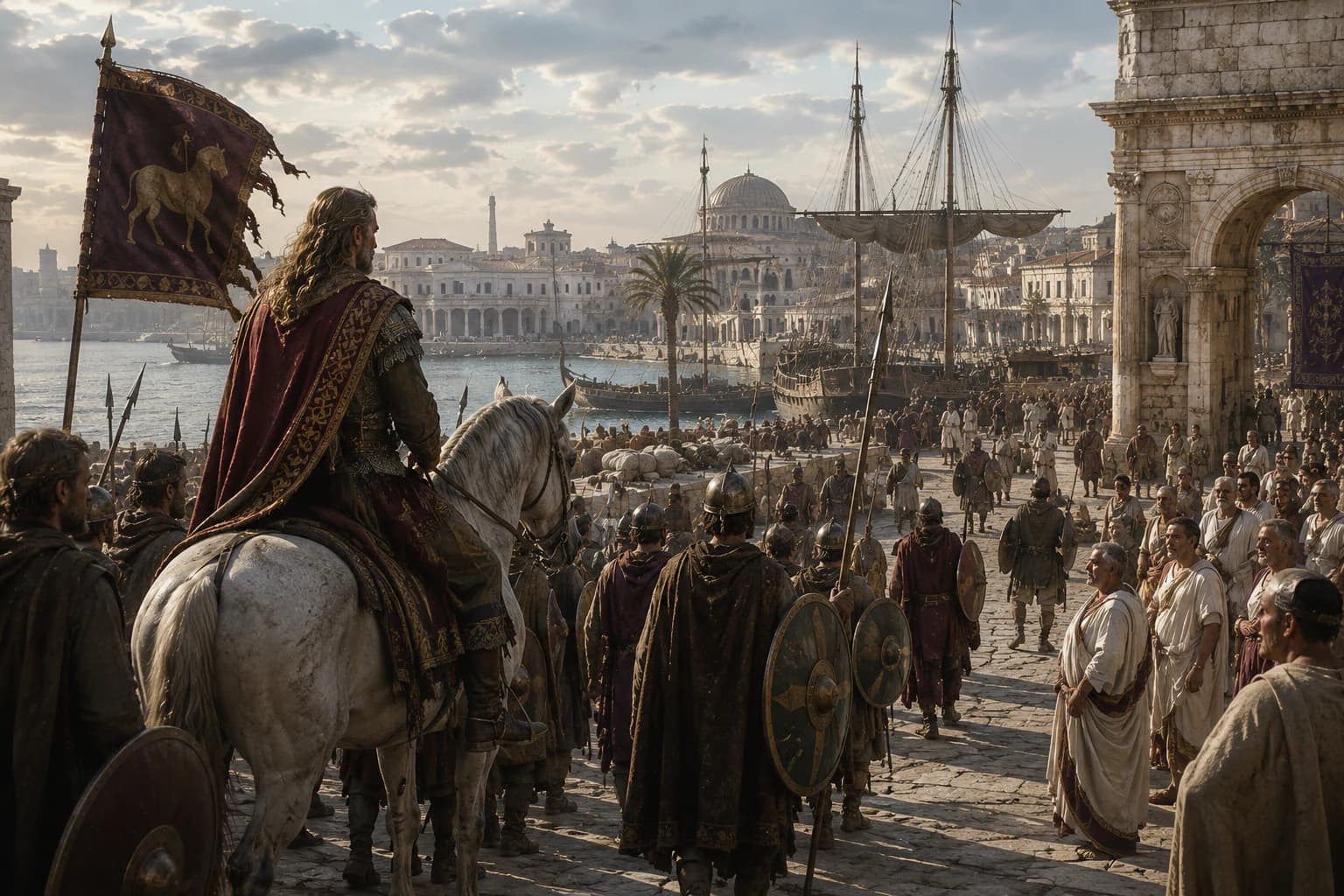
In 439 CE, the Vandals captured . Losing North Africa was a blow the Western Empire could not recover from.

The Vandals had crossed from into North Africa around a decade before, led by Gaiseric, one of the most effective commanders of the age. He turned a displaced people into a naval power and seized the most productive province in the western empire.

North Africa supplied 's grain and generated enormous tax revenue. Losing it meant the western court could no longer pay its armies or its officials. Without money, loyalty became almost impossible to maintain.

had fed for centuries. When Gaiseric took it, the empire began to go hungry in every sense.

The loss made fragmentation permanent. There were no longer the resources needed to reverse what was happening. Province by province, the western empire was being dismantled.

In 455, Gaiseric raided itself, stripping it of treasure accumulated over generations. The western empire was no longer merely weakened. It was being taken apart.

Premium

You've reached the turning point

The opening chapters show Rome's western world under growing pressure. Premium follows the aftermath of imperial collapse: new rulers try to inherit Roman authority, monastic life preserves learning, and Charlemagne gives Europe a new imperial language.

Continue into the reversals, crises and human stakes that make the story matter.

Unlock full story

What Premium unlocks next

  1. 4The Last Western Emperor Falls
  2. 5Theoderic Builds a Roman Gothic Kingdom
  3. 6Justinian Launches Reconquest
  4. 7Benedict Shapes Monastic Europe
  5. 8The Franks Convert to Catholic Power
  6. 9Lombards Redraw Italy
  7. 10Charlemagne Revives the Imperial Idea

Browse stories

Browse stories for free

Explore the people connected to this turning point or enjoy one of our free stories.

Unlock full storyBrowse stories

References

Sources & Further Reading

Reliable sources, primary-source collections and reading paths connected to this page.

Sources used

  1. World History Encyclopedia, Fall of the Western Roman Empire,” Open source
  2. The Metropolitan Museum of Art, Early Medieval Art,” Open source

Further reading

  1. Peter Brown, The Rise of Western Christendom, Wiley-Blackwell.

Primary sources

  1. Fordham University, Internet Medieval Sourcebook,” Open source

A weekly route through history

Find out first about the latest published stories, feature notes and occasional Premium offers in one weekly email.