People

Valens

Valens was Eastern Roman emperor from 364 to 378. His mishandling of Gothic refugees near the Danube helped lead to revolt, and he was killed when the Roman army was defeated at Adrianople.

Born
328 CE
Died
378 CE
Role
Eastern Roman emperor

Eastern Roman emperor (r. 364-378)

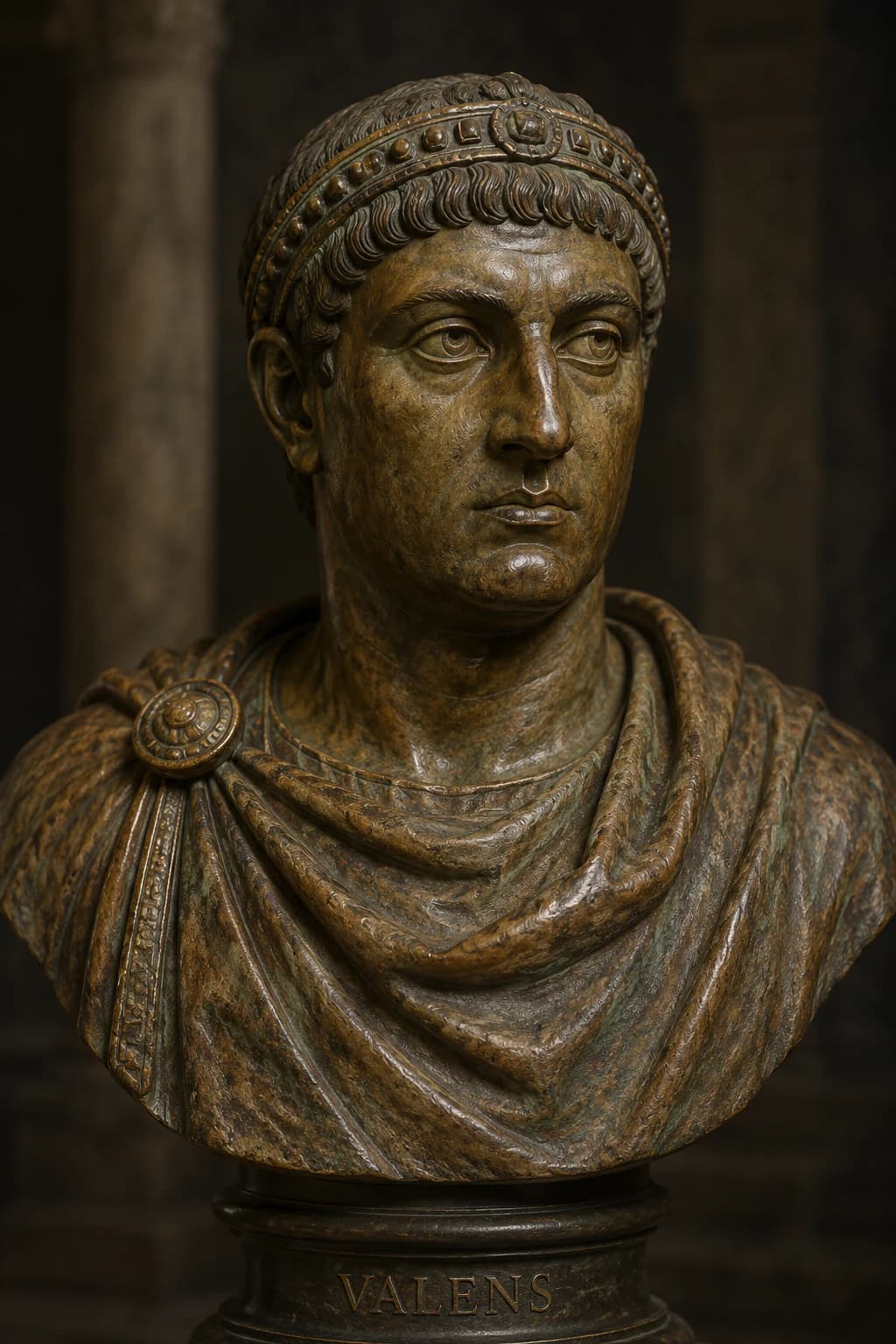
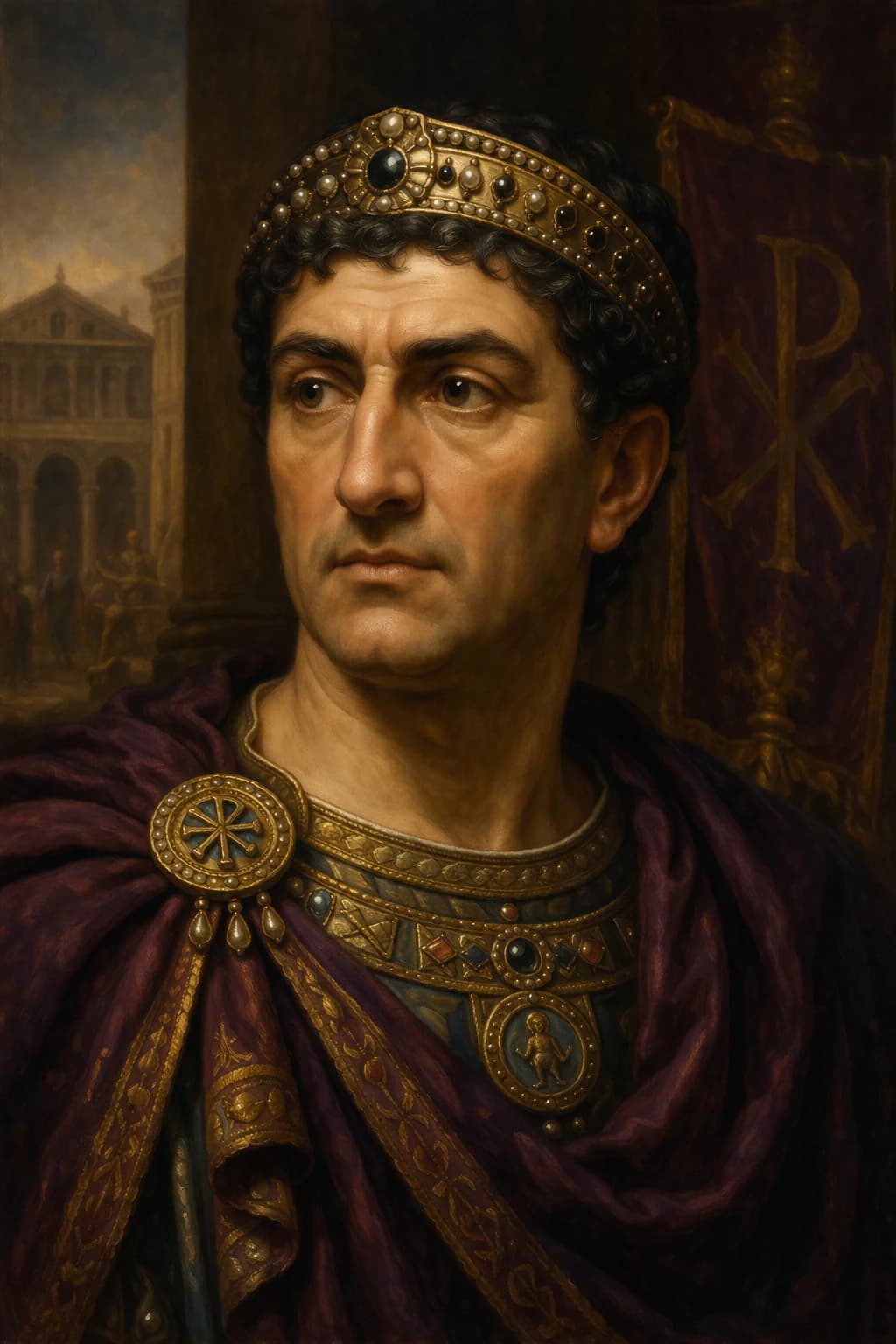
AI-generated portrait of Valens, Eastern Roman emperor
AI-assisted historical reconstruction

An illustrative reconstruction based on historical context. It is not a photograph or documentary likeness. Image policy

Quick answer

Valens was Eastern Roman emperor from 364 to 378. His mishandling of Gothic refugees near the Danube helped lead to revolt, and he was killed when the Roman army was defeated at Adrianople.

Born
328 CE
Died
378 CE
Role
Eastern Roman emperor
Years
328-378 CE
Quick facts

Profile details

Additional identity and tagging details that are not already covered in the introduction.

Full name
Flavius Valens
Also known as
Emperor Valens
Facts

Valens timeline facts

Selected specifics from this profile's life story.

328
Pannonian origins

Valens was born in Cibalae in Pannonia, in the military frontier world that produced many late Roman rulers.

365-366
A contested throne

Valens faced the revolt of Procopius, a rival claimant who briefly threatened his hold on the eastern empire.

378
Adrianople

Valens marched against the Goths near Adrianople without waiting for western reinforcements, and the Roman army was destroyed.

After 378
A warning from defeat

Valens' death at Adrianople did not end the Roman Empire, but it revealed weaknesses that later rulers struggled to contain.

Life Journey

The emperor Adrianople made unforgettable

Follow Valens from imperial co-ruler to the battlefield disaster that reshaped the late Roman world.

Complete chronology

328

Pannonian origins

Valens was born in 328 at Cibalae, in Pannonia, roughly modern Vinkovci in Croatia. Like his brother Valentinian, he came from the hard military provinces rather than the old Roman aristocracy. That background mattered in the fourth-century empire, where emperors were expected to defend frontiers, manage armies, and hold together a state too large for one ruler to govern easily.
364

Made co-emperor

In 364, Valentinian I chose Valens as co-emperor and gave him responsibility for the eastern provinces. The arrangement was practical: the empire faced threats on too many frontiers for one ruler to be everywhere. Valens governed from the eastern court while Valentinian handled the west, making him central to the defense of the Balkans, Asia Minor, Syria, and the Danube frontier.

365-366

A contested throne

Valens' authority was tested almost immediately by Procopius, a relative of the Constantinian dynasty who claimed the purple in Constantinople. The revolt showed how fragile legitimacy could be when imperial memory, army loyalty, and court politics overlapped. Valens defeated Procopius in 366, but the crisis left him suspicious and aware that an emperor could be challenged from within as well as beyond the frontier.

376

The Danube crisis

In 376, Gothic groups asked to cross the Danube and settle inside Roman territory while fleeing pressure from the Huns. Valens allowed the crossing, hoping the newcomers could become taxpayers and soldiers. The plan collapsed when Roman officials failed to feed, disarm, and manage the refugees fairly. Hunger, exploitation, and fear turned an emergency settlement into open revolt.

378

Adrianople

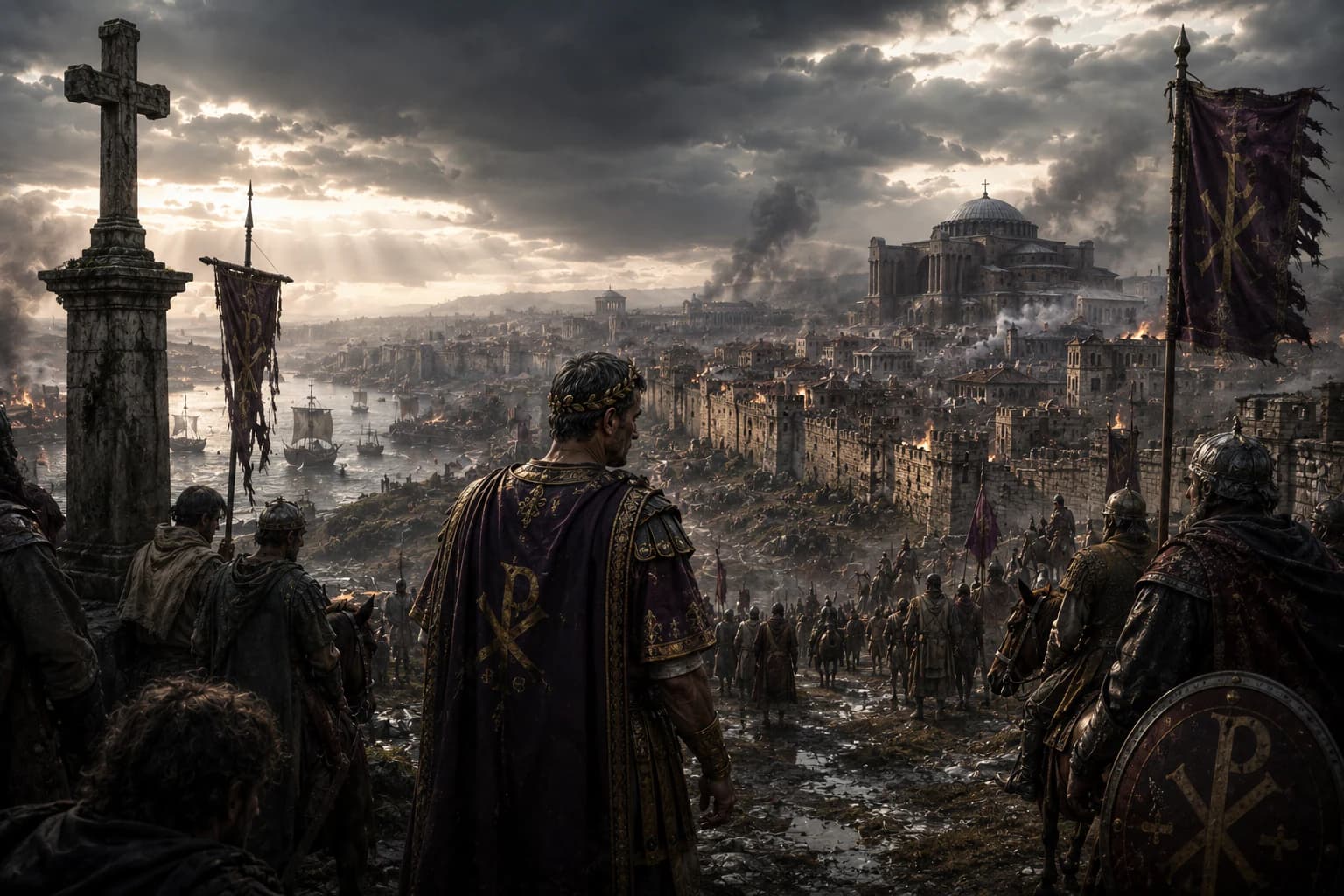
In August 378, Valens moved against the Gothic forces near Adrianople before the western emperor Gratian arrived with reinforcements. The decision may have reflected urgency, confidence, or fear that Gratian would claim too much credit. The battle became a disaster. Gothic cavalry struck the Roman army with devastating force, Valens was killed, and his body was never recovered.

After 378

A warning from defeat

Adrianople did not cause the fall of the Western Roman Empire by itself. The eastern empire survived, and Theodosius I eventually negotiated a settlement with the Goths. But Valens' defeat showed that Roman armies could be destroyed on imperial soil and that large armed groups inside the frontier could not simply be absorbed by command. His legacy is therefore bound to a warning: Rome still had power, but its old assumptions about control were breaking down.

Continue in context

Connected stories

Move from the profile into the wider events and settings this figure belongs to.

Tertiary paths

Content note

This profile is written for educational use and connects to related Stories of History pages. The main portrait is an AI-assisted historical reconstruction, included as an illustrative aid rather than documentary evidence. Image policy

References

Sources & Further Reading

Reliable reference works, archives and reading paths connected to this profile.

Further reading

  1. Encyclopaedia Britannica, Search results for Valens,” accessed June 2026.Open source
  2. WorldCat, Books and library holdings for Valens,” accessed June 2026.Open source

Primary sources

  1. Library of Congress, Search results for Valens,” accessed June 2026.Open source

Reviewed claim sources

Loading reviewed claim sources...

A weekly route through history

Find out first about the latest published stories, feature notes and occasional Premium offers in one weekly email.
