Complete chronology
Full overview and deeper context for every journey step.
c. 370-394
Gothic frontier
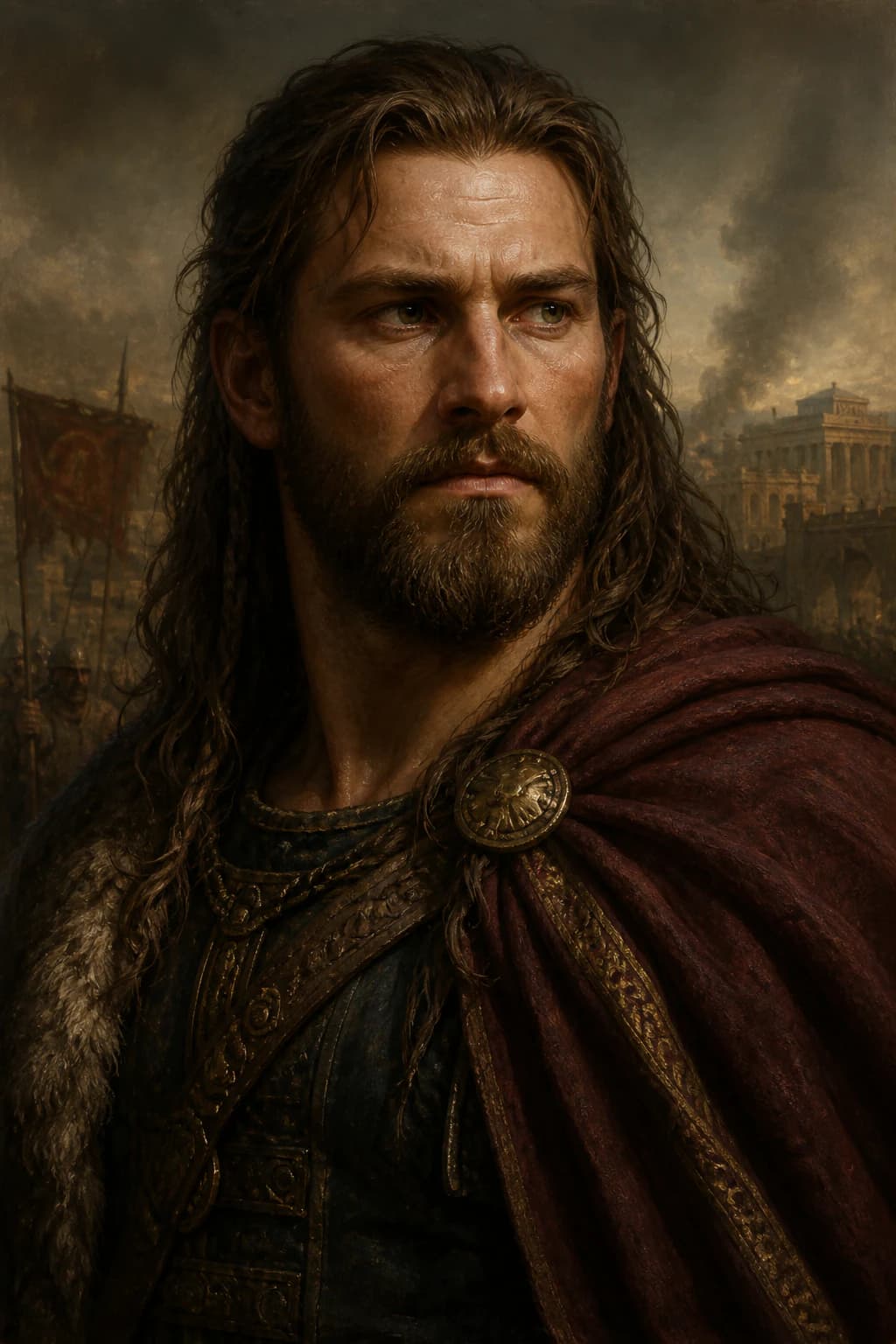
Alaric was probably born around AD 370, in the generation after Gothic groups crossed the Danube into Roman territory under pressure from the Huns and other forces. The Roman defeat at Adrianople in 378 had shown that Gothic military power could not be dismissed, yet the Goths remained entangled with the empire as enemies, settlers, recruits, and uneasy allies. Alaric's early life is poorly documented, but he emerged from this frontier world where identity and allegiance were fluid. The men later called Visigoths had served Rome and fought Rome; they wanted land, pay, rank, and recognition within a Roman system that needed their soldiers but rarely trusted them.
Alaric's career was born from Rome's dependence on peoples it could neither fully absorb nor fully exclude.
394
Roman service
In 394, Theodosius I defeated the western usurper Eugenius at the Battle of the Frigidus. Gothic troops fought in Theodosius's army and suffered heavily. Later sources suggest that many Goths believed they had been spent carelessly in Roman civil war. When Theodosius died in 395, the empire was divided between his sons Arcadius in the east and Honorius in the west, both dependent on powerful ministers and generals. Alaric rose in this unstable setting. He wanted a recognised Roman command and secure settlement for his followers, but imperial politics repeatedly frustrated him.
Alaric was not simply outside Rome; much of his struggle came from trying to force Rome to honour his place inside its system.
395
Leader of the Goths
After 395, Alaric led Gothic forces through the Balkans and into Greece. His actions combined plunder, pressure, and negotiation. He was dangerous enough to require military response but useful enough that Roman authorities sometimes tried to incorporate him. The eastern court eventually granted him a command in Illyricum, though the exact nature and significance of that appointment are debated. Alaric's rise reveals the late Roman world at its most complicated: barbarian leader and Roman general were not always separate categories. He could ravage Roman territory while seeking Roman title.
His ambition was not to destroy the empire at first, but to make the empire recognise and reward his power.
401-408
Italian campaigns
Alaric's first major invasion of Italy brought him into conflict with Stilicho, the dominant general of the western empire. Stilicho defeated or checked him at Pollentia in 402 and Verona afterward, but he did not eliminate him. Roman politics made that restraint controversial, especially because Stilicho himself was of Vandal descent and vulnerable to accusations of disloyalty. In 408, Honorius ordered Stilicho's execution. The purge that followed included violence against families of barbarian soldiers serving Rome, driving many men to join Alaric. The western court had removed its strongest negotiator and strengthened the enemy it feared.
The road to the sack of Rome ran through Roman political self-sabotage as much as Gothic aggression.
408-410
Negotiations and siege
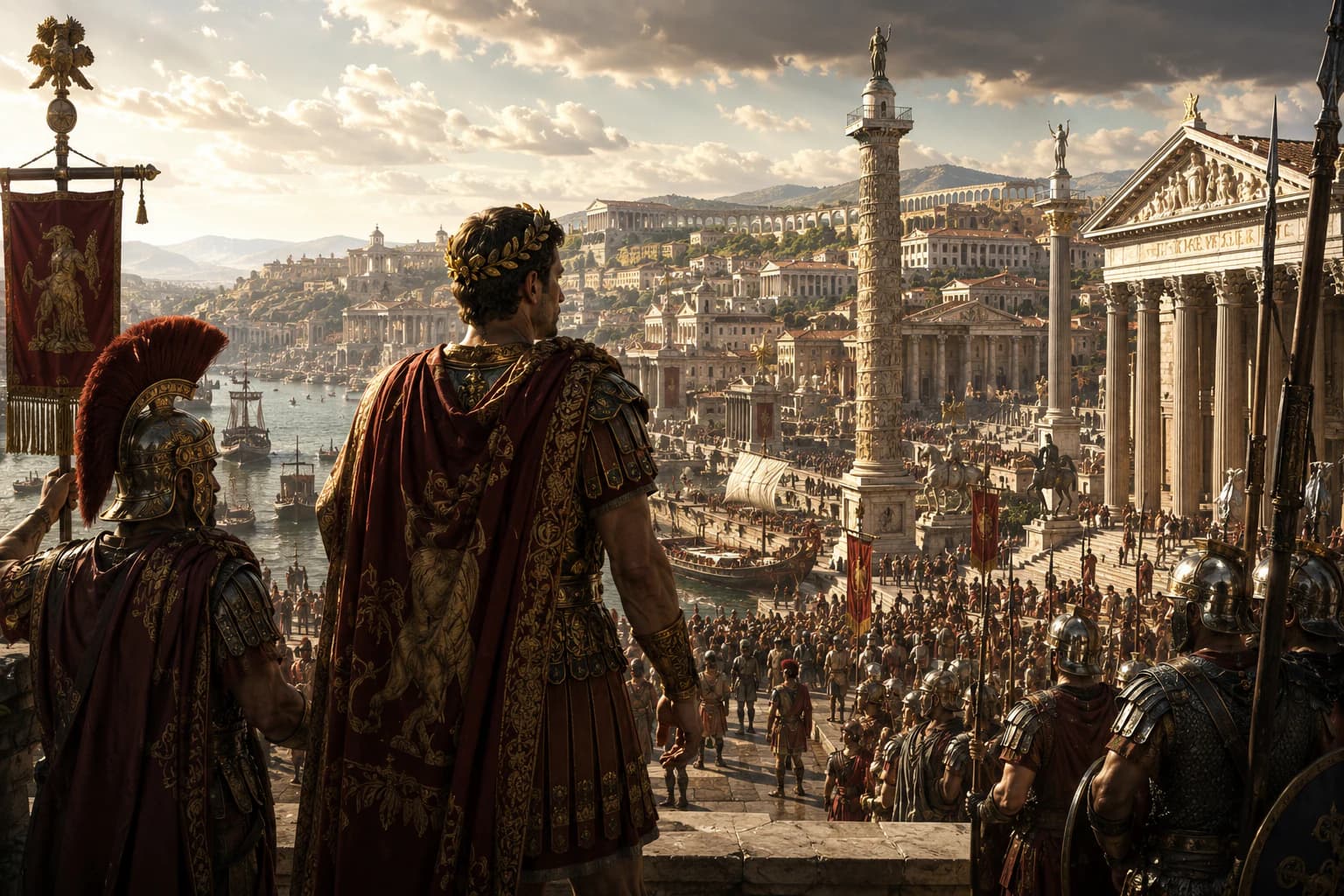
Alaric besieged Rome in 408 and again in 409, using the city as leverage against the imperial court at Ravenna. Ravenna was defensible behind marshes, but Rome carried immense symbolic weight and contained wealth, aristocrats, and a population vulnerable to blockade. Alaric's demands shifted, but they centred on land, payment, and military office. At one point he supported the elevation of the senator Priscus Attalus as rival emperor, then abandoned him when the arrangement failed. These years were a sequence of broken talks, hunger, fear, and hardening positions.
The sack became possible because negotiation failed repeatedly in a political system losing the ability to make credible promises.
410
Sack of Rome
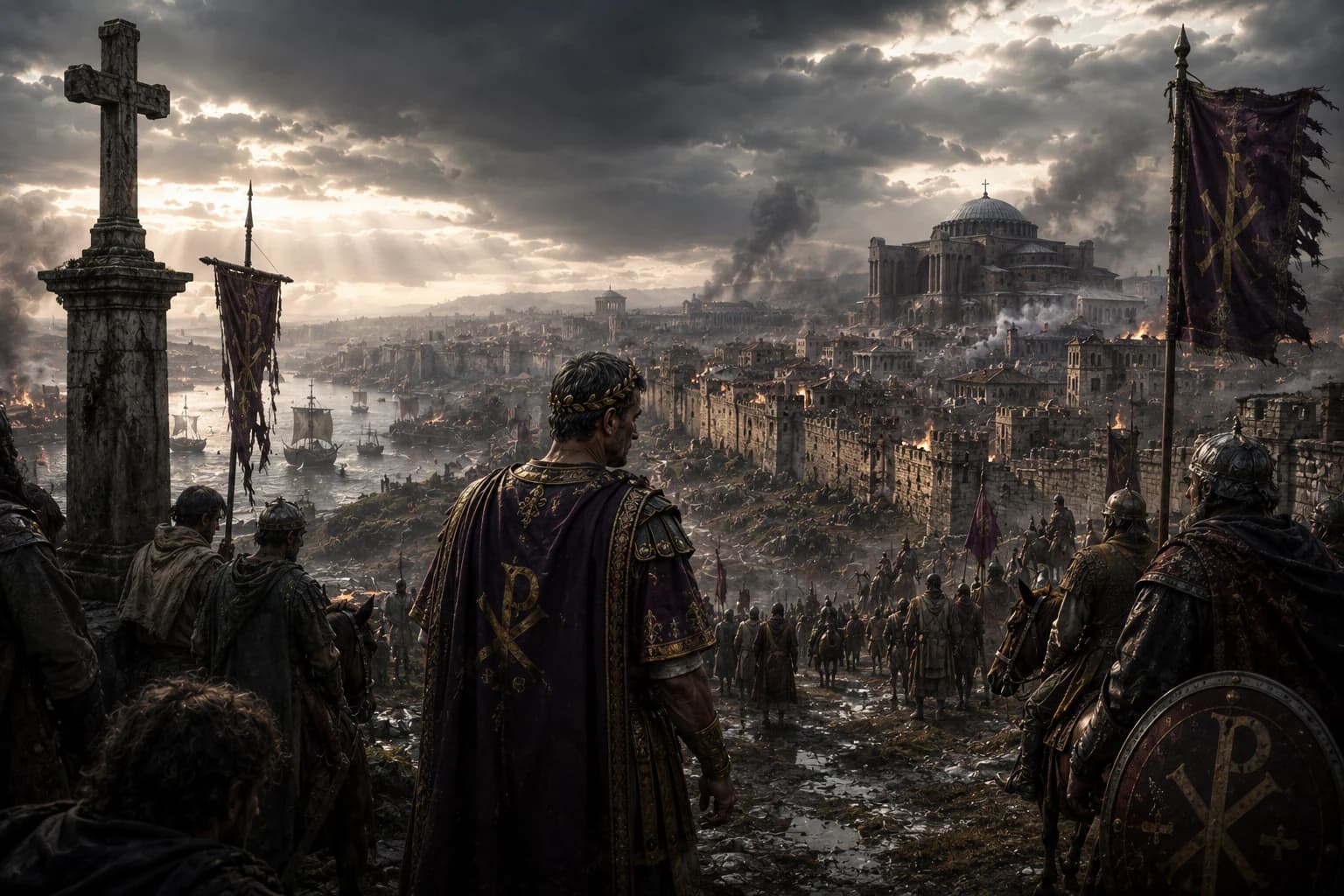
The sack of Rome in 410 was limited compared with some ancient destructions, but its psychological force was enormous. Rome had not been sacked by a foreign enemy since Brennus and the Gauls in 390 BC. Churches associated with the apostles were reportedly spared by order or convention, and the sack lasted three days, but aristocratic houses were looted and the city's aura of inviolability was broken. Pagans blamed Christianity for weakening Rome; Christians answered that earthly cities rise and fall. Augustine of Hippo's City of God was written in the shadow of this crisis.
The event mattered not because Rome was still the administrative capital, but because Rome was the imagination of empire.
410
Death in Italy
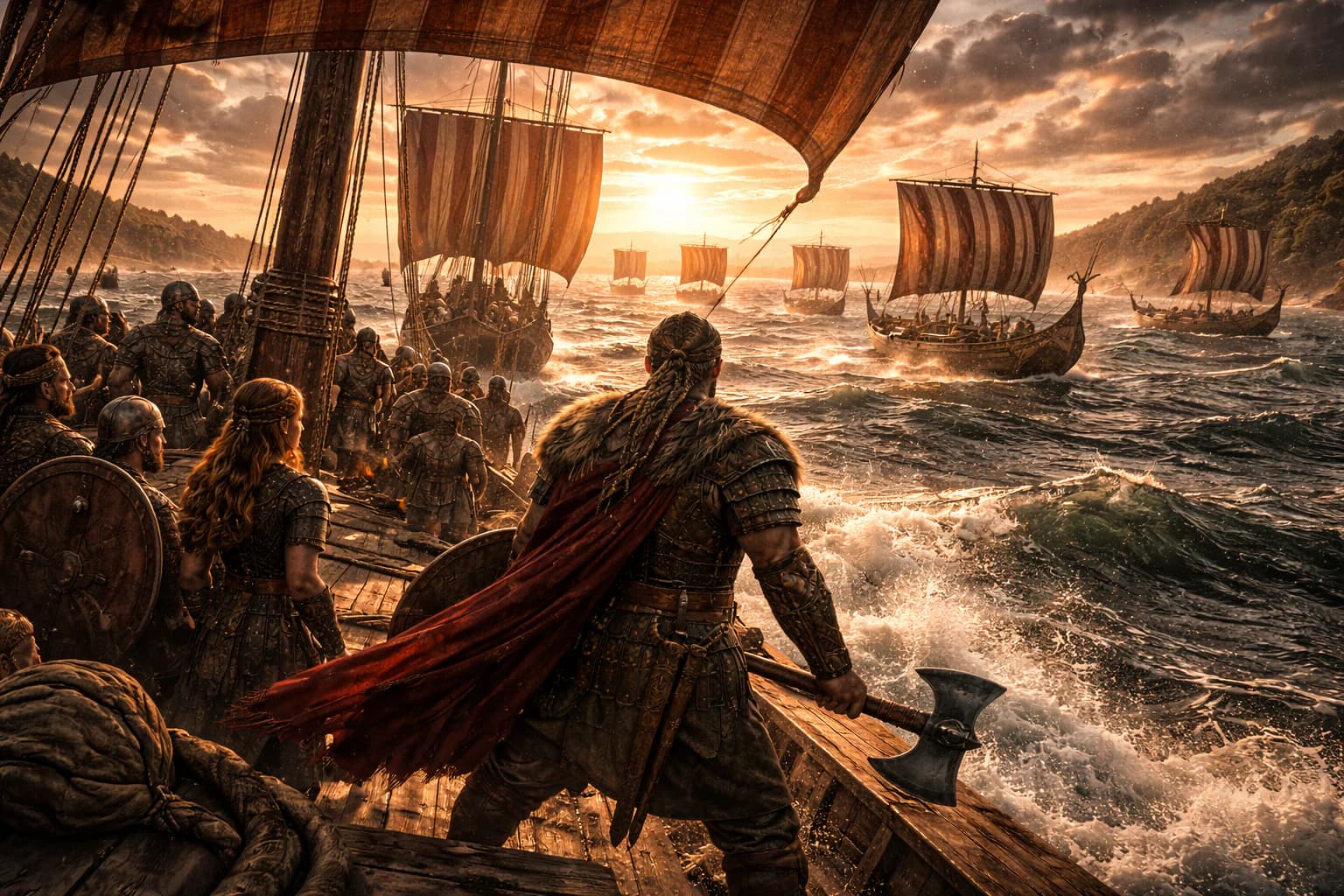
After leaving Rome, Alaric led his people into southern Italy. North Africa, the grain heart of the western empire, may have been his next objective, but storms or logistical failure prevented a crossing. He died later that year near Consentia, modern Cosenza. The famous story that he was buried under a diverted river with treasure and that the labourers were killed to hide the site comes from later tradition and cannot be verified. His brother-in-law Athaulf succeeded him and led the Goths into a new phase, eventually moving into Gaul and Spain.
He won the most famous symbolic victory of his age, but died before turning it into a secure kingdom.
After 410
Rome made mortal
Alaric is often remembered as a destroyer of Rome, but that is too simple. He was a product of Roman military recruitment, frontier settlement, imperial civil war, failed negotiation, and Gothic ambition. His followers wanted survival and status as much as plunder. The sack of 410 did not bring down the western Roman Empire immediately; that came in 476. Yet it changed the emotional weather of late antiquity. It made the decline of western imperial authority visible to contemporaries and forced Christian thinkers, Roman aristocrats, and later historians to ask what Rome really meant if the city itself could fall.
His life shows that Rome did not fall only to outsiders; it changed through the armed peoples it had drawn into its own world.