Related Moment
The Sinking That Pulled A Superpower Closer To War
The sea was calm. Then a white streak cut across the water.
On 7 May 1915, a German torpedo sank the RMS Lusitania off Ireland, killing nearly 1,200 people and pushing American opinion closer to the Allied cause.
The sea was calm. Passengers wandered the decks beneath a bright spring sky, some wrapped in blankets against the Atlantic breeze, others chatting over tea or watching Ireland's coastline slowly emerge from the horizon. After nearly a week at sea, the hardest part of the journey seemed over.
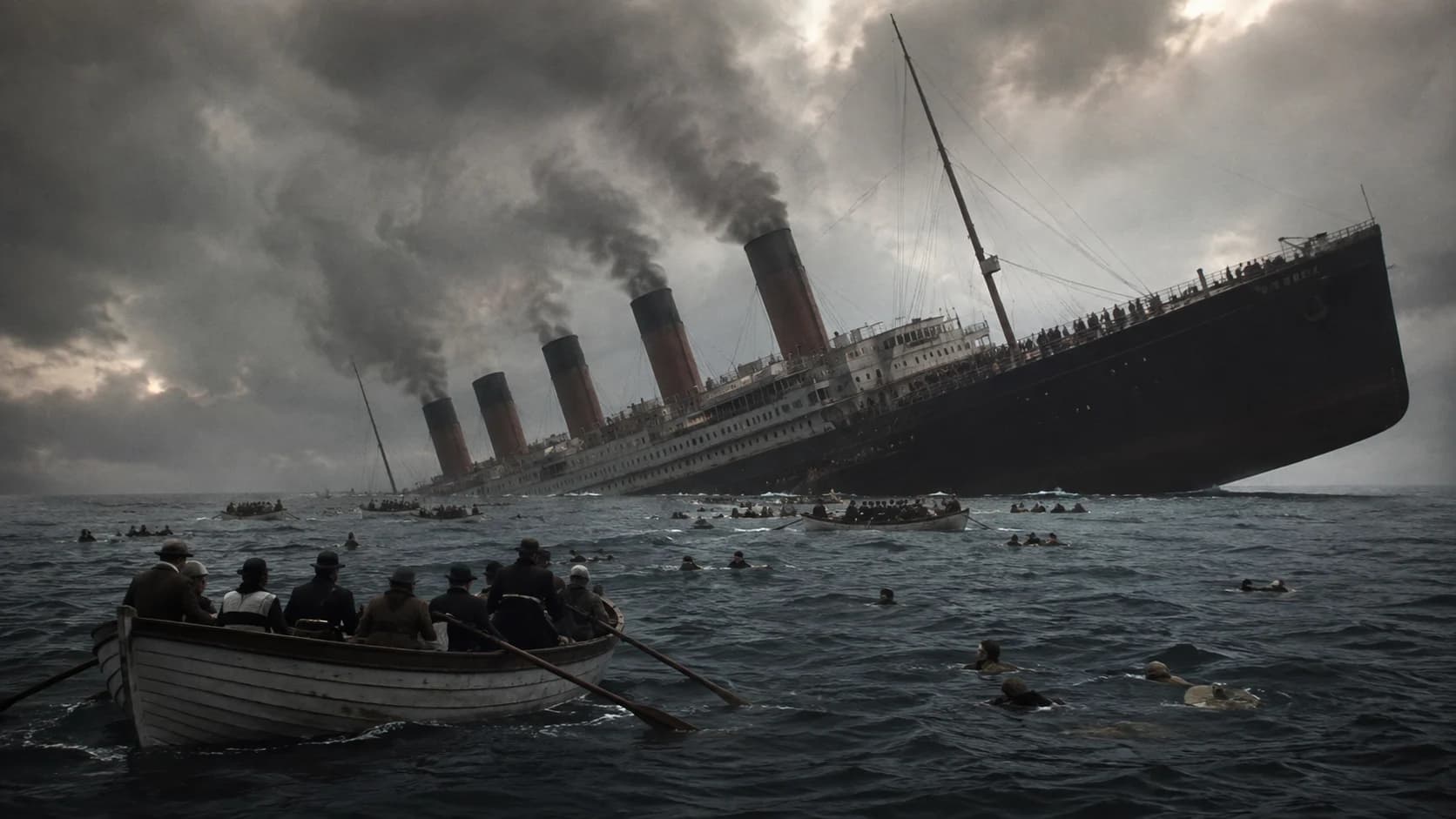
Then, without warning, a white streak cut across the water. A single torpedo slammed into the starboard side of the . Moments later, a second, far more mysterious explosion shook the ship from within.
The great ocean liner lurched violently. Lifeboats swung wildly out of reach. Furniture crashed through elegant dining rooms. Steam burst from shattered pipes. Just eighteen minutes after the attack, one of the world's largest passenger ships disappeared beneath the Atlantic.
When the entered service in 1907, she represented the pinnacle of British engineering: fast, prestigious, and built to carry more than 2,000 passengers in remarkable comfort. By 1915, that world of luxury travel had collided with a war less than a year old.
Britain had imposed a naval blockade on Germany, restricting food, fuel, and raw materials from reaching the Central Powers. Germany increasingly relied on submarines, its U-boats, to attack merchant shipping rather than confront Britain's surface fleet directly.
The strategy was controversial from the beginning. Traditional naval warfare expected warships to stop merchant vessels, inspect them, and allow civilians to escape before sinking them. Submarines were vulnerable when surfaced, and German commanders argued that the old rules made them easy targets.
Germany therefore declared the waters around the British Isles a war zone. Before the sailed from New York on 1 May 1915, the German embassy published newspaper warnings that ships flying the British flag risked attack. Many passengers dismissed the warning as propaganda or intimidation.
Among the nearly 2,000 people aboard were wealthy industrialists, tourists, children, nurses, entertainers, immigrants returning home, and more than 120 Americans. The remained neutral, but its citizens still crossed the Atlantic despite growing danger.
Unknown to most passengers, the ship was also carrying rifle cartridges and other military-related cargo legally classified as munitions under British rules. That cargo later became central to bitter arguments over the sinking and the mysterious second explosion.
On the afternoon of 7 May 1915, the approached the southern coast of Ireland. , commanded by , had already spent days attacking Allied shipping and was running low on torpedoes when the enormous liner appeared through his periscope.
At approximately 2:10 p.m., fired a single torpedo. It struck just below the bridge. Survivors consistently described an almost immediate second explosion, far larger than many expected from one torpedo.
Exactly what caused that second blast remains debated. Some historians point to damaged steam systems or coal dust. Others have suggested cargo-related explosions may have contributed. No definitive answer has ever been established.
Whatever its cause, the effect was catastrophic. The developed a severe list almost immediately. Water poured through shattered bulkheads. Electrical power failed. Corridors became steep, twisted inclines that were nearly impossible to climb.
Launching lifeboats became a nightmare. Many smashed against the ship's side or overturned as they were lowered. Others could not be launched because the decks were tilting too sharply. Families became separated in the chaos. Some passengers jumped into the freezing Atlantic wearing heavy clothing that dragged them down.
More than 1,190 people died, including nearly one hundred children. News of the sinking spread around the world within hours. Newspapers filled their front pages with grieving families, rescue efforts, and lists of the missing.
In Britain, the disaster reinforced the image of Germany as willing to wage war without restraint. Recruitment campaigns invoked the tragedy, using the loss of civilians as evidence of German brutality.
The reaction in the was more complicated but equally significant. Woodrow Wilson resisted immediate calls for war, insisting that the United States should remain neutral while demanding accountability from Germany. Diplomatic exchanges between Washington and Berlin grew increasingly tense.
Germany defended the attack by arguing that the sailed under the British flag, carried war-related cargo, and entered a declared combat zone despite explicit warnings. British authorities emphasized the deliberate targeting of a passenger liner carrying civilians. Both narratives shaped international opinion.
Facing diplomatic pressure, especially from the , Germany moderated aspects of its submarine campaign for a time. Restrictions were placed on attacks against passenger vessels in an effort to avoid provoking entry into the war.
Those limits did not last. In early 1917, Germany resumed , calculating that Britain could be defeated before the could mobilize. Instead, patience collapsed. Combined with the Zimmermann Telegram, the renewed submarine campaign helped push the United States into the war in April 1917.
The had not, by itself, brought into the conflict. But it had profoundly altered public opinion and laid much of the emotional and political groundwork for what followed.
Today, the is remembered not only as a maritime catastrophe but as one of the defining moments of the First World War's diplomatic history. Its loss intensified debates over neutrality, civilian safety, and that influenced the eventual involvement of the .