← People

William Wallace

William Wallace was scottish resistance leader and Guardian of Scotland. He helped defeat an English army at Stirling Bridge and led resistance in John Balliol’s name. Defeat and execution ended his career, but made him an enduring symbol of Scottish independence.

Born
c. 1270 CE
Died
1305 CE
Role
Scottish resistance leader and Guardian of Scotland
Full name
Sir William Wallace

Scottish resistance leader and Guardian of Scotland (c. 1270–1305)

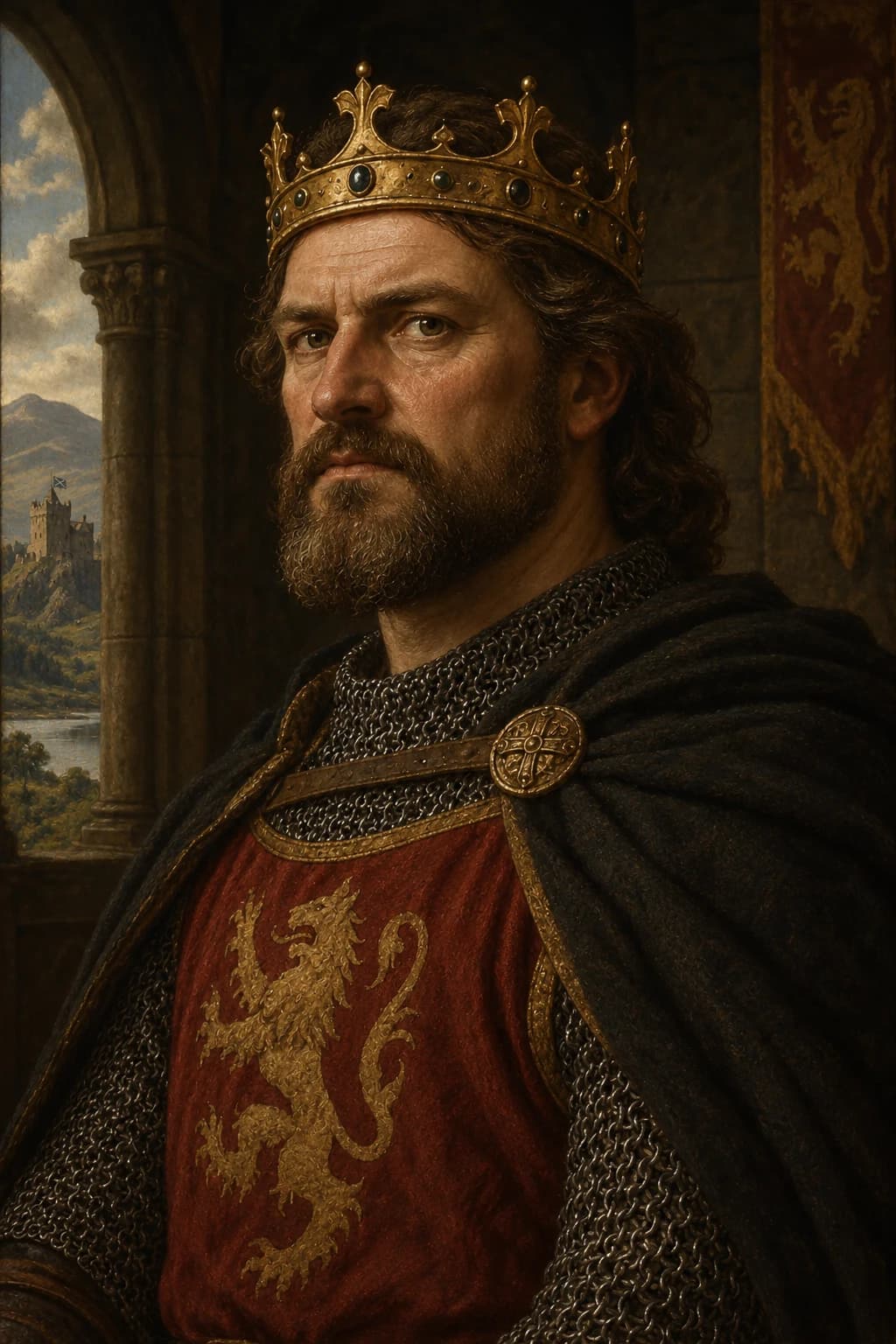
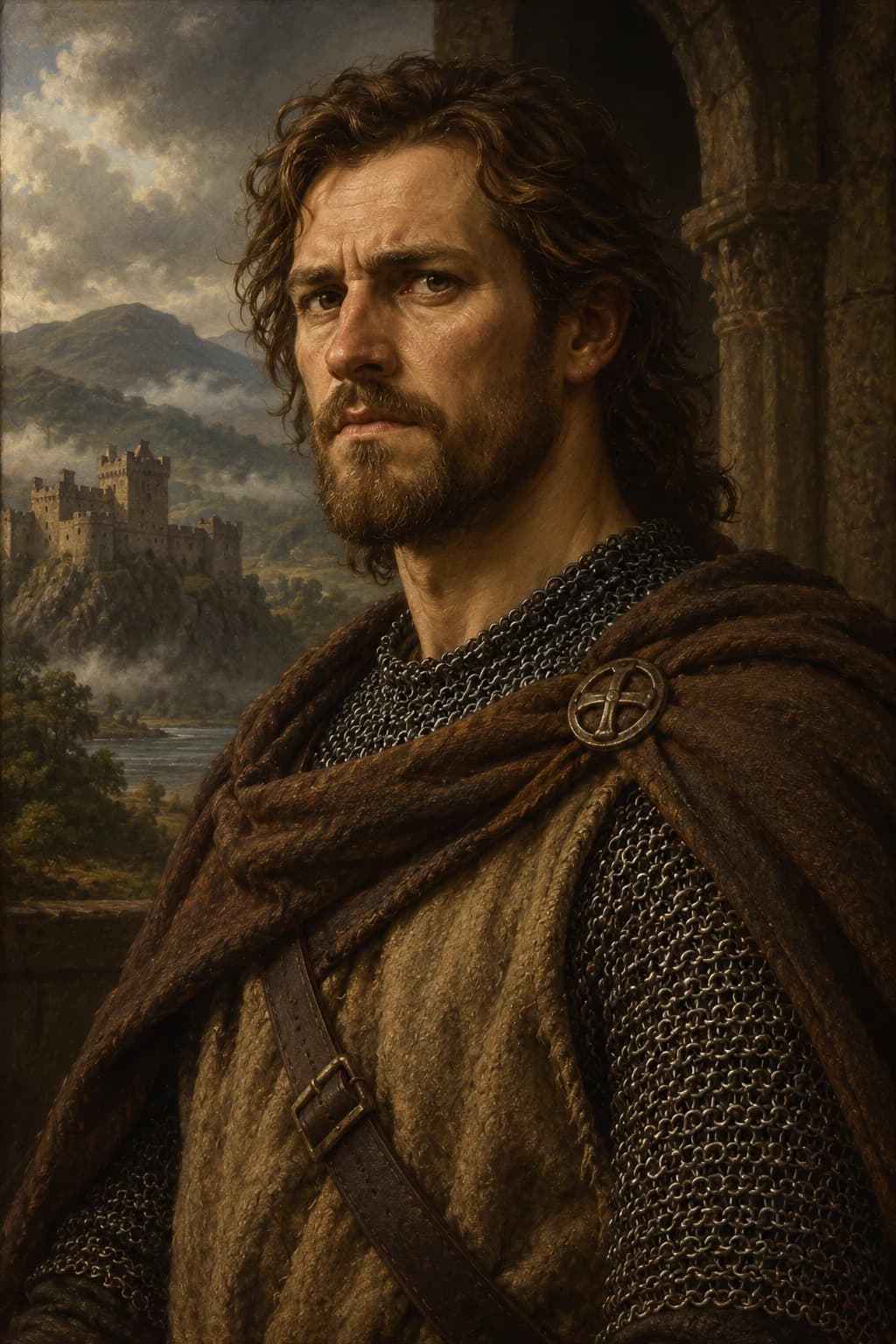
AI-generated portrait of William Wallace in period clothing; an interpretive reconstruction, not a documented likeness
AI-assisted historical reconstruction

An illustrative reconstruction based on historical context. It is not a photograph or documentary likeness. Image policy

Life Journey

Resistance, defeat and a life remade by memory

Follow Wallace through resistance, guardianship, defeat and the memory built around his life.

Complete chronology

c. 1270–1296

A life with missing beginnings

Wallace is usually placed as born around 1270, but neither a precise date nor a complete early biography survives. Claims about his upbringing, appearance and marriage often depend on much later storytelling. This matters because his fame can make uncertain details seem familiar and therefore true. He emerged from a society whose political crisis concerned the survival of an independent Scottish kingdom. His later achievements are well enough established to be compelling without invented childhood scenes. The gaps around his beginnings remind us how unevenly medieval records preserve people outside the highest ranks of power.
1296–1297

A kingdom brought under pressure

The Scottish succession crisis had allowed Edward I to claim an overlord’s role. Conflict escalated, and in 1296 his invasion removed John Balliol from effective kingship. English garrisons and officials attempted to enforce the new order. Resistance developed in different regions, rather than beginning as the work of one man. Wallace became prominent in the southwest, while Andrew Moray organised opposition in the north. Their cause drew strength from resentment of occupation and loyalty to Scotland’s separate political community. It did not require Wallace to possess a royal claim or to seek a crown for himself.

1297

Rebellion takes shape

Wallace was associated with the killing of the English sheriff at Lanark in 1297. Later accounts made the episode a story of personal revenge for the death of a wife, but those details cannot be treated as secure contemporary evidence. What is clearer is the political effect: Wallace emerged as a leader capable of attacking English authority and drawing supporters. The rising was not simply a conflict between a lone hero and a foreign king. It involved local alliances, noble interests and the difficulties of maintaining occupation across a landscape with many points of resistance.

1297

Stirling Bridge

On 11 September 1297, Scottish forces under Wallace and Moray confronted an English army near Stirling. The bridge limited how many troops could cross together. The Scots attacked after part of the force had passed over, trapping it in a vulnerable position. The victory broke the immediate English advance and demonstrated that occupation could be challenged successfully. Moray was wounded and died later in the year, leaving Wallace more prominent in subsequent memory. Giving both commanders their place restores a shared achievement often compressed into the story of one famous individual.

1297–1298

Guardian of Scotland

After Stirling Bridge, Wallace exercised the office of Guardian of Scotland in Balliol’s name. The role was a political responsibility, rather than an informal title for a successful fighter. Scotland needed to communicate with allies and trading partners, maintain authority and sustain an army. Wallace’s surviving documentary traces show a world of seals, letters and diplomatic appeals alongside combat. His forces also raided northern England, bringing destruction to communities there. The fight against occupation did not make war harmless to civilians; it shifted where some of its costs were imposed.

1298

Defeat at Falkirk

Edward returned with a major campaign in 1298. At Falkirk, the Scots used dense formations of spearmen, commonly called schiltrons, to resist cavalry. Their defensive strength could not prevent the battle from turning against them as the English combined missile fire and mounted attacks. Wallace survived, but the defeat weakened his authority and he relinquished the guardianship. Leadership passed to others, including Robert Bruce and John Comyn. Wallace’s career therefore contained a severe military failure after its celebrated victory. Scottish resistance continued because it rested on a wider political community than one commander alone.

1299–1304

Seeking support abroad

After Falkirk, Wallace’s movements become harder to reconstruct. He remained involved in the cause and appears in evidence connected with France and international appeals. A letter from Philip IV recommending him to representatives at the papal court survives in the British archival record. It demonstrates the diplomatic reach of the struggle without proving every journey or meeting later attributed to Wallace. Scotland’s leaders needed outside recognition as well as military survival. Wallace’s role belonged to that larger contest over whether the kingdom would be treated as independent or subordinate to Edward’s authority.

1305

Capture and execution

Wallace was captured in 1305 and brought to London. The charges included treason and violence committed during the wars. English authority treated him as a subject who had rebelled; the Scottish cause denied the legitimacy of that assumption. His execution at Smithfield involved hanging, disembowelment and dismemberment, with parts of his body displayed as warnings. Such punishment was intended to make resistance terrifying, not merely to remove one opponent. It ended Wallace’s life but could not settle the political claim behind his defiance. Edward’s attempt to demonstrate supremacy helped create a lasting symbol of resistance.

1305 and after

The man and the legend

The poet known as Blind Harry wrote his account long after Wallace’s death, combining memory with dramatic storytelling. Later generations added monuments, political meanings and screen portrayals. These sources reveal how people remembered Wallace, but do not provide a transparent record of his lifetime. Familiar scenes involving face paint, kilts or imagined meetings with Isabella belong to later invention rather than the evidence of his career. Wallace’s significance needs none of them. He helped lead a successful rising, governed in a displaced king’s name and died opposing an authority Scotland continued to contest.

Continue in context

Connected stories

Move from the profile into the wider events and settings this figure belongs to.

Tertiary paths

Content note

This profile is written for educational use and connects to related Stories of History pages. The main portrait is an AI-assisted historical reconstruction, included as an illustrative aid rather than documentary evidence. Image policy

References

Sources & Further Reading

Reliable reference works, archives and reading paths connected to this profile.

Sources used

  1. Historic Environment Scotland, “10 things about Sir William Wallace,” accessed 2 October 2026.

    The limits of early evidence, Andrew Moray, guardianship and later memory.

    Open source
  2. Historic Environment Scotland, “Battle of Stirling Bridge (BTL28),” accessed 2 October 2026.

    Military context, campaign and the role of the crossing.

    Open source
  3. The National Archives, “New shared approach for Wallace letter,” accessed 2 October 2026.

    The surviving letter of recommendation and Wallace’s diplomatic activity.

    Open source

Further reading

  1. Encyclopaedia Britannica, “Search results for William Wallace,” accessed June 2026.Open source
  2. WorldCat, “Books and library holdings for William Wallace,” accessed June 2026.Open source

Primary sources

  1. Library of Congress, “Search results for William Wallace,” accessed June 2026.Open source

Reviewed claim sources

Loading reviewed claim sources...

A monthly route through history

Find out first about the latest published stories, feature notes and occasional Premium offers in one monthly email.