Complete chronology
Full overview and deeper context for every journey step.
c. 1481 BC
A royal child
Thutmose III entered a dynasty shaped by recovery, militarization, and ambition. Earlier Eighteenth Dynasty rulers had pushed foreign powers from Egypt, reasserted control over Nubia, and restored Thebes as a center of royal and religious authority. He was the son of Thutmose II, but his mother, Iset, was not the senior queen. That detail mattered when succession came. Egyptian kingship could absorb complexity, but a child heir born to a secondary wife needed protection from powerful court interests. The boy who would become one of Egypt's most active military pharaohs began life in a vulnerable position: legitimate enough to inherit, too young to rule alone, and dependent on the political world around him.
Even rulers remembered for command can begin their reigns in dependence.
c. 1479 BC
Child king
Thutmose III's accession did not immediately give him practical control. His stepmother and aunt Hatshepsut, the senior royal woman, became regent and then took on the full titles and imagery of pharaoh. Older retellings often framed this as a simple usurpation, but the evidence is more careful than that. Thutmose III was not removed from kingship; his name continued in the record, and he remained a co-ruler. Yet during Hatshepsut's mature reign, she dominated monumental display, political initiative, and ideological argument. For Thutmose, this long co-rule may have been frustrating, formative, or both. It placed him inside the machinery of kingship while postponing the moment when he could define it for himself.
Power can be held in title long before it is exercised in practice.
c. 1479-1458 BC
Training for rule
The years under Hatshepsut should not be treated as empty waiting. Egypt was stable, prosperous, and active. The state sent expeditions, built temples, maintained Nubian control, and enlarged the sacred landscape of Thebes. Thutmose III appears to have had military responsibilities before becoming sole ruler, though the details are not always clear. That experience helps explain the speed and competence of his later campaigns. He inherited not a weakened kingdom but a well-organized New Kingdom state with resources, officers, scribes, horses, chariots, river transport, and temple wealth. Hatshepsut's reign and Thutmose's later militarism were not opposites in a simple sense. Her stability helped create the platform from which his imperial activity could operate.
A dramatic reign often depends on quiet preparation laid down by someone else.
c. 1458 BC
Sole pharaoh
Hatshepsut's death changed the balance of power. Thutmose III now had the freedom to rule in his own name, and the geopolitical situation gave him a reason to act. In the Levant, rulers around Kadesh and Megiddo challenged Egyptian influence, likely testing whether the transition after Hatshepsut had weakened royal authority. Thutmose responded with speed. His first major campaign was not simply a raid for glory. It was a strategic assertion that Egypt's northern sphere would not be allowed to unravel. The king had to prove himself to foreign vassals, Egyptian officers, temple audiences, and the court. War became a language of legitimacy.
Transitions invite tests, and successful rulers often answer them quickly.
c. 1457 BC
Battle of Megiddo
The Megiddo campaign is one of the best-known military episodes from ancient Egypt because it was commemorated in unusually detailed inscriptions at Karnak. Facing a coalition in Canaan, Thutmose chose the narrow Aruna route through the hills, a decision his officers reportedly feared because it could expose the army to ambush. The gamble worked. Egyptian forces emerged near Megiddo and defeated the coalition in battle, though the city itself required a siege after Egyptian troops turned to plunder instead of immediately securing the gates. The episode is valuable because it shows both royal boldness and human imperfection. Thutmose won not through mythic inevitability, but through risk, logistics, discipline, and the ability to recover from battlefield disorder.
Even famous victories contain moments of uncertainty and almost-missed opportunity.
c. 1457-1440 BC
Building an empire
Thutmose III's achievement was not a single victory but repetition. He campaigned again and again in the Levant, pressing Egyptian influence over cities, rulers, trade routes, and tribute networks. Victory inscriptions emphasize foreign submission, exotic goods, and divine favor, but beneath the royal language was a practical imperial system. Local rulers could remain in place if they acknowledged Egypt, sent tribute, and offered sons as hostages or trainees at the Egyptian court. Garrisons, supply depots, roads, and scribal oversight helped make distant power manageable. This was not modern empire, and Egyptian control varied by place and moment, but it was more than symbolic dominance. Thutmose turned military success into a structure of dependency.
Conquest becomes empire only when victory is converted into administration.
15th century BC
Nubia and the south
Thutmose III's northern wars often receive the most attention, but Nubia was equally important to New Kingdom power. Egypt's southern territories supplied gold, manpower, strategic depth, and access to African trade networks. Fortresses, temples, officials, and viceroys helped bind Nubia to the Egyptian state, while royal inscriptions presented southern control as proof that pharaoh had mastered the limits of the world. Thutmose continued and strengthened this system. The consequences were not abstract. Nubian resources helped support temples and campaigns elsewhere; Egyptian religious and administrative forms spread deeper into the region; local societies adapted, resisted, and participated in imperial structures. Thutmose's empire was therefore both northern and southern, Levantine and Nile-based.
An empire's power often depends as much on resource corridors as on famous battlefields.
c. 1458-1425 BC
Temples and memory
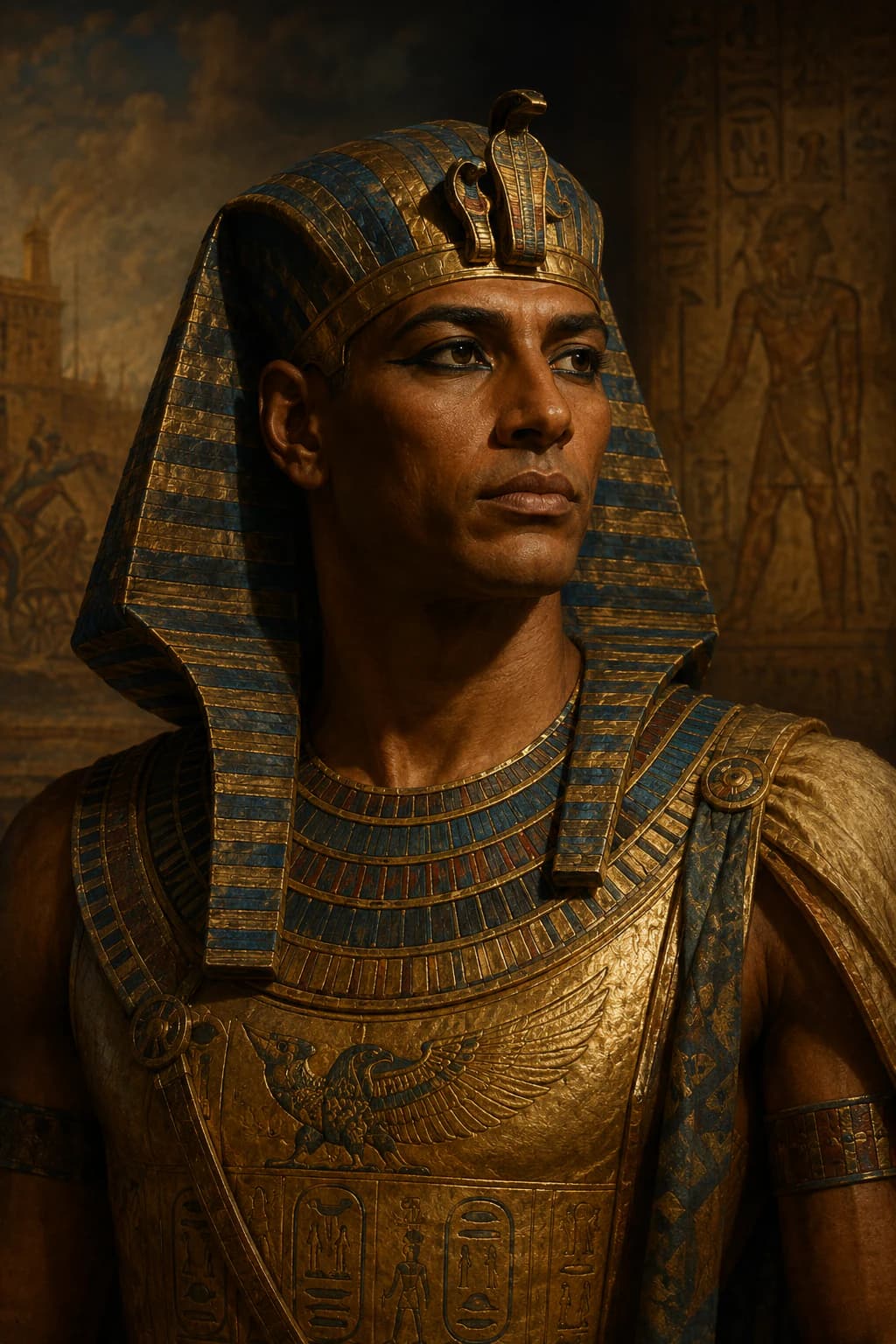
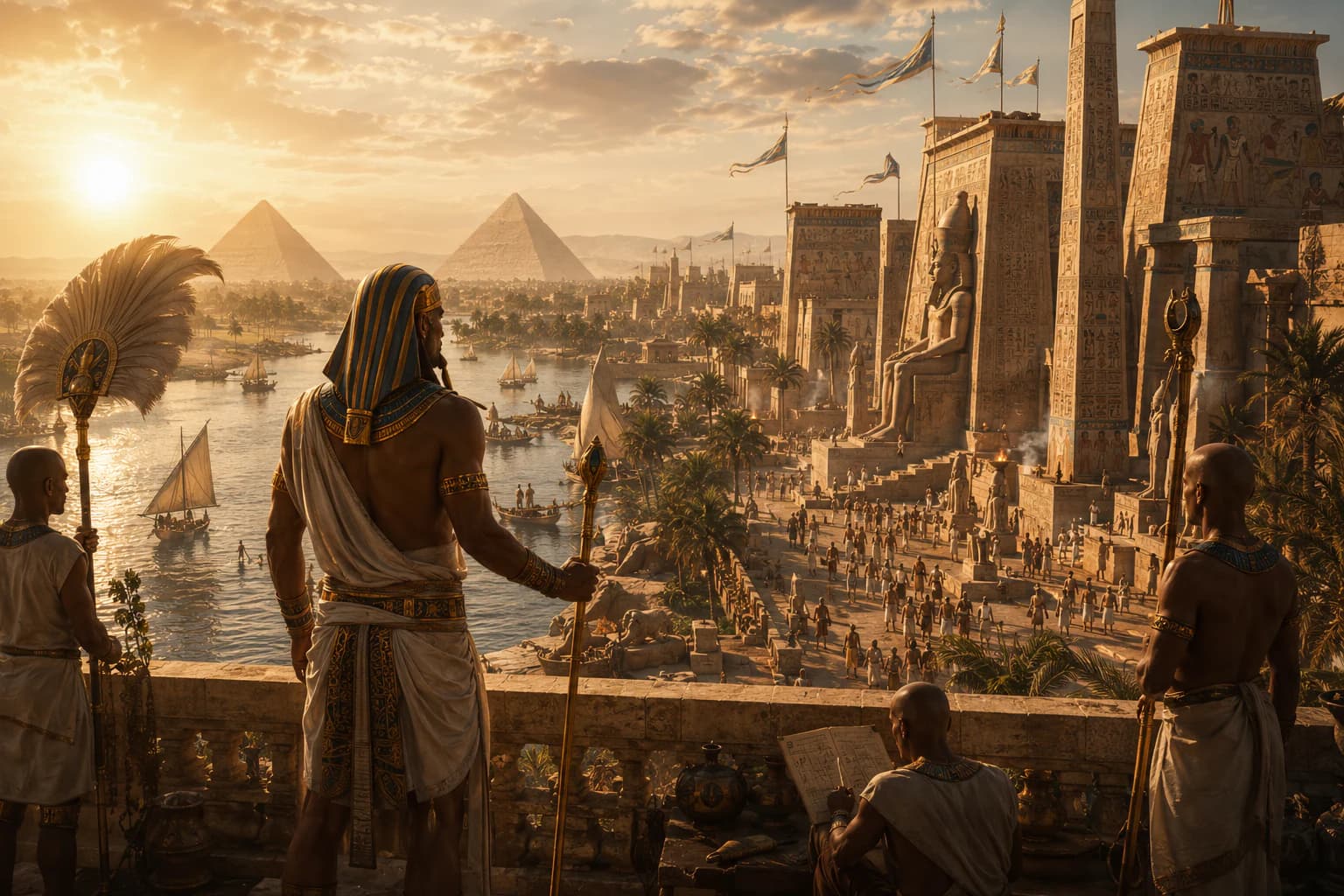
For Thutmose III, building and warfare belonged together. At Karnak, the great temple of Amun became a monumental archive of victory, offering, and divine approval. The annals of his campaigns were carved into sacred space, making military achievement part of temple ritual and public memory. He built halls, shrines, obelisks, and festival spaces, including the Akh-menu, a distinctive festival hall associated with renewal and royal legitimacy. These projects were not decorative afterthoughts to conquest. They were how conquest became meaningful within Egyptian thought. Foreign tribute fed the gods; the gods empowered the king; the king protected order; the inscriptions taught future viewers that this cycle had been fulfilled through Thutmose's reign.
A ruler's record is strongest when achievement is built into the places people already treat as sacred.
later in his reign
Erasing Hatshepsut
One of the most debated parts of Thutmose III's legacy is the later erasure of Hatshepsut. Statues were smashed, names removed, and reliefs altered so that other male rulers appeared in her place. Earlier explanations imagined a resentful stepson finally taking revenge. The timing makes that too simple: the campaign seems to have occurred long after Hatshepsut's death, when Thutmose had already ruled successfully for years. Many scholars now see a dynastic motive. As Thutmose prepared the future of his own line, especially the succession of Amenhotep II, the memory of a woman who had ruled as king may have seemed politically awkward. The erasure was targeted, not absolute. It tells us less about wounded emotion than about how carefully Egyptians managed legitimate memory.
The politics of memory can become most intense after power itself is secure.
c. 1425 BC onward
Death and legacy
Thutmose III died after a long reign that had carried him from child co-king to imperial pharaoh. His tomb in the Valley of the Kings and his monuments at Karnak place him firmly within the mature New Kingdom world he helped create. Later generations remembered him as a model of military kingship, and modern writers have sometimes called him the Napoleon of Egypt. That comparison is catchy but imperfect. Thutmose operated in a very different world, where campaigns, tribute, divine kingship, and temple economy were inseparable. His true importance lies in the way he turned New Kingdom energy into repeated action: campaigning abroad, organizing dependency, enriching temples, and carving royal memory into sacred stone. He did not invent Egyptian empire alone, but he gave it one of its clearest and most durable forms.
A powerful legacy is often built through sustained repetition, not one dramatic moment.