Complete chronology
Full overview and deeper context for every journey step.
1119
Merchant family roots
Becket's origins mattered because he was close to power without being born into its highest ranks. His parents, Gilbert and Matilda, belonged to London's prosperous merchant world, a setting connected to Norman England's commercial and clerical networks. Thomas received an education suitable for advancement, and he learned early how to move between social environments: city, school, church household and royal court. Later legend made his background more exotic than the evidence allows, but the essential point is clear. Becket rose through service, intelligence and style. He was not a hereditary magnate. He became powerful because powerful men found him useful.
His upbringing taught him how to move between social worlds, a skill that later placed him at the center of power.
1130s
Education and training
Becket was not primarily a speculative theologian. His education gave him polish, literacy and legal awareness, but his real training came in administration. In the service of Theobald, Archbishop of Canterbury, he learned how church government worked: correspondence, diplomacy, property disputes, canon law and negotiation with royal authority. Theobald sent him on missions to Rome and helped him acquire further legal expertise. This apprenticeship placed Becket at the meeting point of church and crown. He came to understand both systems intimately, which later made his conflict with Henry II so explosive. He knew exactly what royal power wanted from the church because he had helped manage that relationship.
His early learning focused less on theory and more on how power actually worked.
1140s
Entry to royal service
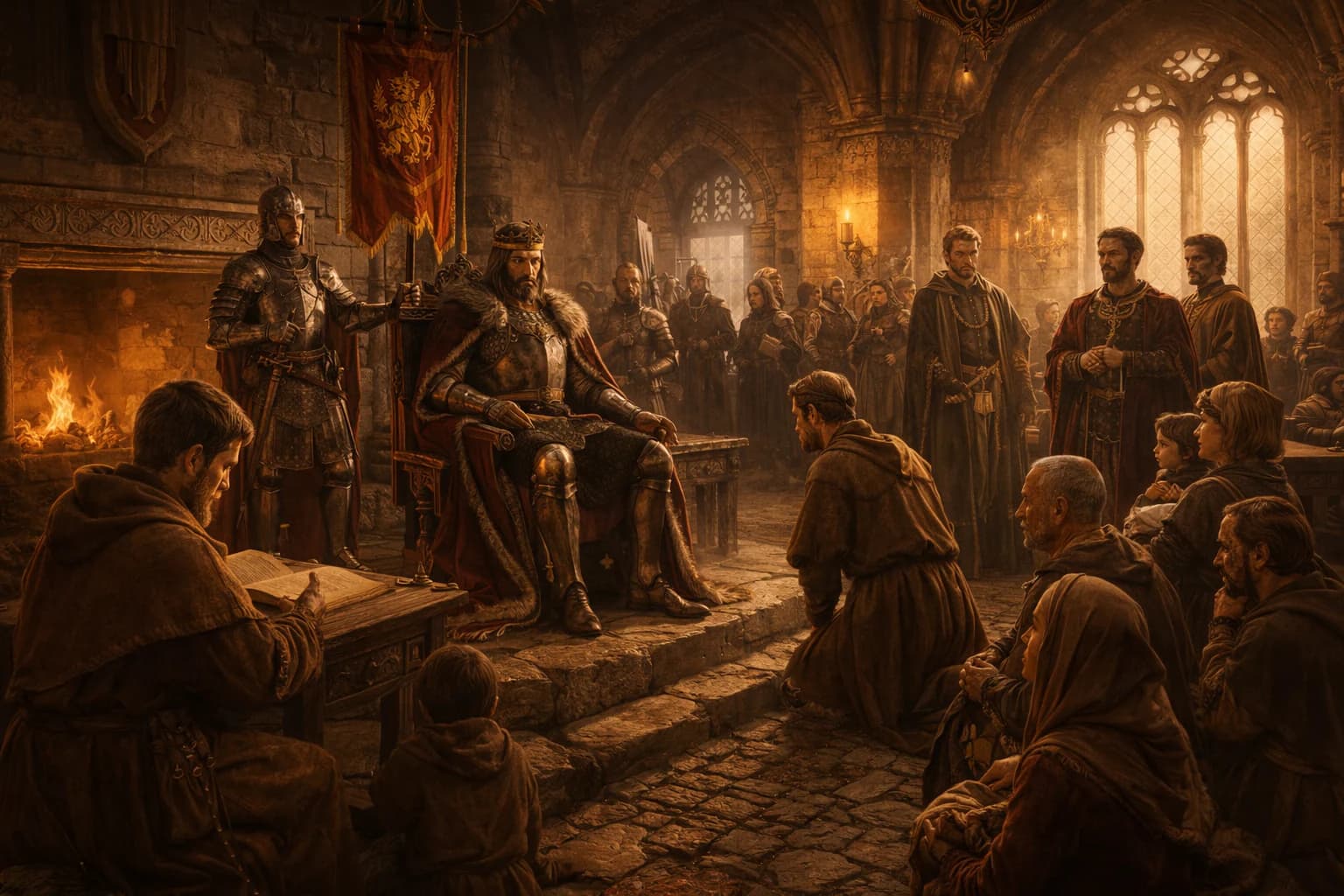
Henry II needed able servants. He had inherited a kingdom damaged by the civil war of Stephen's reign and was determined to restore royal justice, revenue and authority. Becket offered the rare combination of intelligence, energy, charm and institutional knowledge. Theobald's recommendation brought him to the king's attention, but Becket's own performance secured his rise. He could handle documents, diplomacy, money and men. He also knew how to inhabit courtly splendour. That made him more than a clerk. He became one of Henry's closest associates, a man who could translate royal will into action while sharing the king's appetite for display and command.
Competence in smaller roles opened the door to far greater influence.
1155
Royal chancellor
As chancellor, Becket stood at the centre of Angevin government. Henry II was rebuilding royal authority after years of disorder, and Becket helped enforce the king's interests with vigour. He raised revenues, managed correspondence, represented the crown and even took part in military affairs. His household was lavish, his dress splendid, and his style deliberately grand. Contemporary observers were struck by the closeness between king and chancellor. Henry appears to have believed that Becket's loyalty was personal and transferable: the man who served the crown so brilliantly as chancellor would serve royal policy just as brilliantly as archbishop. That assumption proved disastrous.
His success came from aligning himself completely with royal power—at least for a time.
1162
Unexpected appointment
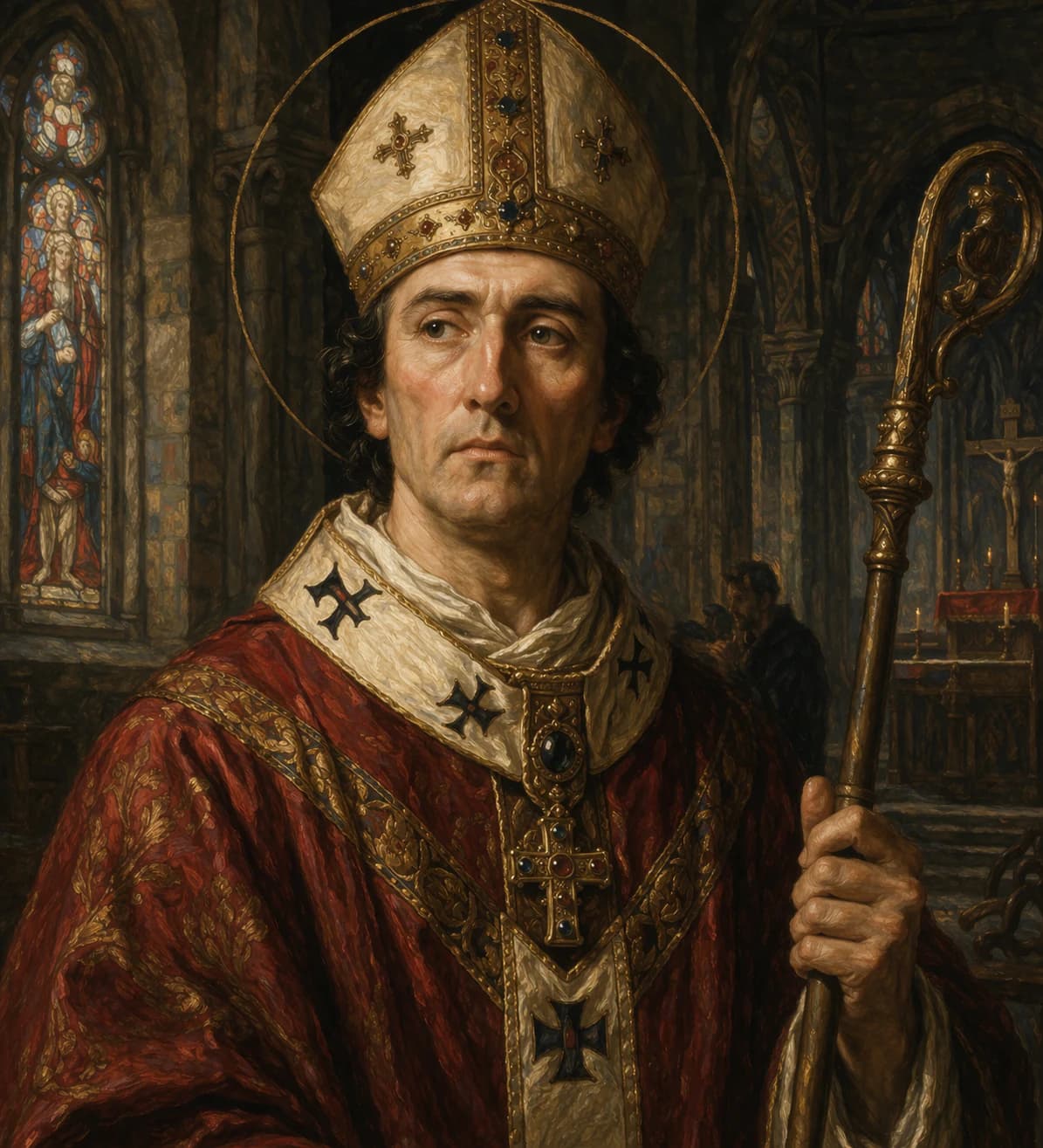
Becket warned, according to later tradition, that if he became archbishop he might lose the king's friendship. Whether the warning is exact or literary, it captures the truth of what followed. Once consecrated, Becket resigned as chancellor and adopted a more ascetic public identity. Historians debate how sudden or sincere the transformation was: was it spiritual conversion, role performance, political calculation, or some mixture? What is clear is that Becket came to define his new office against the crown's expectations. Henry had wanted a loyal manager of the English church. He received an archbishop who believed Canterbury carried obligations no servant of the king could ignore.
A change in role can reshape a person’s loyalties more than any external pressure.
1163–1164
Clash over authority
The conflict was not simply a personal quarrel, though personality made it worse. Henry wanted clergy accused of serious crimes to face effective punishment and sought to clarify the crown's traditional rights over church courts, appeals, appointments and property. The Constitutions of Clarendon in 1164 set out these claims. Becket first wavered, then resisted, arguing that the church's liberties were being compromised. The issue of criminous clerks became symbolic of a larger question: where did royal jurisdiction end and ecclesiastical authority begin? Henry saw Becket as ungrateful and obstructive. Becket saw himself as defending the spiritual order from secular overreach.
Institutional disputes often become personal when they threaten identity and authority.
1164–1170
Years in exile
After being threatened with trial and ruin, Becket escaped to the continent. Exile internationalised the conflict. Pope Alexander III had to balance sympathy for Becket with the politics of his own struggle against imperial pressure. Louis VII of France could embarrass Henry by sheltering the archbishop. Becket used letters, excommunications and appeals to keep the pressure alive. Henry retaliated against Becket's supporters and family. Attempts at reconciliation repeatedly foundered because neither man could accept a settlement that looked like defeat. The longer Becket remained abroad, the more he became a symbol rather than merely an officeholder.
Distance can intensify a conflict rather than resolve it when neither side is willing to compromise.
1170
Cathedral killing
Becket's return did not bring peace. He had excommunicated bishops involved in the coronation of Henry's son, an act that touched royal authority directly. In Normandy, Henry's anger erupted in words later remembered as a complaint that no one would rid him of the turbulent priest. Four knights took the outburst as licence, crossed to England and confronted Becket in Canterbury Cathedral on 29 December 1170. They killed him inside the sacred space, near the altar. The murder was politically catastrophic for Henry. Whether or not he intended violence, the killing made the king morally responsible in the eyes of Europe and transformed Becket from rebel prelate into martyr.
Violence in a sacred space turned a political dispute into a lasting moral symbol.
1170 onwards
Enduring legacy
Becket's cult grew with astonishing speed. Reports of miracles at his tomb spread, and Pope Alexander III canonised him only three years after the murder. Canterbury became one of Europe's great pilgrimage destinations, later immortalised in Chaucer's Canterbury Tales. Henry II was forced into public penance in 1174, a humiliation that showed how thoroughly the moral balance had shifted. Becket's legacy was not a simple victory for church over state; later English kings continued to contest ecclesiastical privilege. But his death created one of medieval Europe's most powerful images of conscience against coercive power. He mattered because he forced kingship to answer before a higher court of meaning.
His death gave lasting force to the idea that moral authority can challenge political power.