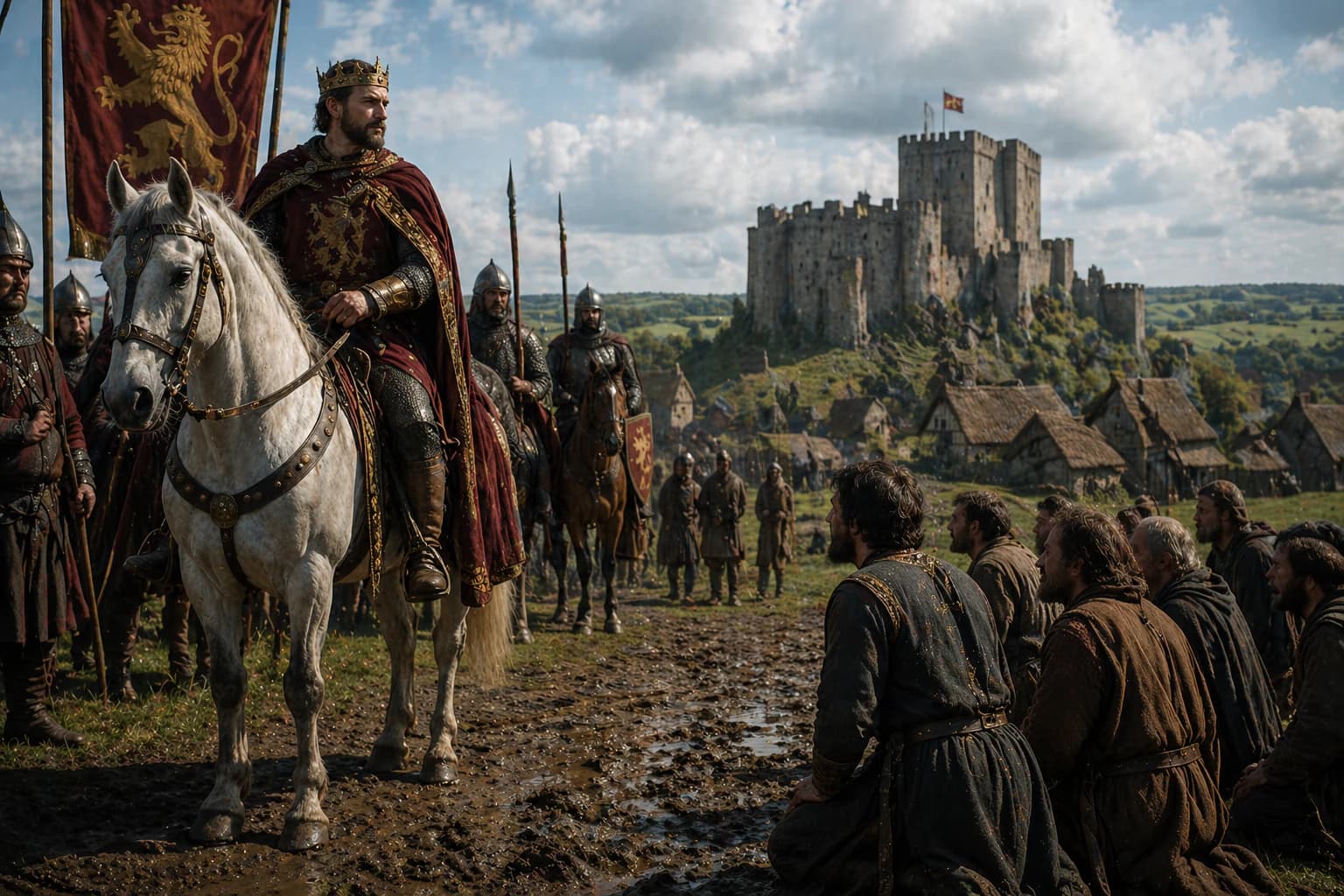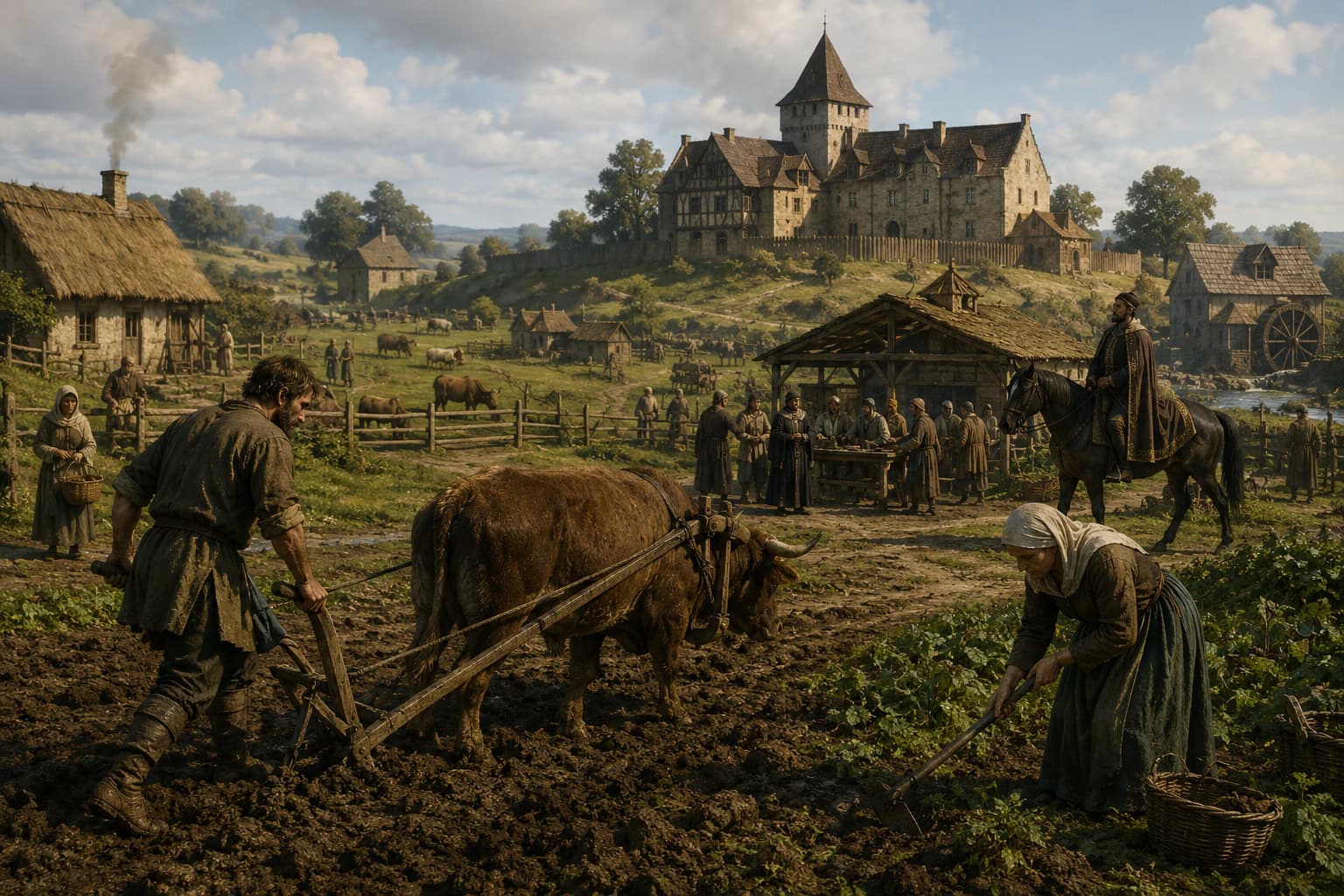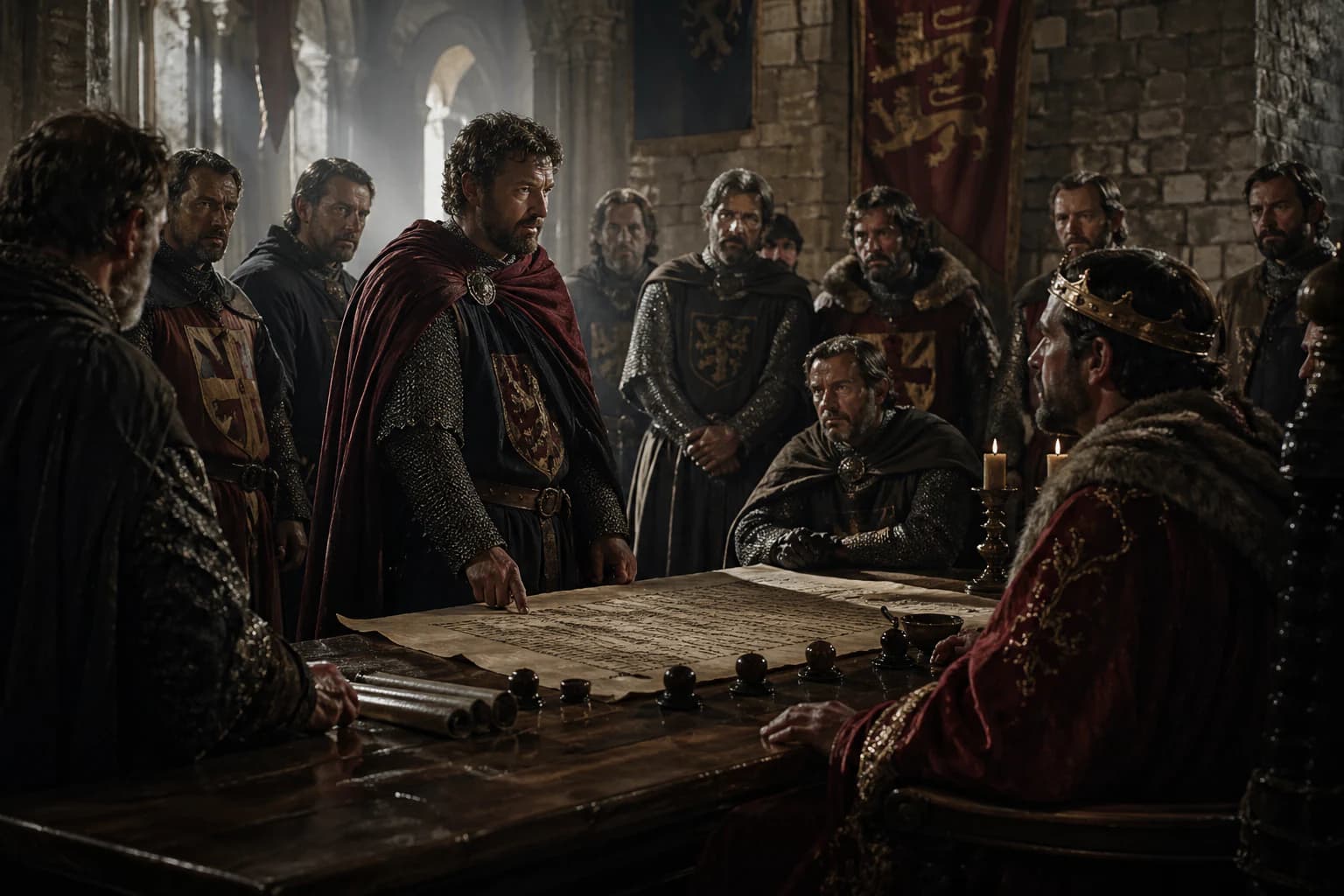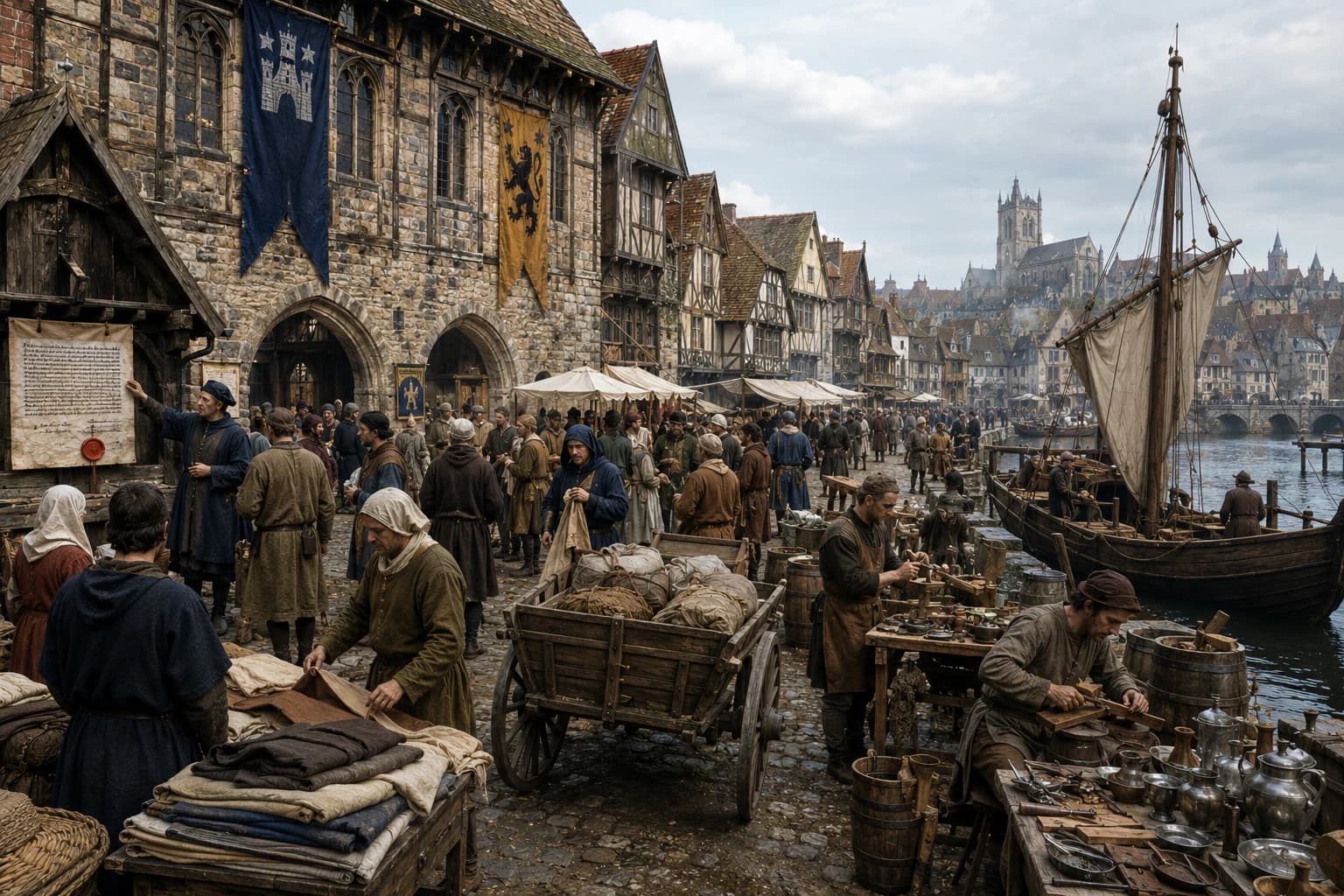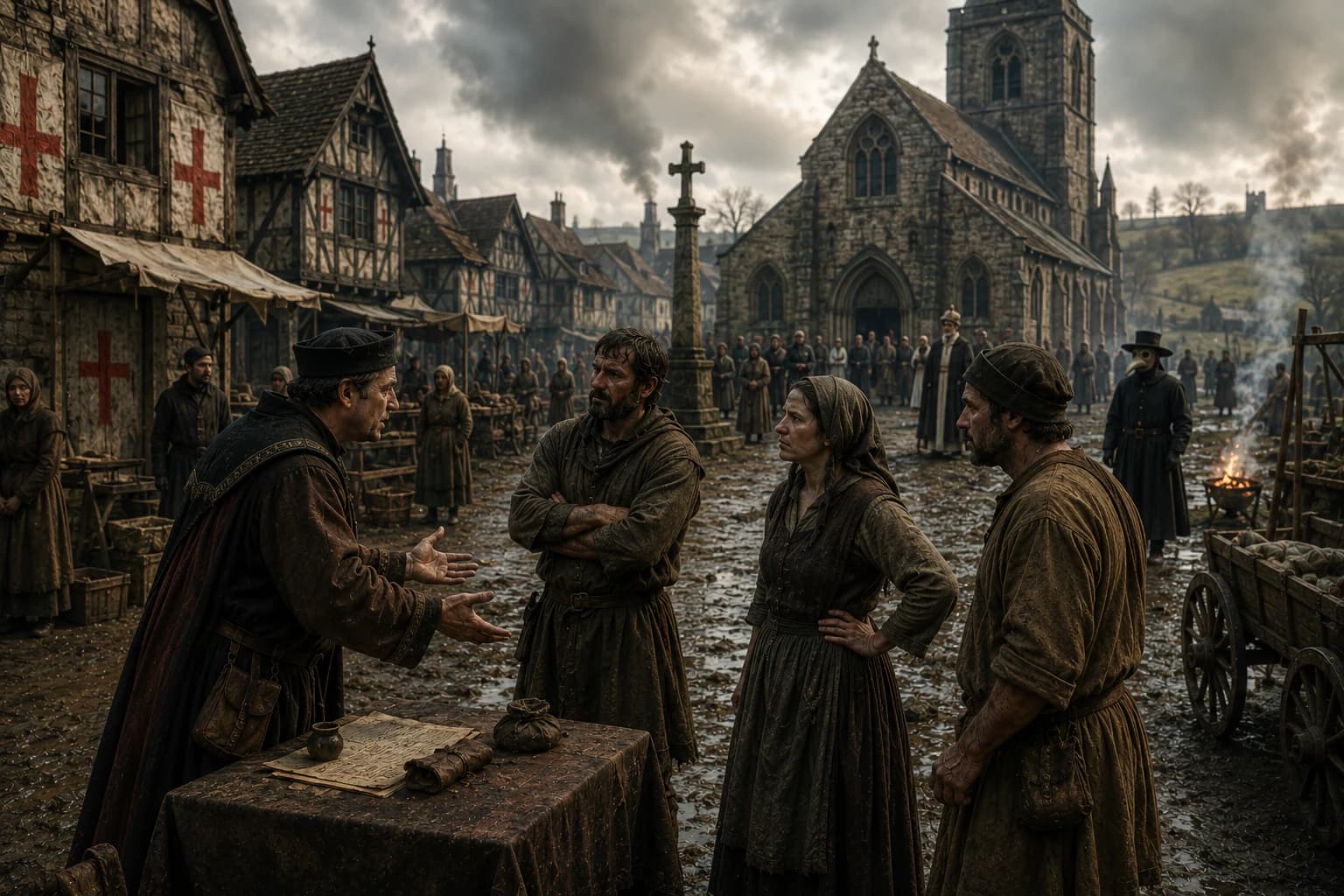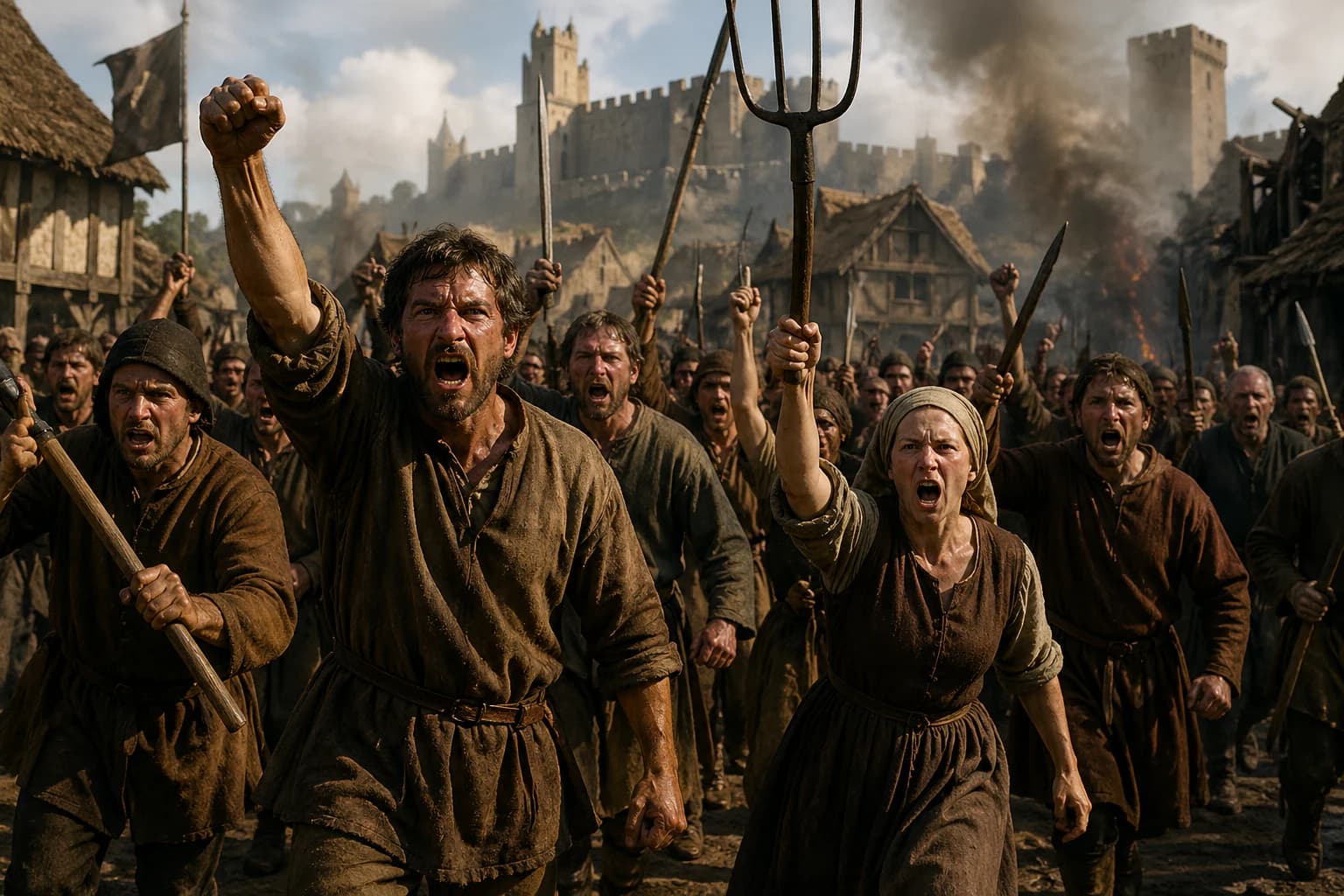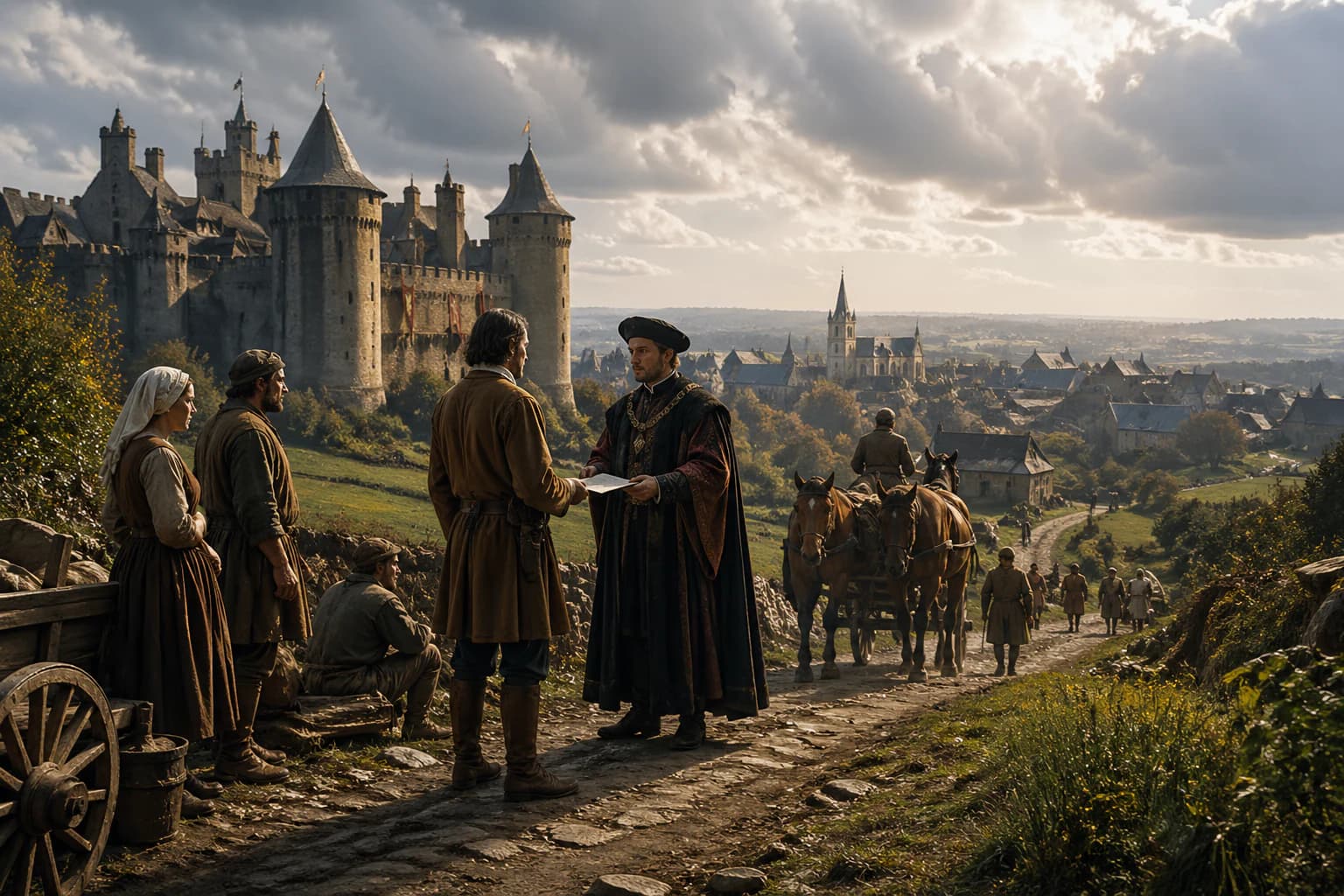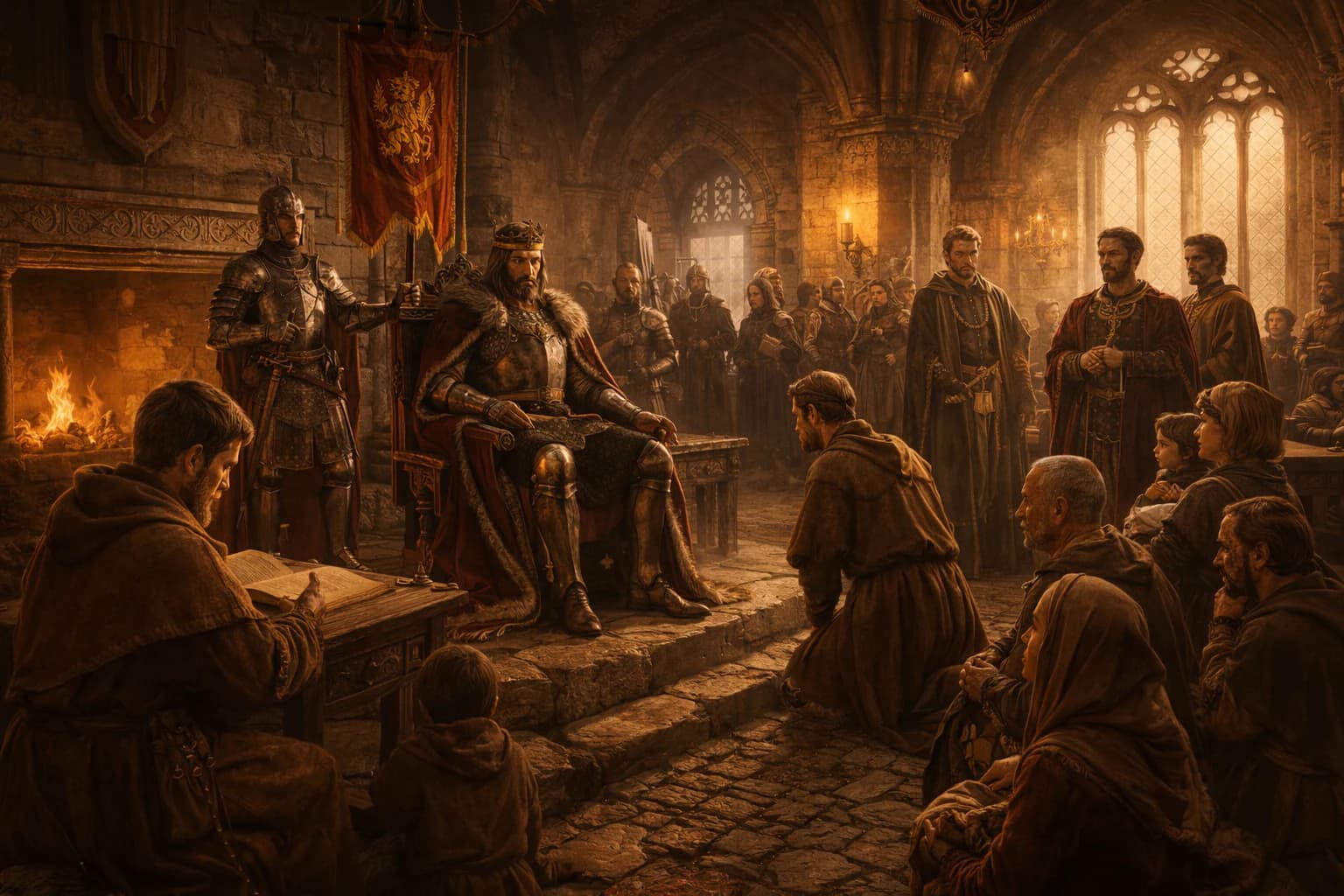
A medieval castle overlooking farmland and a village of serfs
Premium Story

Feudalism and Medieval Society

Step inside medieval Europe, where land, loyalty, castles, villages, and the Church ordered daily life.

11 chapters

Next
Context

Introduction

What you'll learn: You'll see how a world without strong central government organised itself through land, loyalty, and sworn obligation, how that system shaped the lives of lords, knights, and peasants alike, and how plague, revolt, and new economic forces gradually transformed it into something new.

Key forces

Carolingian Foundations of Lordship
800 CE
Step 1 of 10800 CEAccessible mode

Carolingian Foundations of Lordship

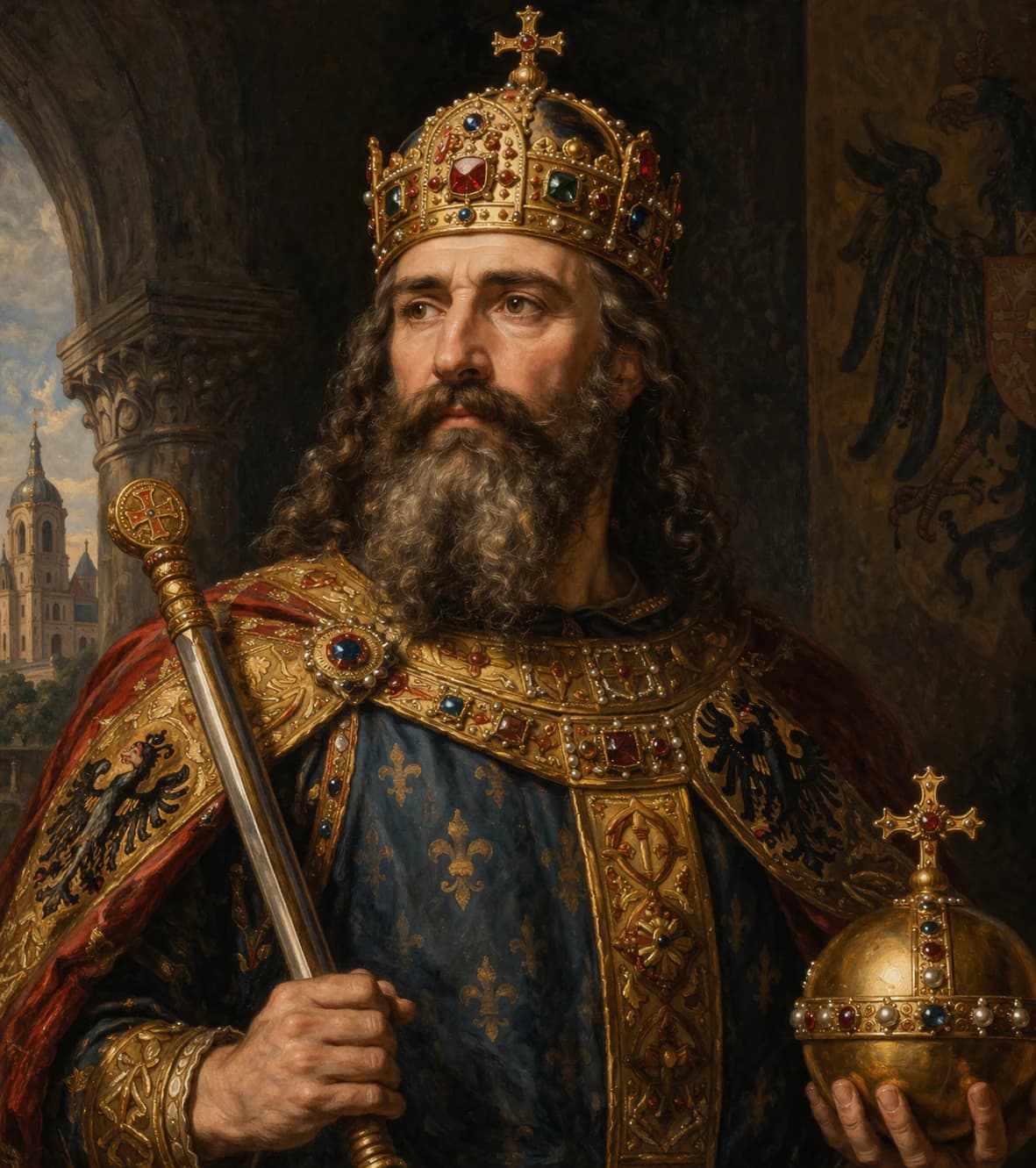
Charlemagne ruled the largest empire western Europe had seen since . The way he organised it laid the foundations for feudal society.

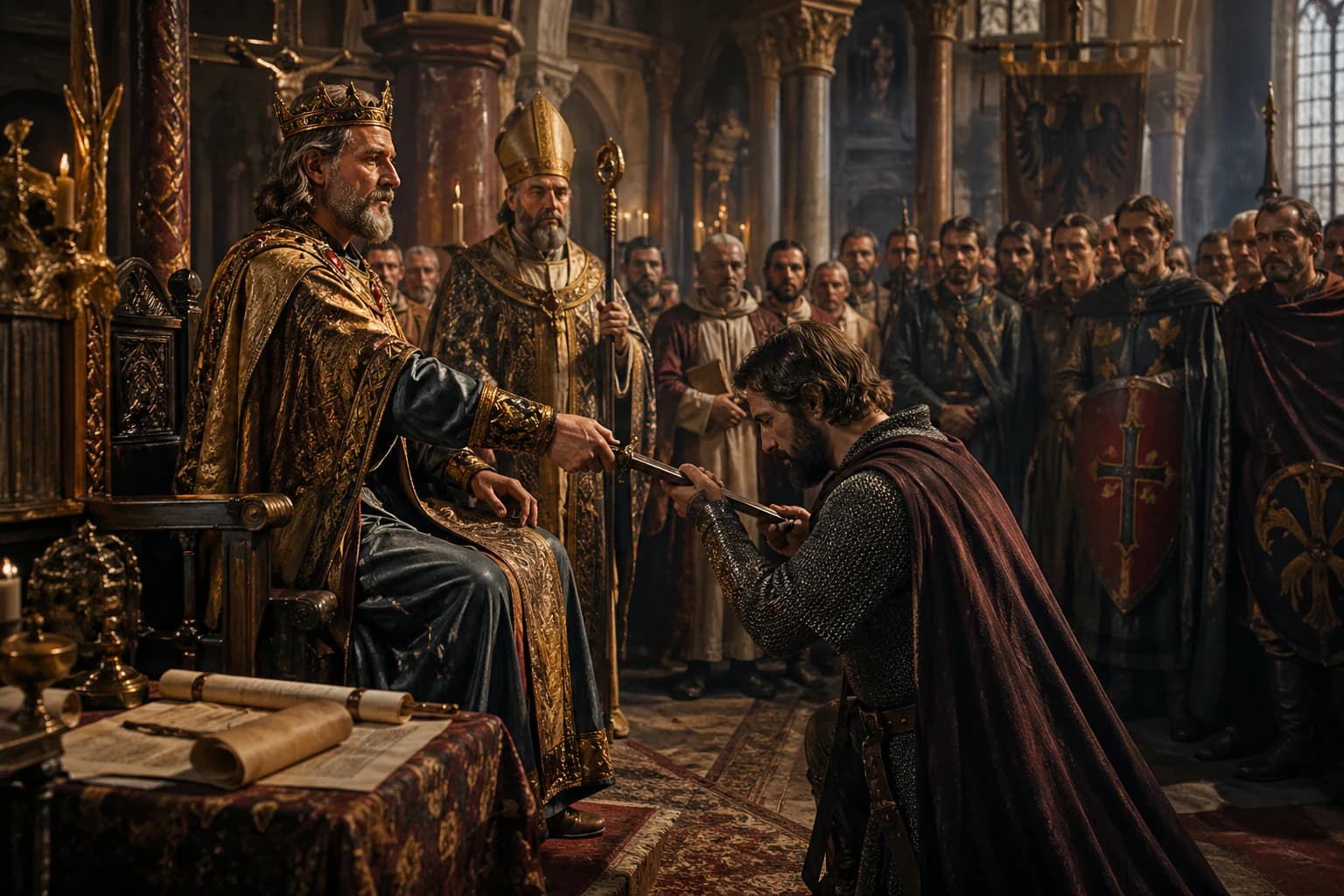
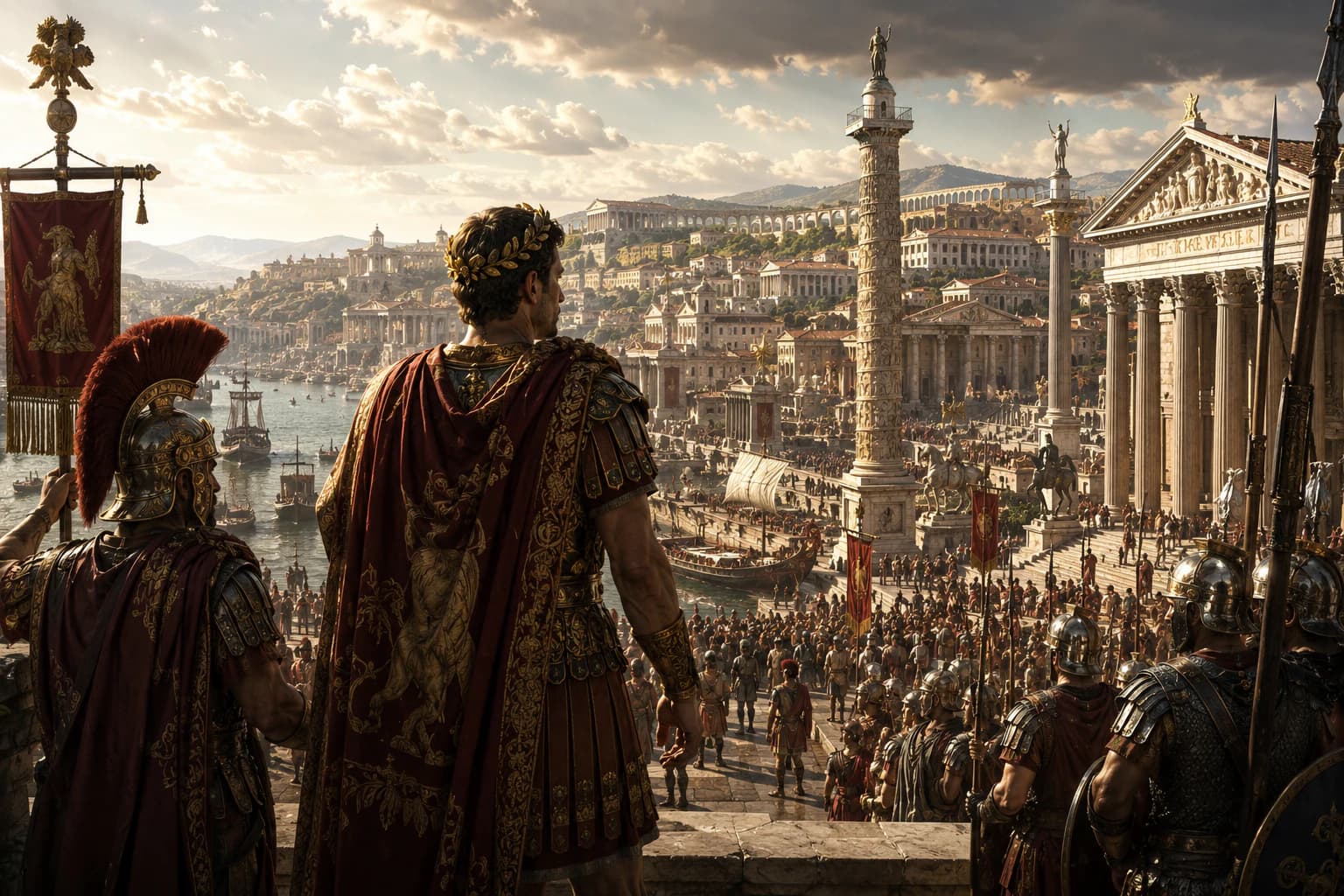
On Christmas Day 800, Pope Leo III crowned Charlemagne emperor. His vast territory stretched from Spain to central Europe, held together not by bureaucrats but by personal loyalty and land grants.

He gave land and authority to trusted nobles called counts, who governed in his name. In return, they swore loyalty and provided soldiers when needed. This exchange of land for service became the basic logic of feudalism.

Charlemagne did not design feudalism. But his habits of land-holding and loyalty became the template that others built upon.

His empire drew on Roman governance, Christian authority, and Germanic traditions of personal loyalty between a chief and his warriors. This fusion shaped how power worked across medieval Europe for centuries.

Fragmentation After the Carolingian Empire
843 CE
Step 2 of 10843 CEAccessible mode

Fragmentation After the Carolingian Empire

Charlemagne's empire split apart in 843. That break created the conditions in which feudal society took shape.

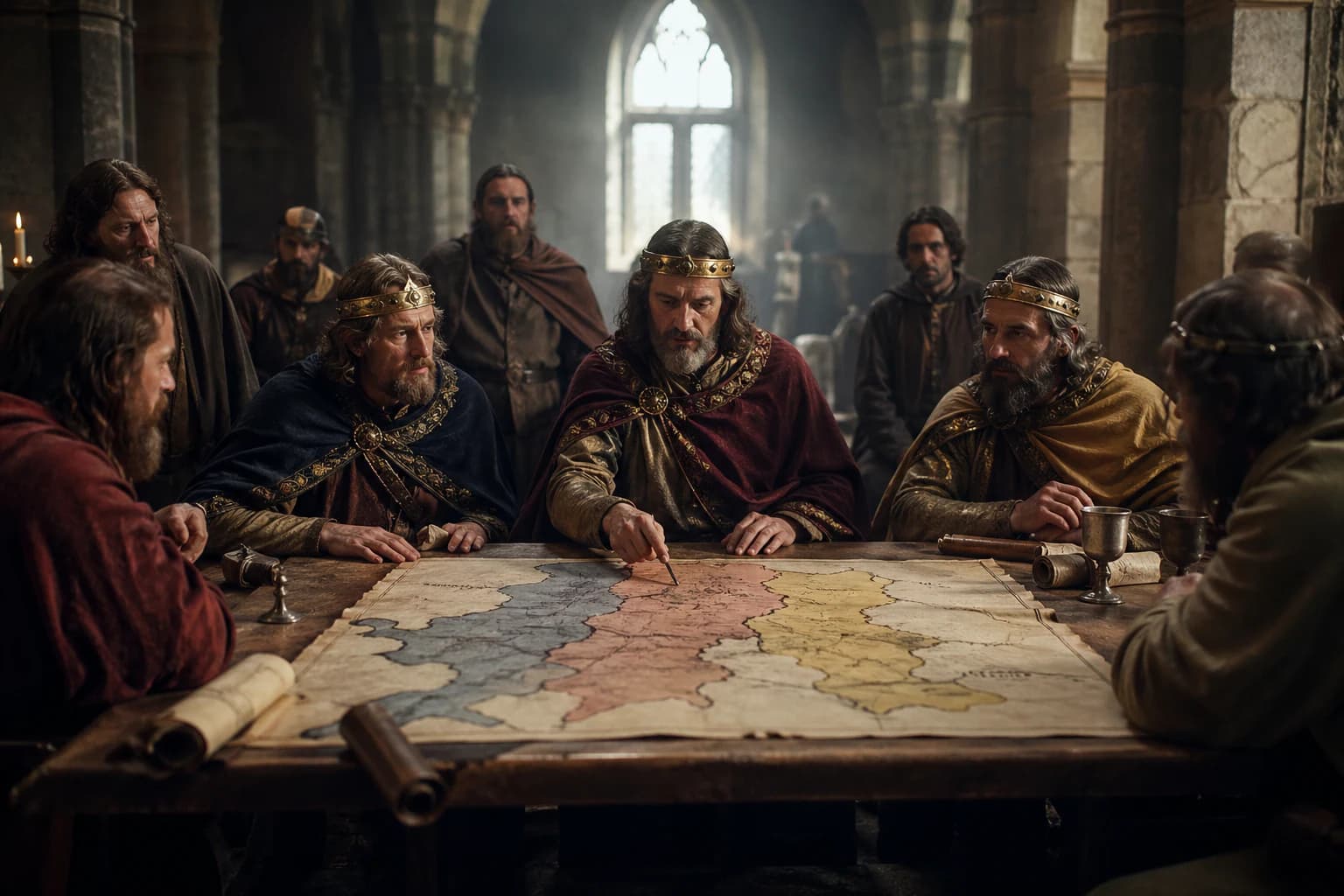
When Charlemagne's grandsons divided the empire at Verdun, they created three weak kingdoms. No ruler was strong enough to govern Europe as a whole. Central authority faded.

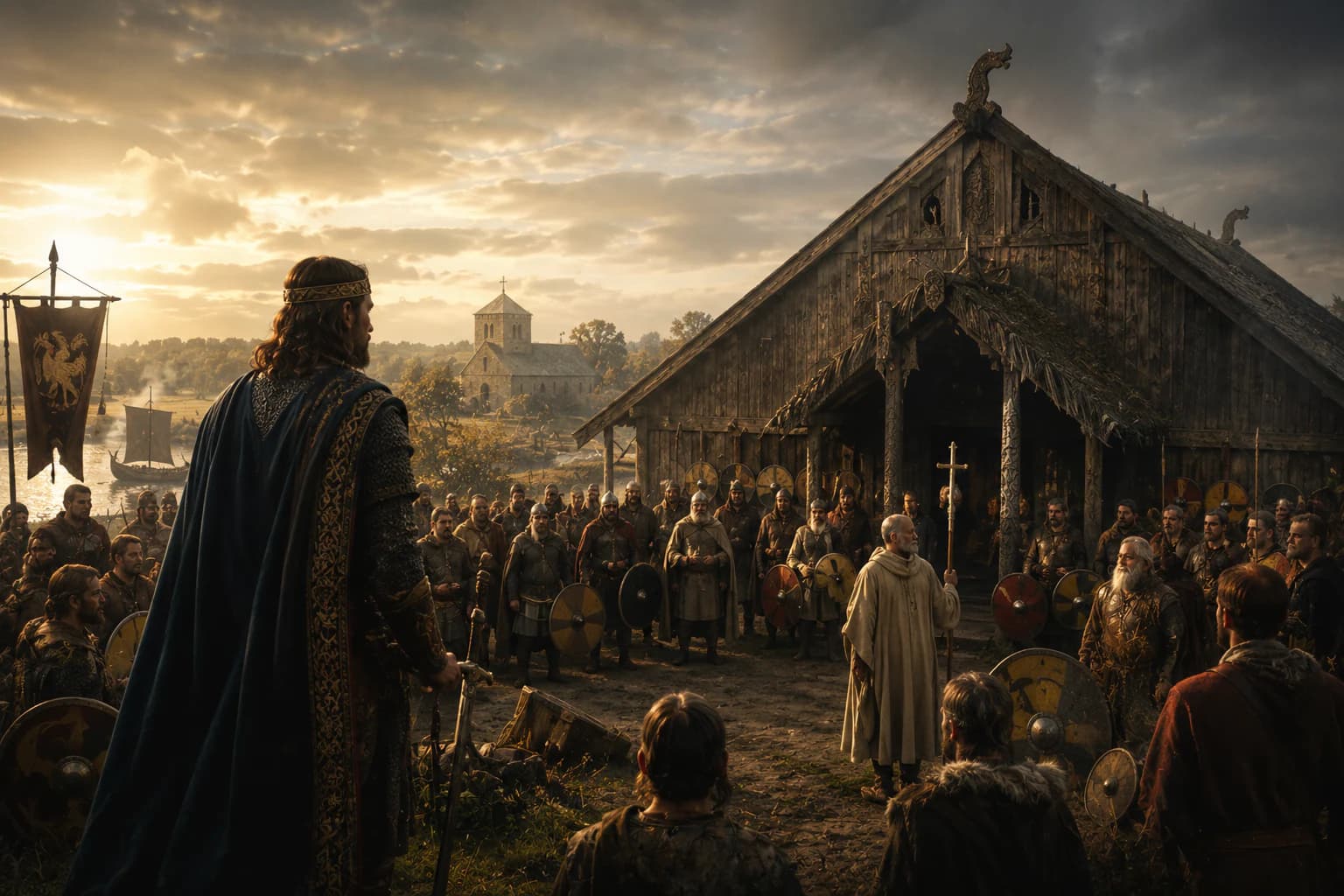
Raids made things worse. Vikings struck from the sea, Magyars swept in from the east, and Arab raiders threatened southern coasts. Distant kings could not respond quickly enough to protect people.

When the king could not protect you, the local lord could. That need shaped the next four centuries.

People turned to whoever had a castle and armed men. In exchange for shelter and protection, they gave up land, labour, and freedom. Feudal bonds grew from this desperate bargain.

Feudalism was not invented. It grew from necessity. The collapse of central power left a space that local lords filled, one village, one oath, one fief at a time.

Rise of Vassalage and Feudal Bonds
911 CE
Step 3 of 10911 CEAccessible mode

Rise of Vassalage and Feudal Bonds

As the old empire fell apart, a new kind of relationship took its place. Lords and vassals bound themselves together through oaths and land grants.

Without strong kings to protect them, people made personal deals for safety. A lord would offer land and protection. In return, a vassal swore loyalty and supplied soldiers. This was the feudal bond.

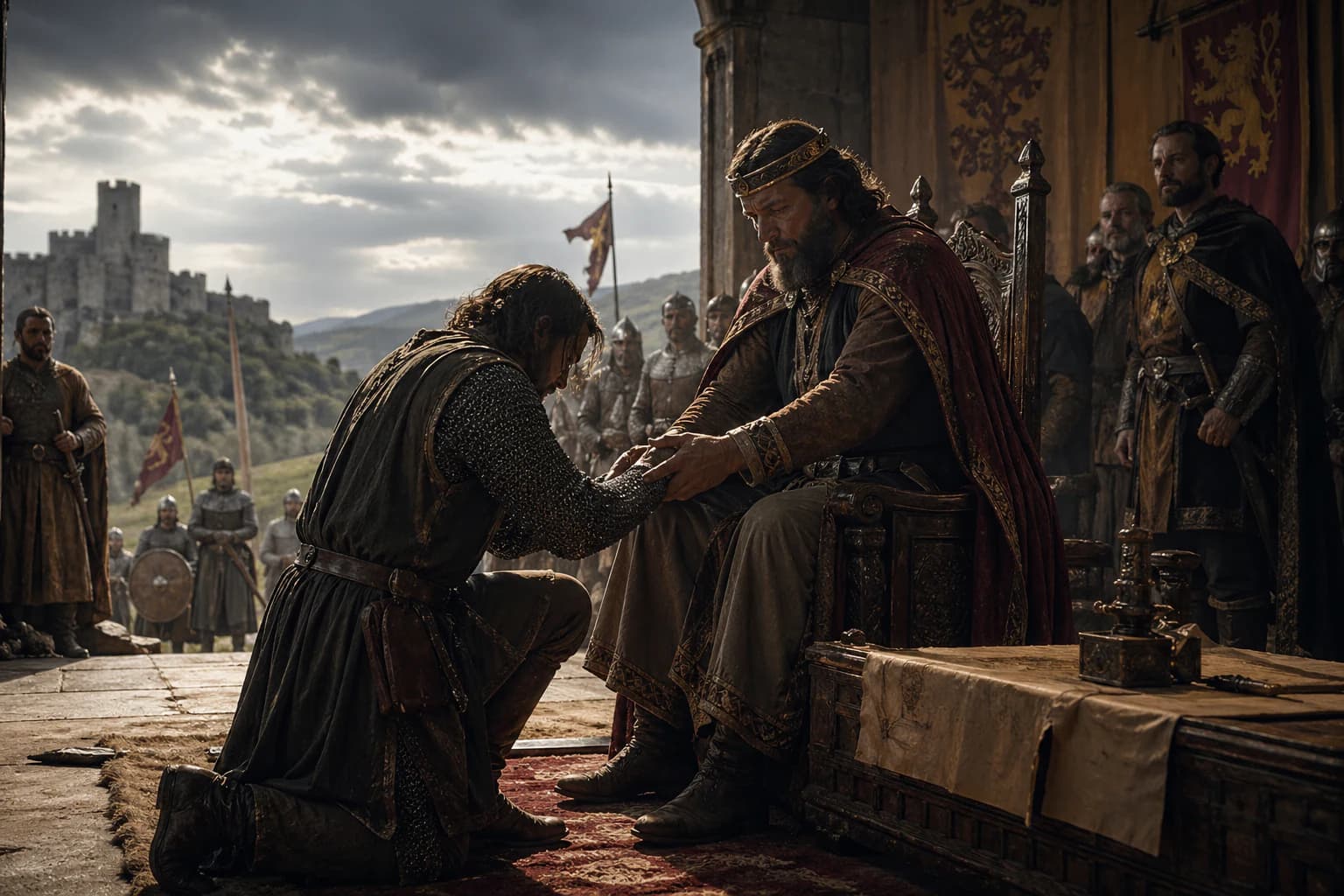
The moment that made the bond real was a ceremony called homage. The vassal knelt, placed his hands between his lord's, and swore an oath of fealty. The lord then granted him a fief, usually a piece of land to support him and his household.

The feudal bond was built on personal honour. Break it, and your reputation, your land, and your place in the world were all at risk.

Both sides had obligations. The vassal owed military service, attendance at the lord's court, and loyalty. The lord owed protection, justice, and the maintenance of the vassal's rights. It was an unequal relationship, but one with rules on both sides.

Premium

You've reached the turning point

The opening chapters show medieval order forming around land, loyalty and protection. Premium follows what that order meant in practice: peasants bound to manors, nobles bargaining with kings, towns pushing outward and plague exposing how fragile the hierarchy could be.

Continue into the reversals, crises and human stakes that make the story matter.

Unlock full story

What Premium unlocks next

  1. 4Norman Consolidation of Feudal Order
  2. 5Manorialism and Peasant Life
  3. 6Barons Challenge Royal Authority
  4. 7Expansion of Towns and Trade
  5. 8The Black Death and Social Disruption
  6. 9Peasant Revolts and Social Tensions
  7. 10Decline of Feudal Structures

Browse stories

Browse stories for free

Explore the people connected to this turning point or enjoy one of our free stories.

Unlock full storyBrowse stories

References

Sources & Further Reading

Reliable sources, primary-source collections and reading paths connected to this page.

Sources used

  1. Encyclopaedia Britannica, Feudalism,” Open source
  2. The British Library, Medieval manuscripts,” Open source

Further reading

  1. Marc Bloch, Feudal Society, Routledge.

Primary sources

  1. Fordham University, Internet Medieval Sourcebook,” Open source

A weekly route through history

Find out first about the latest published stories, feature notes and occasional Premium offers in one weekly email.