People

Spencer Compton

Spencer Compton, Earl of Wilmington, was a British Whig politician and Prime Minister from 1742 to 1743. A former Speaker of the House of Commons, he succeeded Walpole but struggled to dominate government.

Born
1673 CE
Died
1743 CE
Role
British Prime Minister

British Prime Minister (1673–1743)

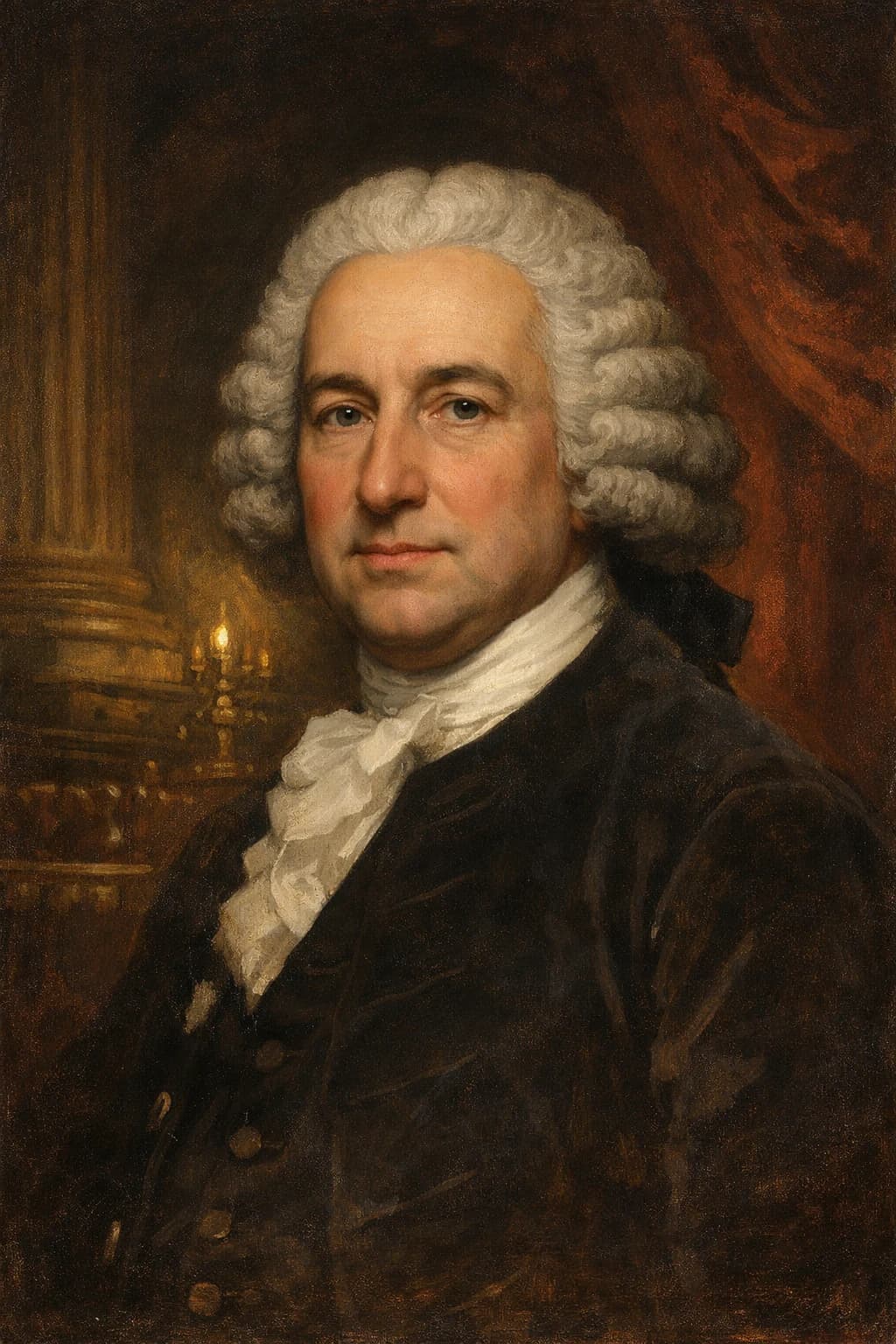
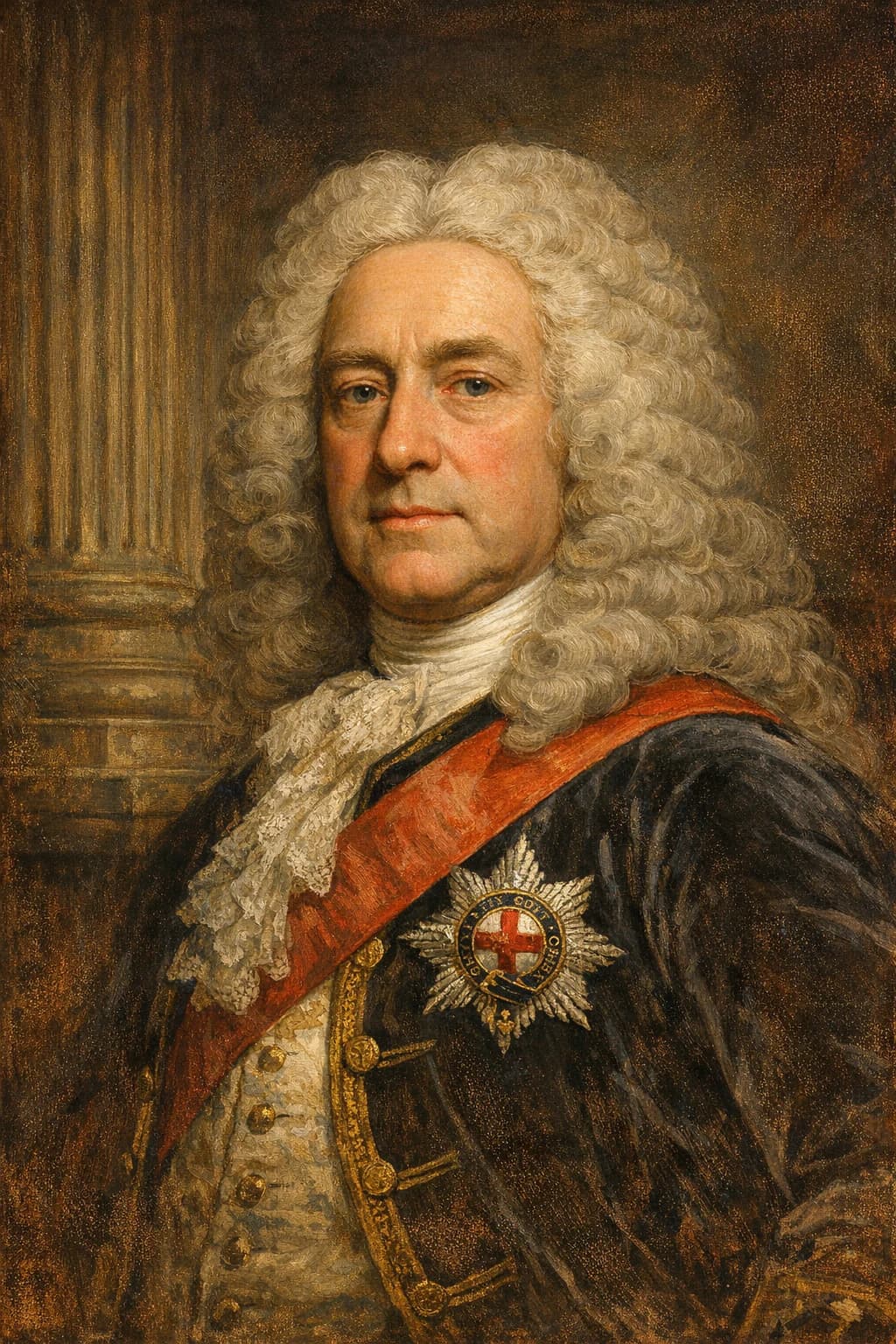
AI-generated portrait of Spencer Compton in formal Georgian attire
AI-assisted historical reconstruction

An illustrative reconstruction based on historical context. It is not a photograph or documentary likeness. Image policy

Quick answer

Spencer Compton, Earl of Wilmington, was a British Whig politician and Prime Minister from 1742 to 1743. A former Speaker of the House of Commons, he succeeded Walpole but struggled to dominate government.

Born
1673 CE
Died
1743 CE
Role
British Prime Minister
Years
1673-1743 CE
Facts

Spencer Compton timeline facts

Selected specifics from this profile's life story.

1673
Aristocratic beginnings

Spencer Compton was born in 1673 into the Northampton family, a younger son with noble connections but no automatic path to major power.

1715–1727
Speaker of Commons

As Speaker of the House of Commons from 1715 to 1727, Compton gained prestige as a procedural figure trusted during the early Hanoverian settlement.

1742–1743
Struggling in power

In office, Wilmington struggled to direct wartime policy and parliamentary factions, while Carteret and the Pelhams increasingly shaped government.

Post-1743
Measured legacy

Wilmington is remembered less for achievements than for what his career reveals about patronage, parliamentary management and the early premiership.

Life Journey

Patronage, royal favour, and a premiership without mastery

Follow the story in a more continuous narrative, with a reading mode that matches how much depth you want.

Complete chronology

1673

Aristocratic beginnings

Spencer Compton's career began with advantage, but not with inevitability. He was born into the Compton family, earls of Northampton, which gave him status, networks and social credibility. As a younger son, however, he had to make his own political position rather than simply inherit the family's central place. That shaped his style. Compton learned the politics of patience: cultivate patrons, avoid unnecessary enemies, appear reliable, and let time do some of the work. In the late Stuart and early Hanoverian world, this mattered enormously. Power moved through offices, pensions, parliamentary management and court access as much as through public ideology. Compton was never the most brilliant figure in that system, but he understood its manners.


1690s

Oxford education

Compton's education prepared him less for intellectual fame than for participation in a ruling culture built on confidence, manners and institutional familiarity. The decades after the Glorious Revolution had left England with a monarchy dependent on Parliament, a growing financial state and intense party competition between Whigs and Tories. A successful politician needed more than birth. He needed procedural fluency, a reputation for steadiness and the ability to move through court and Commons without alarming either. Compton acquired exactly that kind of acceptability. He would rarely dominate a debate, but he could be trusted in offices where caution, discretion and routine mattered.

1698

Entering Parliament

Compton's entry into Parliament came as the political nation was adapting to frequent sessions, party organisation and the fiscal demands of war. He aligned with the Whigs and advanced through a pattern familiar to the age: service, loyalty and administrative trust. His early career did not produce a defining reform or a memorable ideology. Instead, it produced a reputation. He was dependable, moderate and unlikely to upset the balance of a government. That made him valuable in a system where parliamentary numbers, royal confidence and financial credibility had to be managed continually. Compton's strength was not vision. It was availability for responsibility.

1715–1727

Speaker of Commons

The Speakership was the office that made Compton nationally visible. From 1715 to 1727, he presided over the Commons during the early reigns of George I and George II, a period marked by Jacobite fears, Whig dominance and the consolidation of Hanoverian rule. The role required restraint, memory, dignity and command of parliamentary procedure. Compton performed it well enough to become a plausible candidate for higher office, especially in royal eyes. Yet the Speakership also suited his limitations. It rewarded neutrality and order more than initiative. It placed him at the centre of politics without requiring him to drive policy through divided colleagues.

1720s

Gaining royal trust

Compton's most important patronage asset was his relationship with George, Prince of Wales, later George II. The prince disliked Robert Walpole and looked to Compton as a more congenial alternative. When George I died in 1727, many expected Compton to replace Walpole as the leading minister. The moment revealed the hard edge of political competence. Compton struggled to prepare the king's first speech and had to rely on Walpole, whose command of finance, Parliament and patronage was far superior. Queen Caroline also supported Walpole. Royal favour had opened the door, but Walpole's mastery kept control of the room. Compton was rewarded with title and office, but not supremacy.

1742

Becoming prime minister

Robert Walpole's fall in 1742 ended the long first age of British prime-ministerial government. Compton, created Earl of Wilmington, was the man placed at the head of the new ministry. Yet his elevation was not a triumphant takeover. He was elderly, cautious and acceptable to the king, but he did not possess Walpole's grip on the Commons. Real power was dispersed among stronger figures, especially Lord Carteret in foreign policy and the Pelham brothers in parliamentary management. Wilmington's title as prime minister is therefore historically awkward: he held the office in retrospect, but the machinery of leadership was already escaping him. He became the name at the top of a government others animated.

1742–1743

Struggling in power

Wilmington became first minister during the War of the Austrian Succession, when foreign policy, subsidies, military commitments and parliamentary consent all demanded energetic coordination. He was not built for that kind of dominance. Carteret enjoyed the king's confidence on European affairs and pursued a Hanoverian-leaning foreign policy that many politicians disliked. Henry Pelham and the Duke of Newcastle commanded crucial Commons and patronage networks. Wilmington sat above them formally but did not control them decisively. His health was also failing. The result was a ministry whose real centre was unclear. In the evolution of the British premiership, Wilmington's term is useful precisely because it shows what Walpole had possessed and what a weaker successor lacked.

1743

Final years

Wilmington's final months were shaped by physical decline and political marginality. He had waited decades for the summit, only to reach it when age, illness and stronger colleagues limited what he could do with it. His death in office in 1743 cleared the way for Henry Pelham, whose government would restore more coherent parliamentary management. Wilmington's end was quiet rather than dramatic, fitting a career built on steadiness and deferential service. He did not fall through scandal or popular outrage. He faded because the office he occupied required more force than he could supply at the moment he finally obtained it.

Post-1743

Measured legacy

Spencer Compton, Earl of Wilmington, is not a prime minister remembered for legislation, speeches or national transformation. His importance is structural. He shows that the early British premiership was not yet a fixed constitutional machine. It depended on a leader's ability to manage the monarch, Commons, finance, factions and war. Walpole had done that with unusual skill; Wilmington could not. Yet dismissing him as merely weak misses the lesson of his career. He was a successful Speaker, a trusted courtier and a durable Whig officeholder. Those qualities carried him high. They simply did not add up to commanding premiership. His biography is a study in the limits of respectability when politics demands mastery.

Continue in context

Connected stories

Move from the profile into the wider events and settings this figure belongs to.

British Prime Ministers lineage
LineagePrime ministers in sequence
British Prime Ministers
1721 CE–present

Explore British prime ministers from Walpole to the present.

View lineage
Tertiary paths

Content note

This profile is written for educational use and connects to related Stories of History pages. The main portrait is an AI-assisted historical reconstruction, included as an illustrative aid rather than documentary evidence. Image policy

References

Sources & Further Reading

Reliable reference works, archives and reading paths connected to this profile.

Further reading

  1. Encyclopaedia Britannica, Search results for Spencer Compton,” accessed June 2026.Open source
  2. WorldCat, Books and library holdings for Spencer Compton,” accessed June 2026.Open source

Primary sources

  1. Library of Congress, Search results for Spencer Compton,” accessed June 2026.Open source

Reviewed claim sources

Loading reviewed claim sources...

A weekly route through history

Find out first about the latest published stories, feature notes and occasional Premium offers in one weekly email.