Complete chronology
Full overview and deeper context for every journey step.
c. 990 BCE
Royal Birth
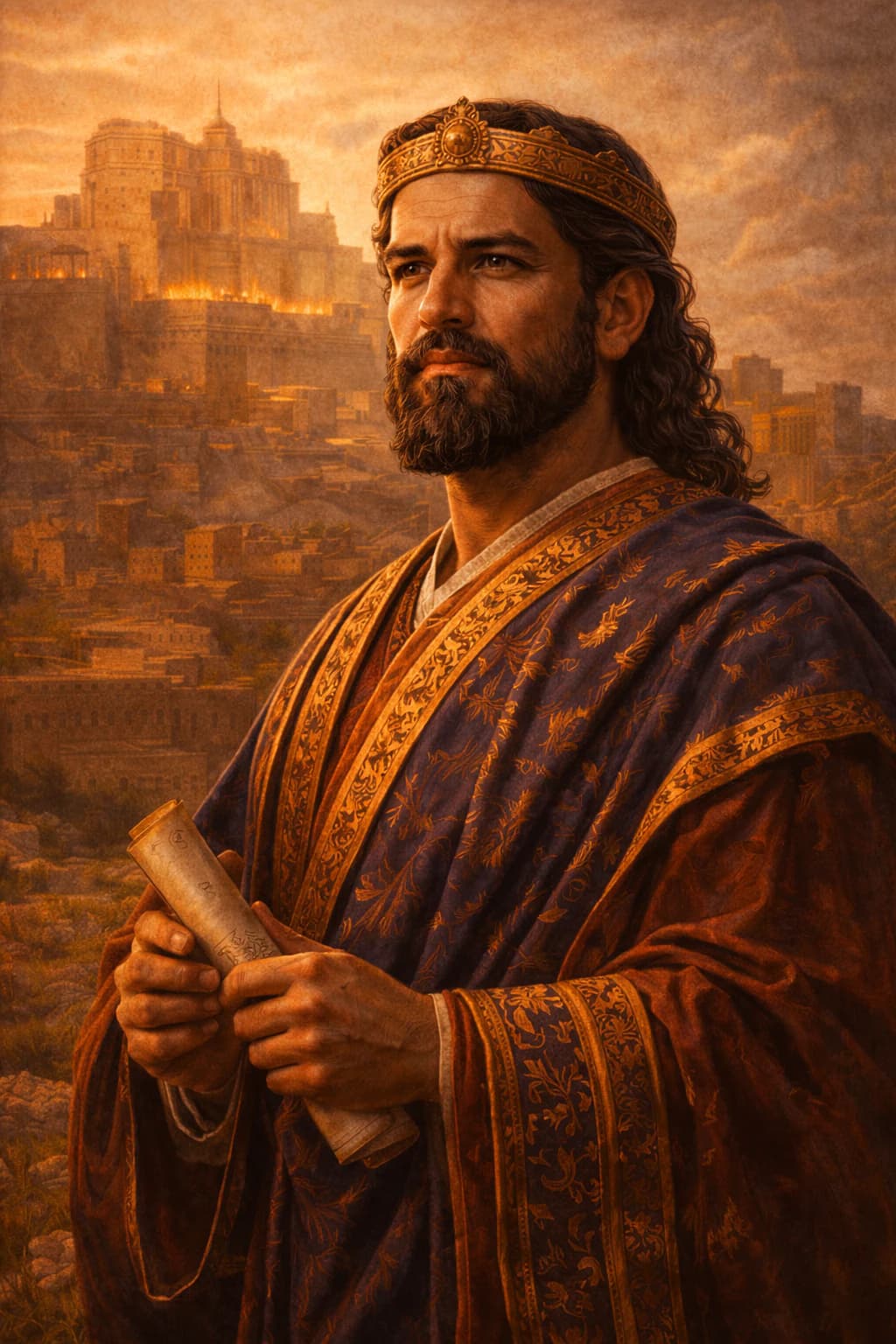
Solomon belongs to the borderland between history, scripture and royal memory. The biblical books of Samuel, Kings and Chronicles present him as a son of David and Bathsheba, heir to a kingdom David had consolidated through warfare, diplomacy and personal authority. Archaeology cannot confirm every detail of the biblical portrait, and scholars debate the scale of the united monarchy. Even so, the tradition places Solomon at a crucial moment: the shift from a warrior king's household to a more elaborate court, bureaucracy and temple-centred kingship. His birth gave him proximity to power, but not an automatic crown. In a royal family crowded with rival sons and dangerous factions, succession had to be managed, defended and sanctified.
Solomon's story begins with inheritance, but inheritance alone did not make rule secure.
c. 970 BCE
Becomes King
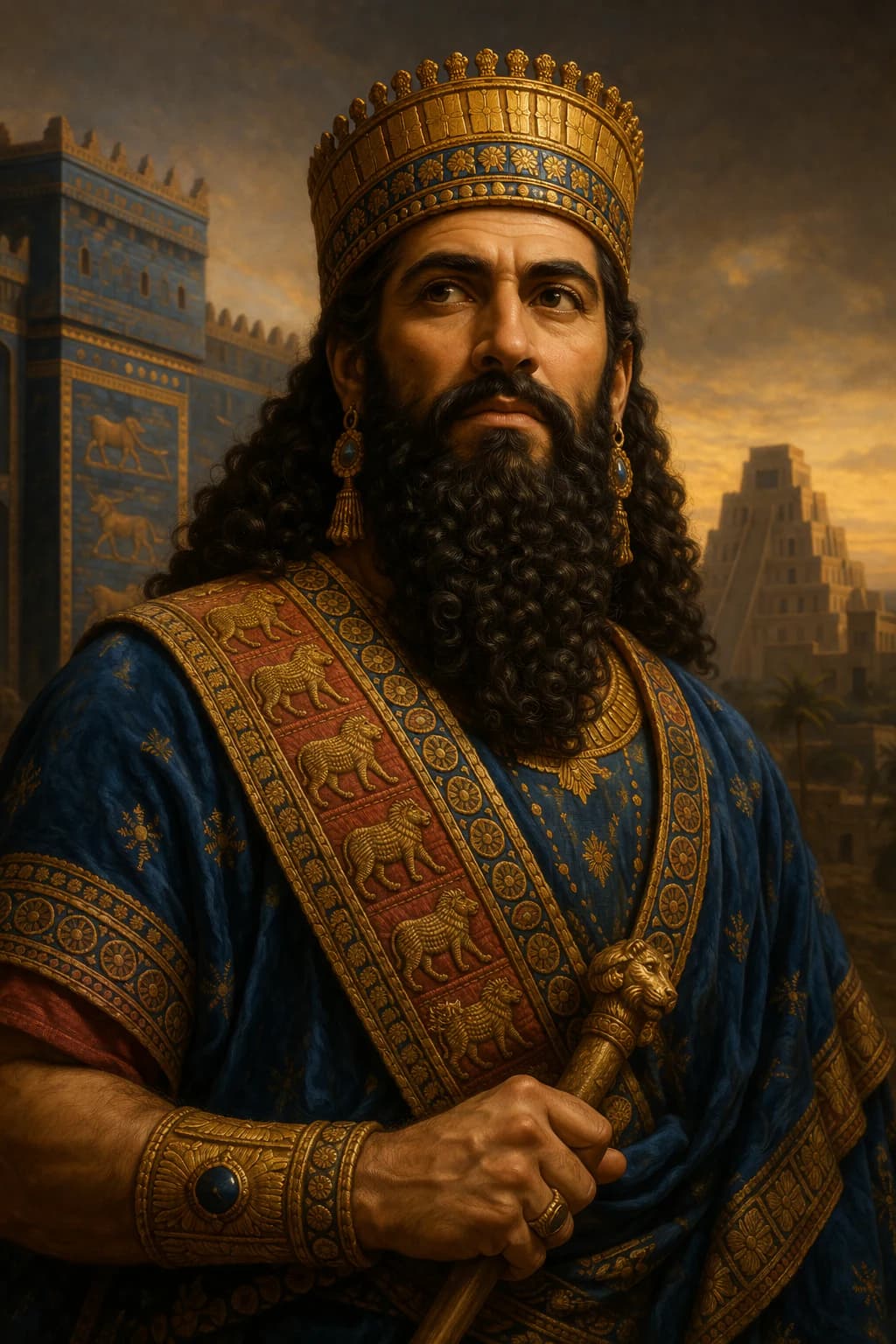
The biblical account of Solomon's accession is not a peaceful inheritance scene. As David aged, Adonijah, another son, moved to claim the throne. Bathsheba and the prophet Nathan intervened, reminding David of Solomon's promised succession and arranging his public anointing. Once king, Solomon moved quickly against threats: Adonijah, Joab and Shimei all disappear from the political field in the early reign. These episodes are morally uncomfortable but historically revealing. Solomon's later image as a wise and peaceful ruler rests on an initial consolidation of power that was sharp, decisive and sometimes ruthless. The monarchy could not become glorious until it had first survived the politics of the palace.
The wise king of tradition first had to become a secure king in practice.
early reign
Reputation for Wisdom
The most famous Solomon story is not a battle but a judgment. Two women claim the same child; Solomon proposes dividing the baby; the true mother reveals herself by choosing the child's life over her claim. Whether the episode preserves a specific legal memory or a crafted royal tale, it explains what Solomonic wisdom meant: not abstract cleverness, but the ability to see human truth beneath conflicting words. Later traditions associated Solomon with proverbs, songs, natural knowledge and riddling intelligence. The Queen of Sheba story extends this fame beyond Israel's borders. Wisdom therefore functioned as political capital. It presented Solomon's authority as more than force, wealth or inheritance. He ruled because he could discern.
Solomon's wisdom stories made judgment itself a source of royal legitimacy.
mid reign
Building Projects
The building of the Temple is the central achievement attached to Solomon's name. In biblical memory, David prepared for it but Solomon completed it, turning Jerusalem into a religious as well as political capital. The Temple housed the ark, focused sacrifice and tied the Davidic monarchy to the worship of Israel's God. It also required resources on a royal scale: cedar from Lebanon, skilled labour, metalwork, stone and administrative coordination. Alongside the Temple, Solomon is credited with palaces, fortifications and store cities. These projects signalled stability and splendour, but they also reveal a more demanding state. Monumental building is never only architecture. It changes taxation, labour obligations and the relationship between ruler and people.
The Temple strengthened Jerusalem's sacred authority while increasing the burdens of monarchy.
mid reign
Wealth and Trade
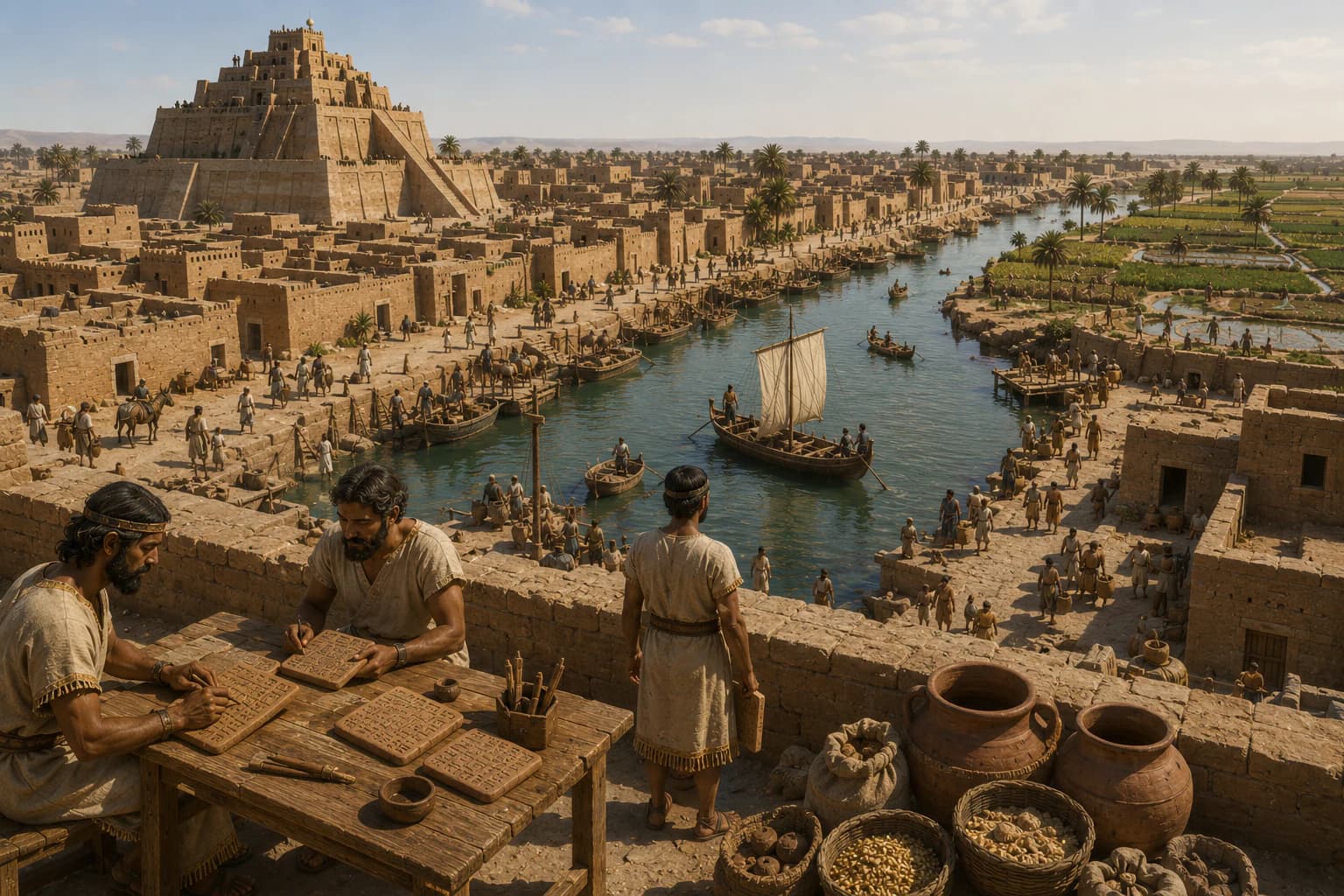
The biblical portrait of Solomon's wealth is deliberately dazzling: gold, ivory, exotic goods, ships, horses, chariots and a court whose abundance impressed visitors. Behind the splendour lies a plausible political logic. Israel sat near important land routes linking Egypt, Syria, Arabia and Mesopotamia, and cooperation with Phoenician Tyre gave access to maritime trade and specialist craftsmen. Marriage alliances, including a reported union with Pharaoh's daughter, placed Solomon within the diplomacy of the eastern Mediterranean. But royal wealth is rarely neutral. The same system that brought luxury to Jerusalem could require corvee labour, tribute, taxation and regional administration. Solomon's achievement was to make the kingdom look international; the cost was that ordinary subjects may have felt the weight of that ambition.
His prosperity made the kingdom visible abroad, but visibility came with domestic pressure.
mid to late reign
Expanding Influence
Solomon's political style differs from David's in the biblical narrative. David is the battlefield founder; Solomon is the courtly consolidator. His influence is shown through visitors, treaties, marriages and awe at his wisdom. That image may simplify reality, but it captures an important shift in kingship: power could be projected through splendour and networks, not only through conquest. At the same time, the foreign ties that enhanced Solomon's status also created religious tension in the biblical account. His many foreign wives are blamed for drawing his heart toward other gods. This may reflect later theological interpretation, but it gives the reign a moral arc: the king whose wisdom ordered the kingdom could not fully order his own loyalties.
Solomon's diplomacy expanded his world while raising questions about the identity of his kingdom.
late reign
Internal Strain
The darker side of Solomon's reign appears most clearly after his death, when the people ask Rehoboam to lighten the harsh service imposed by his father. That complaint suggests that Solomon's grandeur had a social cost. The kingdom's administrative districts, labour levies and building works may have strengthened royal power while weakening consent. The Bible also frames Solomon's later years as religious decline, linking political fracture to covenant unfaithfulness. A historian can read the story on more than one level: theological judgment, memory of regional resentment, and a warning about centralized monarchy. Solomon's reign therefore stands as a paradox. It is the high point of united Israel in tradition, yet the very height contains the stresses that make unity breakable.
His success created the pressures that later exposed the kingdom's fragility.
late reign
Decline of Unity
Solomon died with his dynasty still on the throne, but not with his political settlement secure. Rehoboam's refusal to ease the burdens of service triggered the break between Judah in the south and Israel in the north, with Jeroboam emerging as northern ruler. The split cannot be reduced to one man's arrogance; it likely reflected older tribal, economic and regional tensions. Yet Solomon's reign is the hinge. His court made Jerusalem magnificent, but it also concentrated power there. His Temple created a sacred centre, but northern communities did not necessarily experience that centre as their own. The division after his death shaped the next centuries of biblical history, producing rival kingdoms, rival sanctuaries and competing memories of what Israel was meant to be.
Solomon left a throne to his son, but not a unity his son could easily preserve.
after 931 BCE
Enduring Reputation
Solomon's afterlife is immense. In Jewish and Christian scripture he is linked with wisdom literature, royal judgment, the Temple and the memory of Israel's golden age. In Islamic tradition, Sulayman is a prophet-king associated with justice, command over creatures and submission to God. Later folklore made him a master of hidden knowledge, rings, spirits and marvels. Historical study is more cautious, separating literary theology from recoverable political fact. Yet the power of Solomon's story lies precisely in that layered quality. He is a model of wisdom and a warning against excess; a builder of sacred space and a ruler whose burdens helped fracture a kingdom; a king remembered for peace whose legacy led into division. His biography remains compelling because it refuses to make greatness simple.
Solomon matters because his story holds achievement and warning in the same frame.