People

Sir Thomas More

Sir Thomas More was an English humanist, author of Utopia and Lord Chancellor under Henry VIII. He opposed the break with Rome, refused the Oath of Supremacy, and was executed for treason in 1535.

Born
1478 CE
Died
1535 CE
Role
Lord Chancellor of England

Lord Chancellor and humanist (1478-1535)

AI-generated portrait of Sir Thomas More in Tudor official dress
AI-assisted historical reconstruction

An illustrative reconstruction based on historical context. It is not a photograph or documentary likeness. Image policy

Quick answer

Sir Thomas More was an English humanist, author of Utopia and Lord Chancellor under Henry VIII. He opposed the break with Rome, refused the Oath of Supremacy, and was executed for treason in 1535.

Born
1478 CE
Died
1535 CE
Role
Lord Chancellor of England
Years
1478-1535 CE
Quick facts

Profile details

Additional identity and tagging details that are not already covered in the introduction.

Also known as
Thomas More, Saint Thomas More
Facts

Sir Thomas More timeline facts

Selected specifics from this profile's life story.

1478-1516
Scholar and lawyer

Thomas More rose through law, humanist learning and public service, becoming one of England's most admired intellectuals.

1520s
Royal service

More entered Henry VIII's service and became Lord Chancellor after Cardinal Wolsey's fall.

1534
The oath

More refused the oath tied to Henry's succession and supremacy, because it required accepting claims he could not in conscience affirm.

1535
Execution and memory

More was executed for treason in 1535 and later remembered as a martyr of conscience and Catholic loyalty.

Life Journey

Conscience, service and the cost of refusal

Follow the story in a more continuous narrative, with a reading mode that matches how much depth you want.

Complete chronology

1478-1516

Scholar and lawyer

Thomas More was born in London in 1478 and trained in the law, but his mind ranged far beyond legal practice. He became part of the Christian humanist world associated with Erasmus, combining classical learning, wit, religious seriousness and public service. His Utopia, published in 1516, showed a mind capable of irony, social criticism and imaginative political thought. More was no simple modern liberal; he was deeply orthodox in religion. That combination of learning, discipline and conviction shaped both his rise and his refusal at the end of his life.
1520s

Royal service

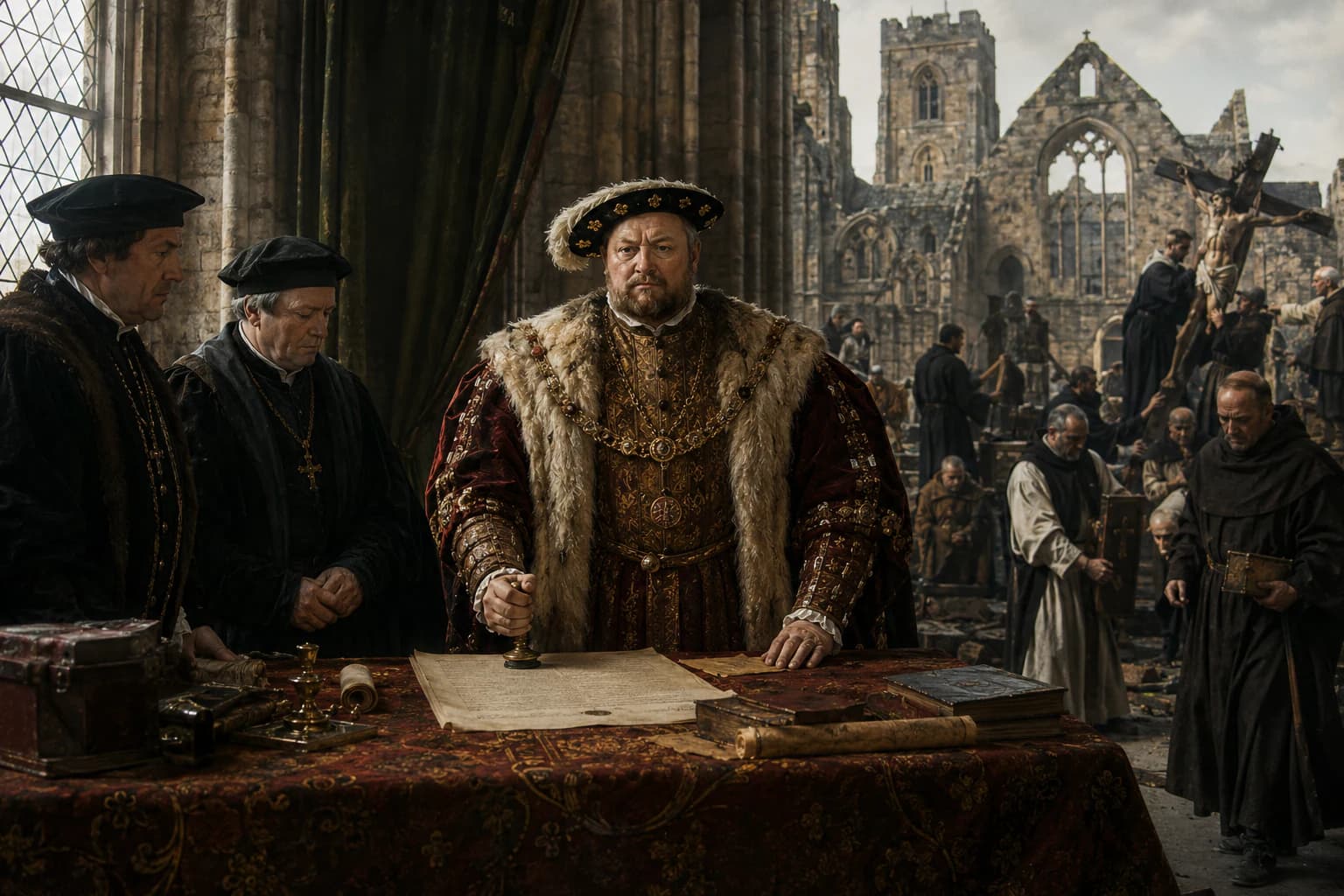
More's ability, reputation and loyalty brought him into Henry VIII's service. He served as a councillor, diplomat and eventually Lord Chancellor after Wolsey failed to secure the king's annulment. More opposed heresy and defended Catholic orthodoxy with severity, especially as Lutheran ideas spread. Yet he was also uneasy about Henry's marriage campaign and the pressure placed on the church. His position became increasingly difficult because the king he served demanded support for a policy More could not accept in conscience.

1532

Resignation

In 1532, More resigned from the chancellorship. He gave reasons of health, but the political context was clear. Henry's government was pressing the clergy, restricting Rome's authority and moving toward the annulment of Catherine of Aragon's marriage. More tried to survive by silence, avoiding open attacks on the king while refusing to endorse what he believed was wrong. Silence, however, was not enough in a regime that increasingly required public obedience. Henry and Cromwell were not merely changing policy; they were demanding sworn recognition of the new order.

1534

The oath

The oath connected to the succession and royal supremacy placed More in direct danger. He was willing to accept Anne Boleyn's children as heirs if Parliament required it, but he would not swear to the religious and jurisdictional claims behind the new settlement. The distinction mattered to him, but not enough to save him. He was imprisoned in the Tower of London. The government treated refusal not as private scruple but as political defiance. More's conscience had become a test case for the new relationship between crown, church and subject.

1535

Execution and memory

More was tried and executed in July 1535. The prosecution relied heavily on claims that he had spoken against the royal supremacy, while More insisted he had kept silence where the law allowed. His death, along with that of Bishop John Fisher, signalled that refusal of the new religious order would be treated as treason. Later Catholic memory honoured him as a martyr, and he was canonised in the twentieth century. His legacy remains complex: a brilliant humanist, a severe opponent of heresy, and a man whose final stand made conscience one of the central dramas of the English Reformation.

Continue in context

Connected stories

Move from the profile into the wider events and settings this figure belongs to.

Tertiary paths

Content note

This profile is written for educational use and connects to related Stories of History pages. The main portrait is an AI-assisted historical reconstruction, included as an illustrative aid rather than documentary evidence. Image policy

References

Sources & Further Reading

Reliable reference works, archives and reading paths connected to this profile.

Further reading

  1. Encyclopaedia Britannica, Search results for Sir Thomas More,” accessed June 2026.Open source
  2. WorldCat, Books and library holdings for Sir Thomas More,” accessed June 2026.Open source

Primary sources

  1. Library of Congress, Search results for Sir Thomas More,” accessed June 2026.Open source

Reviewed claim sources

Loading reviewed claim sources...

A weekly route through history

Find out first about the latest published stories, feature notes and occasional Premium offers in one weekly email.