People

Ramesses II

Ramesses II, also known as Ramesses the Great and Ozymandias, was pharaoh of Egypt from 1279 to 1213 BC. He fought the Battle of Kadesh, made a landmark treaty with the Hittites, built Abu Simbel and ruled during the Nineteenth Dynasty.

Born
1303 BCE
Died
1213 BCE
Role
Pharaoh of Egypt

Pharaoh of Egypt (1303 BC–1213 BC)

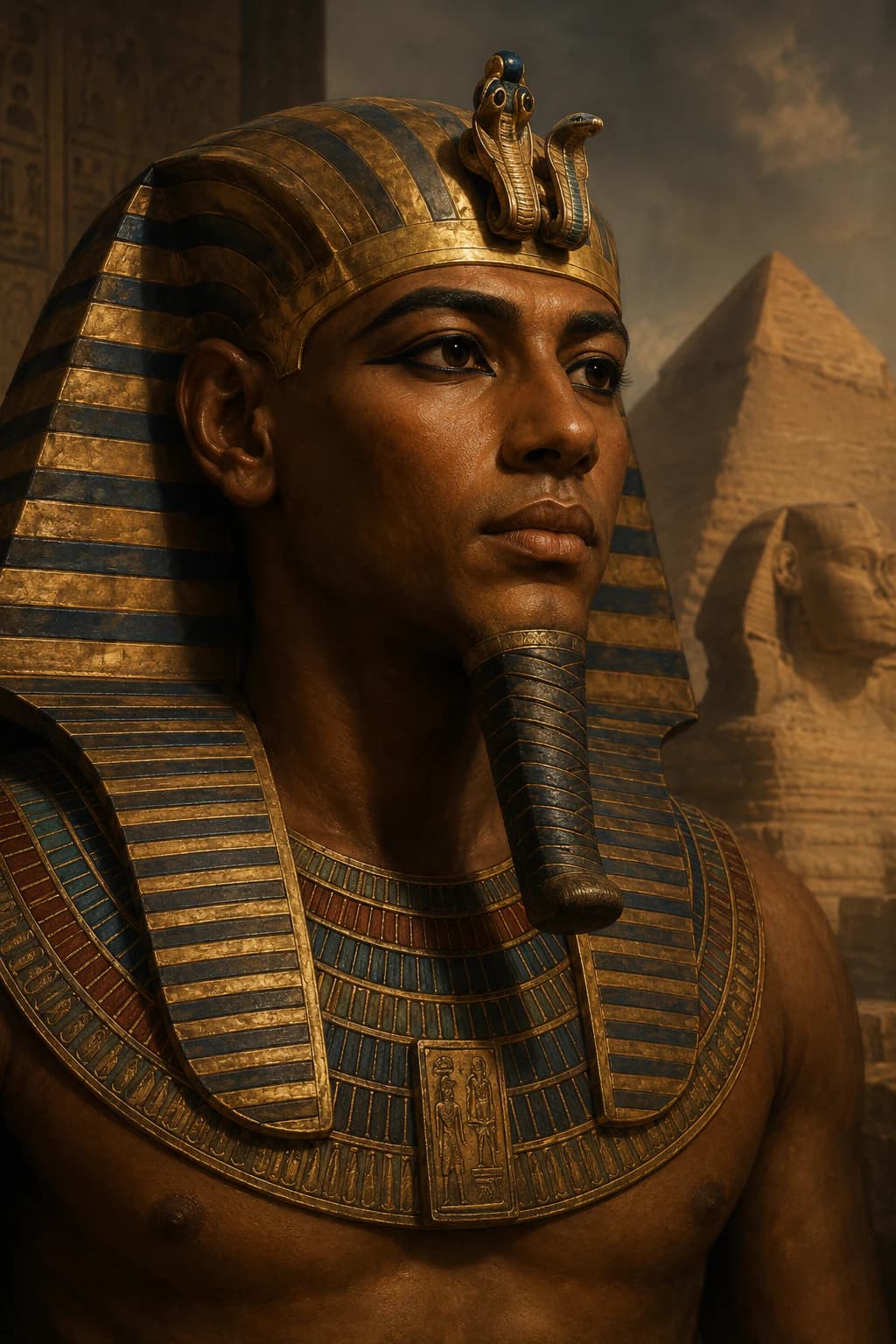
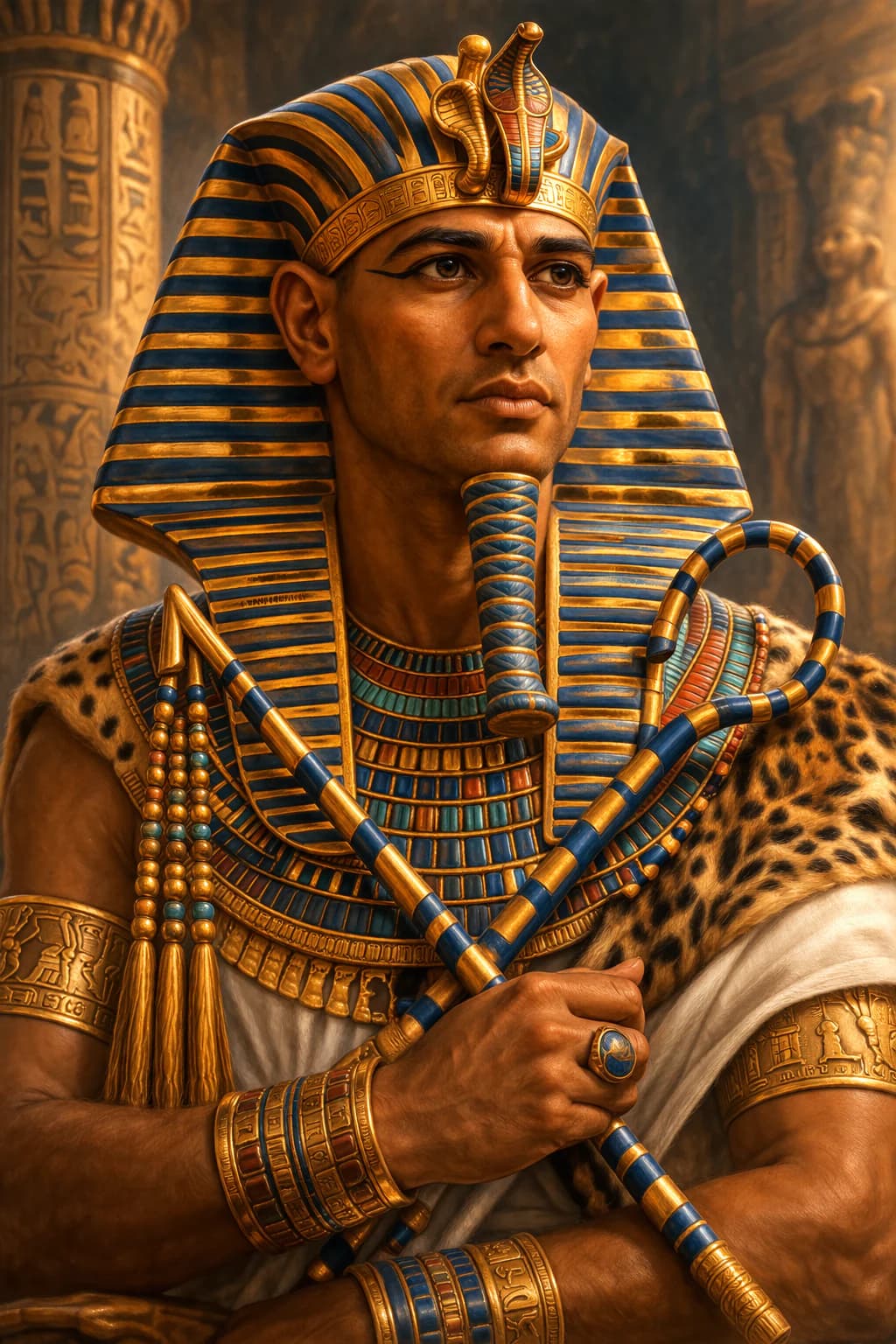
AI-generated portrait of Ramesses II in ancient Egyptian royal attire
AI-assisted historical reconstruction

An illustrative reconstruction based on historical context. It is not a photograph or documentary likeness. Image policy

Quick answer

Ramesses II, also known as Ramesses the Great and Ozymandias, was pharaoh of Egypt from 1279 to 1213 BC. He fought the Battle of Kadesh, made a landmark treaty with the Hittites, built Abu Simbel and ruled during the Nineteenth Dynasty.

Born
1303 BCE
Died
1213 BCE
Role
Pharaoh of Egypt
Years
1303-1213 BCE
Quick facts

Profile details

Additional identity and tagging details that are not already covered in the introduction.

Also known as
Ramesses the Great, Ozymandias
Facts

Ramesses II timeline facts

Selected specifics from this profile's life story.

c. 1303 BC–1279 BC
Prince and warrior

Ramesses II was born into Egypt's Nineteenth Dynasty and trained under Seti I for kingship, warfare and imperial command.

c. 1279 BC–1213 BC
Building campaign

Ramesses II commissioned one of the most ambitious building programmes in Egyptian history, including the temples at Abu Simbel, Luxor additions, and the new capital Pi-Ramesses.

c. 1240 BC–1213 BC
Decades of reign

Ramesses outlived many of his own sons and most of his contemporaries, reigning for over sixty-six years and dying around the age of ninety.

After 1213 BC
Legacy and myth

Ramesses II became the model of pharaonic greatness, remembered through monuments, later Egyptian imitation and the Ozymandias legend.

Life Journey

Sixty years of conquest, construction, and self-invention

Follow the story in a more continuous narrative, with a reading mode that matches how much depth you want.

Complete chronology

c. 1303 BC–1279 BC

Prince and warrior

Ramesses II was born around 1303 BC into a dynasty still restoring Egyptian power after the upheavals that followed Akhenaten and the late Eighteenth Dynasty. His grandfather Ramesses I had founded the Nineteenth Dynasty, but it was Seti I, Ramesses' father, who reasserted Egyptian strength in Canaan, Syria and Nubia. The young prince was given titles early, appeared beside his father and learned kingship as performance, administration and war. By the time he became pharaoh around 1279 BC, he had seen how fragile empire could be when vassals drifted and rival powers advanced. His reign would be built around a simple royal message: Egypt was strong, the pharaoh was heroic, and his name would be made impossible to forget.
c. 1279 BC–1275 BC

Early campaigns

Early in his reign, Ramesses demonstrated that he intended to be an active military pharaoh rather than a ceremonial one. Operations in Libya secured the western frontier. In Canaan he re-established Egyptian suzerainty over vassal states that had been drifting toward Hittite influence. In Nubia, campaigns reinforced control over territories that supplied Egypt with gold, cattle, and manpower. These were not merely symbolic gestures: they were the essential maintenance of an empire that required constant pressure to remain coherent. The early campaigns also served as preparation — in personnel, logistics, and royal confidence — for the much larger confrontation that was coming in the north.

c. 1274 BC

Battle of Kadesh

The Battle of Kadesh stands as one of the defining military events of the ancient Near East. Ramesses led a force of perhaps twenty thousand men toward the fortified city of Kadesh in modern Syria, where the Hittite king Muwatalli II was waiting with a comparable or larger army. Egyptian intelligence failed: Ramesses's lead division was ambushed, and for a period the pharaoh found himself nearly surrounded. According to his own later accounts, he personally led a countercharge that stabilised the situation. The battle ended without a clear victor — both sides held their positions and withdrew — but Ramesses would spend decades presenting it as a magnificent personal triumph, filling temple walls across Egypt with images of his heroic stand.

c. 1279 BC–1213 BC

Building campaign

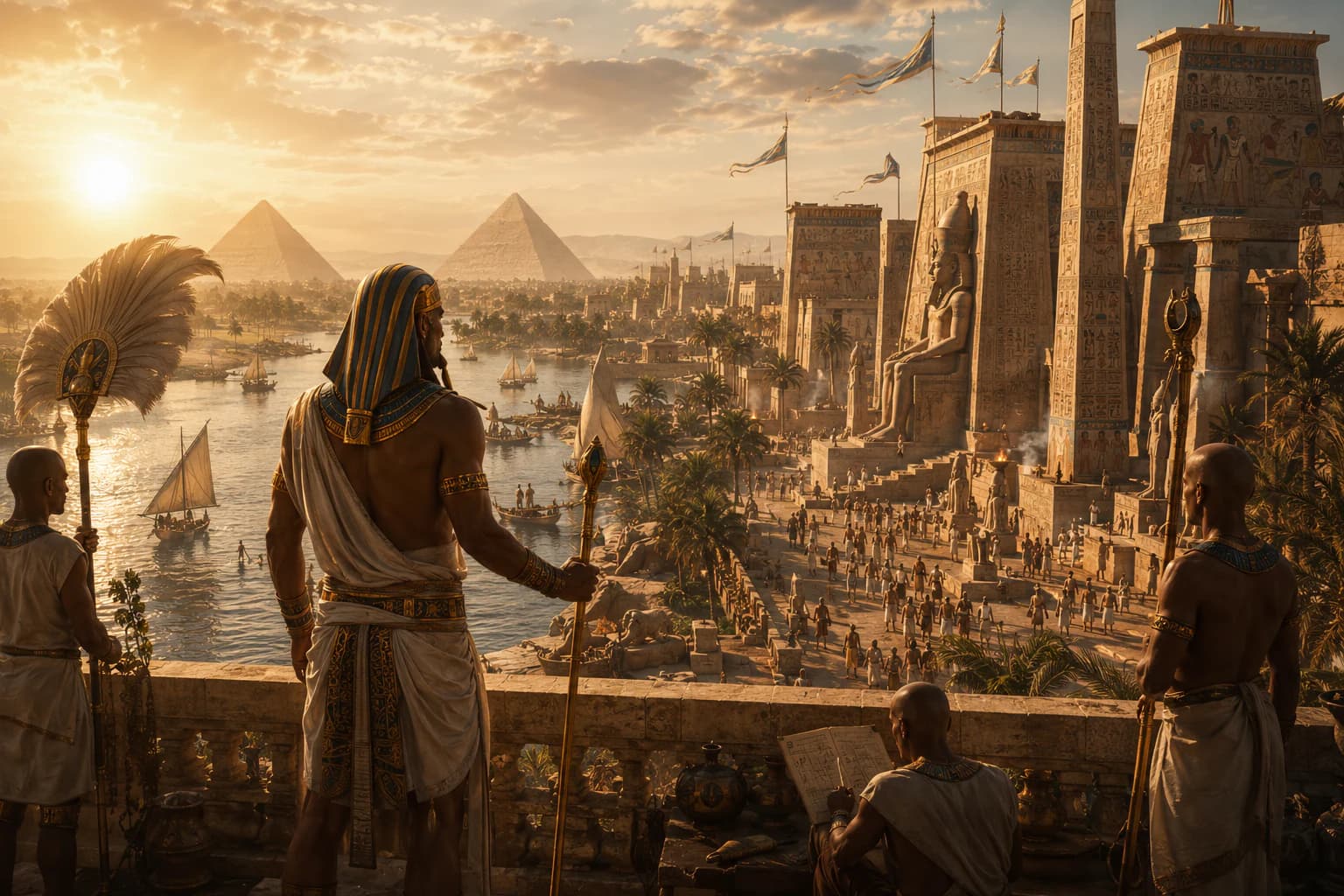
The monuments Ramesses left across Egypt remain among the most recognisable in the ancient world. At Abu Simbel in Nubia he carved two temples directly into the rock face, their facades dominated by four colossal seated statues of himself, each over twenty metres tall. At Luxor and Karnak he added extensively to existing temple complexes. He built an entirely new capital city — Pi-Ramesses — in the eastern Nile Delta, closer to the Levantine frontier. And across the country, he placed his name on existing structures, sometimes replacing those of predecessors. The scale was staggering: enough construction to fill the careers of a dozen ordinary pharaohs, compressed into a single reign of over sixty years.

c. 1259 BC

Treaty with the Hittites

The standoff at Kadesh was followed by years of intermittent conflict and diplomatic manoeuvring in the Levant, with neither Egypt nor the Hittite Empire able to deliver a decisive blow. Around 1259 BC, both powers agreed to formalise what geography and military reality had already established: a division of influence with neither side dominating the other. The resulting treaty — copies of which survive in both Egyptian hieroglyphs and Hittite cuneiform — is the earliest known international peace agreement in written history. Its terms addressed not only borders but mutual defence against third parties and the return of refugees. Ramesses later married a Hittite princess to cement the arrangement, bringing her to Egypt with considerable ceremony.

c. 1260 BC–1240 BC

Peak of the reign

With the Hittite threat managed through diplomacy rather than war, Egypt enjoyed a period of relative stability. Trade routes through the Levant functioned, Nubia continued to supply gold and resources, and the administrative machinery Ramesses had inherited and expanded ran effectively. This was the world he had built: enormous, bureaucratically complex, and deliberately shaped around his own image. His many sons — he is said to have fathered over a hundred children — were appointed to military and administrative positions, embedding the royal family throughout the governing structure. The king himself was the centre of a system that functioned by his authority and advertised that authority at every surface it could find.

c. 1240 BC–1213 BC

Decades of reign

Few ancient rulers governed as long as Ramesses II. By the time he died, he had outlived at least a dozen heirs and witnessed several generations of succession within his own family. The later years of his reign saw a gradual shift of authority toward sons who managed day-to-day governance while the aged pharaoh remained the symbolic centre of the state. Physical examination of his mummy suggests he suffered from arthritis, dental abscesses, and hardened arteries in his final years — a body that had outlasted the vigour that had defined his earlier life. His eventual successor was Merenptah, his thirteenth son, who was himself already in late middle age when he took the throne.

c. 1213 BC

Death and burial

Ramesses was buried with the full rites of Egyptian kingship, his tomb in the Valley of the Kings among the most elaborate of its era. In the centuries after his death, the threat of tomb robbery led priests to rewrap and relocate many royal mummies to a secure cache at Deir el-Bahri. When the cache was discovered in 1881, among the mummies found was one identified as Ramesses II — exceptionally well preserved, his face still recognisable, his white hair still visible. He was transported to Cairo, and in 1976 the French government received the mummy for conservation treatment with the kind of ceremony normally reserved for living heads of state. The passport issued for his travel listed his occupation as 'King, deceased.'

After 1213 BC

Legacy and myth

Later Egyptian kings took the name Ramesses as a sign of legitimacy and aspiration, and his monuments were adopted, imitated and maintained long after his death. In Western culture, his fame took another path. Greek and Roman traditions remembered a mighty king called Ozymandias, and this afterlife fed Percy Shelley's 1818 sonnet, which turned colossal royal boasting into a meditation on the ruin of all earthly power. The irony is powerful, but incomplete. Ramesses' monuments at Abu Simbel still stand, his mummy is still studied, his treaty with the Hittites is still cited, and his face remains one of the most recognisable from ancient Egypt. He was a master of propaganda, but propaganda attached to real longevity, real building and real diplomacy can become history's raw material.

Continue in context

Connected stories

Move from the profile into the wider events and settings this figure belongs to.

Tertiary paths

Content note

This profile is written for educational use and connects to related Stories of History pages. The main portrait is an AI-assisted historical reconstruction, included as an illustrative aid rather than documentary evidence. Image policy

References

Sources & Further Reading

Reliable reference works, archives and reading paths connected to this profile.

Further reading

  1. Encyclopaedia Britannica, Search results for Ramesses II,” accessed June 2026.Open source
  2. WorldCat, Books and library holdings for Ramesses II,” accessed June 2026.Open source

Primary sources

  1. Library of Congress, Search results for Ramesses II,” accessed June 2026.Open source

Reviewed claim sources

Loading reviewed claim sources...

A weekly route through history

Find out first about the latest published stories, feature notes and occasional Premium offers in one weekly email.