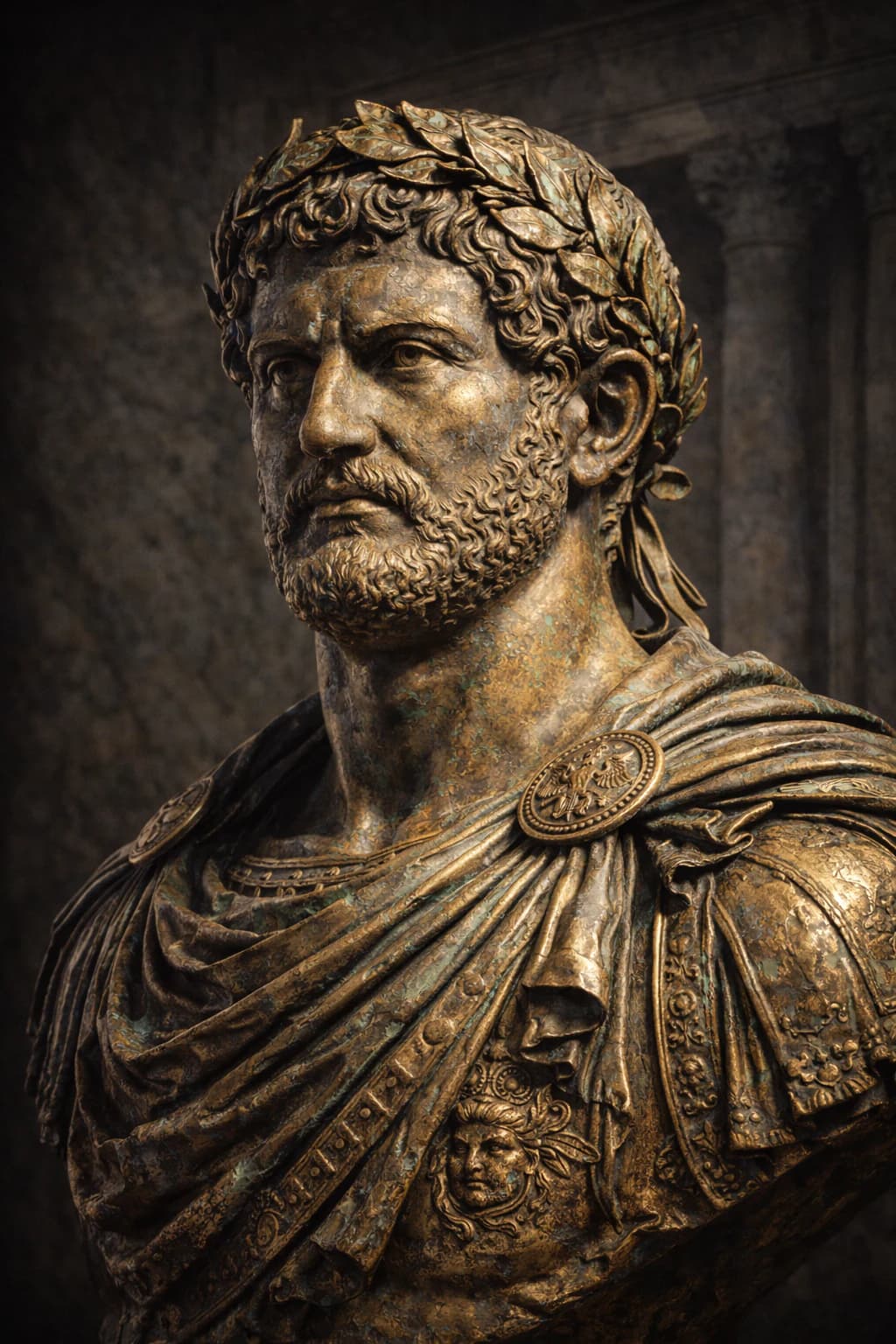
Complete chronology
Full overview and deeper context for every journey step.
121–138
Early promise
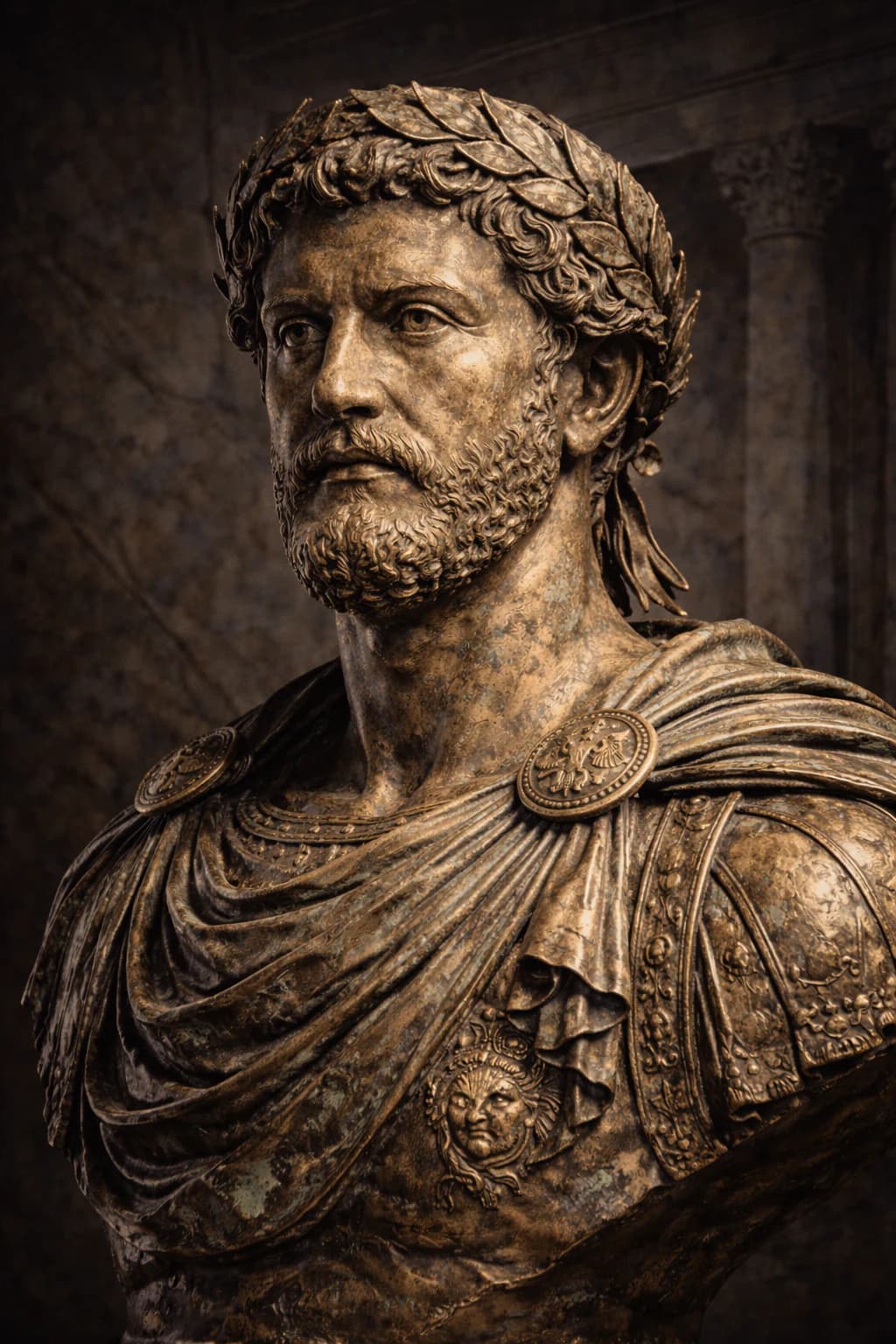
Marcus Aurelius was born in Rome in 121 into a wealthy and well-connected senatorial family. His birth name, Marcus Annius Verus, tied him to elite networks, but his future was not automatic. What marked him out was reputation: seriousness, discipline, intellectual appetite and an unusual attraction to philosophy. The emperor Hadrian noticed him, reportedly nicknaming him for his truthfulness. Marcus's education was broad and demanding, shaped by Greek literature, Latin rhetoric, law and moral philosophy. He grew up inside privilege, but the habits praised in him were not luxury. They were self-control, attentiveness and a sense that rank existed to serve duty.
Character formed early can guide decisions when responsibility arrives.
138
Adopted successor
Marcus's path changed decisively in 138, when Hadrian arranged the succession through Antoninus Pius. Antoninus adopted Marcus and Lucius Verus, placing them in the imperial line. This was part of the adoptive succession often associated with Rome's second-century stability, though it was never a purely meritocratic system. Adoption was politics, family strategy and statecraft at once. For Marcus, it meant decades of apprenticeship. Under Antoninus Pius he learned administration, ceremonial restraint, legal process and the patience of government. He also learned that imperial power was less a prize than an unending claim on a ruler's attention.
Being chosen for leadership brings both privilege and heightened responsibility.
138–161
Philosophical development
Marcus's philosophical formation was not a decorative hobby. He studied with leading teachers, admired Epictetus through the notes of Arrian, and absorbed Stoic ideas about reason, duty, discipline and the limits of control. Stoicism did not ask him to escape the world. It asked him to perform his role within it without being ruled by fear, anger, vanity or pleasure. That mattered for a future emperor. Marcus would later write to himself, not for publication, urging patience with difficult people, acceptance of death, and fidelity to justice. His philosophy was personal training for public strain.
A strong philosophical foundation can shape how power is exercised.
161
Becoming emperor
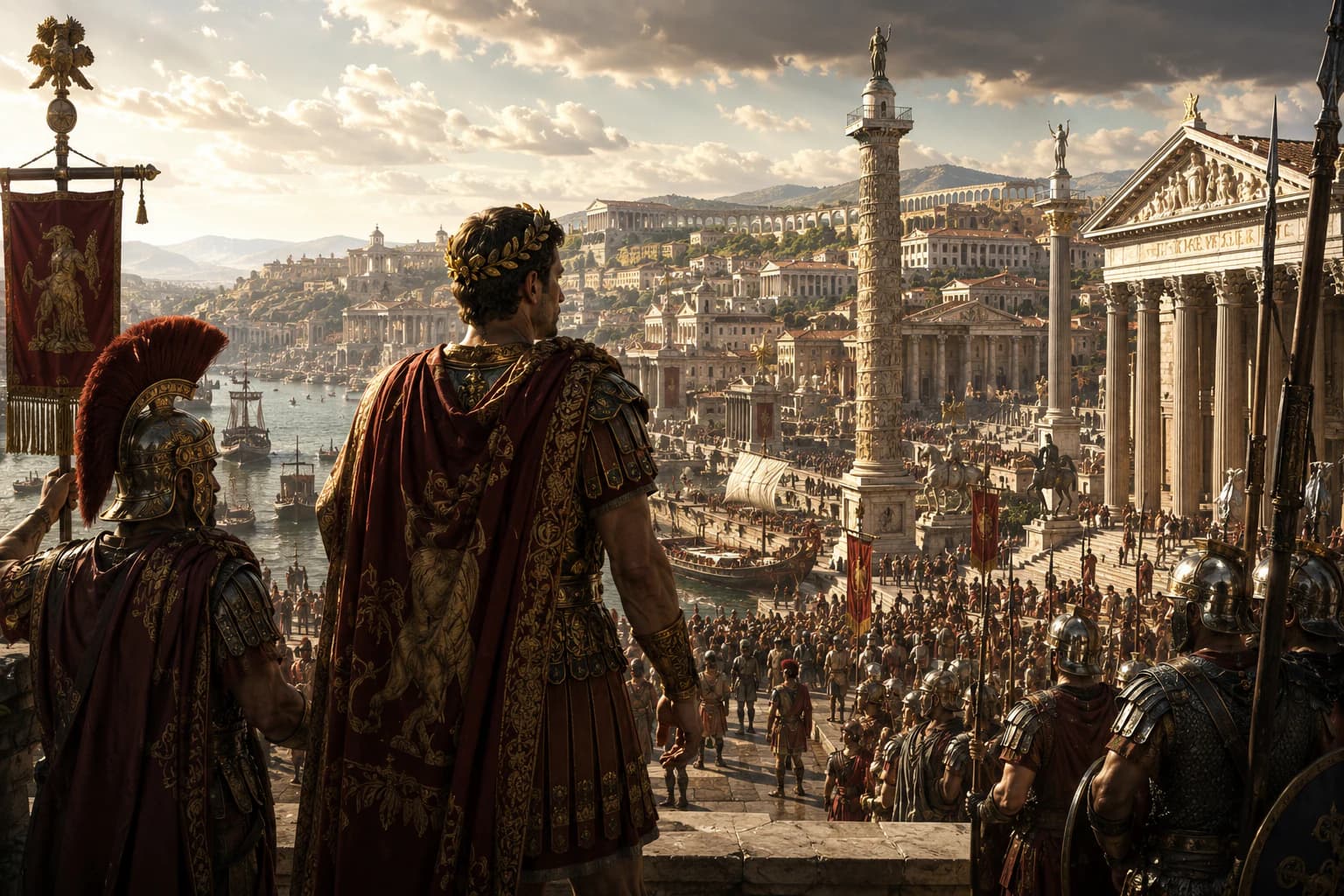
Marcus became emperor in 161 after the death of Antoninus Pius. He did something striking: he insisted that Lucius Verus share imperial power with him. Rome had seen colleagues and heirs before, but this formal joint rule gave the empire two Augusti. The arrangement was partly loyalty to Hadrian's succession plan and partly practical recognition that the empire was too large for one man to manage easily. Marcus inherited a state that looked stable from a distance, but dangers soon appeared. War with Parthia broke out in the east, and the new emperor's philosophical calm had to become administrative action.
Leadership reveals whether principles can withstand real-world demands.
161–169
Shared rule
Lucius Verus took the eastern war as his great theatre, though generals such as Avidius Cassius carried much of the military burden. Rome defeated Parthian forces and restored its position, but victory carried a hidden cost. Troops returning west appear to have helped spread the Antonine plague, a devastating epidemic that weakened population, army recruitment, finances and morale. Marcus's reign therefore became a study in compounding pressure. He had to manage military success, public health disaster and imperial coordination at once. The philosopher emperor was not ruling in tranquil abstraction. He governed through exhaustion.
Effective leadership can involve sharing authority to manage complexity.
160s–170s
Wars and hardship
From the late 160s, Marcus faced the Marcomannic Wars along the Danube frontier, where Germanic and Sarmatian groups pressed into imperial territory. The causes were wider than simple invasion: population movement, frontier pressure, Roman vulnerability after plague, and the constant instability of border politics all played roles. Marcus spent years near the front, directing campaigns far from Rome's comforts. The wars forced emergency recruitment, financial strain and hard choices. His reign is sometimes imagined through the serenity of Meditations, but the lived reality was camps, reports, negotiations, discipline, disease and the fear that Rome's northern frontier might break.
Endurance becomes a defining quality when leadership is tested over time.
170s
Writing reflections
Marcus wrote the notes later known as Meditations in Greek, probably during the military years of the 170s. They were not a polished treatise or imperial memoir. They were private exercises: reminders to get out of bed, endure fools, distrust applause, remember mortality and act according to nature and reason. Their power comes from that intimacy. They show a ruler trying to govern himself while governing others. Readers should not turn them into proof that Marcus always succeeded morally or politically. They reveal aspiration under pressure. Precisely because he held immense power, his repeated effort to restrain ego still feels urgent.
Self-reflection can help sustain clarity and purpose in times of pressure.
170s–180
Final years
Marcus's final years brought both persistence and controversy. In 175, Avidius Cassius, the successful eastern commander, briefly rebelled after false reports or rumours of Marcus's death. Marcus moved carefully, and the revolt collapsed before a major civil war developed. More consequential was the succession. Marcus raised his son Commodus to imperial rank, breaking the pattern of adoptive succession that later writers idealised. The choice may have seemed natural, dynastic and stabilising, but Commodus's later rule damaged Marcus's reputation. Marcus died in 180, probably at Vindobona or Sirmium while campaigning, still tied to the frontier crisis that had consumed so much of his reign.
Consistency in leadership can be as significant as moments of bold action.
180 onward
Philosophical legacy
Marcus Aurelius's legacy survives in two forms that do not always fit comfortably together. As emperor, he defended the empire through plague and frontier war, administered law seriously, and tried to embody traditional Roman duty. He also participated in a system built on hierarchy, conquest and coercion, and his decision to elevate Commodus helped shape the troubled years after his death. As a writer, he became one of history's most accessible Stoic voices. The enduring question is not whether he was a perfect philosopher king. He was not. It is whether a person inside power can keep asking how to act justly when events are brutal, time is short and control is limited.
Ideas grounded in lived experience can endure long after political power fades.