People

Louis XVI

Louis XVI was the last Bourbon king of France before the French Revolution overthrew the monarchy and sent him to the guillotine.

Born
1754 CE
Died
1793 CE
Role
King of France

King of France (1754-1793)

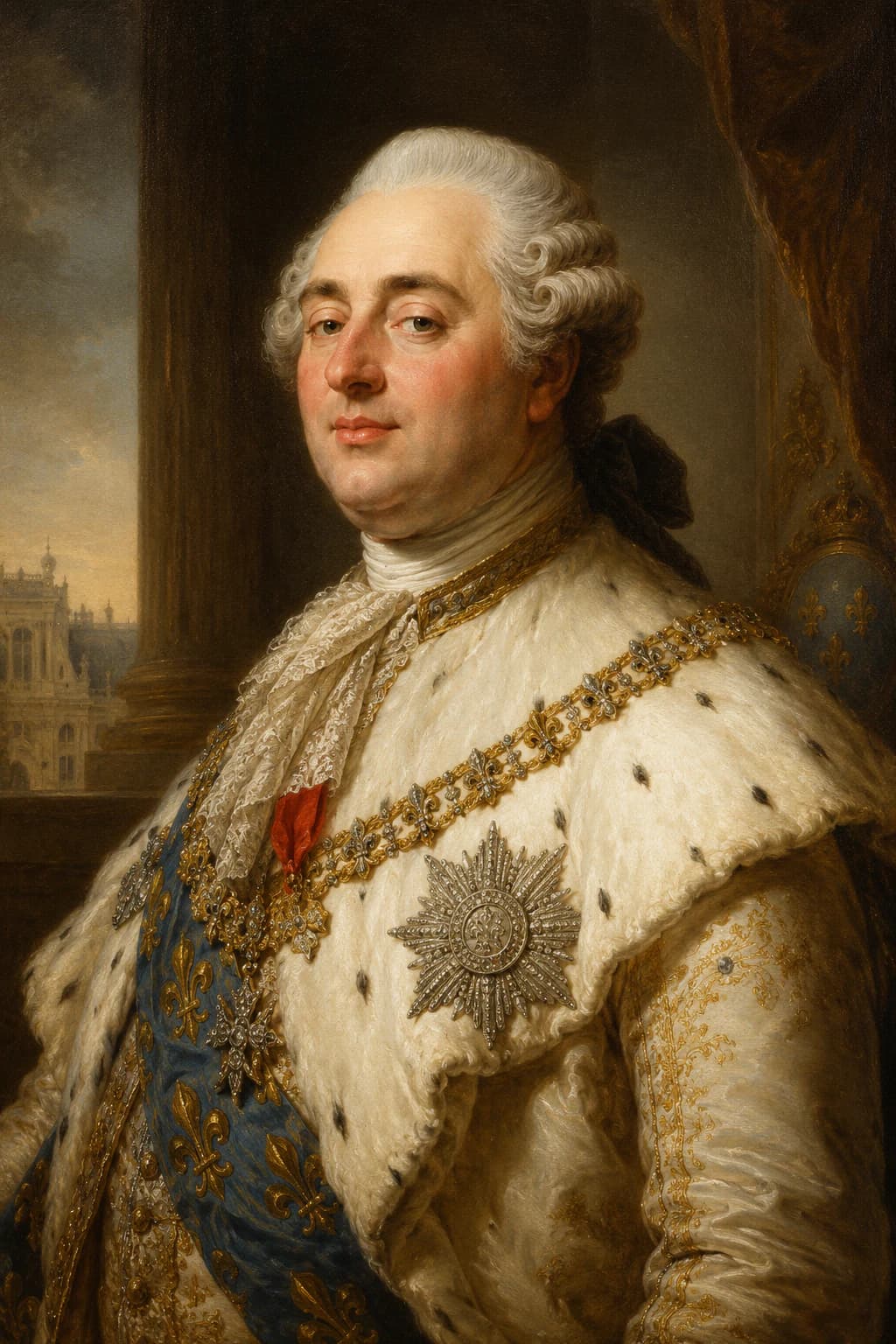
AI-generated portrait of Louis XVI in French royal dress
AI-assisted historical reconstruction

An illustrative reconstruction based on historical context. It is not a photograph or documentary likeness. Image policy

Quick answer

Louis XVI was the last Bourbon king of France before the French Revolution overthrew the monarchy and sent him to the guillotine.

Born
1754 CE
Died
1793 CE
Role
King of France
Years
1754-1793 CE
Quick facts

Profile details

Additional identity and tagging details that are not already covered in the introduction.

Also known as
Louis-Auguste, Louis Auguste
Facts

Louis XVI timeline facts

Selected specifics from this profile's life story.

1754
Born at Versailles

Louis-Auguste was born at Versailles into the Bourbon dynasty and became heir after the deaths of closer successors.

1778-1783
American war costs

French support for the American Revolution damaged Britain but worsened France's financial crisis.

1792
Fall of the monarchy

War, radicalisation and the storming of the Tuileries brought down the French monarchy in August 1792.

Long-term
Historical legacy

Louis XVI is remembered as a well-intentioned but ineffective ruler whose weaknesses became fatal in a revolutionary age.

Life Journey

The king caught between reform and revolution

Follow the story in a more continuous narrative, with a reading mode that matches how much depth you want.

Complete chronology

1754

Born at Versailles

Louis-Auguste was born at Versailles in 1754, the grandson of Louis XV. He was not originally expected to carry the full burden of the French crown, but family deaths moved him closer to succession. His education gave him religious seriousness, historical knowledge and a taste for practical crafts, yet it did not make him naturally commanding. He grew up inside the rituals of the most famous court in Europe, where monarchy looked magnificent even as the state's finances and political structures were under increasing strain.
1770

Marriage alliance

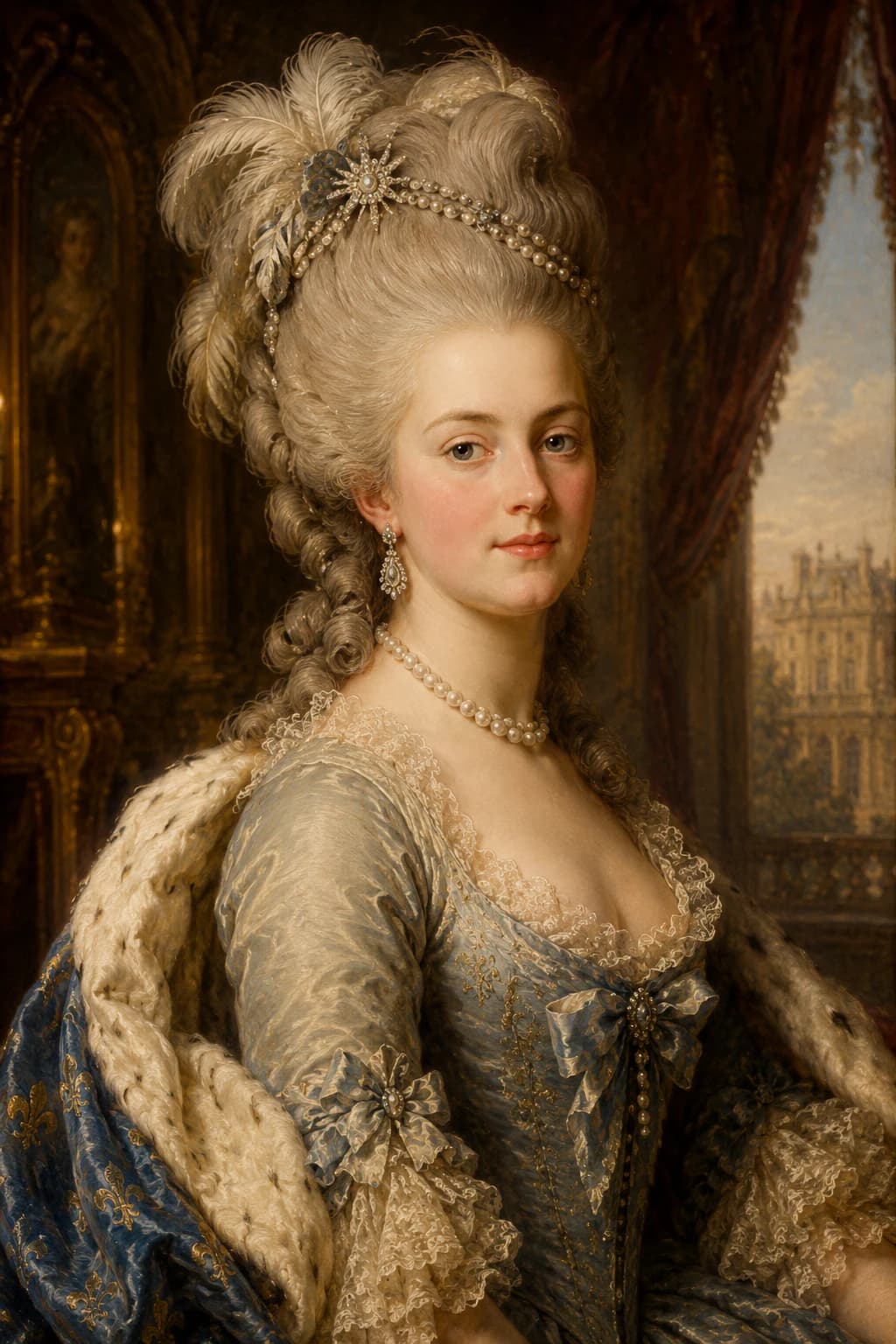
In 1770, Louis married Marie Antoinette, daughter of Empress Maria Theresa of Austria. The marriage was designed to bind France and Austria after generations of rivalry, but it also made the young couple vulnerable to suspicion. Many French critics disliked the Austrian alliance, and Marie Antoinette's foreign birth would later become a political weapon against both queen and king. The marriage began as diplomacy, but during the Revolution it became part of a larger story about loyalty, national identity and the perceived distance between Versailles and the French people.

1774

Becomes king

Louis XVI came to the throne in 1774 after the death of Louis XV. He wanted to be seen as moral, conscientious and reform-minded, but he ruled a kingdom where privilege was deeply embedded. Tax exemptions, regional rights, court expenditure and state debt made reform urgent and politically dangerous. Ministers such as Turgot, Necker and Calonne attempted different solutions, but entrenched interests resisted change. Louis often recognised the need for reform without sustaining the force needed to impose it. His reign became a prolonged struggle between necessity and hesitation.

1778-1783

American war costs

Louis XVI approved French intervention in the American War of Independence, a decision that struck at Britain's global power and helped the American colonies secure victory. Strategically, it was a success. Financially, it deepened France's debt and exposed the weakness of the royal fiscal system. The monarchy had helped a revolution abroad while struggling to fund government at home. That contradiction mattered. The language of liberty, representation and rights crossed the Atlantic in both directions, and the cost of the war pushed France closer to the financial reckoning that would force political change.

1789

Estates-General

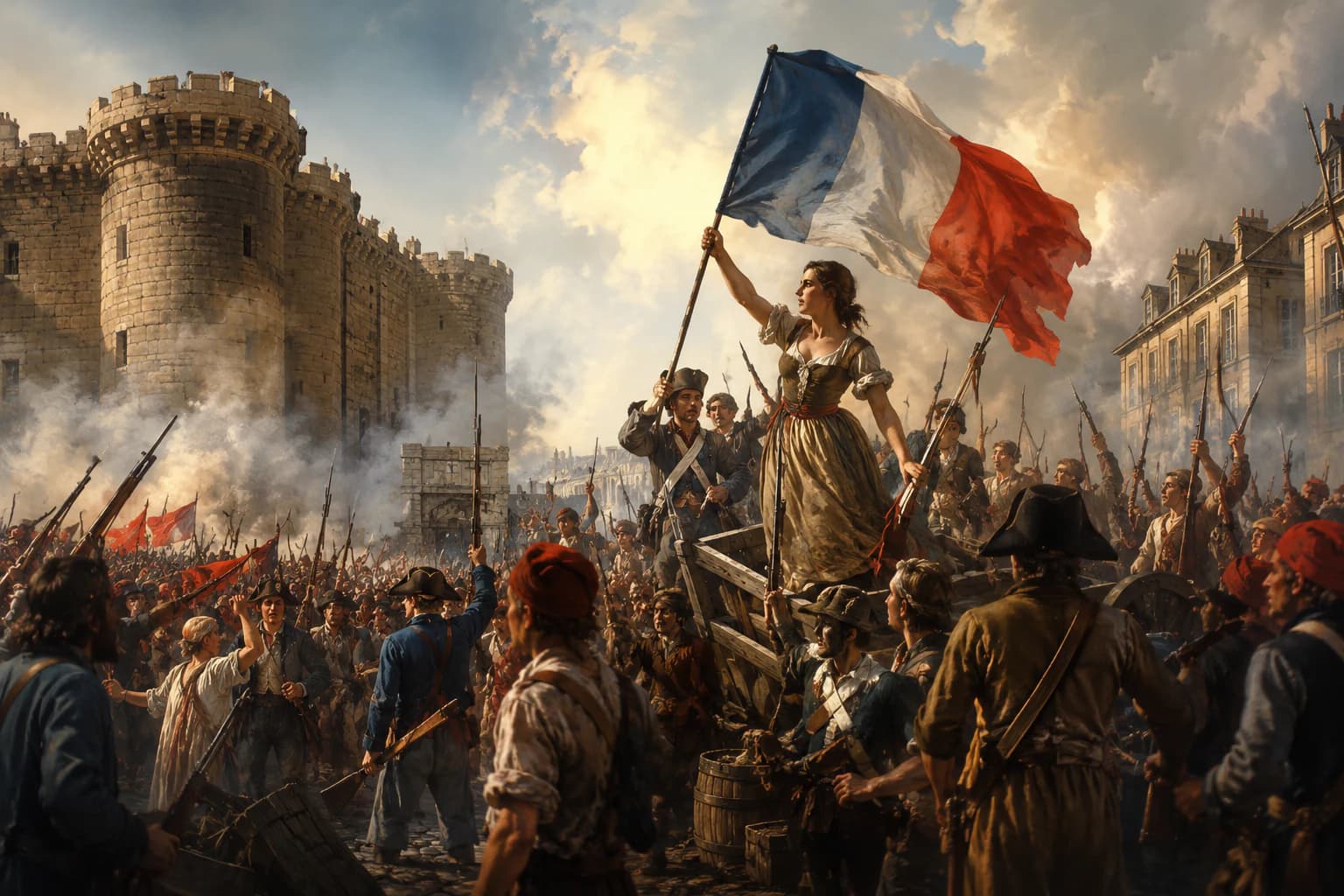
In 1789, Louis summoned the Estates-General for the first time since 1614. He needed consent for fiscal reform, but the meeting gave France's political nation a stage. Disputes over voting and representation led the Third Estate to declare itself the National Assembly. The Tennis Court Oath, the fall of the Bastille and the August abolition of feudal privileges transformed a financial emergency into a revolution. Louis still possessed formal authority, but events had moved beyond the controlled language of royal reform. Sovereignty was being redefined in public, and the king was no longer the sole centre of political legitimacy.

1791

Flight to Varennes

In June 1791, Louis and the royal family attempted to escape Paris and reach a safer position near the frontier. The plan failed when they were recognised and stopped at Varennes. The consequences were devastating. Many who had hoped for a constitutional monarchy now saw the king as untrustworthy or actively opposed to the Revolution. Louis accepted the Constitution of 1791, but confidence had been broken. His personal indecision became, in revolutionary eyes, evidence of conspiracy. From this point, the monarchy survived legally more than politically.

1792

Fall of the monarchy

The outbreak of war in 1792 intensified every fear around the monarchy. Revolutionaries suspected royal collusion with foreign enemies, while military setbacks made treason seem plausible to many in Paris. On 10 August 1792, insurgents attacked the Tuileries Palace, and the royal family took refuge with the Legislative Assembly. The monarchy was suspended and later abolished by the National Convention. Louis was no longer a sacred king but a prisoner called Louis Capet, a name meant to strip away the mystique of dynasty and reduce him to a citizen answerable to the nation.

1793

Trial and execution

Louis XVI's trial forced the Revolution to decide whether a king could be judged by the nation he had once embodied. Documents found in the Tuileries strengthened the case against him, and the Convention found him guilty of conspiracy against public liberty and national security. The vote for death was close but decisive. On 21 January 1793, Louis was executed by guillotine in Paris. His death shocked Europe, hardened the war against revolutionary France and made compromise with the old monarchy almost impossible. It was both punishment and declaration: sovereignty now claimed the right to kill the king.

Long-term

Historical legacy

Louis XVI was not the simple tyrant imagined by some revolutionaries, nor the innocent martyr imagined by later royalists. He was a conscientious man with real reforming impulses, but he lacked the political force, timing and clarity needed to save the monarchy. His reign exposes the crisis of the ancien regime: a state powerful in ceremony but constrained in finance, privilege and consent. His legacy matters because his failure was not merely personal. It revealed that France's old system could no longer absorb the pressures placed upon it, and his death made the French Revolution a European and ideological earthquake.

Continue in context

Connected stories

Move from the profile into the wider events and settings this figure belongs to.

Tertiary paths

Content note

This profile is written for educational use and connects to related Stories of History pages. The main portrait is an AI-assisted historical reconstruction, included as an illustrative aid rather than documentary evidence. Image policy

References

Sources & Further Reading

Reliable reference works, archives and reading paths connected to this profile.

Further reading

  1. Encyclopaedia Britannica, Search results for Louis XVI,” accessed June 2026.Open source
  2. WorldCat, Books and library holdings for Louis XVI,” accessed June 2026.Open source

Primary sources

  1. Library of Congress, Search results for Louis XVI,” accessed June 2026.Open source

Reviewed claim sources

Loading reviewed claim sources...

A weekly route through history

Find out first about the latest published stories, feature notes and occasional Premium offers in one weekly email.