People

Lord Kitchener

Lord Kitchener was a British soldier, imperial commander, and war secretary whose career stretched from Sudan and South Africa to mass recruitment in World War I.

Born
1850 CE
Died
1916 CE
Role
British soldier and imperial commander

British soldier and imperial commander (1850-1916)

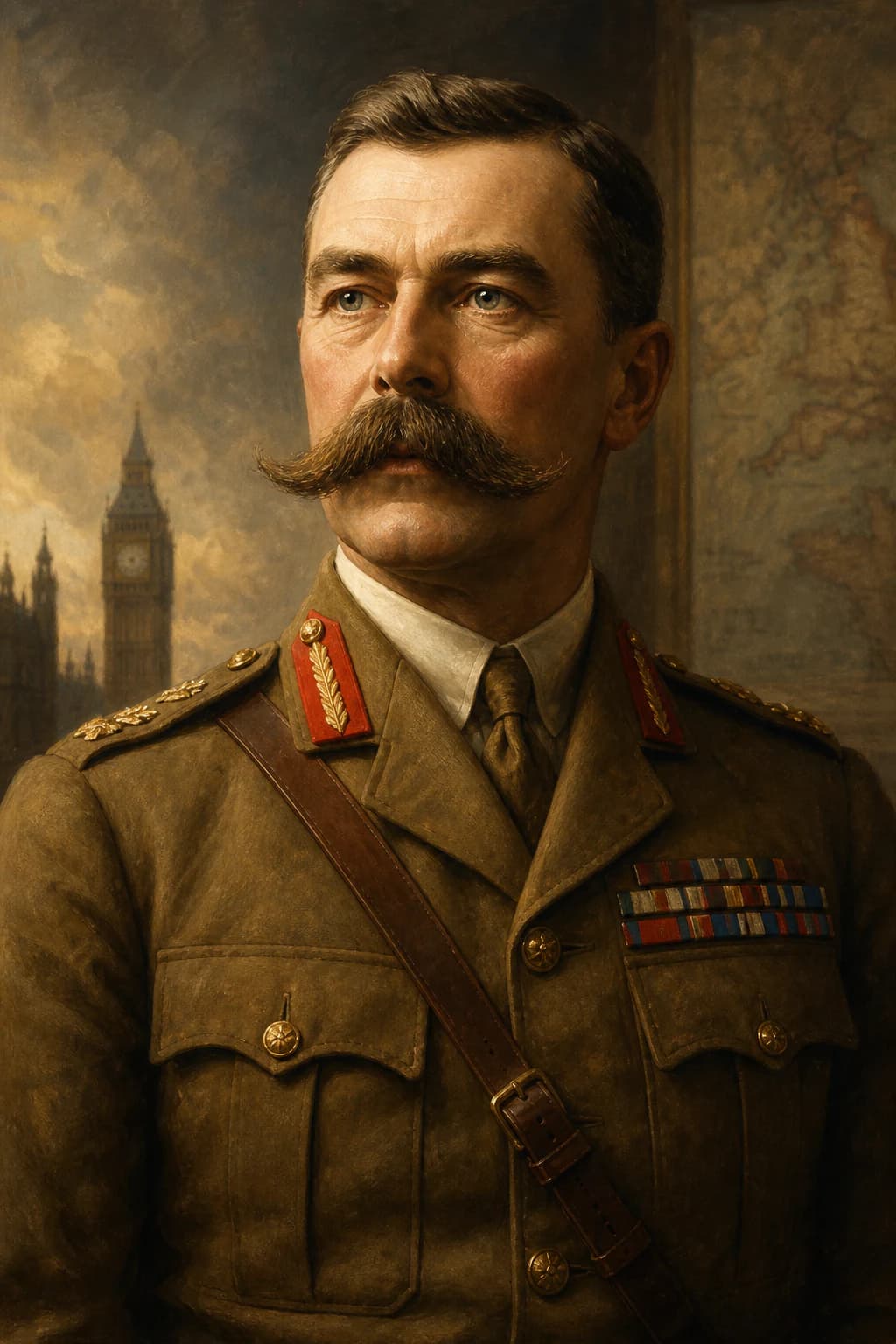
AI-generated portrait of Lord Kitchener
AI-assisted historical reconstruction

An illustrative reconstruction based on historical context. It is not a photograph or documentary likeness. Image policy

Quick answer

Lord Kitchener was a British soldier, imperial commander, and war secretary whose career stretched from Sudan and South Africa to mass recruitment in World War I.

Born
1850 CE
Died
1916 CE
Role
British soldier and imperial commander
Years
1850-1916 CE
Quick facts

Profile details

Additional identity and tagging details that are not already covered in the introduction.

Full name
Horatio Herbert Kitchener
Also known as
Herbert Kitchener
Facts

Lord Kitchener timeline facts

Selected specifics from this profile's life story.

1850
Military formation

Horatio Herbert Kitchener was born in County Kerry and trained for an imperial military career built on discipline, engineering, and command.

1898
Sudan campaign

Kitchener secured his reputation by defeating the Mahdist state at Omdurman and restoring British-Egyptian control in Sudan.

1914
War minister

As secretary of state for war in 1914, Kitchener predicted a long conflict and became the face of Britain's volunteer army.

1916
Death at sea

Kitchener died when HMS Hampshire sank in 1916, leaving a legacy divided between patriotic memory and criticism of imperial warfare.

Life Journey

Why Lord Kitchener matters

Follow the story in a more continuous narrative, with a reading mode that matches how much depth you want.

Complete chronology

1850

Military formation

Horatio Herbert Kitchener was born on 24 June 1850 at Ballylongford in County Kerry, Ireland, into an Anglo-Irish family. Educated in Switzerland and at the Royal Military Academy, Woolwich, he entered the Royal Engineers, a branch that suited his eye for mapping, logistics, and infrastructure. Kitchener's early career took him to Palestine, Cyprus, Egypt, and Sudan, places where imperial power depended as much on survey, transport, and administration as battlefield courage. He developed a reputation for reserve, stamina, and formidable self-control. He was not a warm public politician. He was a builder of systems: railways, supply lines, intelligence networks, and chains of command.
1898

Sudan campaign

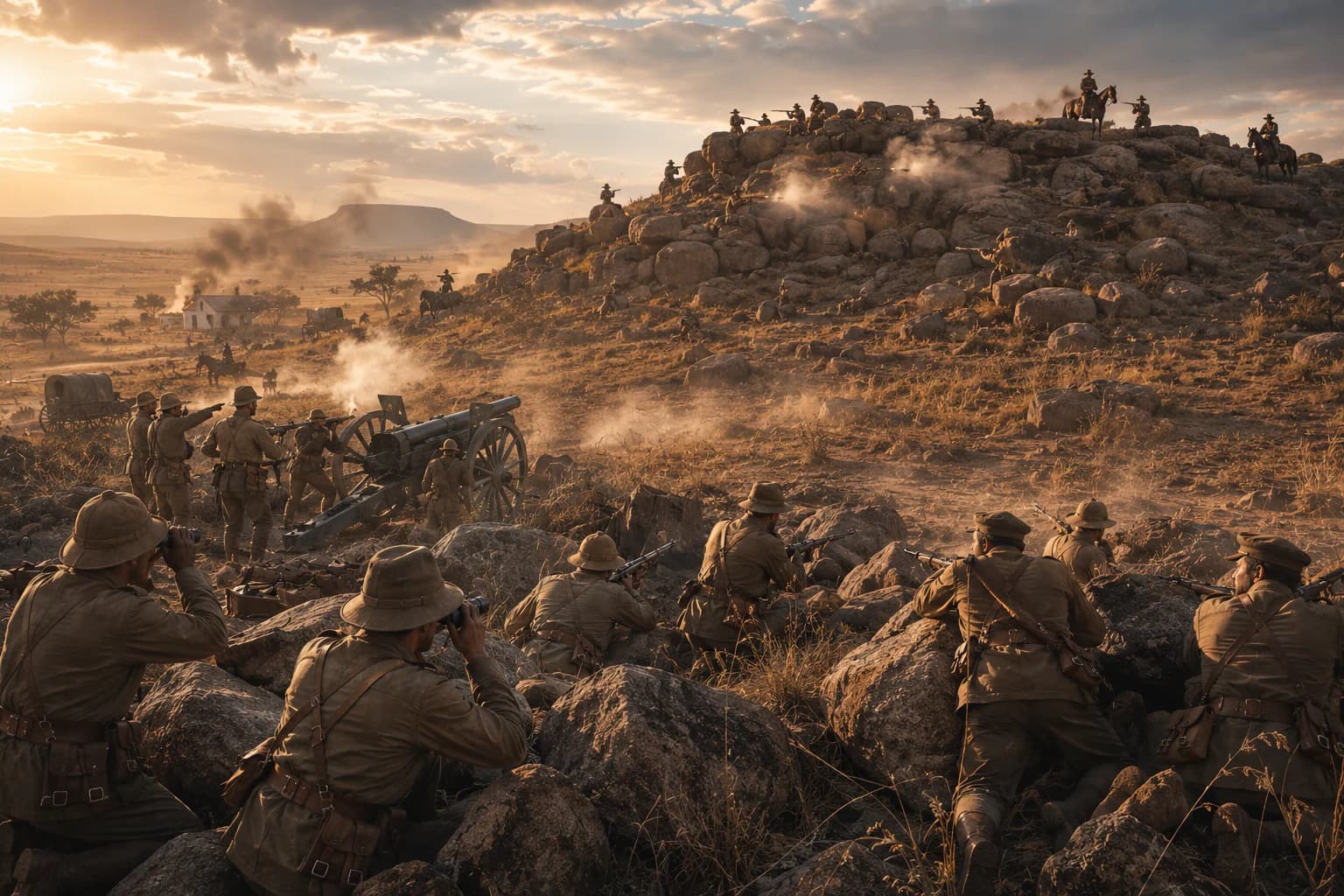
Kitchener's fame was made in the reconquest of Sudan. As sirdar of the Egyptian Army, he prepared the campaign with calculated patience, extending railways and supply systems southward before delivering battle. At Omdurman on 2 September 1898, his forces defeated the Mahdist army with devastating firepower, a victory celebrated in Britain as revenge for the death of Charles Gordon at Khartoum in 1885. The battle also revealed the brutal asymmetry of imperial warfare: modern rifles, artillery, and machine guns against massed opponents at terrible human cost. Kitchener's victory made him a national hero and secured his elevation in public life. Yet his reputation was never only admiration. Critics questioned the treatment of enemies, including the desecration of the Mahdi's tomb.

1899-1902

Boer War

Kitchener served in the Second Boer War and became commander-in-chief in South Africa after Lord Roberts. By then the war had shifted from conventional campaigning to Boer guerrilla resistance. Kitchener answered with a system: blockhouse lines, mounted sweeps, farm destruction, livestock seizure, and concentration camps for Boer civilians and Black Africans displaced by the conflict. These measures helped break the republics' capacity to continue fighting, but they also produced immense suffering. Disease, poor sanitation, and inadequate supplies killed thousands in the camps, especially children. The Treaty of Vereeniging in 1902 ended the conflict on British terms. His South African record remains one of the clearest examples of how imperial victory could be achieved through administrative harshness as much as battlefield success.

1914

War minister

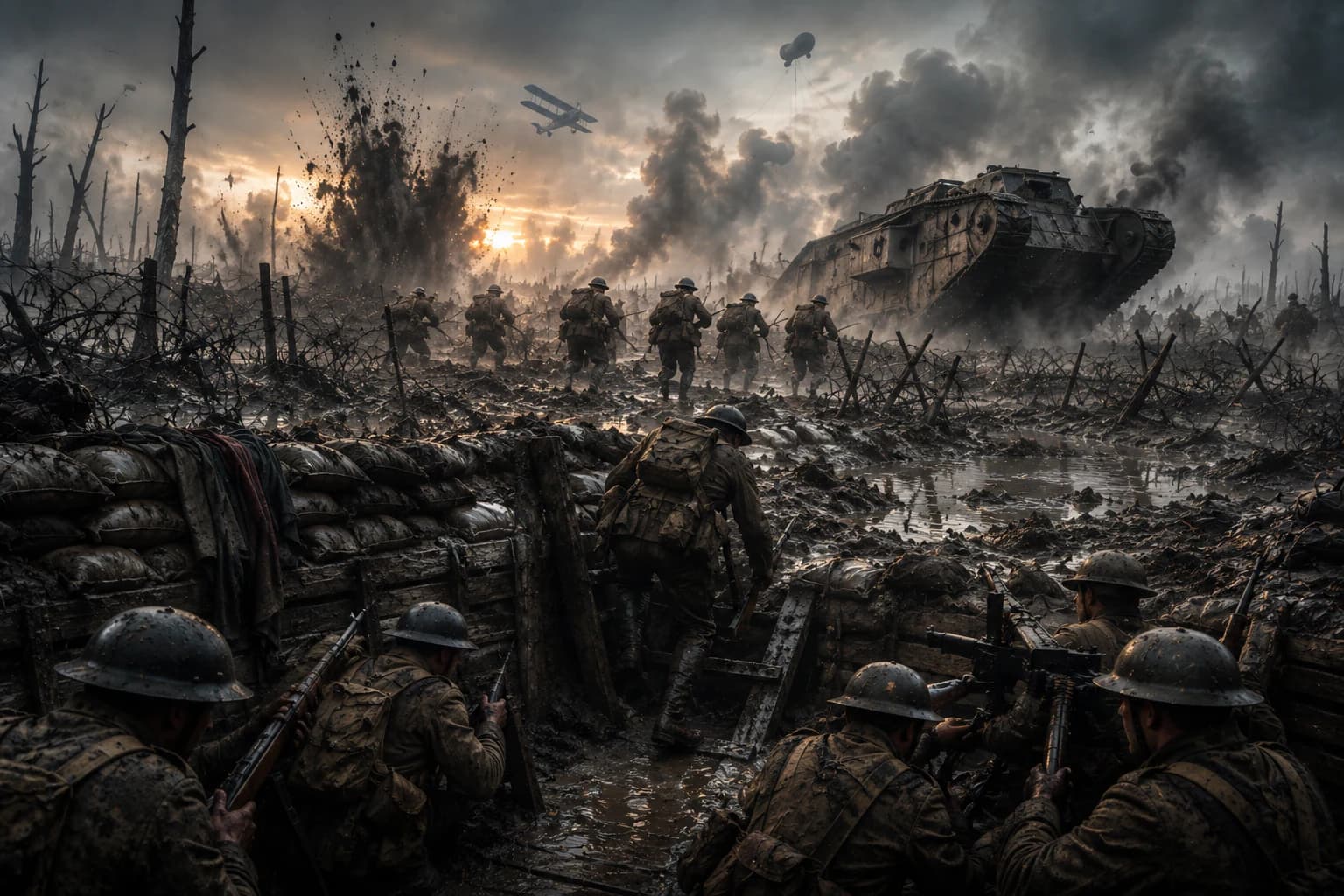
When World War I began in August 1914, Kitchener was appointed secretary of state for war. Unlike many who expected a short conflict, he grasped that Britain faced a long industrial war requiring armies far larger than the small professional British Expeditionary Force. His name and image became central to recruitment. The famous poster adapted from his pointing portrait, with the message that the country needed its men, turned him into the visual embodiment of national mobilisation. Kitchener's New Armies drew millions of volunteers before conscription was introduced in 1916. His administrative record was uneven: he clashed with colleagues, struggled with munitions supply, and did not always adapt easily to cabinet government. But his early insistence on mass mobilisation proved strategically vital.

1916

Death at sea

Kitchener died on 5 June 1916 when HMS Hampshire struck a German mine and sank off Orkney while carrying him toward Russia for diplomatic talks. His death shocked Britain. He had become more than a minister: he was a symbol of duty, recruitment, and wartime resolve. Yet his historical reputation is complex. In Britain he is remembered through posters, memorials, and the mythology of 1914 mobilisation. In Sudan and South Africa, his name carries different associations: conquest, coercion, and the human cost of imperial order. Kitchener's career connects late Victorian imperial warfare to twentieth-century total war. He mastered the management of distance, supply, manpower, and morale, but the same gifts could produce policies of frightening severity.

Continue in context

Connected stories

Move from the profile into the wider events and settings this figure belongs to.

Tertiary paths

Content note

This profile is written for educational use and connects to related Stories of History pages. The main portrait is an AI-assisted historical reconstruction, included as an illustrative aid rather than documentary evidence. Image policy

References

Sources & Further Reading

Reliable reference works, archives and reading paths connected to this profile.

Further reading

  1. Encyclopaedia Britannica, Search results for Lord Kitchener,” accessed June 2026.Open source
  2. WorldCat, Books and library holdings for Lord Kitchener,” accessed June 2026.Open source

Primary sources

  1. Library of Congress, Search results for Lord Kitchener,” accessed June 2026.Open source

Reviewed claim sources

Loading reviewed claim sources...

A weekly route through history

Find out first about the latest published stories, feature notes and occasional Premium offers in one weekly email.