People

John Russell

Lord John Russell, later 1st Earl Russell, was a two-time British Prime Minister and leading Whig reformer. He helped steer the Reform Act of 1832 and spent decades advancing parliamentary and liberal reform.

Born
1792 CE
Died
1878 CE
Role
Two-time Whig Prime Minister

Two-time Whig Prime Minister (1792–1878)

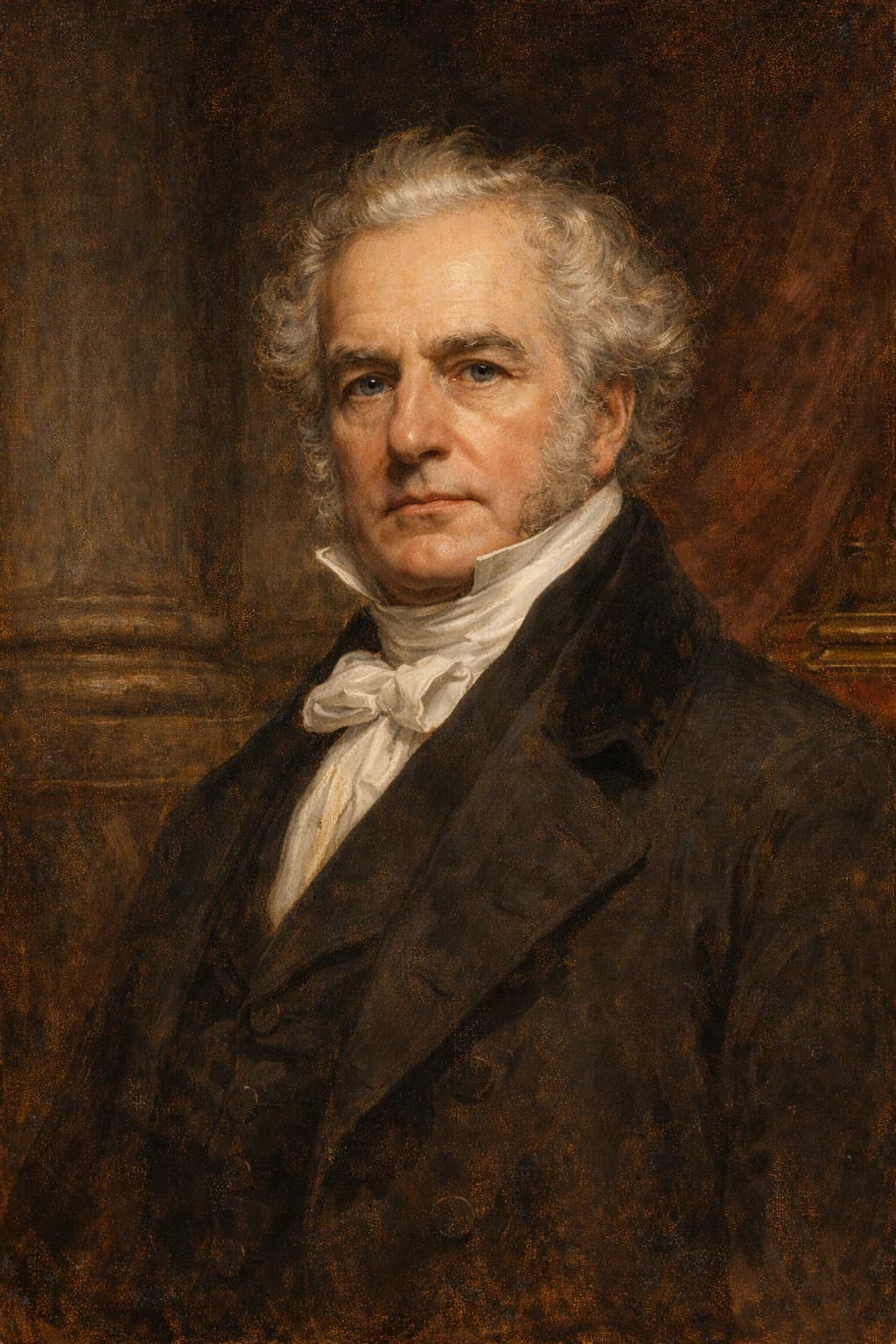
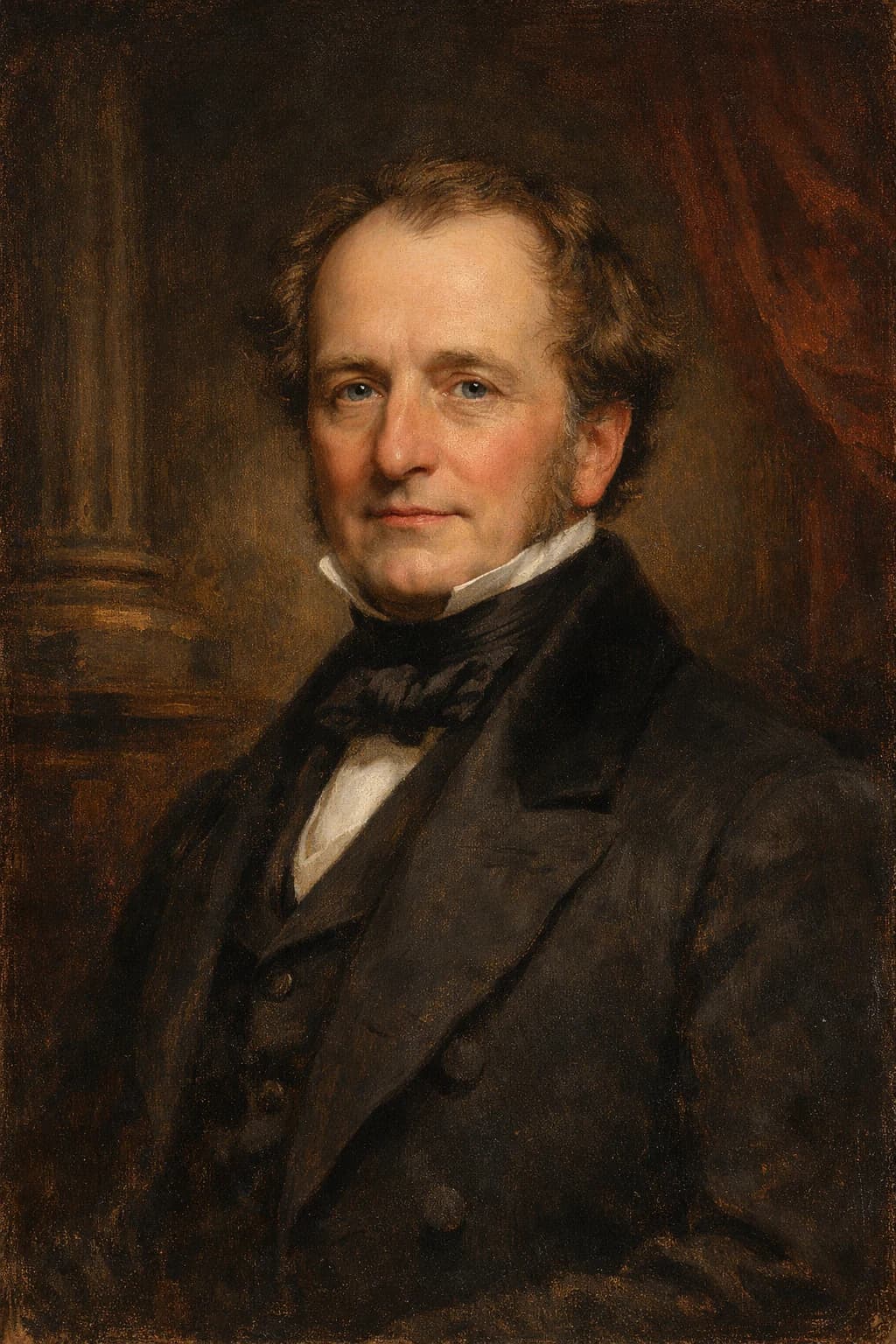
AI-generated portrait of Lord John Russell in formal Victorian attire
AI-assisted historical reconstruction

An illustrative reconstruction based on historical context. It is not a photograph or documentary likeness. Image policy

Quick answer

Lord John Russell, later 1st Earl Russell, was a two-time British Prime Minister and leading Whig reformer. He helped steer the Reform Act of 1832 and spent decades advancing parliamentary and liberal reform.

Born
1792 CE
Died
1878 CE
Role
Two-time Whig Prime Minister
Years
1792-1878 CE
Quick facts

Profile details

Additional identity and tagging details that are not already covered in the introduction.

Full name
John Russell, 1st Earl Russell
Also known as
Lord John Russell, Earl Russell, 1st Earl Russell
Facts

John Russell timeline facts

Selected specifics from this profile's life story.

1792
Aristocratic Beginnings

John Russell was born into the powerful Russell family in 1792, giving him elite access to politics and an early view of Britain's unreformed constitution.

1820s
Championing Reform

By the 1820s, Russell had become one of the clearest parliamentary voices against rotten boroughs and the under-representation of industrial Britain.

1845–1849
Irish Famine Era

The Irish famine became the darkest crisis of Russell's premiership, as limited relief and laissez-faire assumptions failed to meet mass catastrophe.

1878
Enduring Legacy

Russell died in 1878 remembered as a founder of Victorian liberal reform, though his reputation remains marked by Ireland and by the limits of aristocratic liberalism.

Life Journey

A lifetime spent widening the vote

Follow the story in a more continuous narrative, with a reading mode that matches how much depth you want.

Complete chronology

1792

Aristocratic Beginnings

John Russell was born in 1792 into one of Britain's great Whig families. As a younger son of the Duke of Bedford, he inherited access, confidence and a political tradition that valued aristocratic leadership but also, at its best, constitutional reform. That combination defined him. Russell was an insider who came to believe the system needed repair. He grew up in a Britain still shaped by war with revolutionary France, aristocratic borough influence and a Parliament that represented property far more than population. Industrial towns were expanding, but political power remained unevenly distributed through rotten boroughs, pocket boroughs and county interests. Russell's privilege did not make him a democrat in the modern sense, but it gave him the position from which to attack some of the old order's most indefensible features.
1800s

Education and Ideas

Russell's education was shaped partly by fragile health and partly by family culture. He studied at Westminster and Edinburgh rather than following the most conventional aristocratic route through Oxford or Cambridge. Edinburgh exposed him to a sharper intellectual climate, including Scottish Enlightenment traditions and reform-minded debate. He also travelled on the continent, seeing European politics during the age of Napoleon and restoration. Russell became deeply attached to the Whig interpretation of history: liberty protected by Parliament, monarchy limited by law, and reform used to prevent revolution. This framework gave his career coherence. He rarely sought to destroy institutions. He sought to adjust them before pressure from below made adjustment impossible. That instinct made him both bold and cautious, a reformer who believed change was necessary precisely because continuity mattered.

1813

Entering Parliament

Russell entered Parliament in 1813, when Britain was still fighting Napoleon and the unreformed electoral system looked secure to many of its beneficiaries. He quickly identified himself with liberal Whig causes. Catholic emancipation, repeal of religious disabilities, civil liberty and parliamentary reform became recurring themes. He was physically slight and not naturally commanding in appearance, but he possessed persistence and moral confidence. His speeches could be dry, yet his commitment was unmistakable. Russell's early parliamentary years taught him how resistant the system was to change. Reformers faced not only ideological opposition but also the self-interest of men whose seats depended on the old arrangements. He learned that constitutional reform would require patience, pressure and the ability to present change as national preservation rather than surrender to radicalism.

1820s

Championing Reform

The case for parliamentary reform grew stronger as Britain's social geography changed. Manchester, Birmingham, Leeds and other industrial centres had immense economic importance but inadequate direct representation, while tiny boroughs could send MPs to Westminster through aristocratic control. Russell made this imbalance a central issue. He repeatedly proposed reform measures, often facing defeat but keeping the subject alive inside Parliament. His genius was political framing. He argued that moderate reform would strengthen the constitution by removing abuses before they provoked revolution. The fear was not imaginary. The French Revolution and later European upheavals haunted British politics. Russell used that fear differently from conservatives: where they saw reform as danger, he saw unreformed privilege as the greater risk. His persistence helped make the once-marginal reform case respectable.

1832

Reform Act Victory

The Reform Act of 1832 was the central achievement of Russell's public life. As a leading figure in Lord Grey's Whig government, he introduced and defended the reform bill through a bitter constitutional struggle. The measure abolished many rotten boroughs, redistributed seats toward growing towns and counties, and expanded the electorate among property-holding men. It did not enfranchise working-class men as a whole, and it left women excluded entirely. Yet it broke the old system's claim to permanence. The crisis around the bill, including resistance in the Lords and public agitation across the country, showed how close Britain could come to instability when institutions refused to move. Russell's role made him a hero to reformers and a target for opponents. The Act's power lay not in completing democracy, but in making further reform imaginable.

1846–1852

Prime Minister

Russell became prime minister in 1846 after the fall of Robert Peel, whose repeal of the Corn Laws split the Conservatives. Russell's government inherited a difficult landscape: free-trade transition, Chartist agitation, imperial pressures and the devastating Irish famine. He was a sincere liberal reformer, but governing exposed the limits of sincerity. His ministry passed measures in education, public health and colonial affairs, yet it often lacked stable parliamentary strength. Russell's style could be principled to the point of rigidity, and he struggled with colleagues whose ambitions and temperaments differed from his own. Victorian Britain was becoming harder to govern through old Whig networks alone. Russell stood between eras: formed by aristocratic constitutionalism, confronted by mass politics, industrial capitalism and demands for a more active state.

1845–1849

Irish Famine Era

The Great Famine in Ireland casts the longest shadow over Russell's first premiership. The potato blight had begun under Peel, but Russell's government oversaw crucial years of mass hunger, disease and emigration. Ministers did provide relief, including public works and soup kitchens at different stages, but policy was constrained by administrative weakness, fear of dependency, market ideology and deep prejudices about Irish land and society. The result was disastrously inadequate to the scale of suffering. Russell did not set out to produce catastrophe, but history judges governments by consequences as well as intentions. The famine exposed the moral limits of mid-Victorian liberalism when it treated a human emergency too much as a problem of markets, local responsibility and fiscal caution. For all Russell's reform achievements, Ireland remains the severe indictment in his record.

1865–1866

Second Premiership

Russell's second premiership, from 1865 to 1866, came when the pressure for another Reform Act had become unavoidable. Now Earl Russell and an elder statesman, he led a Liberal government with William Gladstone as a major force in the Commons. Their reform bill proposed a limited extension of the franchise, but opposition from Conservatives and dissenting Liberals defeated it. The government fell, and Benjamin Disraeli's Conservatives passed the Reform Act of 1867 the following year. The irony was sharp: Russell, the great reformer of 1832, failed to carry the next major step, while his opponents claimed the achievement. Yet his failure still mattered. By placing reform at the centre of politics again, he helped make retreat impossible. His career shows that political victories often belong not only to those who pass the law, but to those who make the question unavoidable.

1878

Enduring Legacy

John Russell died in 1878 after a career that stretched from the Napoleonic era to the age of mass Liberal politics. His legacy is large and uneven. He helped dismantle the unreformed parliamentary system, supported civil and religious liberties, and kept the cause of representation alive across decades. He also twice held the premiership without becoming a fully successful executive leader. His failures in Ireland, especially during the famine, prevent any simple celebration. Russell was a reformer, but not a modern democrat; a liberal, but one formed by aristocratic assumptions; a champion of constitutional change, but often cautious about social and economic intervention. That complexity is precisely why he matters. He stands at the hinge between eighteenth-century Whig oligarchy and Victorian liberal democracy, helping open a door through which later reformers would walk much further.

Continue in context

Connected stories

Move from the profile into the wider events and settings this figure belongs to.

British Prime Ministers lineage
LineagePrime ministers in sequence
British Prime Ministers
1721 CE–present

Explore British prime ministers from Walpole to the present.

View lineage
Tertiary paths

Content note

This profile is written for educational use and connects to related Stories of History pages. The main portrait is an AI-assisted historical reconstruction, included as an illustrative aid rather than documentary evidence. Image policy

References

Sources & Further Reading

Reliable reference works, archives and reading paths connected to this profile.

Further reading

  1. Encyclopaedia Britannica, Search results for John Russell,” accessed June 2026.Open source
  2. WorldCat, Books and library holdings for John Russell,” accessed June 2026.Open source

Primary sources

  1. Library of Congress, Search results for John Russell,” accessed June 2026.Open source

Reviewed claim sources

Loading reviewed claim sources...

A weekly route through history

Find out first about the latest published stories, feature notes and occasional Premium offers in one weekly email.