People

Leon Trotsky

Leon Trotsky was a Russian revolutionary, Bolshevik strategist and founder of the Red Army. A key figure in the 1917 Revolution, he was defeated by Stalin, exiled from the Soviet Union and assassinated in Mexico in 1940.

Born
1879 CE
Died
1940 CE
Role
Russian revolutionary and Red Army founder

Russian revolutionary and Red Army founder (1879–1940)

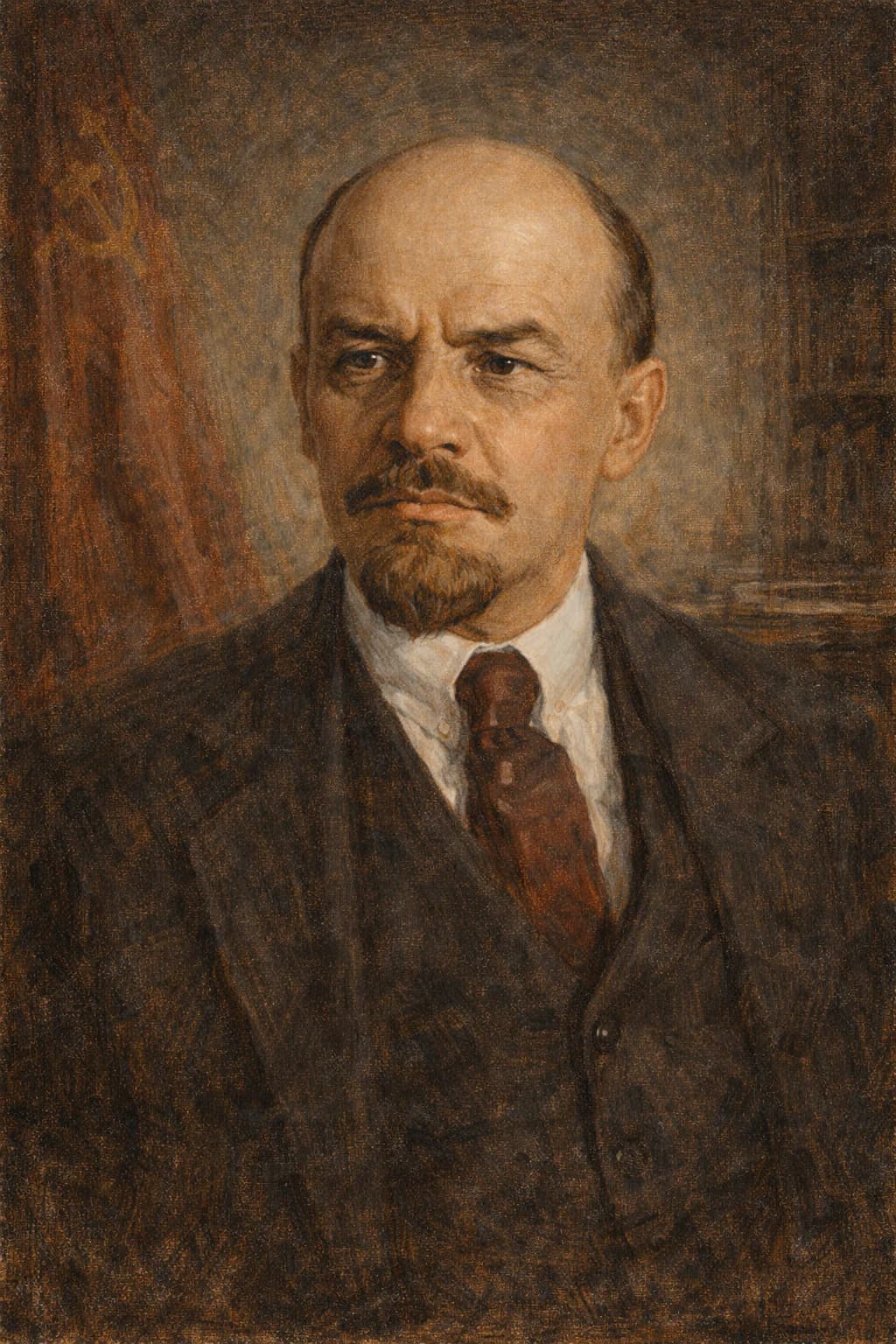
AI-generated portrait of Leon Trotsky in revolutionary attire
AI-assisted historical reconstruction

An illustrative reconstruction based on historical context. It is not a photograph or documentary likeness. Image policy

Quick answer

Leon Trotsky was a Russian revolutionary, Bolshevik strategist and founder of the Red Army. A key figure in the 1917 Revolution, he was defeated by Stalin, exiled from the Soviet Union and assassinated in Mexico in 1940.

Born
1879 CE
Died
1940 CE
Role
Russian revolutionary and Red Army founder
Years
1879-1940 CE
Quick facts

Profile details

Additional identity and tagging details that are not already covered in the introduction.

Also known as
Lev Bronstein, Trotsky
Facts

Leon Trotsky timeline facts

Selected specifics from this profile's life story.

1879
Rural beginnings

Born Lev Davidovich Bronstein in the southern Russian Empire, Trotsky grew up in a Jewish farming family before education and empire-wide inequality drew him toward revolution.

1905
1905 uprising

During the 1905 Revolution, Trotsky became chairman of the Saint Petersburg Soviet, proving he could lead in the open as well as argue in exile.

1924–1927
Struggle for succession

After Lenin's illness and death, Trotsky lost the succession struggle to Stalin, whose control of party machinery proved more durable than revolutionary prestige.

1940
Assassination and legacy

Trotsky was murdered in Mexico City in 1940 by Ramon Mercader, a Stalinist agent, leaving a legacy divided between revolutionary genius and revolutionary coercion.

Life Journey

Revolution, exile, and unfinished ambitions

Follow the story in a more continuous narrative, with a reading mode that matches how much depth you want.

Complete chronology

1879

Rural beginnings

Leon Trotsky was born Lev Davidovich Bronstein in 1879 near Yanovka, in what is now Ukraine, then part of the Russian Empire. His family were Jewish farmers, prosperous enough to value education but still marked by the restrictions and prejudice that shaped Jewish life under tsarism. That double inheritance mattered: Trotsky was neither a destitute peasant nor a secure insider. He saw a world of estates, officials, languages and legal barriers from the edge rather than the centre. Schooling in Odessa and Nikolaev exposed him to urban life, modern literature and political argument. The young Bronstein was intellectually restless, sharp in debate and impatient with inherited authority. The revolutionary he became was not formed by poverty alone, but by the collision between talent and a system that offered obedience as the price of advancement.
1897–1898

First revolutionary steps

Trotsky's first politics grew out of study circles and worker networks in southern Russia, where Marxist ideas met the practical misery of factory life. He helped form the South Russian Workers' Union in 1897, writing leaflets, organising contacts and learning how fragile underground politics could be. The tsarist police arrested him in 1898. Prison and Siberian exile might have broken a less driven activist; for Trotsky they became a school. He read, argued, married fellow revolutionary Aleksandra Sokolovskaya and absorbed the habits of conspiratorial politics. This was the first pattern of his life: repression pushed him into wider networks rather than silence. By the time he escaped exile, he had become more than a provincial radical. He had acquired discipline, a voice, and a belief that revolution required both mass energy and ruthless organisation.

1900–1902

Exile and escape

In 1902 Bronstein escaped Siberia using forged papers bearing the name Trotsky, reportedly taken from a jailer. The borrowed name became one of the most recognisable in revolutionary history. Abroad, he joined the intense emigre world of Russian socialism: printing presses, cramped rooms, factional meetings and arguments conducted as if the future of humanity depended on every clause. He worked with Lenin's newspaper Iskra but did not simply become Lenin's follower. When Russian Social Democracy split between Bolsheviks and Mensheviks in 1903, Trotsky resisted permanent alignment with either side, a stance that displayed independence but later cost him trust. He emerged as a brilliant polemicist and speaker, convinced that Russia's backwardness might produce not a mild liberal transition but a revolutionary chain reaction. His theory of permanent revolution began to take shape in these years: Russia's working class, he argued, might seize power and depend on revolution spreading abroad.

1905

1905 uprising

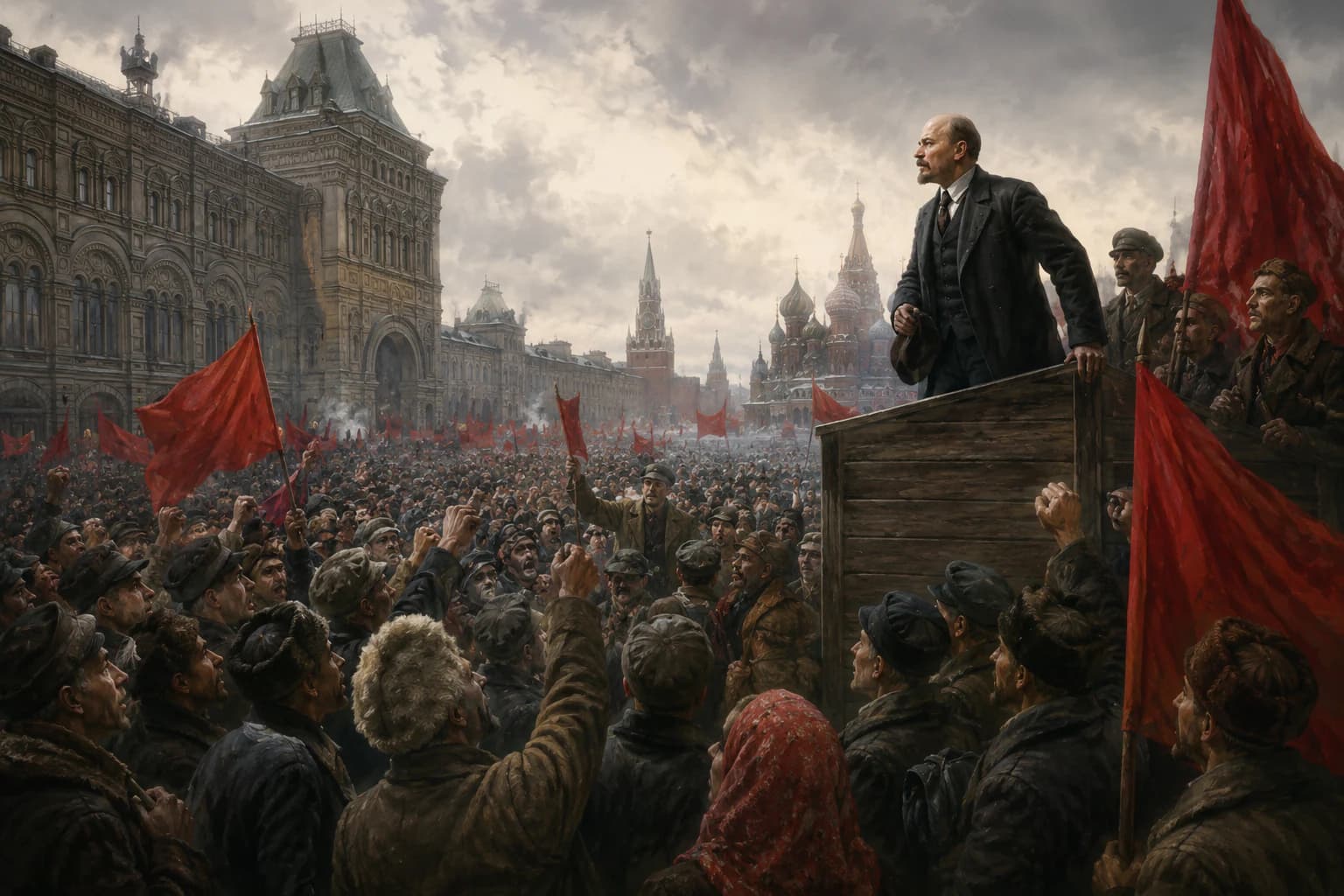
The 1905 Revolution gave Trotsky his first real command of events. Returning to Russia amid strikes, mutinies and mass demonstrations, he became a central figure in the Saint Petersburg Soviet, the workers' council that briefly gave the capital's labour movement a political voice. His speeches were electric because they joined analysis to urgency. He could explain why the old order was vulnerable and then tell a crowd what to do next. The Soviet was eventually crushed, and Trotsky was arrested again, but 1905 revealed the form of a future revolution: workers' councils, paralysis of state authority, armed pressure and the need for decisive leadership. It also exposed the limits of spontaneity. Trotsky learned that revolutionary moments open quickly and close just as fast. In 1917, he would act with the memory of 1905's missed opportunity behind him.

1917

Return in 1917

The First World War shattered the tsarist state and created the opening Trotsky had long imagined. After a difficult journey from exile in New York, including temporary detention by British authorities in Canada, he reached revolutionary Russia in May 1917. By then the February Revolution had removed the tsar but left unresolved the questions of war, land, food and power. Trotsky joined the Bolsheviks that summer, closing years of distance from Lenin because both now demanded power for the soviets and an end to the Provisional Government. As chairman of the Petrograd Soviet, Trotsky became the public organiser of October. He used the Military Revolutionary Committee to give the uprising institutional cover, linking armed action to soviet authority rather than presenting it as a mere party coup. His role did not make the revolution bloodless or democratic in the liberal sense, but it made it operational. Trotsky supplied timing, language and command.

1918–1921

Architect of victory

Trotsky's greatest administrative achievement was the creation of the Red Army during the Russian Civil War. The Bolshevik regime faced White armies, foreign intervention, nationalist movements, peasant revolts and economic collapse. Revolutionary enthusiasm was not enough. Trotsky reintroduced military hierarchy, conscription and harsh discipline; he recruited former tsarist officers while surrounding them with political commissars; and he travelled by armoured train from front to front, issuing orders, rallying troops and punishing desertion. These methods saved the regime, but they also helped normalise coercion inside the revolutionary state. Trotsky's brilliance lay in accepting what ideology found uncomfortable: to defeat professional armies, the Bolsheviks needed a professional army of their own. The victory of the Reds secured Soviet power, yet the habits of emergency rule, central command and sanctioned violence would outlive the emergency itself.

1924–1927

Struggle for succession

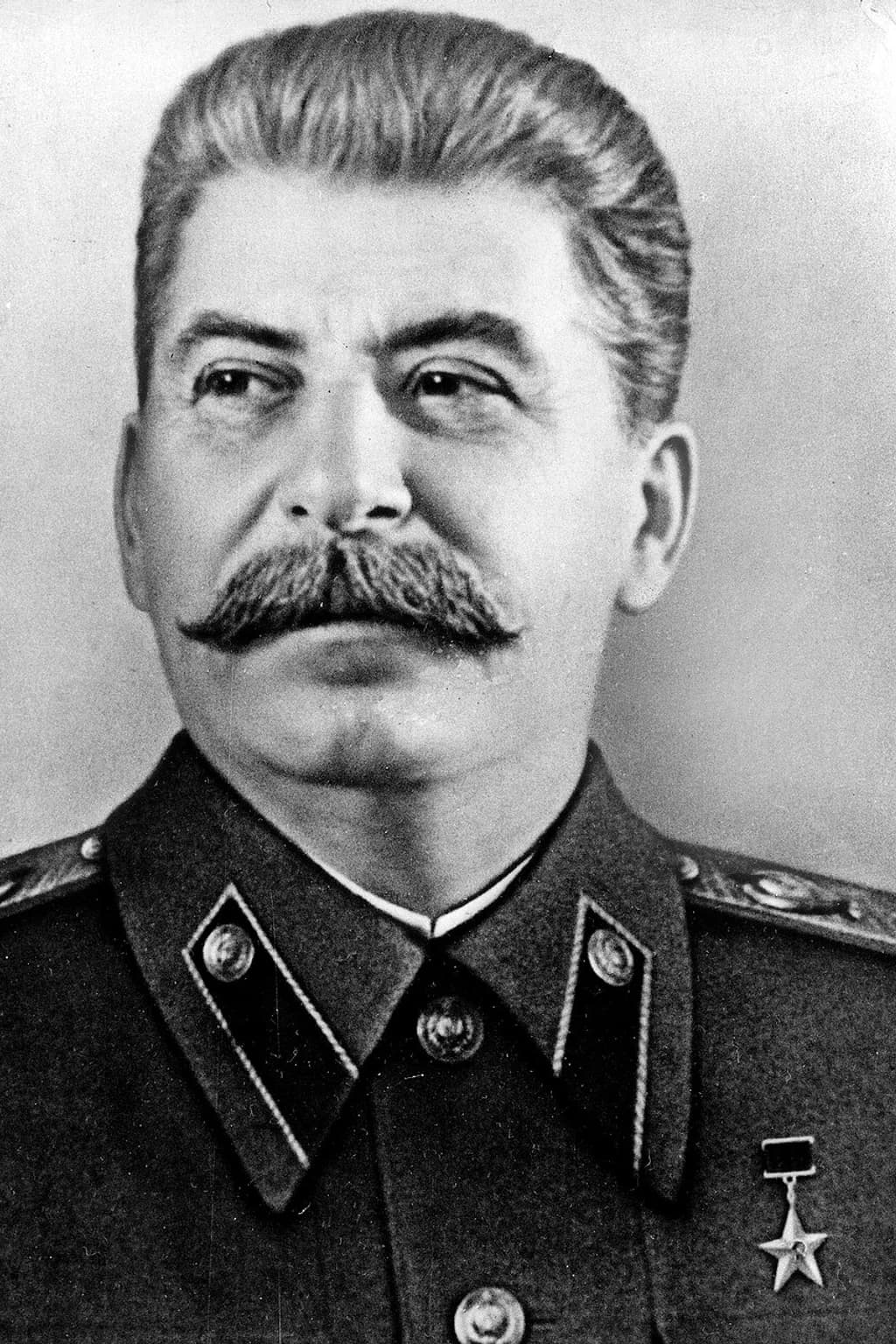
Trotsky appeared, to many outsiders, the obvious heir to Lenin: famous, intellectually formidable and central to the revolution's victory. Inside the Communist Party, the balance was different. Lenin's illness after 1922 created a slow succession crisis in which organisation mattered more than theatre. Stalin, as General Secretary, controlled appointments, networks and the daily machinery of loyalty. Trotsky underestimated this power and carried liabilities of his own: earlier disputes with Lenin, a reputation for arrogance, Jewish identity in an antisemitic society, and political positions that made him seem dangerous to officials tired of upheaval. His call for more internal party democracy clashed with a system he himself had helped centralise. His insistence on international revolution lost ground to Stalin's promise of building socialism in one country. By 1927 Trotsky was expelled from the party. By 1929 he was forced out of the Soviet Union.

1929–1940

Years in exile

Trotsky's exile was not retirement. From Prinkipo in Turkey, then France, Norway and finally Mexico, he produced a vast stream of books, articles and letters attacking Stalin's rule as a bureaucratic betrayal of the revolution. He condemned forced confessions, the Moscow Trials and the cult of Stalin, while still defending the idea that the Soviet Union rested on revolutionary social foundations worth protecting against capitalism. This position made him difficult to classify: anti-Stalinist but not anti-communist, a victim of repression who had earlier defended repression against others. His followers founded the Fourth International in 1938, hoping to keep revolutionary Marxism alive beyond Moscow's control. Stalin saw even this weakened exile as intolerable. Trotsky's son Lev Sedov died in suspicious circumstances in Paris, supporters were hunted, and the walls around Trotsky's Mexico City home grew higher.

1940

Assassination and legacy

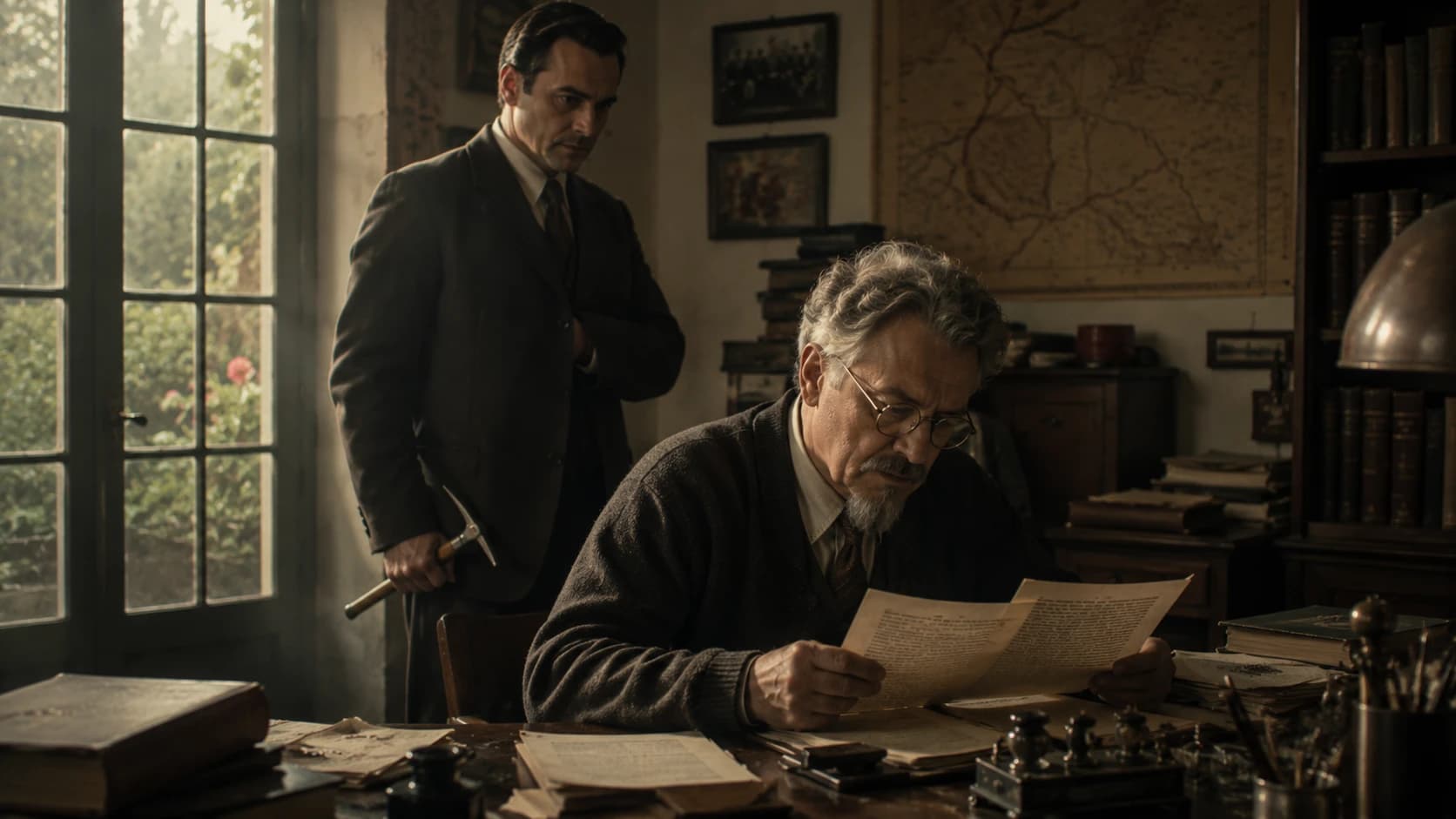
On 20 August 1940, Ramon Mercader, a Spanish communist acting for Soviet intelligence, attacked Trotsky with an ice axe in his study in Coyoacan, Mexico City. Trotsky died the next day. His assassination was the final act of Stalin's campaign to destroy real and imagined rivals from the revolutionary generation. Yet death did not settle Trotsky's meaning. To admirers, he remained the dazzling organiser of October, the military founder who saved the revolution, and the prophet who understood Stalinism as a deformation of socialist hope. To critics, he was also a maker of the authoritarian system he later denounced: a leader who accepted terror, one-party rule and militarised politics when they served Bolshevik survival. The full biography holds both truths. Trotsky matters because his life sits at the hinge between revolutionary possibility and revolutionary dictatorship, between the dream of liberation and the machinery built in its name.

Continue in context

Connected stories

Move from the profile into the wider events and settings this figure belongs to.

Tertiary paths

Content note

This profile is written for educational use and connects to related Stories of History pages. The main portrait is an AI-assisted historical reconstruction, included as an illustrative aid rather than documentary evidence. Image policy

References

Sources & Further Reading

Reliable reference works, archives and reading paths connected to this profile.

Further reading

  1. Encyclopaedia Britannica, Search results for Leon Trotsky,” accessed June 2026.Open source
  2. WorldCat, Books and library holdings for Leon Trotsky,” accessed June 2026.Open source

Primary sources

  1. Library of Congress, Search results for Leon Trotsky,” accessed June 2026.Open source

Reviewed claim sources

Loading reviewed claim sources...

A weekly route through history

Find out first about the latest published stories, feature notes and occasional Premium offers in one weekly email.