People

Kim Il-sung

Kim Il-sung was the founder and first leader of North Korea from 1948 to 1994. He led the Korean War, built the Juche state and established the Kim dynasty.

Born
1912 CE
Died
1994 CE
Role
Founder and first Supreme Leader of North Korea

Founder and first Supreme Leader of North Korea (1912–1994)

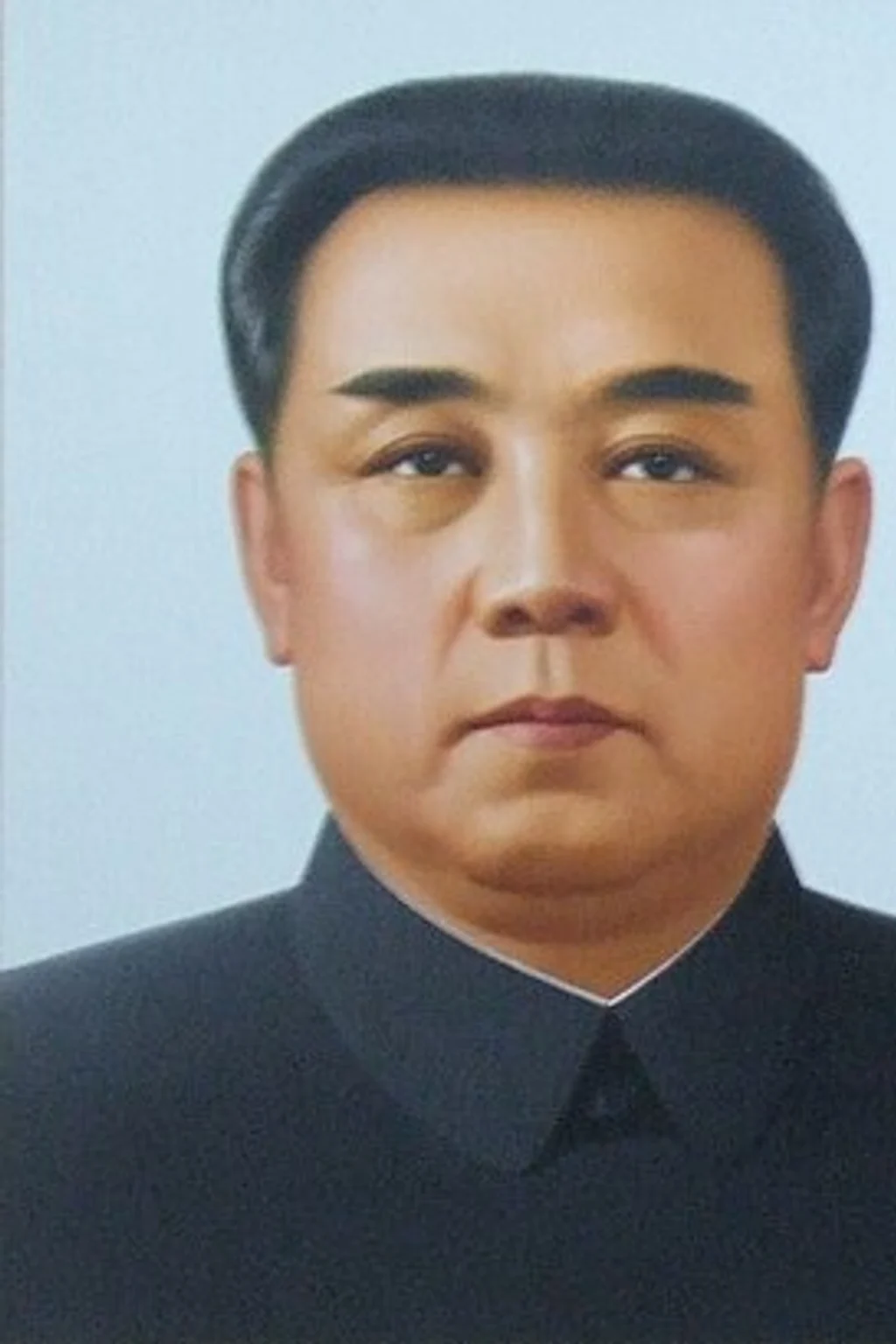
Portrait photograph of Kim Il-sung
Licensed archival image

A real historical or editorial image is used here. Source, licence and transformation details are publicly recorded. Image policy Attribution

Quick answer

Kim Il-sung was the founder and first leader of North Korea from 1948 to 1994. He led the Korean War, built the Juche state and established the Kim dynasty.

Born
1912 CE
Died
1994 CE
Role
Founder and first Supreme Leader of North Korea
Years
1912-1994 CE
Facts

Kim Il-sung timeline facts

Selected specifics from this profile's life story.

1912–1920s
Colonial childhood

Kim Il-sung was born Kim Song-ju in 1912, two years after Japan annexed Korea, into a family later woven deeply into North Korea's official liberation mythology.

1948
State formation

In 1948, Kim became premier of the Democratic People's Republic of Korea, a new state claiming authority over all Korea from Pyongyang.

1960s–1980s
Cult of leadership

Kim's cult of personality turned biography into state religion, filling schools, workplaces, homes and public space with stories of the Great Leader.

Post-1994
Enduring system

Kim Il-sung remains North Korea's Eternal President, a title that shows how thoroughly his memory was built into the country's political architecture.

Life Journey

From guerrilla fighter to architect of a controlled state

Follow the story in a more continuous narrative, with a reading mode that matches how much depth you want.

Complete chronology

1912–1920s

Colonial childhood

Kim Il-sung's early life took place under Japanese colonial rule, a setting that shaped almost every later claim he made about legitimacy. He was born near Pyongyang as Kim Song-ju, and his family moved into Manchuria while he was young, part of a wider Korean migration under the pressures of colonialism, poverty, resistance, and opportunity. North Korean state history later turned his childhood into a sacred origin story, surrounding his parents and early activities with heroic certainty. The evidence is more complicated. He did become involved in anti-Japanese networks, but the official biography magnified and purified the story to make him seem destined for leadership. From the beginning, Kim's historical life and the political myth built around it cannot be separated.
1930s

Path into resistance

Kim's guerrilla years gave him the one credential no rival could easily dismiss: armed resistance to Japanese empire. In the 1930s he served with anti-Japanese partisan units linked to Chinese communist forces in Manchuria. These groups operated in brutal conditions, hunted by Japanese counterinsurgency and dependent on mobility, secrecy, discipline and local support. Kim was not the sole liberator later propaganda described, but he was a real guerrilla commander whose experience mattered. It taught him the value of tight organization, ideological education, suspicion of factionalism, and personal loyalty. It also gave him a usable revolutionary identity. When Korea was liberated in 1945, many politicians had ideas; Kim had a soldier's biography that Soviet power could elevate.

1945

War and opportunity

Liberation from Japan did not bring a unified Korean settlement. The peninsula was divided along the 38th parallel, with Soviet forces occupying the north and American forces the south. Kim returned from the Soviet sphere as a relatively young communist with guerrilla prestige and the support of a superpower. That backing was decisive. In the north, parties, people's committees, security organs and land reform were shaped under Soviet influence, while rival nationalists, Christians, landlords and non-Kim communists were pushed aside or absorbed. Kim's rise was therefore both Korean and Cold War history. He was not simply installed like a puppet, nor did he rise independently. He advanced because his anti-Japanese record, political usefulness and Soviet patronage converged at the right moment.

1948

State formation

The founding of the Democratic People's Republic of Korea in 1948 formalized the division of the peninsula. Kim Il-sung became premier, while Syngman Rhee led the Republic of Korea in the south. Both governments claimed to represent the whole nation, making division inherently unstable. In the north, Kim moved to centralize authority through the Workers' Party, security services, land redistribution, nationalization and ideological mobilization. Early North Korea borrowed heavily from Soviet models, but Kim worked steadily to make the system personally dependent on him. His achievement was institutional as well as propagandistic: the party, army, police, schools and media increasingly taught that national liberation, socialism and loyalty to Kim were inseparable.

1950–1953

War leadership

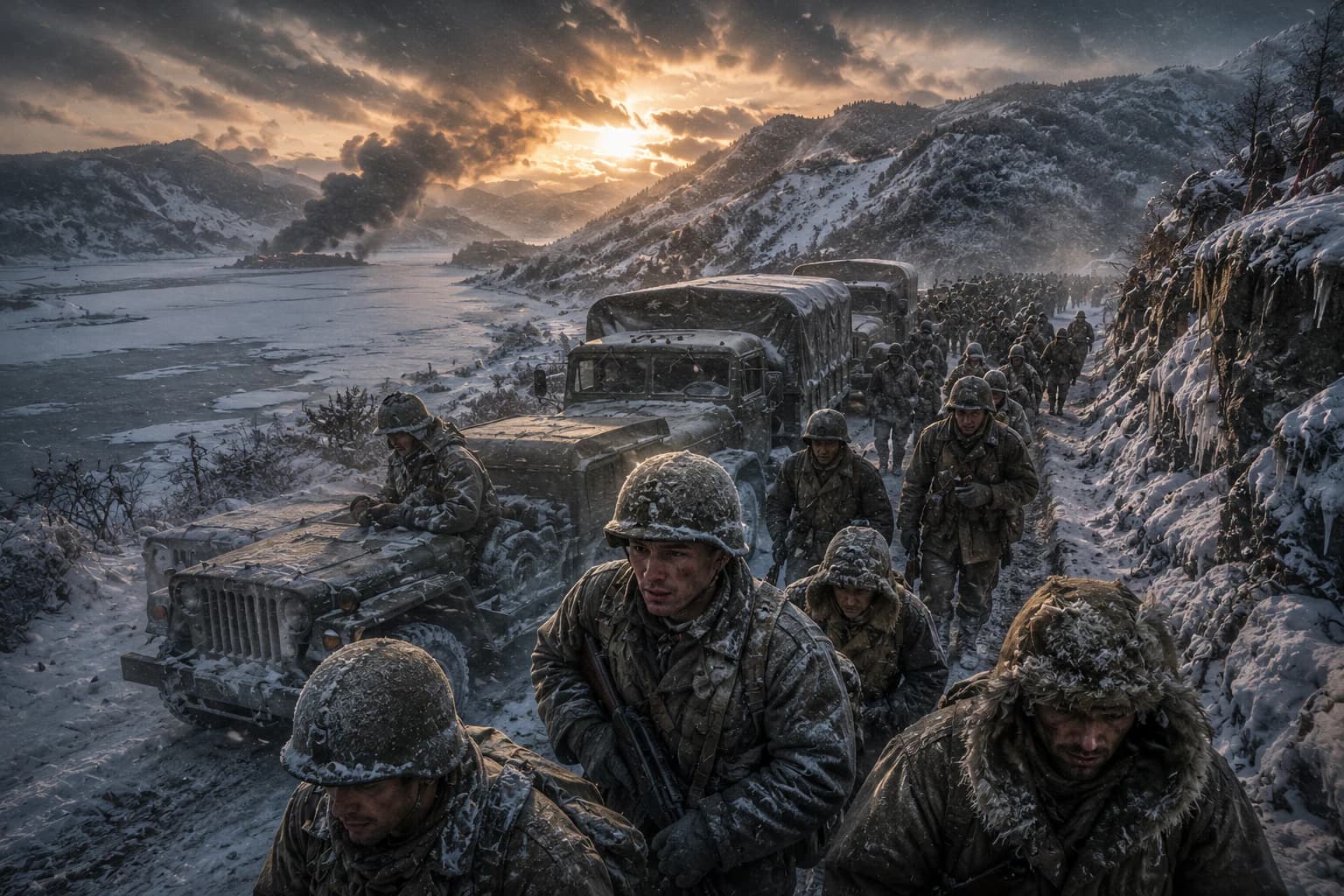
The Korean War was the central catastrophe of Kim's rule. In June 1950 North Korean forces crossed the 38th parallel, rapidly taking Seoul and driving south before United Nations forces led by the United States intervened. The war then swung violently: North Korea nearly collapsed after the Inchon landing, Chinese intervention rescued it, and the front eventually settled near the original dividing line. The armistice of 1953 ended open fighting but not the war itself, because no peace treaty followed. For Koreans, the cost was immense: cities destroyed, families divided, civilians killed in huge numbers, and political systems hardened on both sides. For Kim, failure became usable. He presented survival as victory, blamed enemies for devastation, and used wartime emergency to justify even tighter control.

1950s–1960s

Power consolidation

Postwar North Korea was reconstructed with heavy support from the Soviet Union, China and other socialist states, but Kim also used the period to eliminate alternative centers of power. Domestic communists, Soviet-Korean figures, Yan'an-linked communists associated with China, and other rivals were removed through purges, trials, demotions and political pressure. By the late 1950s and 1960s, Kim had achieved a level of personal dominance rare even among communist leaders. Juche, usually translated as self-reliance, became the ideological language of this consolidation. It promised national independence from great powers, but it also justified obedience to a leader presented as the interpreter of Korea's destiny. The state became less a normal communist bureaucracy than a personalized command system.

1960s–1980s

Cult of leadership

The mature Kim system fused politics, surveillance, family classification, propaganda and ritual. Portraits, songs, study sessions, monuments and official histories made Kim the source of wisdom, protection and national life. The songbun system classified citizens according to perceived political loyalty and family background, affecting education, residence, employment and survival chances. Labor camps and repression punished real and imagined dissent. At the same time, the regime claimed social achievements in literacy, mobilization, health and reconstruction, especially in its earlier decades. The point is not to deny that North Korean society changed under Kim, but to see the cost of how it changed. Development was tied to obedience; citizenship was tied to loyalty; truth was subordinated to the leader's myth.

1980s–1994

Preparing succession

Kim Il-sung's most consequential late decision was dynastic succession. Communist systems usually claimed legitimacy through party, class and revolution, not bloodline. Kim reshaped that logic by elevating Kim Jong-il through party posts, propaganda, cultural control and ideological presentation. The succession was gradual, allowing elites to adapt and making loyalty to the Kim family the safest political position. Meanwhile North Korea's economy became increasingly rigid, dependent and isolated, especially as relations among China, the Soviet Union and the wider socialist bloc shifted. Kim remained active into old age and held talks with South Korea's leadership shortly before his death was expected to open new possibilities. He died in July 1994 before a planned inter-Korean summit could take place.

Post-1994

Enduring system

Kim's legacy is not past tense inside North Korea. After his death, he was elevated as Eternal President, while Kim Jong-il and later Kim Jong-un ruled within institutions and myths he created. The famine of the 1990s, nuclear weapons program, military-first politics, sanctions, repression and continuing division of Korea all belong to the world after Kim Il-sung, but none can be understood without his foundations. He built a state that survived the Cold War's end by making loyalty, isolation and dynastic legitimacy mutually reinforcing. Outside North Korea, he is remembered as the architect of one of the most controlled societies in modern history. Inside official memory, he remains liberator, founder and patriarch. The distance between those two images is the measure of the system he made.

Continue in context

Connected stories

Move from the profile into the wider events and settings this figure belongs to.

Tertiary paths

Content note

This profile is written for educational use and connects to related Stories of History pages. The main portrait uses a real historical or editorial image, with source and licence details recorded for attribution review. Image policy Image attribution

References

Sources & Further Reading

Reliable reference works, archives and reading paths connected to this profile.

Further reading

  1. Encyclopaedia Britannica, Search results for Kim Il-sung,” accessed June 2026.Open source
  2. WorldCat, Books and library holdings for Kim Il-sung,” accessed June 2026.Open source

Primary sources

  1. Library of Congress, Search results for Kim Il-sung,” accessed June 2026.Open source

Reviewed claim sources

Loading reviewed claim sources...

A weekly route through history

Find out first about the latest published stories, feature notes and occasional Premium offers in one weekly email.