← People

John of Gaunt

John of Gaunt was duke of Lancaster. A prince with enormous estates and ambitions in Spain, he upheld Richard II’s monarchy while building the inheritance that later carried his own descendants towards the crown.

Born
1340 CE
Died
1399 CE
Role
Duke of Lancaster
Full name
John of Gaunt, Duke of Lancaster

Duke of Lancaster (1340–1399)

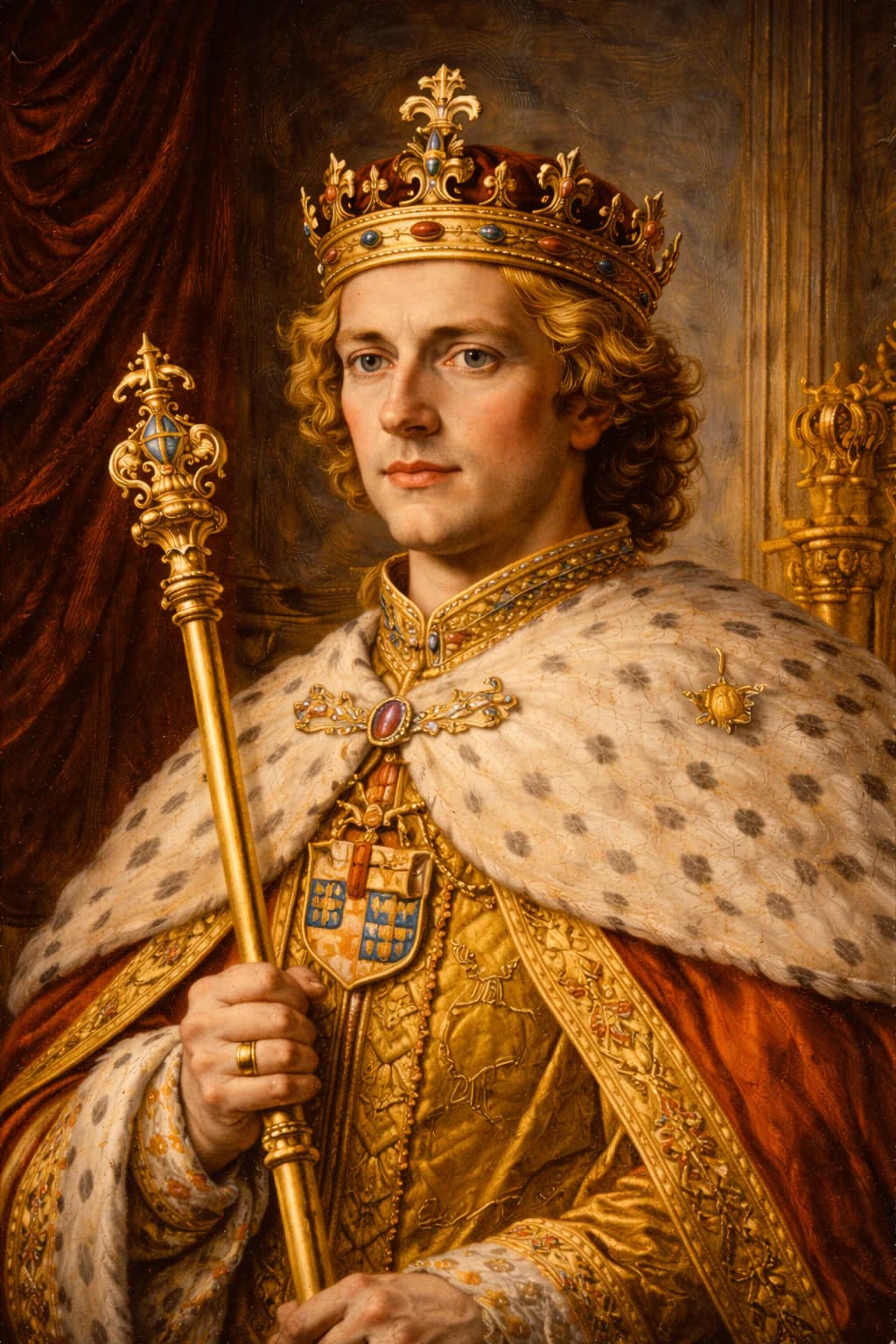
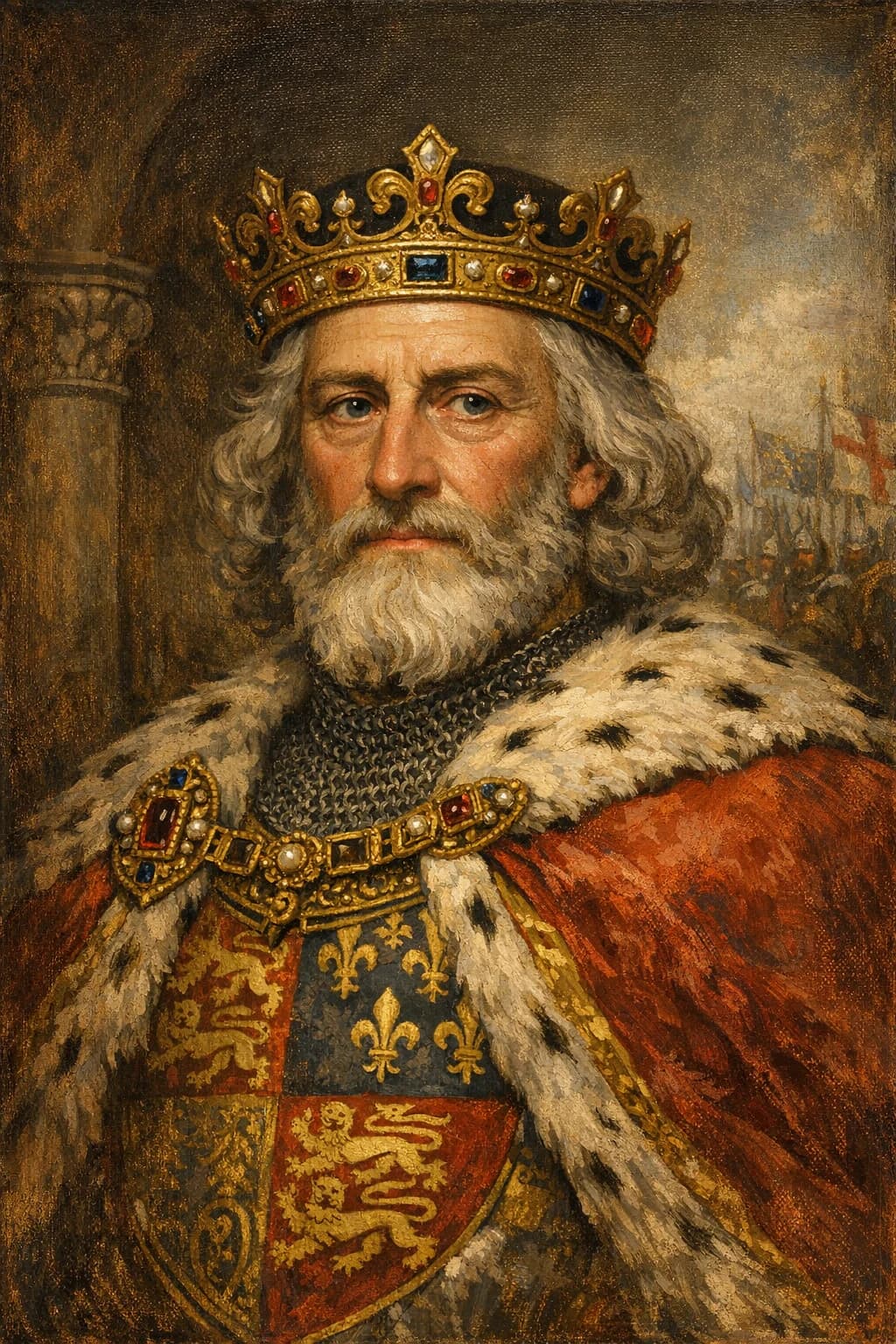
AI-generated portrait of John of Gaunt in period clothing; an interpretive reconstruction, not a documented likeness
AI-assisted historical reconstruction

An illustrative reconstruction based on historical context. It is not a photograph or documentary likeness. Image policy

Life Journey

The prince whose inheritance outlasted his ambitions

Follow John from a younger royal son to the centre of a far-reaching dynastic inheritance.

Complete chronology

1340–1359

A prince born in Ghent

John entered a royal family already committed to continental war. Born in Ghent in 1340, he was a younger son of Edward III and Philippa of Hainault, behind the Black Prince in the succession. Gaunt was an English rendering of his Flemish birthplace. Like other royal sons, he needed an inheritance and a useful role rather than an immediate expectation of kingship. Marriage, military service and grants of land could turn that secondary position into substantial power. His career would show how a prince far from the crown could become essential to the kingdom’s government.
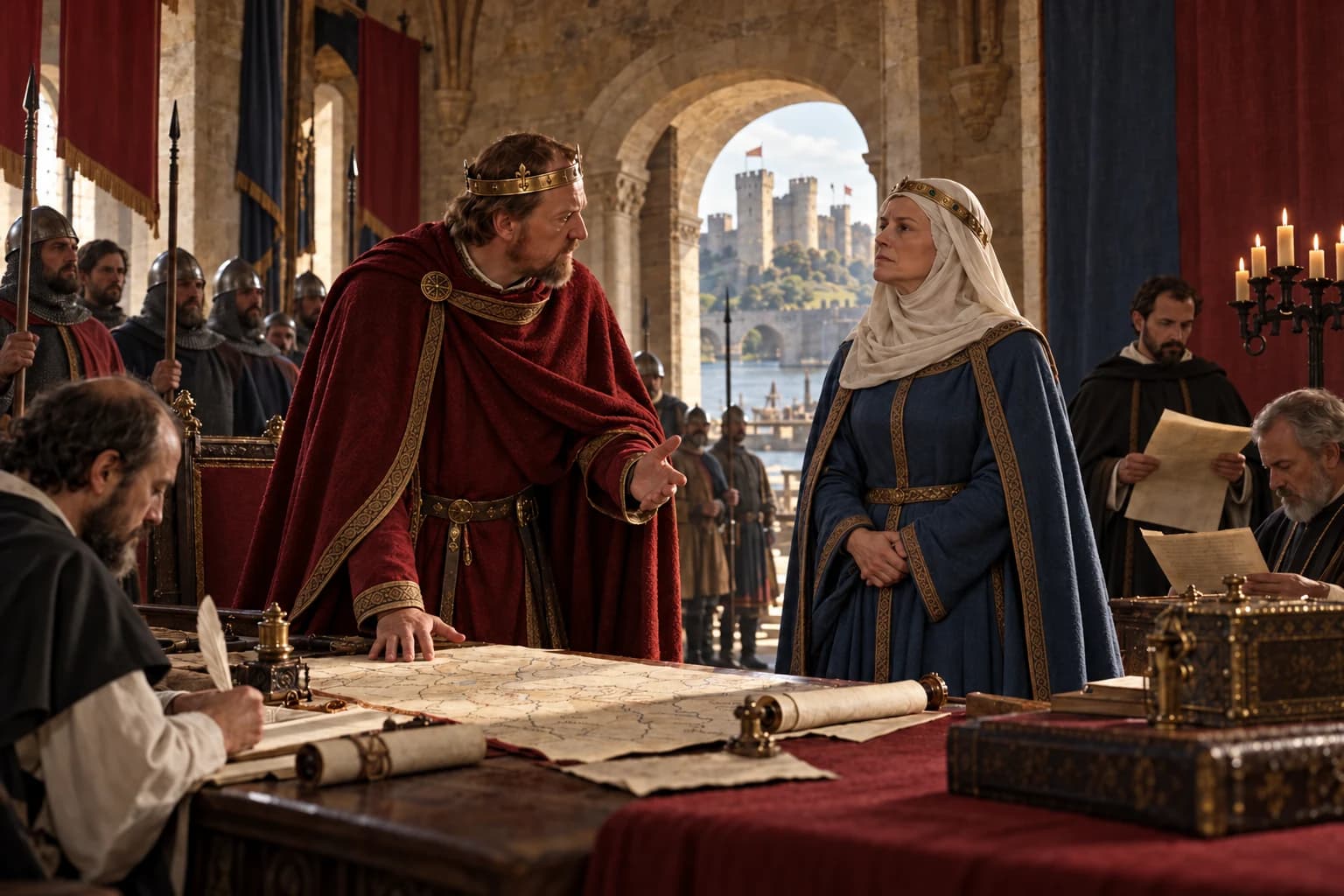
1359–1362

The Lancaster inheritance

John married Blanche in 1359. The deaths of her father and sister brought the great Lancaster inheritance into their household, and Edward III made John Duke of Lancaster in 1362. These estates were a network of lands, revenues, offices and people, rather than simply a grand title. They supported soldiers, administrators and political dependants across the kingdom. Blanche’s inheritance supplied the practical foundation for John’s later influence. It also explains why the seizure of that property after his death could become a national crisis: a great aristocratic affinity stood behind the family’s rights.

1360s–1373

War and its costs

John took part in the intervention in Castile that culminated in the Black Prince’s victory at Nájera in 1367. Victory there did not resolve the financial and political difficulties of English war-making. In 1373, John led a major expedition from Calais across France towards Bordeaux. The army covered an extraordinary distance but suffered heavily and won little permanent advantage. Such campaigns could devastate communities without delivering the territorial gains their commanders wanted. John remained a serious military figure, but the distance between aristocratic ambition and sustainable conquest repeatedly shaped his career.

1371–1388

A crown beyond England

Constance’s father, Pedro of Castile, had been killed by his rival and half-brother Enrique. John’s marriage to Constance in 1371 allowed him to claim the Castilian crown in her right. He used the claim in his titles and rebuilt Kenilworth with a grandeur suited to royal ambitions. His expedition to Iberia in the 1380s failed to turn the claim into effective rule. Negotiation eventually offered another route: their daughter Catherine married the future Enrique III. John abandoned his pursuit of the crown, while a dynastic marriage placed his descendants inside the succession.

1376–1380

Power beside the throne

The final years of Edward III’s reign left a weakening king and a disputed political direction. John’s elder brother died in 1376, leaving the young Richard as heir. John’s wealth and seniority made him central to government, but they also exposed him to suspicions that he wanted too much authority. Disputes over ministers, taxation and war sharpened hostility towards him. He also protected the reforming cleric John Wycliffe for a time. When Richard became king in 1377, John supported the new monarchy rather than claiming the throne, though distrust of his intentions persisted.

1381

The Savoy burns

The rising of 1381 brought rebels into London and put royal government under immediate pressure. John was absent, which helped him survive, but his Savoy palace became a conspicuous target. Its destruction expressed hostility towards a man associated with enormous wealth and unpopular government. The rebels did not act against a single tax in isolation; grievances included labour controls, local abuses and the unequal demands of lordship. For John, the violence revealed how vulnerable aristocratic magnificence could become. A palace that advertised power also gave anger a place to gather.

1389–1395

Holding the family together

John returned to England after Richard had endured a confrontation with the Lords Appellant. His seniority and extensive connections made him useful in stabilising relationships within the ruling elite. He continued to serve his nephew, while negotiating with France and defending his own rights. This was not a harmonious family settlement: Richard’s ambitions and the interests of his uncles and cousins could pull in different directions. Yet John’s presence offered a kind of restraint. His importance came partly from being powerful enough to mediate, and partly from being invested in keeping the monarchy intact.

1396–1397

Katherine and the Beauforts

Katherine had been John’s partner for years before they married, and their children carried the name Beaufort. Marriage in 1396 was followed by papal and royal recognition of the children’s legitimacy. The settlement changed their legal standing without removing every future political objection to their descendants’ place in the succession. Through Blanche, John was the father of Henry Bolingbroke; through Katherine, he became an ancestor of the Tudor kings. These were different branches with different claims. Their later importance grew out of arrangements made within a household long before a Tudor monarchy was imaginable.

1398–1399

An inheritance seized

Richard banished Henry Bolingbroke in 1398. When John died in February 1399, Richard took control of the Lancaster inheritance and shut off Henry’s expected route to possession. This threatened more than one exile’s wealth: it raised fears about the security of noble inheritance itself. Henry returned while Richard was in Ireland, gathered support and ultimately displaced him as Henry IV. John did not live to see his son crowned, and he had spent years supporting Richard’s monarchy. The succession that followed his death grew from the destruction of the balance he had helped maintain.

Continue in context

Connected stories

Move from the profile into the wider events and settings this figure belongs to.

Tertiary paths

Content note

This profile is written for educational use and connects to related Stories of History pages. The main portrait is an AI-assisted historical reconstruction, included as an illustrative aid rather than documentary evidence. Image policy

References

Sources & Further Reading

Reliable reference works, archives and reading paths connected to this profile.

Sources used

  1. Duchy of Lancaster, “Our History and Timeline,” accessed 2 October 2026.

    Lancaster inheritance, ducal title and the succession crisis of 1399.

    Open source
  2. English Heritage, “History of Kenilworth Castle,” accessed 2 October 2026.

    Gaunt’s Castilian ambitions and extensive rebuilding.

    Open source
  3. Westminster Abbey, “Geoffrey Chaucer,” accessed 2 October 2026.

    Literary patronage and Blanche of Lancaster.

    Open source
  4. University of Southampton, “Some lordships of John of Gaunt,” accessed 2 October 2026.

    Research on Gaunt’s family, household and political networks.

    Open source

Further reading

  1. Encyclopaedia Britannica, “Search results for John of Gaunt,” accessed June 2026.Open source
  2. WorldCat, “Books and library holdings for John of Gaunt,” accessed June 2026.Open source

Primary sources

  1. Library of Congress, “Search results for John of Gaunt,” accessed June 2026.Open source

Reviewed claim sources

Loading reviewed claim sources...

A monthly route through history

Find out first about the latest published stories, feature notes and occasional Premium offers in one monthly email.