People

Richard II

Richard II was King of England from 1377 to 1399. He survived the Peasants' Revolt, clashed with the Lords Appellant, ruled through favourites and revenge, and was deposed by Henry IV.

Born
1367 CE
Died
1400 CE
Role
English king

English king (1367–1400)

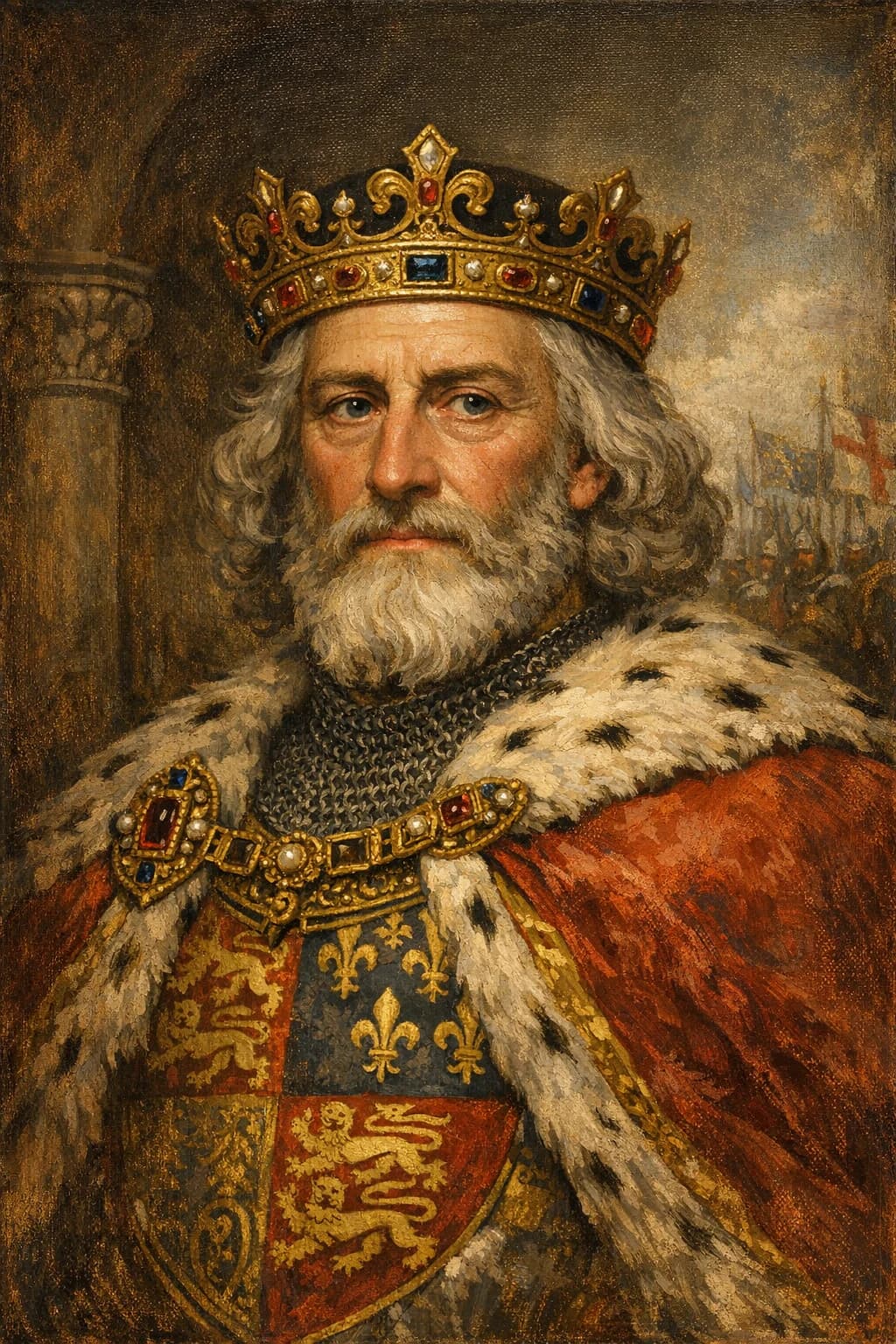
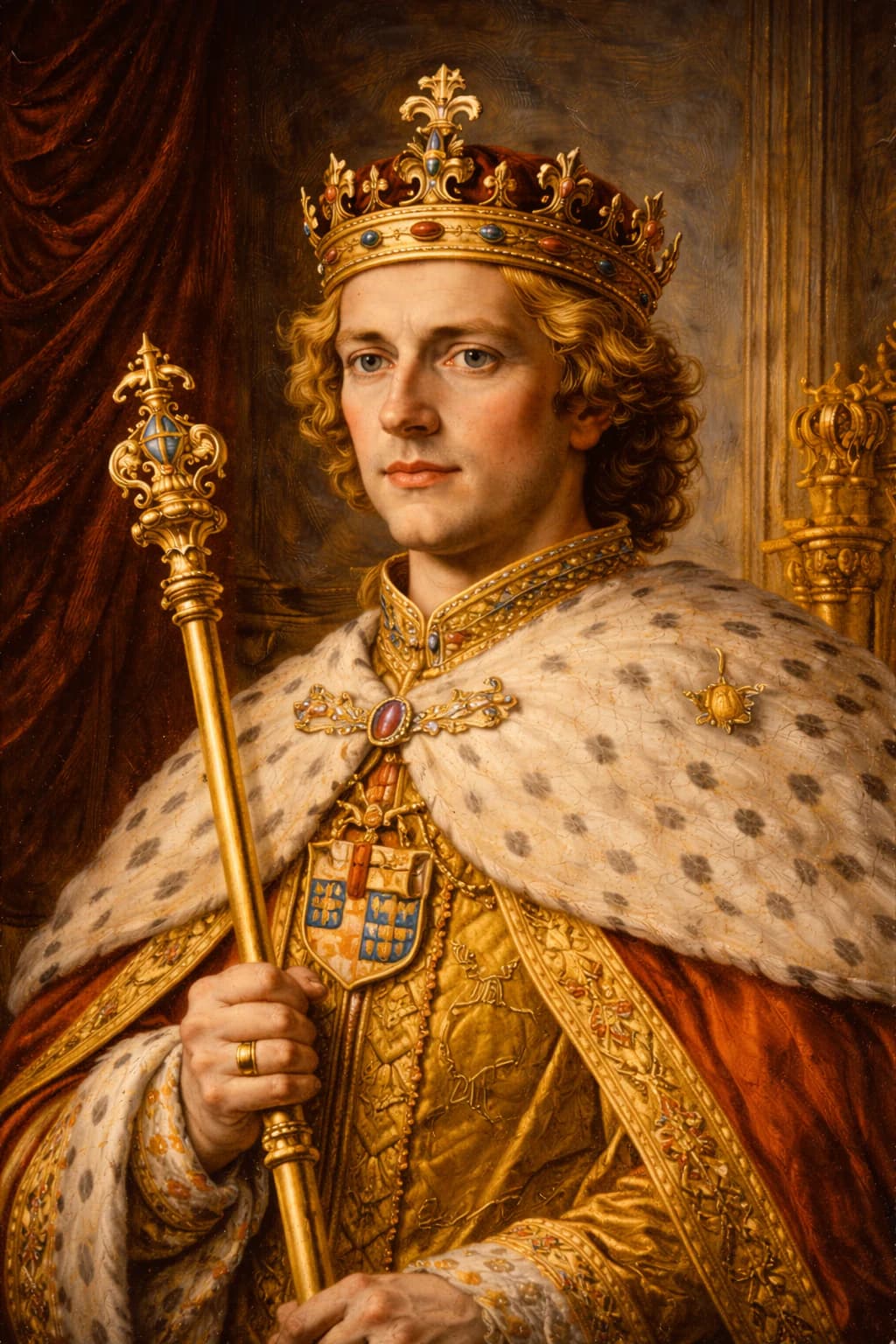
AI-generated portrait of Richard II in medieval royal attire
AI-assisted historical reconstruction

An illustrative reconstruction based on historical context. It is not a photograph or documentary likeness. Image policy

Quick answer

Richard II was King of England from 1377 to 1399. He survived the Peasants' Revolt, clashed with the Lords Appellant, ruled through favourites and revenge, and was deposed by Henry IV.

Born
1367 CE
Died
1400 CE
Role
English king
Years
1367-1400 CE
Facts

Richard II timeline facts

Selected specifics from this profile's life story.

1367
Royal Childhood

Richard was born at Bordeaux in 1367, the son of Edward the Black Prince and grandson of Edward III, and became heir to England before he was old enough to understand the politics around him.

1380s
Struggles with Nobles

Richard's reliance on favourites such as Robert de Vere and Michael de la Pole angered great nobles who believed the king was excluding them from rightful influence.

1399
Return of Bolingbroke

Henry Bolingbroke returned from exile in 1399 while Richard was in Ireland, first claiming his inheritance and then gathering enough support to challenge the throne itself.

1400
Death and Legacy

Richard died at Pontefract Castle in 1400, probably starved or otherwise neglected after a failed rising in his name, and became a warning about monarchy without trust.

Life Journey

A fragile crown tested by revolt, ambition, and loss of trust

Follow the story in a more continuous narrative, with a reading mode that matches how much depth you want.

Complete chronology

1367

Royal Childhood

Richard II's biography begins inside the triumph and exhaustion of the Plantagenet monarchy. His father, Edward the Black Prince, had been one of the most admired soldiers of the Hundred Years' War, but illness killed him in 1376 before he could inherit the throne. When Edward III died the next year, the crown passed to a ten-year-old boy whose lineage was glorious and whose experience was almost nonexistent. Richard inherited not only a kingdom but a war with France, heavy taxation, factional court politics, and expectations built around the memory of a warrior father he could never fully imitate. His minority placed enormous power in the hands of royal councils, magnates, and household figures, teaching him early that a king could possess majesty while others handled the machinery of rule.
1377

Becomes King

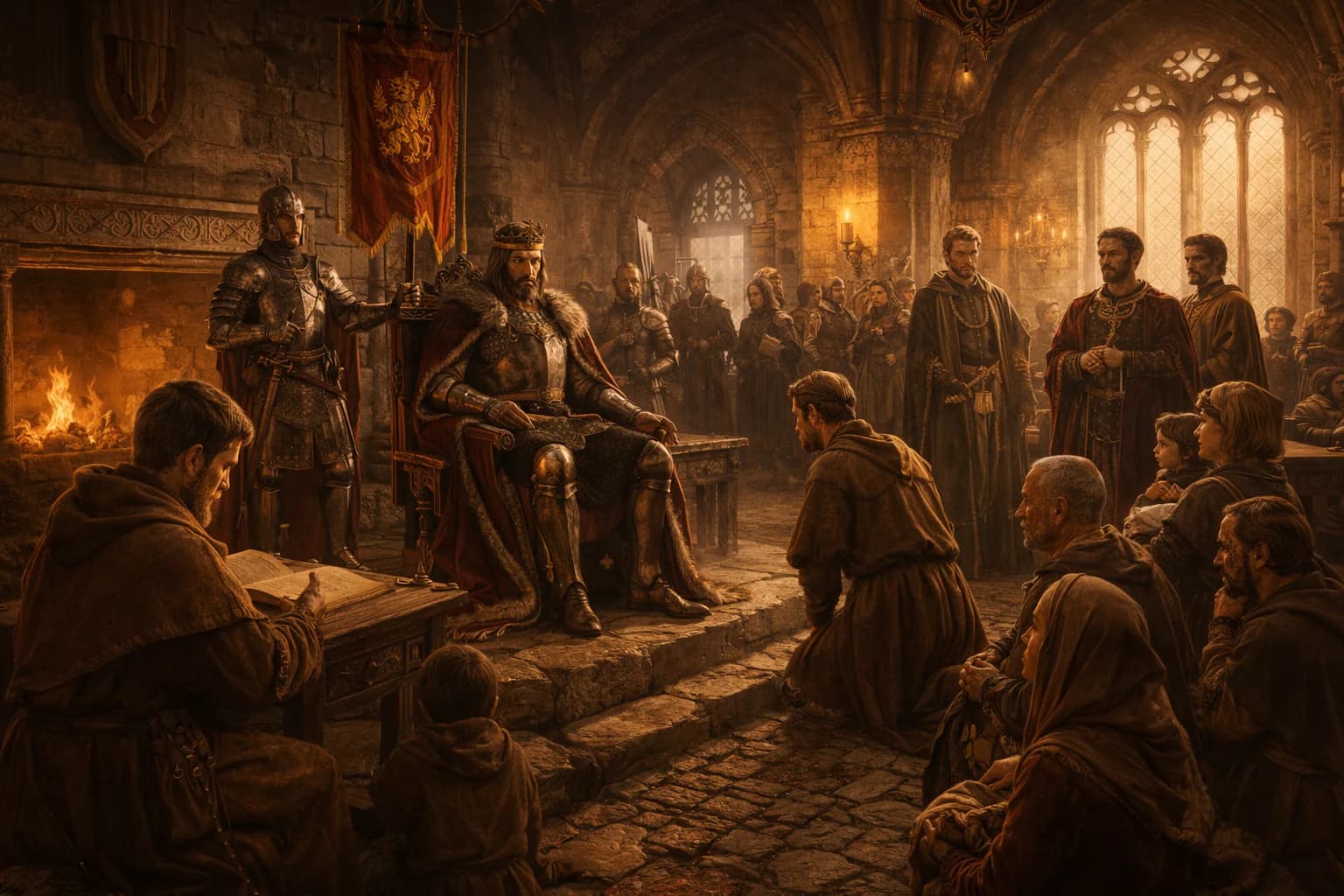
The young king's accession created a delicate constitutional problem. England needed royal authority, but Richard was a child, and the leading nobles were unwilling to let one household faction monopolise access to him. Parliament and council therefore became unusually important. John of Gaunt, Duke of Lancaster, was the most powerful royal uncle, yet even he could not simply govern as regent without provoking suspicion. For Richard, the lesson was double-edged: monarchy depended on ceremony, consent, and advice, but it could also feel humiliatingly constrained. Later in life he would develop an exalted idea of kingship, partly because his earliest years showed him how easily a king's name could be used by other men.

1381

Peasants’ Revolt

The Peasants' Revolt was fuelled by the poll tax, labour tensions after the Black Death, anger at corrupt officials, and resentment toward a government seen as remote and exploitative. Rebels from Kent and Essex entered London, killed royal officers, and forced the government into direct confrontation with popular revolt. Richard, only fourteen, met them first at Mile End and then at Smithfield after the rebel leader Wat Tyler was killed. His apparent nerve mattered: by presenting himself as the rebels' sovereign rather than their enemy, he helped disperse a dangerous crowd. Yet the promises made under pressure were quickly withdrawn, and repression followed. The episode gave Richard a lasting memory of royal theatre working in a moment of terror, but it did not teach him much about compromise.

1380s

Struggles with Nobles

By the mid-1380s Richard was determined to rule through men he trusted. That was not unusual for a medieval king, but his choices alarmed powerful magnates who saw policy, patronage, and royal favour being concentrated around a narrow circle. Robert de Vere, elevated with extraordinary generosity, became a particular symbol of the king's judgement; Michael de la Pole, made Earl of Suffolk and chancellor, became another. Parliament pushed back, critics spoke of misgovernment, and Richard responded by insisting that royal authority should not be treated as a committee possession. The conflict was personal, institutional, and generational at once: a young king wanted mastery, while older aristocrats believed they were defending the realm from reckless counsel.

1390s

Assertion of Authority

The crisis came when a group later known as the Lords Appellant moved against Richard's inner circle. They defeated de Vere at Radcot Bridge in 1387 and used the Merciless Parliament of 1388 to execute, exile, or disgrace the king's allies. Richard was not removed, but he was publicly humbled. In 1389 he declared himself of age and gradually restored royal control with surprising patience. For much of the 1390s he governed more smoothly, pursued peace with France, married Isabella of Valois, and cultivated a court culture that emphasised dignity, ceremony, and the sacred nature of kingship. The calm was real, but it rested on memory. Richard had not forgiven the men who had once reduced him to a spectator in his own reign.

1397–1398

Exile of Rivals

Richard's revenge against the Lords Appellant changed the character of his reign. The Duke of Gloucester was arrested and died in custody; the Earl of Arundel was executed; the Earl of Warwick was condemned and imprisoned. Richard then used a compliant parliament to undo earlier restraints and reward loyal supporters. When Henry Bolingbroke and Thomas Mowbray quarrelled, Richard exiled both, then extended Bolingbroke's banishment after the death of John of Gaunt and seized the Lancastrian inheritance. This was the fatal overreach. Medieval kings had wide powers, but aristocratic property and hereditary right were central to political trust. By treating Bolingbroke's inheritance as a weapon, Richard frightened nobles who might otherwise have stayed neutral.

1399

Return of Bolingbroke

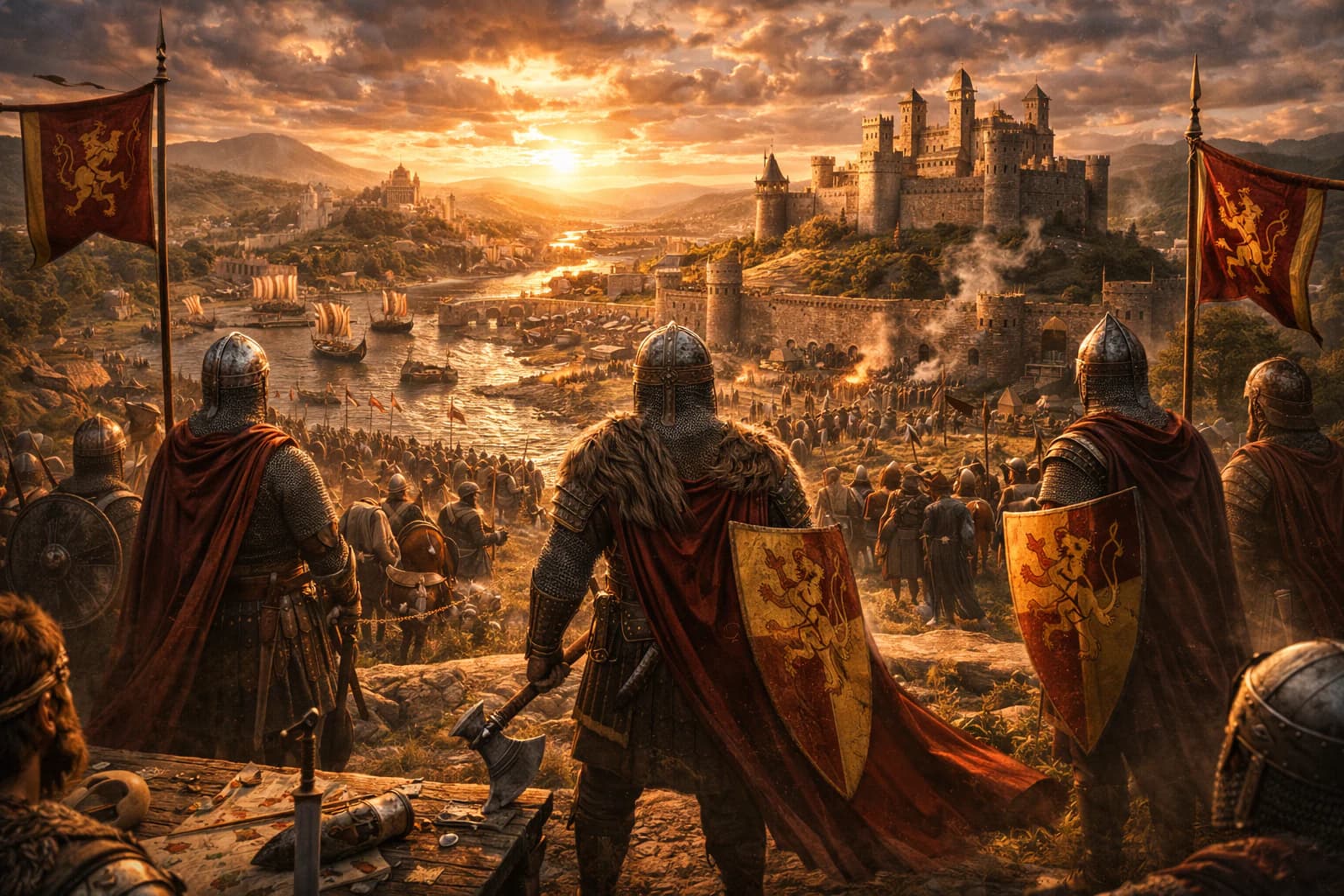
Richard's expedition to Ireland left England exposed at exactly the wrong moment. Bolingbroke landed in Yorkshire with a limited public claim: he wanted the lands and rights of the Duchy of Lancaster restored. That claim was powerful because many nobles understood it as a defence of inherited property against arbitrary royal seizure. Support gathered quickly. Richard returned from Ireland to find that the political map had shifted beneath him, with former supporters calculating that Bolingbroke offered a safer future. The crisis revealed that Richard's authority had become brittle. He still possessed the crown, but trust had drained away from the institutions and relationships that made the crown usable.

1399

Deposition

Richard's deposition in 1399 was staged with legal and ceremonial care because everyone involved understood the danger of what they were doing. The official case against him emphasised misgovernment, broken promises, excessive taxation, arbitrary rule, and the alienation of his people. Henry Bolingbroke did not merely reclaim Lancaster; he accepted the crown as Henry IV, founding the Lancastrian line. The event mattered far beyond one man's failure. It showed that an anointed king could be judged politically inadequate and replaced, even if the language used to justify that replacement remained cautious. Later struggles over succession, legitimacy, and parliamentary authority would repeatedly look back to the unresolved questions opened by Richard's fall.

1400

Death and Legacy

Richard's final months were spent in captivity, first as a former king and then as a living risk to Henry IV's new regime. A rebellion in early 1400 attempted to restore him, making his continued survival politically dangerous. He died soon afterward at Pontefract Castle; the precise circumstances remain uncertain, but starvation has long been suspected. His body was displayed to prove he was dead, yet his memory did not disappear. Supporters could turn him into a martyr, dramatists into a tragic king, and political thinkers into a case study in failed rule. Richard II's legacy is not simply that he was deposed. It is that he tested the language of sacred monarchy against the practical requirement that a king retain the confidence of those who could uphold or abandon him.

Continue in context

Connected stories

Move from the profile into the wider events and settings this figure belongs to.

British Monarchs lineage
Lineage42 rulers
British Monarchs
1066 CE–present

Trace the English and later British monarchy from William I to today.

View lineage
Tertiary paths

Content note

This profile is written for educational use and connects to related Stories of History pages. The main portrait is an AI-assisted historical reconstruction, included as an illustrative aid rather than documentary evidence. Image policy

References

Sources & Further Reading

Reliable reference works, archives and reading paths connected to this profile.

Further reading

  1. Encyclopaedia Britannica, Search results for Richard II,” accessed June 2026.Open source
  2. WorldCat, Books and library holdings for Richard II,” accessed June 2026.Open source

Primary sources

  1. Library of Congress, Search results for Richard II,” accessed June 2026.Open source

Reviewed claim sources

Loading reviewed claim sources...

A weekly route through history

Find out first about the latest published stories, feature notes and occasional Premium offers in one weekly email.