Complete chronology
Full overview and deeper context for every journey step.
1806
Born into engineering
Brunel grew up in a household where engineering was not an abstract profession but a daily language. His father, Marc Isambard Brunel, had fled revolutionary France and become one of Britain's most inventive engineers, famous for machinery and tunnelling. The younger Brunel inherited both technical exposure and ambition. He learned drawing, mathematics, mechanics, and the habit of seeing obstacles as design problems. His name itself seemed built for distinction, but his career was not guaranteed. Victorian Britain rewarded engineering brilliance, yet it also punished failure brutally through bankruptcy, injury, and public embarrassment. Brunel would live at that edge.
Early immersion in a craft can turn curiosity into conviction long before formal success appears.
1820–1822
Training in Europe
Brunel's education in France gave him precision and breadth. He studied mathematics, drafting, and practical engineering in a culture with its own technical traditions, then returned to Britain with a continental confidence in design as a disciplined art. He was not merely a dreamer of large things. He could calculate, draw, supervise, and argue for them. That combination mattered because his later works often required persuading investors, directors, workers, and the public that an unprecedented structure was not madness. Brunel's imagination was most powerful when joined to the page: plans, sections, gradients, stresses, and costs.
Exposure to different traditions can expand the limits of what feels possible to create.
1825–1828
Thames Tunnel work
The Thames Tunnel was one of the most dangerous engineering projects of its age. Marc Brunel's tunnelling shield made possible work beneath the Thames, but the river repeatedly threatened to break in. Young Isambard served as resident engineer and nearly died in the catastrophic flood of 1828. Workers endured foul air, instability, and constant risk. The tunnel's delays and finances were punishing, yet the project proved that subaqueous tunnelling could be attempted with new technology rather than wishful courage. For Brunel, it was a brutal apprenticeship. He learned that great engineering was not clean triumph. It was calculation conducted in mud, debt, injury, and fear.
Breakthroughs often emerge from environments where failure is frequent and danger is real.
1831
Clifton Bridge vision
The Avon Gorge demanded a bridge that was both structurally daring and visually worthy of its setting. Brunel's proposal for the Clifton Suspension Bridge showed his instinct for drama: engineering as public spectacle, not merely utility. The project was delayed by finance, politics, and unrest, and Brunel never saw it completed. Yet the design became inseparable from his identity. It captured the quality that made him famous: a willingness to make infrastructure emotionally powerful. Clifton was not just a way across a gap. It was a statement that modern engineering could possess grandeur once reserved for cathedrals and monuments.
A bold idea can define a career even before it is fully realised.
1833–1841
Great Western Railway
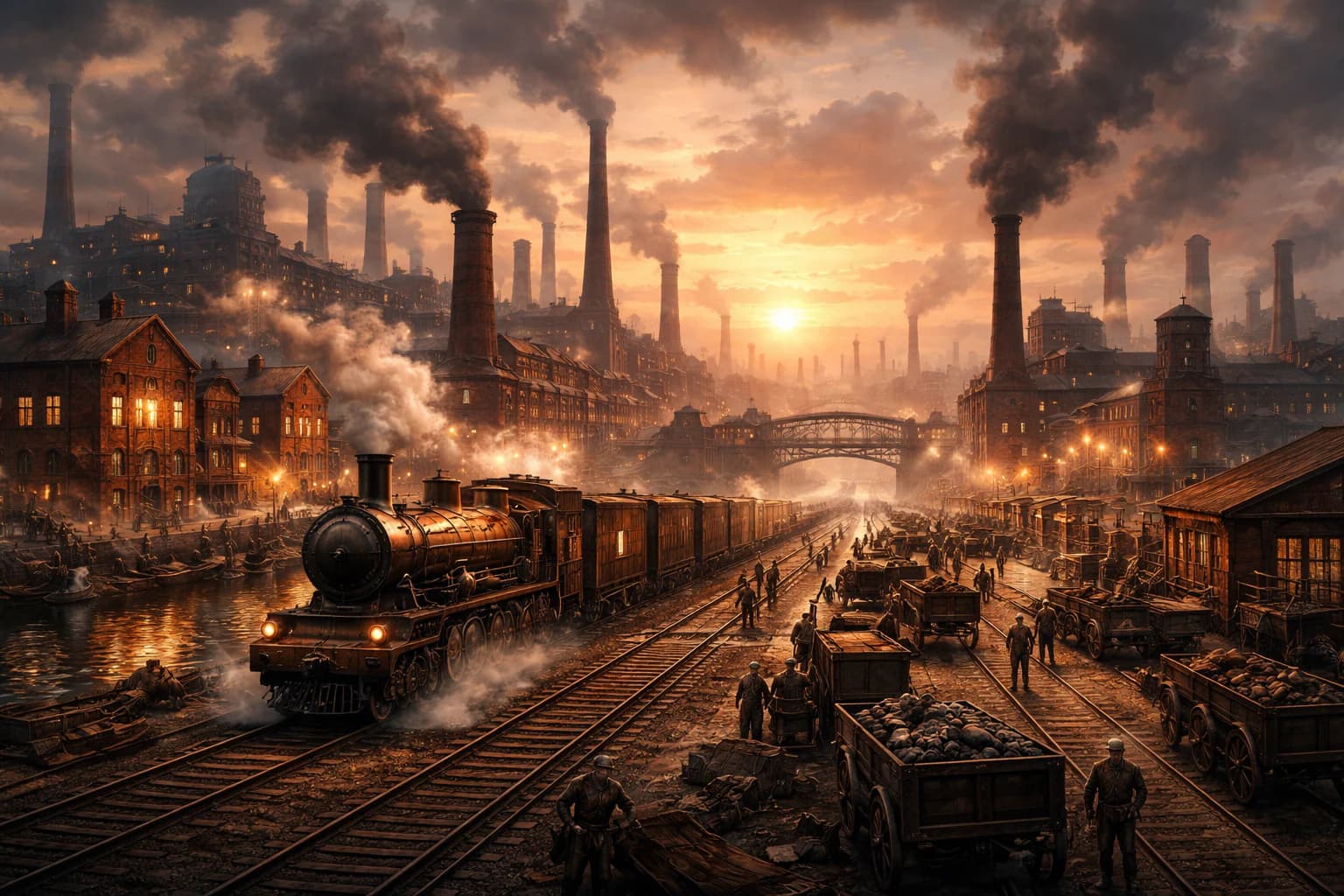
Brunel treated the Great Western Railway as a complete transport system. He chose gentle gradients and sweeping curves where possible, accepted expensive tunnels and bridges to preserve speed, and designed stations, viaducts, and alignments as parts of one experience. His broad gauge track was controversial: supporters praised its smoothness and speed, while opponents attacked the cost and incompatibility with other lines. The gauge war eventually went against Brunel's preference, but the railway itself transformed movement between London, Bristol, and the west. It showed the Victorian public that engineering could reorganise geography. Distance became timetable.
Transformative systems come from seeing every component as part of a larger whole.
1837–1845
Steamship innovation
Brunel's steamships extended the logic of the Great Western Railway onto the sea. The Great Western proved that large steamships could cross the Atlantic commercially. The Great Britain went further: an iron-hulled, screw-propelled ocean liner of extraordinary importance in maritime engineering. Brunel understood transport as a chain. Passengers and goods should move from city to port to ocean with increasing speed and reliability. His ships were technically bold and financially hazardous, but they pointed toward the modern world of integrated global travel. He was not designing isolated machines. He was designing systems of movement.
Innovation often means extending a vision beyond its original domain.
1854–1858
The Great Eastern
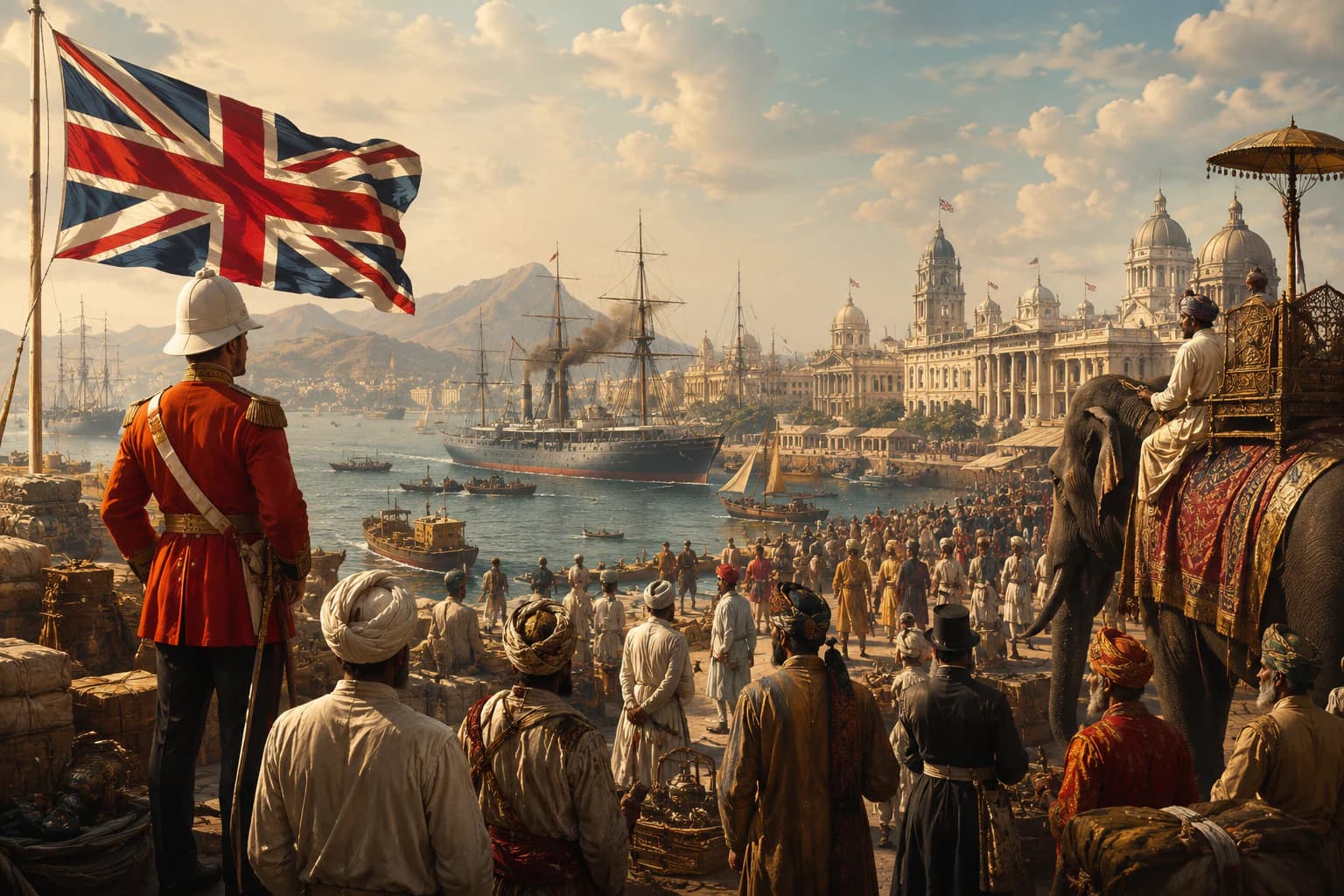
The Great Eastern was conceived for long routes to India and Australia without frequent coaling stops. Its scale was astonishing: iron construction, double hull, paddle wheels and screw propeller, and a capacity far beyond contemporary demand. Construction was plagued by technical problems, accidents, cost overruns, and public doubt. The launch itself became an ordeal. Commercially, the ship failed to fulfil Brunel's passenger dream. Yet its size later made it invaluable for laying transatlantic telegraph cables, helping connect continents by communication rather than travel. The Great Eastern reveals Brunel's paradox: he could see the future clearly, but not always the market timing that would make it profitable.
Ideas ahead of their time may fail in one role yet succeed unexpectedly in another.
1859
Final years
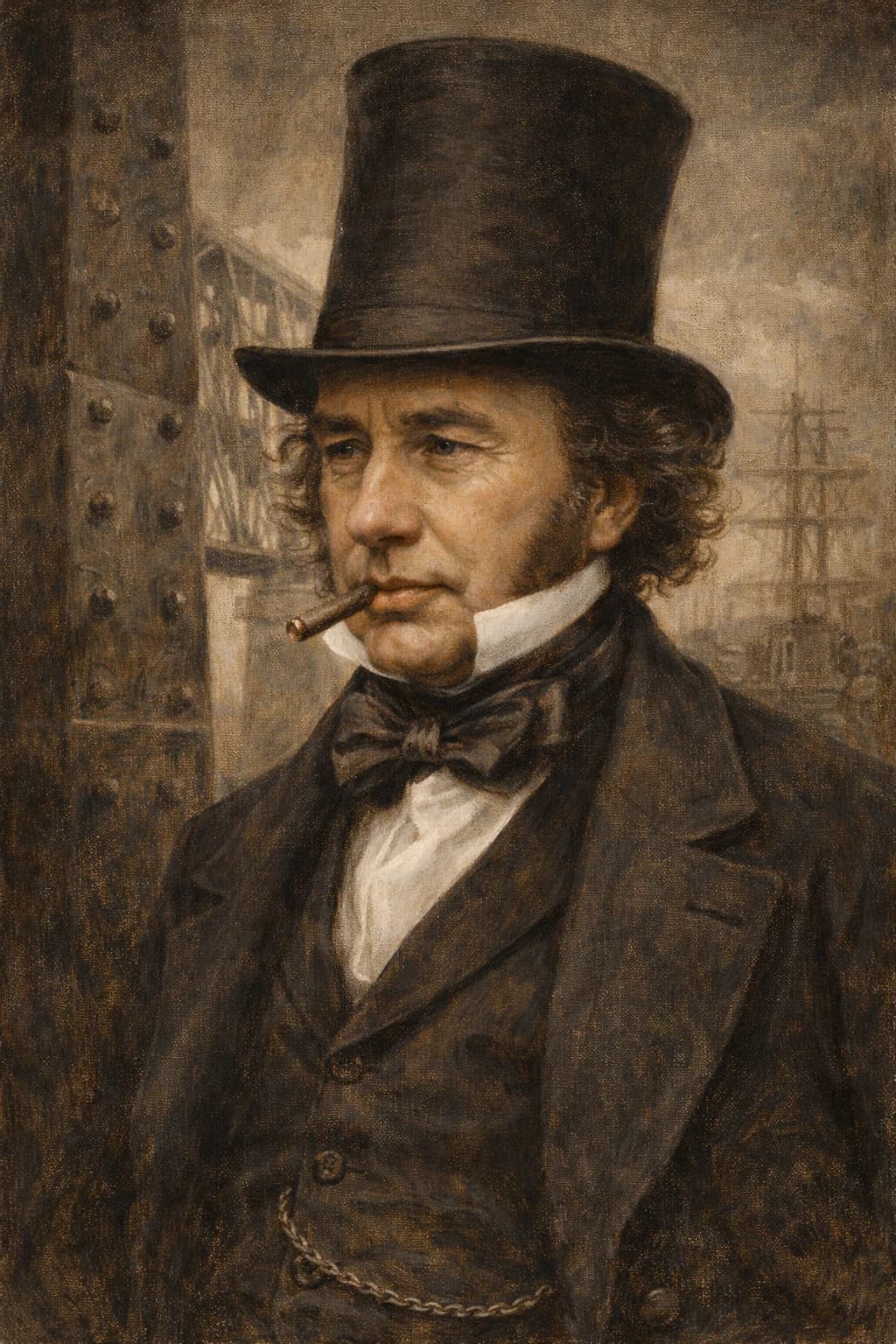
Brunel drove himself brutally. He managed crises across multiple projects, travelled constantly, smoked heavily, and absorbed pressures that would have exhausted a larger organisation. The Great Eastern's difficulties weighed heavily on him, and he suffered a stroke in 1859 before dying at only fifty-three. His death came just as Victorian engineering was becoming more corporate, specialised, and bureaucratic. Brunel belonged to an earlier heroic phase, when one engineer's vision could dominate a railway, a bridge, and an ocean liner. The cost of that model was personal as well as financial. He burned through his strength trying to make the impossible practical.
A life driven by creation can burn brightly but at significant personal cost.
After 1859
Enduring legacy
Brunel's legacy is visible and conceptual. The Clifton Suspension Bridge, the Great Western Railway, Paddington Station, Box Tunnel, the Royal Albert Bridge, and his great steamships all belong to the story of a Britain remade by movement. Not every decision was vindicated. The broad gauge vanished, the atmospheric railway failed, and the Great Eastern was a commercial disappointment before its cable-laying afterlife. But even his failures were instructive because they stretched the boundaries of what engineers attempted. Brunel made infrastructure feel imaginative. He helped define the Victorian belief that design, iron, steam, and nerve could redraw the limits of ordinary life.
True influence lies not only in what is built, but in how it reshapes the imagination of those who follow.