Complete chronology
Full overview and deeper context for every journey step.
1068
Youngest son
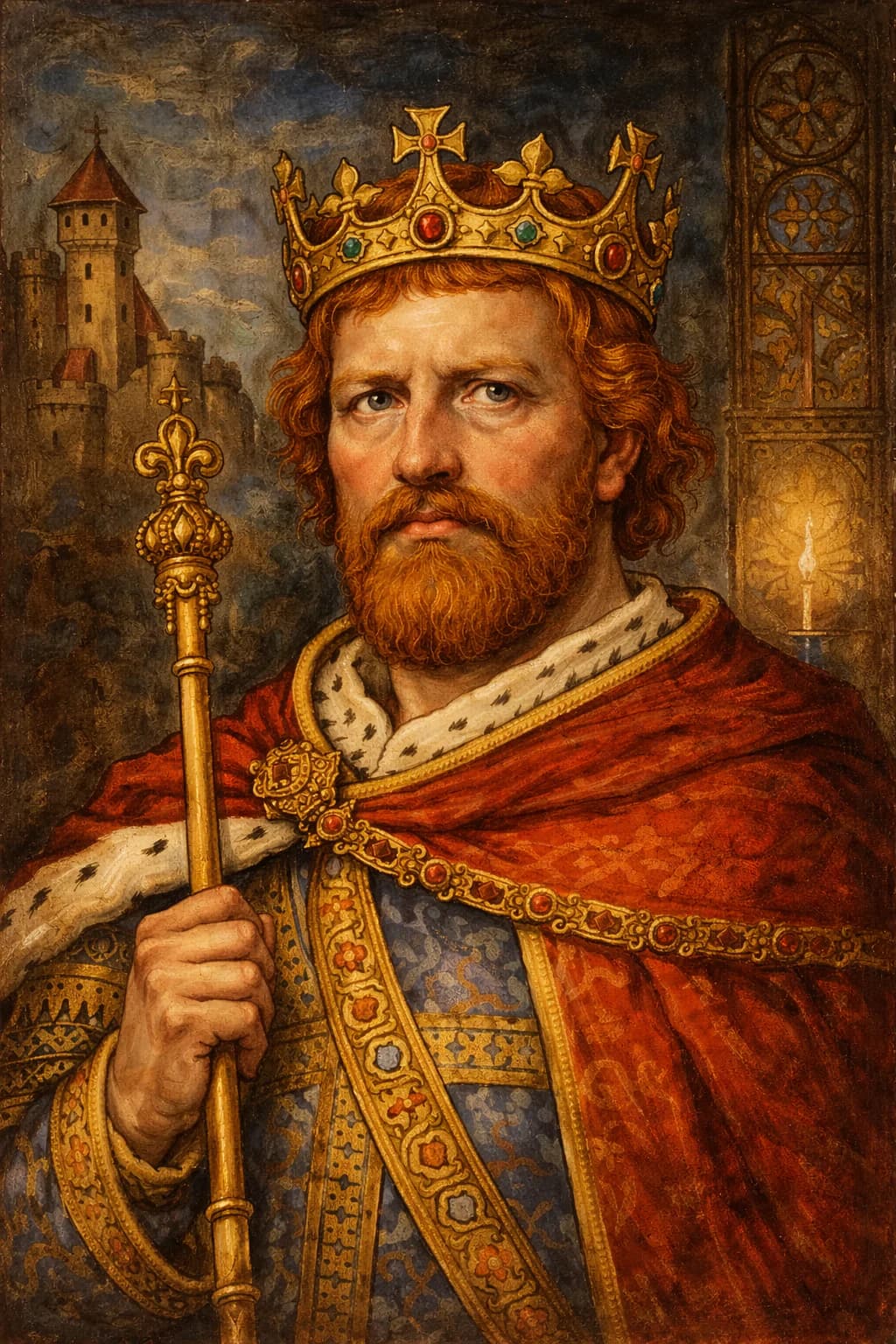
Henry was born into the new Norman ruling house created by the conquest of England in 1066. As the youngest surviving son of William the Conqueror and Matilda of Flanders, he began life behind Robert Curthose, Richard, and William Rufus in the family hierarchy. That position mattered. Henry had status, education, and access, but not the straightforward inheritance that shaped his elder brothers' futures. Chroniclers later called him Beauclerc, the fine scholar, a nickname that probably exaggerates his learning but captures a real distinction: Henry understood documents, revenue, law, and the practical language of rule. In a dynasty built by war, he learned that administration could be as powerful as a sword.
Being overlooked early can encourage preparation rather than complacency.
1080s
Education and ambition
William the Conqueror's death in 1087 split the family's power: Robert received Normandy, William Rufus took England, and Henry received money rather than a settled realm. That division pushed Henry into the hard school of dynastic politics. He bought territory in the Cotentin, lost and regained influence, and learned to survive between stronger brothers who distrusted one another. The experience sharpened the traits that would define his kingship: speed in a crisis, legal caution when useful, and a keen eye for treasuries, castles, and oaths. Henry's rise was not inevitable. It was built through patience, opportunism, and an unusually clear grasp of how the Norman state worked.
Skill and awareness can compensate for a lack of immediate advantage.
1100
Seizing opportunity
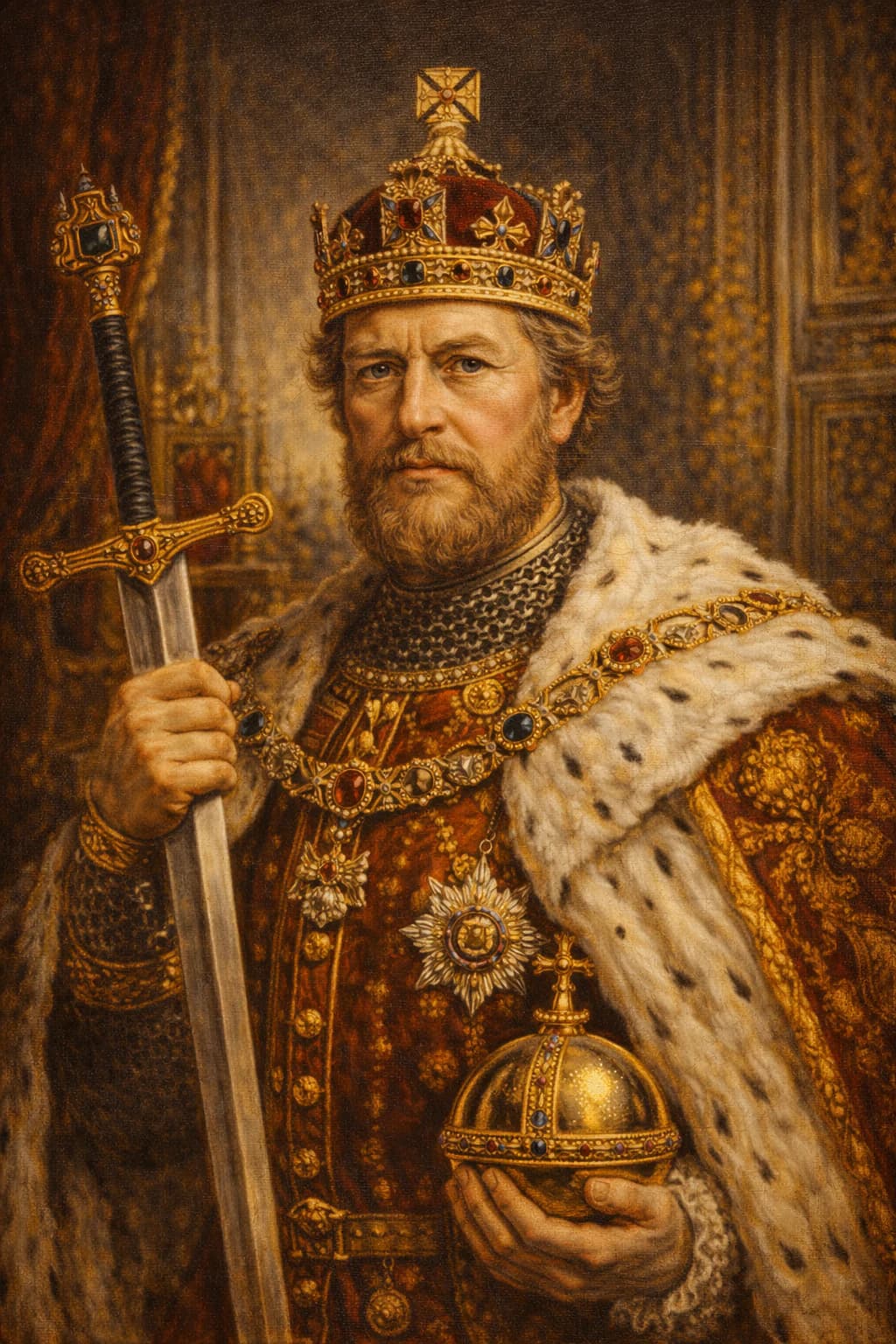
William Rufus died while hunting in the New Forest on 2 August 1100, and the speed of Henry's response was decisive. Robert Curthose, the elder brother with a strong dynastic claim, was away on crusade. Henry rode to Winchester, took control of the royal treasury, and had himself crowned at Westminster within days. Later suspicion surrounded the hunting accident, but no firm evidence proves Henry arranged it. What is certain is that he understood the politics of the moment better than anyone else. In medieval kingship, possession mattered. By controlling the treasury, winning church support, and presenting himself as the answer to instability, Henry converted a sudden death into a successful accession.
Timing and decisiveness can determine who claims power in moments of uncertainty.
1100
Charter of liberties
Henry's Charter of Liberties was both a political pledge and a calculated piece of royal branding. It promised relief from certain abuses involving church vacancies, inheritances, marriages, and excessive royal demands. The charter did not make Henry a constitutional monarch, and he was perfectly capable of harsh rule when it suited him. But it mattered because it framed kingship as something answerable to custom, justice, and recognised limits. By presenting himself as a restorer rather than a usurper, Henry won breathing room from barons and clergy who might otherwise have rallied to Robert. More than a century later, memories of such royal promises would echo in the political world that produced Magna Carta.
Promises of fairness can strengthen authority when power is newly claimed.
1106
Defeating his brother
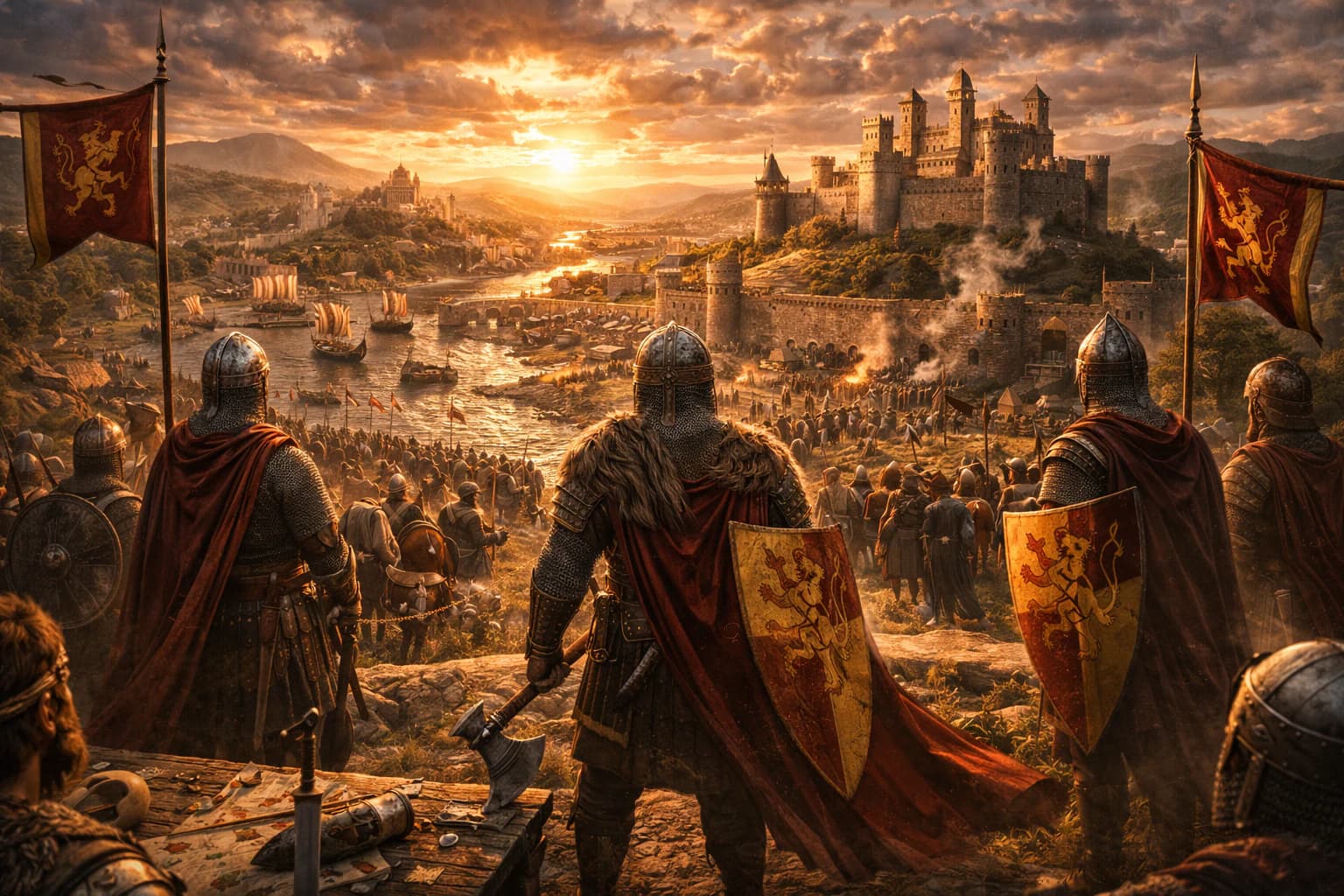
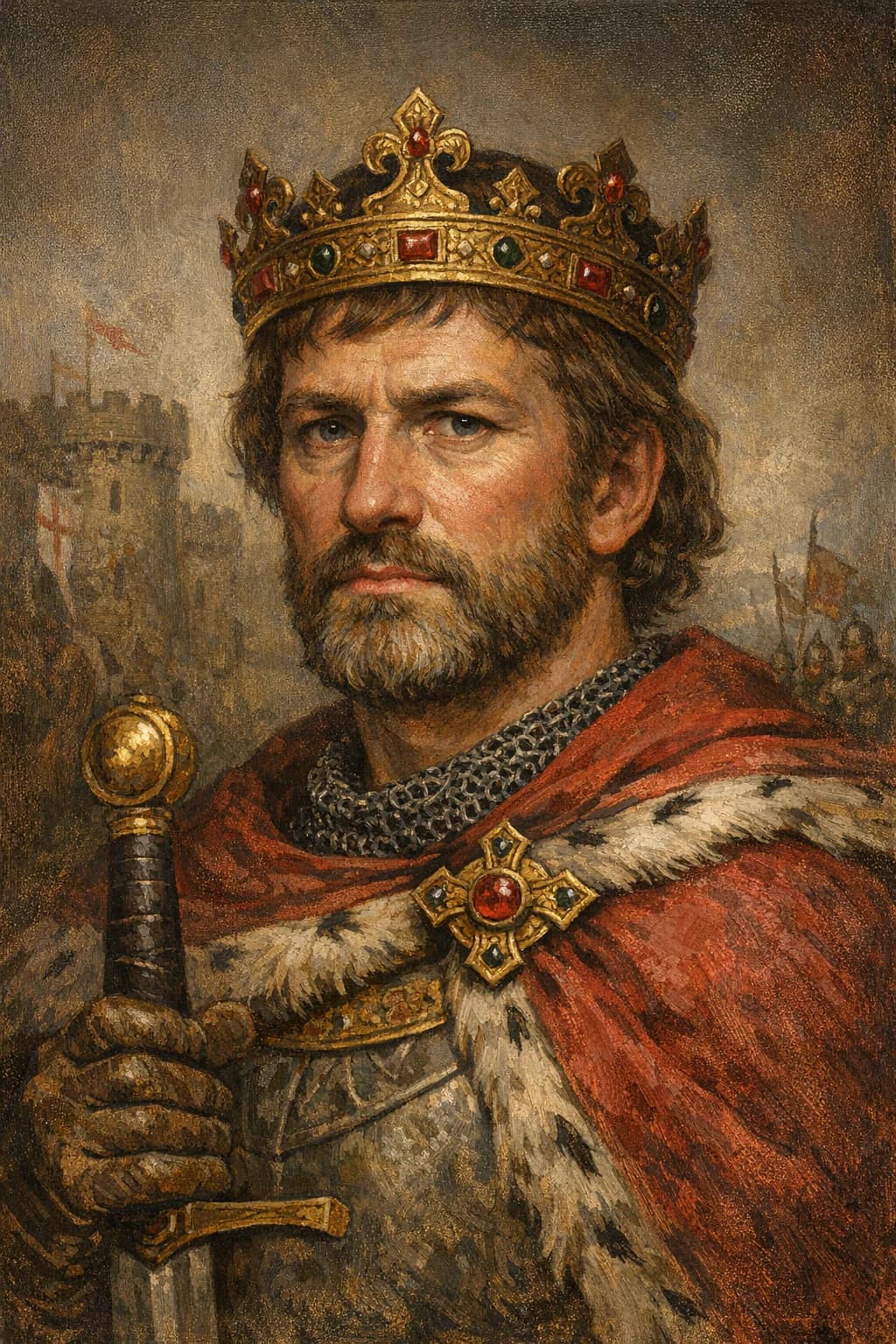
Robert Curthose invaded England in 1101 but accepted a settlement; Henry then spent years undermining his brother's authority in Normandy. The decisive battle came at Tinchebray in 1106, exactly forty years after Hastings. Henry's victory was more than a family triumph. Robert was captured and kept in confinement for the rest of his life, while Normandy, the Conqueror's original power base, returned to the English king's control. That reunion strengthened Henry's prestige and resources, but it also pulled him into constant cross-Channel management. England helped finance Norman security; Norman politics demanded English attention. Henry had solved one dynastic problem by force, only to inherit the burden of ruling a realm whose centre of gravity lay on both sides of the sea.
Removing rivals can secure power, but also increases responsibility for maintaining unity.
1110s–1120s
Administrative reform
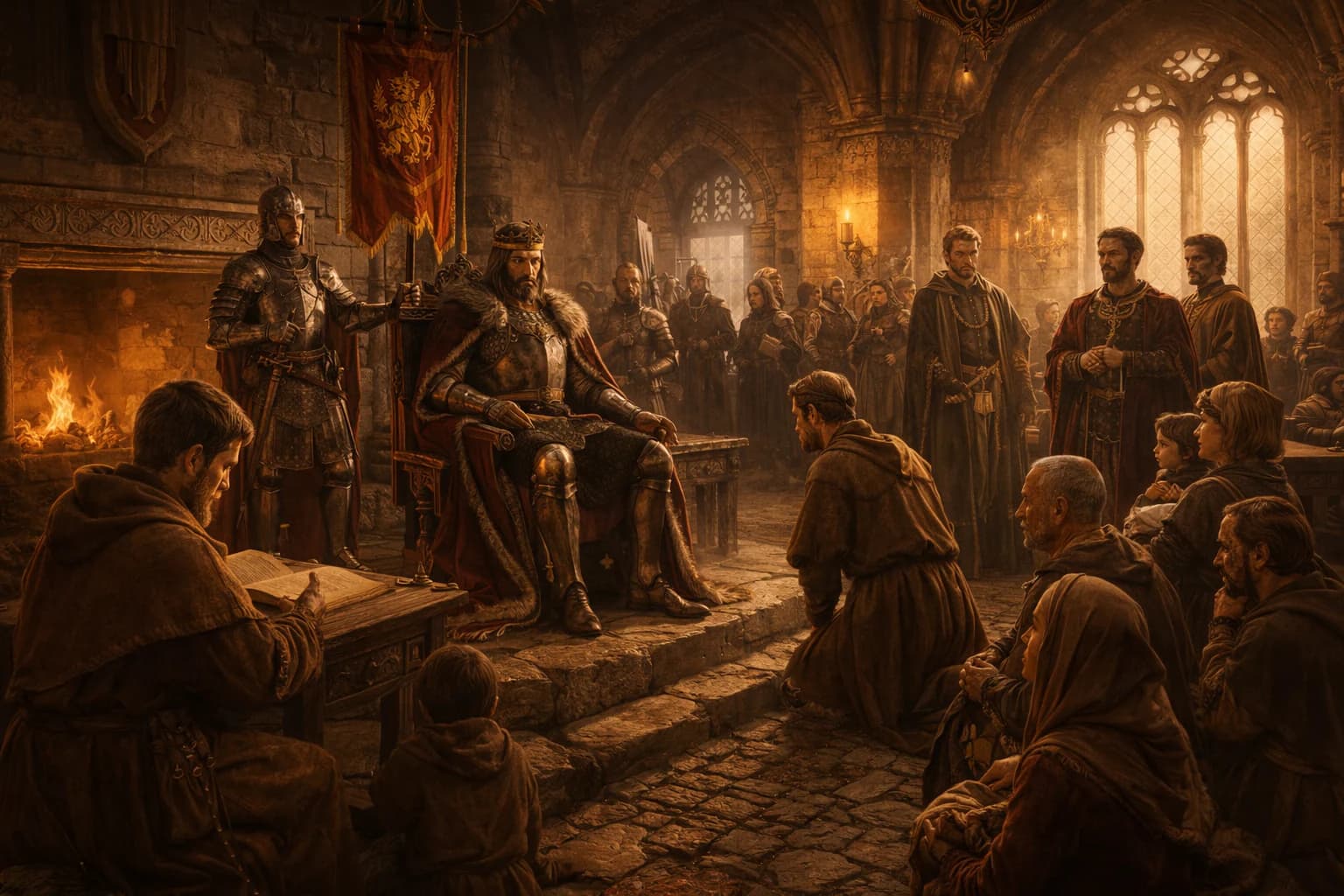
Henry's greatest achievement was not a single battle but the tightening of government. Under him the Exchequer developed into a more regular financial institution, using audits, written records, and disciplined accounting to track what sheriffs owed the crown. Royal justice also became more visible, with travelling officials and central oversight extending the king's authority into local disputes. This did not mean modern bureaucracy, and much still depended on personality, patronage, and force. Yet Henry's reign helped make the Anglo-Norman monarchy unusually effective for its age. He used capable administrators, including men of relatively modest background, because skill served royal power. The result was a monarchy that could collect, judge, punish, and remember.
Strong institutions can extend a ruler’s influence beyond their immediate presence.
1120
Succession tragedy
On 25 November 1120 the White Ship struck a rock and sank off Barfleur. Among the dead was William Adelin, Henry's legitimate son and accepted heir. The disaster was personal, dynastic, and political all at once. Henry had many illegitimate children, but only one legitimate son; his daughter Matilda was widowed from the German emperor and later married Geoffrey of Anjou. The king remarried Adeliza of Louvain in the hope of producing another male heir, but no child followed. A monarchy that looked orderly suddenly depended on persuading a male aristocracy to accept a woman as ruler. The White Ship did not merely kill a prince. It exposed how much medieval stability rested on one fragile body.
Even carefully planned systems can be undone by unforeseen events.
1120s–1135
Securing the future
Henry did not ignore the succession crisis. He made the political community swear repeated oaths to recognise Matilda, his surviving legitimate child, as heir. The plan was bold but brittle. Matilda had imperial status and formidable ancestry, yet no woman had ruled England in her own right, and her second marriage to Geoffrey of Anjou alarmed many Norman magnates who distrusted Angevin power. Henry could command vows while alive, but he could not control how men would interpret duty once he was dead. His late reign therefore combined administrative confidence with dynastic anxiety. The machinery of government remained strong; the question of who would inherit it remained dangerously unsettled.
Authority cannot always guarantee acceptance of unconventional decisions.
post-1135
A structured monarchy
Henry died in Normandy in 1135, famously after eating lampreys against medical advice, though the detail comes through hostile or moralising tradition. His nephew Stephen moved quickly to take the crown, despite the oaths sworn to Matilda, and England entered the long civil conflict later known as the Anarchy. That failure has often overshadowed Henry's achievement, but it should not erase it. He consolidated Norman rule, restored Normandy to the English crown, strengthened the Exchequer, expanded royal justice, and showed how disciplined administration could magnify royal authority. His legacy is therefore double-edged. Henry I made the English monarchy more capable, more literate in power, and more financially alert; he also proved that even a highly organised state could be thrown into crisis when succession lost consent.
Building strong systems does not always ensure a stable succession.