Complete chronology
Full overview and deeper context for every journey step.
1056
Royal birth
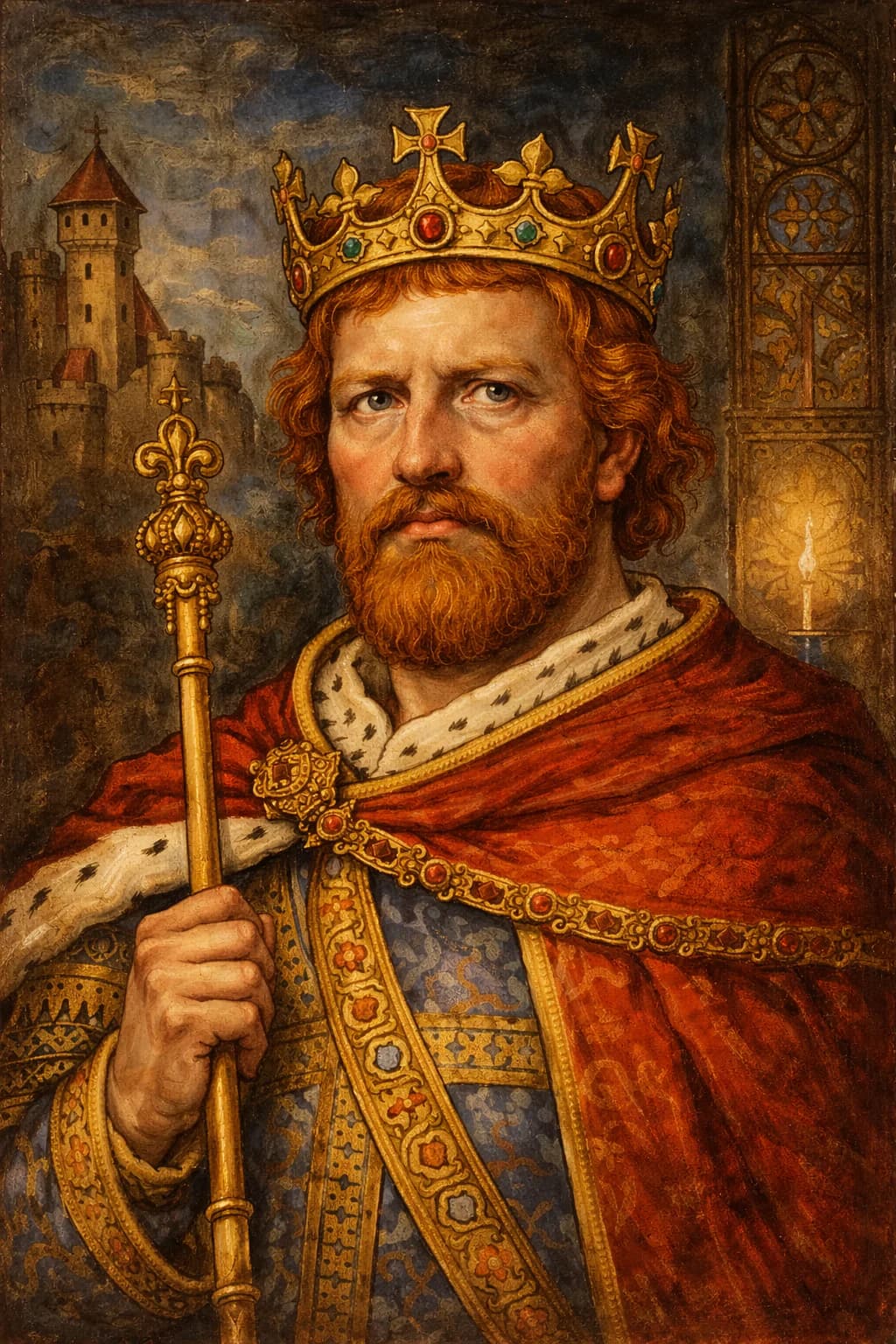
William Rufus was one of the sons of William the Conqueror and Matilda of Flanders. His nickname probably referred to his ruddy complexion or hair, but it also suits the vivid, aggressive personality later chroniclers gave him. He was not the eldest son and was not expected to inherit Normandy. Instead, he belonged to a family whose power depended on holding together a conquest still fresh enough to bleed. He learned kingship from a father who used castles, land grants, church appointments and terror when necessary. Rufus inherited that hard political world, and he proved more than willing to govern within it.
Being born into power meant learning not how to gain it, but how to hold onto it.
1087
Inheritance of throne
The Conqueror's settlement created a problem almost immediately. England and Normandy were politically linked by aristocrats who held land on both sides of the Channel, but they now owed loyalty to different brothers. Rufus moved quickly to secure the English crown, gaining support from Lanfranc, Archbishop of Canterbury, and from key royal officials. Robert Curthose, more charismatic to some nobles but less disciplined, became a natural focus for those who disliked Rufus. The split inheritance made rebellion almost inevitable. Rufus's reign began as a test of whether England would remain a separate royal power or become an appendage of Norman aristocratic politics.
Inheritance can bring authority, but it also brings new divisions that must be managed.
1087–1090s
Securing authority
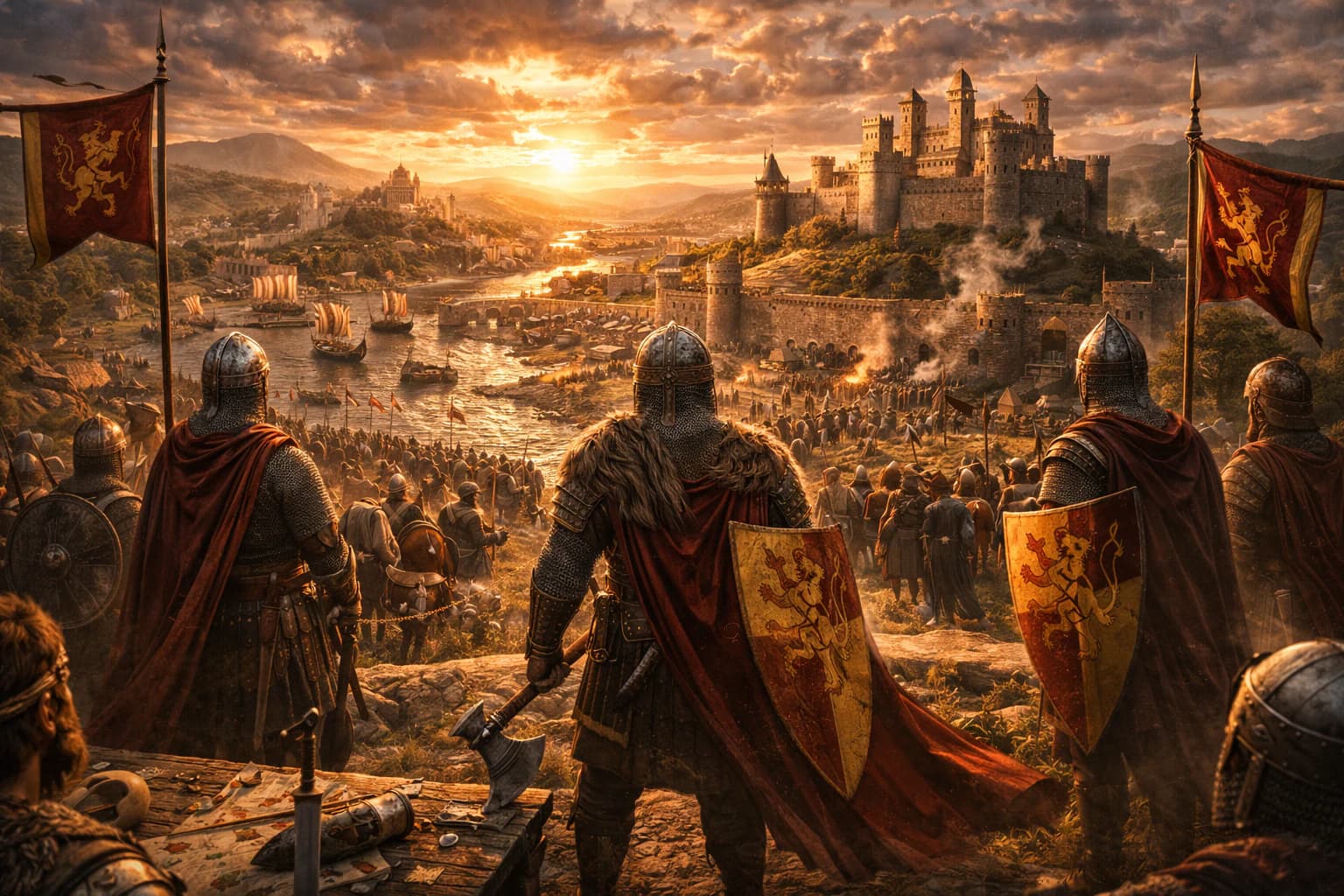
The revolt of 1088 was the first great test of Rufus's kingship. Leading magnates, including Bishop Odo of Bayeux, preferred a single lord for England and Normandy and backed Robert Curthose. Rufus responded with a mixture of speed, promises and popular appeal. He called English forces to his side, promised better laws and lower taxes, and crushed the rebels castle by castle. The victory strengthened royal authority and showed that the post-conquest English monarchy could mobilise more than Norman aristocratic loyalty. It also taught Rufus that money, military readiness and decisive punishment were the foundations of survival.
Swift responses to opposition can secure control, but they may also deepen underlying tensions.
1090s
Conflict with church
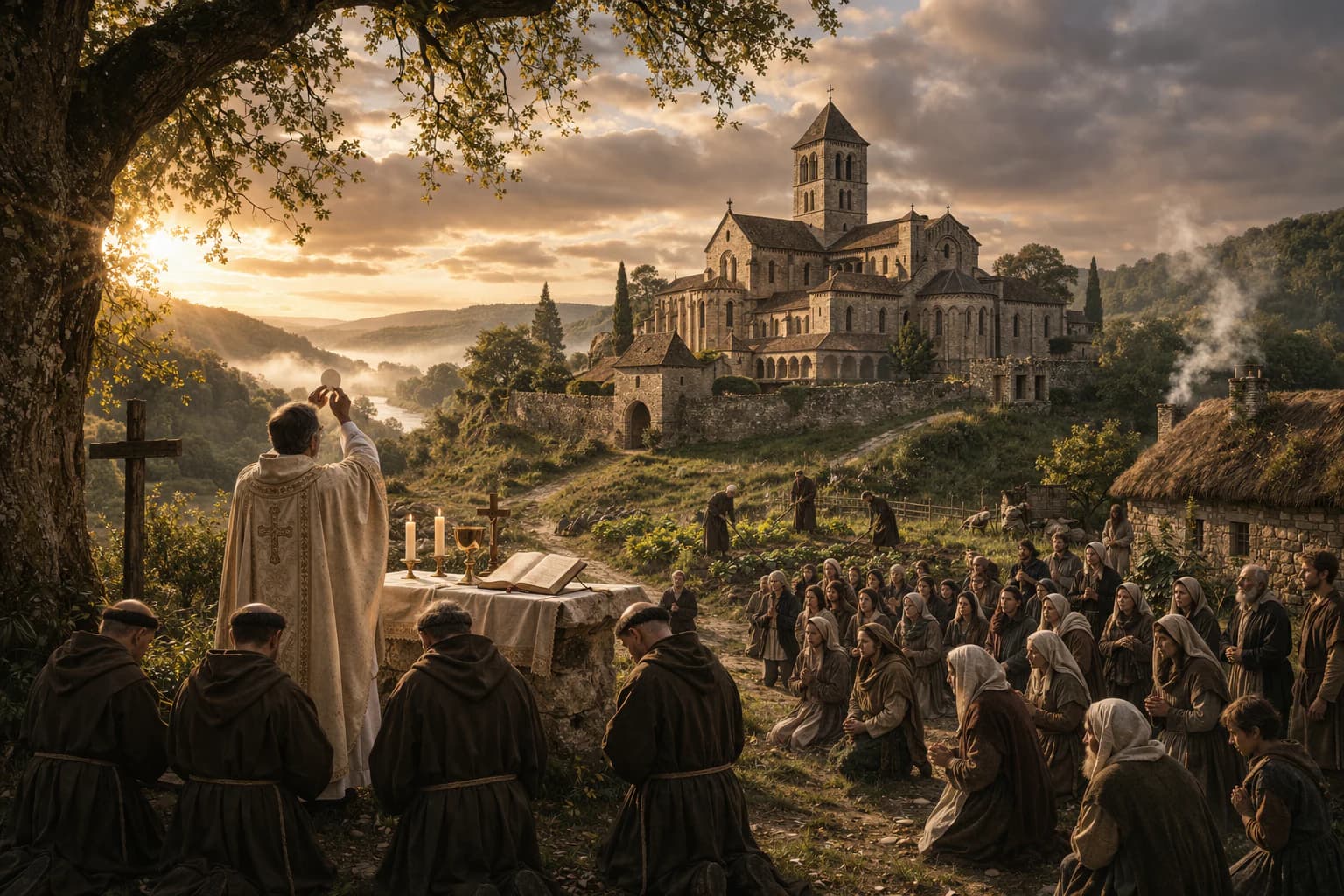
Church writers shaped much of Rufus's reputation, and they did not like him. He kept bishoprics and abbeys vacant so their revenues flowed to the crown, treated ecclesiastical wealth as a royal resource and resisted the reforming claims of Anselm after appointing him Archbishop of Canterbury in 1093. The dispute was part of a wider European struggle over lay authority and church independence, but in England it became intensely personal. Anselm wanted recognition of papal authority and freedom for the church; Rufus wanted the obedience his father had enjoyed. The conflict ended with Anselm in exile and Rufus remembered by monks as greedy, irreverent and morally dangerous.
Clashes over authority often reveal deeper questions about who truly governs a society.
1090s
Relations with Normandy
The brothers' rivalry never disappeared. Rufus campaigned in Normandy, bought support from barons, took advantage of Robert's debts and pushed English royal influence across the Channel. In 1096, when Robert joined the First Crusade, he mortgaged Normandy to Rufus for a large sum. The arrangement gave Rufus practical control of the duchy and brought him close to reuniting his father's lands under his own rule. He also pressed into Wales and Scotland, where royal overlordship remained contested and uneven. Rufus was no passive heir. He was an opportunist with a sharp understanding that cash could be as effective as conquest.
Family ties in politics often complicate power rather than secure it.
1090s
Royal governance
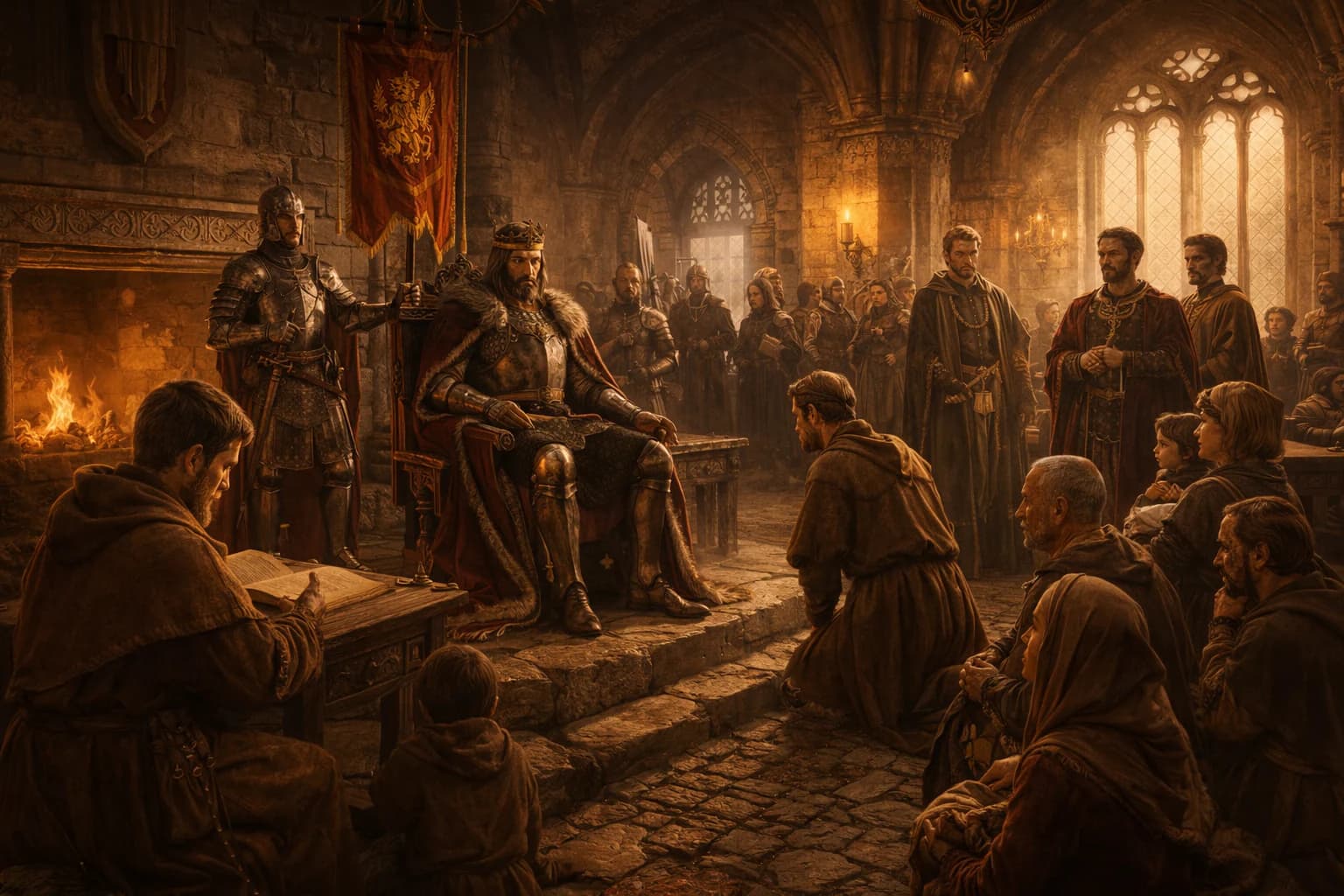
Rufus did not dismantle the Conqueror's system; he drove it hard. The royal household, sheriffs, feudal incidents and church vacancies became instruments for extracting the money needed for warfare, diplomacy and court display. His chief minister Ranulf Flambard became notorious for fiscal ingenuity, especially in exploiting feudal obligations. To supporters, this was effective government in a dangerous world. To monastic chroniclers, it was oppression and sacrilege. Both views contain truth. Rufus strengthened the monarchy by making it financially formidable, but the pressure of that system fed the hostile portrait that long dominated his historical memory.
Effective control often relies on maintaining systems rather than constantly changing them.
Reign years
Personality and court
The personality of Rufus is hard to separate from hostile clerical testimony. Chroniclers accused him of blasphemy, sexual vice, luxurious display and contempt for holy men. Some of this may be moralising convention; some may preserve genuine court culture that unsettled reform-minded monks. What is clearer is that Rufus was energetic, brave, sharp-tongued and effective among warriors. He could reward service lavishly and punish disloyalty without hesitation. He never married and left no legitimate heir, which later sharpened suspicion around his life and death. His court looked to critics like disorder; to followers, it may have looked like power enjoying itself.
A ruler’s personality can shape governance as much as formal policies do.
1100
Mysterious death
Rufus's death has the shape of a mystery because it was sudden, convenient and poorly documented. During a hunt in the New Forest, he was struck by an arrow, traditionally said to have been loosed by Walter Tirel. Tirel fled, later denied responsibility, and the king's body was reportedly left to be carried away by local men. Henry, Rufus's younger brother, rode quickly to secure the royal treasury at Winchester and was crowned within days. None of this proves murder. Hunting accidents were common. But the speed of Henry's action, Rufus's unpopularity among clerical writers and the absence of a clear investigation ensured that suspicion became part of the story.
Unexplained endings can leave a legacy shaped as much by mystery as by achievement.
Post-1100
Legacy of rule
Rufus is easy to dismiss if one accepts the monastic verdict whole: greedy, impious, violent and justly punished. A fuller view is sharper. He preserved the English crown against rebellion, kept Normandy within reach, maintained military pressure on the borders and strengthened royal finance. He also alienated church reformers, exploited ecclesiastical revenues and governed with a hardness that made affection unlikely. His death gave his enemies the perfect ending, as if providence had fired the arrow. History has to be more careful. Rufus was not a lovable king, but he was an able one, and the mystery of the New Forest should not obscure the power he wielded before it ended.
His rule shows that strength can secure power, but not always lasting approval.