Complete chronology
Full overview and deeper context for every journey step.
-247
Born into rivalry
Hannibal Barca entered history inside a wounded superpower. Carthage had lost the First Punic War to Rome, surrendered Sicily, and faced a brutal struggle over mercenary troops soon afterward. His father, Hamilcar Barca, was one of Carthage's leading commanders and refused to accept a future defined by Roman victory. The Barcid answer was to rebuild power in Iberia, where silver, soldiers, and new alliances could restore Carthaginian strength. Hannibal's childhood was therefore political from the beginning. He grew up around camps, bargaining, resentment, and ambition rather than the safe routines of an ordinary aristocratic life. To understand who Hannibal was, start there: not with elephants in the snow, but with a family trying to reverse a national humiliation and create the resources for a second contest with Rome.
His childhood was not neutral ground but a training ground shaped by unfinished conflict.
-237
Oath of hostility
The famous oath story comes through Roman and later traditions, so it should be handled carefully. According to the account, Hamilcar made the young Hannibal swear at an altar that he would never be friendly to Rome. Whether the scene happened exactly as told is less important than why it survived. It gave Hannibal's career the shape of destiny and explained his war as personal hatred as well as strategy. In reality, the conflict was larger than one boy's promise. Carthage and Rome were competing imperial systems in the western Mediterranean, and Iberia became the arena where that rivalry sharpened again. Still, the oath expresses something true about Hannibal's formation. He was trained to see Rome not as a distant rival, but as the force that had humiliated his family, restricted his city, and had to be confronted before it became unchallengeable.
His direction in life was set early, blending personal loyalty with inherited rivalry.
-221
Command in Iberia
After Hamilcar's death and then the assassination of Hasdrubal the Fair, Hannibal was chosen by the army and confirmed by Carthage as commander in Iberia. He was still young, but he had grown up inside the Barcid project and understood its human material: Libyan infantry, Iberian allies, Numidian cavalry, officers loyal to his house, and local communities whose support could not be assumed forever. His leadership combined charisma, speed, and calculated violence. The crisis at Saguntum, a city allied with Rome south of the Ebro, brought the rivalry to breaking point. Hannibal besieged and captured it in 219 BCE, forcing Rome and Carthage toward war. His actions were aggressive, but they were not reckless in the simple sense. He believed Rome would keep tightening the ring unless Carthage struck first and struck somewhere Rome did not expect.
His rise showed an ability to turn inherited positions into active power.
-218
Alpine crossing
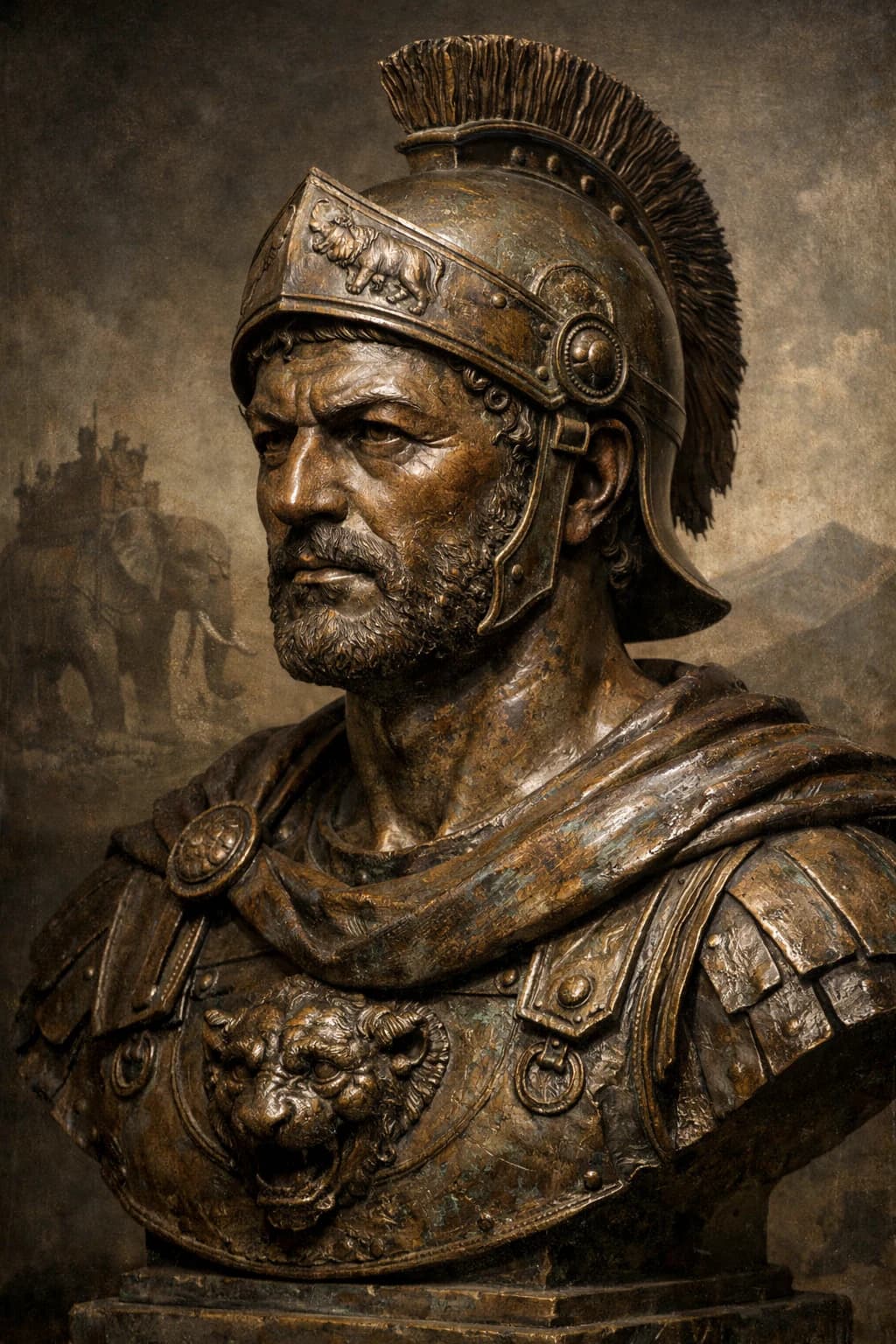
Hannibal's Alpine crossing remains one of the most audacious military movements in ancient history, but its meaning is often flattened into spectacle. The elephants mattered, but the greater weapon was surprise. Rome expected to fight Carthage in Iberia and Africa; Hannibal brought the war into Italy itself. The march was punishing. Mountain weather, difficult passes, local attacks, exhaustion, and supply problems reduced his army badly before he reached the Po valley. Yet the survivors arrived with enormous psychological force. They also entered a region where Rome's hold over recently conquered peoples was not yet emotionally secure. Hannibal's plan was to defeat Roman armies, encourage Rome's Italian allies to defect, and break the confederation that gave Rome manpower. The crossing was not a stunt. It was the opening move in a political war against Rome's alliance system.
His greatest weapon was not just force, but the shock of the unexpected.
-218 to -216
Victories in Italy
Hannibal's Italian campaign made his reputation because he repeatedly turned Roman confidence against itself. At Trebia in 218 BCE, he drew the Romans into cold, difficult conditions and used an ambush to decisive effect. At Lake Trasimene in 217, he trapped a Roman army beside the water in one of antiquity's great ambushes. At Cannae in 216, he achieved the masterpiece: a controlled centre, strong wings, and cavalry superiority produced a double envelopment that annihilated a massive Roman force. Cannae was not just a battlefield disaster; it was a political earthquake. Some southern Italian communities, including Capua, shifted away from Rome. Yet the expected collapse did not come. Hannibal could destroy Roman armies, but Rome's citizen levy, allied network, Senate, and stubborn civic discipline proved harder to kill than soldiers on a field.
Tactical brilliance brought victories, but not the decisive end he needed.
-215 to -204
Rome adapts
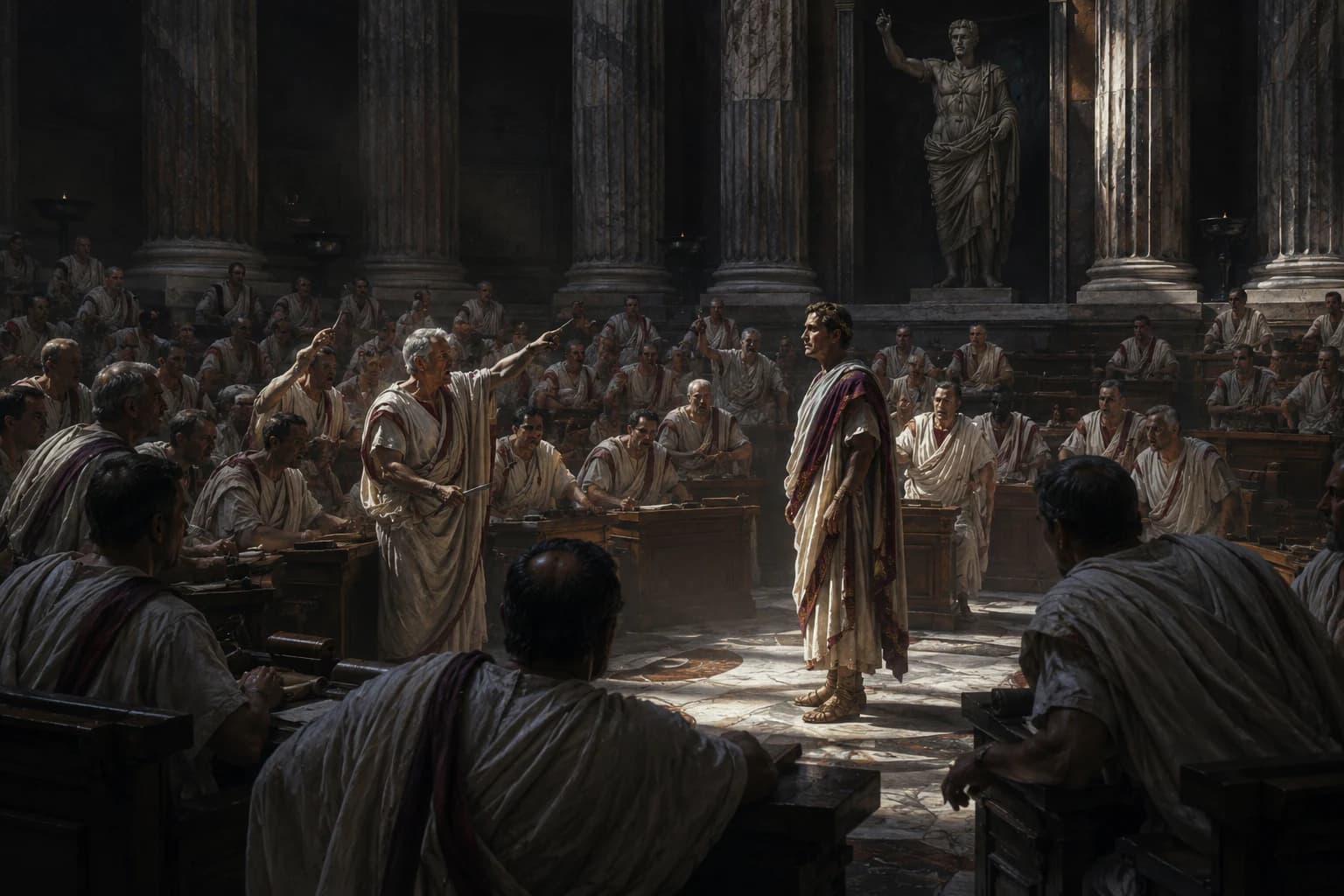
The central puzzle of Hannibal's biography is why victories so astonishing did not win the war. The answer lies in Roman adaptation. Fabius Maximus had already argued for delay: shadow Hannibal, avoid disastrous set-piece battle, protect what could be protected, and wear him down. After Cannae, Rome did not surrender. It punished defectors when possible, held key allies, raised new armies, and fought in multiple theatres. Hannibal lacked siege equipment and reliable reinforcements strong enough to take Rome or force a settlement. Carthaginian strategy was divided, and his brother Hasdrubal's attempt to bring help into Italy ended in defeat at the Metaurus in 207 BCE. Hannibal remained dangerous for years, but his war became narrower. The genius of movement was trapped inside a long contest of resources, loyalty, and endurance.
Adaptation can neutralize even the most brilliant opponent over time.
-203 to -202
Recall and defeat
Rome eventually did to Carthage what Hannibal had done to Rome: it carried the war to the enemy's home ground. Publius Cornelius Scipio, later Africanus, campaigned in North Africa, won Numidian cavalry support, and forced Carthage to recall Hannibal from Italy. At Zama in 202 BCE, Hannibal met an opponent who had learned from him. Scipio handled the elephants, kept his infantry disciplined, and used cavalry superiority to decisive effect. Hannibal's army was not the same hardened instrument that had crossed into Italy, and Carthage's strategic position was desperate. The defeat ended the war and imposed harsh terms: loss of fleet, indemnity, limits on independent warfare, and Roman dominance. Hannibal had come closer than any foreign commander to breaking Rome, but Zama proved that Rome had learned how to survive him and then surpass him.
Even extraordinary campaigns can hinge on a single decisive loss.
-195 to -183
Exile and flight
Hannibal's later life shows that he was more than a battlefield commander. Back in Carthage, he held high civic office and worked to reform finances, reduce corruption, and make the defeated state able to pay its indemnity without surrendering entirely to oligarchic mismanagement. That competence alarmed both domestic rivals and Rome. Accusations that he was encouraging renewed anti-Roman action made his position dangerous, and he left Carthage around 195 BCE. In exile he moved through the courts of rulers such as Antiochus III of the Seleucid Empire and later Prusias of Bithynia, offering advice wherever resistance to Rome still seemed possible. But the world was changing. Rome's reach extended eastward, and every court that hosted Hannibal risked Roman pressure. The man who had once invaded Italy became a fugitive symbol of unfinished resistance.
A life defined by command ended in a search for refuge beyond former influence.
-183
Enduring legacy
Hannibal's death, traditionally placed in 183 BCE, came far from the city he had fought to defend. Facing the prospect of being handed over to Rome, he is said to have taken poison. As with parts of his life, the final scene carries literary shape, but the meaning is clear. Rome wanted not only victory over Hannibal, but possession of him. His legacy is double. Militarily, he became the model of operational daring, tactical imagination, and the use of mixed forces against a stronger state. Cannae haunted Roman memory and later military education for centuries. Politically, his failure is just as instructive. He showed that brilliant generalship cannot by itself defeat an enemy whose institutions, alliances, manpower, and will survive catastrophe. Hannibal was important because he exposed Rome's vulnerability and, by failing to destroy it, helped reveal the deeper strength that would make Rome Mediterranean master.
His legacy lies not in victory, but in redefining what strategy could achieve.