People

Georges Clemenceau

Georges Clemenceau was French Prime Minister during the final year of World War I. Known as the Tiger, he defended Dreyfus, led France to victory in 1918, and shaped the Treaty of Versailles.

Born
1841 CE
Died
1929 CE
Role
French Prime Minister

French Prime Minister (1841–1929)

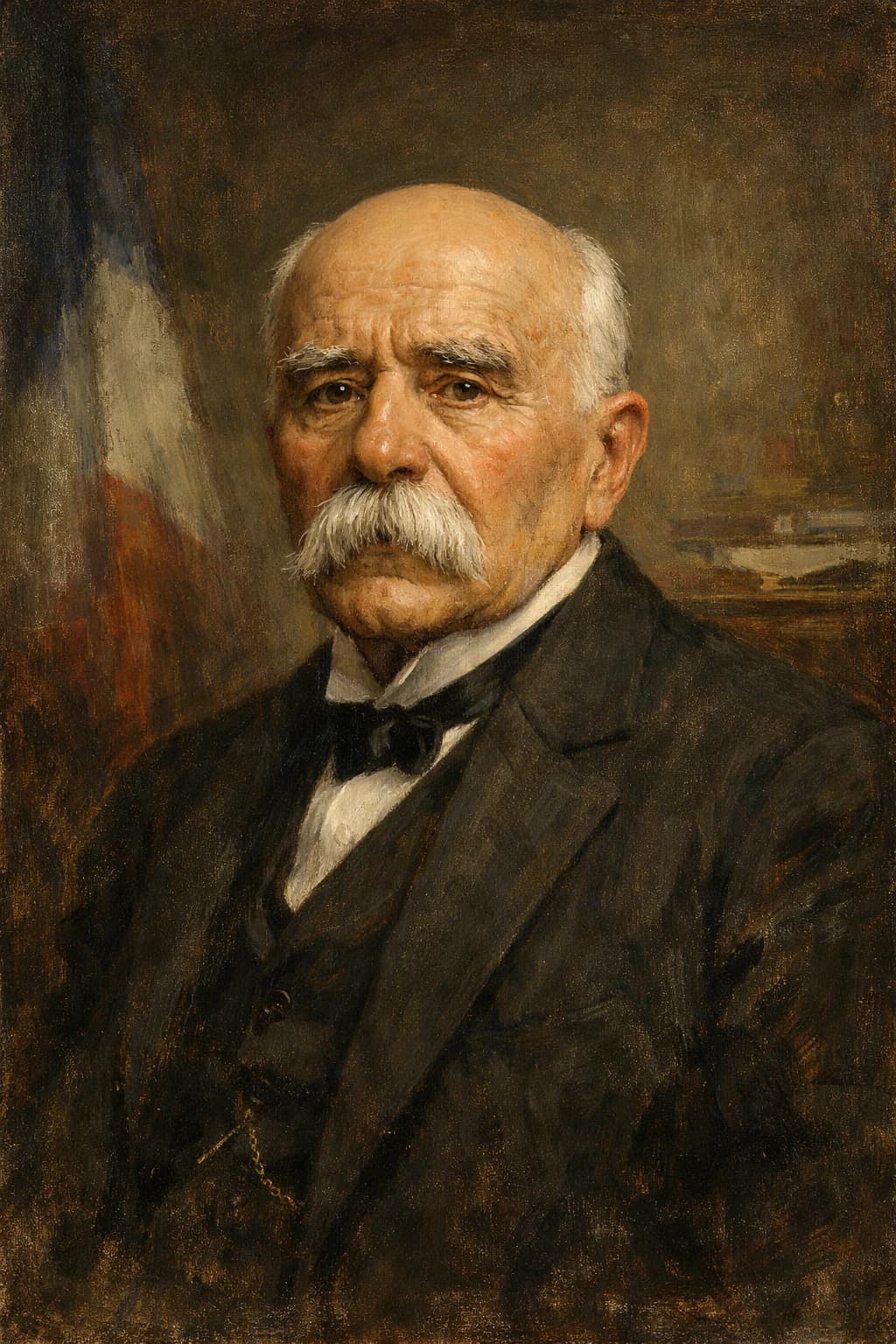
AI-generated portrait of Georges Clemenceau in formal attire
AI-assisted historical reconstruction

An illustrative reconstruction based on historical context. It is not a photograph or documentary likeness. Image policy

Quick answer

Georges Clemenceau was French Prime Minister during the final year of World War I. Known as the Tiger, he defended Dreyfus, led France to victory in 1918, and shaped the Treaty of Versailles.

Born
1841 CE
Died
1929 CE
Role
French Prime Minister
Years
1841-1929 CE
Facts

Georges Clemenceau timeline facts

Selected specifics from this profile's life story.

1841
Provincial beginnings

Born in western France to a politically engaged family, he grew up surrounded by republican ideas that would shape his lifelong distrust of authority.

1870s
Entering politics

He became a prominent voice in the new French Republic, gaining attention for his fierce speeches and refusal to compromise on key principles.

1917
Wartime leadership

He returned to lead France during the First World War’s darkest phase, rallying the nation and insisting on total commitment to victory.

1920s
Final years

After leaving office, he remained a respected yet controversial figure, remembered for his decisive leadership and uncompromising vision.

Life Journey

From radical critic to wartime leader

Follow the story in a more continuous narrative, with a reading mode that matches how much depth you want.

Complete chronology

1841

Provincial beginnings

Georges Clemenceau was born on 28 September 1841 in the Vendee, a region with fierce political memories of revolution and counter-revolution. His father, Benjamin, was a doctor, atheist, republican and opponent of authoritarian rule under Napoleon III. That household gave Clemenceau his lifelong suspicion of clerical power, monarchy and military pretension. He grew up believing that politics was not politeness but combat over liberty. The young Clemenceau absorbed science, anticlericalism and republican defiance before he entered national life. His later ferocity was not a performance added late. It was rooted in a family culture where authority had to justify itself or be attacked.
1860s

Medical training

Clemenceau studied medicine in Nantes and Paris, but the capital's political life educated him as much as anatomy or diagnosis. He joined republican student circles, wrote against the Second Empire and was briefly imprisoned for activism. Medicine gave him a respect for evidence, anatomy and material reality; politics gave him enemies. He completed his medical degree, but he was never going to be content as a quiet provincial doctor. He had the temperament of an attacker: quick, skeptical, impatient with cant and unusually willing to make public argument personal. That style made him dangerous in journalism and parliament alike.

1865–1870

Exile and return

In 1865 Clemenceau left for the United States, where he lived through the aftermath of the Civil War, taught French, practiced medicine and wrote for newspapers. He observed American democracy at a moment of emancipation, Reconstruction and violent uncertainty. He also married Mary Plummer, though the marriage later collapsed painfully. The American years broadened his political imagination without making him sentimental. When he returned to France in 1869, Napoleon III's regime was weakening and republican opportunities were opening. Clemenceau came back with confidence in journalism, democratic politics and the usefulness of confrontation when institutions tried to hide failure.

1870s

Entering politics

The Franco-Prussian War and the fall of Napoleon III brought Clemenceau into public office. He became mayor of Montmartre during the siege of Paris and then a deputy in the early Third Republic. He opposed the harsh settlement with Germany after 1871 and rejected monarchist attempts to shape the republic into something timid. Clemenceau became a radical deputy known for destroying ministries with speeches and newspaper campaigns, earning the nickname 'the Tiger.' His politics defended secular republicanism, civil liberty and parliamentary accountability, but his temperament made compromise difficult. He was often more effective as critic than builder, until war gave his ruthlessness a national use.

1890s

Dreyfus defender

The Dreyfus Affair brought Clemenceau's republican instincts to one of their finest tests. Alfred Dreyfus, a Jewish army officer, had been wrongly convicted of treason in 1894 amid antisemitism, forged evidence and military secrecy. Clemenceau used journalism to attack the injustice and published Emile Zola's famous 'J'accuse' in L'Aurore in 1898. He was not defending Dreyfus because it was easy; much of France was nationalist, antisemitic or deferential to the army. He defended him because the republic could not survive if truth was sacrificed to institutional honor. The affair confirmed Clemenceau's belief that journalism could be a weapon of civic rescue.

1906

Return to power

Clemenceau became prime minister for the first time in 1906. The old destroyer of ministries now had to govern. He faced strikes, labor unrest, church-state tensions and the challenge of maintaining republican order without betraying republican liberty. His response was often hard. He used troops against strikers and angered socialists who had expected a radical ally. Yet he also continued the anticlerical and republican consolidation of the Third Republic. The episode revealed a central Clemenceau paradox: he distrusted authority until he held it, then used it with severity. He believed the republic had to be defended against enemies on the right, left and within itself.

1917

Wartime leadership

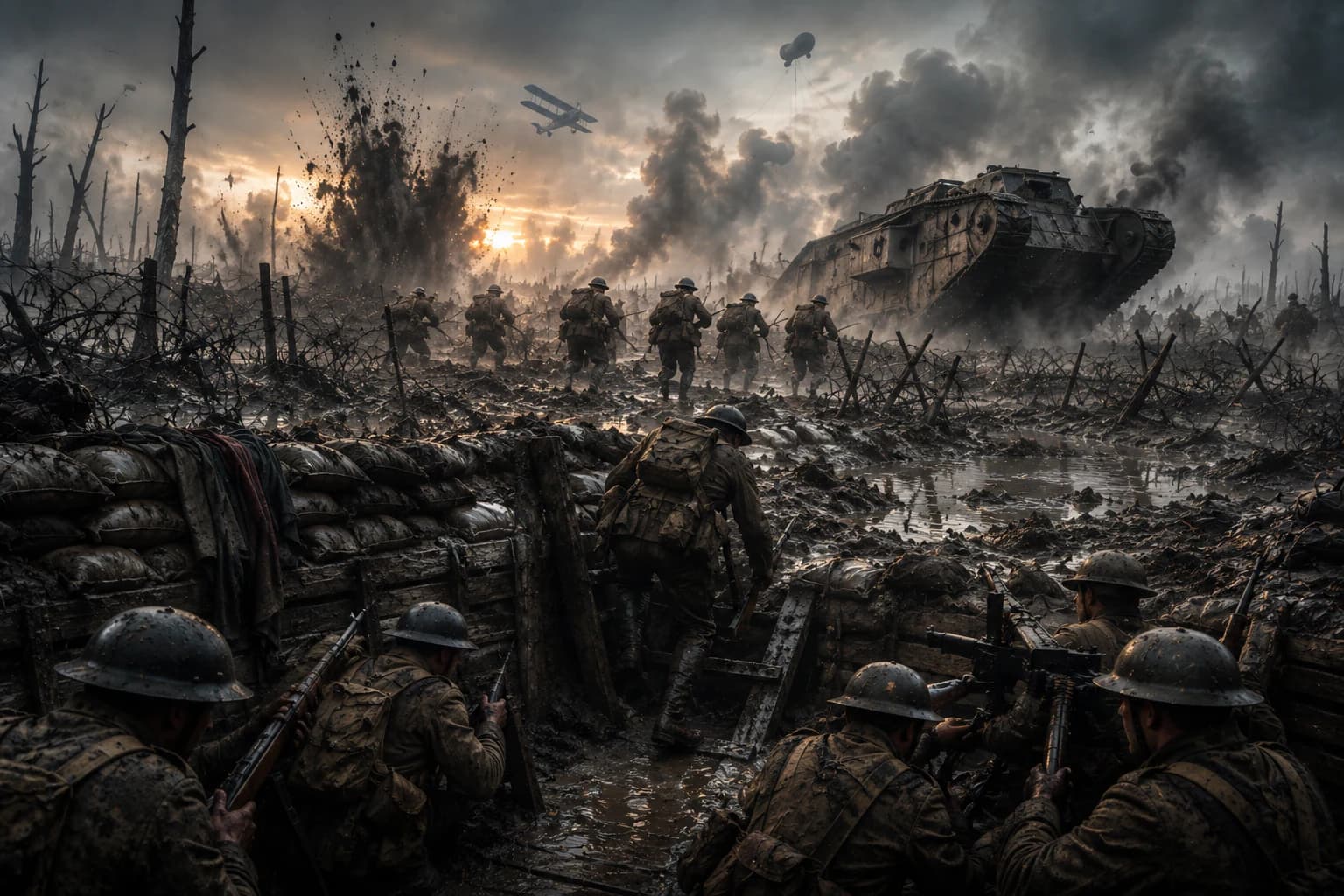
By 1917 France was exhausted. Verdun, mutinies, casualties, shortages and political uncertainty had weakened confidence. President Raymond Poincare called Clemenceau back to power in November because the republic needed will more than charm. Clemenceau's policy was simple: war to victory. He censored defeatism, pursued suspected traitors, visited the front and bullied politicians into focus. His relationship with generals, including Ferdinand Foch, was firm; he supported military command but insisted civilian authority would not disappear. The arrival of American forces and the failure of Germany's 1918 offensives helped make victory possible. Clemenceau did not win the war alone, but he gave France a voice equal to its endurance.

1919

Peace negotiations

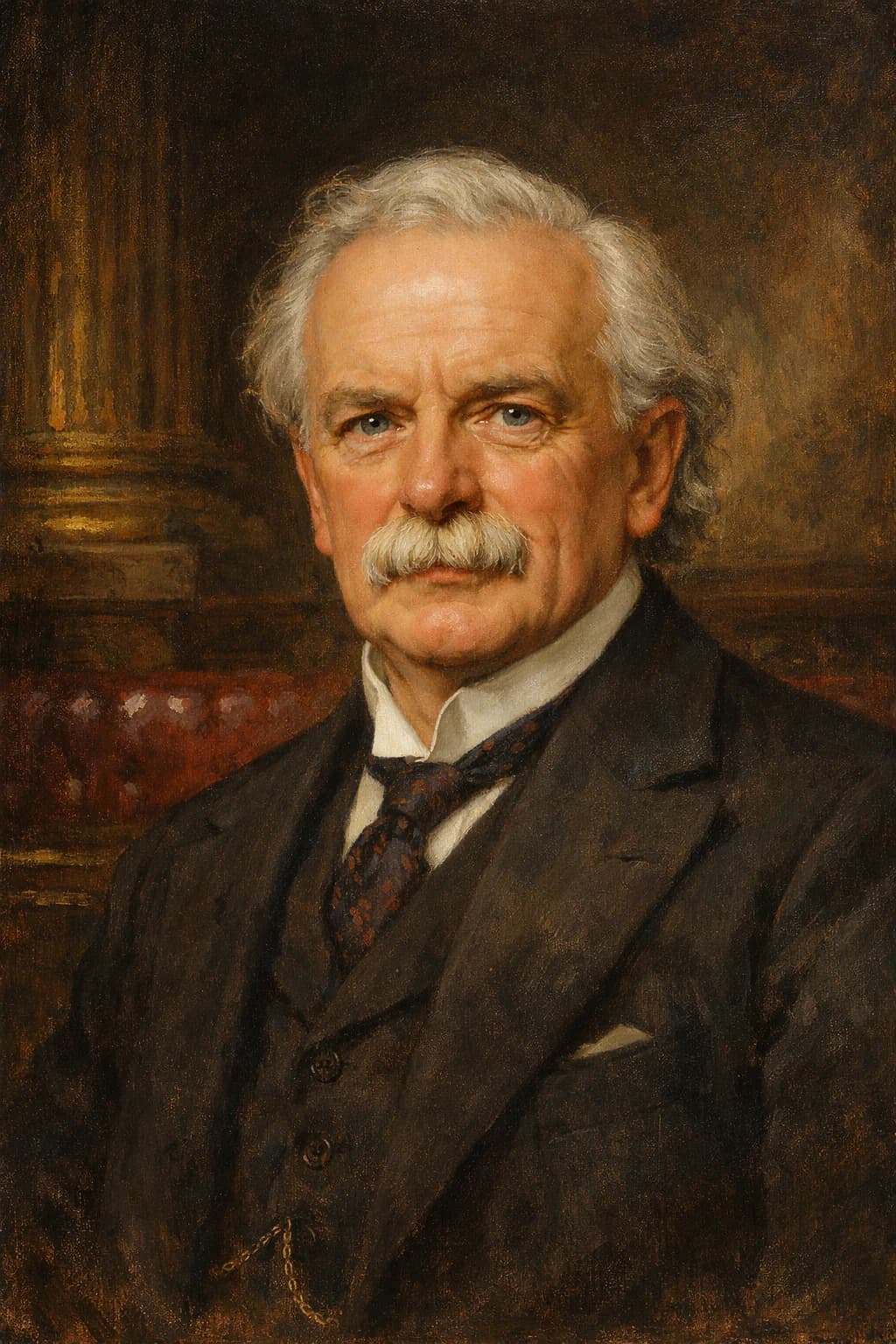
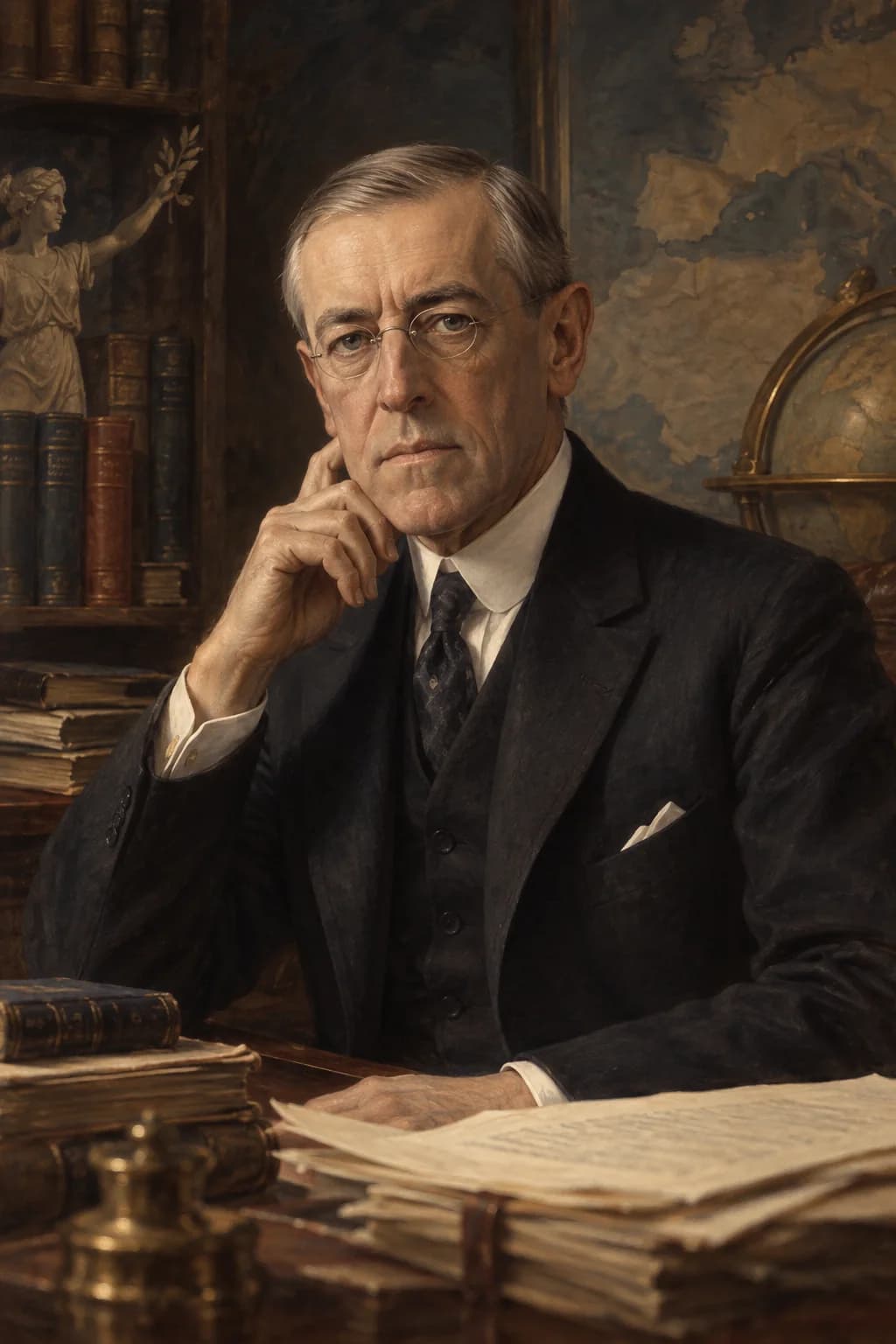
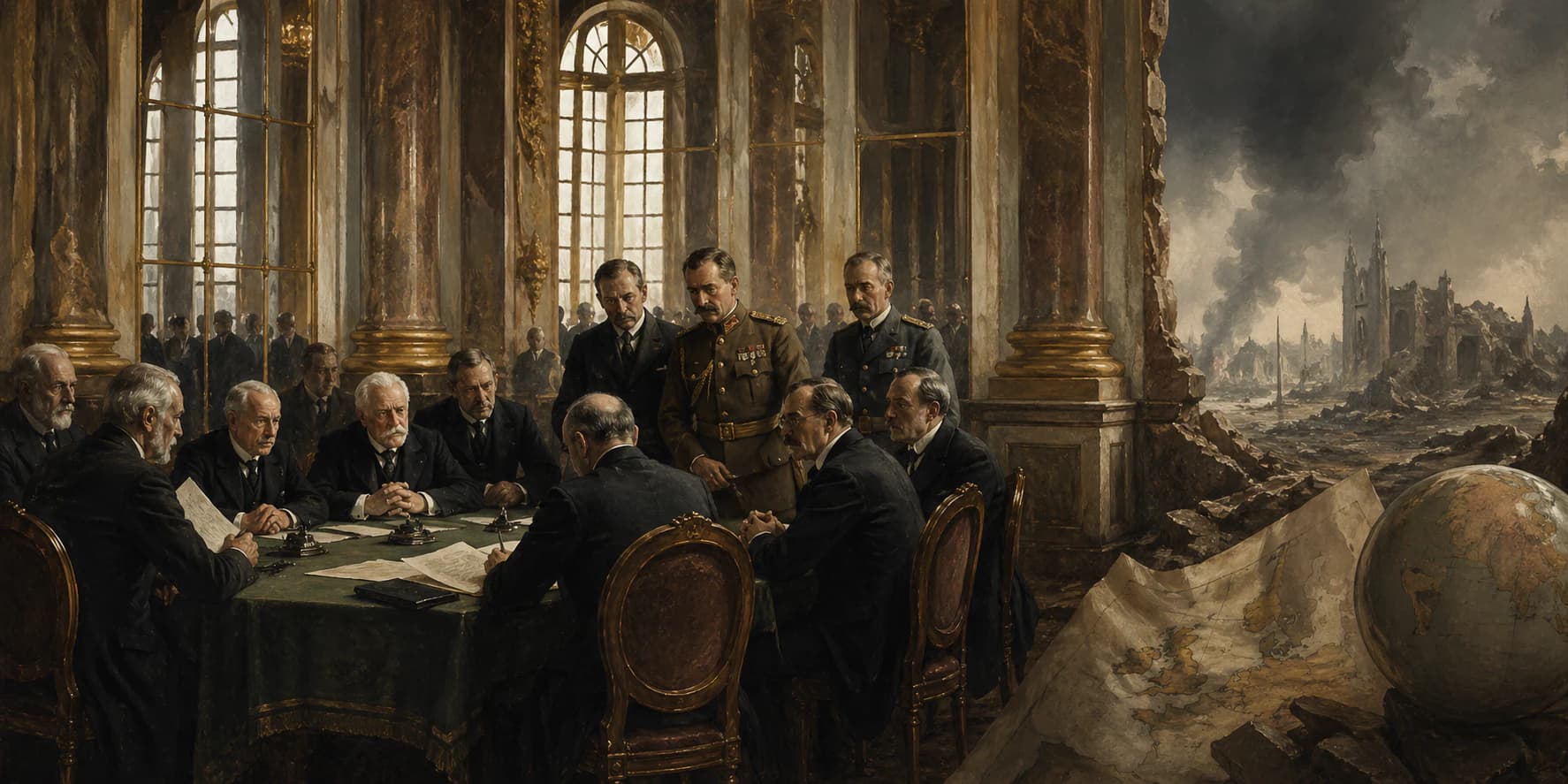
At the Paris Peace Conference in 1919, Clemenceau faced Woodrow Wilson's language of self-determination and David Lloyd George's balancing instincts with France's memory of invasion. Germany had occupied French territory in 1870 and again in 1914; northern France had been devastated. Clemenceau wanted Alsace-Lorraine restored, reparations, limits on German power and security guarantees. He accepted less than some French nationalists demanded, including compromise over the Rhineland, because he needed Allied unity. The Treaty of Versailles became associated with harshness, but Clemenceau himself was criticized at home for not being harsh enough. His problem was impossible: turn victory into security without creating the conditions of another war.

1920s

Final years

Clemenceau failed to win the French presidency in 1920 and withdrew from active power, though not from argument. He traveled, wrote and defended his wartime record, increasingly bitter that Allied guarantees to France were weakening. He died on 24 November 1929, before the full collapse of the European settlement he had helped shape. His legacy is not simply vengeance. It is the legacy of a republican who distrusted illusions and believed France's security had to be built against the possibility of German recovery. To ask why Georges Clemenceau was important is to see the difficulty of leadership after mass sacrifice: the Tiger helped win the war, but even he could not make victory permanently safe.

Continue in context

Connected stories

Move from the profile into the wider events and settings this figure belongs to.

Tertiary paths

Content note

This profile is written for educational use and connects to related Stories of History pages. The main portrait is an AI-assisted historical reconstruction, included as an illustrative aid rather than documentary evidence. Image policy

References

Sources & Further Reading

Reliable reference works, archives and reading paths connected to this profile.

Further reading

  1. Encyclopaedia Britannica, Search results for Georges Clemenceau,” accessed June 2026.Open source
  2. WorldCat, Books and library holdings for Georges Clemenceau,” accessed June 2026.Open source

Primary sources

  1. Library of Congress, Search results for Georges Clemenceau,” accessed June 2026.Open source

Reviewed claim sources

Loading reviewed claim sources...

A weekly route through history

Find out first about the latest published stories, feature notes and occasional Premium offers in one weekly email.