People

Gavrilo Princip

Gavrilo Princip was a Bosnian Serb nationalist and member of Young Bosnia. On 28 June 1914 he assassinated Archduke Franz Ferdinand in Sarajevo, triggering the July Crisis before World War I.

Born
1894 CE
Died
1918 CE
Role
Bosnian Serb nationalist

Bosnian Serb nationalist (1894–1918)

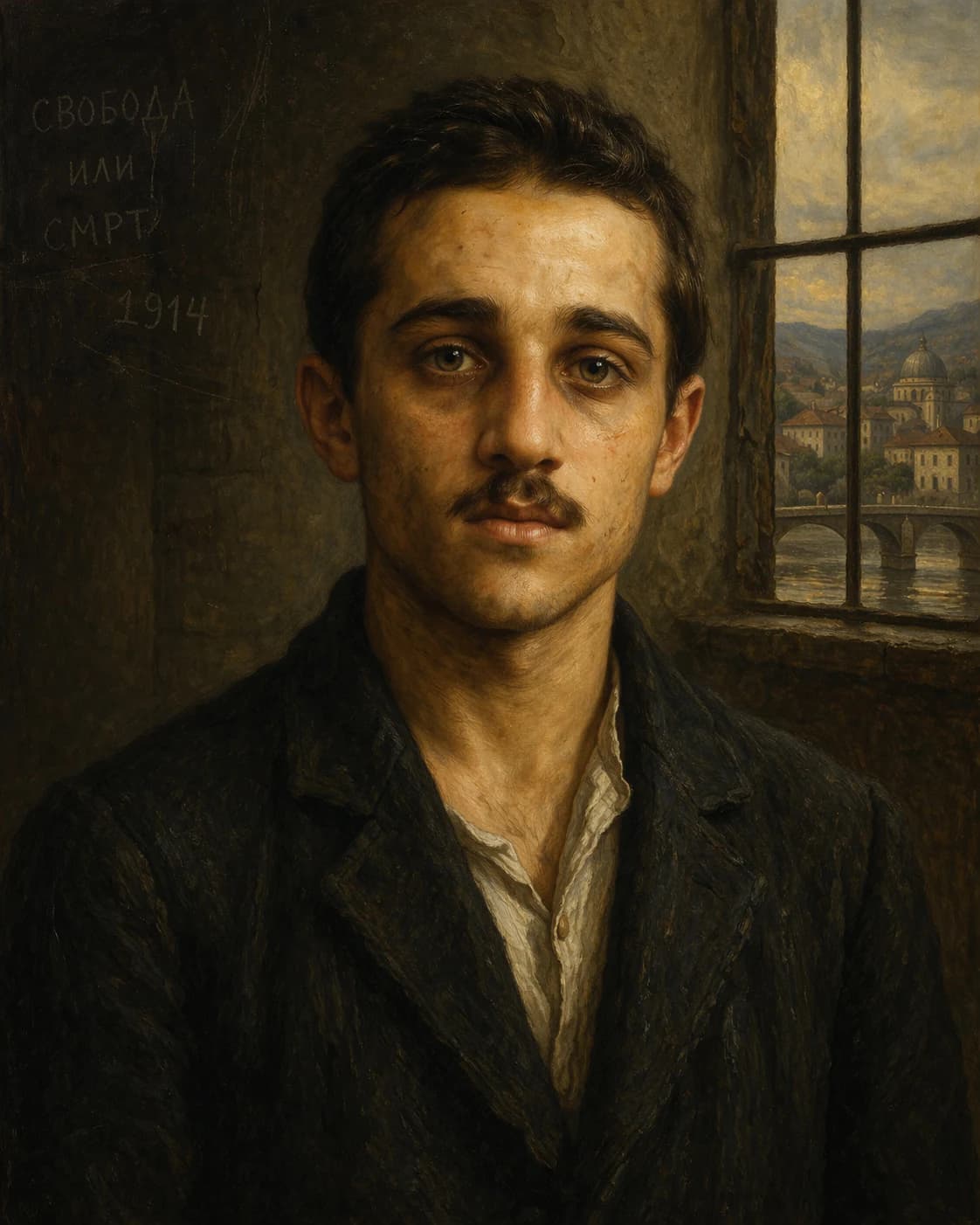
AI-generated portrait of Gavrilo Princip in early 20th-century civilian attire
AI-assisted historical reconstruction

An illustrative reconstruction based on historical context. It is not a photograph or documentary likeness. Image policy

Quick answer

Gavrilo Princip was a Bosnian Serb nationalist and member of Young Bosnia. On 28 June 1914 he assassinated Archduke Franz Ferdinand in Sarajevo, triggering the July Crisis before World War I.

Born
1894 CE
Died
1918 CE
Role
Bosnian Serb nationalist
Years
1894-1918 CE
Facts

Gavrilo Princip timeline facts

Selected specifics from this profile's life story.

1894
Rural beginnings

Gavrilo Princip was born into a poor farming family in Bosnia, growing up in a region marked by political tension and foreign rule.

1914
The assassination plot

Princip joined a group planning to assassinate Archduke Franz Ferdinand during his visit to Sarajevo, seeing it as a symbolic strike against imperial rule.

1914
War erupts

In the weeks after the assassination, alliances activated and Europe descended into a large-scale war that reshaped global politics.

Post-1918
Enduring legacy

Princip’s actions remain deeply debated, seen by some as resistance and by others as a catalyst for immense destruction.

Life Journey

From restless youth to a shot that changed the world

Follow the story in a more continuous narrative, with a reading mode that matches how much depth you want.

Complete chronology

1894

Rural beginnings

Gavrilo Princip was born on 25 July 1894 in Obljaj, a poor village in western Bosnia, then administered by Austria-Hungary. His family were Bosnian Serbs living in a region where imperial rule, rural poverty, religious difference and competing national ideas pressed against one another. Bosnia had been occupied by Austria-Hungary in 1878 and formally annexed in 1908, angering many South Slav nationalists who saw Habsburg power as foreign domination. Princip's childhood was marked by hardship and illness, not by the glamour later projected onto assassins by political myth. He grew up in a world where empire was not an abstraction. It was taxation, police authority, schools, uniforms and the question of who had the right to decide Bosnia's future.
1907–1912

Student years

Education took Princip from village life into Sarajevo and later Belgrade, where politics became sharper and more urgent. Student circles discussed nationalism, anti-imperial struggle, Serbian history, South Slav unity, anarchist violence, Russian revolutionaries and the recent Balkan Wars. He belonged to the loose movement known as Young Bosnia, which included Serbs, Croats and Muslims who imagined liberation from Habsburg rule and, in different ways, a South Slav future. Princip was not a major strategist. He was a young radical formed by books, poverty, resentment and the emotional intensity of student politics. His tuberculosis and physical frailty may also have deepened his appetite for sacrifice, though historians must be careful not to reduce ideology to illness.

1912–1913

Turning to radicalism

By 1912 and 1913 the Balkans had been transformed by war, but Bosnia remained under Habsburg rule. Princip and his associates absorbed the idea that dramatic violence could awaken history. This was not unique to the Balkans; assassination had become part of radical politics across Europe. But in Bosnia it fused with resentment of empire and the hope that Serbia might become a center of South Slav liberation. The conspirators' links to Serbian nationalist networks, including men connected with the Black Hand, gave them access to weapons and training, though the exact chain of responsibility has been debated. What is clear is that Princip moved from grievance to conspiracy. He came to believe that killing a symbol of imperial power could make a political future possible.

1914

The assassination plot

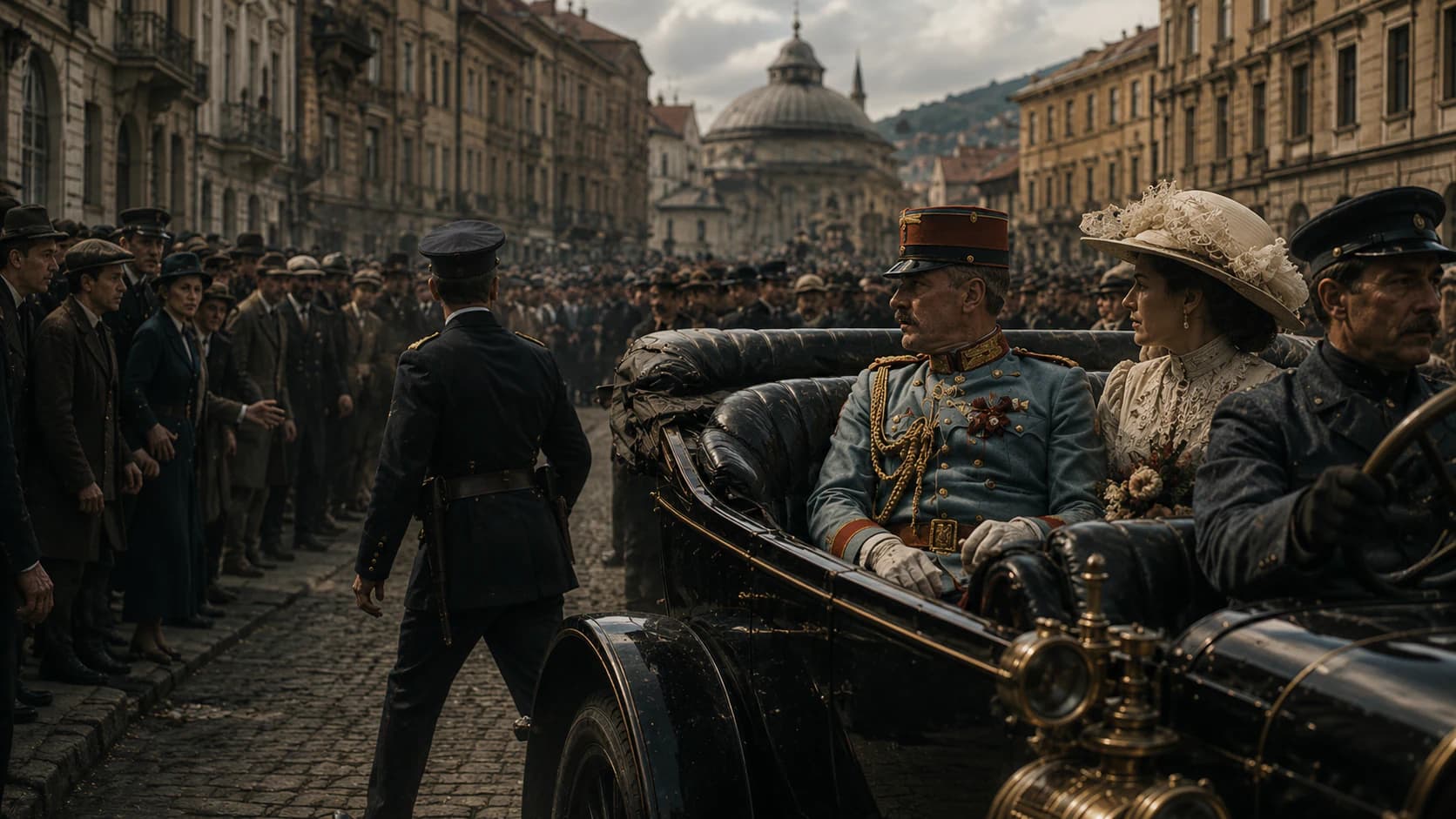
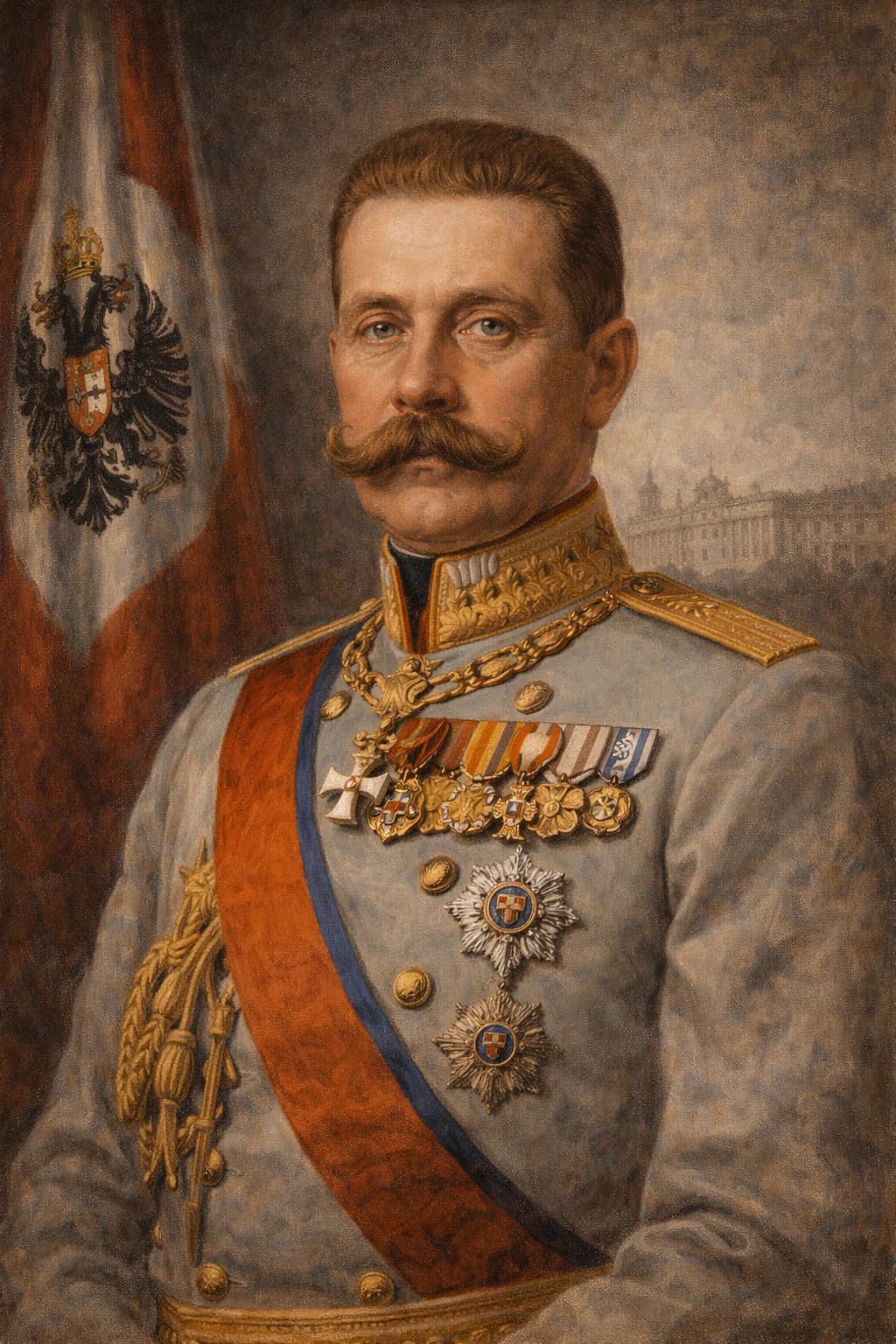
Archduke Franz Ferdinand's visit to Sarajevo on 28 June 1914 offered the conspirators a target heavy with symbolism. He was heir to the Habsburg throne, and the date was Vidovdan, associated in Serbian memory with the Battle of Kosovo. Several young men positioned themselves along the motorcade route with pistols and bombs. The planning mixed purpose with amateurish uncertainty. Nedeljko Cabrinovic threw a bomb that missed the archduke's car and injured others; several conspirators failed to act as the procession passed. Princip was one member of a wider plot, not a lone architect. Yet history often turns on the person still in position when a plan has already begun to fail.

1914

Shots in Sarajevo

After the failed bombing, Franz Ferdinand continued with the official program before deciding to visit the wounded. Confusion over the route brought his car to a halt near Princip, close to the Latin Bridge. Princip fired at close range, fatally wounding the archduke and Sophie, Duchess of Hohenberg. The assassination lasted seconds. Its meaning expanded because Europe was already unstable: Austria-Hungary feared Serbian nationalism, Serbia was emboldened by recent wars, Russia backed Slavic interests, Germany supported Vienna, and France and Britain were tied into the wider balance of power. Princip did not cause every condition of World War I. He supplied the spark that leaders used, mishandled and escalated.

1914

Capture and trial

Princip was seized almost immediately after the shooting. His attempt to use poison failed, as did efforts by other conspirators to die before interrogation. At trial, he presented himself as a South Slav nationalist rather than a murderer for private gain. Because he was under twenty, Austro-Hungarian law spared him execution; he received the maximum sentence of twenty years. Other conspirators were hanged. The proceedings tried to expose the network behind the assassination, especially Serbian involvement, but legal proof, political suspicion and diplomatic accusation did not always align cleanly. Princip's youth became part of his later mythology: to supporters, a martyr; to critics, a fanatic whose act helped unleash disaster.

1914

War erupts

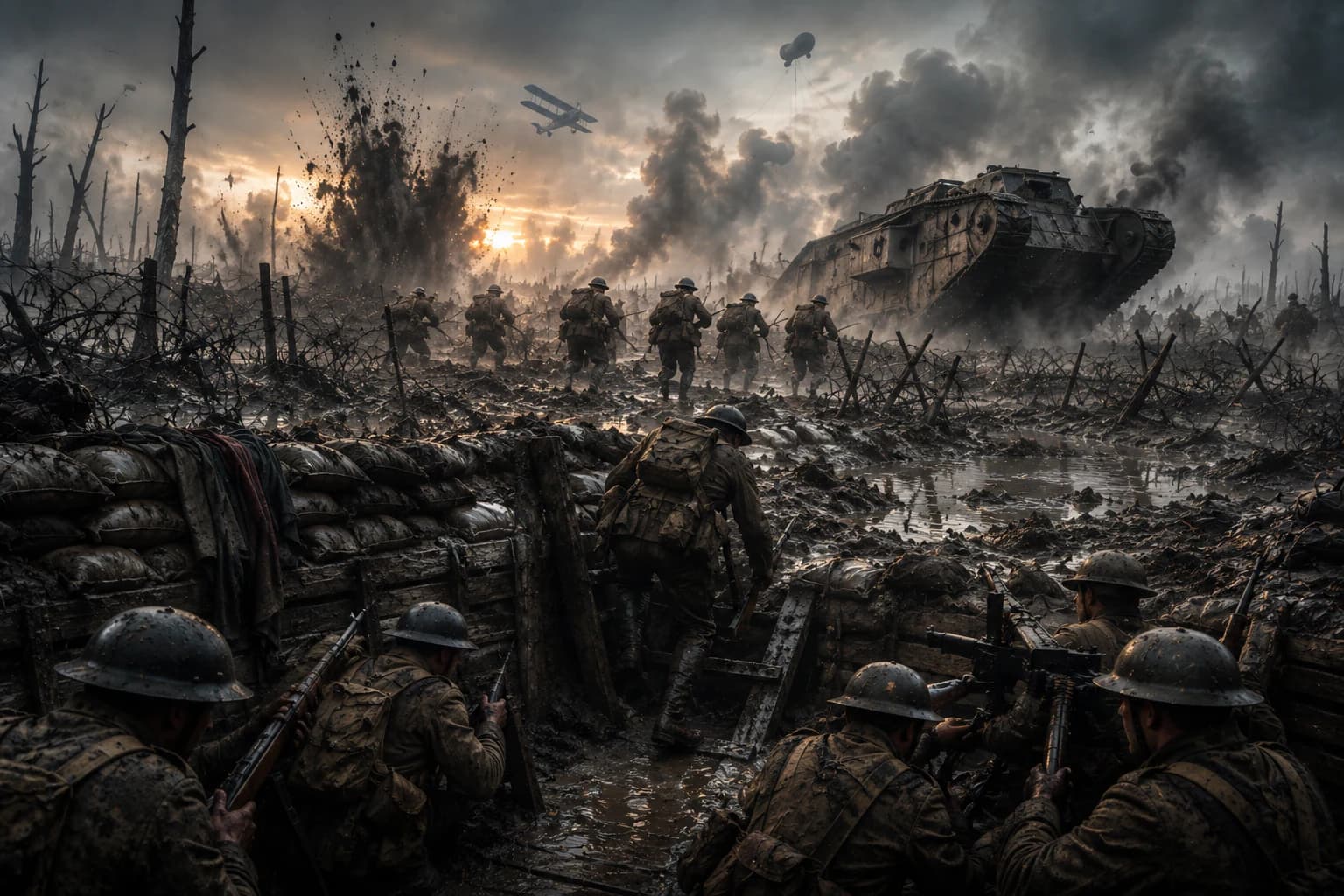
The July Crisis turned assassination into war through deliberate choices. Austria-Hungary, encouraged by Germany's blank cheque, issued Serbia an ultimatum designed to be difficult to accept in full. Serbia accepted much but not all of it. Mobilizations followed, and alliance commitments, war planning and fear of losing advantage narrowed diplomatic space. Austria-Hungary declared war on Serbia on 28 July 1914. Within days, Russia, Germany, France and Britain were drawn in. Princip, locked away, had no control over this escalation. The First World War emerged from imperial rivalry, militarism, alliance politics, nationalism and decision-making under pressure. His importance lies in triggering the crisis, not in single-handedly explaining the war.

1914–1918

Final years in prison

Princip was imprisoned in the fortress at Theresienstadt, where harsh conditions and tuberculosis destroyed his health. He was chained, isolated and physically declining while the war connected to his act consumed Europe. One arm was amputated before his death. He died on 28 April 1918, aged twenty-three, months before Austria-Hungary itself collapsed. The contrast is stark: the young man whose name became attached to a world war died powerless, sick and largely unseen. That does not absolve him, nor does it make him uniquely monstrous. It places him back inside human scale, where ideology, youth, violence and historical contingency met with consequences vastly beyond his reach.

Post-1918

Enduring legacy

Gavrilo Princip's legacy remains fiercely contested because he sits at the crossing point of empire, nationalism, terrorism, liberation memory and global catastrophe. In some Serbian and Yugoslav traditions he was remembered as an anti-imperial fighter against Habsburg rule. In Austrian, European and many wider narratives he became the assassin whose bullets opened the road to mass slaughter. Both readings can become too simple if they erase context. Princip was not the sole cause of World War I, but neither was he a harmless symbol swept along by events. He chose political murder. The meaning of that choice has been fought over ever since, showing how one life can become a battleground for national memory.

Continue in context

Connected stories

Move from the profile into the wider events and settings this figure belongs to.

Tertiary paths

Content note

This profile is written for educational use and connects to related Stories of History pages. The main portrait is an AI-assisted historical reconstruction, included as an illustrative aid rather than documentary evidence. Image policy

References

Sources & Further Reading

Reliable reference works, archives and reading paths connected to this profile.

Further reading

  1. Encyclopaedia Britannica, Search results for Gavrilo Princip,” accessed June 2026.Open source
  2. WorldCat, Books and library holdings for Gavrilo Princip,” accessed June 2026.Open source

Primary sources

  1. Library of Congress, Search results for Gavrilo Princip,” accessed June 2026.Open source

Reviewed claim sources

Loading reviewed claim sources...

A weekly route through history

Find out first about the latest published stories, feature notes and occasional Premium offers in one weekly email.