People

Franz Ferdinand

Franz Ferdinand was the Habsburg heir presumptive to Austria-Hungary. His assassination with Sophie Chotek in Sarajevo on 28 June 1914 triggered the July Crisis and the First World War.

Born
1863 CE
Died
1914 CE
Role
Heir to the Austro-Hungarian throne

Heir to the Austro-Hungarian throne (1863–1914)

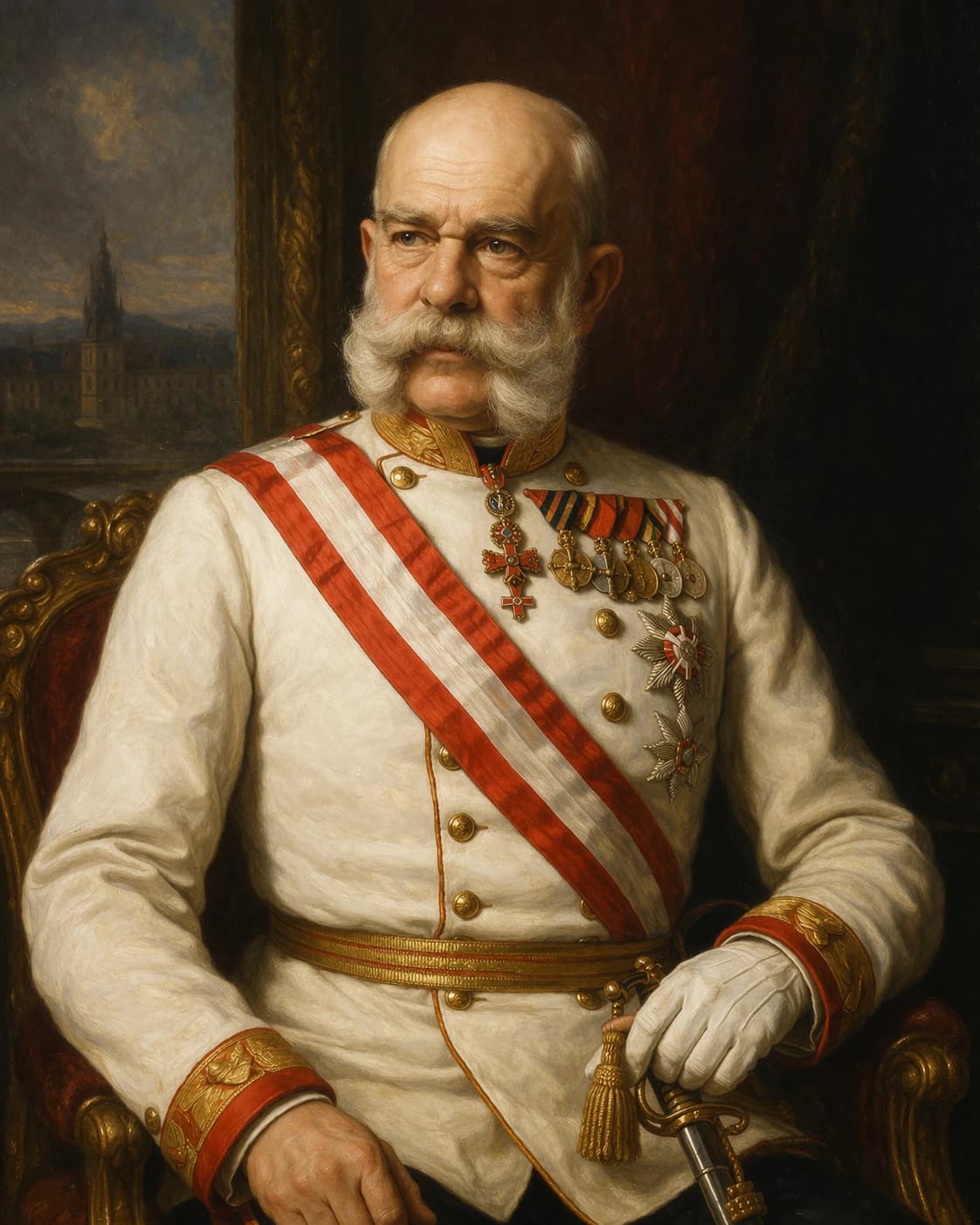
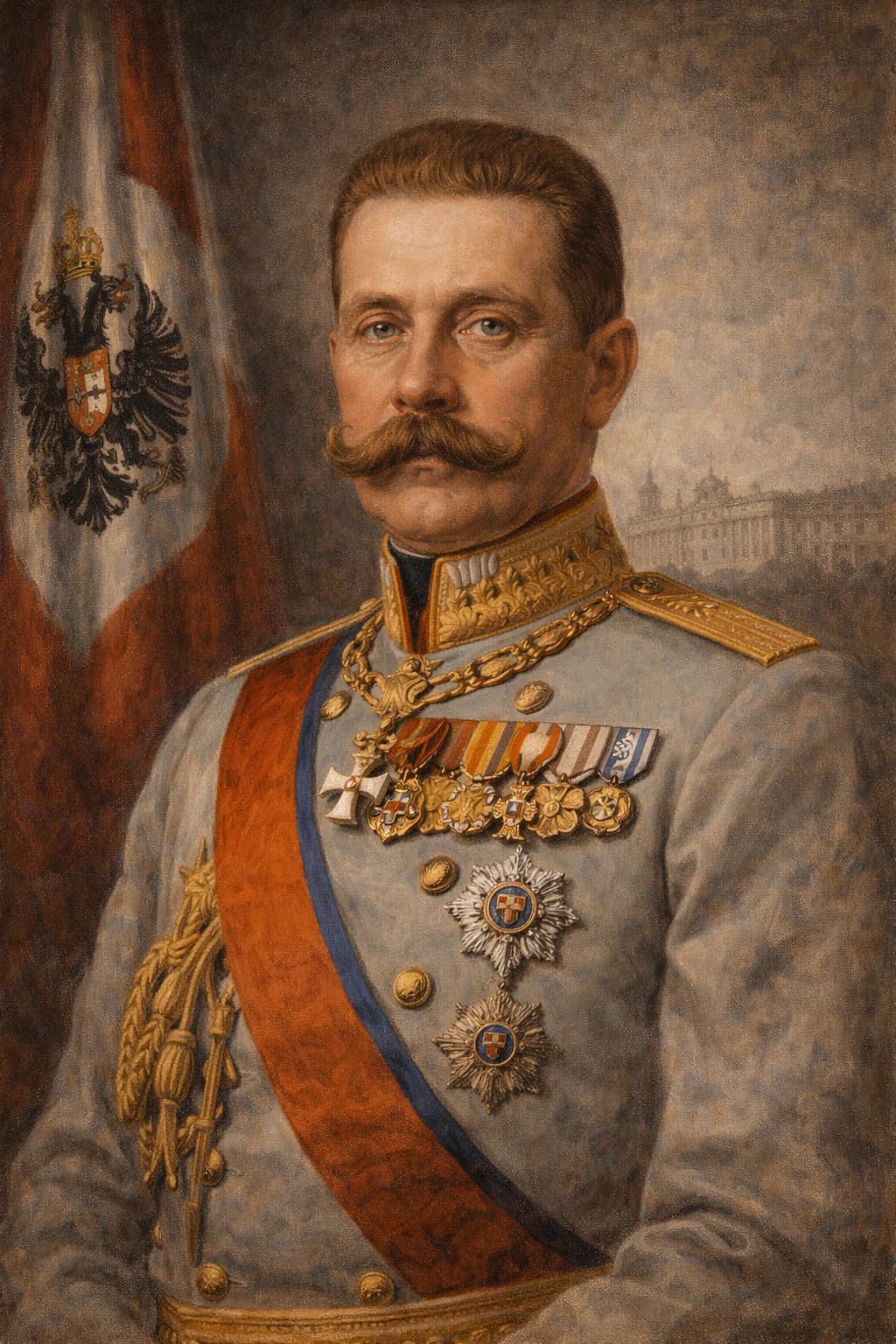
AI-generated portrait of Archduke Franz Ferdinand in Austro-Hungarian military uniform
AI-assisted historical reconstruction

An illustrative reconstruction based on historical context. It is not a photograph or documentary likeness. Image policy

Quick answer

Franz Ferdinand was the Habsburg heir presumptive to Austria-Hungary. His assassination with Sophie Chotek in Sarajevo on 28 June 1914 triggered the July Crisis and the First World War.

Born
1863 CE
Died
1914 CE
Role
Heir to the Austro-Hungarian throne
Years
1863-1914 CE
Facts

Franz Ferdinand timeline facts

Selected specifics from this profile's life story.

1863
Born to Privilege

Franz Ferdinand was born into the Habsburg dynasty in 1863, a privileged archduke who was not expected at first to inherit Austria-Hungary.

1894-1900
Marriage and Defiance

His love for Sophie Chotek forced a morganatic marriage in 1900, exposing the cold rigidity of Habsburg rank and succession rules.

June 1914
Bosnia Inspection

His June 1914 visit to Sarajevo was meant as an imperial inspection, but it brought him into a city charged by annexation, nationalism, and Serbian grievance.

1914 and after
Legacy Beyond His Life

Franz Ferdinand is remembered for a reign that never happened and for a death that helped turn Europe's unresolved tensions into world war.

Life Journey

A timeline of inheritance, strain and a fatal summer

Follow the story in a more continuous narrative, with a reading mode that matches how much depth you want.

Complete chronology

1863

Born to Privilege

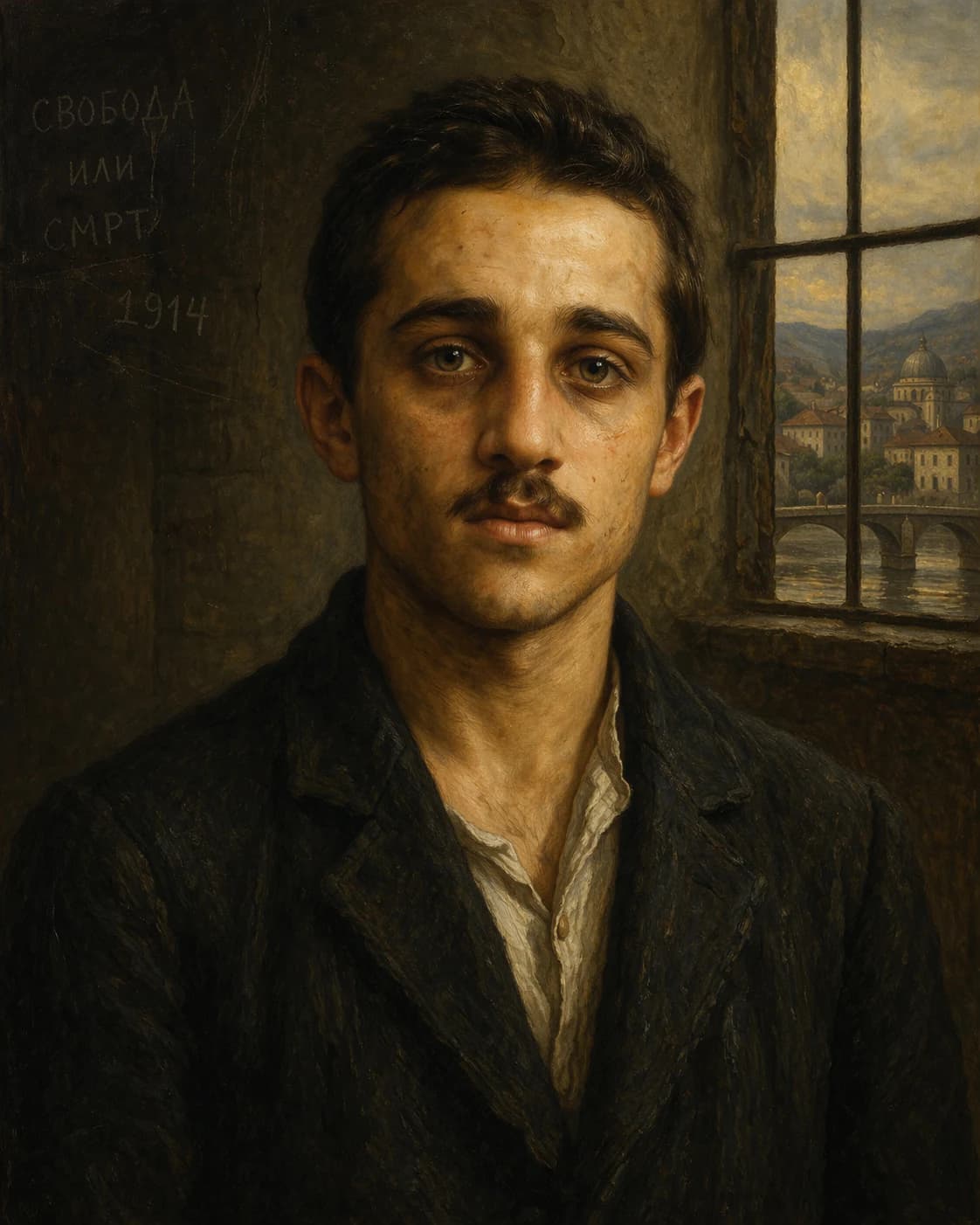
Archduke Franz Ferdinand was born in Graz on 18 December 1863 into the House of Habsburg-Lorraine, one of Europe's oldest ruling dynasties. At birth, he was important but not central. Emperor Franz Joseph had a son, Crown Prince Rudolf, and the imperial family contained many ranked branches, titles, expectations, and rival temperaments. Franz Ferdinand's childhood therefore trained him for aristocratic service rather than certain sovereignty. He grew up inside a dynasty that claimed to hold together a vast multiethnic empire of Germans, Hungarians, Czechs, Croats, Poles, Ruthenians, Romanians, Italians, Slovenes, Serbs, and others. Ceremony and discipline mattered because the empire itself depended on hierarchy. Yet nothing in his earliest position suggested that his name would one day become shorthand for the beginning of the First World War.
1875-1889

The Line Shifts

The line of succession changed through dynastic shock. Crown Prince Rudolf's suicide at Mayerling in 1889 removed Emperor Franz Joseph's only son. Succession then passed toward the emperor's brother, Archduke Karl Ludwig, and after Karl Ludwig's death in 1896 toward Karl Ludwig's eldest son, Franz Ferdinand. A man not raised as the obvious future ruler became heir presumptive by the hard arithmetic of dynasty. This mattered far beyond palace genealogy. Austria-Hungary was already strained by constitutional conflict, national movements, and disputes between Vienna and Budapest. The identity of the next monarch could shape military command, relations with Hungary, policy in the Balkans, and possible reform for Slavic peoples within the empire. Franz Ferdinand's private future became an imperial question.

1892-1893

Travel, Illness, Reflection

Franz Ferdinand suffered from poor health, and fears of tuberculosis followed him for years. Illness made him more withdrawn and perhaps more defensive, but travel gave him a wider view than many court figures possessed. His journey around the world in 1892-1893 took him through imperial ports, colonies, and distant political settings at a time when European power was being projected globally. He returned with collections, impressions, and a sharper sense that empire depended on logistics, armed force, administration, and prestige. The experience did not make him liberal in any simple sense. It hardened his seriousness. He became a man of strong opinions, little patience for fools, and a belief that Austria-Hungary needed discipline if it was to survive the pressures of modern nationalism.

1894-1900

Marriage and Defiance

Franz Ferdinand's relationship with Sophie Chotek became the defining private rebellion of his life. Sophie was an aristocrat, but not from a ruling or formerly ruling dynasty considered equal enough for a Habsburg heir. Emperor Franz Joseph and the court resisted the marriage, fearing damage to dynastic rules. Franz Ferdinand persisted, and the wedding in 1900 was allowed only on morganatic terms. Sophie did not receive the rank of a future empress, and their children were excluded from the succession. The arrangement produced repeated public humiliations, with Sophie placed below women of higher dynastic status even when her husband was heir to the throne. The marriage reveals the human cost of imperial hierarchy. It also shows Franz Ferdinand's stubbornness: he could submit to formal restrictions, but he would not abandon the central personal choice of his life.

1896-1906

Heir Presumptive

After 1896, Franz Ferdinand became a permanent factor in imperial politics even though Franz Joseph continued to reign. He cultivated influence from the Belvedere Palace, where advisers, officers, and officials watched the future take shape before it had formal power. He cared deeply about the army and distrusted arrangements that, in his view, weakened central authority. He was especially hostile to Hungarian efforts to expand control over the joint military, fearing that Magyar dominance inside the Dual Monarchy damaged imperial cohesion. Yet he was not merely a rigid reactionary. He considered reforms that might strengthen the monarchy by giving Slavic peoples more recognition and reducing the imbalance between Austria and Hungary. Whether these ideas were practical is disputed. What is clear is that many powerful people feared what he might do as emperor.

1906-1913

A Troubled Empire

Austria-Hungary's great problem was not simply weakness. It was complexity. The empire contained many peoples with different languages, loyalties, churches, elites, and national projects. The 1867 Compromise had elevated Hungary, but it left many Slavs frustrated and created a political structure that could be obstructed from several directions at once. Franz Ferdinand believed the monarchy needed stronger central authority and a reorganized internal settlement if it was to endure. He also feared the destabilizing pull of Serbia after the Balkan Wars, when Serbian prestige and territory increased. Importantly, he was often cautious about war with Serbia, understanding that a Balkan conflict could draw in Russia and endanger the empire. This makes his legacy more ironic. The man whose death triggered the July Crisis was not simply a warmonger. He was a hard, conservative reformer who feared that the monarchy might break if it failed to adapt.

June 1914

Bosnia Inspection

In June 1914, Franz Ferdinand traveled to Bosnia to inspect military maneuvers and appear publicly in Sarajevo. Bosnia-Herzegovina had been annexed by Austria-Hungary in 1908, angering Serbia and many South Slav nationalists who saw Habsburg rule as illegitimate. The date, 28 June, coincided with Vidovdan, associated in Serbian memory with the Battle of Kosovo in 1389, giving the visit an added symbolic charge. The conspirators who targeted him were young Bosnian Serb nationalists with links to networks that reached into Serbia, including members connected to the Black Hand. Security was careless for a visit so politically loaded. From Vienna's perspective, the heir's presence projected order. From the street, it exposed how contested that order had become.

28 June 1914

Shots in Sarajevo

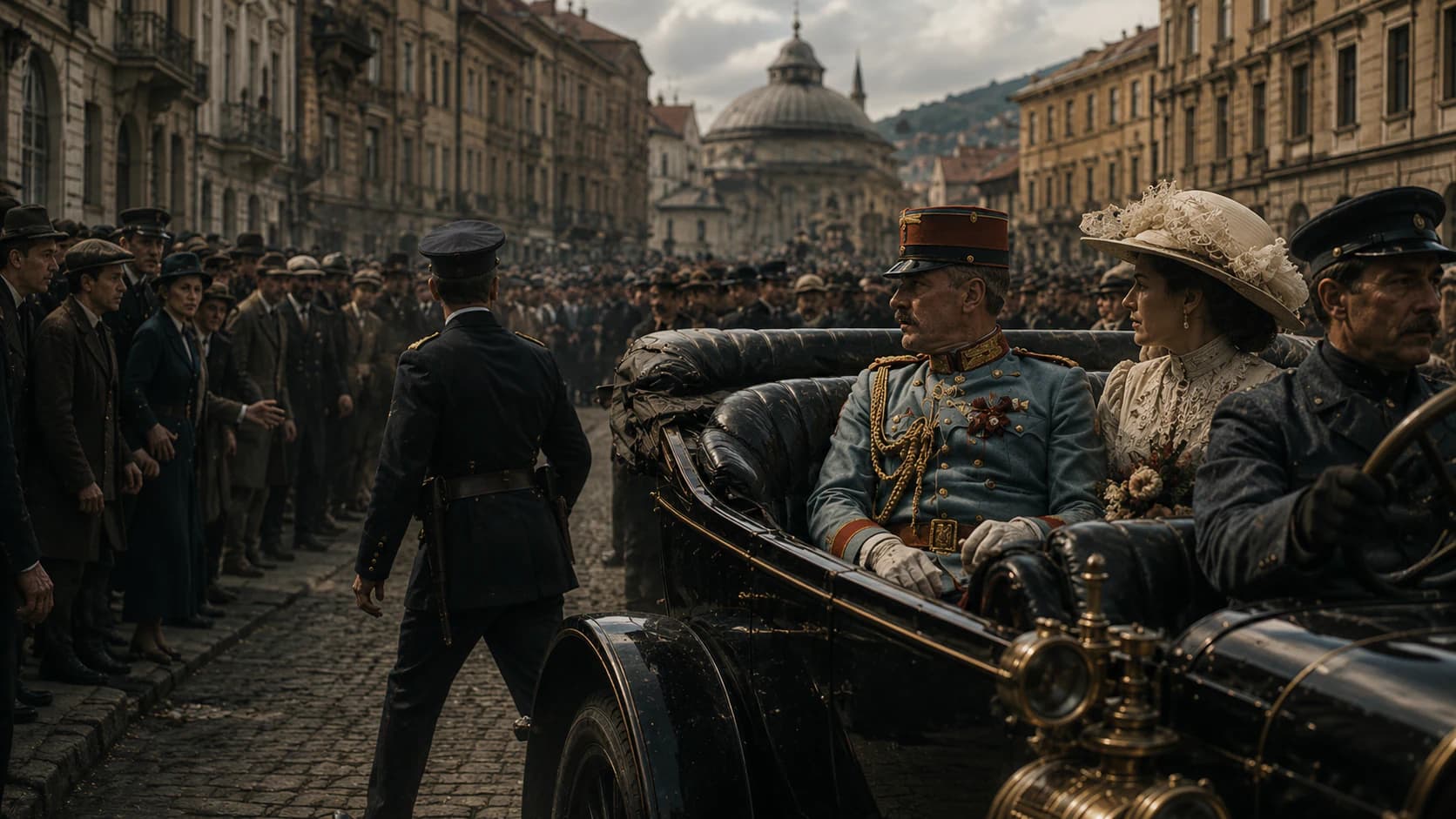
The assassination unfolded through warning, confusion, and chance. Earlier in the day, Nedeljko Cabrinovic threw a bomb at the motorcade. It failed to kill the archduke and wounded others instead. Franz Ferdinand continued with the visit, then decided to see the injured. The route was mishandled, and the car stopped near Gavrilo Princip, one of the conspirators. Princip fired at close range, killing both Franz Ferdinand and Sophie. The murders were shocking, but their world-historical force came from what followed. Austria-Hungary used the assassination to confront Serbia. Germany offered support to Vienna. Russia moved toward Serbia. France, Britain, and the wider alliance system were drawn into escalating decisions. The assassination did not by itself cause the First World War; militarism, imperial rivalry, nationalism, alliance commitments, and crisis mismanagement had been building for years. But Sarajevo supplied the spark at exactly the point where Europe's diplomatic machinery was most combustible.

1914 and after

Legacy Beyond His Life

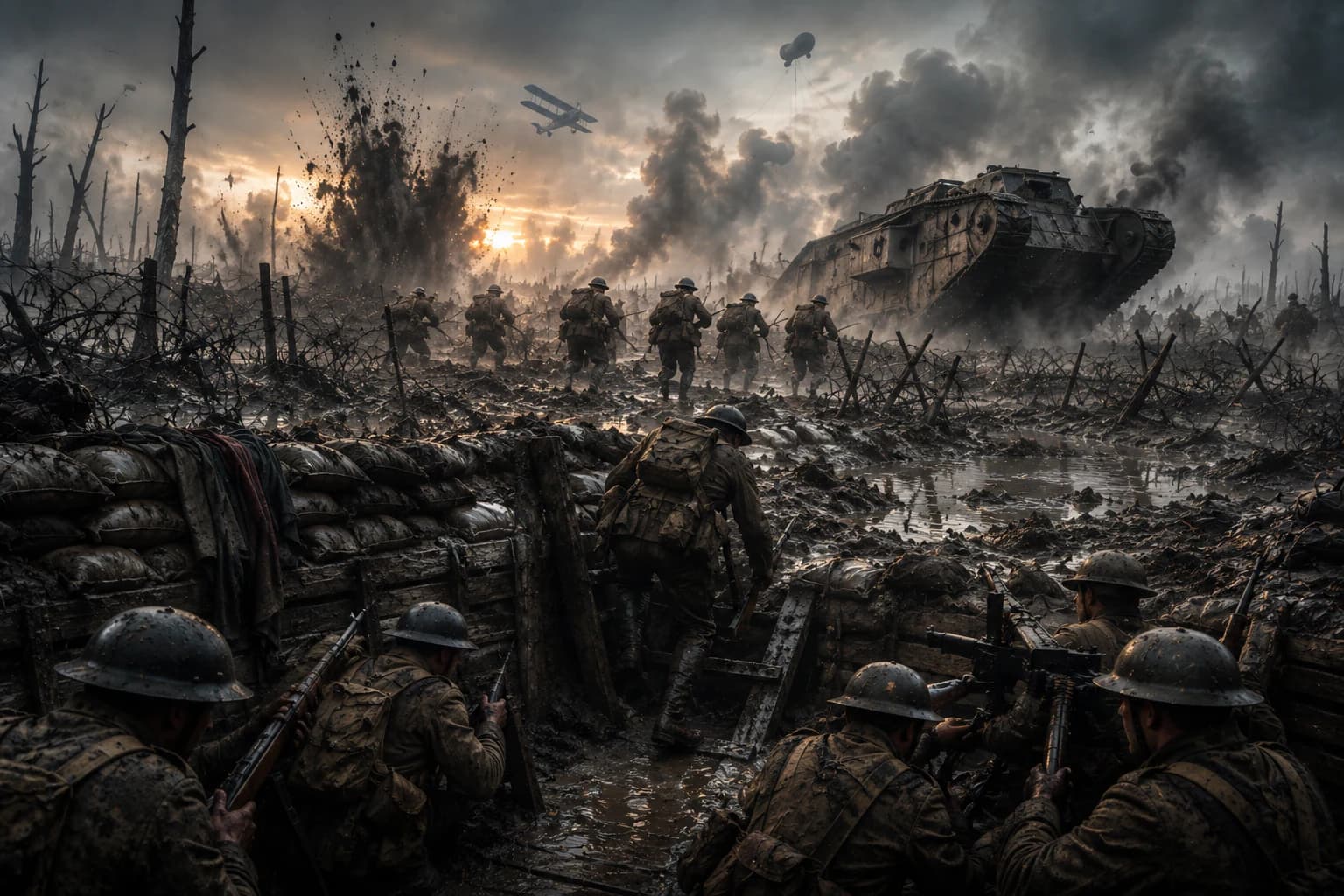
Franz Ferdinand's historical importance lies partly in absence. He never became emperor, never tested his plans for reform, and never revealed whether his suspicion, military seriousness, and possible federal instincts could have strengthened Austria-Hungary or accelerated its internal conflicts. Historians therefore treat him with caution. He was not a liberal democrat waiting to save Europe, but neither was he merely a symbol of doomed aristocracy. He was a severe Habsburg conservative who understood that the empire could not survive indefinitely by ceremony alone. His assassination mattered because it removed a future ruler and gave Vienna's hawks a crisis they could use. The war that followed killed millions, destroyed the Habsburg, Romanov, Ottoman, and German imperial orders, and reshaped the twentieth century. Franz Ferdinand remains one of history's clearest examples of an interrupted life whose consequences became larger than the life itself.

Continue in context

Connected stories

Move from the profile into the wider events and settings this figure belongs to.

Tertiary paths

Content note

This profile is written for educational use and connects to related Stories of History pages. The main portrait is an AI-assisted historical reconstruction, included as an illustrative aid rather than documentary evidence. Image policy

References

Sources & Further Reading

Reliable reference works, archives and reading paths connected to this profile.

Further reading

  1. Encyclopaedia Britannica, Search results for Franz Ferdinand,” accessed June 2026.Open source
  2. WorldCat, Books and library holdings for Franz Ferdinand,” accessed June 2026.Open source

Primary sources

  1. Library of Congress, Search results for Franz Ferdinand,” accessed June 2026.Open source

Reviewed claim sources

Loading reviewed claim sources...

A weekly route through history

Find out first about the latest published stories, feature notes and occasional Premium offers in one weekly email.