People

Francisco Pizarro

Francisco Pizarro was a Spanish conquistador who captured Atahualpa at Cajamarca, helped destroy the Inca Empire, founded Lima, and was assassinated in 1541.

Born
1478 CE
Died
1541 CE
Role
Spanish conquistador

Spanish conquistador (1478–1541)

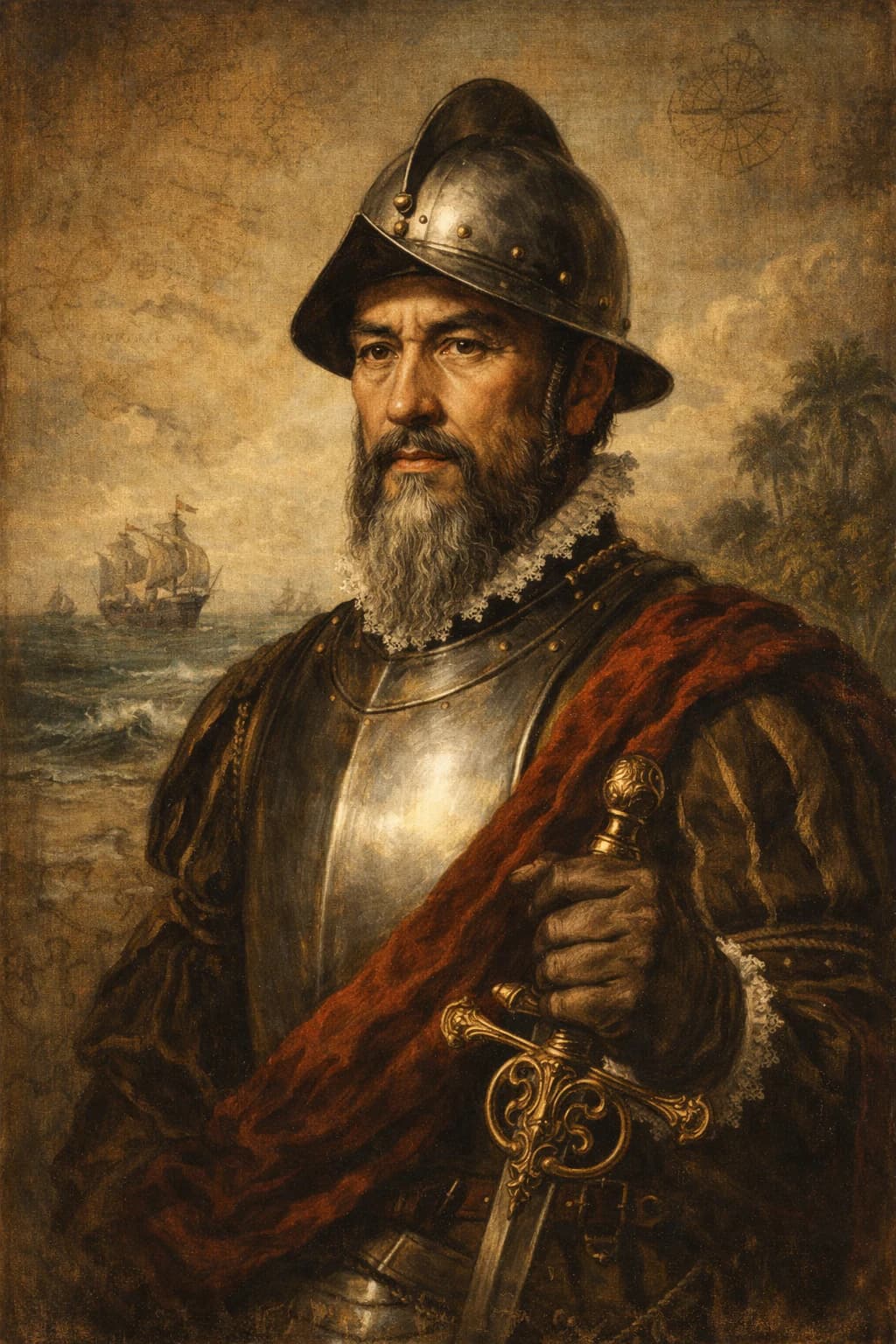
AI-generated portrait of Francisco Pizarro in 16th-century conquistador armour
AI-assisted historical reconstruction

An illustrative reconstruction based on historical context. It is not a photograph or documentary likeness. Image policy

Quick answer

Francisco Pizarro was a Spanish conquistador who captured Atahualpa at Cajamarca, helped destroy the Inca Empire, founded Lima, and was assassinated in 1541.

Born
1478 CE
Died
1541 CE
Role
Spanish conquistador
Years
1478-1541 CE
Facts

Francisco Pizarro timeline facts

Selected specifics from this profile's life story.

1478
Humble Birth

Francisco Pizarro was born in Trujillo, Spain, into poverty and limited status, making conquest overseas one of the few routes to wealth and command.

1529
Crown Authorization

In 1529, Pizarro received royal authorization through the Capitulacion de Toledo, gaining titles that strengthened him but angered his partners.

1533
Cusco Taken

After Atahualpa's execution, Pizarro advanced into Cusco, using puppet rulers and alliances to convert a hostage crisis into Spanish colonial control.

1541
Violent End

Pizarro was assassinated in Lima in 1541 by followers of Almagro, leaving a legacy of conquest, colonial foundation, and immense Andean devastation.

Life Journey

From obscurity to conquest and consequence

Follow the story in a more continuous narrative, with a reading mode that matches how much depth you want.

Complete chronology

1478

Humble Birth

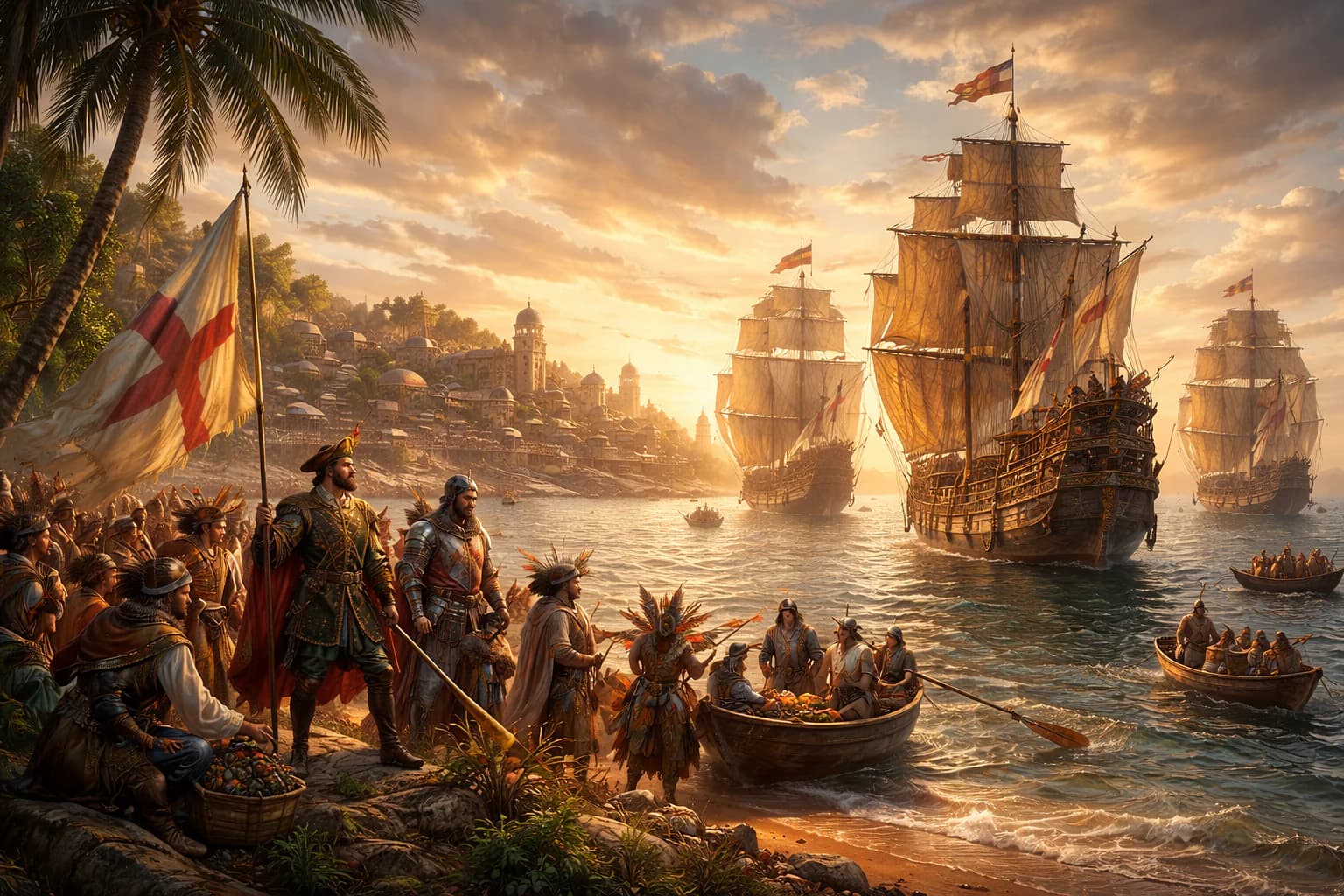
Francisco Pizarro's beginnings were far from the image of polished imperial command. Born in Trujillo in Extremadura, probably in the 1470s, he grew up with little formal education and few secure prospects. Later tradition emphasizes his illegitimacy, poverty, and illiteracy, details that should be handled carefully because hostile or heroic accounts often sharpen origin stories. What is clear is that Pizarro came from the hard edge of Spanish society, where military service and overseas risk could offer what birth did not. Extremadura produced many conquistadors because men with limited local futures could imagine advancement across the Atlantic. Pizarro's ambition was therefore not only personal greed, though greed mattered. It was also the product of a society that rewarded violent opportunity when it was carried out under royal authority.
1509–1523

New World Arrival

Pizarro's early American career trained him in the methods of conquest before he ever reached Peru. He took part in Spanish ventures in the Caribbean and joined the movement that established a Spanish foothold on the Isthmus of Panama. There he operated in a frontier world of expeditions, forced labor, shifting alliances, disease, hunger, and rumor. Spanish power in the Americas was never simply a matter of a few Europeans overpowering whole societies by themselves. It depended on Indigenous allies, intelligence, opportunism, legal paperwork, and the willingness to use extreme violence. In Panama, Pizarro learned how expeditions were financed, how leaders divided spoils, and how fragile partnerships could become. He also heard reports of wealthy lands to the south along the Pacific. Those reports turned his hard-won experience into a larger ambition.

1524–1526

Seeking the South

The first expeditions toward the south were miserable, uncertain, and nearly ruinous. Pizarro, Diego de Almagro, and the priest Hernando de Luque formed a partnership to pursue the lands rumored along the Pacific coast, but rumor did not feed men or repair ships. The expeditions faced storms, shortages, disease, hostile encounters, and despair among crews who saw little reason to continue. Pizarro's persistence was not romantic exploration. It was a high-risk business venture backed by men who expected returns in gold, land, status, and labor. Eventually the Spaniards encountered stronger evidence of the Andean world's wealth and organization. Textiles, metalwork, settlements, and reports of the Inca realm suggested that this was not a marginal prize. It was a state of enormous scale, and Pizarro became determined to turn information into conquest.

1529

Crown Authorization

Pizarro returned to Spain to convert private ambition into royal permission. The Capitulacion de Toledo in 1529 gave him authority to conquer and govern lands in Peru for the Spanish crown, along with titles and privileges that elevated him above his partners. This was a decisive legal step. Conquistadors needed royal sanction to turn violence into legitimate conquest, at least in Spanish eyes. But the agreement also planted future conflict. Almagro and others believed Pizarro had secured disproportionate rewards for himself and his brothers. The conquest of Peru would therefore begin with a contradiction already inside it: Pizarro carried the crown's authority, but his own factional world was unstable. The ambition that made the campaign possible also made its aftermath dangerous.

1531–1532

First Encounters

Pizarro did not conquer a stable empire at full strength. The Inca state, or Tawantinsuyu, had recently been shaken by the deaths of Huayna Capac and a likely heir, probably amid epidemic disease that spread ahead of or alongside Europeans. A civil war followed between Atahualpa in the north and Huascar in Cuzco. Atahualpa had just won when Pizarro arrived with a tiny Spanish force. That timing was crucial. The Spaniards brought horses, steel weapons, firearms, war dogs, interpreters, and experience from Caribbean and Mexican conquests, but they also benefited from Andean divisions and local grievances against Inca rule. Pizarro studied the situation with predatory care. He understood that direct military conquest of such a vast empire was impossible for his numbers. Seizing the ruler offered another path.

1532

Cajamarca Ambush

The encounter at Cajamarca was one of the most consequential ambushes in world history. Pizarro had fewer than two hundred Spaniards, while Atahualpa had armies nearby. Numbers alone should have made Spanish victory absurd. Pizarro therefore chose a tactic already familiar from the conquest of Mexico: strike at the ruler, create panic, and turn political centrality into vulnerability. On 16 November 1532, after a tense meeting involving the friar Vicente de Valverde and disputed communication through interpreters, the hidden Spaniards attacked. Horses, gunfire, steel, and surprise shattered the ceremonial setting. Many Inca attendants were killed, and Atahualpa was taken alive. Pizarro's genius, if the word can be used for something so ruthless, lay in understanding that he did not need to defeat the empire's armies immediately. He needed to hold the man through whom imperial authority flowed.

1533

Cusco Taken

Atahualpa filled a ransom room with gold and silver, but the payment did not save him. Pizarro's forces executed him in 1533 after a trial shaped by conquest politics. The Spaniards then marched toward Cusco, the symbolic and administrative heart of the Inca world. Their entry into the city did not end Andean resistance, but it transformed the crisis. Pizarro and his allies installed rulers they could manage, rewarded Indigenous supporters, seized wealth, and began redirecting political authority toward Spanish colonial structures. The fall of Cusco was devastating because it struck the sacred center of the empire, but it was not a simple story of European superiority. Spanish success depended on local alliances, civil-war wounds, epidemic disruption, and Pizarro's willingness to exploit every fracture. The Inca world continued to resist, especially later from Vilcabamba, but independent imperial power had been broken.

1535–1541

Internal Strife

The conquerors' victory quickly curdled into rivalry. Pizarro founded Lima, the City of Kings, in 1535 to anchor Spanish rule on the coast, closer to maritime supply and imperial administration than highland Cusco. Yet the new colonial order remained violently unstable. Diego de Almagro believed he had been cheated of rewards and authority, and disputes over Cusco hardened into war between Spanish factions. Almagro was defeated and executed in 1538 by forces associated with the Pizarro family, deepening resentment among his followers. These conflicts reveal a central truth about conquest: men who could cooperate against an Indigenous empire often turned on one another when dividing the spoils. Pizarro had helped destroy one political order, but the Spanish replacement was not yet secure. It was improvised through violence, patronage, and revenge.

1541

Violent End

On 26 June 1541, supporters of the dead Almagro attacked Pizarro's palace in Lima and killed him after a violent struggle. His death was not an accident at the edge of empire; it was the predictable result of a conquest culture built on personal reward, armed retinues, and contested legitimacy. Pizarro's legacy is therefore inseparable from both achievement and catastrophe. He founded Lima and secured a Spanish foothold that became central to colonial South America. He also helped destroy the sovereignty of the largest empire in the Americas, unleashed plunder on sacred and political wealth, and opened a long era of forced labor, disease, cultural assault, and colonial exploitation in the Andes. To ask who Francisco Pizarro was is to confront the darker mechanics of empire: audacity, calculation, legal sanction, tactical brilliance, and devastating human cost bound together in one life.

Continue in context

Connected stories

Move from the profile into the wider events and settings this figure belongs to.

Tertiary paths

Content note

This profile is written for educational use and connects to related Stories of History pages. The main portrait is an AI-assisted historical reconstruction, included as an illustrative aid rather than documentary evidence. Image policy

References

Sources & Further Reading

Reliable reference works, archives and reading paths connected to this profile.

Further reading

  1. Encyclopaedia Britannica, Search results for Francisco Pizarro,” accessed June 2026.Open source
  2. WorldCat, Books and library holdings for Francisco Pizarro,” accessed June 2026.Open source

Primary sources

  1. Library of Congress, Search results for Francisco Pizarro,” accessed June 2026.Open source

Reviewed claim sources

Loading reviewed claim sources...

A weekly route through history

Find out first about the latest published stories, feature notes and occasional Premium offers in one weekly email.