People

Francis Walsingham

Sir Francis Walsingham was Elizabeth I principal secretary from 1573 to 1590 and is remembered as the architect of Elizabethan intelligence. A committed Protestant statesman, diplomat and spymaster, he used agents, intercepted letters, codebreaking and double agents to expose Catholic plots, including the Babington Plot that led to Mary Queen of Scots execution.

Born
1532 CE
Died
1590 CE
Role
Elizabethan principal secretary and intelligence organiser

Elizabethan principal secretary and intelligence organiser (c. 1532-1590)

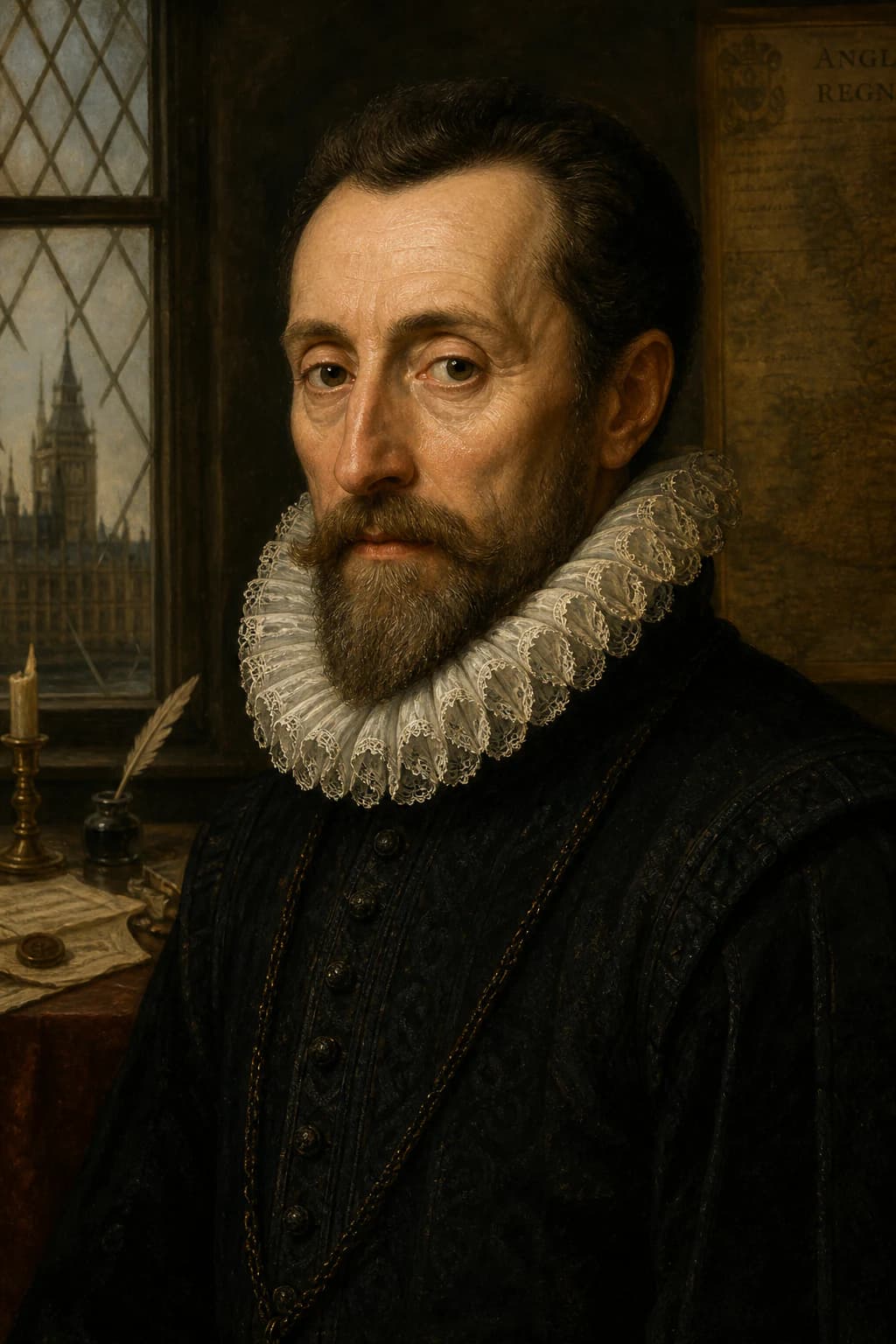
AI-generated portrait of Francis Walsingham in dark Elizabethan dress
AI-assisted historical reconstruction

An illustrative reconstruction based on historical context. It is not a photograph or documentary likeness. Image policy

Quick answer

Sir Francis Walsingham was Elizabeth I principal secretary from 1573 to 1590 and is remembered as the architect of Elizabethan intelligence. A committed Protestant statesman, diplomat and spymaster, he used agents, intercepted letters, codebreaking and double agents to expose Catholic plots, including the Babington Plot that led to Mary Queen of Scots execution.

Born
1532 CE
Died
1590 CE
Role
Elizabethan principal secretary and intelligence organiser
Years
1532-1590 CE
Quick facts

Profile details

Additional identity and tagging details that are not already covered in the introduction.

Full name
Sir Francis Walsingham
Facts

Francis Walsingham timeline facts

Selected specifics from this profile's life story.

c. 1532-1553
Protestant formation

Francis Walsingham was born in Kent around 1532 into a gentry family and educated at Kings College, Cambridge, before studying law at Grays Inn.

1560s
Working with Cecil

Walsingham entered Parliament and began performing confidential work for William Cecil, Elizabeths chief minister and the central organiser of early Elizabethan government.

1570s-1580s
Building the network

Walsingham developed a wide intelligence network using agents, informers, double agents, intercepted correspondence, cipher specialists and contacts across Europe.

1590
Security and survival

Walsingham died in London on April 6, 1590, financially strained but central to the survival politics of Elizabethan England.

Life Journey

The intelligence state before its time

Follow the story in a more continuous narrative, with a reading mode that matches how much depth you want.

Complete chronology

c. 1532-1553

Protestant formation

Walsingham's early life placed him inside the educated Protestant networks that would shape Elizabethan government. Cambridge and legal training gave him discipline, languages and administrative habits. Religion was not a private ornament in his world; it was a matter of survival, allegiance and international politics. Under Mary I, when Protestantism became dangerous, Walsingham left England.
1553-1558

Exile under Mary I

Exile hardened Walsingham's view of Catholic power. He saw Protestant communities under pressure and learned how politics worked across borders. He also acquired languages, contacts and a habit of watching people closely. These were not yet the tools of a formal intelligence service, but they became the foundation of his later methods.

1560s

Working with Cecil

Cecil recognised Walsingham's usefulness: industrious, serious, Protestant and discreet. Walsingham gathered information among foreign communities in London and learned how domestic security connected to European diplomacy. Elizabeth's regime faced a dangerous combination: a Protestant queen with contested legitimacy, a Catholic claimant in Mary Queen of Scots, and hostile powers watching for opportunity.

1570-1573

Ambassador in France

Paris marked Walsingham deeply. He had gone to France seeking diplomatic possibilities, but the massacre exposed the fragility of Protestant life in Catholic Europe. English Protestants sheltering in his residence brought the crisis to his door. The event confirmed his suspicion that England could not rely on goodwill from Catholic powers and that Mary Stuart would remain a focus for plots as long as she lived.

1573

Principal secretary

The principal secretaryship gave Walsingham access, but not unlimited power. Elizabeth valued him yet often resisted his urgency, especially when he pushed for stronger Protestant intervention abroad or decisive action against Mary. Walsingham therefore worked within a court where persuasion, patience and documentation mattered. His office became a nerve centre for a realm that felt permanently vulnerable.

1570s-1580s

Building the network

Walsingham did not create modern intelligence in a fully institutional sense, but he anticipated many of its practices. His agents operated in France, the Low Countries, Scotland, Italy and English Catholic circles. Letters were opened, copied, decoded and resealed. Informers were paid, pressured or manipulated. In an age of slow communication, good intelligence could buy time, and time could save a monarchy.

1583-1586

Throckmorton and Babington

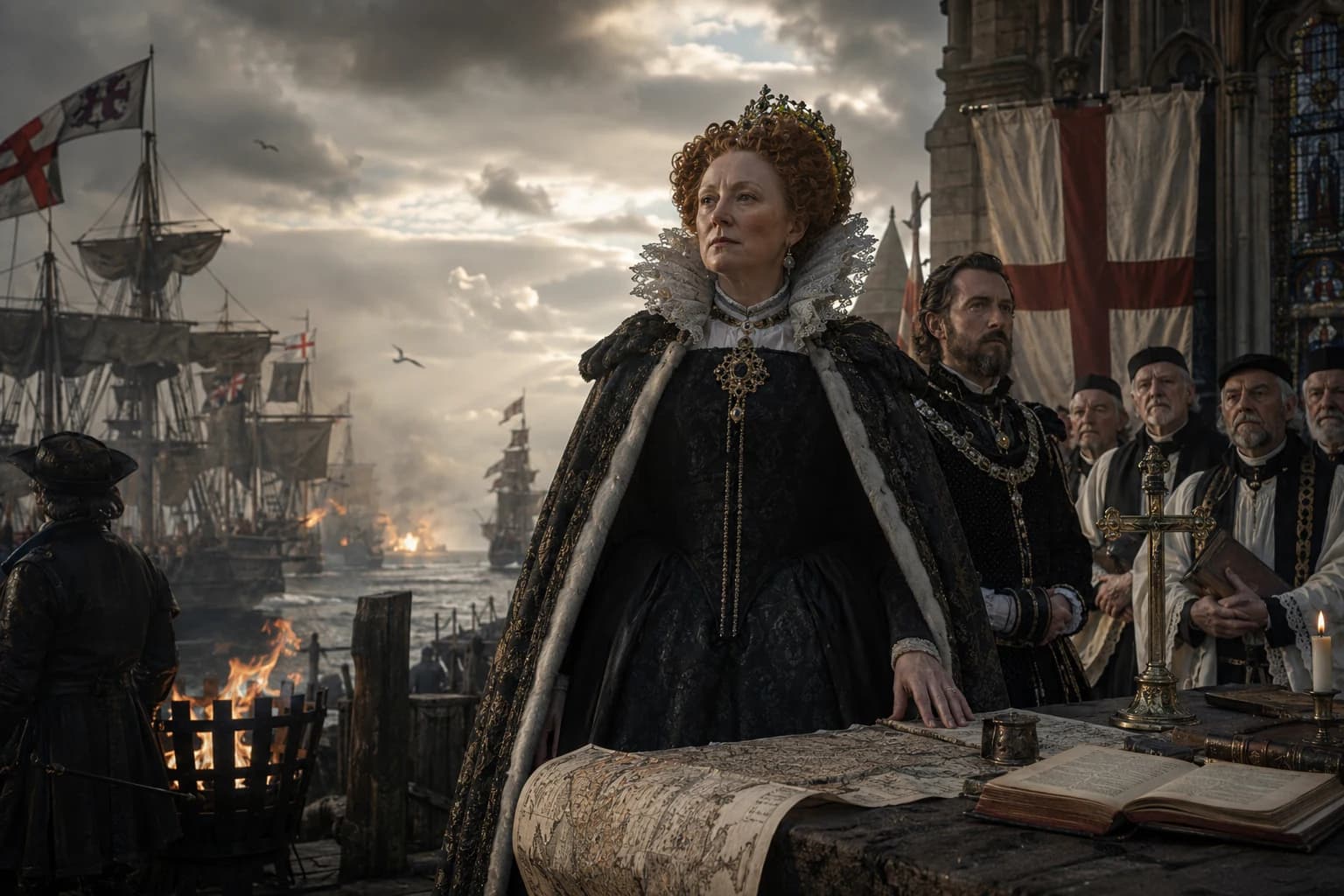
The Babington Plot was Walsingham's most famous and controversial triumph. His agents penetrated the correspondence system used to communicate with Mary, allowing the government to watch the conspiracy develop. When Mary appeared to consent to Elizabeth's assassination, Walsingham had the evidence needed to move against her. He turned hidden correspondence into a political weapon, and Mary paid with her life.

1590

Security and survival

Francis Walsingham matters because he made intelligence a central instrument of English statecraft. He was not a shadowy mastermind outside politics; he was a minister operating in a confessional age where assassination, invasion and dynastic claims were real threats. His methods could be ruthless, intrusive and manipulative. They were also effective. His legacy is the uncomfortable birth of a security state: necessary in crisis, dangerous in its power, and inseparable from the fears that created it.

Continue in context

Connected stories

Move from the profile into the wider events and settings this figure belongs to.

Tertiary paths

Content note

This profile is written for educational use and connects to related Stories of History pages. The main portrait is an AI-assisted historical reconstruction, included as an illustrative aid rather than documentary evidence. Image policy

References

Sources & Further Reading

Reliable reference works, archives and reading paths connected to this profile.

Further reading

  1. Encyclopaedia Britannica, Search results for Francis Walsingham,” accessed June 2026.Open source
  2. WorldCat, Books and library holdings for Francis Walsingham,” accessed June 2026.Open source

Primary sources

  1. Library of Congress, Search results for Francis Walsingham,” accessed June 2026.Open source

Reviewed claim sources

Loading reviewed claim sources...

A weekly route through history

Find out first about the latest published stories, feature notes and occasional Premium offers in one weekly email.